Completed in 1972, Kisho Kurokawa’s Nakagin Capsule Tower stands as a definitive icon of the Metabolist movement, envisioning a future of modular, replaceable living units in a rapidly densifying Tokyo. The scene captures the frantic energy of the Ginza district during the height of Japan’s "Economic Miracle," where corporate salarymen navigate a landscape of smog-filtered morning light and period-accurate Toyota Crown sedans. This architectural landmark represents a pivotal moment in postwar urban planning, blending avant-garde organicism with the industrial reality of a burgeoning global megalopolis.

Laborers at the Hyundai Heavy Industries shipyard in Ulsan weld the massive steel hull of an Ultra Large Crude Carrier (ULCC) beneath the towering blue gantry cranes that defined South Korea’s industrial skyline in 1985. This scene illustrates the "Miracle on the Han River," a period of unprecedented economic growth that saw the Republic of Korea transform into a global leader in heavy industry and maritime manufacturing. The grit and scale of the shipyard reflect the national mobilization toward export-oriented industrialization, which propelled the country from post-war poverty to a high-tech industrial powerhouse by the late 20th century.

A wild giant panda (*Ailuropoda melanoleuca*) forages on arrow bamboo amidst the misty, high-altitude forests of the Qionglai Mountains circa 1985. This period represented a pivotal era for wildlife preservation in China, characterized by the expansion of the Wolong National Nature Reserve and the formalization of modern international conservation partnerships. The lush landscape of ancient Dawn Redwoods and moss-covered karst limestone illustrates the unique temperate ecosystem that has served as a sanctuary for this iconic species for millennia.

A sea of commuters in indigo and olive-green Zhongshan suits flows across Beijing’s Chang’an Avenue on "Flying Pigeon" bicycles, illustrating the rhythmic pulse of the "Kingdom of Bicycles" during the 1970s. This scene captures the austere egalitarianism of the late Maoist era, where functional attire and human-powered transport defined the urban experience. In the background, the imposing Socialist Realist architecture and vibrant propaganda posters reflect a landscape deeply shaped by state ideology and the collective labor of the Cultural Revolution period.
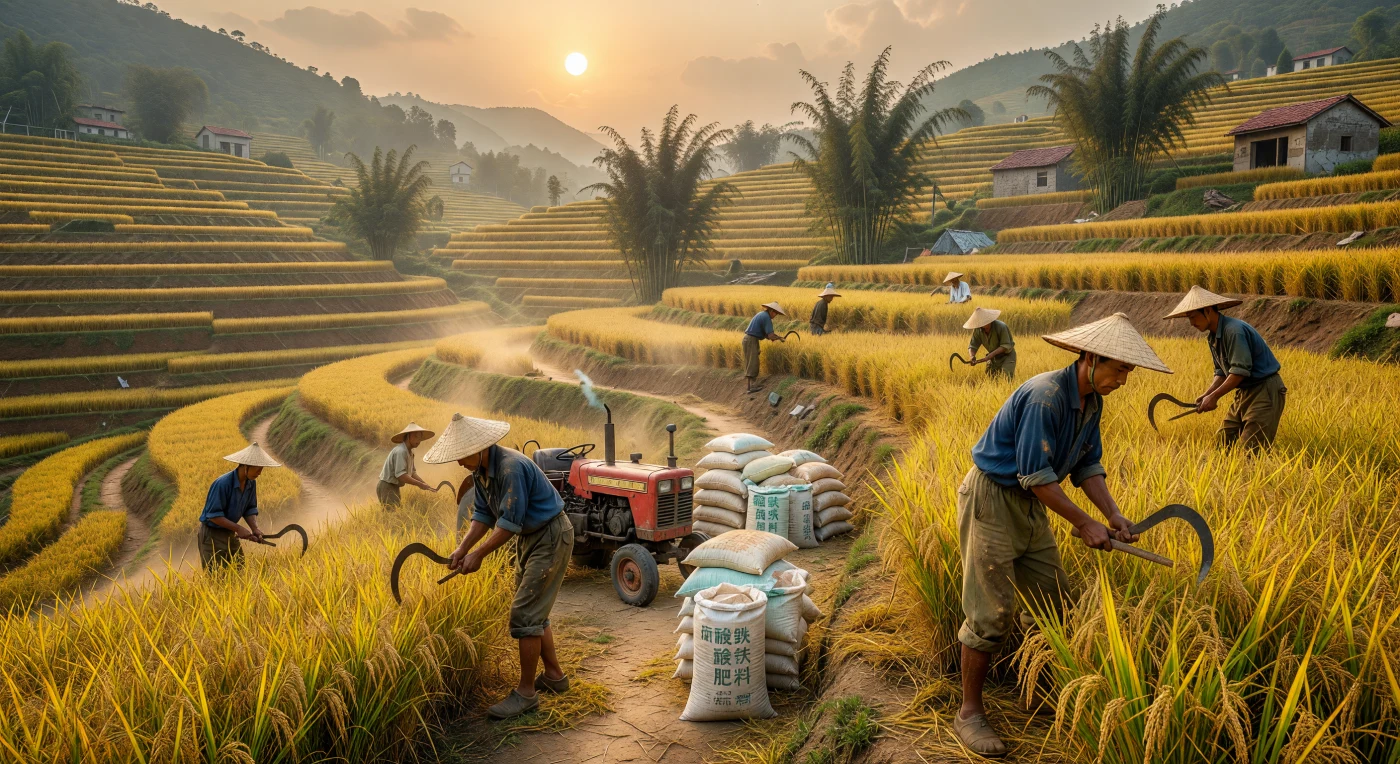
Peasants in 1970s rural China harvest high-yield rice varieties against a backdrop of meticulously terraced hillsides, illustrating the local impact of the global Green Revolution. The scene captures a critical technological transition, pairing traditional manual labor and iron sickles with early mechanization in the form of a versatile "walking tractor" and industrial chemical fertilizers. Dressed in functional indigo-dyed cotton and conical straw hats, these laborers represent the late Mao-era's intensive push toward agricultural self-sufficiency and modernization.

Republic of Korea soldiers stand in a rigid, intimidating combat stance at the Joint Security Area in Panmunjom, facing their North Korean counterparts across the narrow concrete curb of the Military Demarcation Line. Captured during the height of the Cold War in the late 1970s, the scene illustrates the profound tension of the Korean divide, framed by the iconic "UN Blue" diplomatic huts and the brutalist architecture of the North’s Panmungak Pavilion. The guards' starched olive-drab fatigues and mirrored aviator sunglasses reflect the disciplined psychological standoff that has defined this sterile, high-stakes threshold for decades.

This scene captures the vibrant, high-density urban environment of Kowloon, Hong Kong, in the mid-1990s, characterized by a glowing canopy of neon signage and rain-slicked streets. Pedestrians dressed in the era's signature synthetic windbreakers and stonewashed denim navigate a landscape of "tong lau" tenement buildings, reflecting the city’s unique blend of traditional Cantonese culture and rapid modernization. During this penultimate period before the 1997 handover to China, Hong Kong stood as a global hub of commerce and pop culture, epitomized by the iconic red Toyota Crown taxis and the ubiquitous use of pagers among its bustling population.
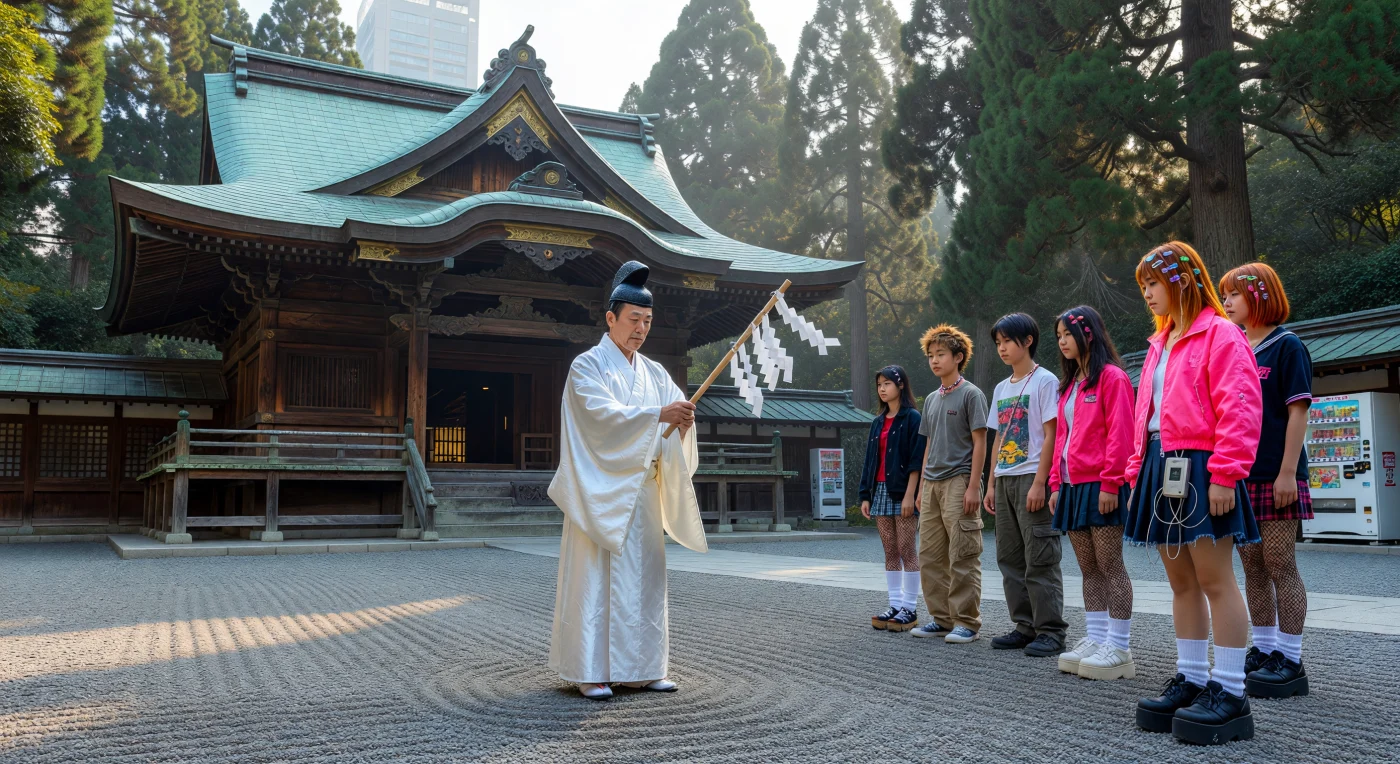
A Shinto priest performs a purification rite at a Tokyo shrine during the mid-1990s, illustrating the enduring nature of Japanese spiritual traditions amidst rapid modernization. Nearby, teenagers dressed in iconic Harajuku street fashion—including platform shoes and "loose socks"—observe the ceremony, reflecting the era's vibrant and rebellious youth subcultures. This juxtaposition highlights the unique cultural synthesis of the Heisei period, where ancient rituals and cutting-edge urban trends coexisted within the landscape of the Japanese megalopolis.