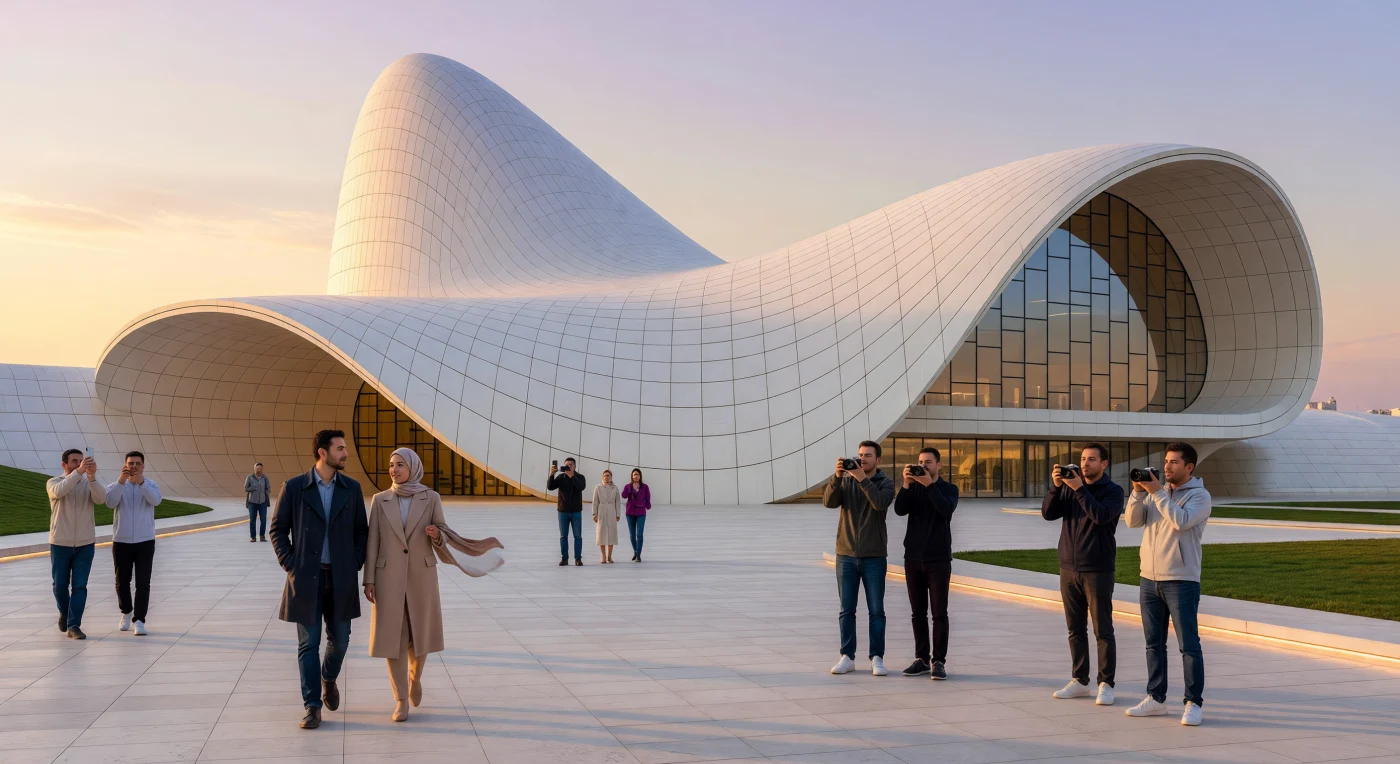
Designed by Pritzker Prize-winning architect Zaha Hadid and completed in 2012, the Heydar Aliyev Center in Baku, Azerbaijan, stands as a masterpiece of the Digital Age, defined by its fluid, "parametric" geometry. The structure’s undulating skin, composed of thousands of glass-fiber reinforced panels, seamlessly merges the surrounding plaza with the building’s roof, rejecting traditional Euclidean angles in favor of organic, sculptural forms. This landmark exemplifies the early 21st-century trend of using iconic "starchitect" designs to redefine urban landscapes through advanced computer-aided engineering and innovative materials.

Completed in 2014, Stefano Boeri’s *Bosco Verticale* (Vertical Forest) in Milan represents a pivotal shift in 21st-century urbanism toward "Green Architecture" and ecological sustainability. These residential towers, rising 111 and 76 meters, integrate over 900 trees and thousands of shrubs into their cantilevered concrete balconies to promote urban biodiversity and microclimate regulation. This scene captures the towers at sunset, highlighting the contrast between their industrial porcelain facades and the lush, living ecosystem that defines the Digital Age’s "Eco-Tech" aesthetic.
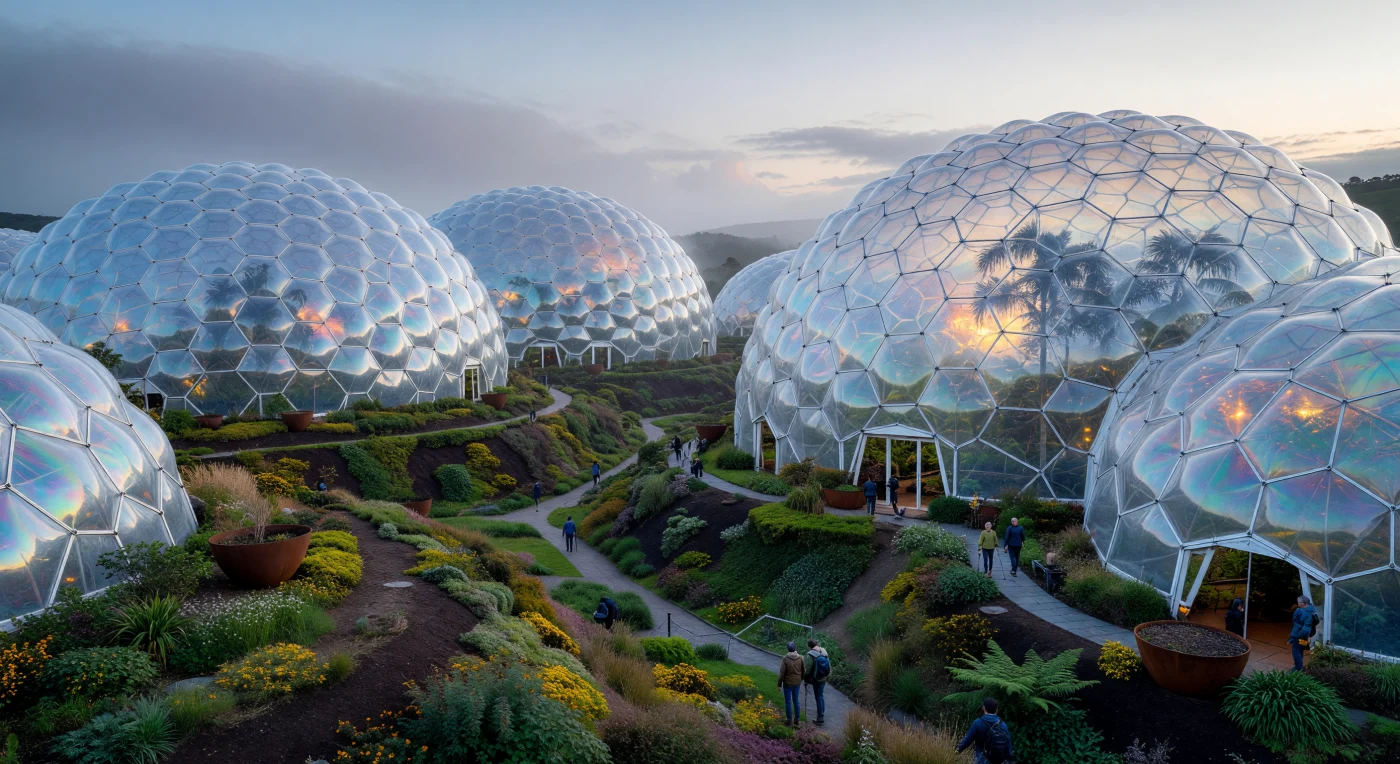
The Eden Project’s biomes in Cornwall represent a pinnacle of early 21st-century "Eco-Tech" architecture, utilizing lightweight, pneumatic ETFE (Ethylene Tetrafluoroethylene) pillows held within a complex geodesic space frame of galvanized steel. This view captures the transition to dusk as the domes begin to glow from within, revealing the lush tropical silhouettes of a managed rainforest housed inside a reclaimed industrial clay pit. These structures exemplify the Digital Age’s shift toward biomimetic design and sustainable urbanism, blending advanced materials science with a commitment to ecological restoration and public education.
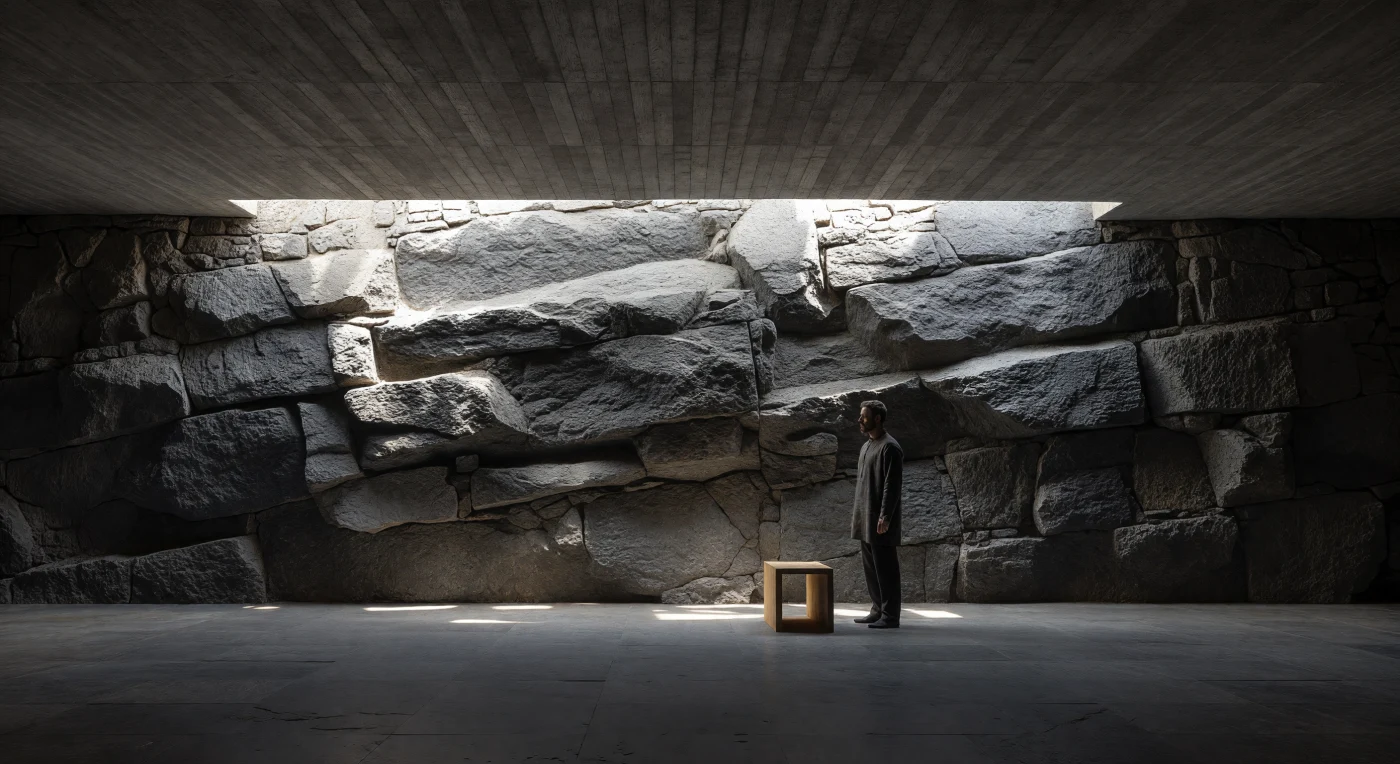
Designed by Emre Arolat and completed in 2012, the Sancaklar Mosque in Istanbul represents a radical shift in Digital Age sacred architecture, eschewing traditional ornamentation for a subterranean "cave-like" sanctuary that blends into the Anatolian topography. The interior showcases a dramatic contrast between the industrial texture of board-formed concrete and the primal, layered strata of rough-hewn grey stone, all illuminated by a singular "halo" of natural light from a hidden skylight. This minimalist design illustrates the 21st-century movement toward material honesty and atmospheric precision, utilizing modern engineering to create a space focused entirely on spiritual contemplation and silence.
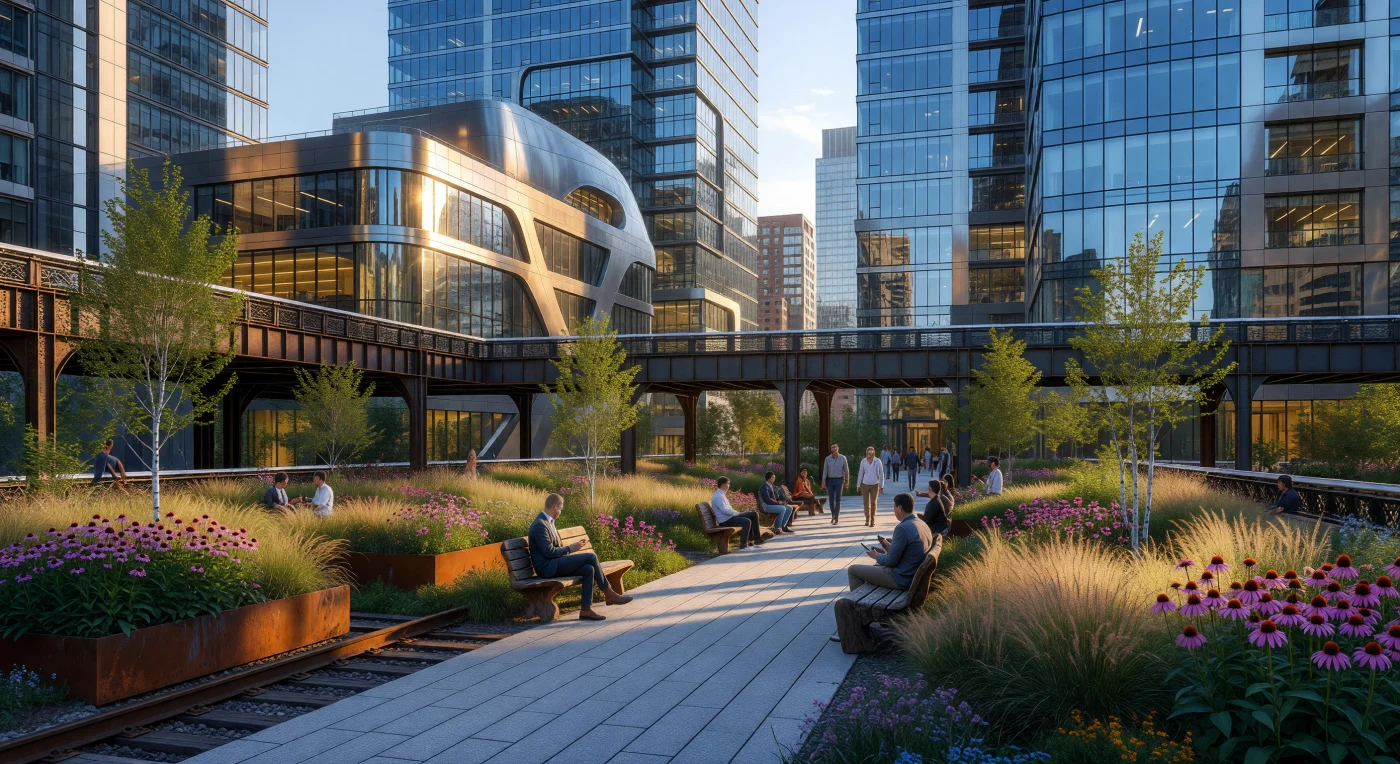
The High Line in New York City exemplifies the Digital Age’s shift toward urban adaptive reuse, transforming an abandoned industrial rail viaduct into a linear park that blends naturalistic Piet Oudolf-style gardens with sophisticated granite planking. The scene highlights the juxtaposition of weathered Corten steel and original iron tracks against the fluid, parametric curves of Zaha Hadid’s 520 West 28th Street, a landmark reflecting the era’s transition from traditional drafting to complex computer-aided design. This space captures the essence of early 21st-century urbanism, where sustainable "Green Architecture" and high-tech luxury residential design converge to redefine the public landscape.
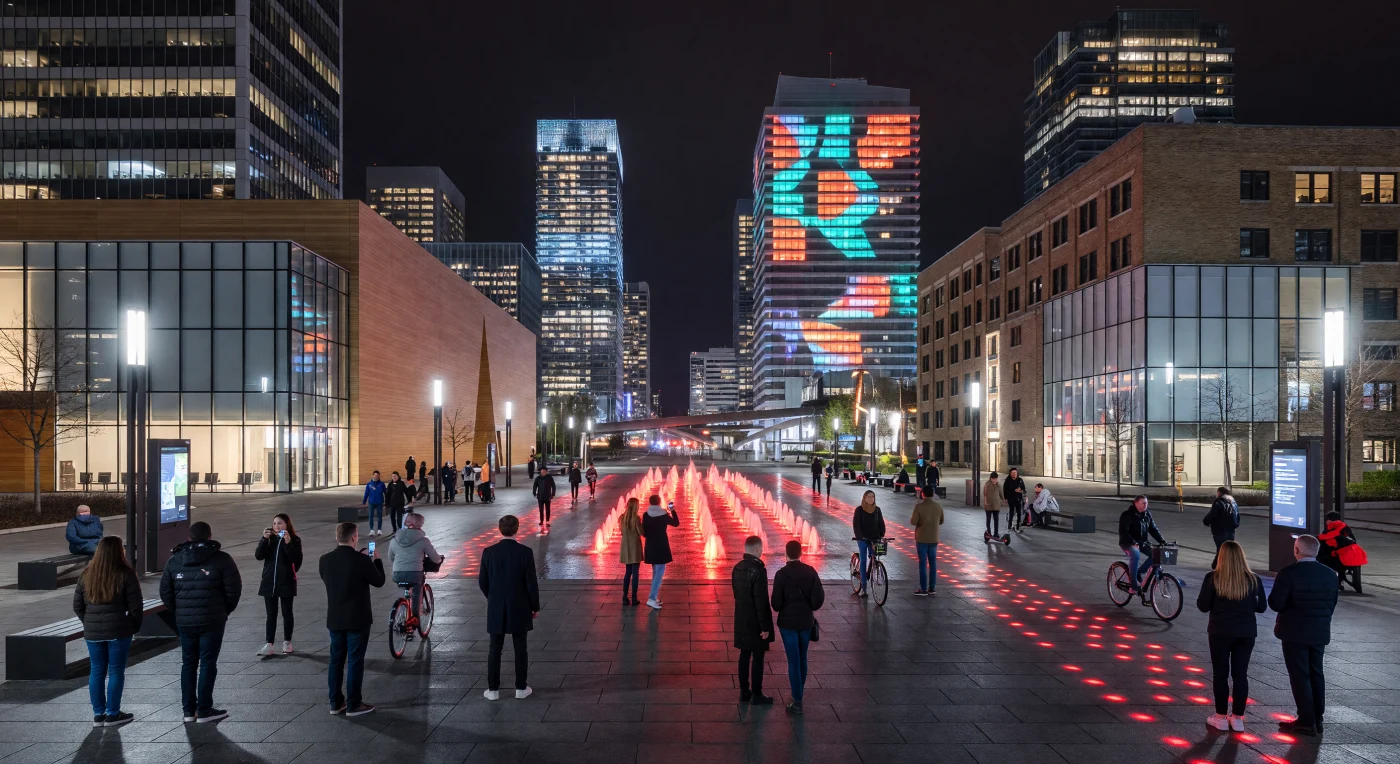
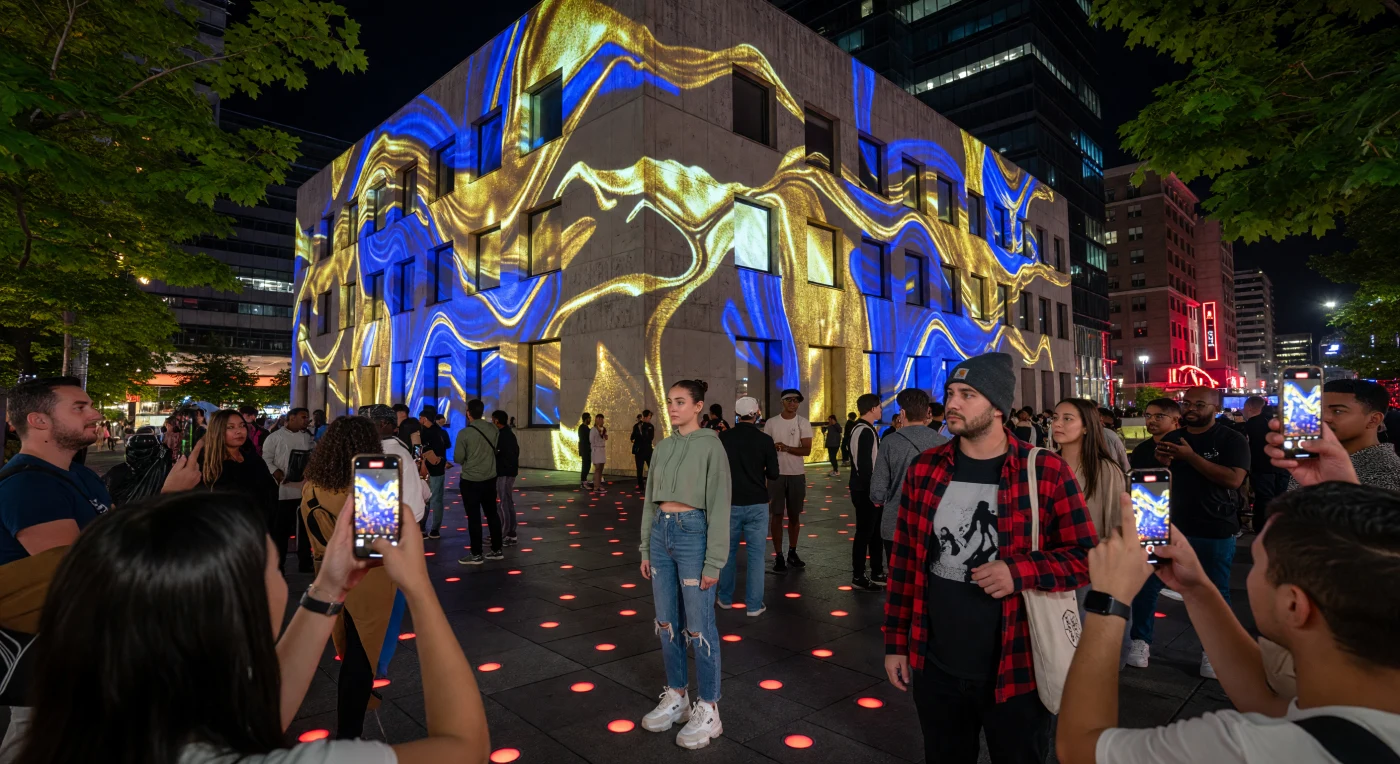
This nightscape of Montreal’s Place des Festivals illustrates the "Digital Age" transformation of urban spaces into interactive, multi-sensory environments through signature red lighting and architectural projection mapping. The scene captures the harmonious blend of historic masonry and minimalist glass design, exemplified by the Wilder Building’s contemporary expansion alongside the 235-jet programmable fountain. Reflecting the social fabric of the early 2020s, a diverse crowd navigates the district using smartphones and bike-share services, highlighting the era's reliance on mobile connectivity and sustainable transit within the "smart city" framework.
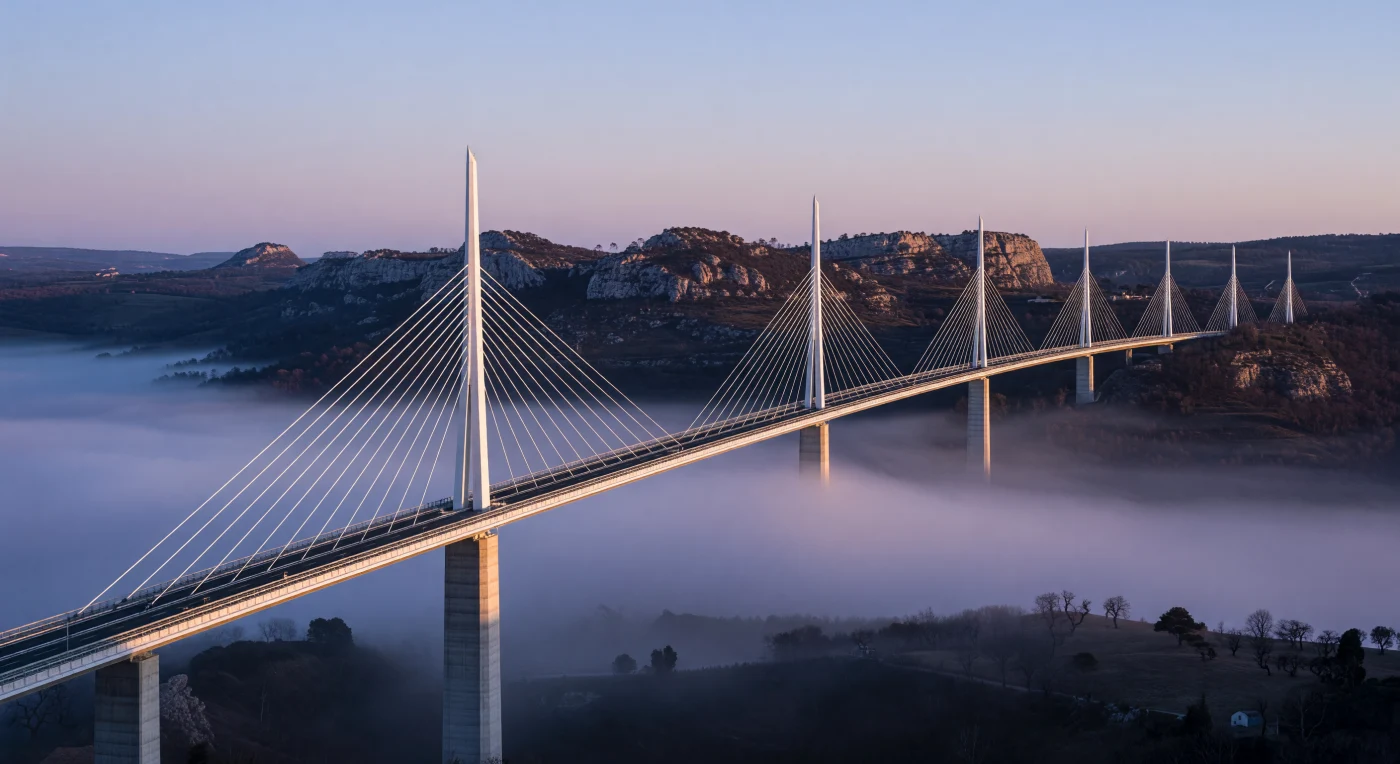
Completed in 2004, the Millau Viaduct in Southern France represents a pinnacle of Digital Age engineering, where computer-aided design allowed for the creation of the world’s tallest bridge structure. This scene captures the seven slender, cable-stayed pylons rising 343 meters above the Tarn Valley, their tapered forms and white steel finish exemplifying the era's shift toward lightweight, aerodynamic, and iconic infrastructure. The bridge’s subtle curvature and high-tensile steel components reflect a masterly integration of early 21st-century precision within the rugged, ancient landscape of the Aveyron region.
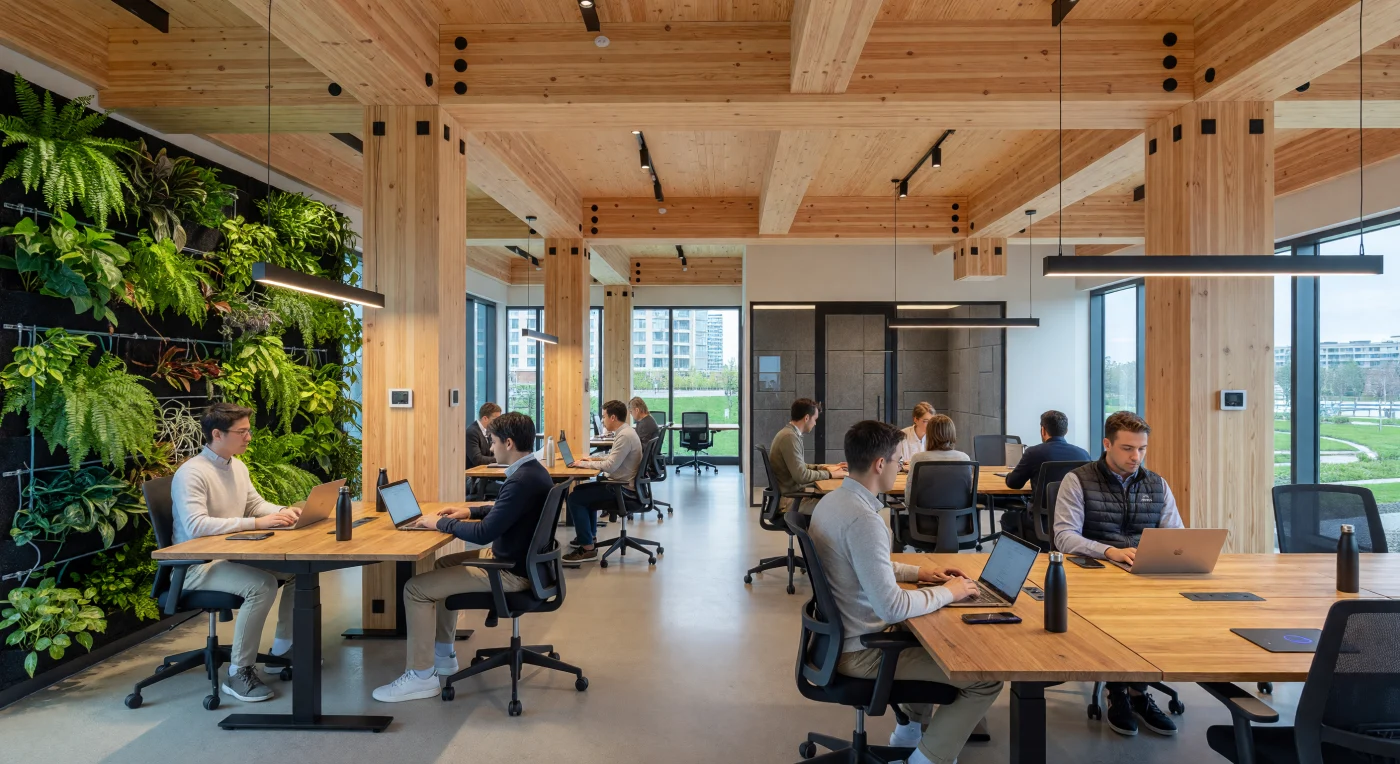
This mid-rise office interior exemplifies the early 21st-century shift toward sustainable "Mass Timber" construction, featuring exposed Cross-Laminated Timber (CLT) beams and biophilic living walls. The space reflects the period’s emphasis on environmental wellness and technology, integrating high-efficiency air filtration, circadian LED lighting, and "smart" IoT sensors. Outside, the "Sponge City" urban landscape highlights a global movement toward climate-resilient infrastructure and pedestrian-centric design. Occupants are depicted in the era’s signature "business casual" attire, utilizing the portable digital devices and minimalist, height-adjustable workstations that defined the agile workspace of the 2020s.