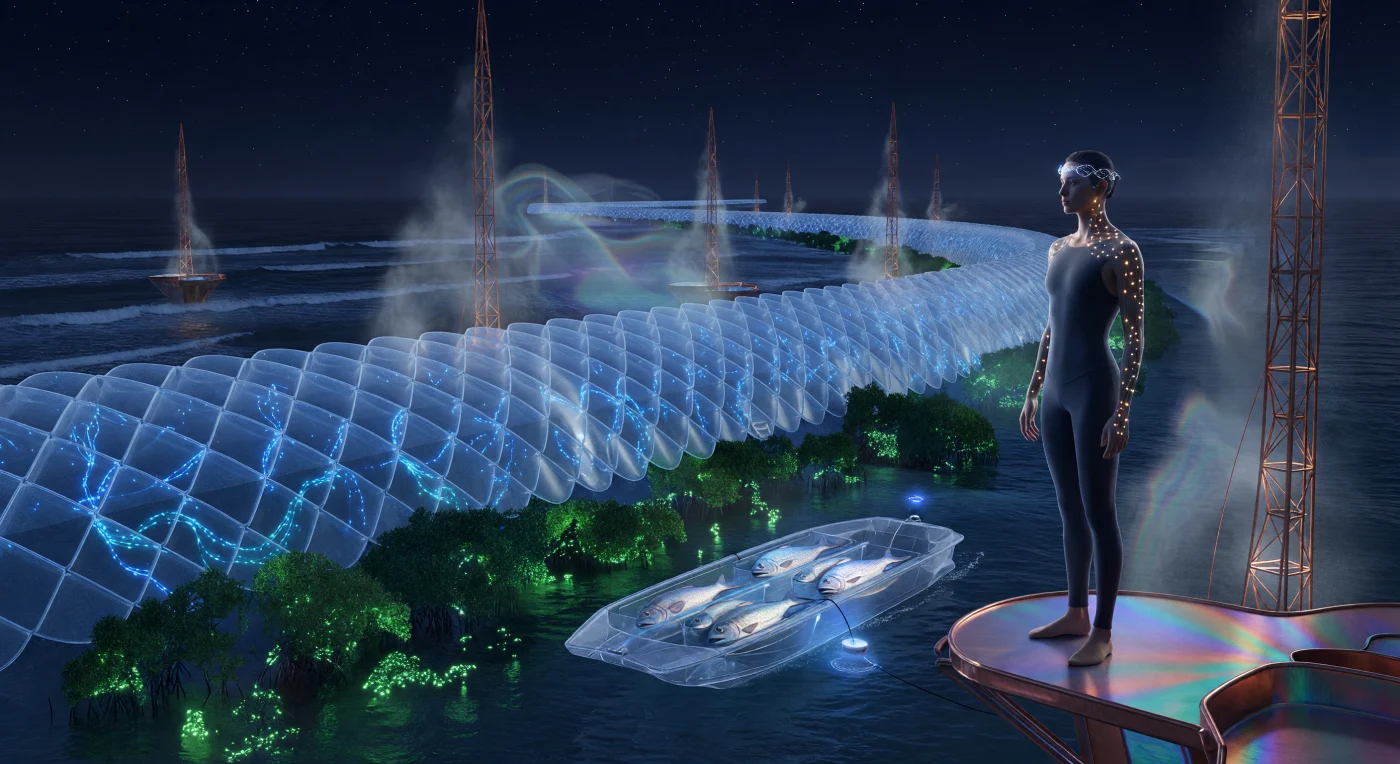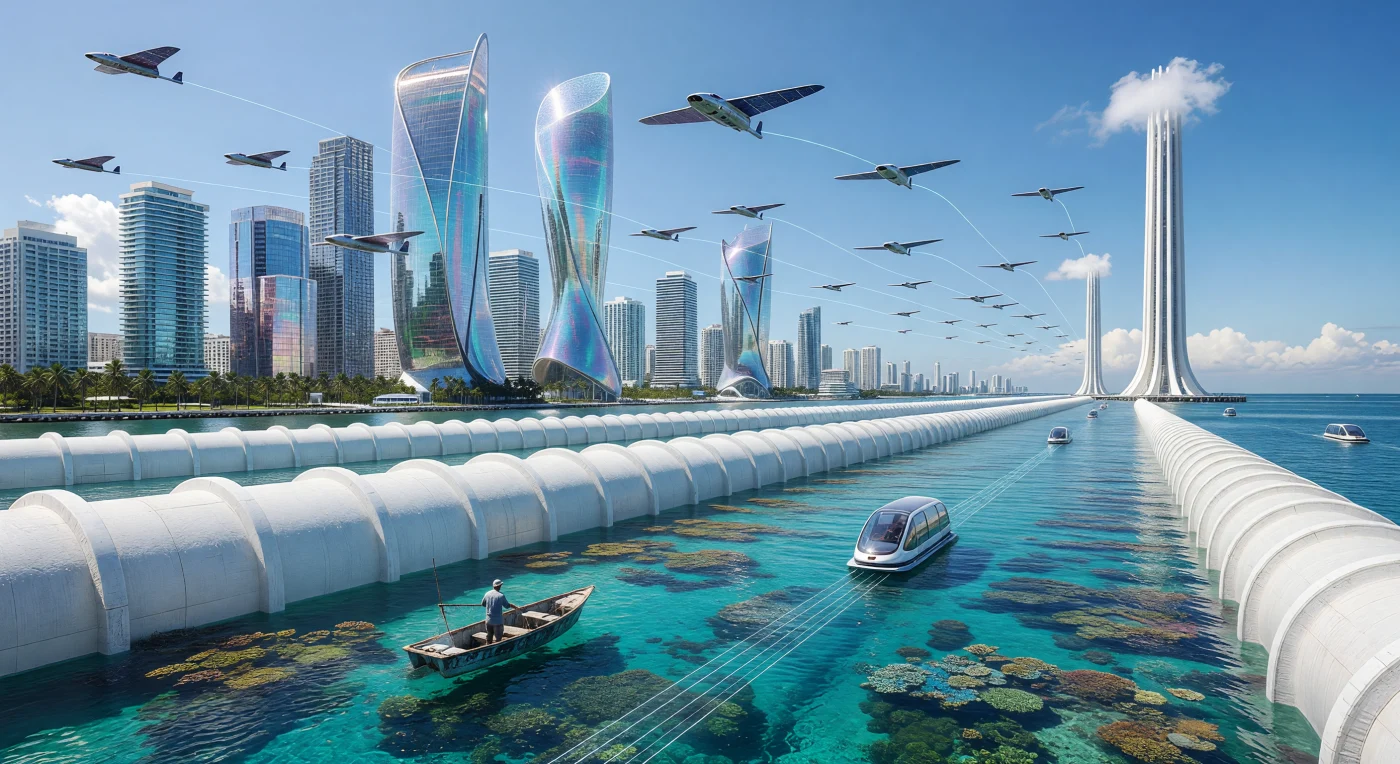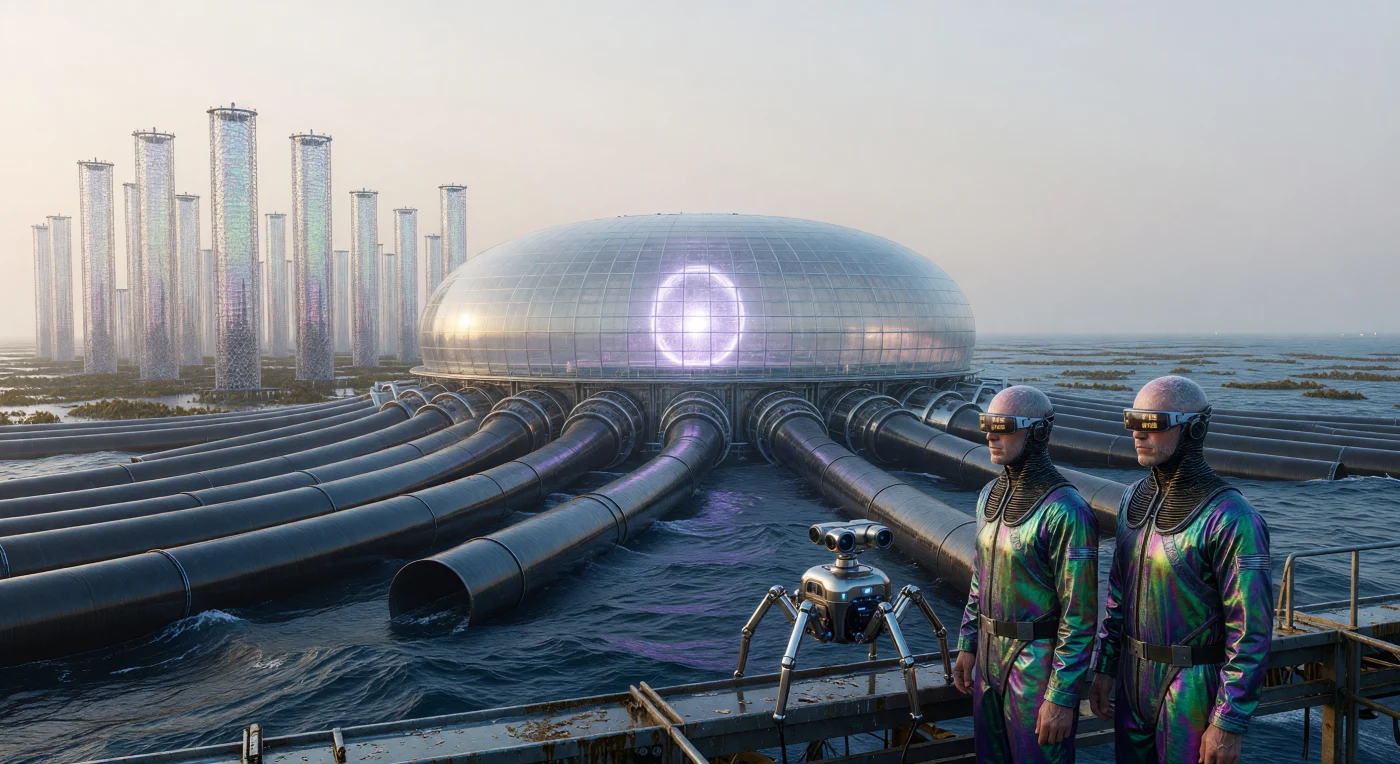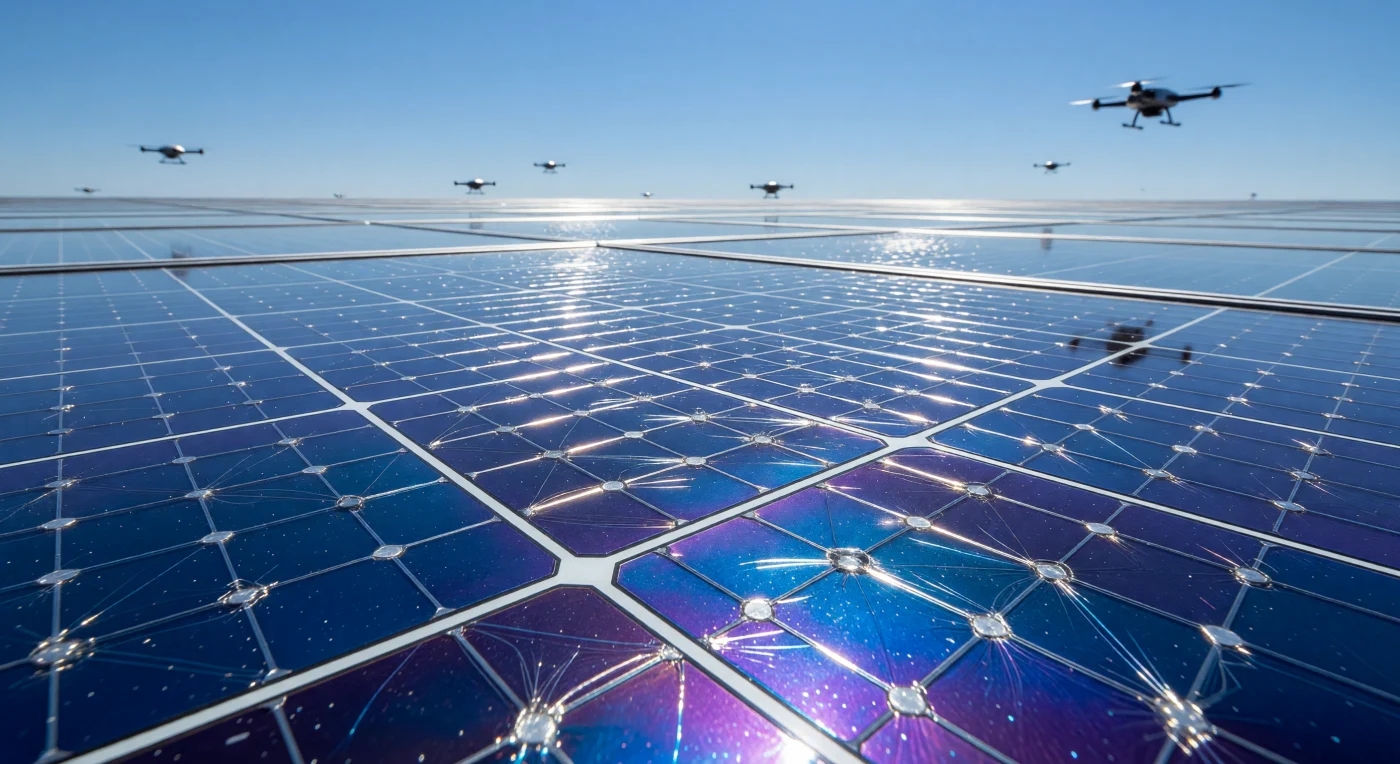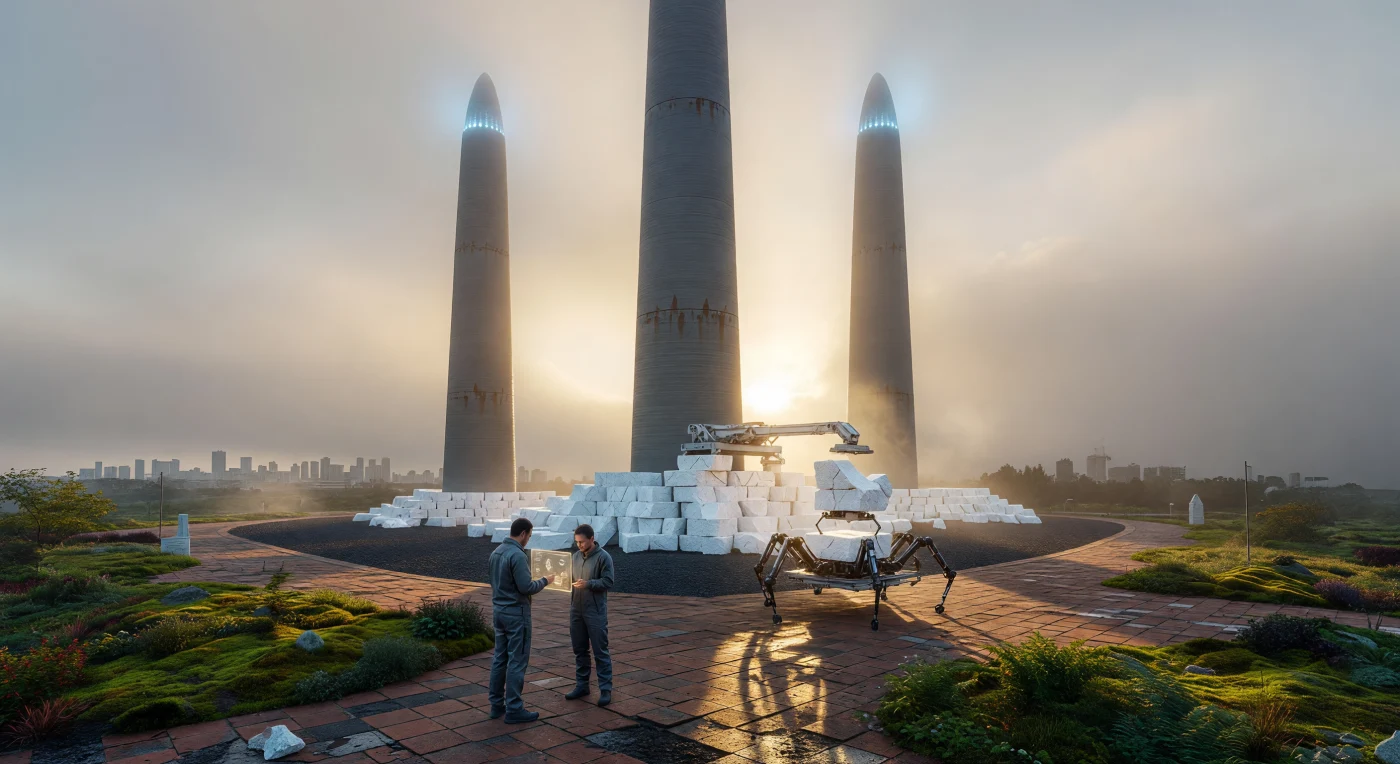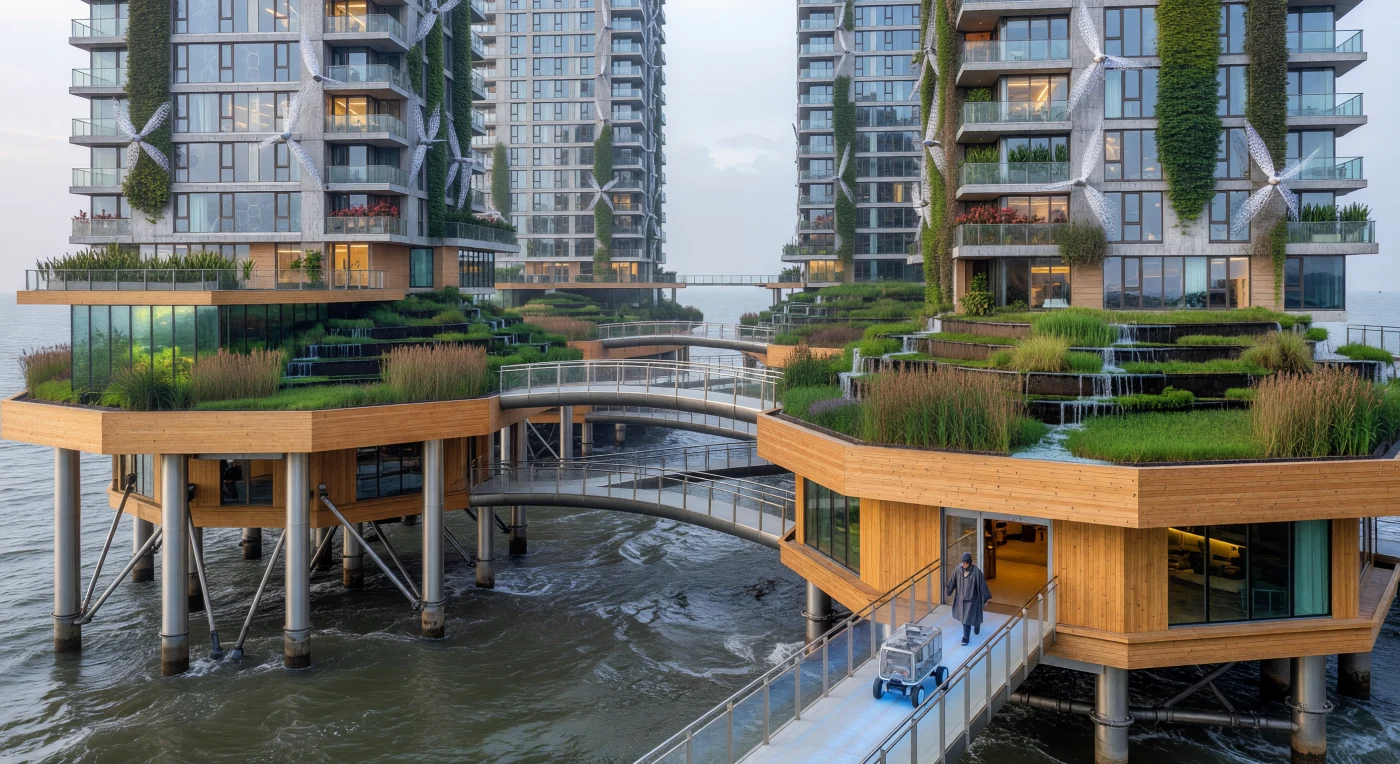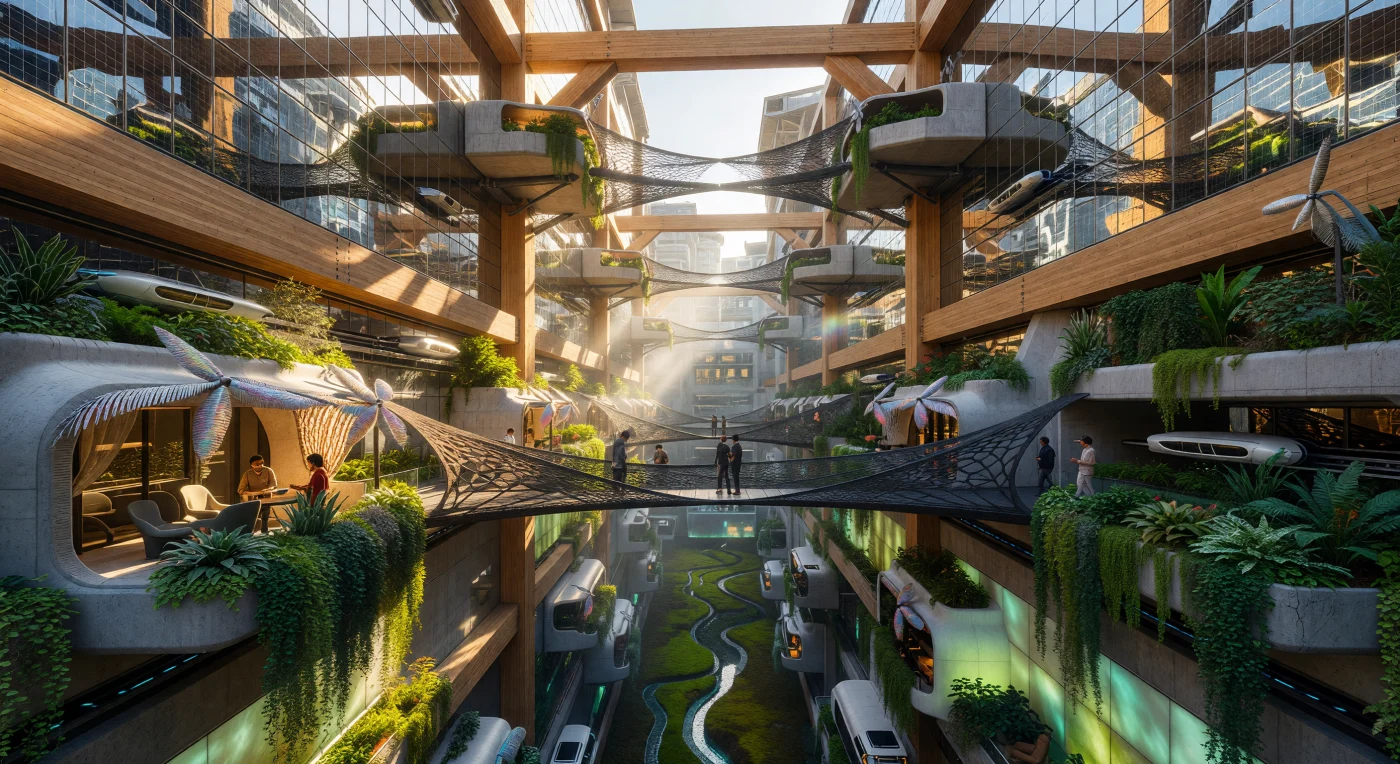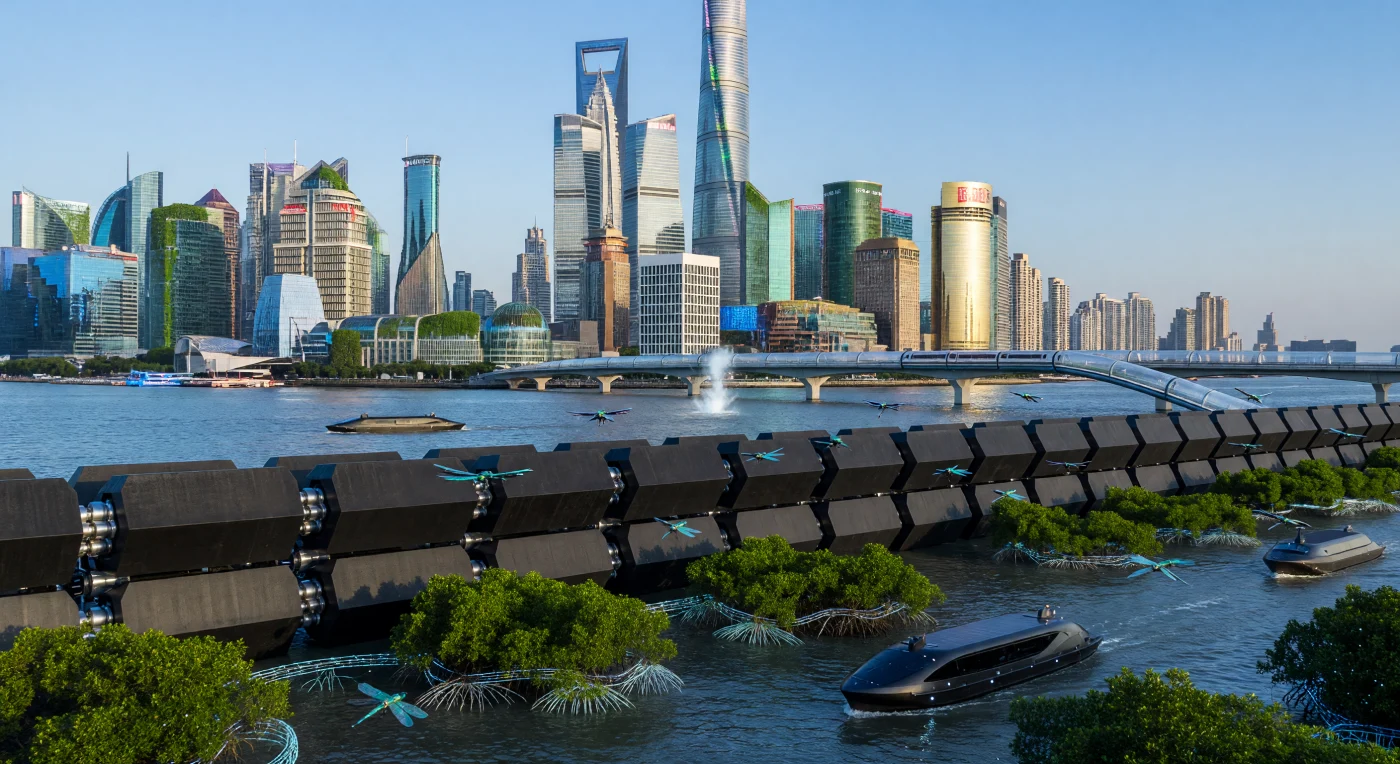
In the mid-21st century era known as The Threshold, the Shanghai coastline exemplifies the radical integration of synthetic biology and advanced materials used to mitigate the impacts of climate change. The Great Bund Kinetic Sea Wall, constructed from graphene-reinforced concrete, works in tandem with genetically engineered "Sponge City" mangroves to protect the Pudong district from rising tides while simultaneously harvesting tidal energy. This 2048 vista showcases a carbon-negative metropolis where skyscrapers are encased in perovskite solar skins and CO2-sequestering ivy, marking a transition toward a fully integrated bio-technological urban ecosystem.
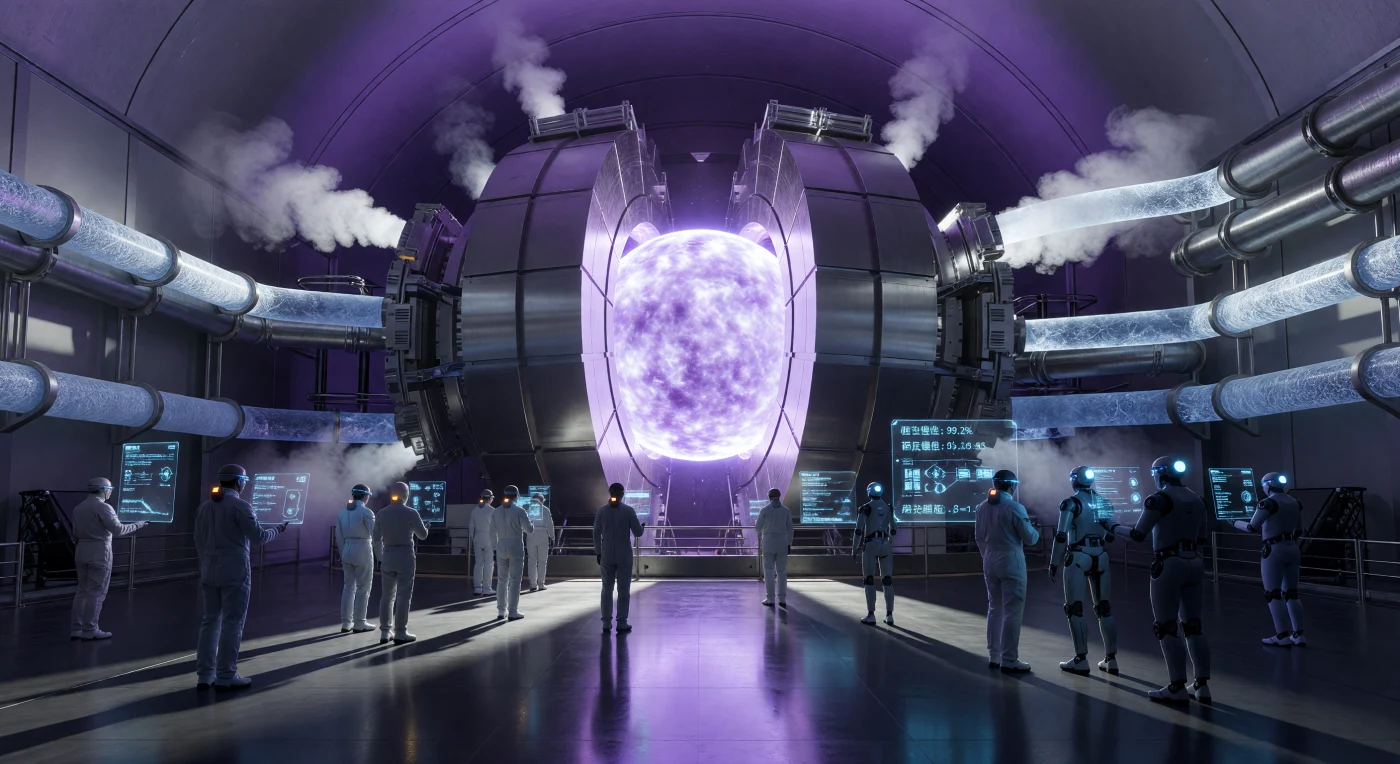
Set in the year 2042 during the pivotal era known as The Threshold, this scene captures the interior of the Hefei Fusion Core, a cornerstone of East Asian energy hegemony. A diverse team of neural-linked technicians and carbon-fiber Synths monitor the blinding violet-white plasma torus within the monumental Chinese Fusion Engineering Test Reactor (CFETR). Utilizing niobium-tin superconducting magnets and liquid-helium cooling, this facility exemplifies the transition to a Kardashev-scale civilization powered by sustainable, controlled stellar fusion.
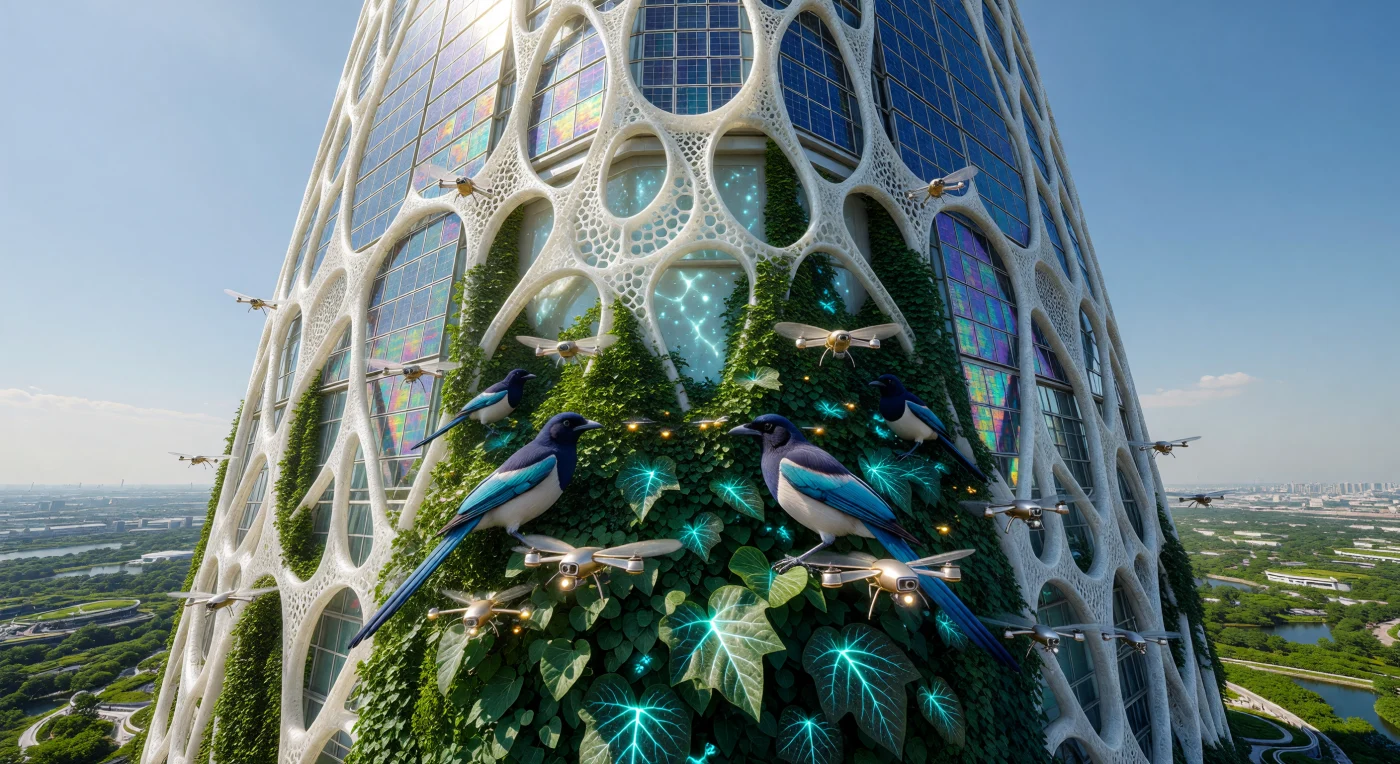
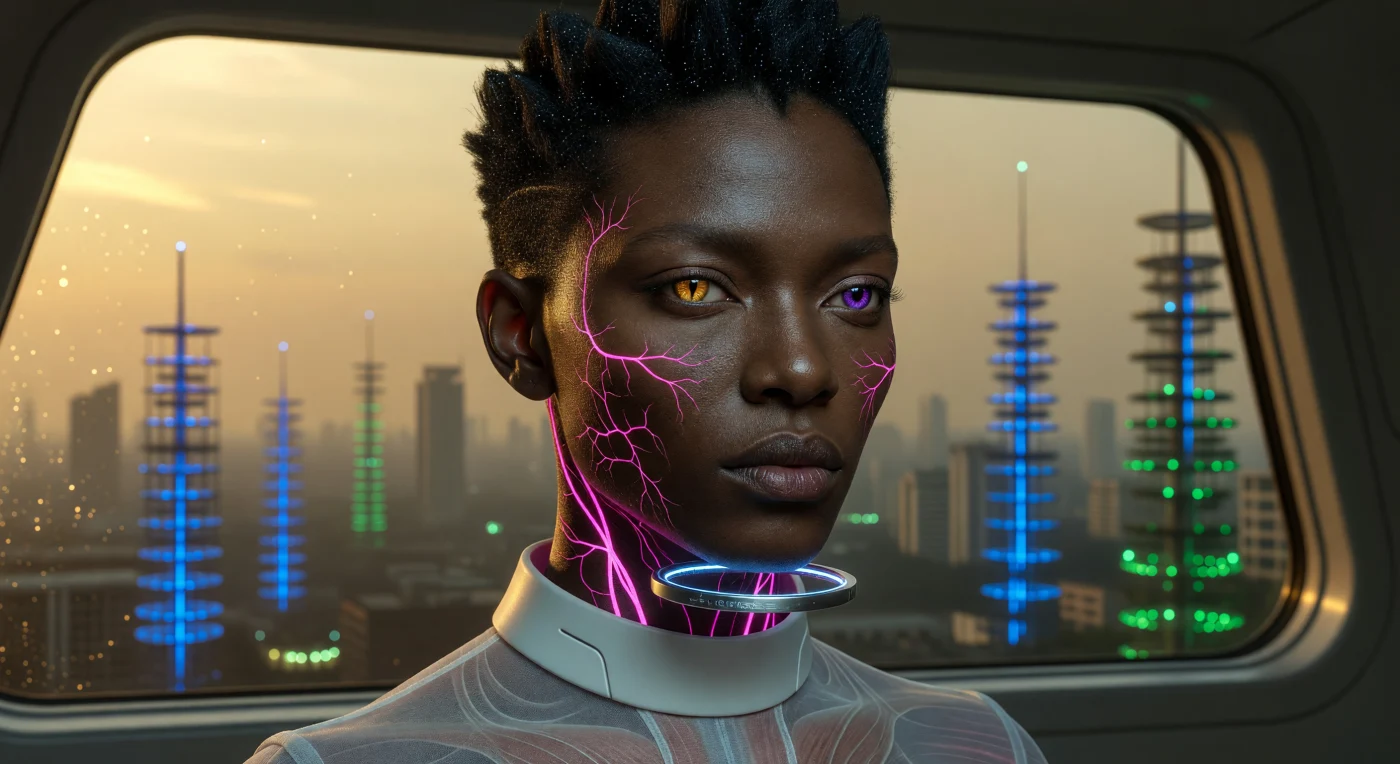
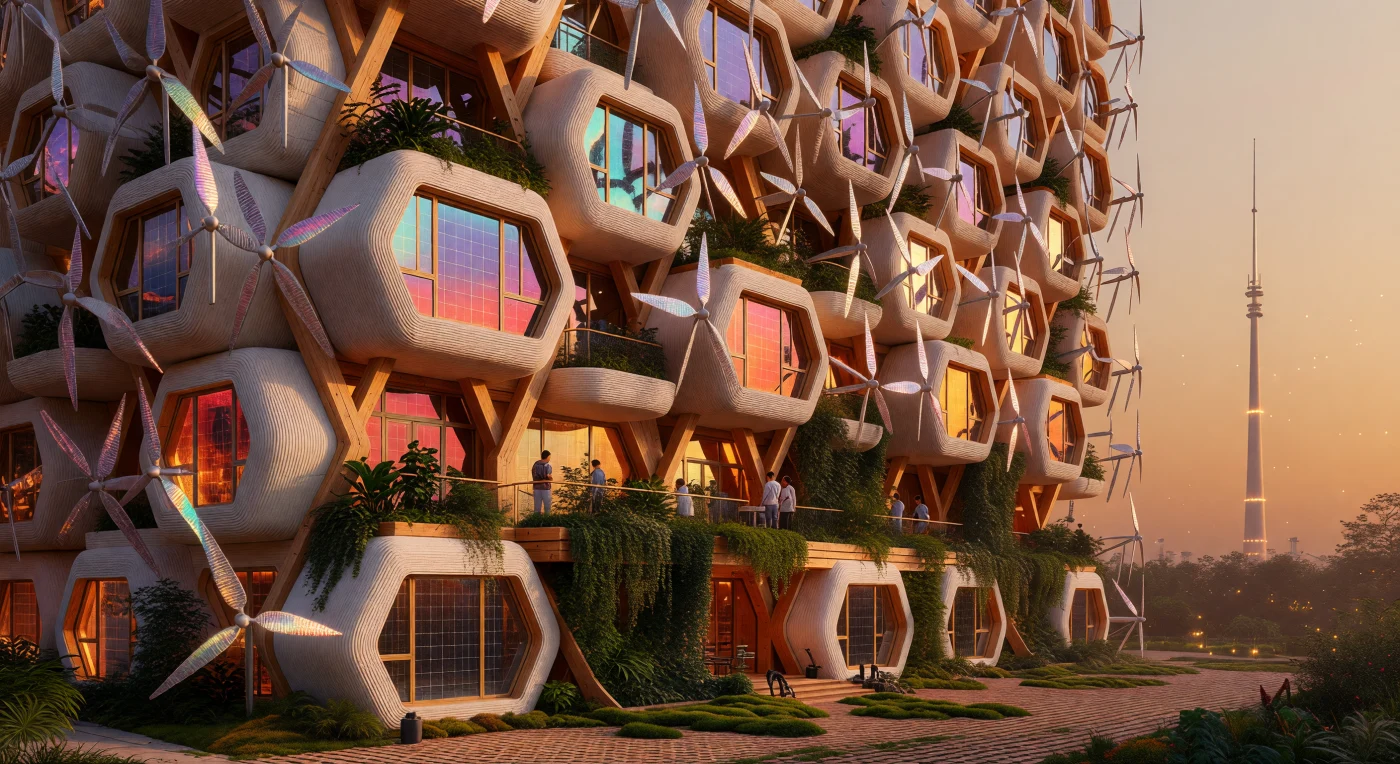
This view of mid-21st century Seoul illustrates the "Threshold" era (c. 2025–2050), where architectural structures transitioned into functional biological habitats through osteomorphic engineering. Genetically modified *Hedera helix-alpha* ivy, featuring bioluminescent veins designed for enhanced carbon sequestration, scales a bone-like polymer lattice alongside native Azure-winged magpies (*Cyanopica cyanus*). This vertical ecosystem represents the pinnacle of the East Asian fusion-powered age, where synthetic drones and organic life-forms co-exist within a climate-controlled urban biosphere.
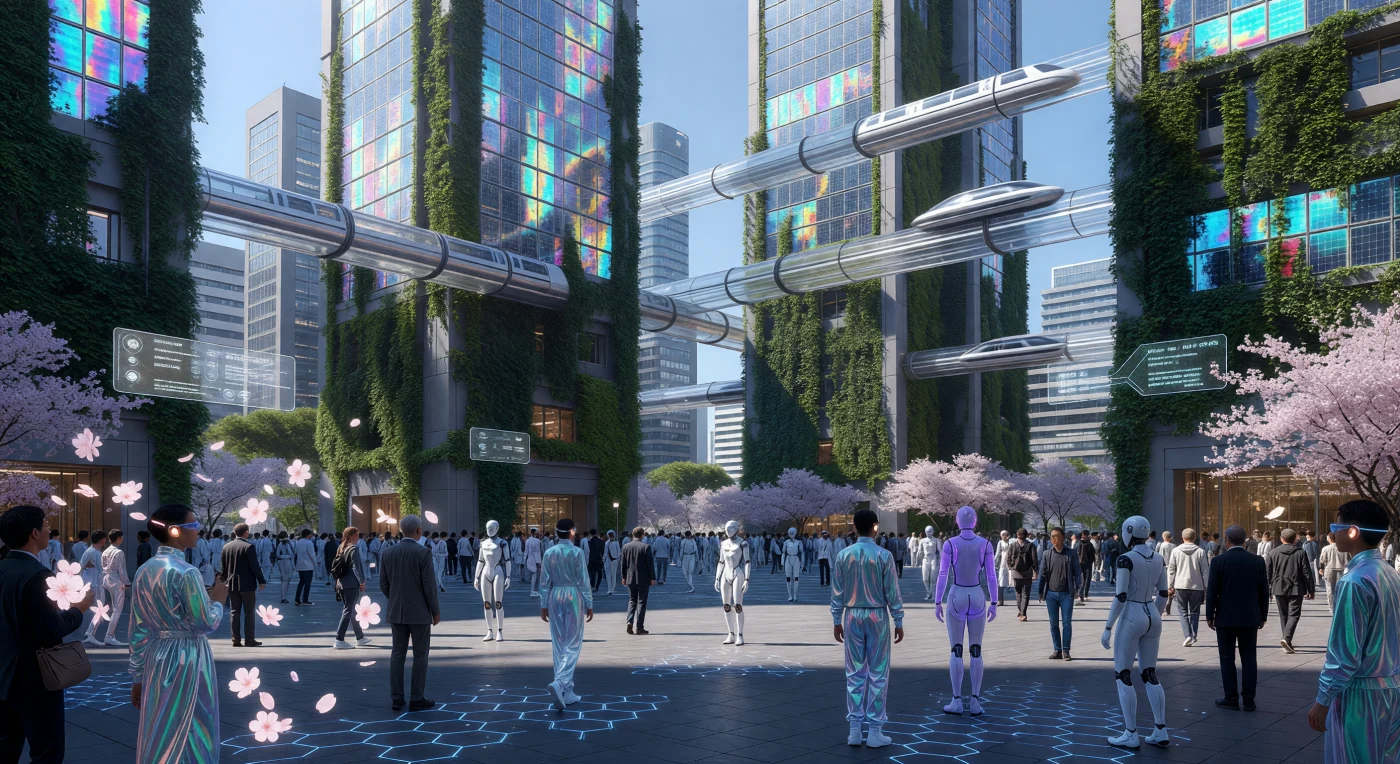
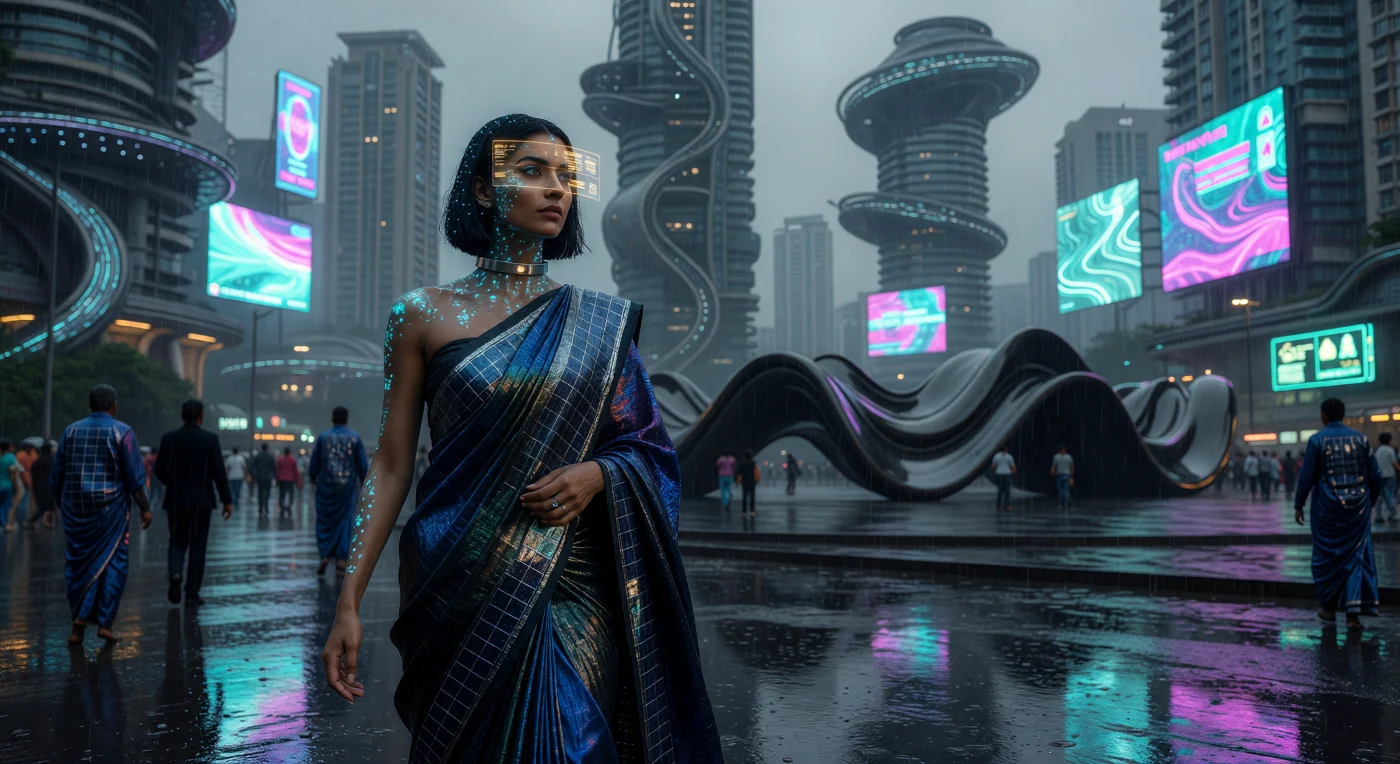
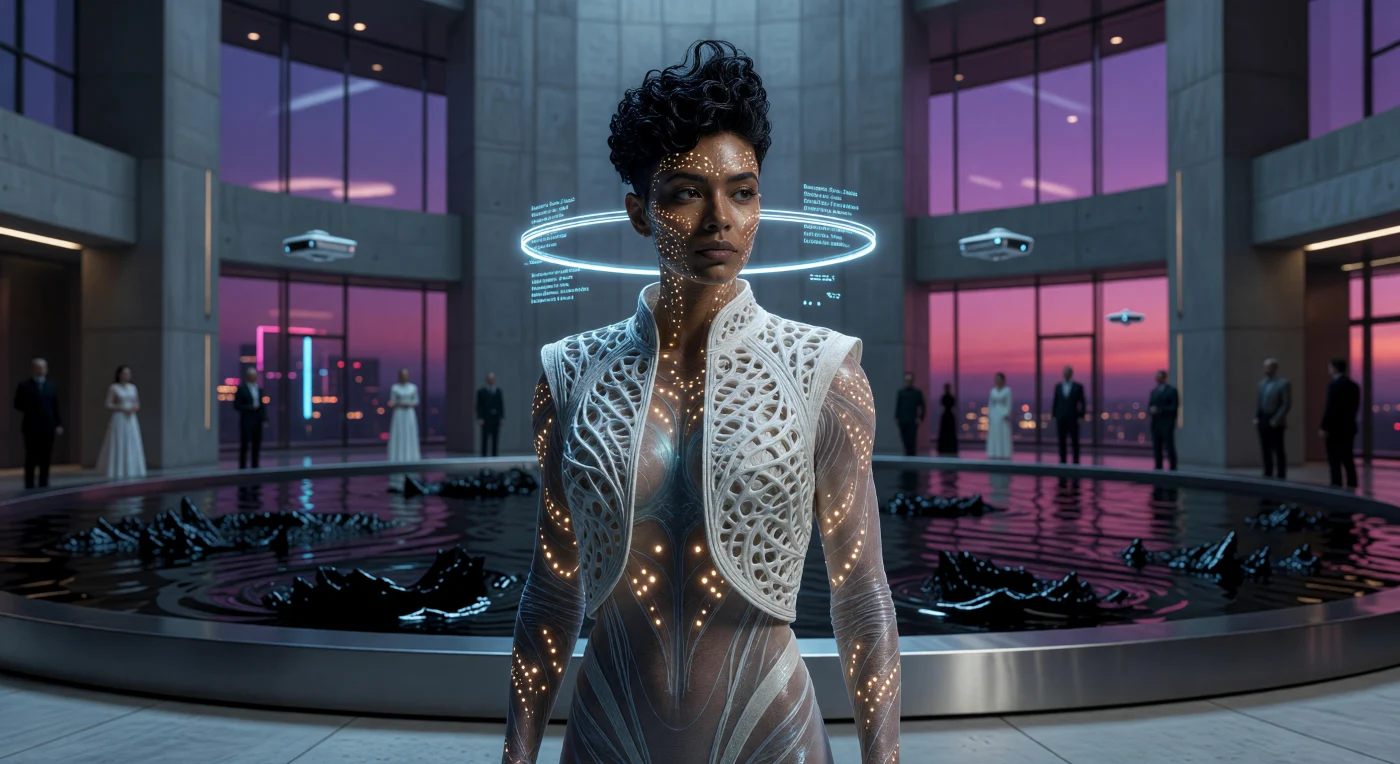
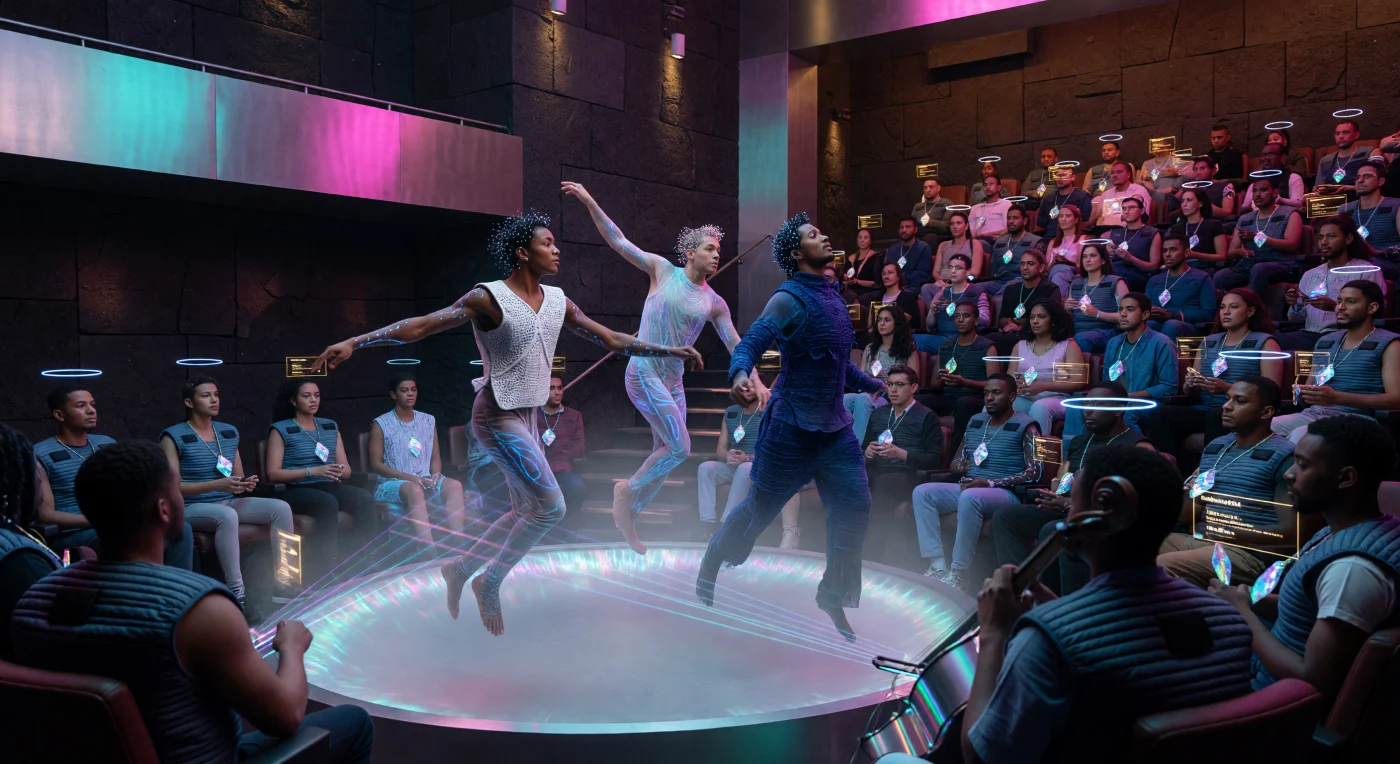
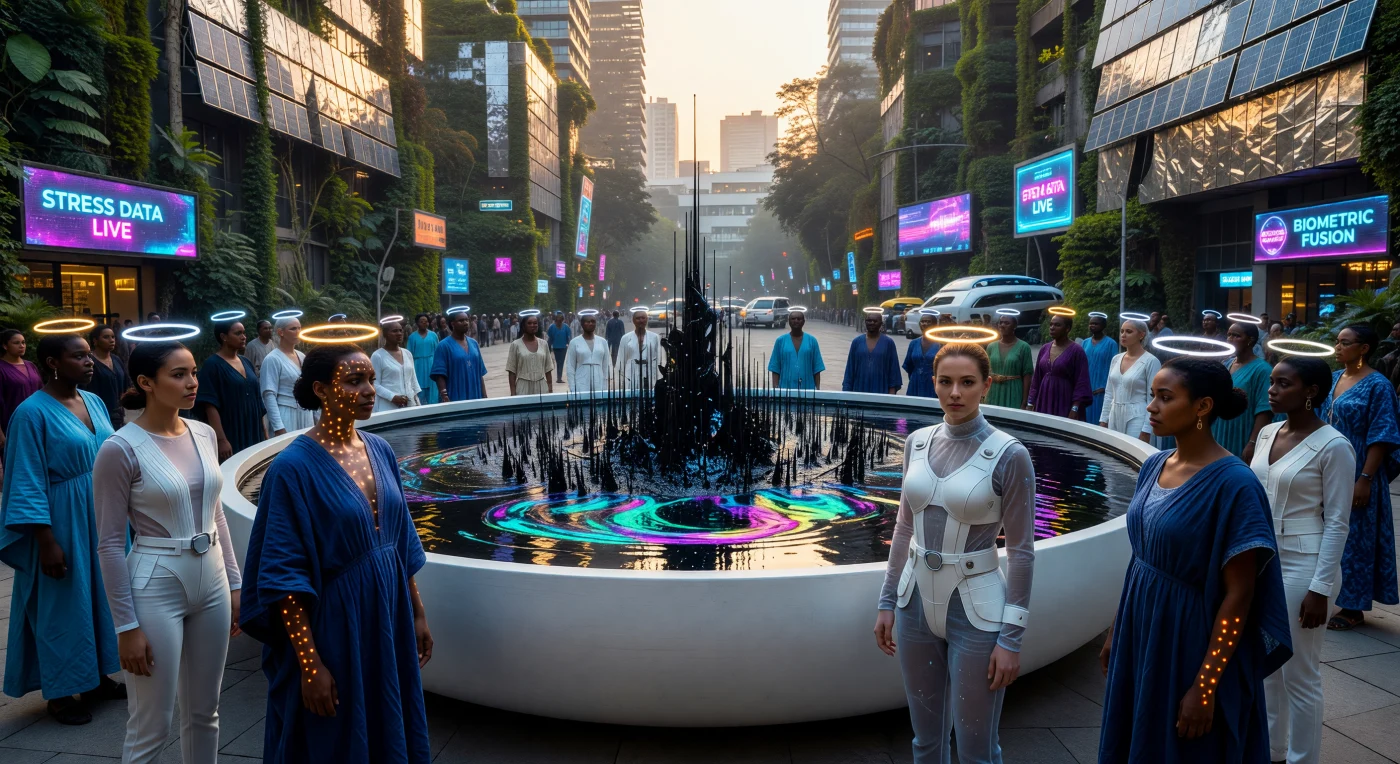
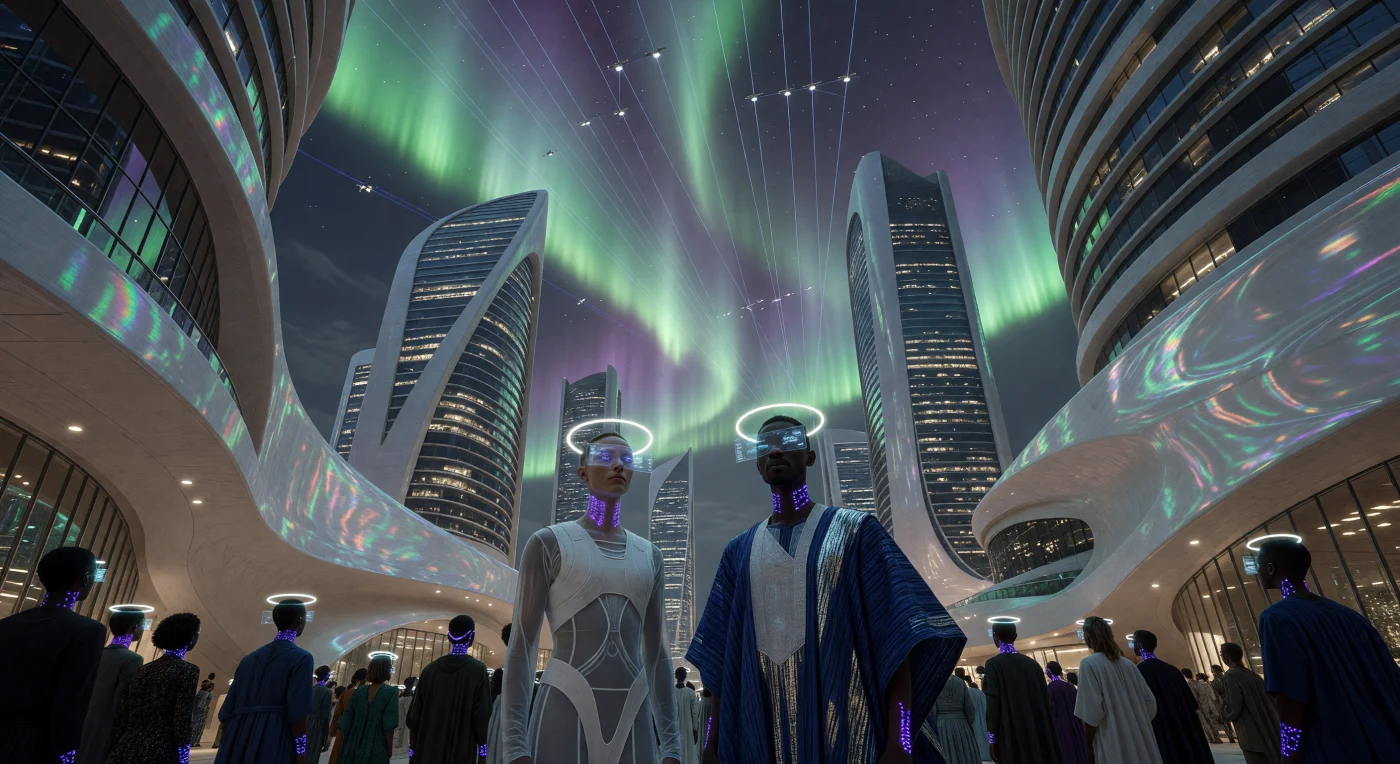
In this mid-21st-century vista of the "Threshold" era (c. 2045), augmented humans and humanoid Synths navigate a Shinjuku plaza defined by matte-grey carbon-fiber architecture and hyper-efficient "Sponge City" ivy. The scene illustrates the peak of the Pan-Asian Fusion Hegemony, where urban surfaces are coated in perovskite-silicone solar cells and the physical world is perpetually overlaid with holographic data-streams. This period represents a critical evolutionary transition, as biological consciousness began its definitive merge with synthetic systems and global climate-stabilization technologies.

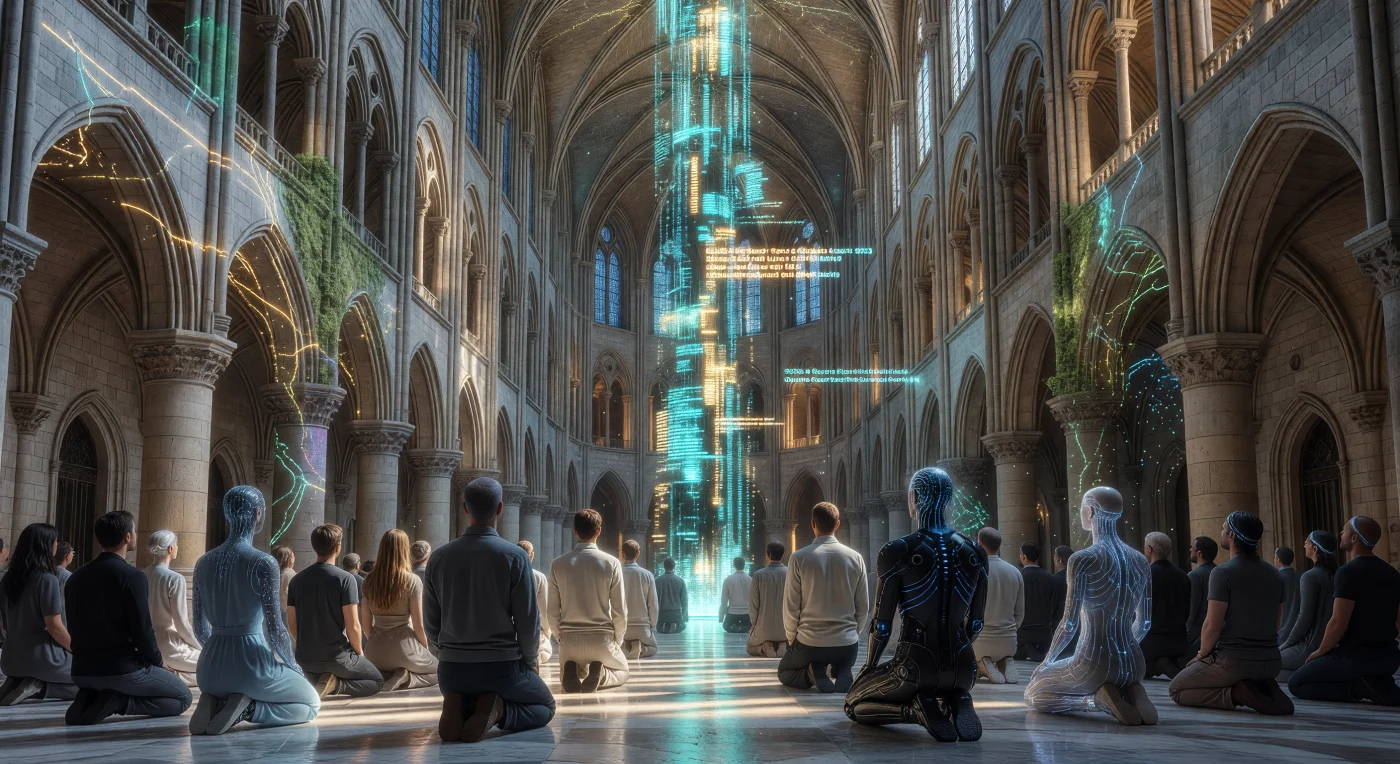
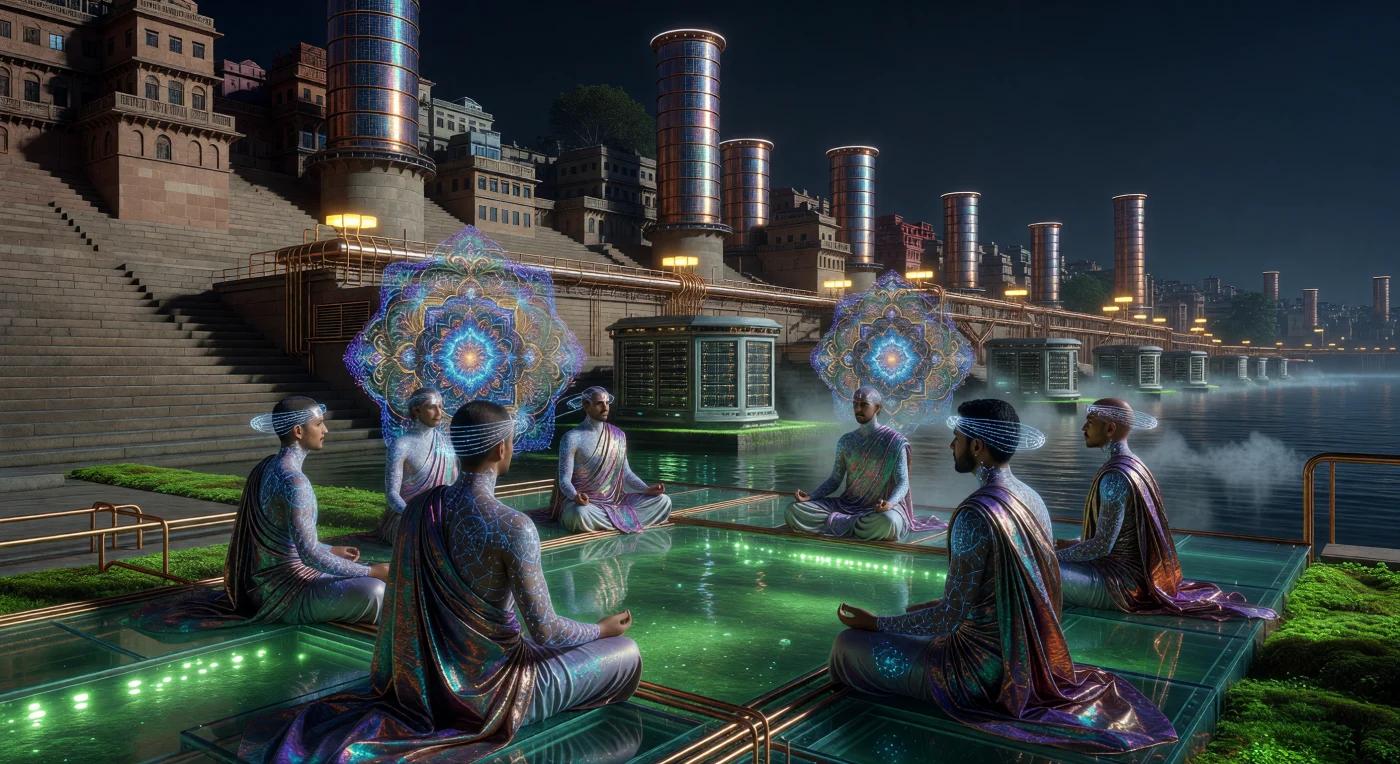
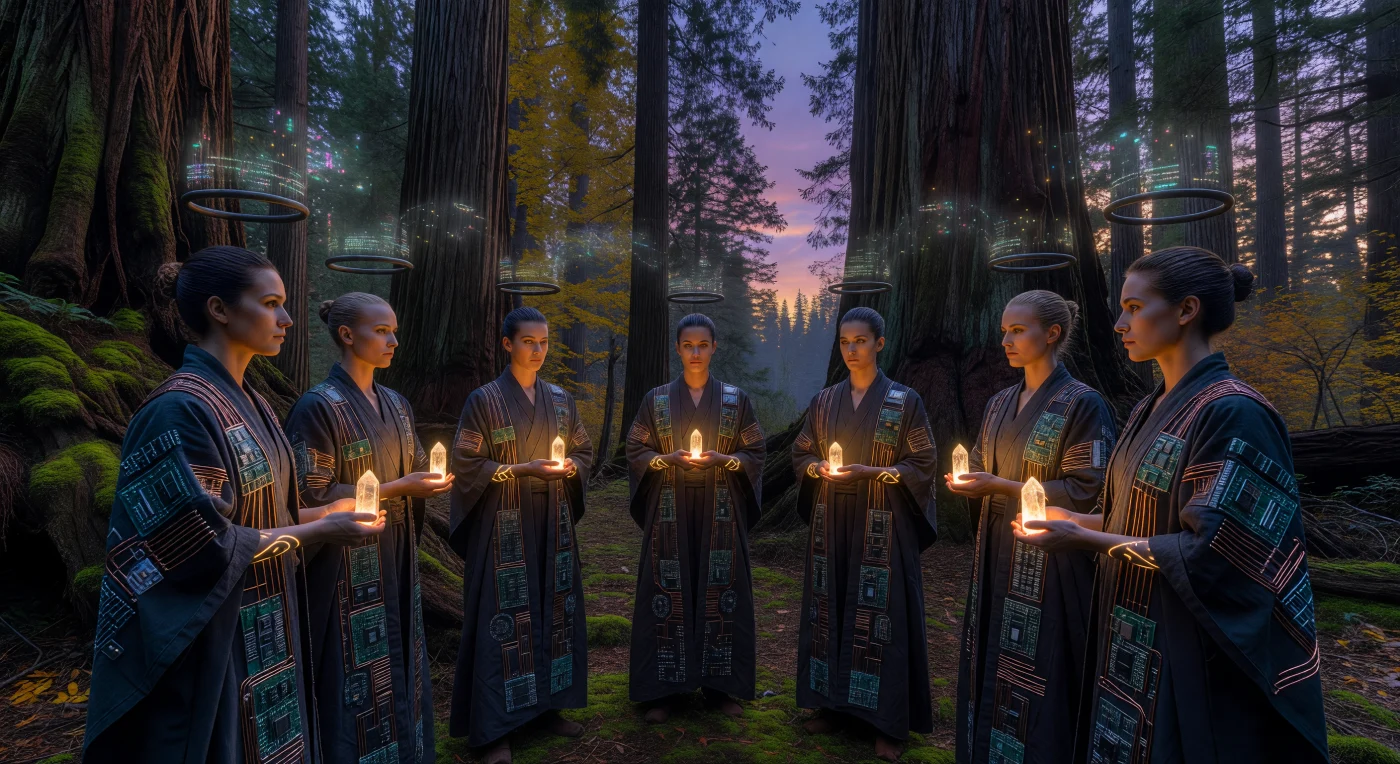
Set in the mid-21st-century "Threshold" period (c. 2050 CE), this scene depicts a Data-Sangha ritual within a 14th-century Kyoto Zen temple preserved by a molecular nanotech stasis field. Buddhist monks, equipped with Type-IV Neural Interfaces and smart contact lenses, sit upon graphene-based induction mats to generate a collective "Cognitive Mandala" via quantum-optical projection. This tableau illustrates the era's peak integration of biological consciousness and synthetic intelligence, occurring as East Asia achieved energy autonomy through the Pan-Asian Fusion Grid.
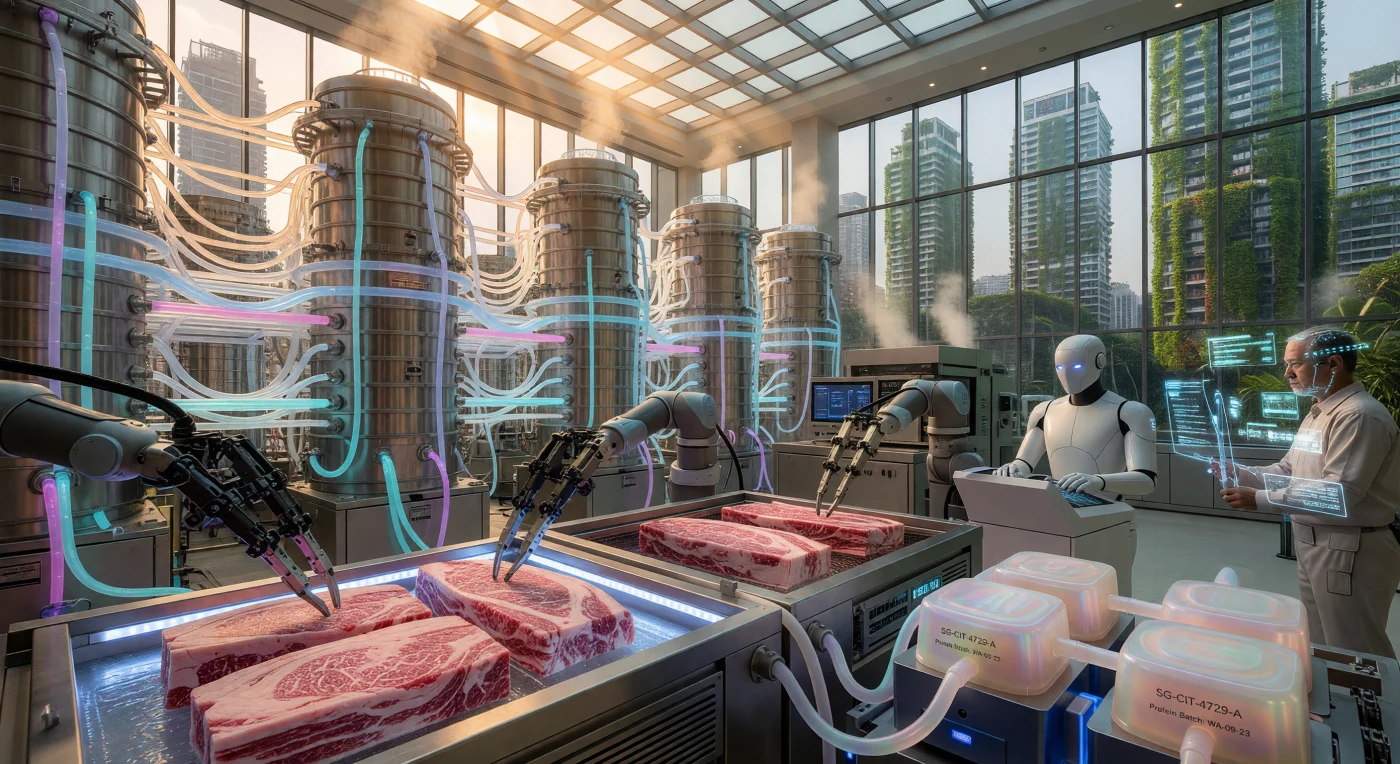
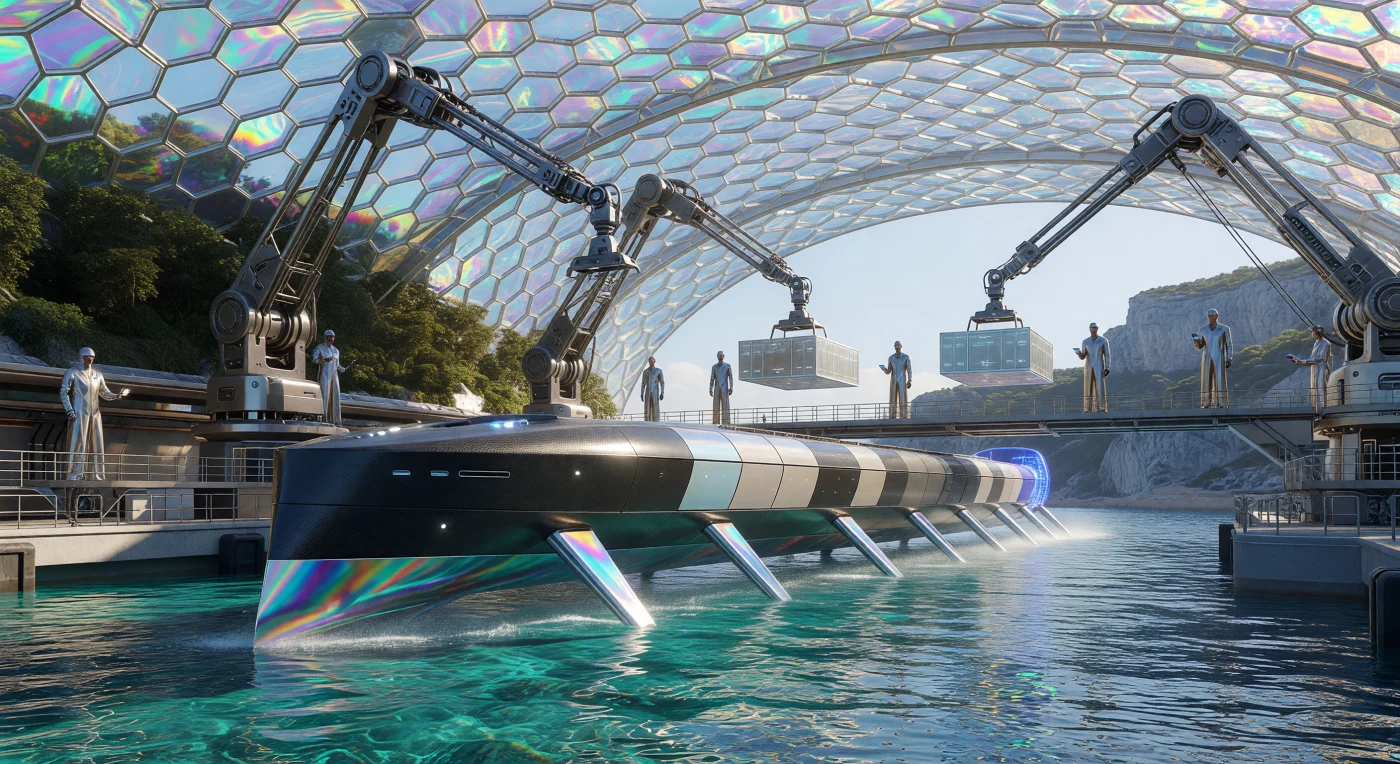
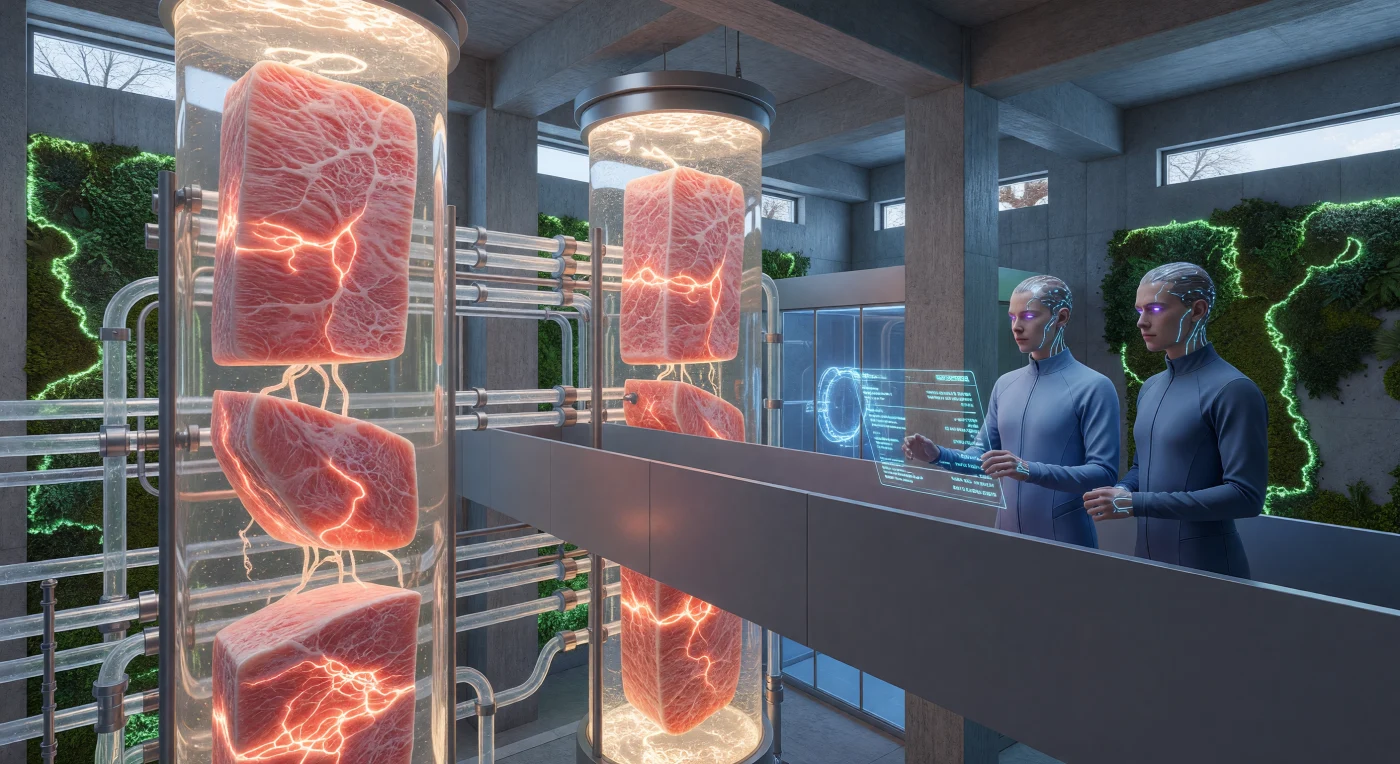
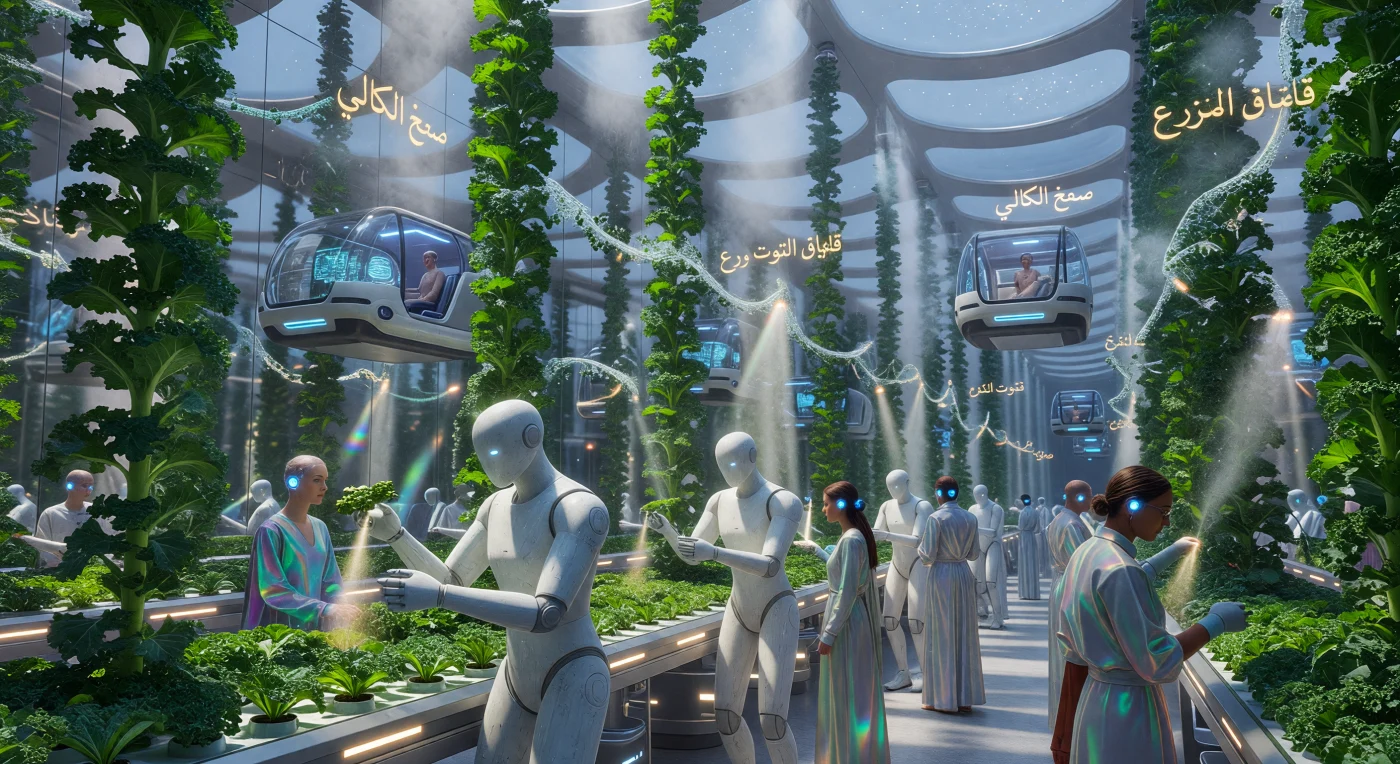
Set in a Singaporean "Green Tower" during The Threshold (c. 2025–2050), this scene illustrates the pinnacle of mid-21st-century cellular agriculture as a solution to global food security. Automated robotic systems harvest cultured wagyu protein slabs within a cathedral-like facility powered by fusion energy and perovskite solar glass, where human technicians with Type-IV neural interfaces work alongside synthetic residents. This transition to precision fermentation and lab-grown tissue reflects the era's shift toward a molecular-based food system, essential for sustaining the dense, technologically integrated populations of East Asia.

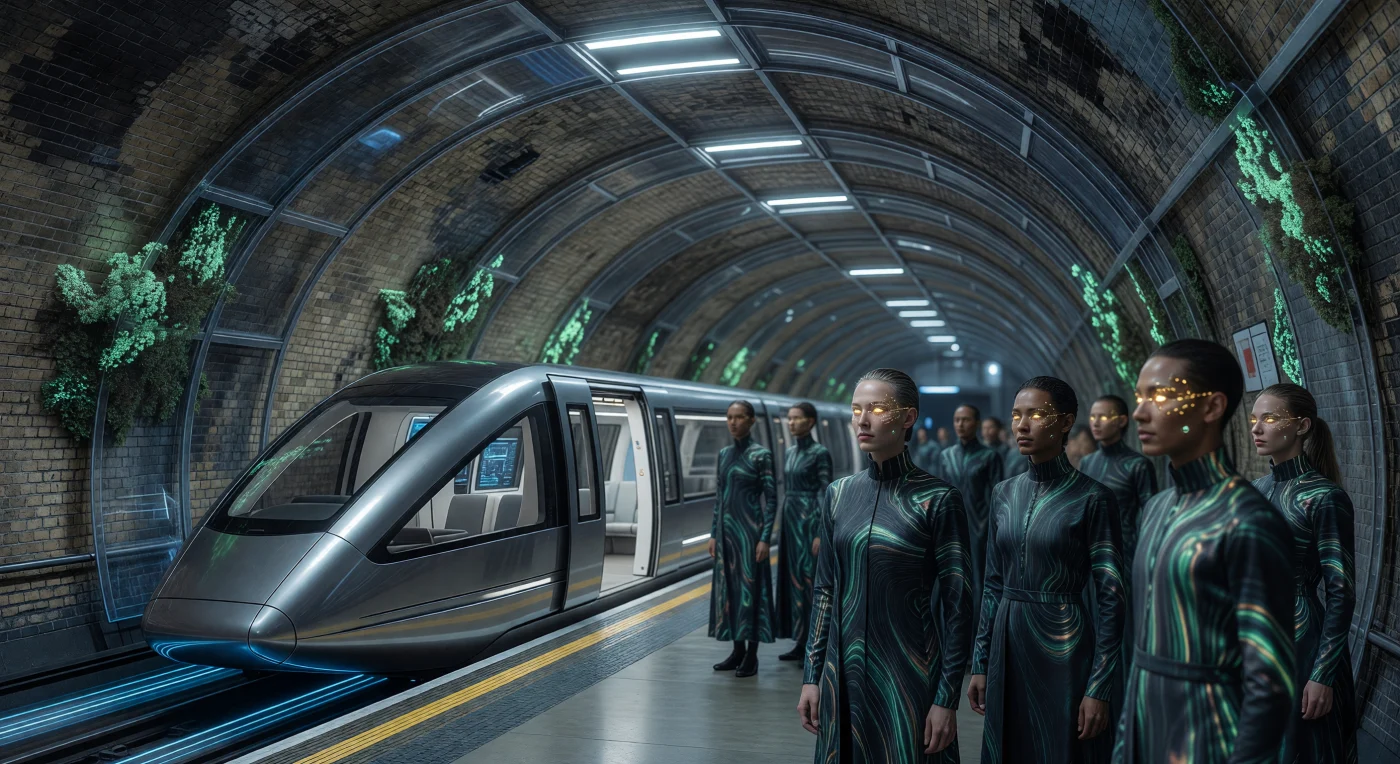
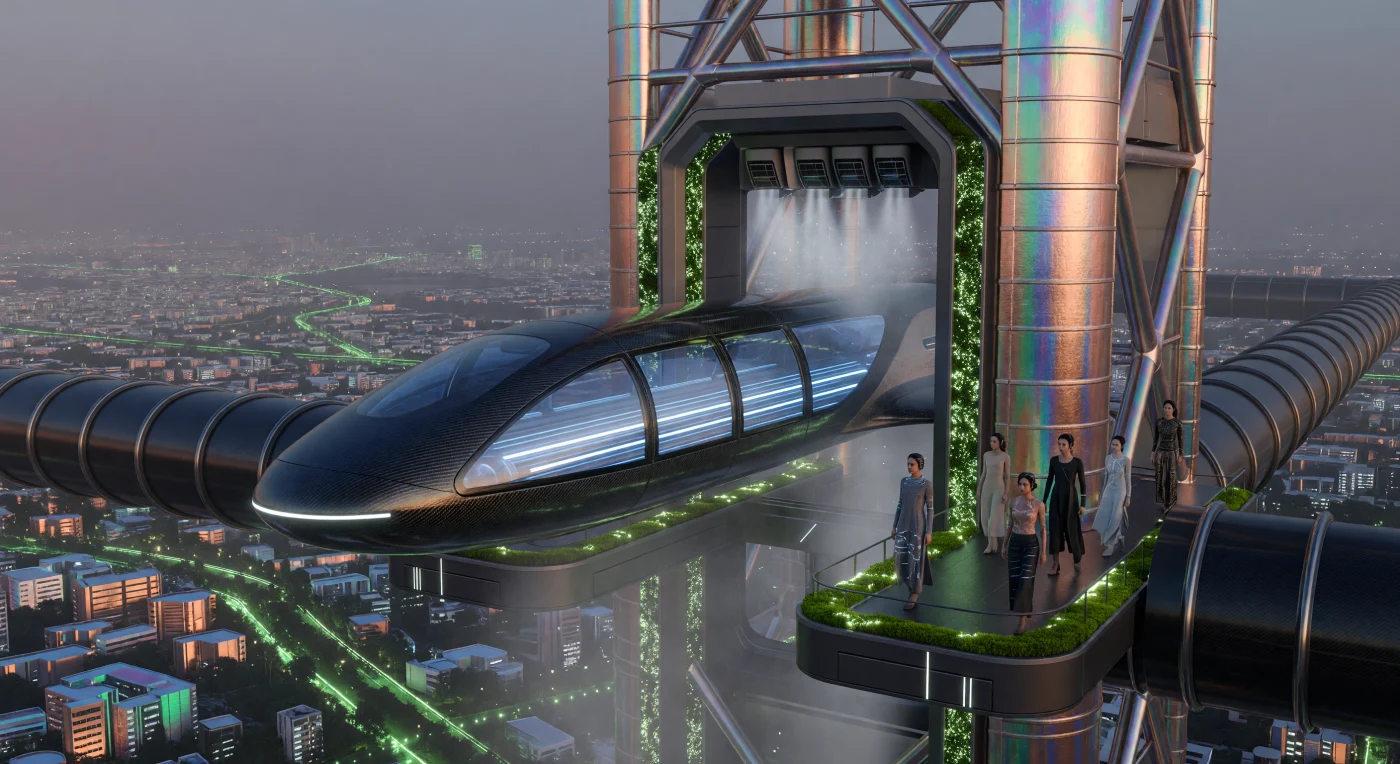
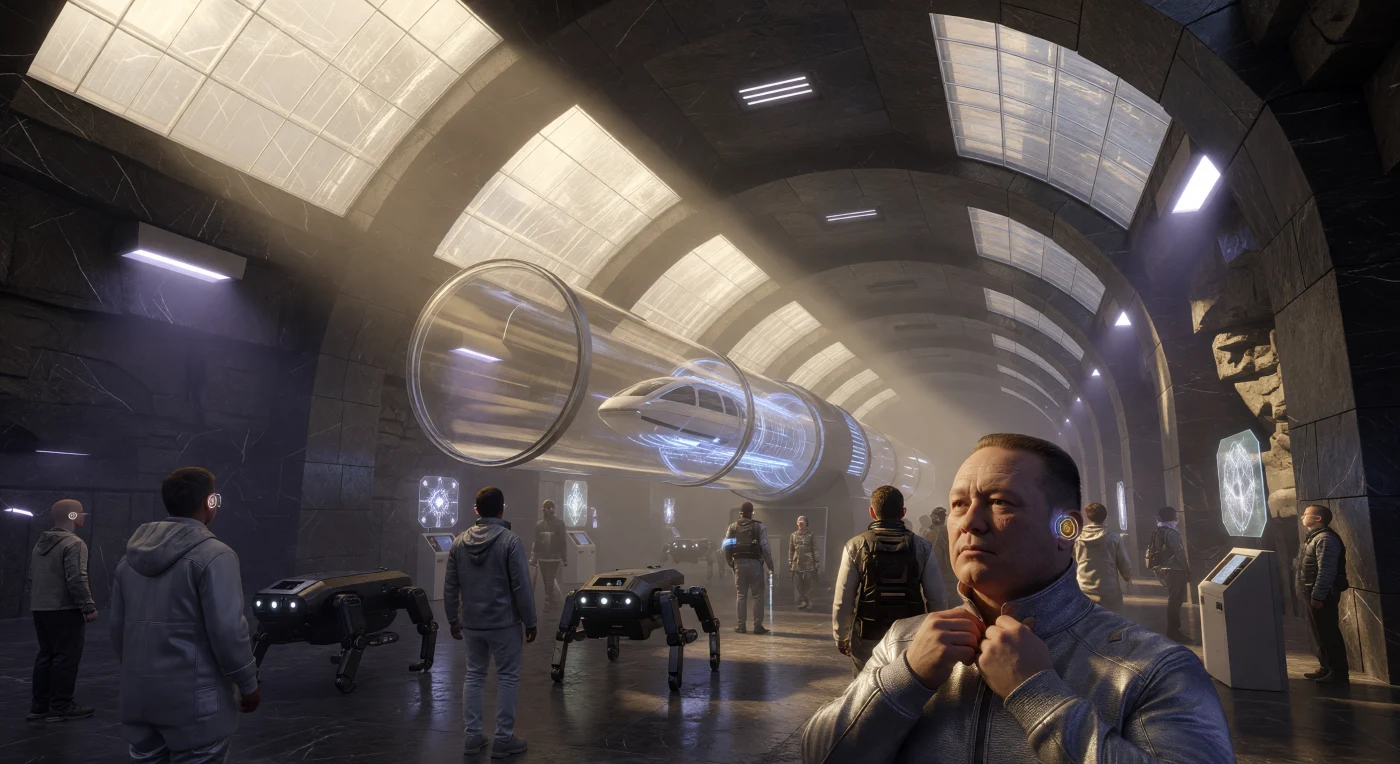
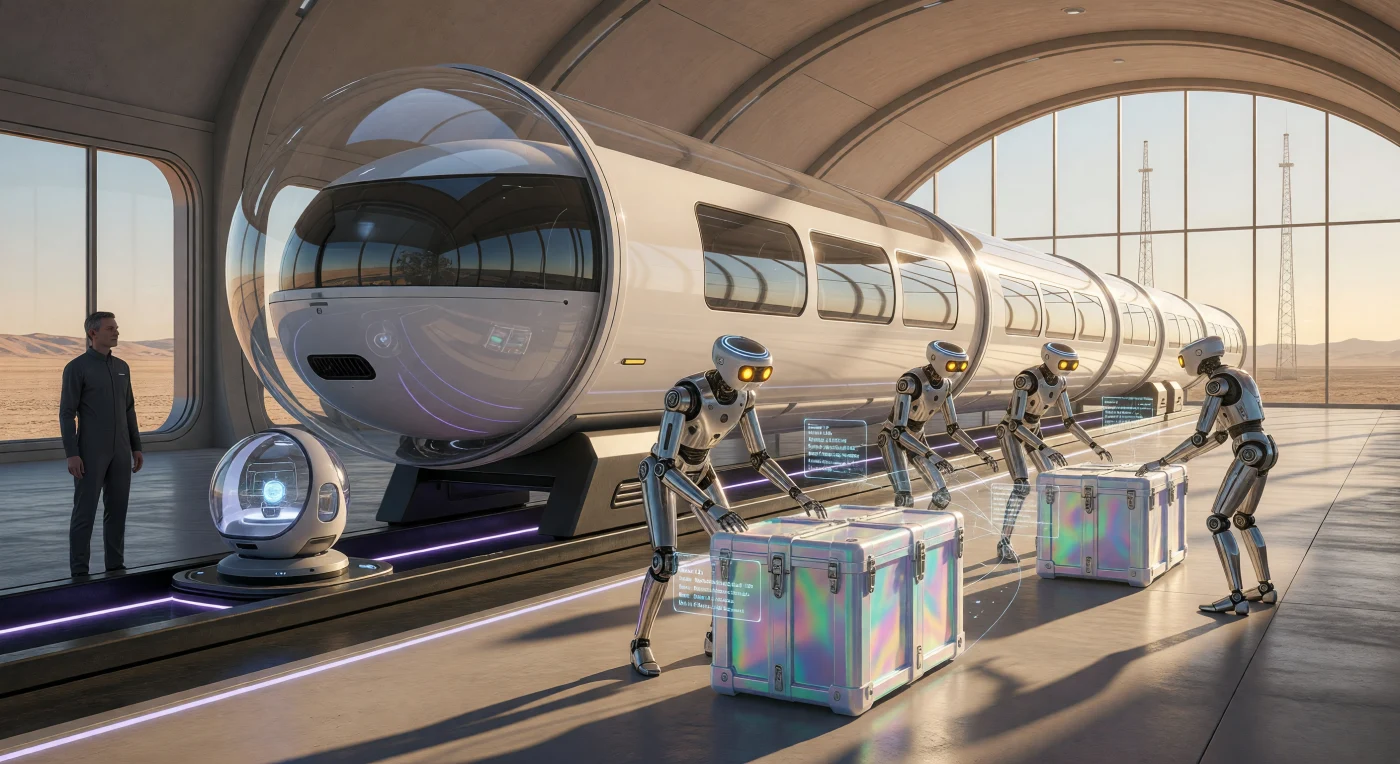
Set in 2048 during the era known as The Threshold, this scene illustrates the Suwon Vactrain Hub in South Korea, a pinnacle of mid-21st-century transit and energy integration. A needle-shaped maglev sled exits a vacuum-sealed polymer tube, its navigation managed by a Montreal-designed MILA-2 quantum core while the surrounding "Sponge City" architecture utilizes genetically modified ivy and perovskite-silicone solar skins for maximum ecological efficiency. The presence of neural-linked citizens and synthetic residents highlights the deep cognitive and biological integration that characterizes this transformative period of East Asian history.

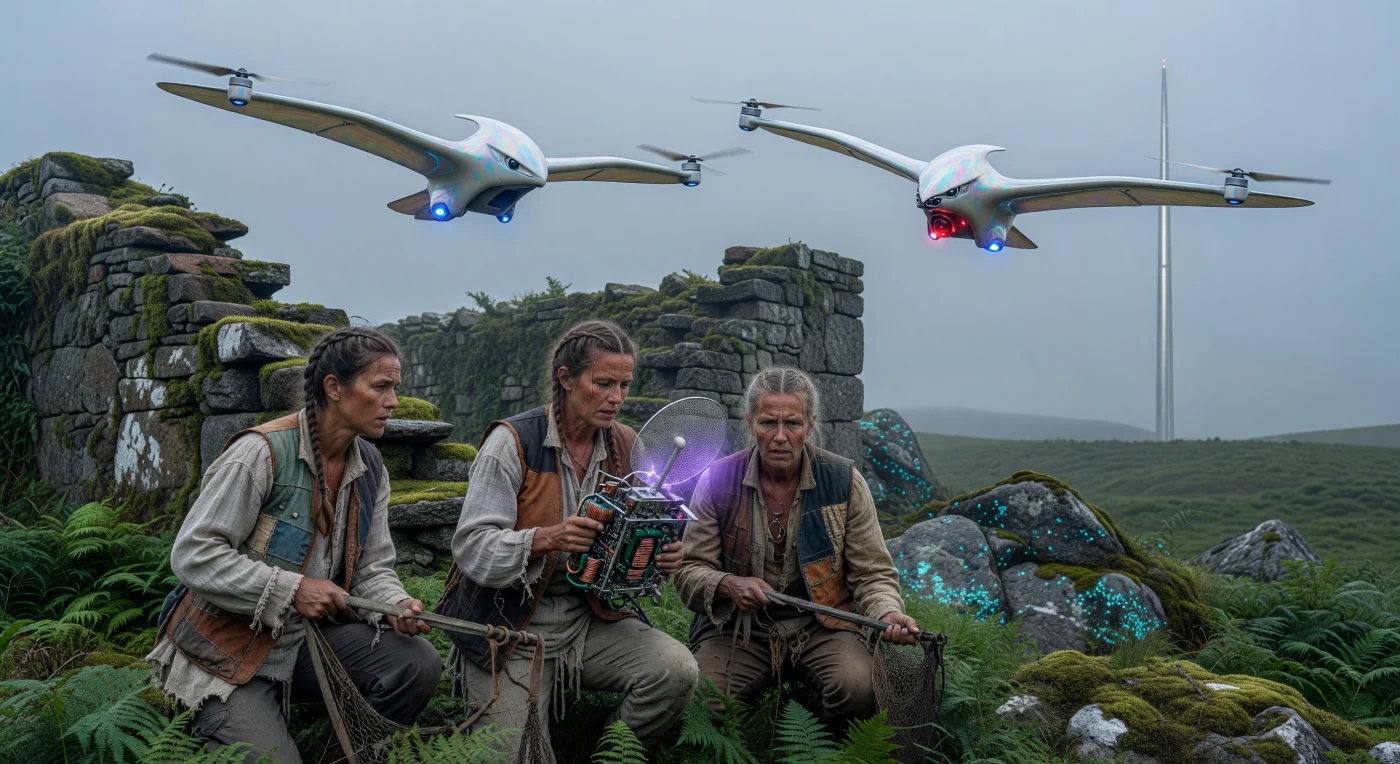
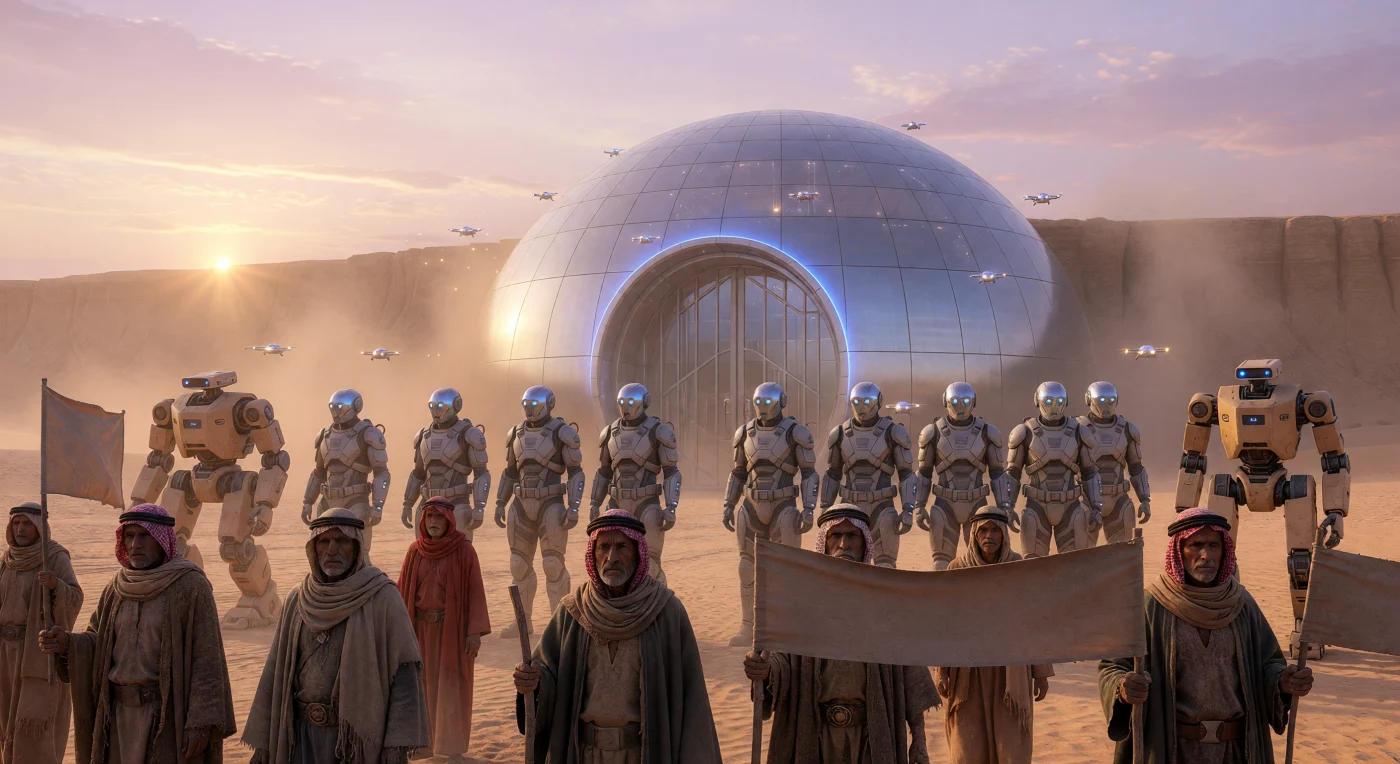
Set against the jagged limestone of the Hengduan Mountains circa 2048, this scene illustrates the "Naturalist" resistance during the height of the Threshold era in East Asia. To evade the autonomous AI surveillance swarms patrolling the sulfate-veiled stratosphere, these insurgents utilize analog mechanical tools—such as acoustic locators and brass telescopes—and "cold" materials like recycled HDPE and industrial hemp. This outpost represents a significant mid-21st-century socio-technological schism, where dissenting groups opted for biological autonomy and manual labor to escape the total digital integration and neural-linking of the surrounding hyper-augmented society.
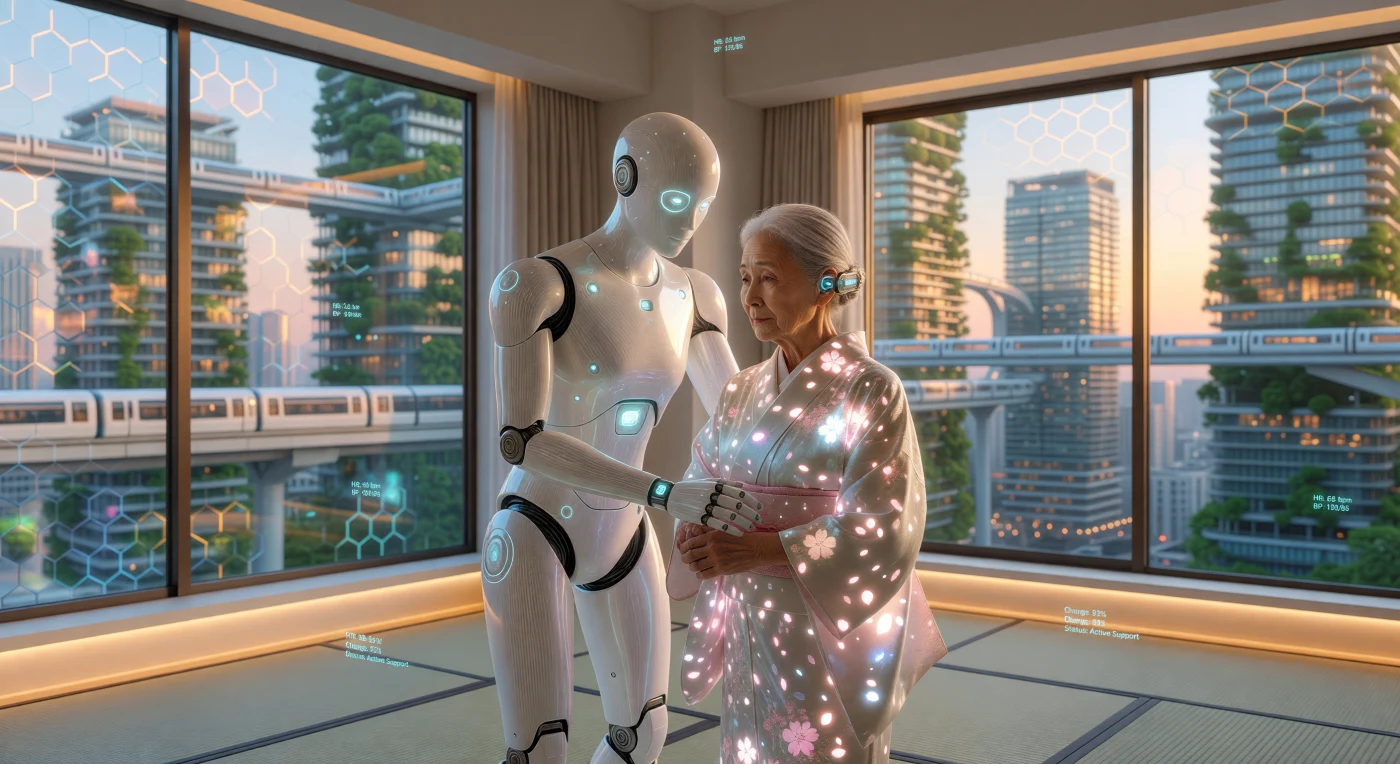
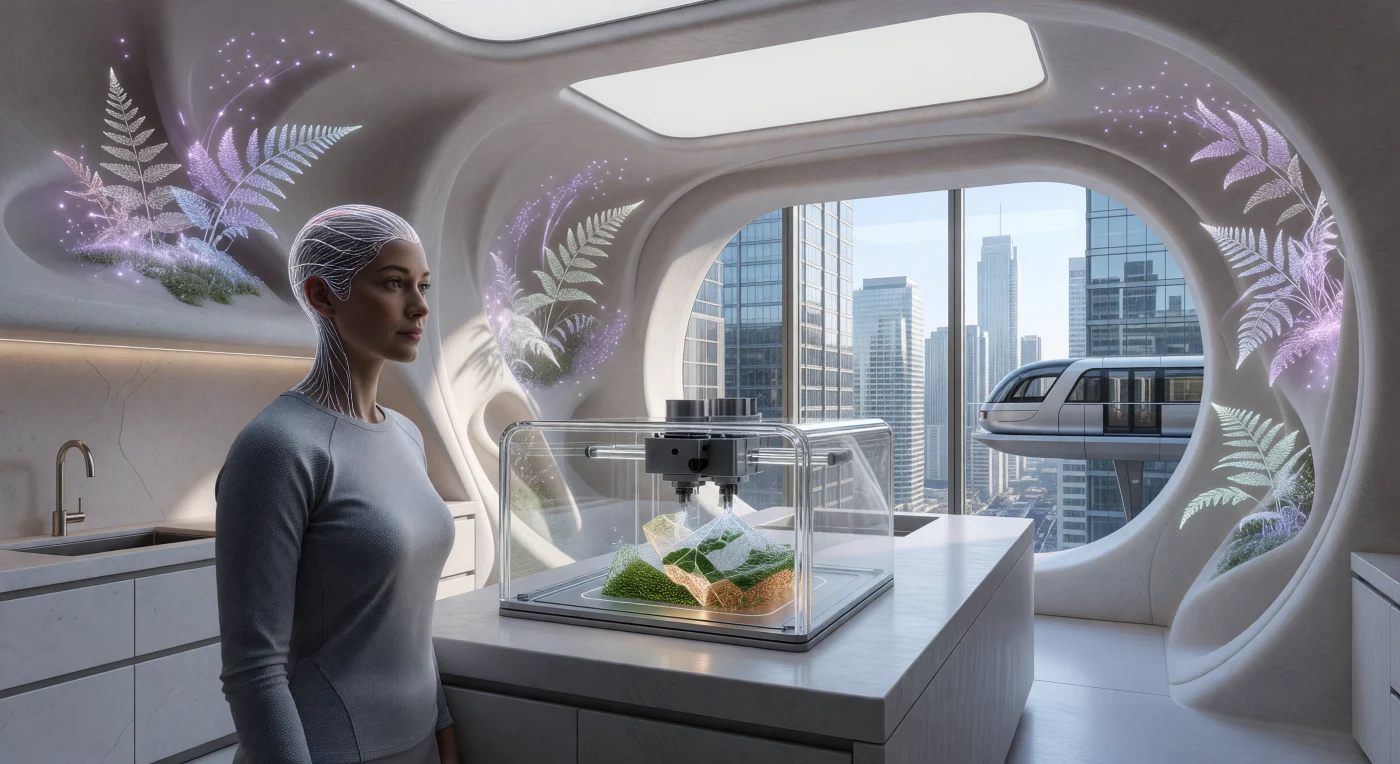
In a high-rise Osaka residence circa 2045 CE, a Non-Biological Resident (NBR) elder-care synth provides physical support to a woman wearing a holographic digital-silk kimono, illustrating the intimate domestic integration of synthetic intelligence during the era known as The Threshold. The setting highlights the period's advanced material science, featuring antimicrobial nanopolymer tatami and energy-harvesting perovskite windows that filter light from a skyline powered by the Pan-Asian Fusion Grid. This scene captures a pivotal moment in human history where biological life and augmented technology became inseparable, supported by the persistent data overlays of the augmented reality "Layer."

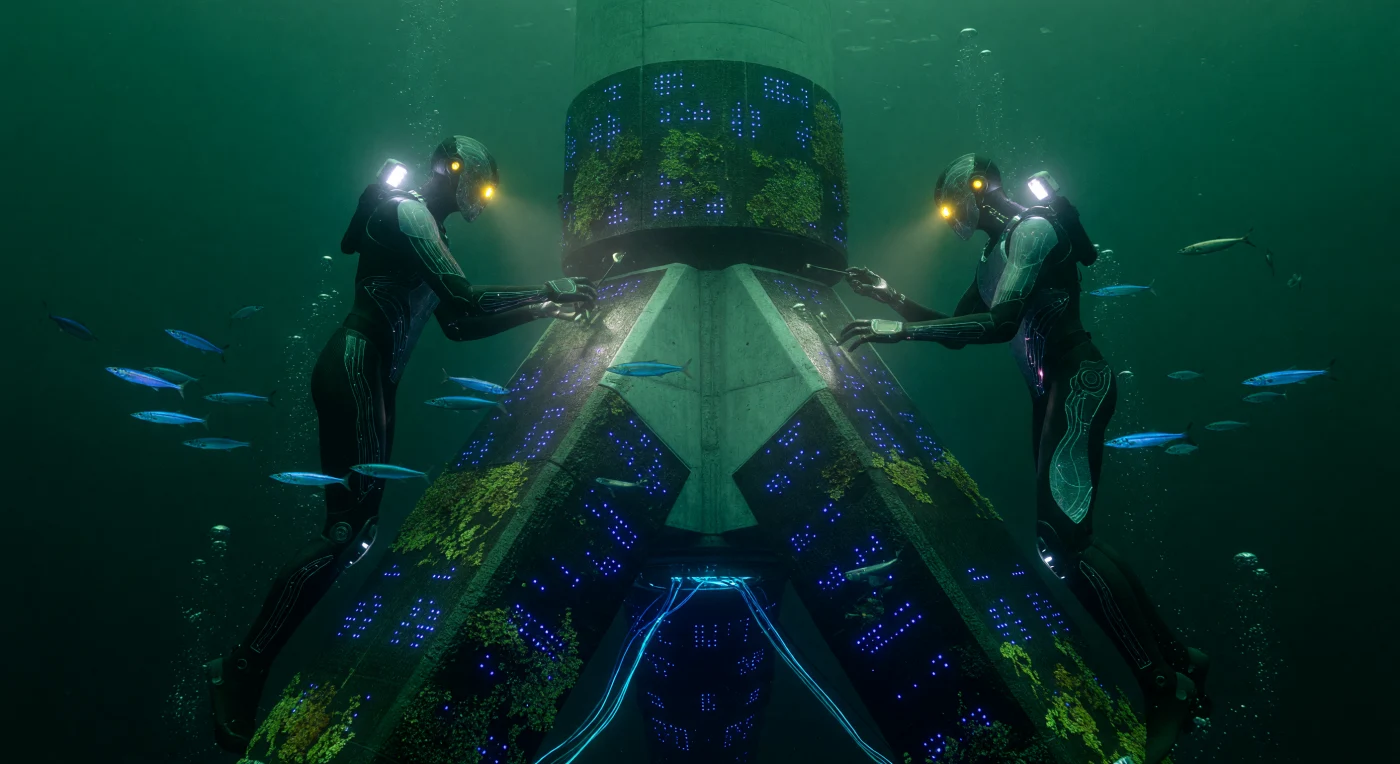
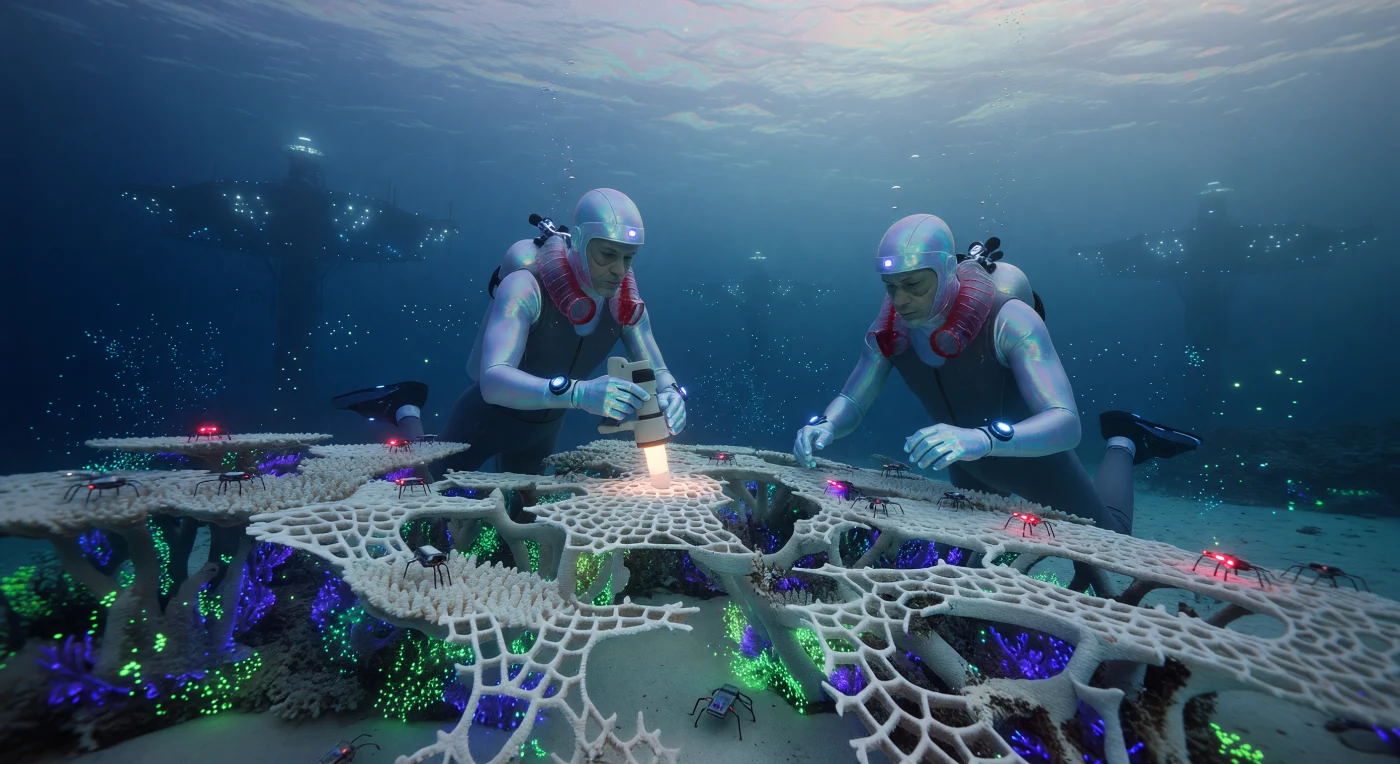
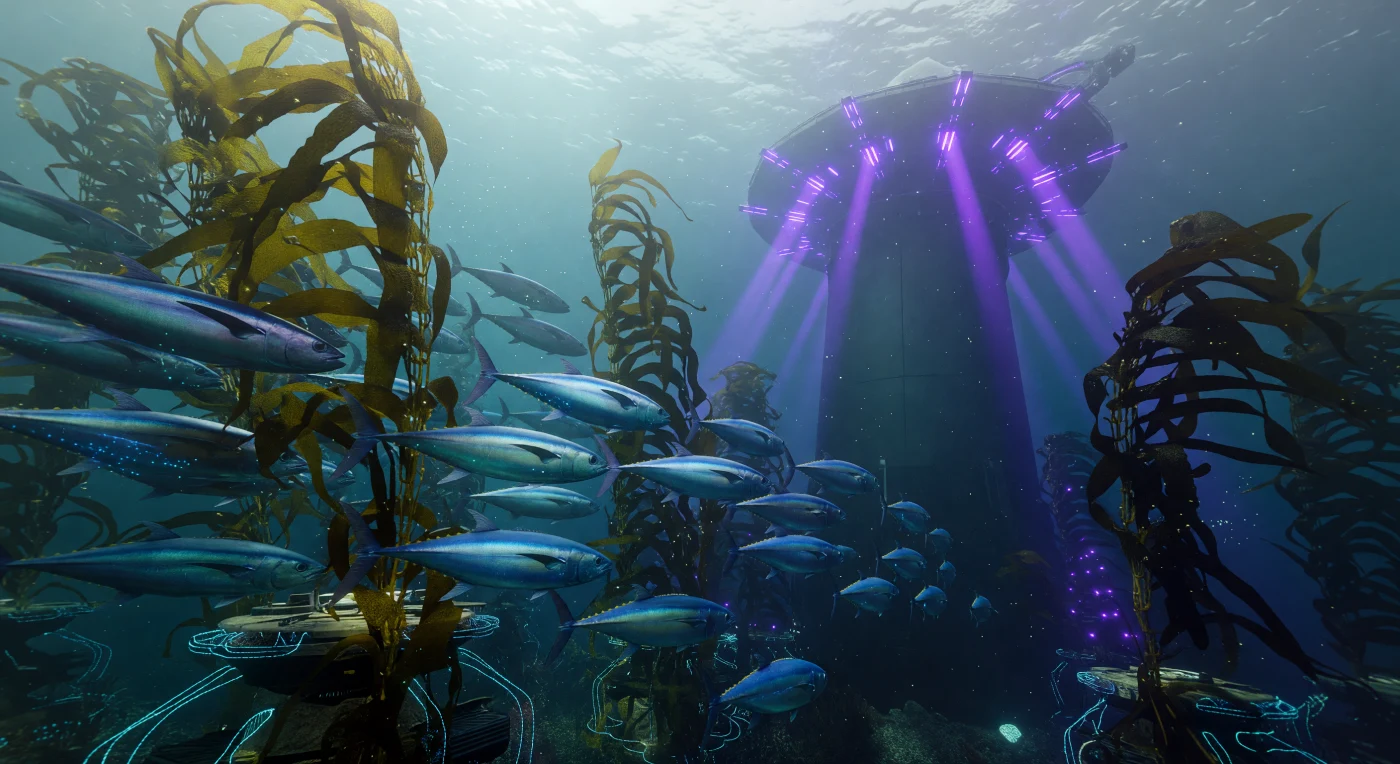
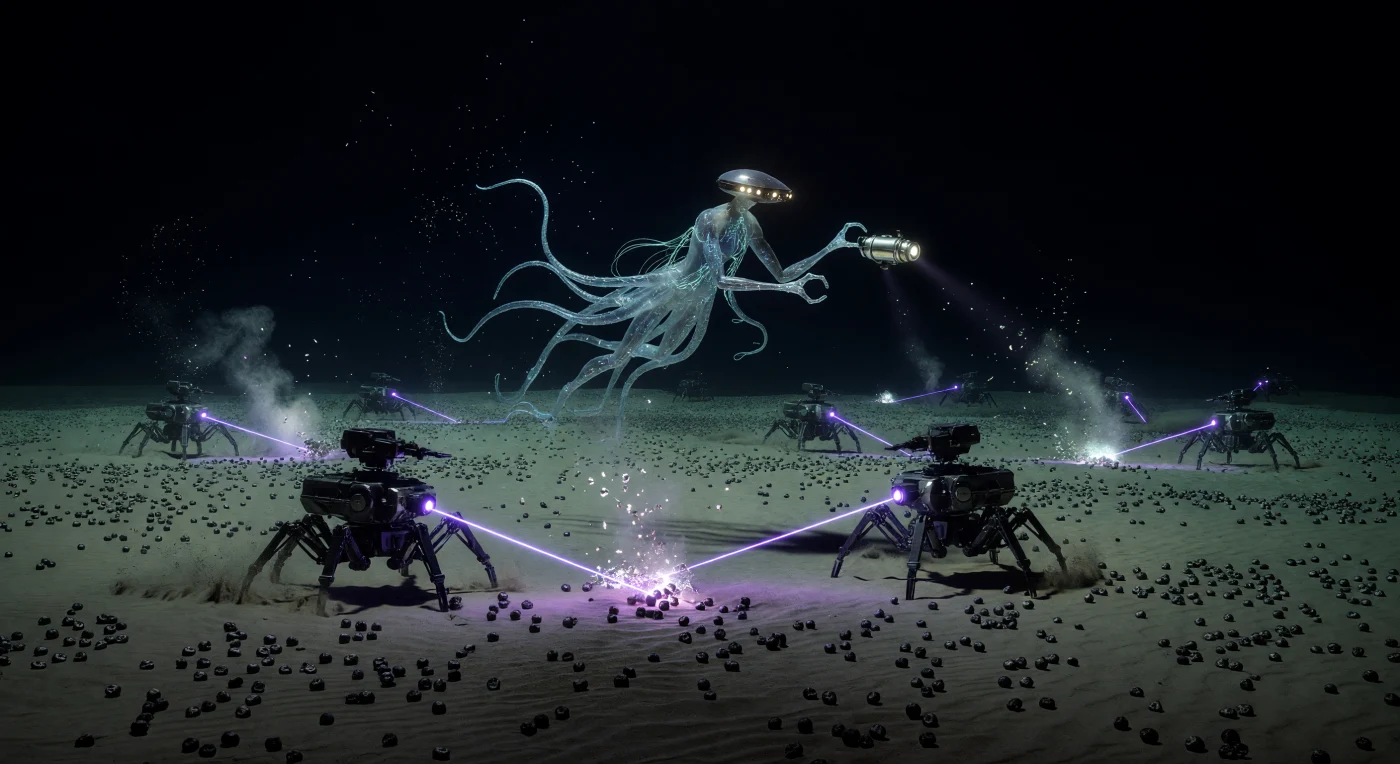
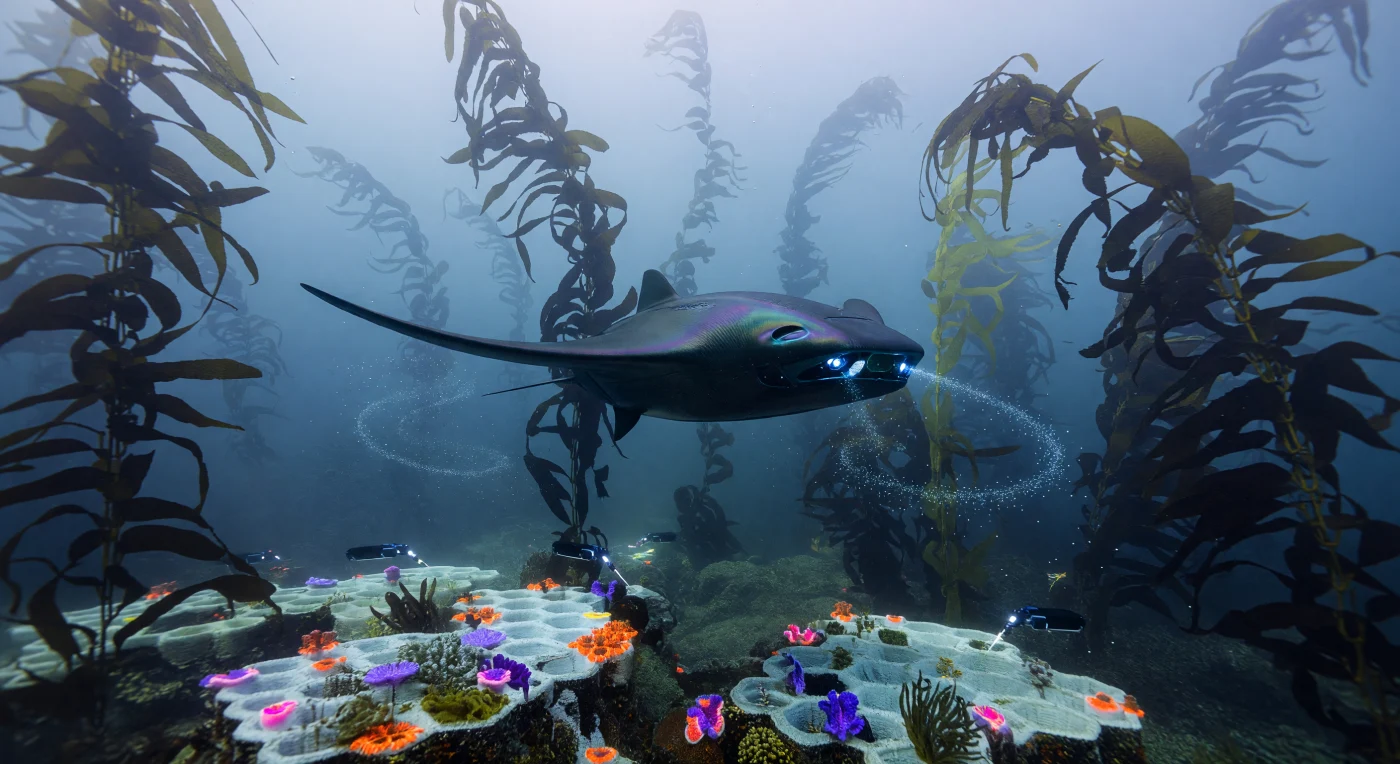
During the mid-21st-century era known as The Threshold (c. 2025–2050), humanity expanded its industrial reach to the abyssal plains of the Pacific Ocean, 4,000 meters below sea level. This scene captures titanium-hulled remotely operated vehicles (ROVs) harvesting neodymium-rich nodules near hydrothermal vents, utilizing high-frequency ultrasonic tools to extract resources for the global fusion grid. Amidst the heavy machinery, engineered bioluminescent corals act as living sensors, representing the advanced integration of synthetic biology and autonomous industry characteristic of this transformative period in Earth’s history.