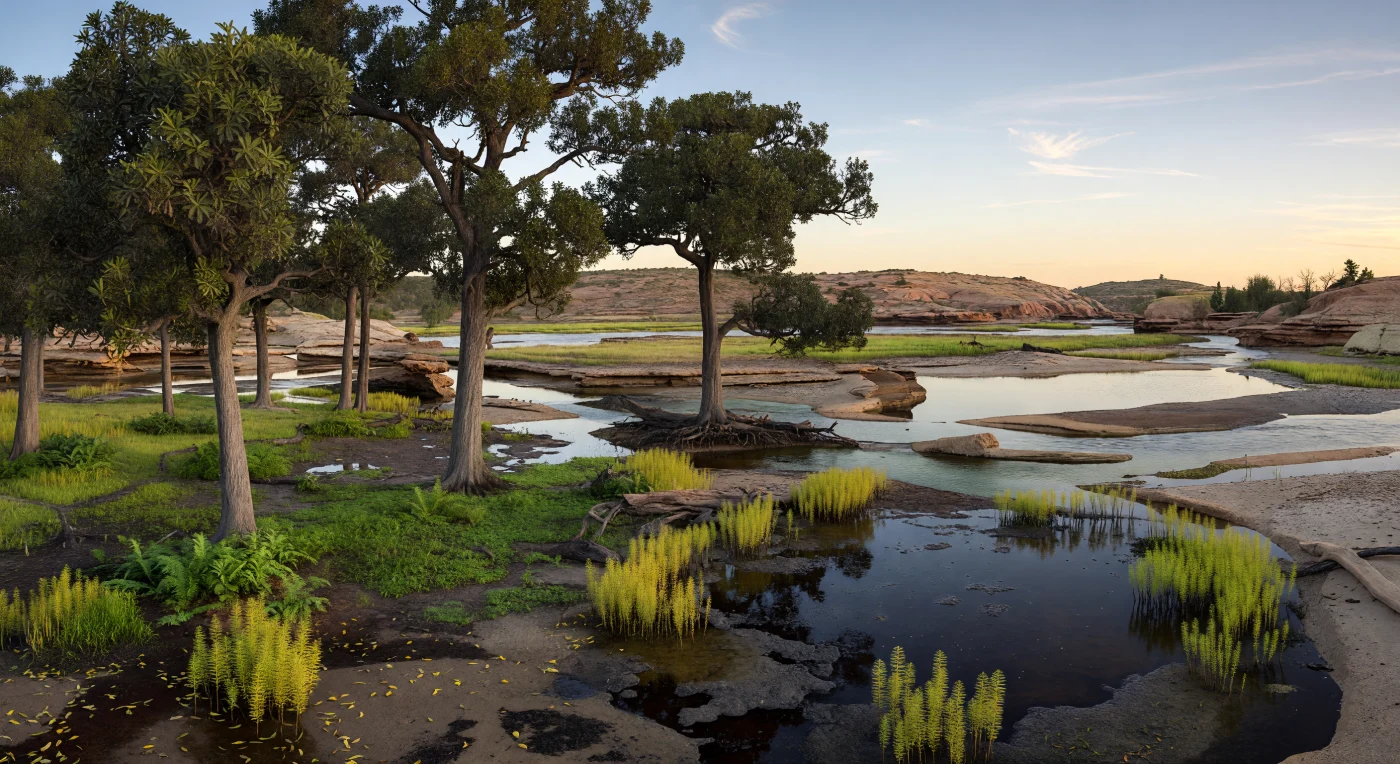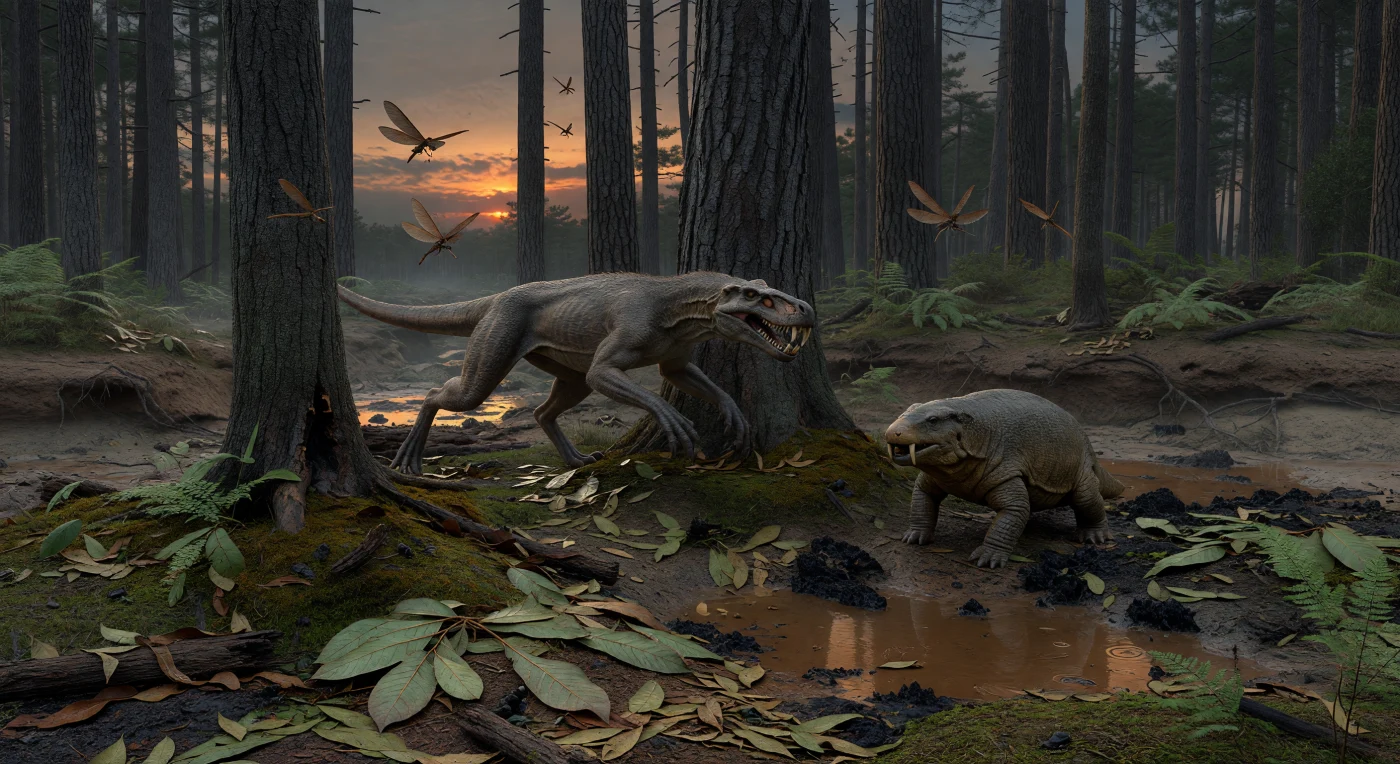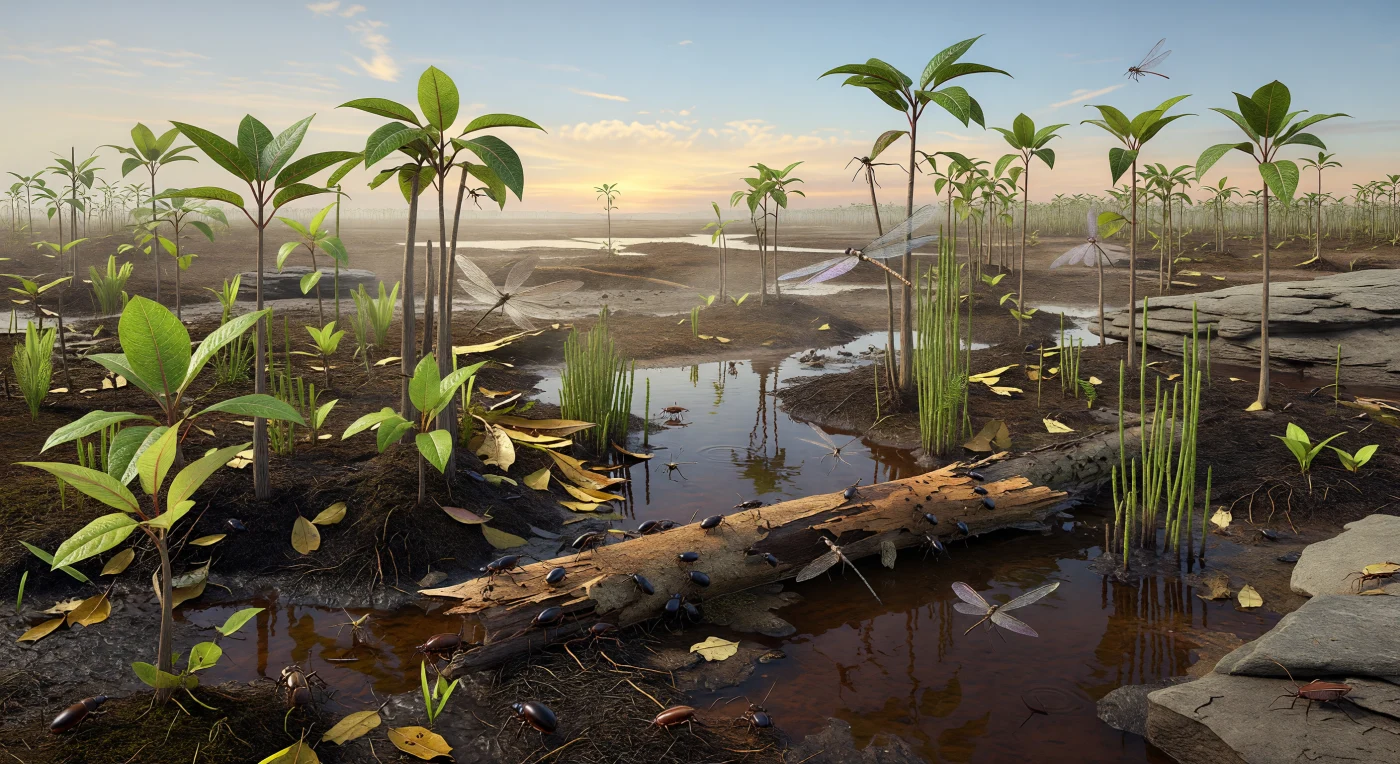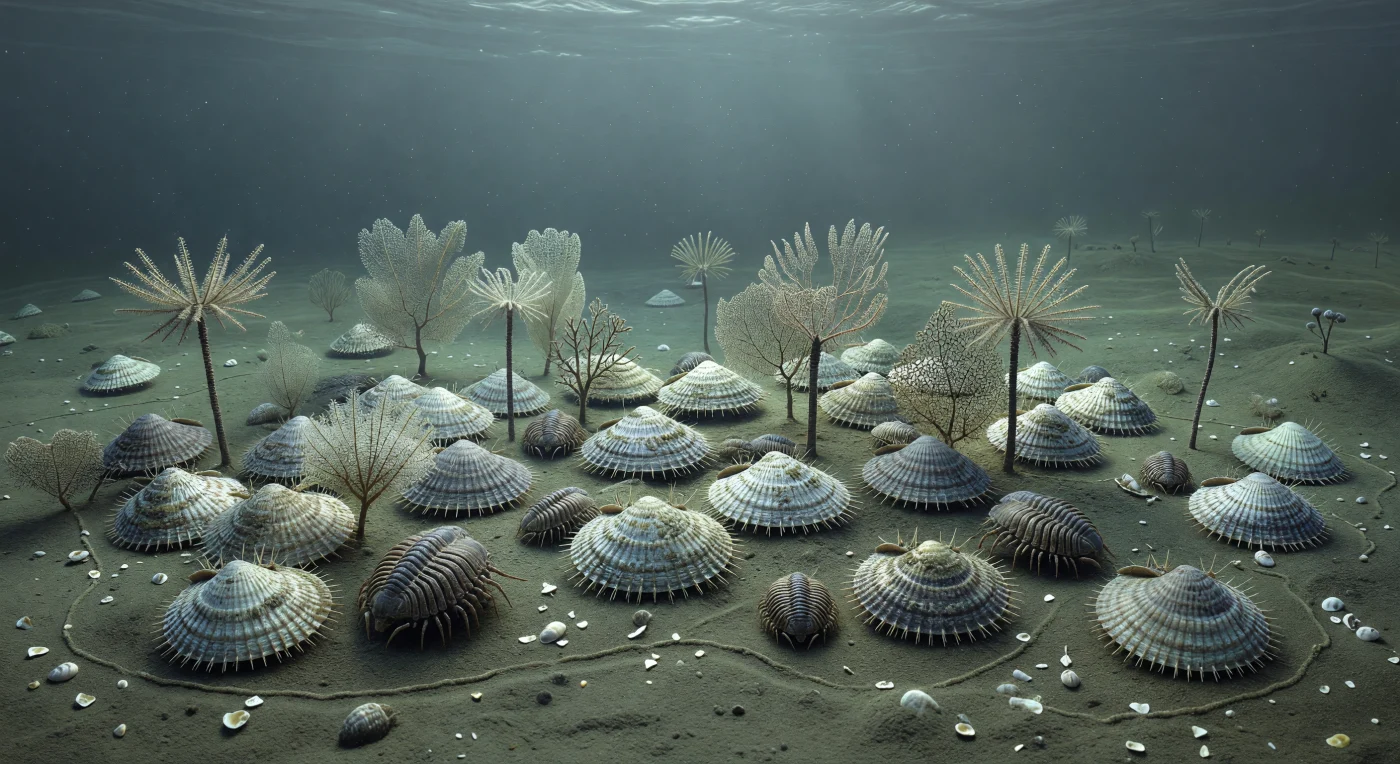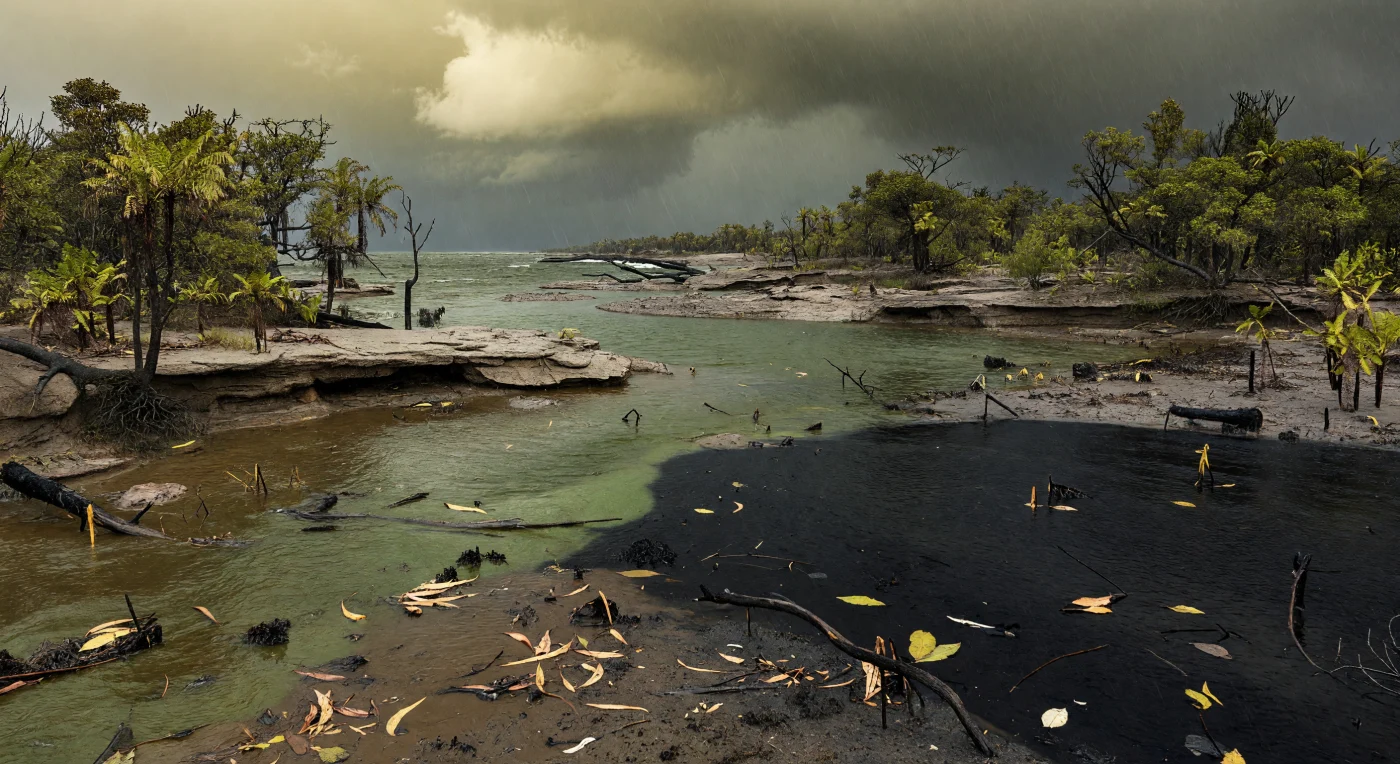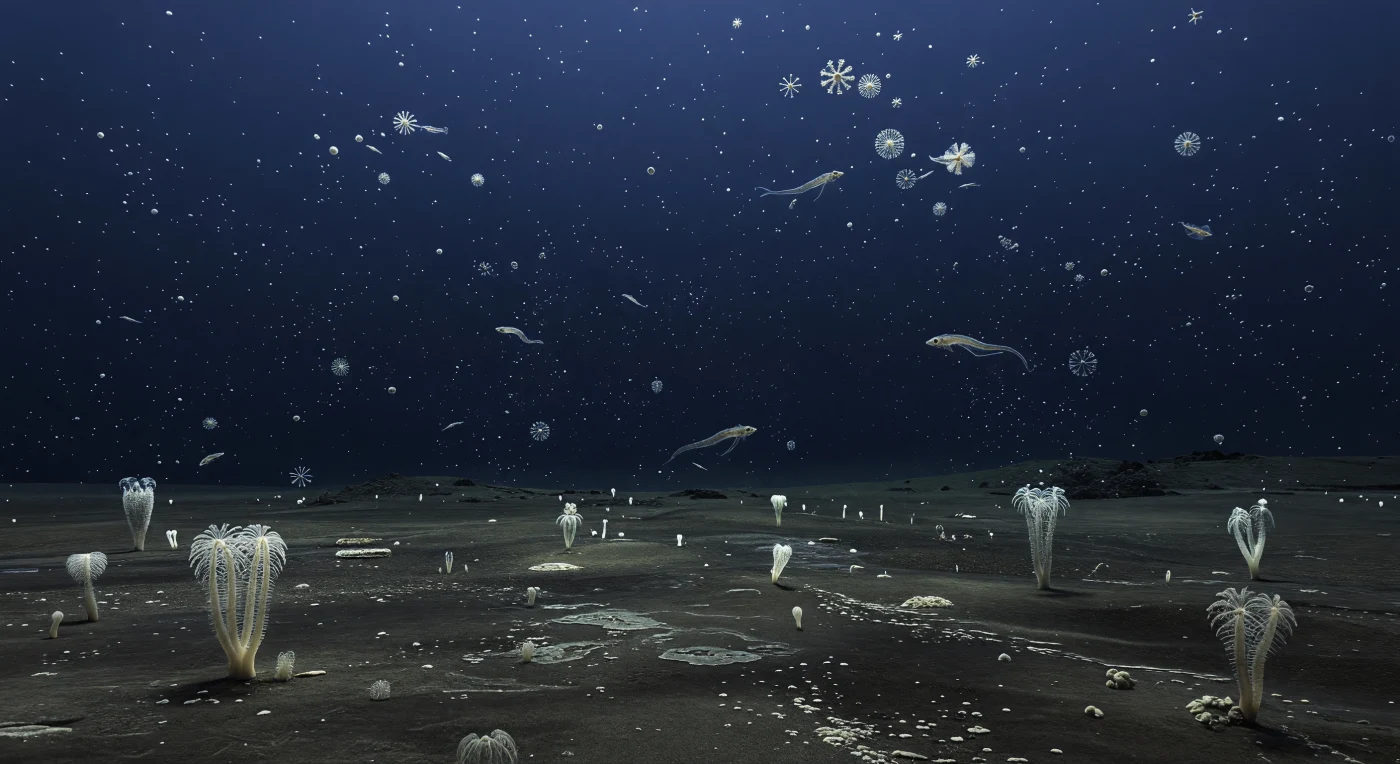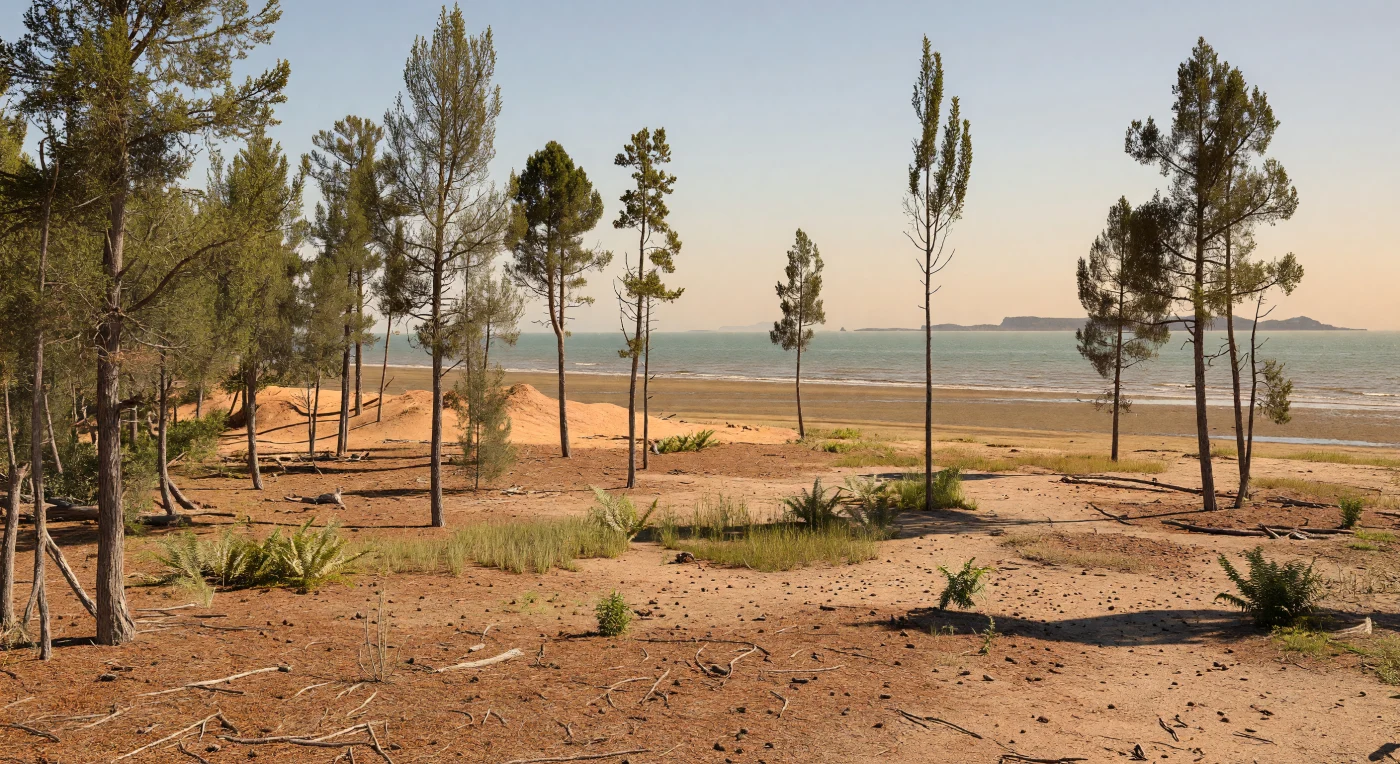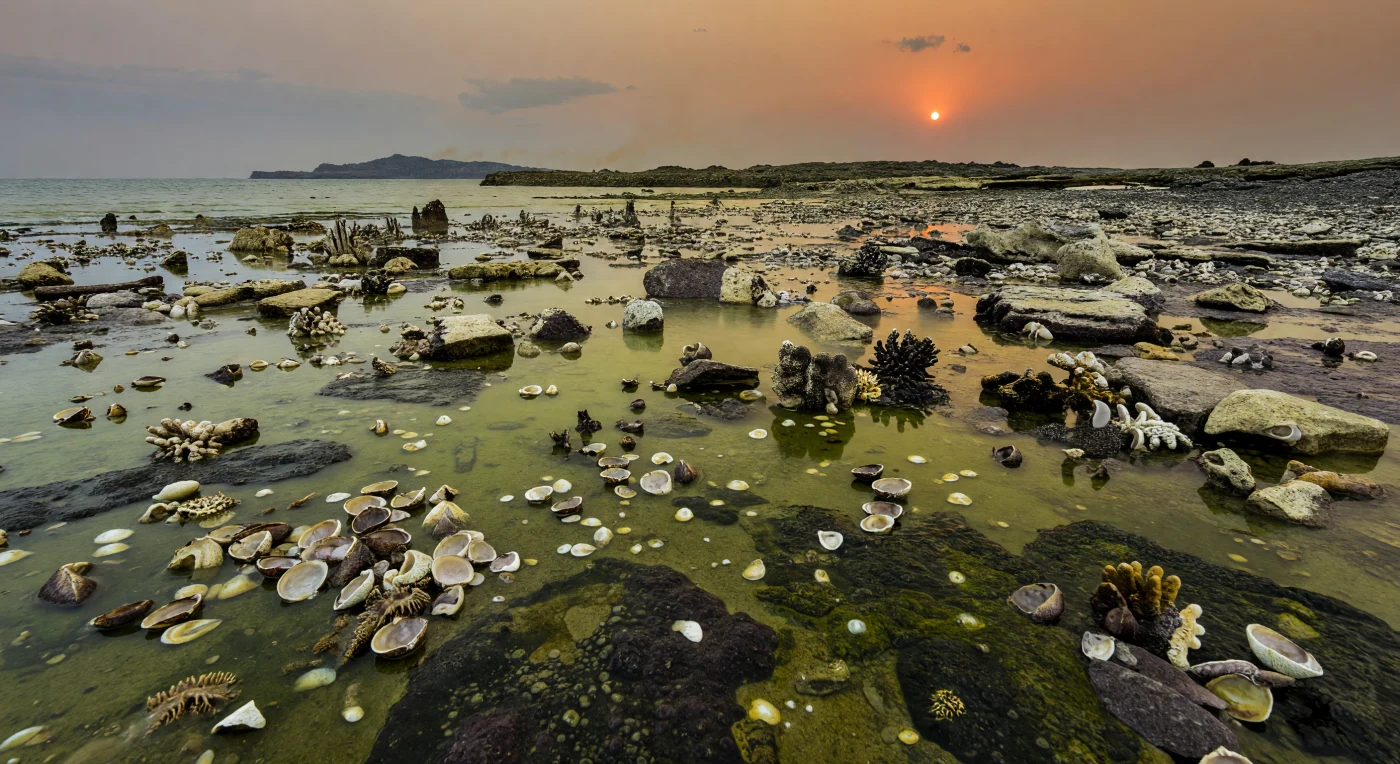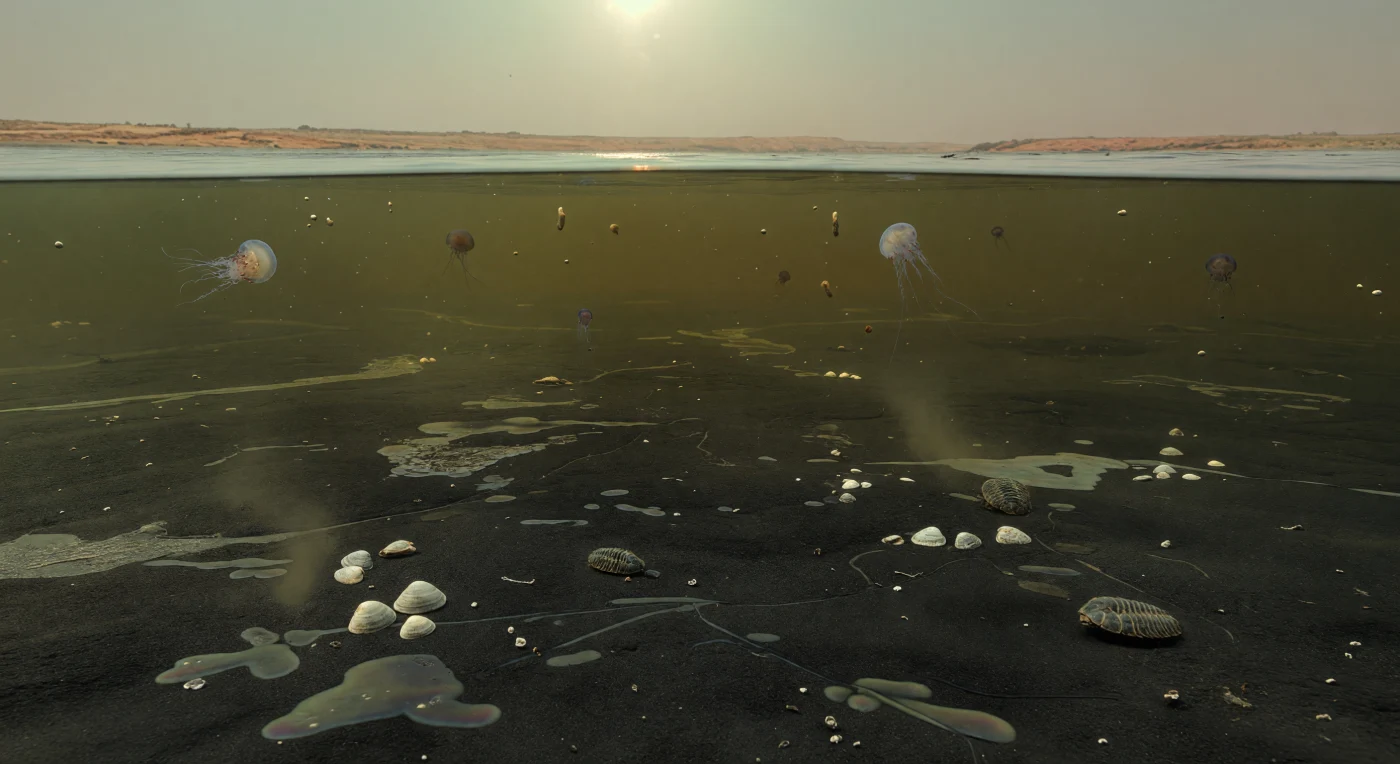
In the latest Permian, about 252 million years ago, a restricted marine basin on the margins of Pangaea had become a hostile seafloor of black, sulfidic mud under murky, oxygen-poor water. Sparse survivors such as Claraia bivalves and a few phillipsiid trilobites like Pseudophillipsia linger on the sediment while drifting medusae hang in the dim water column, illustrating the ecological collapse associated with the end-Permian mass extinction. This scene reflects the spread of anoxia and euxinia during Earth’s most severe biotic crisis, when marine ecosystems were reduced to low-diversity, stress-tolerant communities.
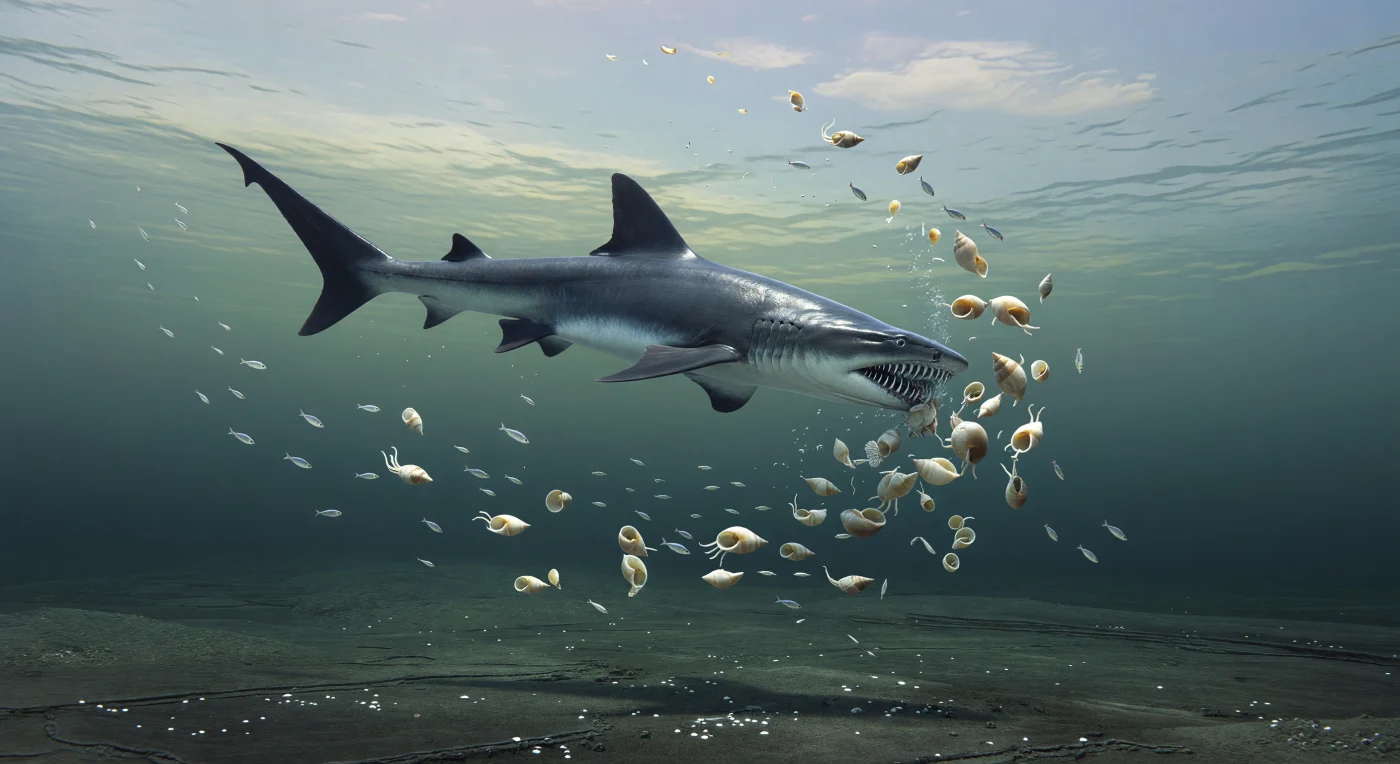
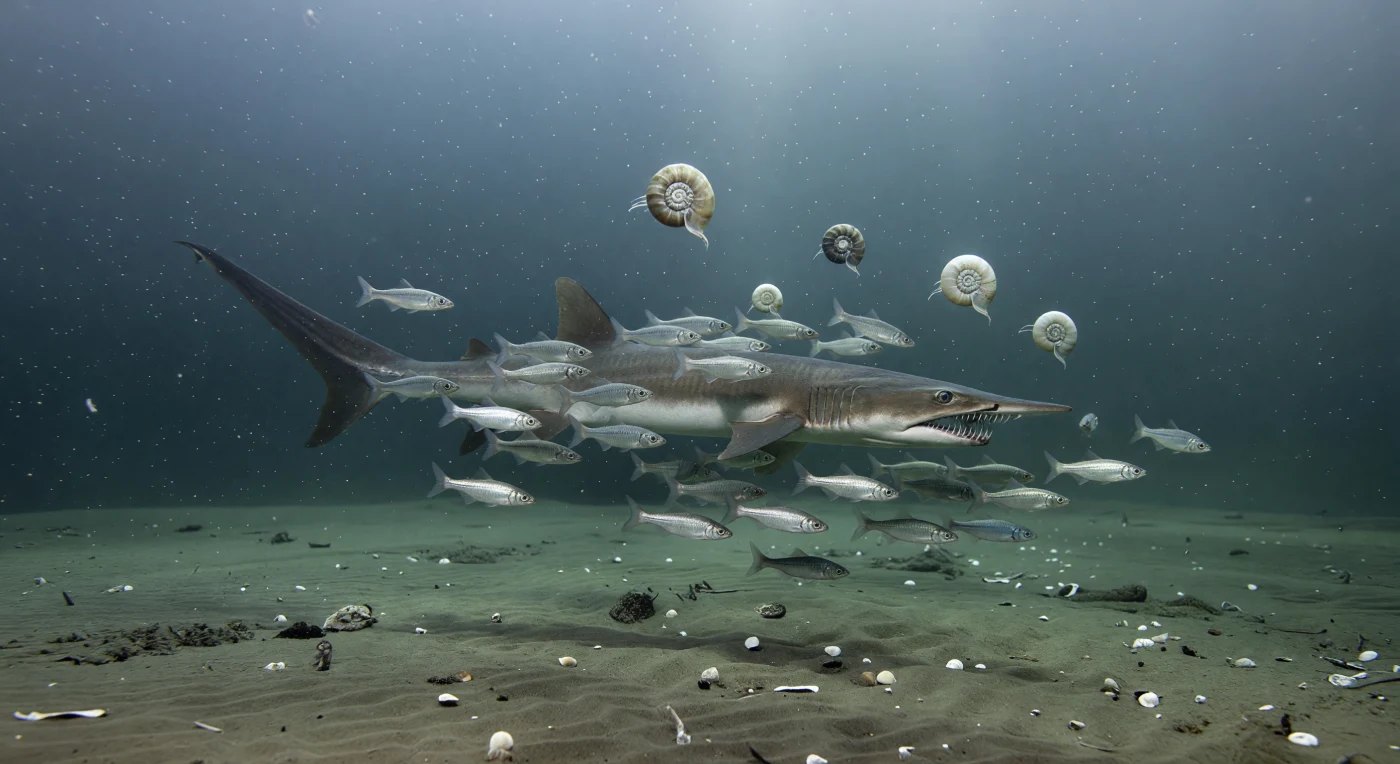
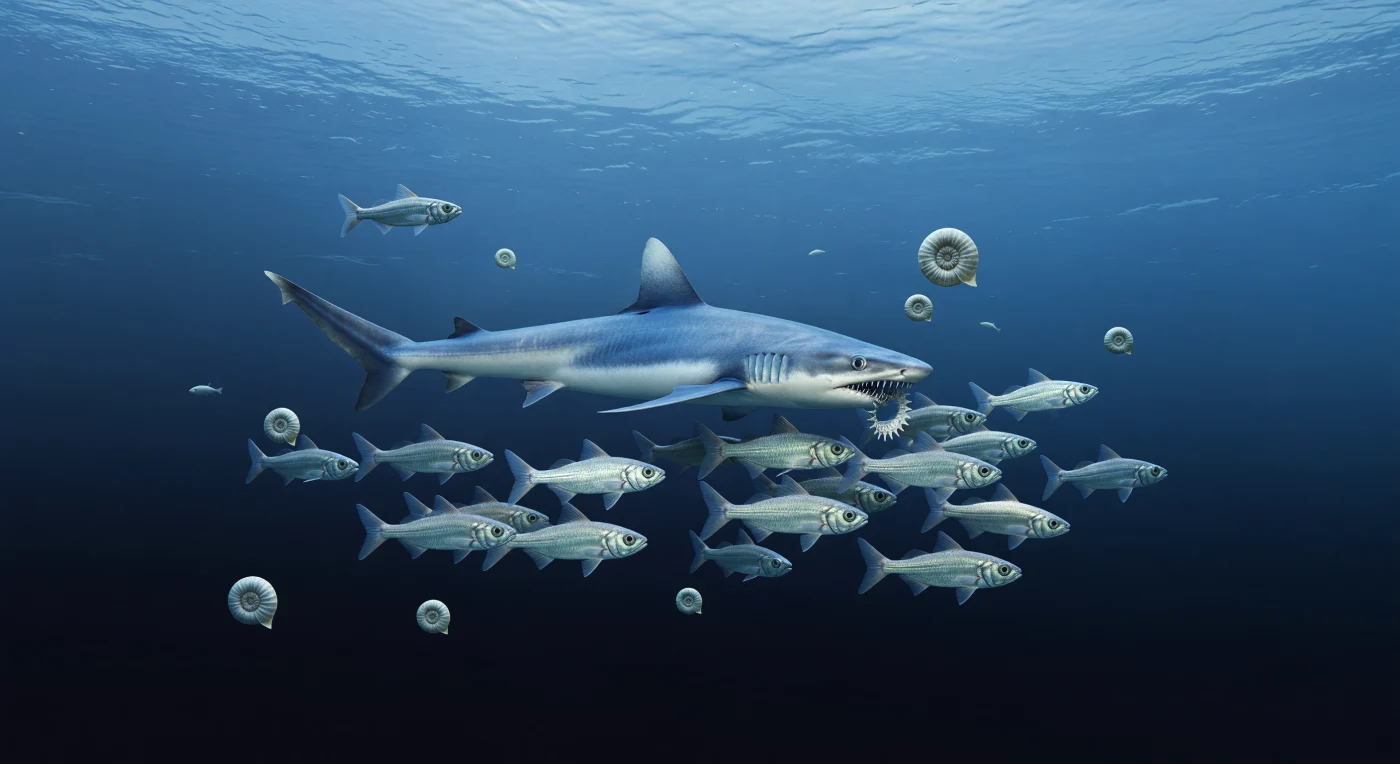
In the warm open waters fringing Late Permian Pangaea, a large Helicoprion—an unusual cartilaginous fish known for its spiral tooth whorl—surges upward through a shoal of small Agathiceras ammonoids while paleonisciform fishes dart away and tiny conodont animals drift below. This scene is set in Panthalassa roughly 255–252 million years ago, near the close of the Permian Period, when marine ecosystems were still diverse but approaching the catastrophic end-Permian mass extinction. Although the exact hunting behavior of Helicoprion cannot be observed directly from fossils, its streamlined body and remarkable lower-jaw dentition suggest it was a fast-swimming predator of shelled prey in offshore seas.
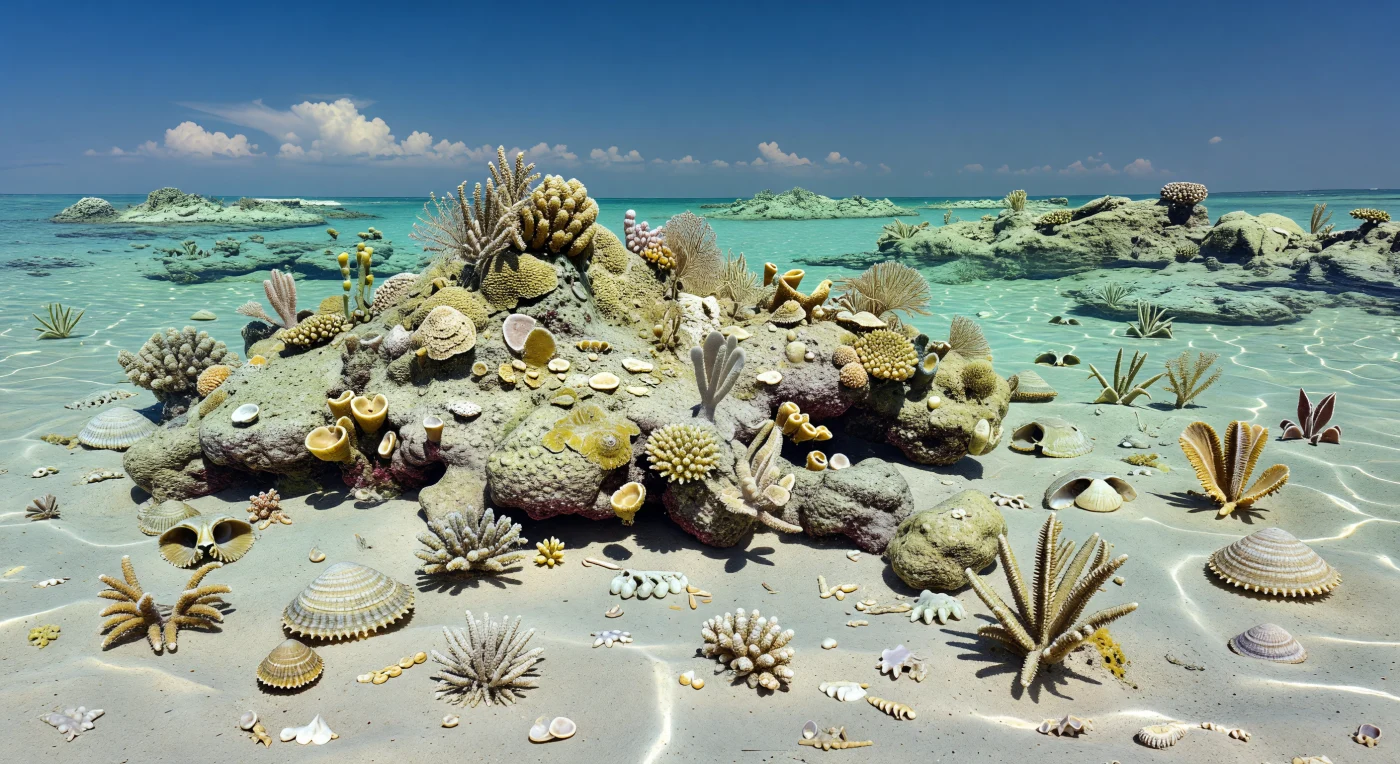
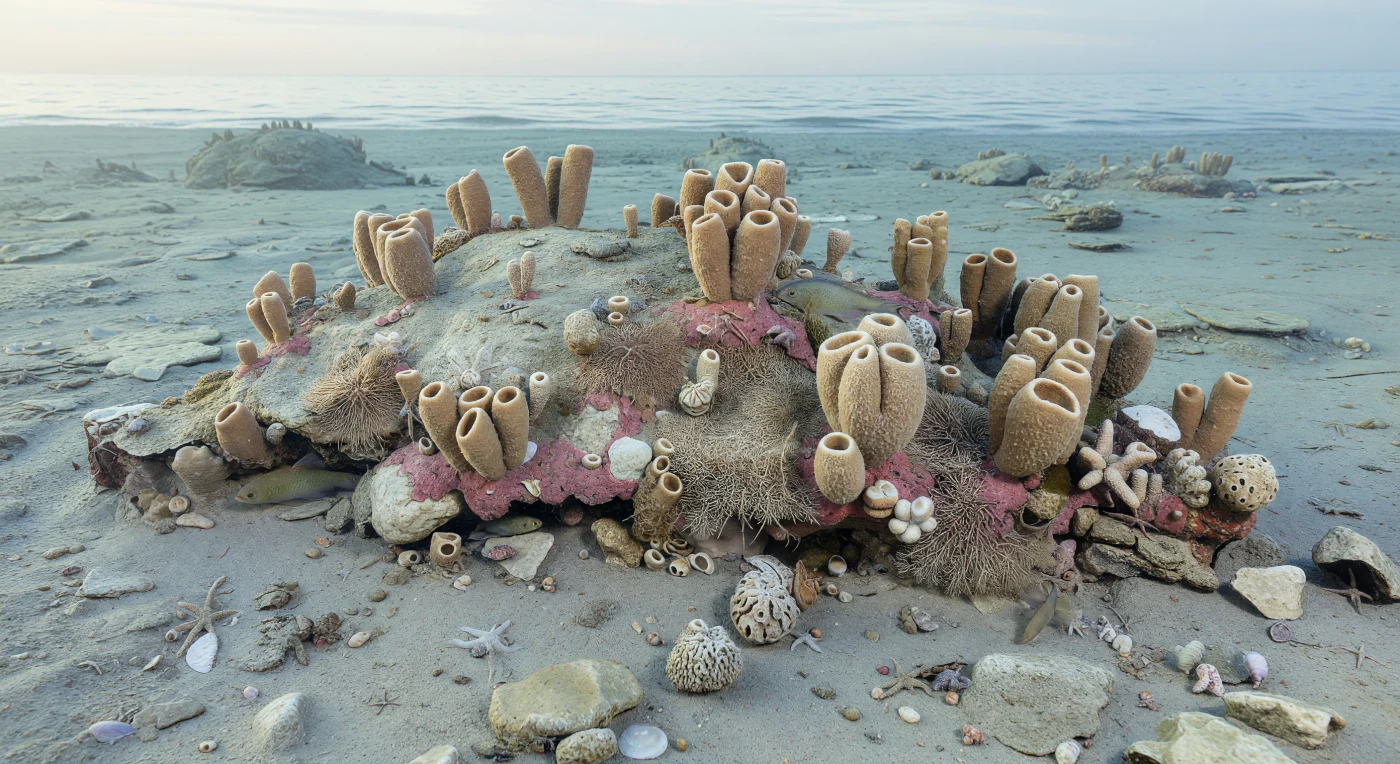
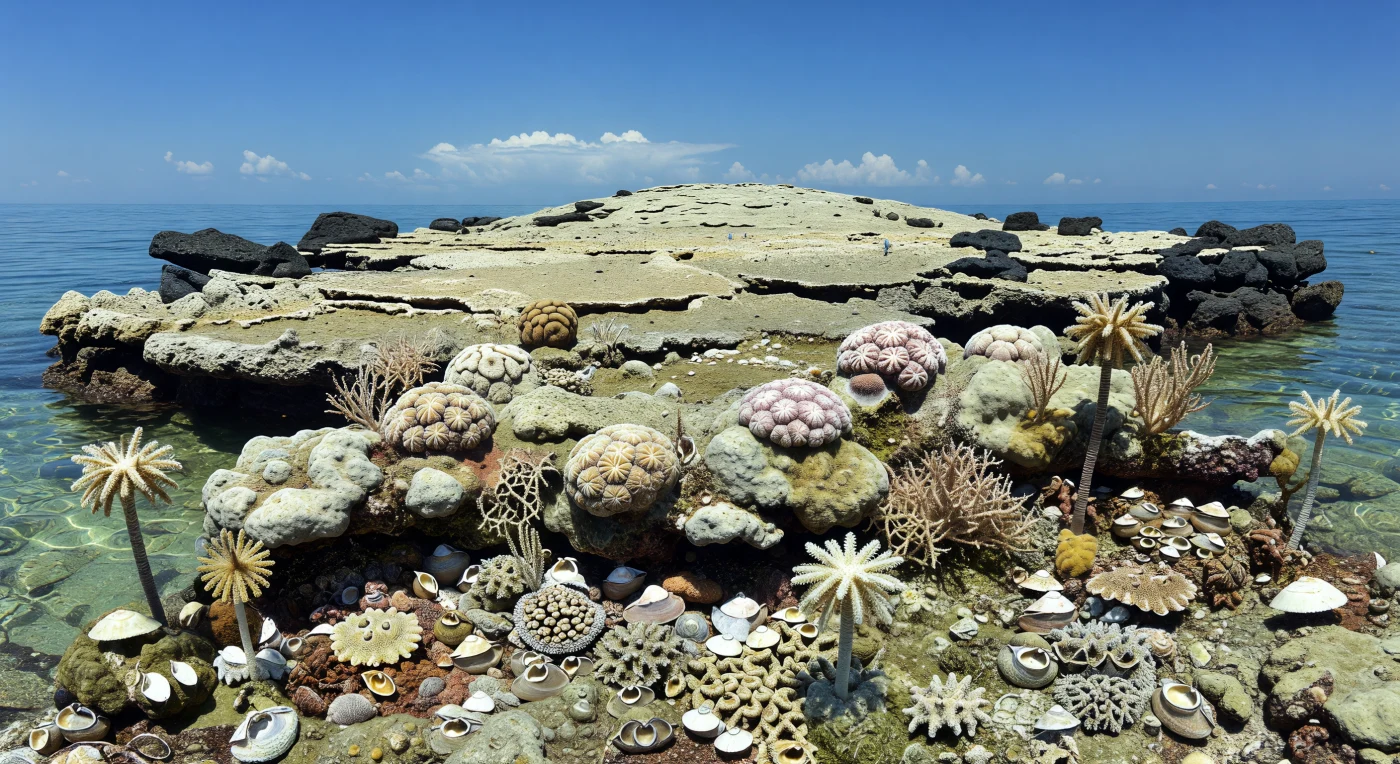
In the warm, shallow waters of the Late Permian Paleo-Tethys, about 260–252 million years ago, low reef mounds built mainly by calcified sponges and microbial crusts rose from a pale carbonate seafloor. Among these bioherms grew Waagenophyllum rugose corals, fenestrate bryozoans, and stalked crinoids, while dense assemblages of brachiopods such as Productus and Neospirifer covered the surrounding shelf muds and skeletal sands. Scenes like this represent one of the distinctive marine ecosystems of the final chapter of the Paleozoic, just before the end-Permian mass extinction—the “Great Dying”—reshaped life in the oceans.
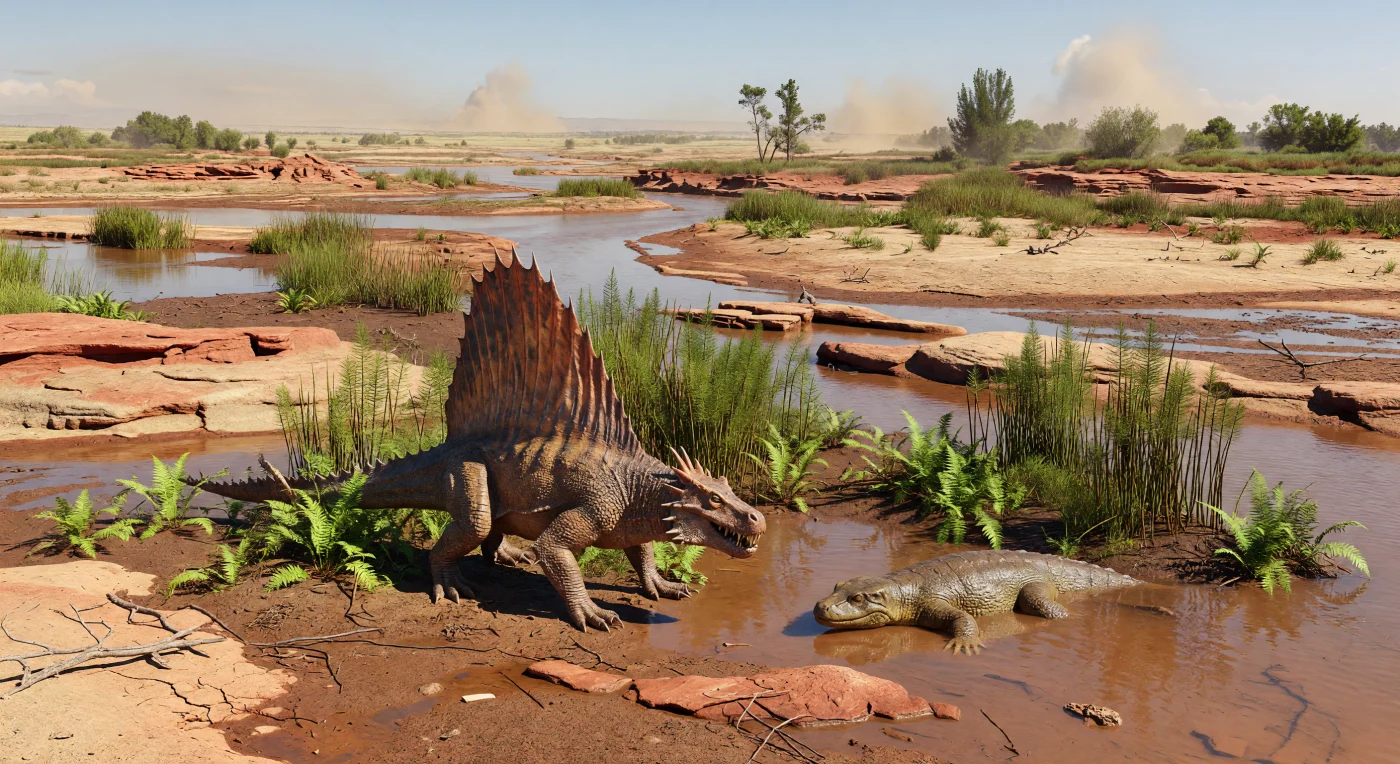
On an Early Permian floodplain about 295–272 million years ago, a sail-backed Dimetrodon patrols the edge of a muddy seasonal channel while the large amphibian Eryops lies half-submerged in the shallows. This red-bed landscape of equatorial to subtropical Pangaea is dotted with horsetails, seed ferns, and early conifers rather than flowering plants or grasses, reflecting the dry, strongly seasonal climates that shaped many Permian inland basins. Though often mistaken for a dinosaur, Dimetrodon was a synapsid—part of the broader lineage that would eventually give rise to mammals.

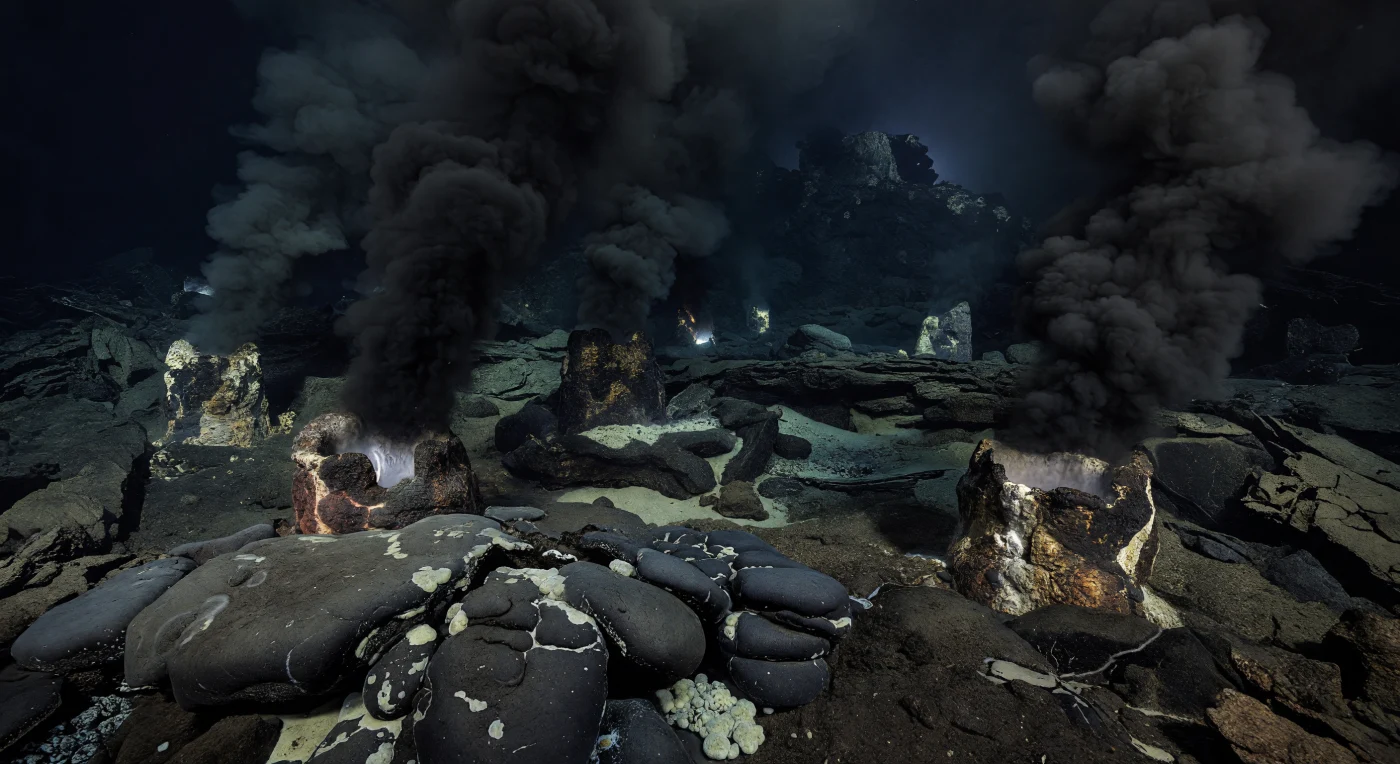
Around 252 million years ago, near the end of the Permian Period, immense fissures of the Siberian Traps split northern Pangaea and poured out vast sheets of tholeiitic basalt. In this scene, incandescent lava rivers advance across red sedimentary plains and scorched stands of Permian conifers such as voltzialeans and cordaitaleans, while ash, sulfur-rich gases, and acid rain turn the landscape into a toxic volcanic wasteland. These prolonged eruptions are closely linked to the end-Permian mass extinction—the “Great Dying”—the most severe biodiversity crisis in Earth’s history.
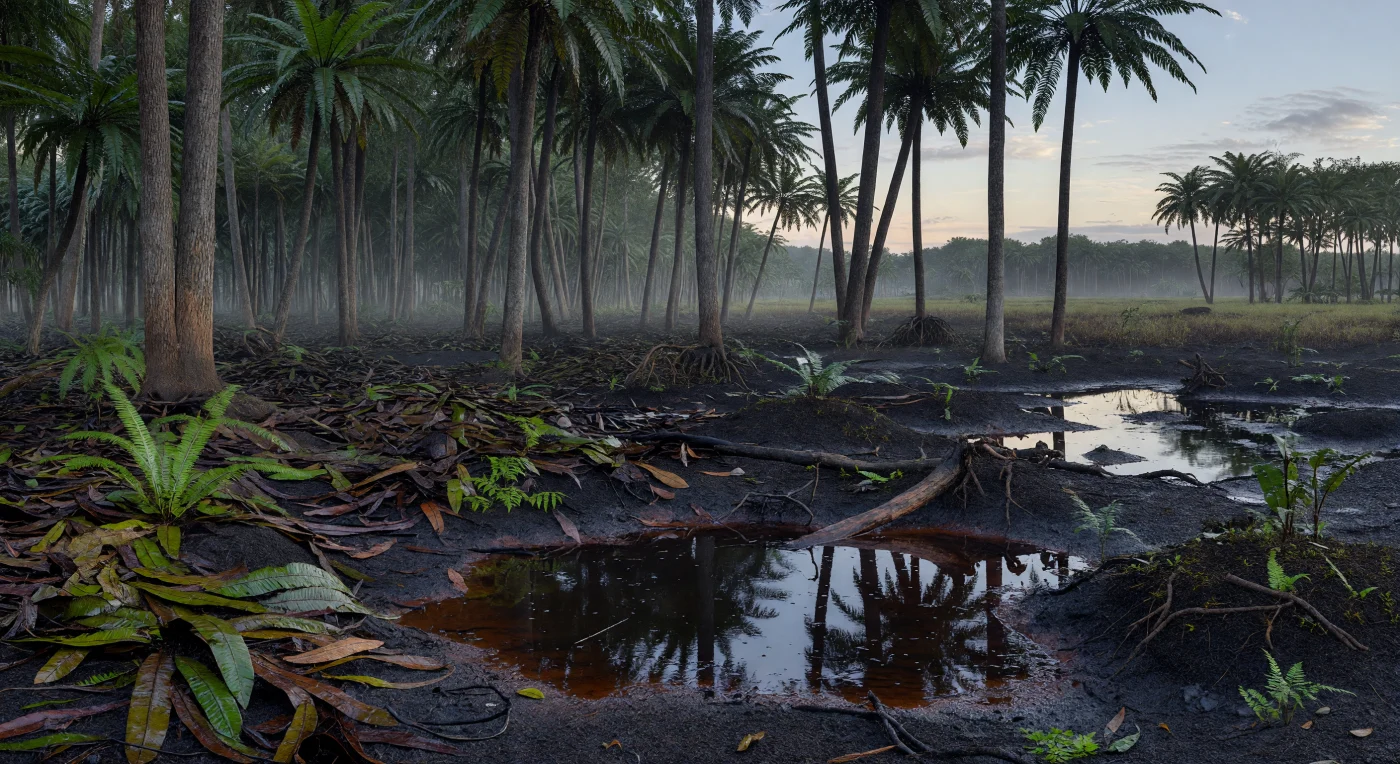
In the cool, humid lowlands of southern Gondwana near the end of the Permian, about 253–252 million years ago, dense stands of Glossopteris seed ferns rise above a dark, peaty forest floor strewn with fallen tongue-shaped leaves. Shallow tannin-stained pools, low ferns, and sparse sphenopsids reflect the subdued light of a misty morning in a high-latitude swamp forest. These Glossopteris-dominated ecosystems were among the most characteristic floras of Late Permian Gondwana, flourishing shortly before the end-Permian mass extinction—the “Great Dying”—reshaped life on Earth.
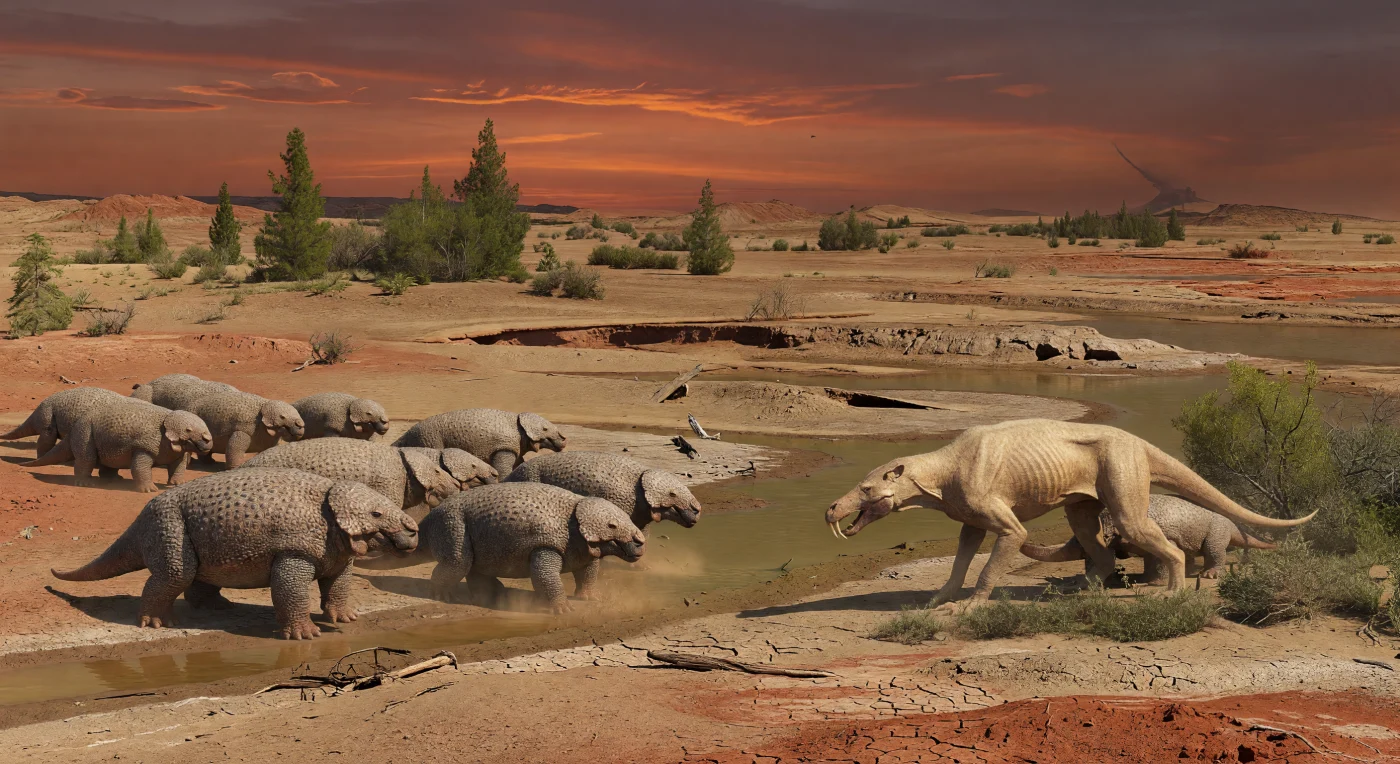
On the drought-stricken floodplains of northern Pangaea about 252 million years ago, a herd of the armored pareiasaur Scutosaurus karpinskii bunches together as the saber-toothed gorgonopsian Inostrancevia stalks from sparse scrub. This scene captures the harsh final chapter of the Permian, just before the end-Permian mass extinction, when hot, dusty red-bed landscapes and stressed ecosystems dominated much of the supercontinent. Scutosaurus was a heavy-bodied herbivore with a distinctive knobby skull, while Inostrancevia was among the top predators of its time, part of a therapsid world that would soon be devastated by the Great Dying.
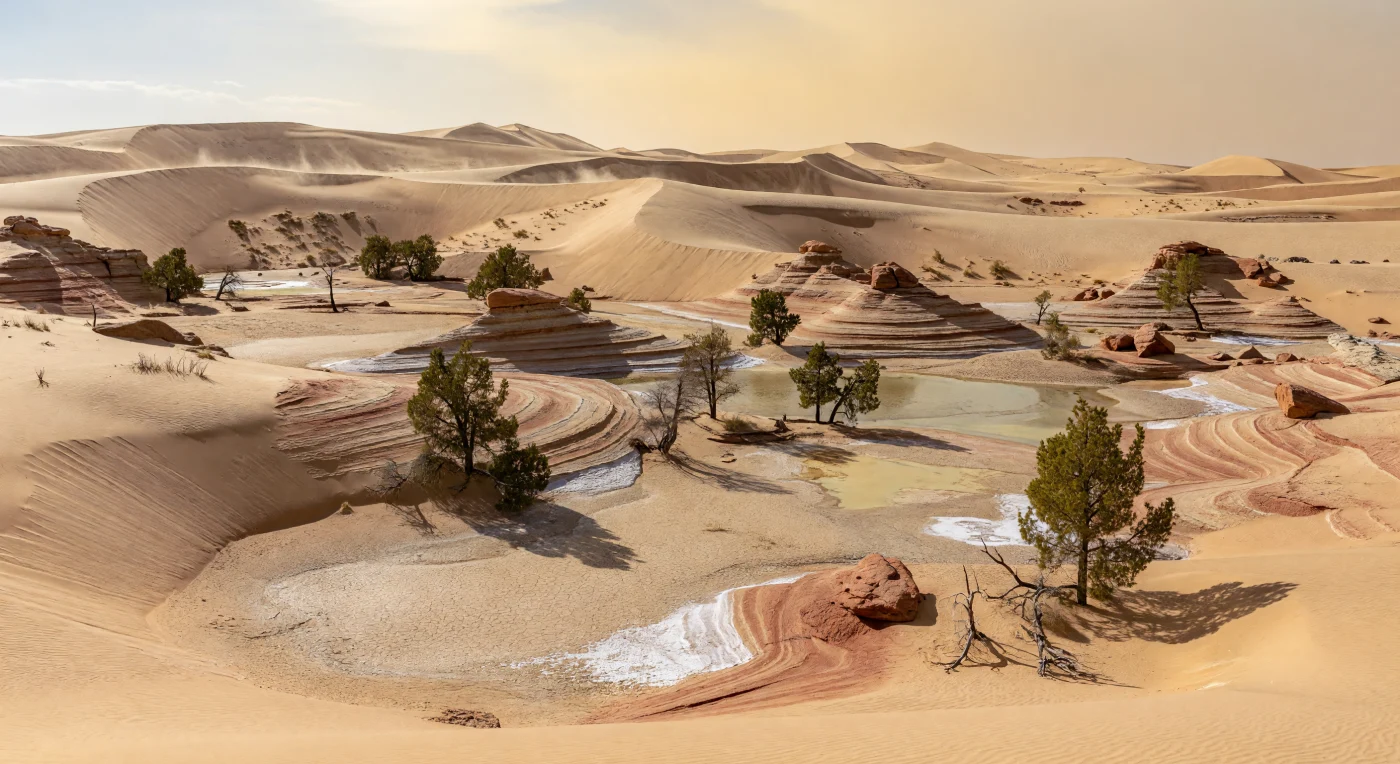
In the Late Permian, around 260–252 million years ago, central Pangaea included immense interior deserts where wind built towering cross-bedded dunes under an intensely arid climate. This scene shows a vast erg of oxidized red and ochre sands, with cracked playa mud, halite and gypsum crusts, and only sparse drought-tolerant conifers such as Walchia and Ullmannia surviving in interdune washes. Such landscapes reflect the extreme continental dryness that developed on the Permian supercontinent shortly before the end-Permian mass extinction, the most severe biodiversity crisis in Earth’s history.