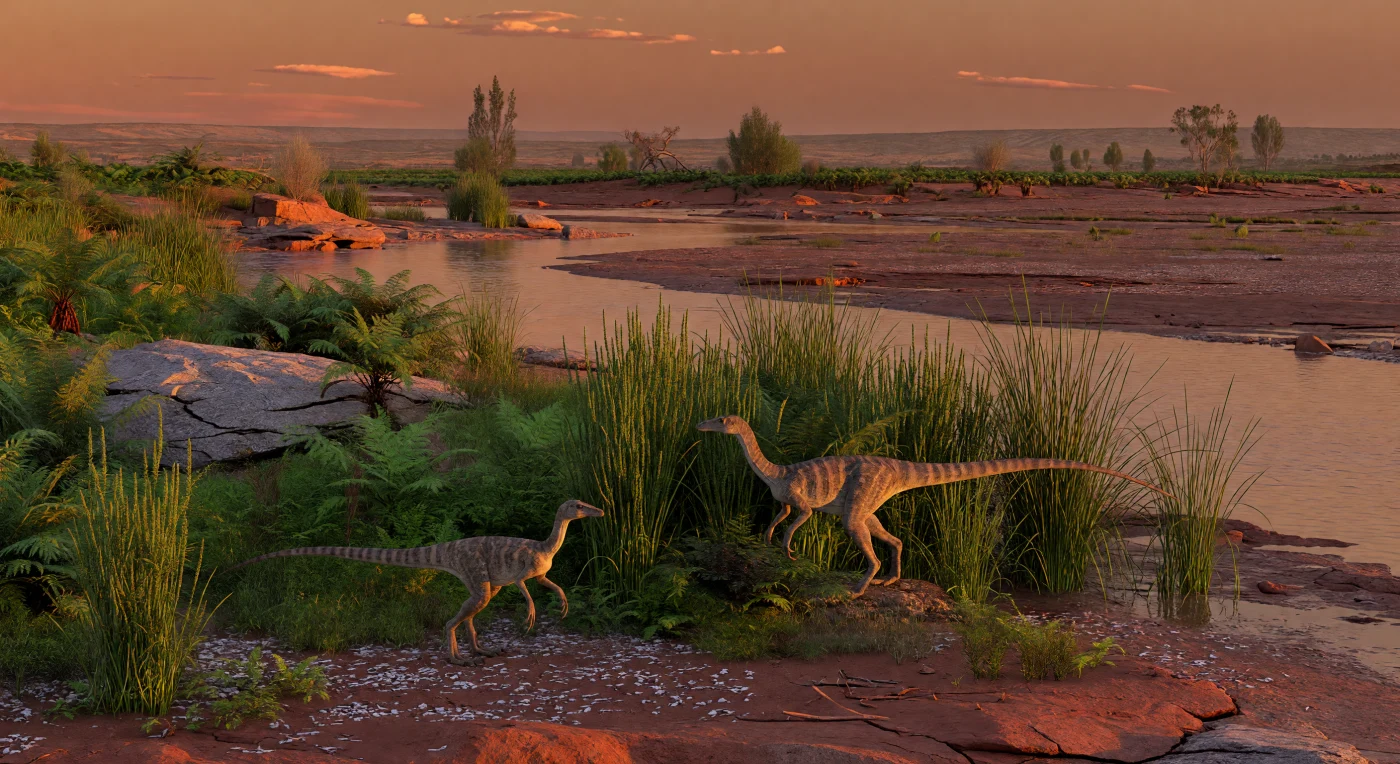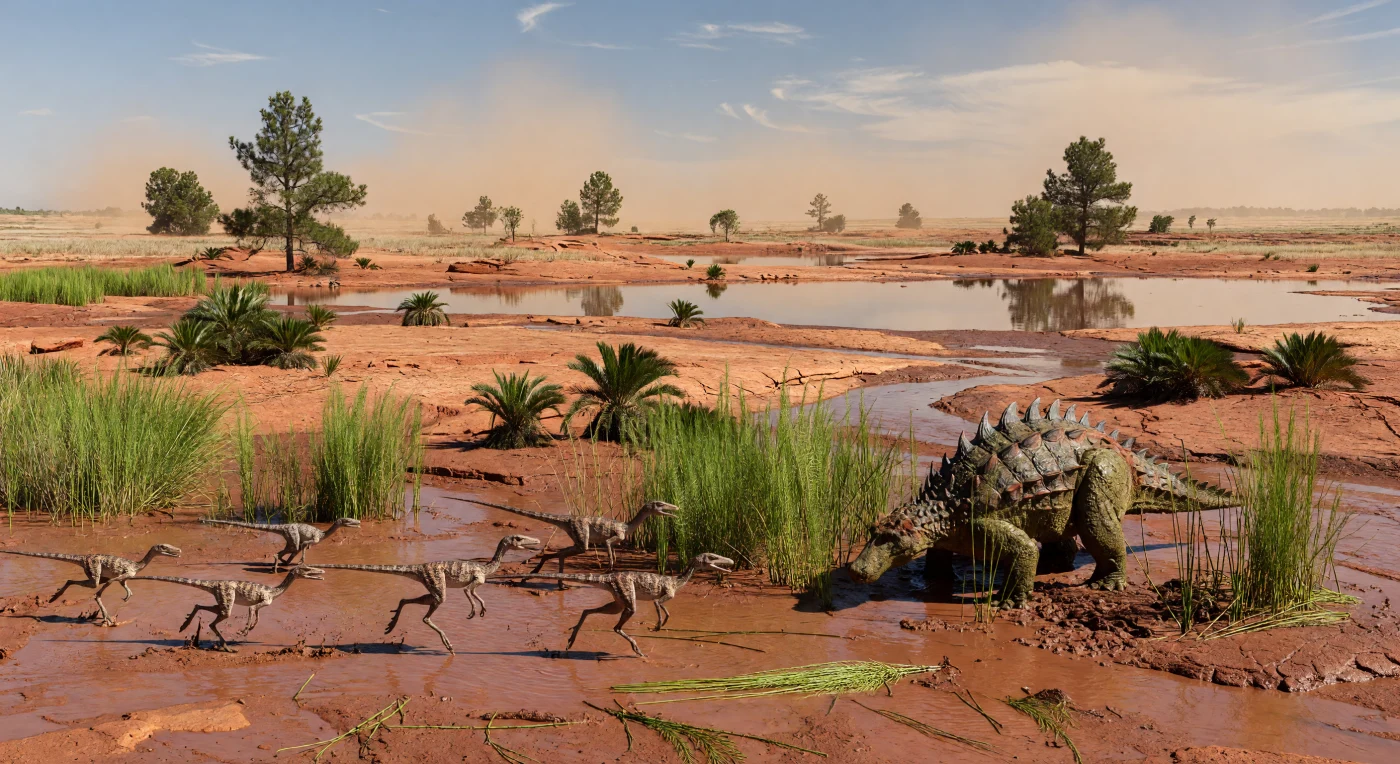
On a monsoonal Late Triassic floodplain of northern Pangaea, slender Coelophysis bauri dash along the edge of a muddy channel while the heavily armored aetosaur Desmatosuchus roots through wet sediment nearby. This scene evokes the Chinle-type landscapes of Laurasia about 220–210 million years ago, where seasonal rivers crossed red-bed basins under hot, strongly seasonal climates. Horsetails, cycads, and conifers such as Voltzia-like trees reflect the pre-flowering plant world that supported these early dinosaur-dominated ecosystems.

In a seasonal woodland of Late Triassic Central Europe, several Plateosaurus—long-necked early sauropodomorph dinosaurs about 7–8 meters long—rear up to browse from conifers and ginkgophytes, while bennettitaleans, ferns, and horsetails dot the red, dusty floodplain. This scene represents the Norian Stage, roughly 220–210 million years ago, when central Laurasia lay within the vast interior of Pangaea and experienced strongly seasonal, semi-arid conditions. Plateosaurus was among the largest herbivores of its ecosystem, using its flexible neck, grasping hands, and bipedal reach to exploit vegetation above the low understory.

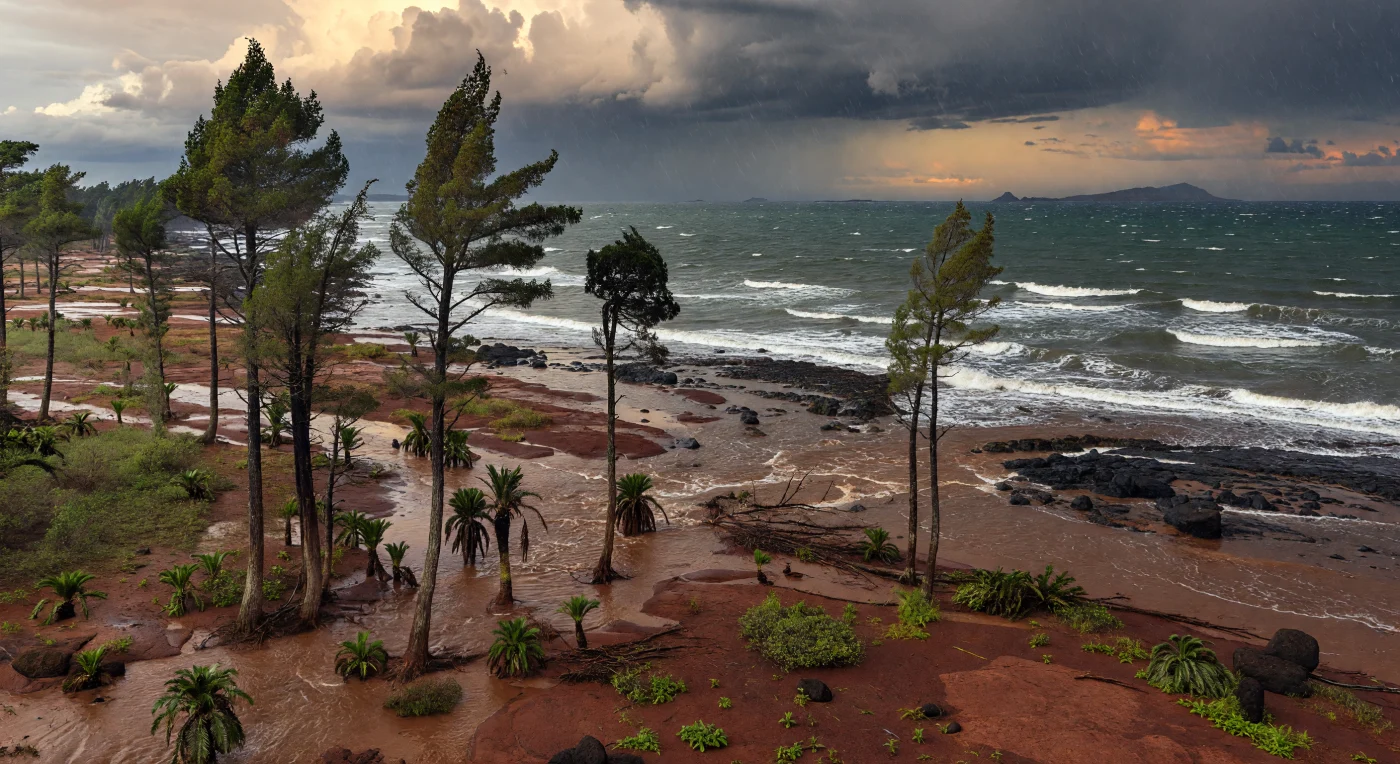
At the close of the Triassic, about 201 million years ago, eastern North America lay within a fault-bounded rift basin as the Central Atlantic Magmatic Province (CAMP) began to erupt. This scene shows incandescent tholeiitic basalt spilling from linear fissures across red mudstones and shallow lake margins, while sparse Pelourdea-like cheirolepidiacean conifers, ferns, and horsetails cling to a stressed volcanic landscape. Tiny coelophysoid theropods or a phytosaur at the water’s edge emphasize the scale of the eruptions and the environmental upheaval that accompanied the end-Triassic mass extinction.

In the late Triassic, about 220–210 million years ago, seasonal droughts could reduce rivers in southwestern North America to shrinking, stagnant waterholes like this one. Dominating the pool is the phytosaur Machaeroprosopus, a crocodile-shaped archosaur with nostrils set high on its snout, while a stranded Koskinonodon temnospondyl and dying semionotiform fishes reveal the harsh toll of desiccation in Laurasia’s arid monsoonal interior. Sparse horsetails, ferns, conifers, cycads, and bennettitalean seed plants cling to the damp margins, reflecting a world long before grasses or flowering plants appeared.

In the Late Triassic, about 230–210 million years ago, giant ichthyosaurs of the genus Shonisaurus glide through the deep offshore waters of Panthalassa along the western margin of Laurasia. Their streamlined bodies, long snouts, and crescent-shaped tails reveal these reptiles as highly specialized open-ocean swimmers, moving above a steep basin wall in a vast blue pelagic realm. Floating shell-rich debris dominated by the thin bivalve Halobia and schools of small marine fishes add to the scene, evoking the rich but still distinctly Mesozoic ecosystems that flourished long before modern whales or seabirds appeared.

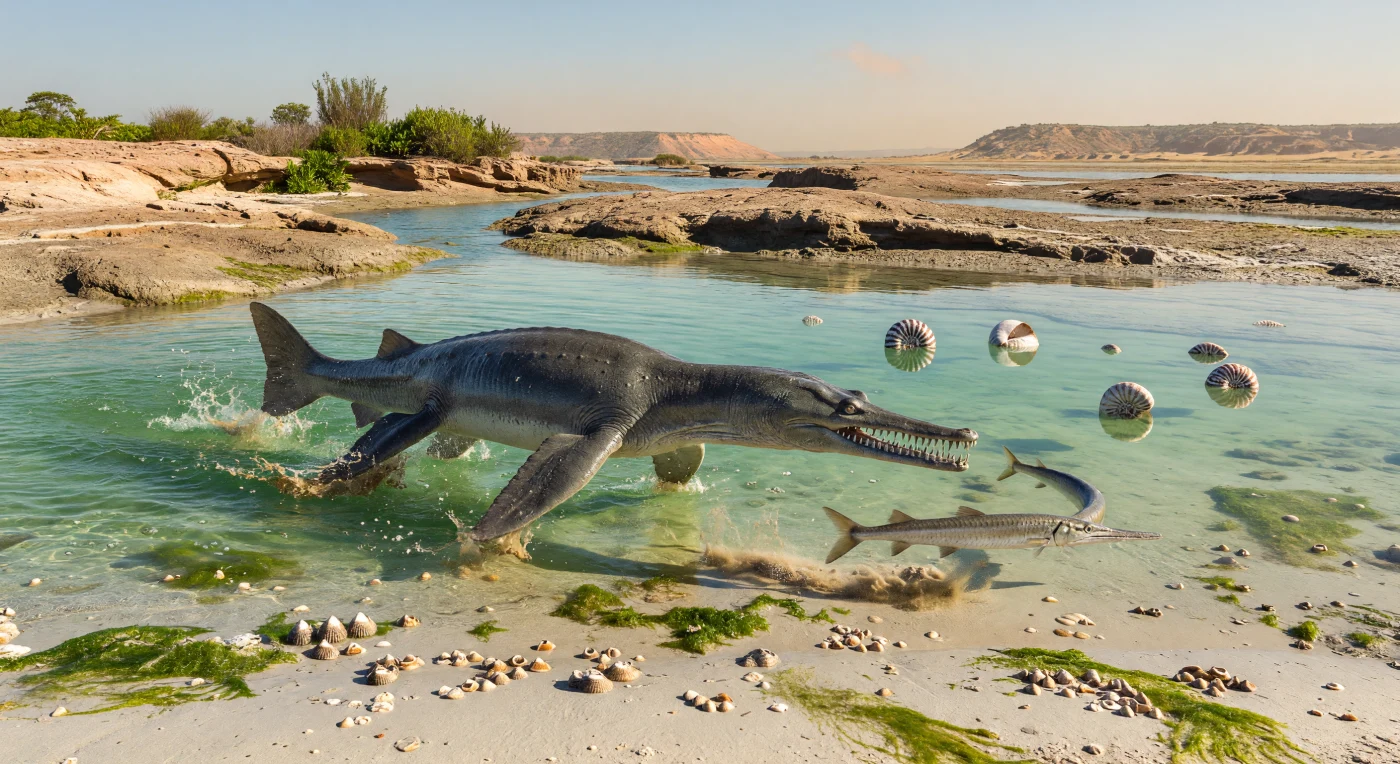
In the shallow, sunlit waters of the Middle Triassic Muschelkalk sea, about 245–240 million years ago, a Nothosaurus patrols above a carbonate seafloor dotted with crinoids, bivalves, ammonoids, and small fishes. This scene from the Germanic Basin of Laurasia shows characteristic marine life including the stalked crinoid Encrinus liliiformis, ribbed Myophoria clams, Ceratites ammonoids, and silvery Perleidus, all part of a warm epicontinental shelf ecosystem where early marine reptiles became important predators.

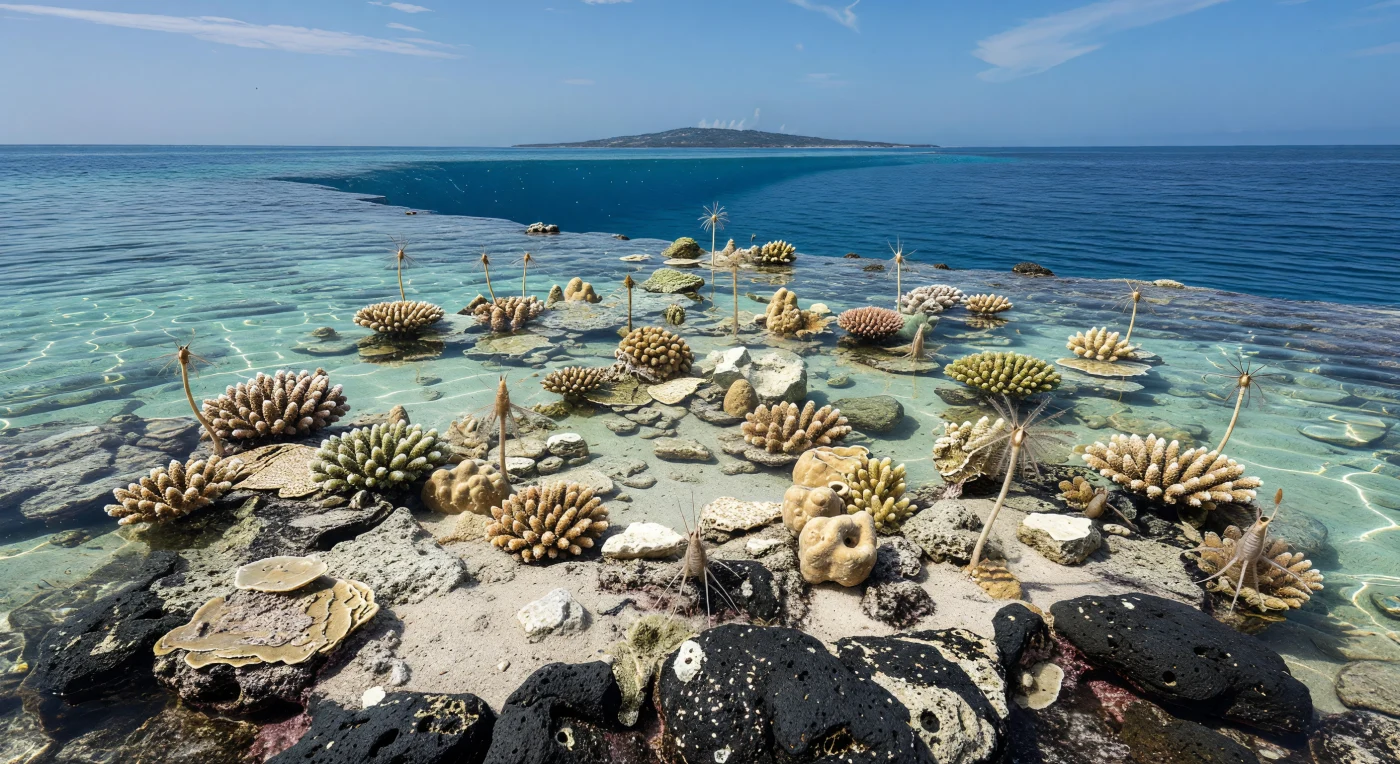
On a warm Tethyan shelf along the Laurasian margin in the Late Triassic, about 220–210 million years ago, low reef knolls of scleractinian corals such as Retiophyllia and Volzeia are bound together by bulbous sphinctozoan sponges and microbial crusts. Small ganoid fish, including Peltopleurus, weave through the branching framework while smooth-shelled ammonoids like Arcestes hover in the clearer water beyond. These Norian reefs differed from modern coral reefs, relying on a distinctive partnership of early reef-building corals, chambered sponges, and microbial binders to construct carbonate-rich bioherms on shallow tropical seafloors.

In a warm, shallow Triassic lagoon along the Tethyan margin of Laurasia, a Placodus browses the shell-strewn bottom, using its projecting front teeth to pry up prey and its broad crushing teeth to crack open thick-shelled bivalves such as Megalodon. Above, hybodont sharks patrol the clear water while carbonate sand, shell debris, and low algal mats cover the seafloor. This scene reflects a Middle to Late Triassic marine ecosystem, roughly 240–220 million years ago, when placodont reptiles were specialized durophages adapted to feeding on hard-shelled invertebrates in coastal shelf and lagoon environments.