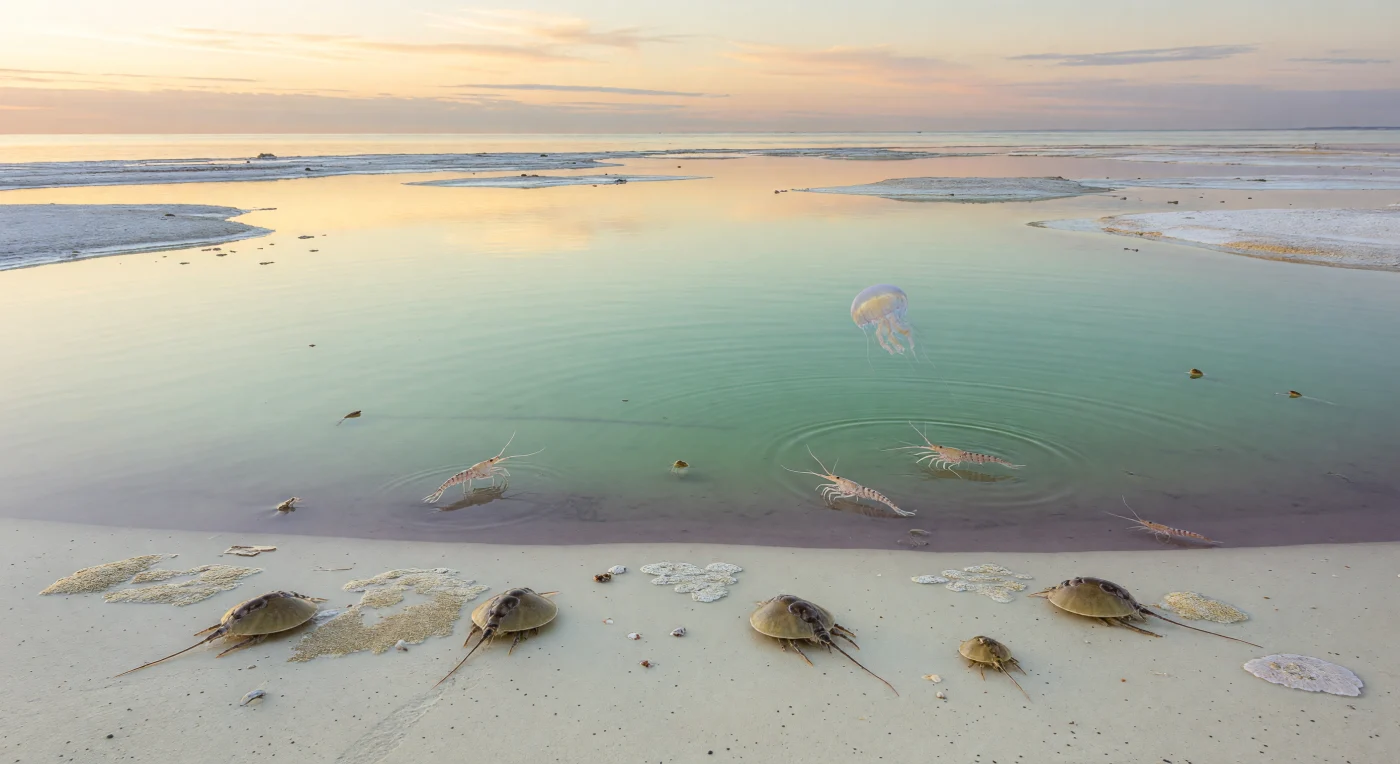
In the Late Jurassic, about 150 million years ago, the Solnhofen Archipelago of southern Germany was a mosaic of low limestone islands and quiet, hypersaline lagoons. Here, the early feathered dinosaur Archaeopteryx lithographica launches from a conifer branch, showing its mix of birdlike flight feathers and reptilian features such as toothed jaws, clawed fingers, and a long bony tail, while Rhamphorhynchus pterosaurs glide over the still turquoise water. Sparse bennettitalean and conifer vegetation reflects the harsh, salty island environment that helped preserve some of the world’s most famous fossils in fine lagoonal limestone.

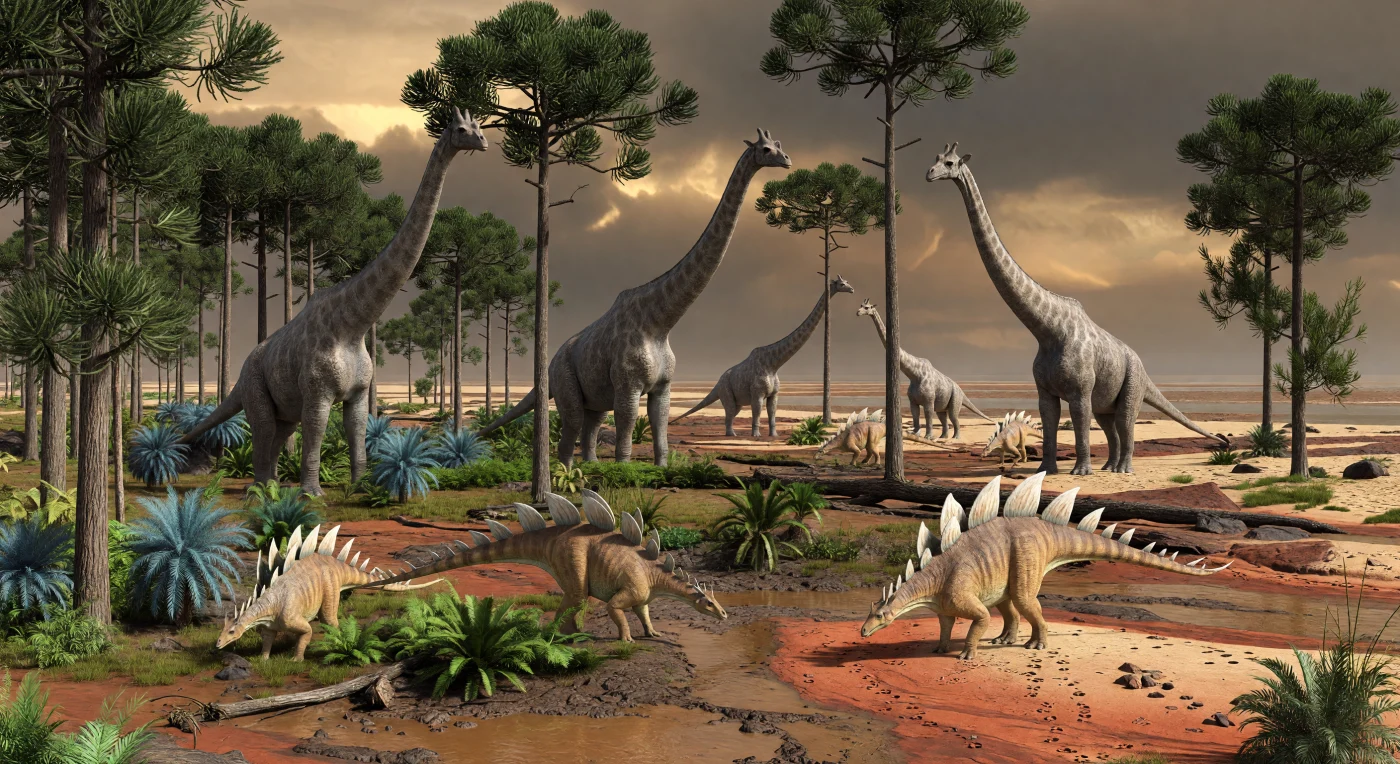
On a Late Jurassic floodplain of the Morrison Formation in western North America, about 155–148 million years ago, a herd of Diplodocus wades through a sediment-laden river while a much taller Brachiosaurus rises above the conifer-lined banks. The scene captures a characteristic Laurasian ecosystem of broad alluvial plains, muddy channels, fern meadows, horsetail thickets, and conifer woodland, with fresh sauropod and theropod tracks marking the wet ground. These giant plant-eaters were among the most impressive dinosaurs of Jurassic North America, thriving in warm seasonal landscapes long before grasses and flowering plants evolved.
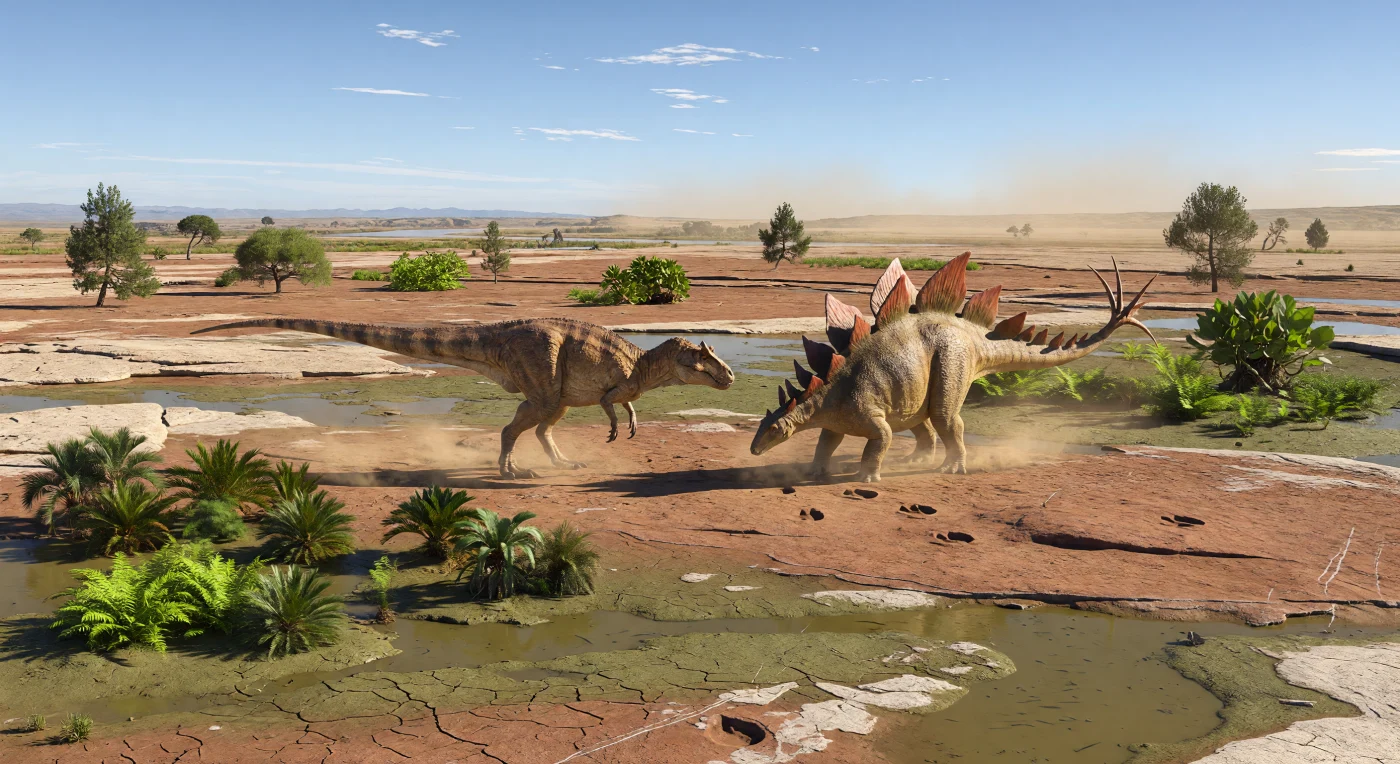
On the semi-arid floodplains of the Morrison Formation in western North America, about 150 million years ago in the Late Jurassic, an adult Allosaurus fragilis cautiously circles a defensive Stegosaurus. The scene captures a plausible moment of predator-prey tension: the theropod stays just beyond the reach of the stegosaur’s raised, four-spiked tail, while its alternating double row of plates and low-slung posture are shown against a landscape of cycads, ferns, araucarian conifers, and seasonally dry mudflats. This ecosystem was part of Laurasia and supported some of the most famous dinosaurs of the Jurassic, including Allosaurus, Stegosaurus, and giant sauropods whose tracks could mark the same floodplain.

In a cool, misty wetland of the Daohugou ecosystem in northeastern Asia, a semi-aquatic mammaliaform, Castorocauda lutrasimilis, slips from the muddy shore into a still Jurassic pond while salamanders and dragonfly-like insects animate the shaded margin. Dating to the Middle–Late Jurassic, about 165–160 million years ago, this scene highlights an unusually mammal-like animal adapted for life in water, with dense fur, paddle-like feet, and a flattened tail. The surrounding ginkgophytes, conifers, horsetails, and ferns reflect the non-flowering vegetation that dominated Laurasian landscapes long before grasslands and modern forests evolved.
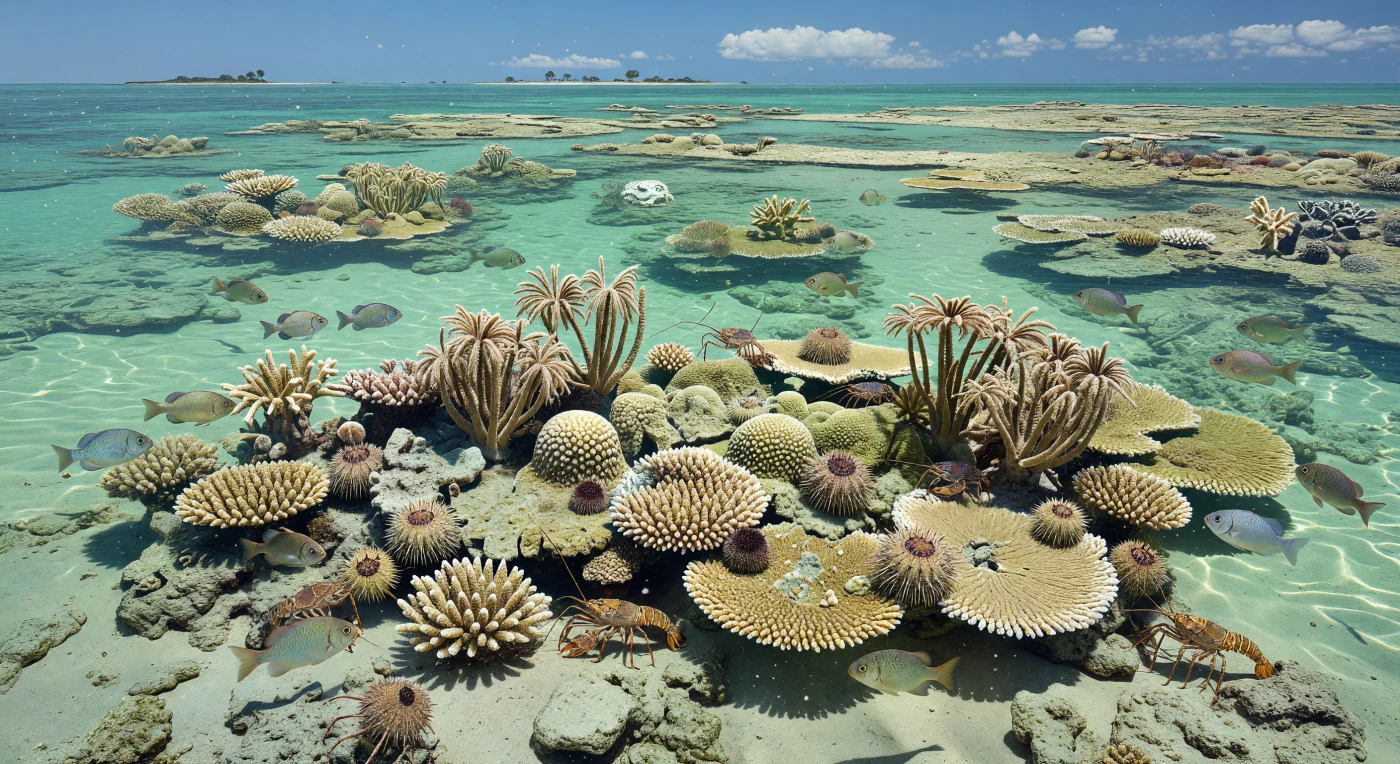
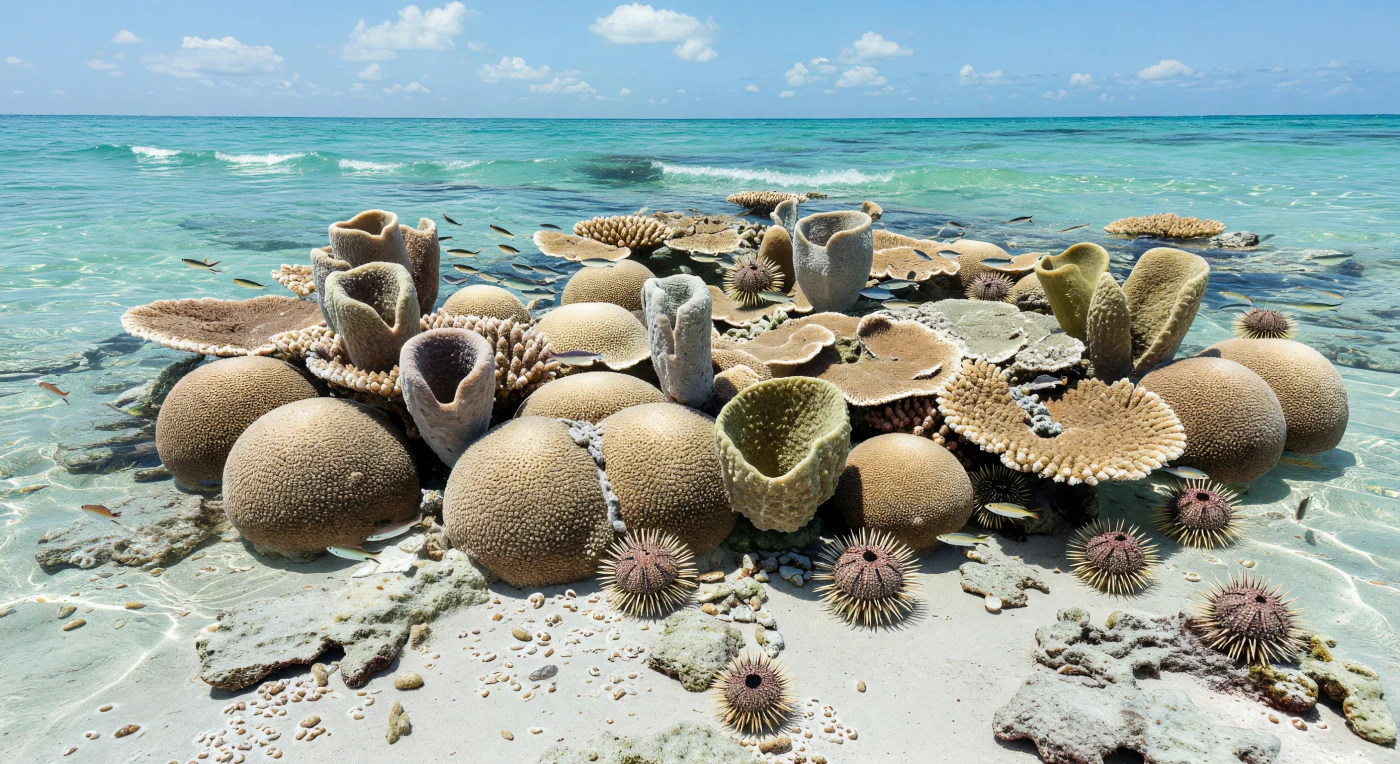
In the warm, shallow shelf seas of Late Jurassic Europe, about 160–150 million years ago, low patch reefs built by scleractinian corals such as Thecosmilia, Isastrea, and Thamnasteria rose from a pale carbonate seafloor. Among the coral colonies, stalked Pentacrinites crinoids filtered food from the water, spiny cidaroid sea urchins grazed across the reef surface, and Glyphea lobsters sheltered in crevices while schools of deep-bodied Dapedium cruised through the sunlit shoals. This scene captures a Jurassic carbonate platform in the Tethyan-influenced seas of Laurasia, before modern reef communities had evolved.

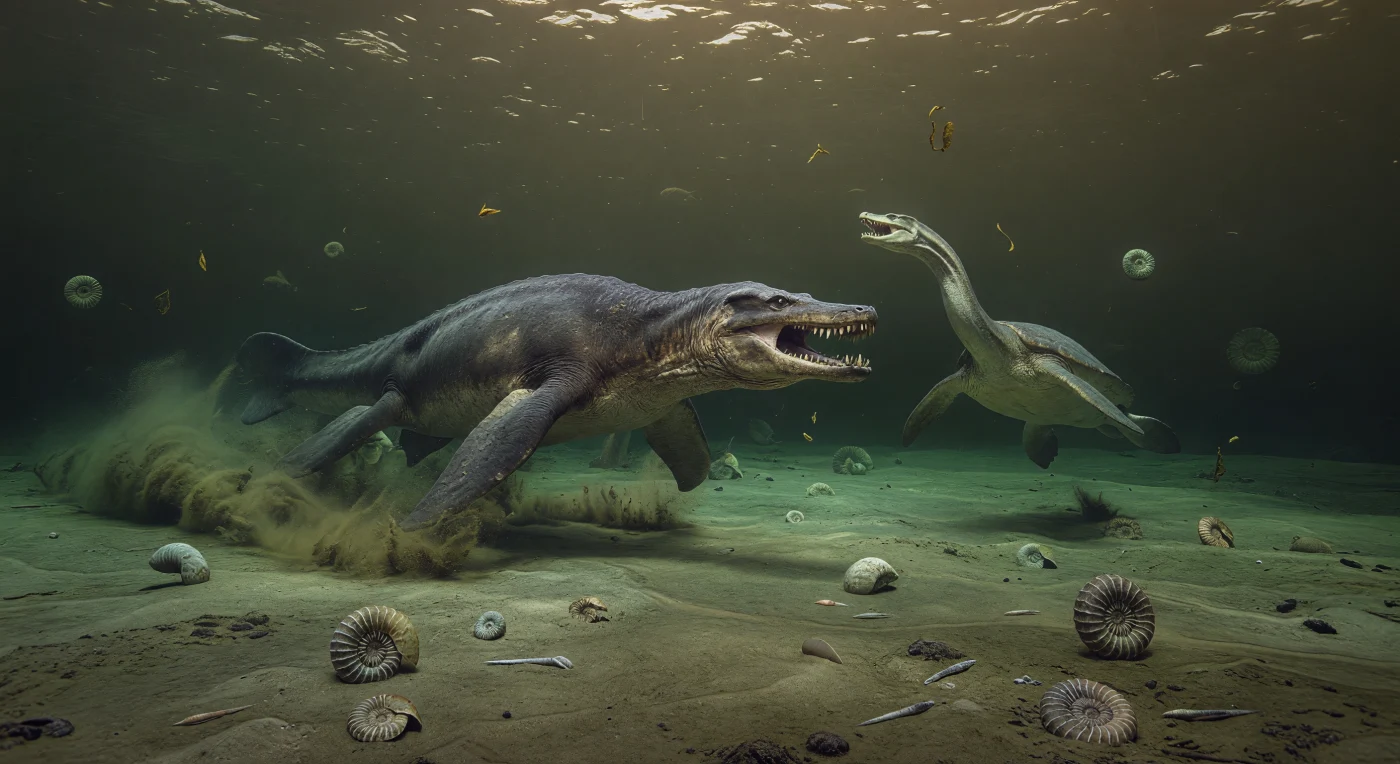
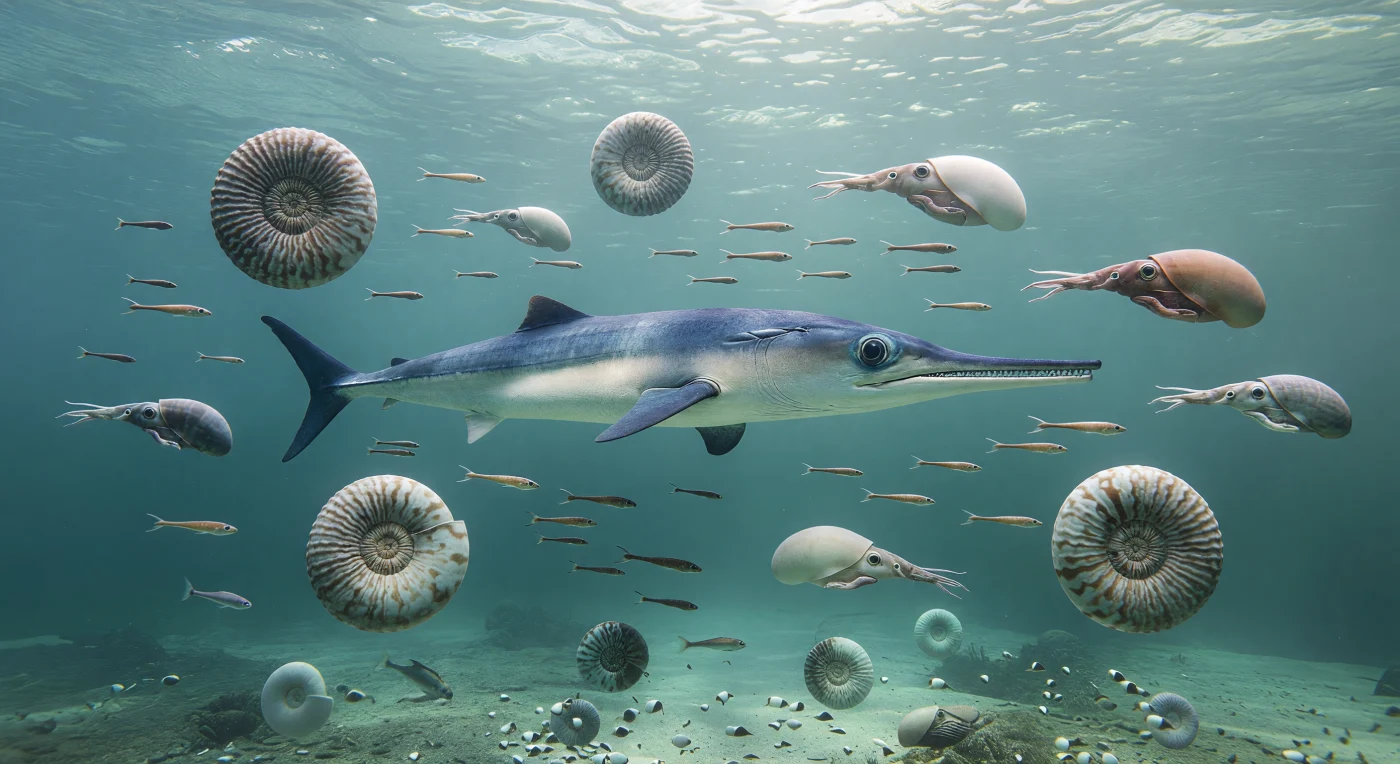
In the clear offshore waters of the Late Jurassic, about 160–150 million years ago, an Ophthalmosaurus sweeps through a shoal of Hibolites belemnites while ribbed Perisphinctes ammonites drift nearby above a pale carbonate seafloor. Below, the long-necked plesiosaur Cryptoclidus glides over the outer shelf, its broad body and four powerful flippers contrasting with the ichthyosaur’s streamlined, fishlike form. This scene captures a typical marine ecosystem of the western Tethyan–European shelf in Laurasia, where cephalopods and fast-swimming marine reptiles thrived in warm epicontinental seas.

In this Early Jurassic Laurasian shelf sea, about 183 million years ago during the Toarcian Oceanic Anoxic Event, the upper waters still support life beneath a murky phytoplankton bloom of dinoflagellates and coccolithophores. Schools of Passaloteuthis belemnites and drifting Dactylioceras ammonites occupy this oxygenated layer, while below them the water darkens abruptly into stagnant, sulfur-rich depths almost devoid of animals. The seafloor is covered by undisturbed organic mud—the precursor to black shale—recording one of the Jurassic’s best-known episodes of widespread marine oxygen depletion.

In the Early Jurassic, about 200 million years ago, eastern Laurasia’s Atlantic rift margin was a landscape of active faulting, red-bed basins, and seasonal storm runoff. This scene shows a broad fault-bounded valley with rain-darkened mudflats, shallow ephemeral lakes, fresh alluvial fans, and distant weathered basalt flows left by earlier Central Atlantic Magmatic Province volcanism. Sparse conifers, cycad-like plants, bennettitaleans, seed ferns, and ferns cling to damp channels and basin margins, illustrating the dry but strongly seasonal environments typical of Jurassic rift basins.