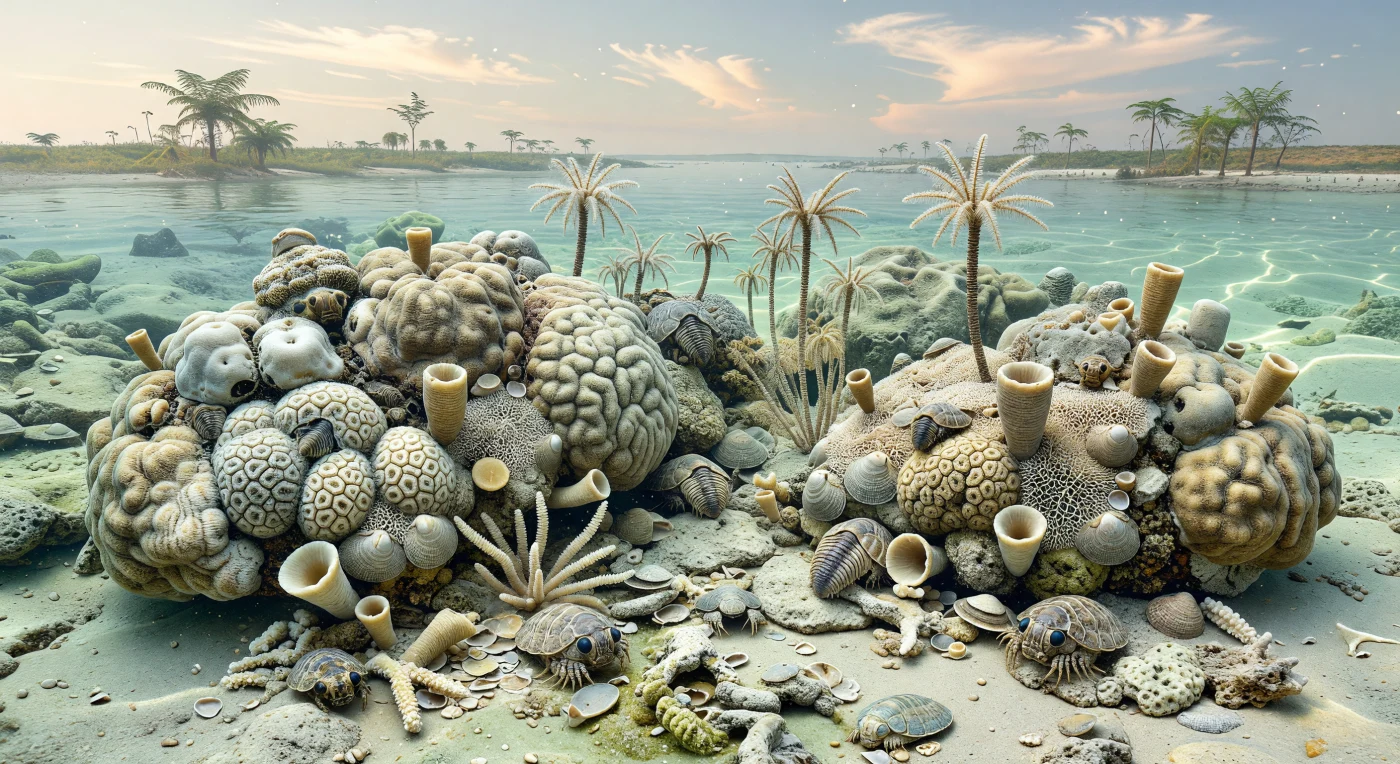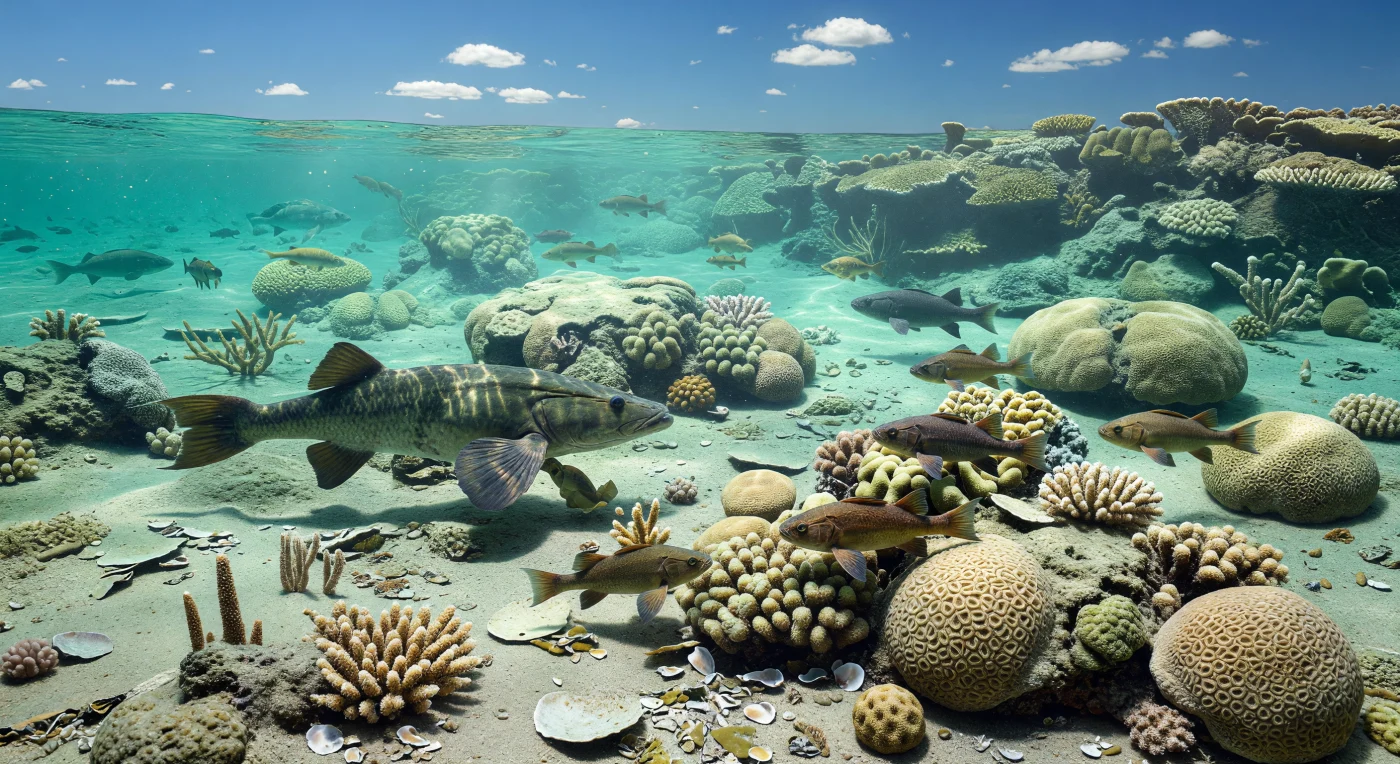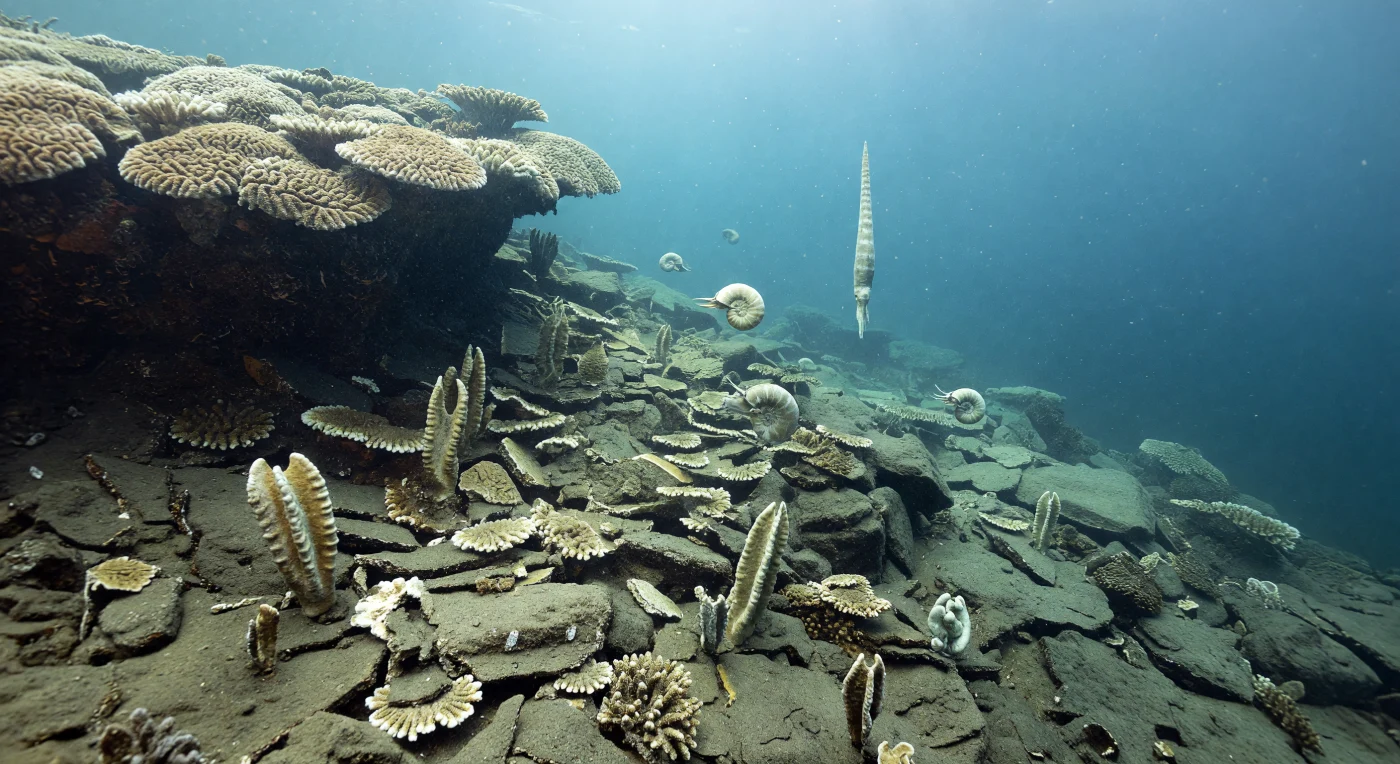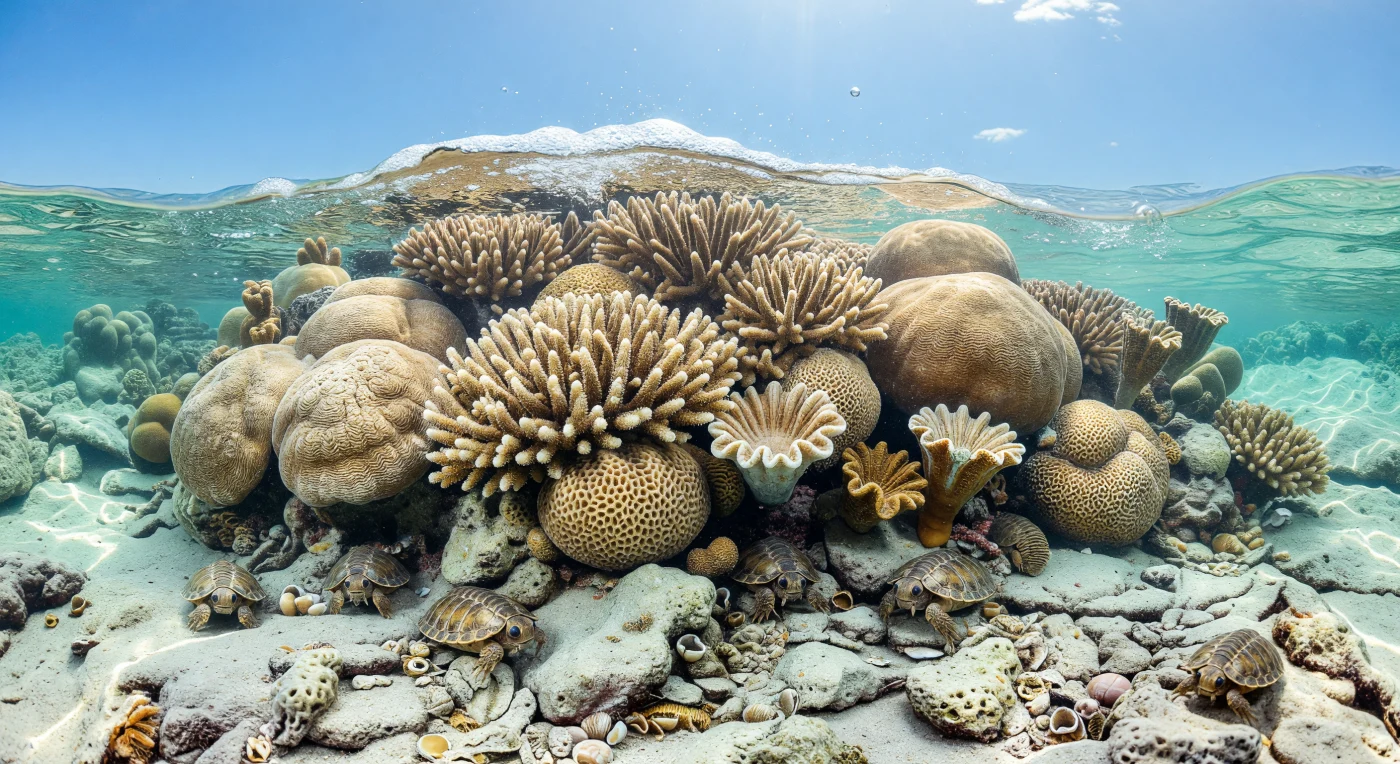
In a warm, shallow Middle Devonian sea about 393–383 million years ago, a surge-swept reef crest is built by domed stromatoporoid sponges such as Stromatopora, branching Amphipora, and colonial corals including Favosites, with scattered horn corals like Heliophyllum rising from pale carbonate rubble. Small Phacops trilobites crawl across the seafloor, dwarfed by the meter-scale reef framework that dominated many tropical epicontinental seas of the time. Before modern coral reefs became widespread, stromatoporoid–coral communities like these formed some of the great reef systems of the Devonian, often called the “Age of Fishes.”
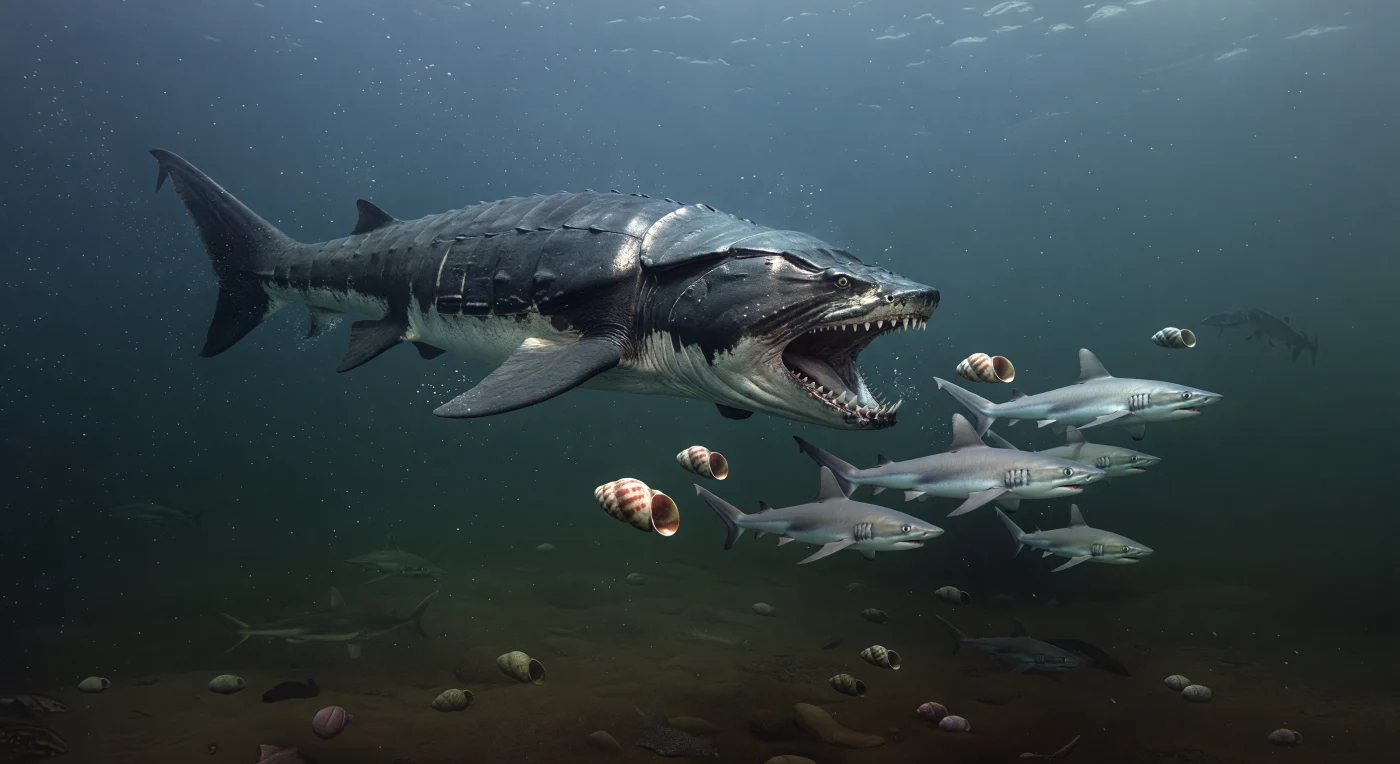
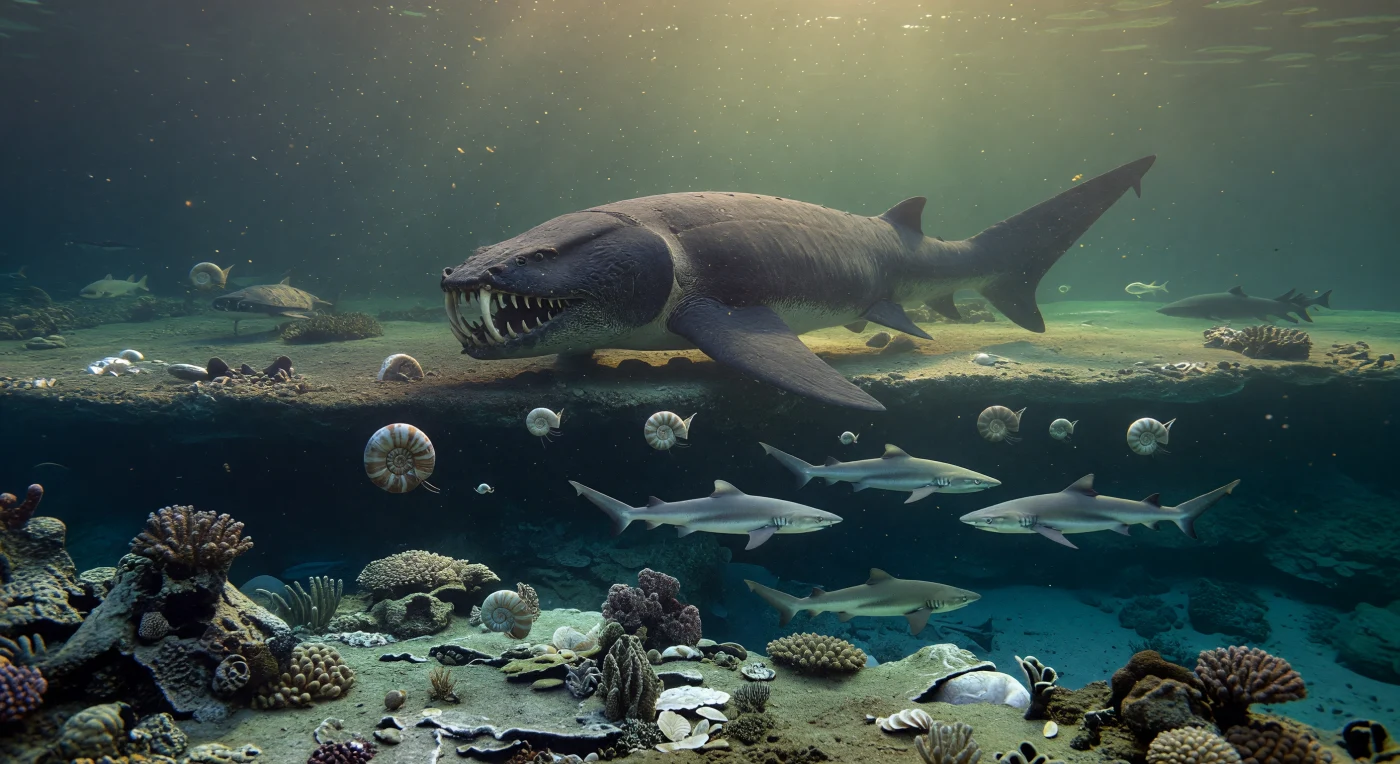
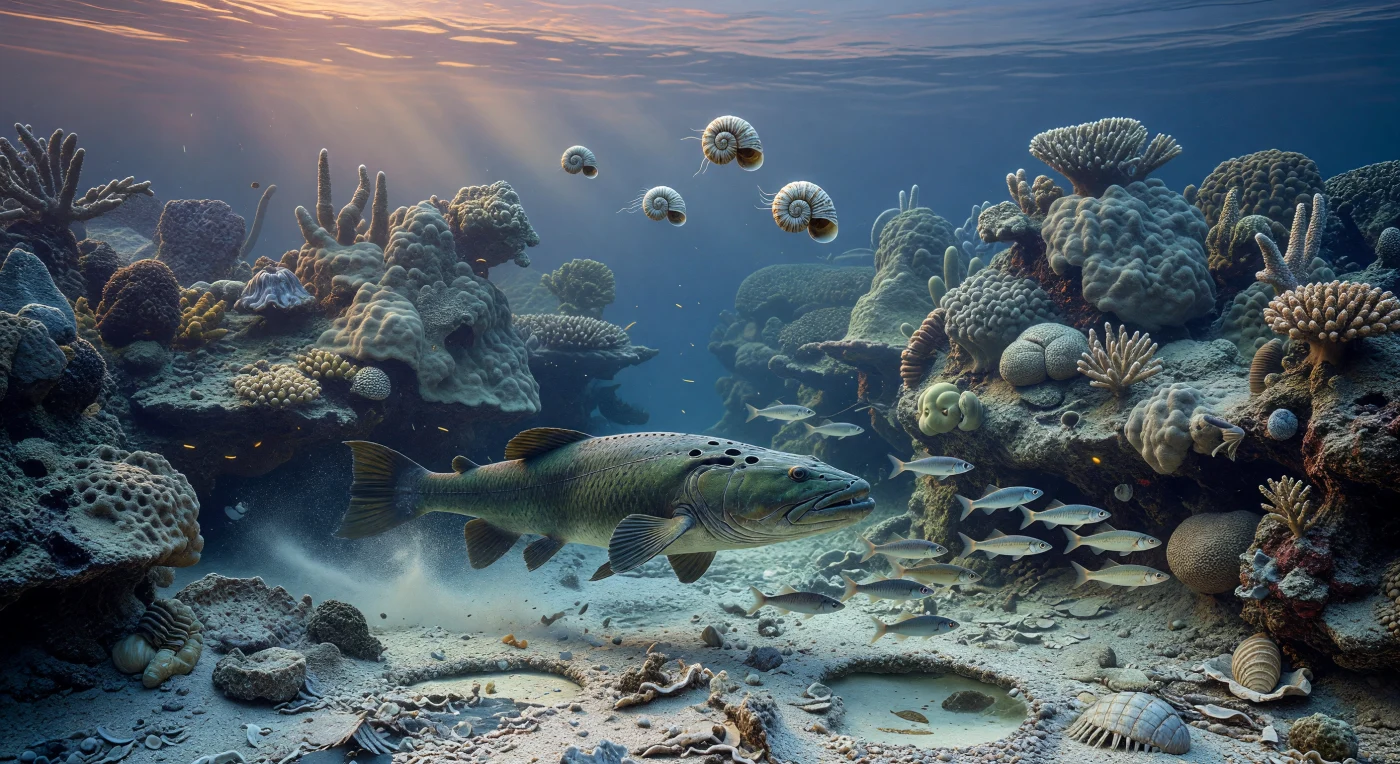
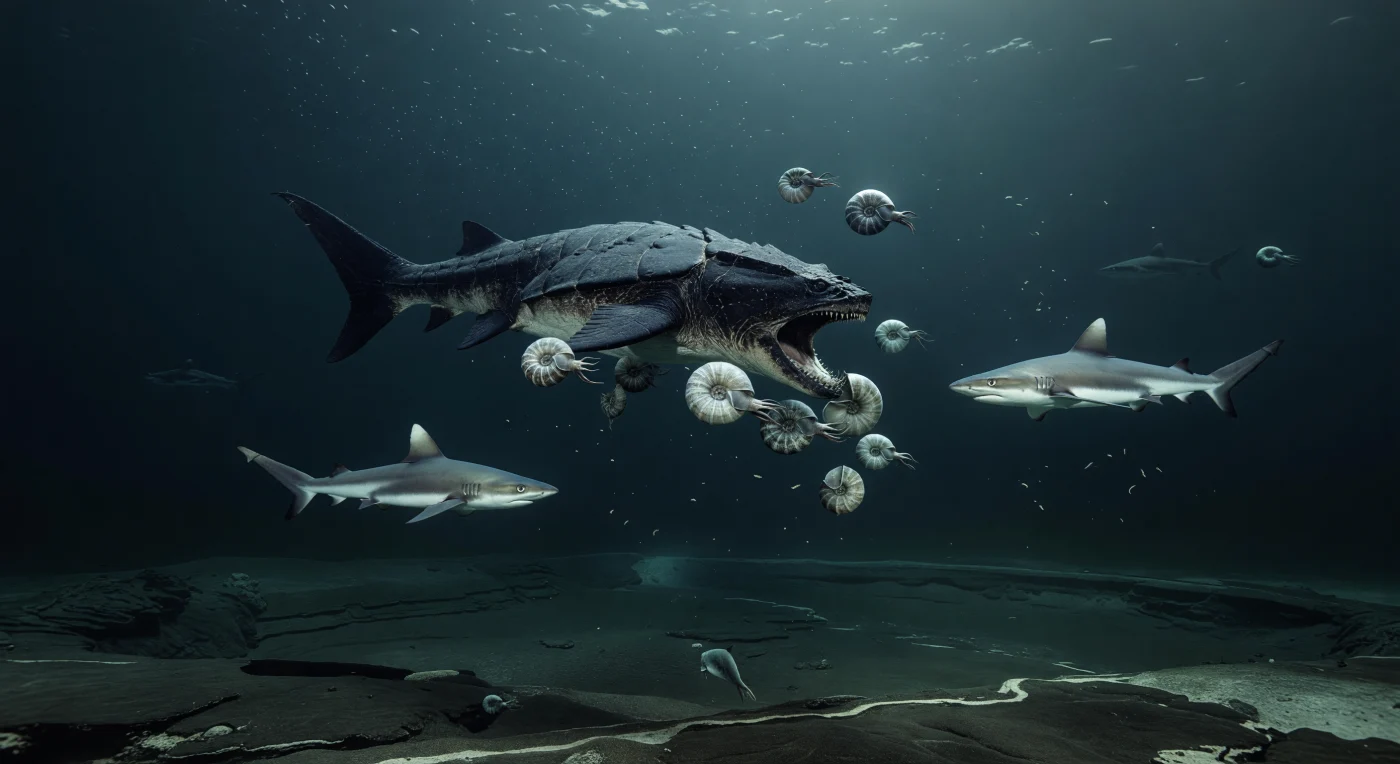
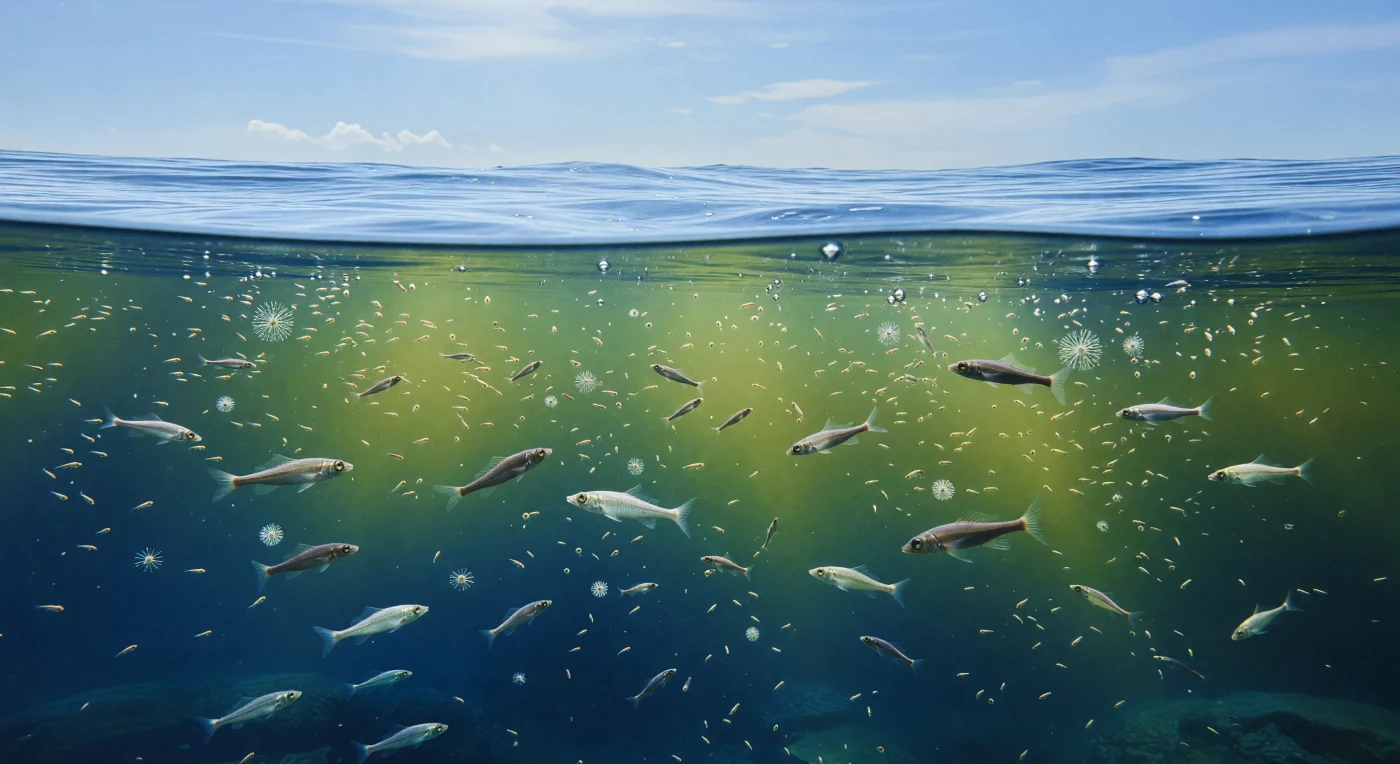
In the Late Devonian, about 372–359 million years ago, a giant armored fish, Dunkleosteus terrelli, surges through the dim outer-shelf seas of tropical Laurussia in pursuit of a scattering school of Cladoselache. The scene captures a vertebrate-dominated ocean in transition: swift early sharks, drifting ammonoids such as Manticoceras, and murky, particle-rich water above deeper oxygen-poor basins where organic-rich muds accumulated. Rather than true teeth, Dunkleosteus wielded sharpened bony jaw blades, making it one of the most formidable marine predators of its time.
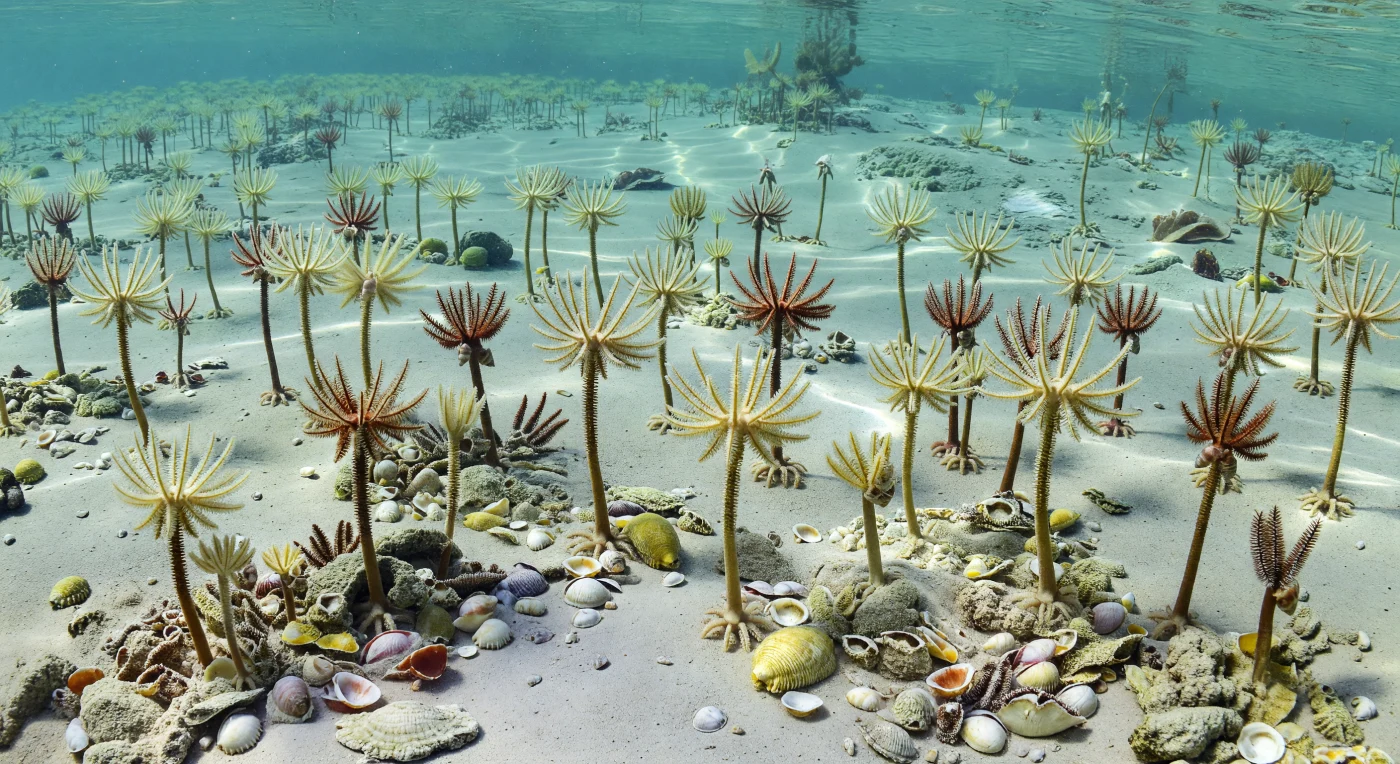
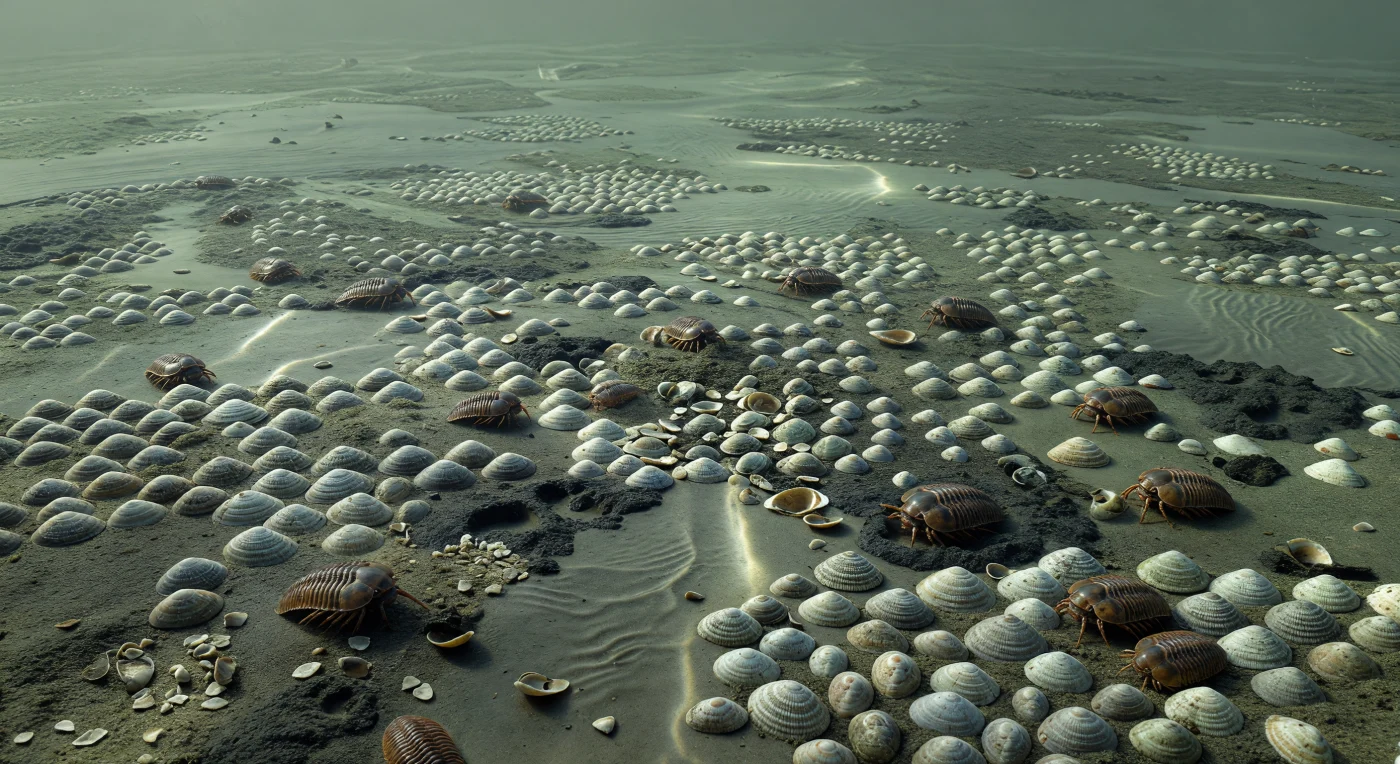
In the warm, clear seas of the Middle Devonian, about 393–383 million years ago, dense meadows of stalked crinoids such as Cupressocrinites and Taxocrinus rose from a pale carbonate shelf, their feathery crowns filtering food from gentle currents. Around their bases lie shell beds of brachiopods including Mucrospirifer and Atrypa, while small Platyceras snails cling near some crinoid calyxes, illustrating a well-known Paleozoic ecological association. This scene captures a typical shallow tropical shelf community of the Devonian, when echinoderms, brachiopods, stromatoporoids, and corals flourished in greenhouse seas long before the first marine reptiles or modern seagrass evolved.
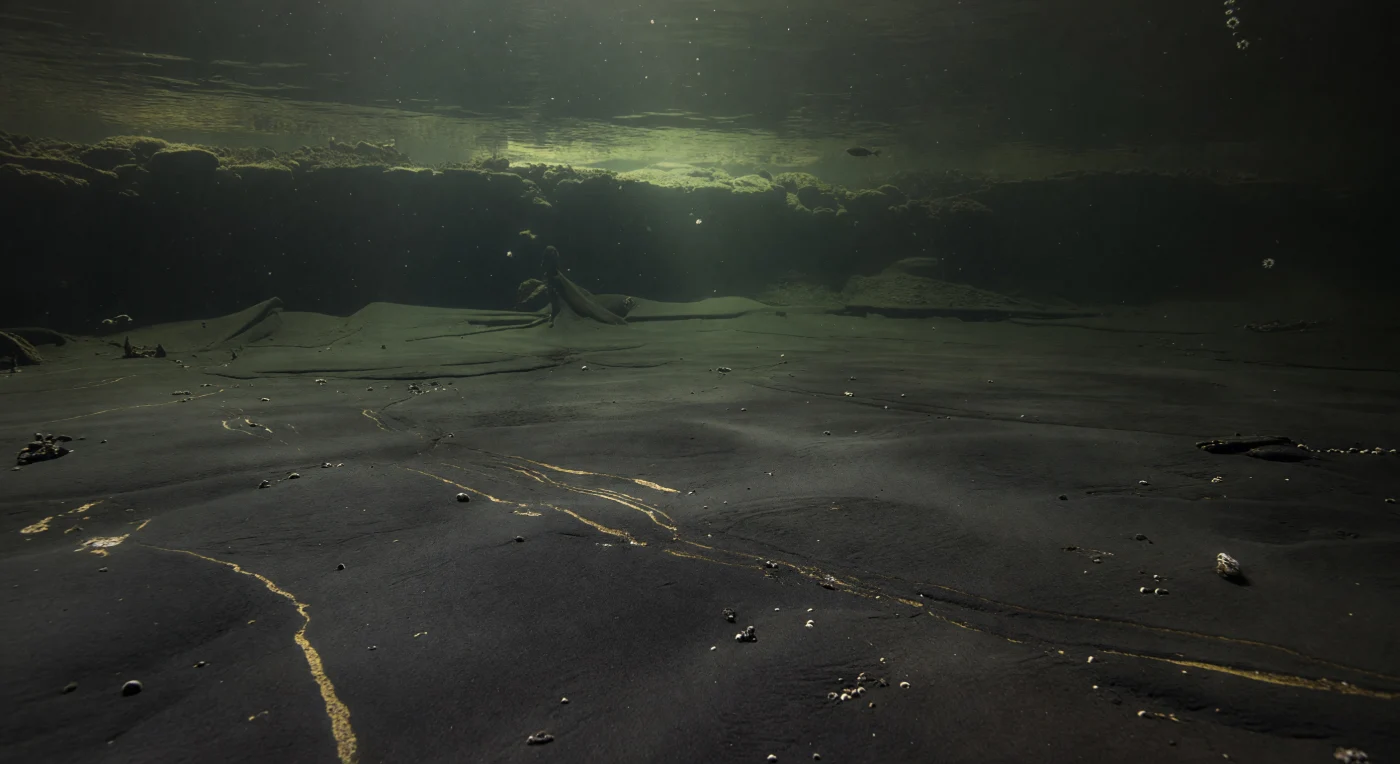
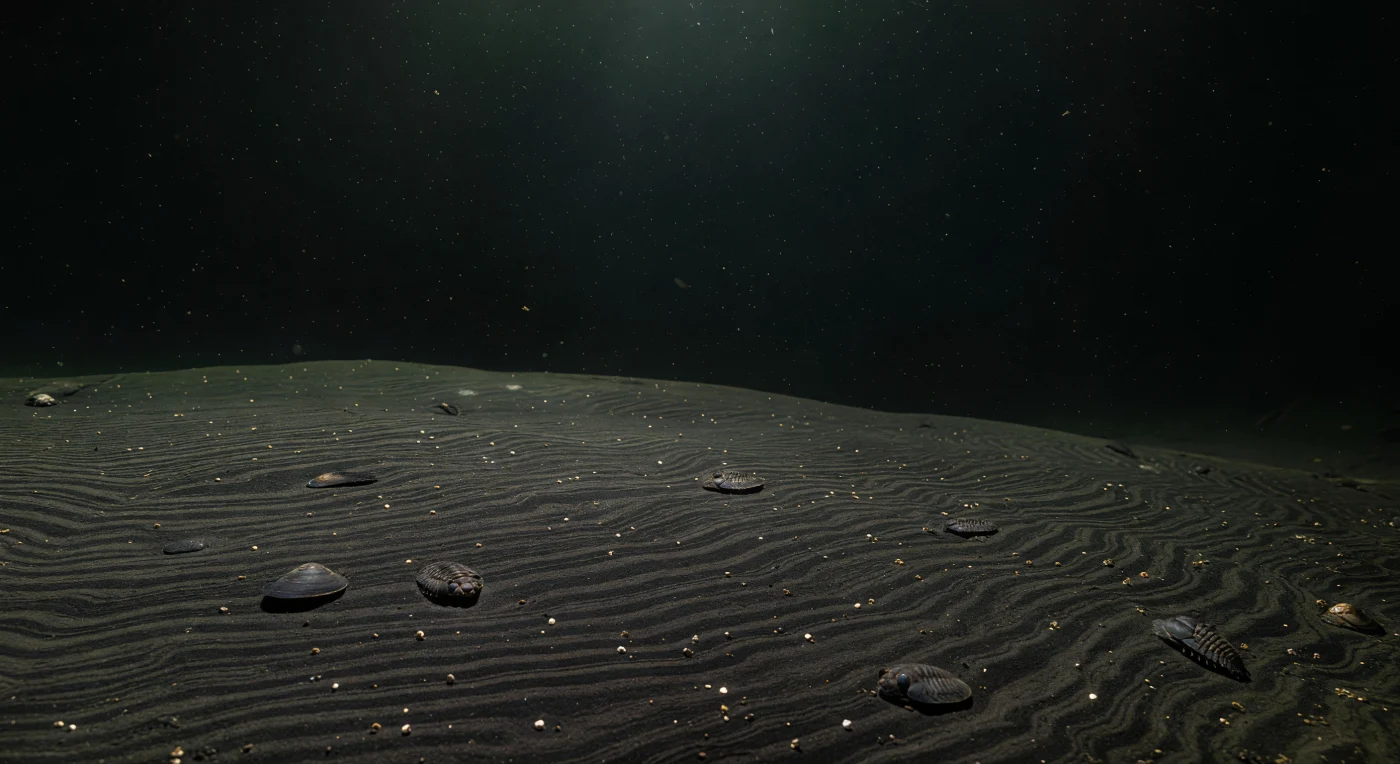
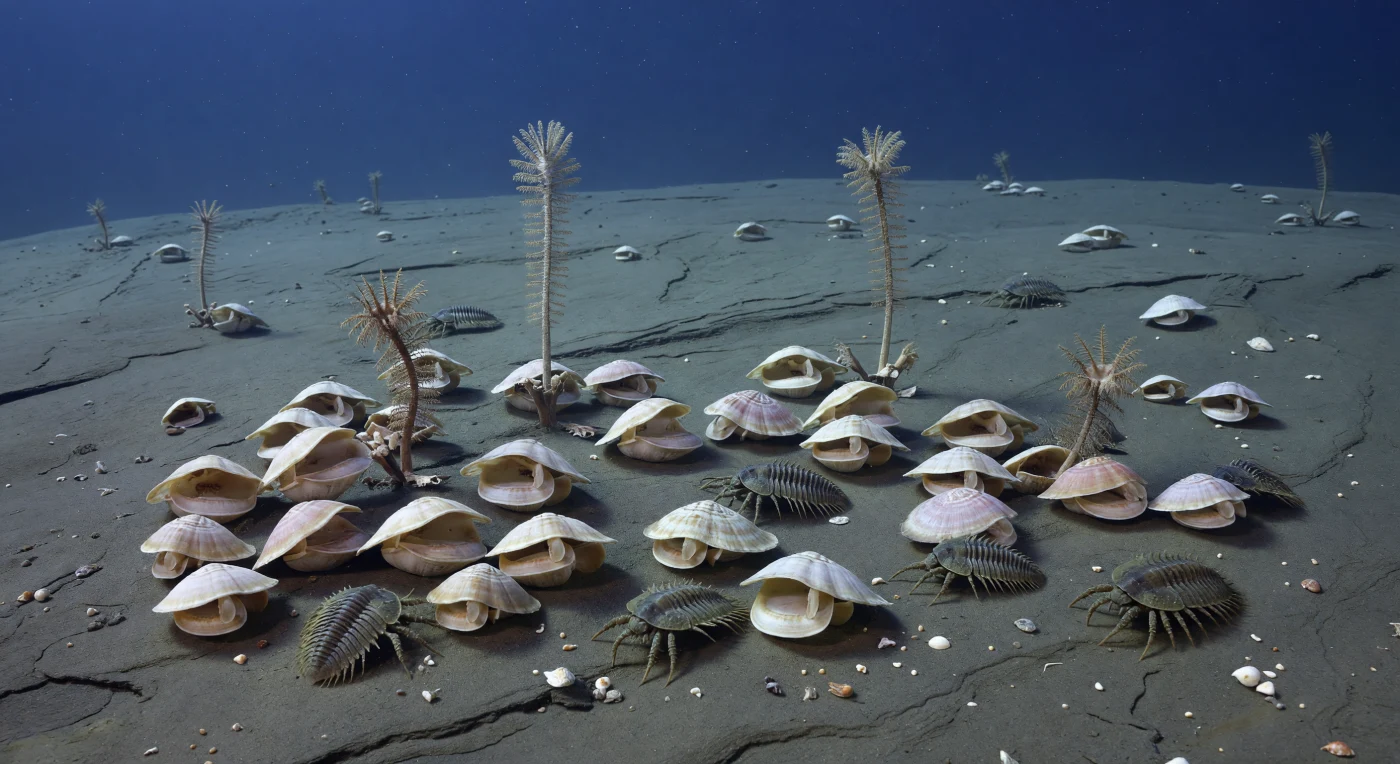
In this Late Devonian marine basin, about 372–359 million years ago, dim green-black water settles over a broad seafloor of fine organic mud destined to become black shale. Sparse radiolarians drift in the water column above laminated, pyrite-rich sediment, while the near absence of burrows or bottom-dwelling life reveals severe oxygen depletion during one of the Devonian’s recurrent oceanic crises. The faintly visible shelf margin above hints at a warmer, reef-fringed world nearby, but the basin interior itself is quiet, stagnant, and ecologically stressed.
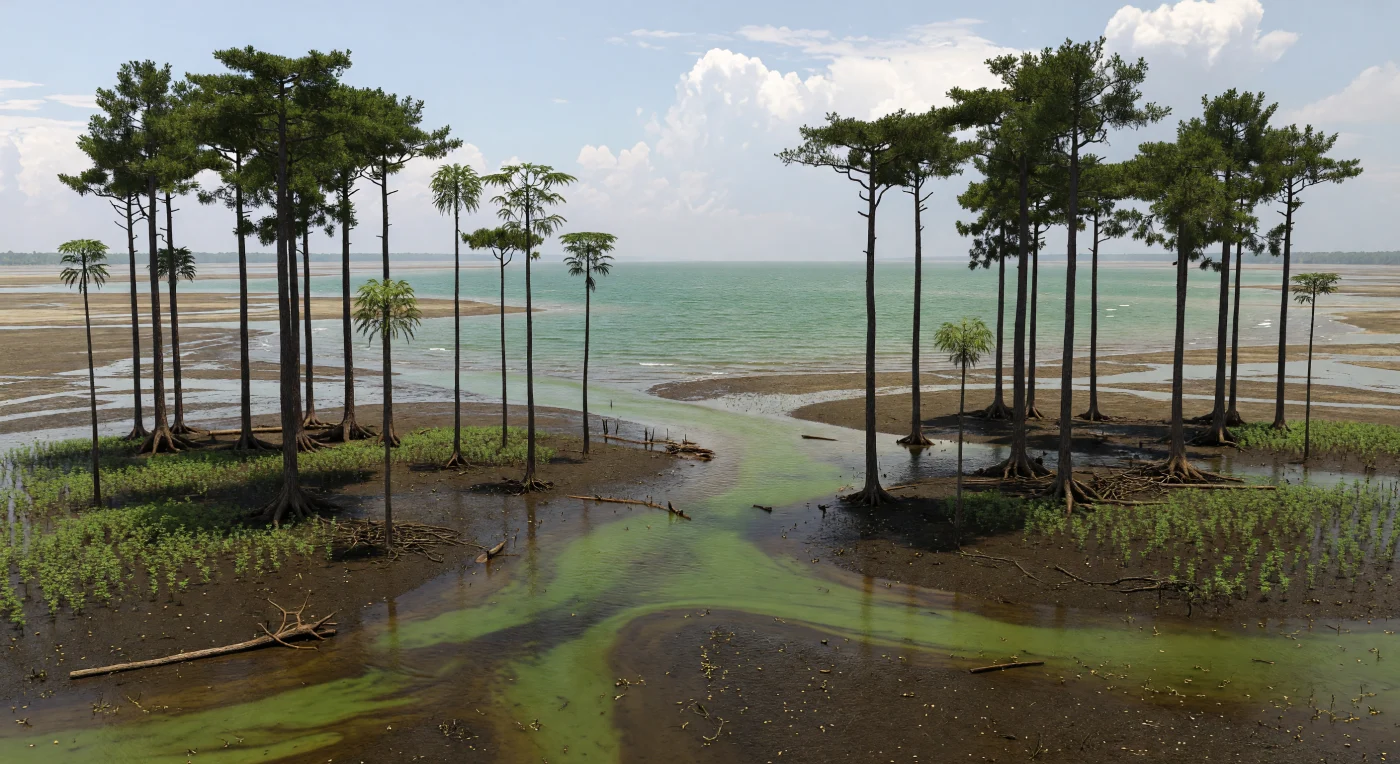
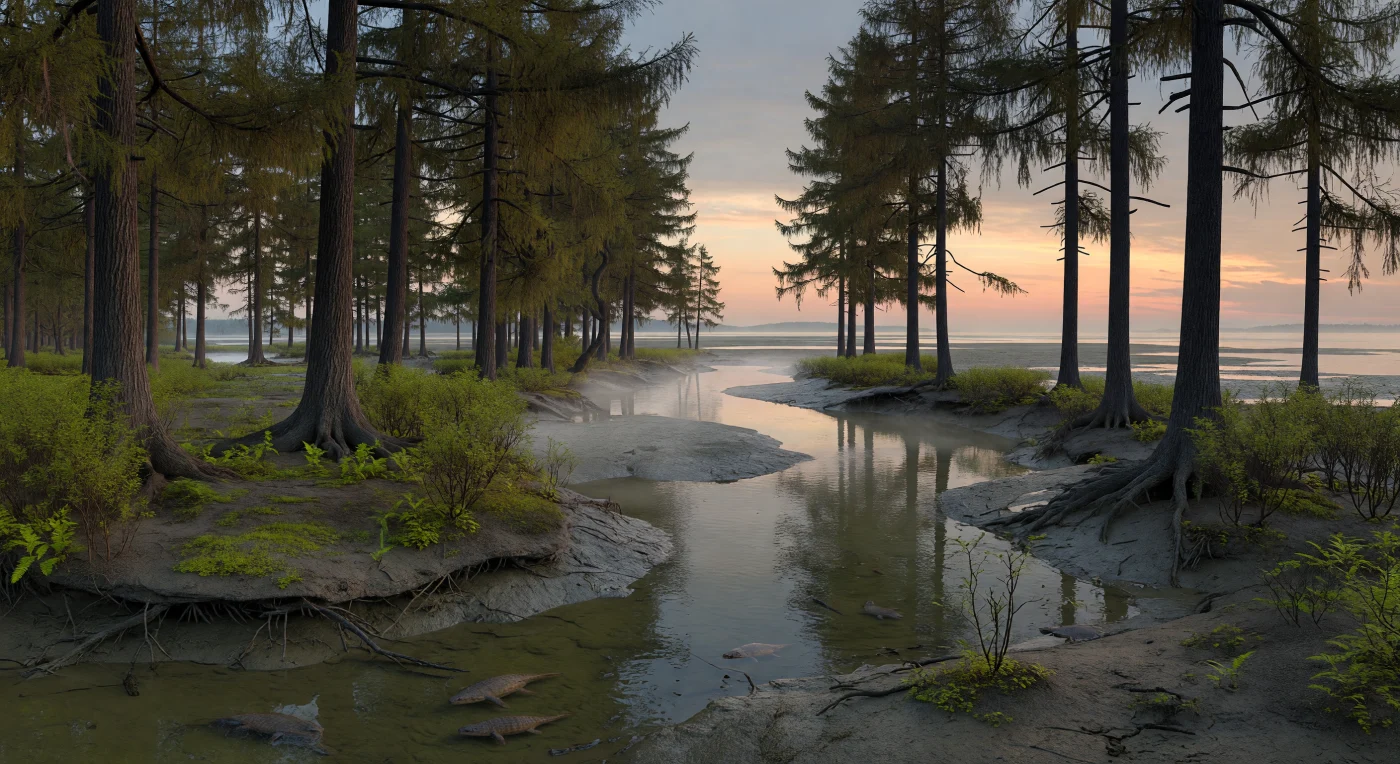
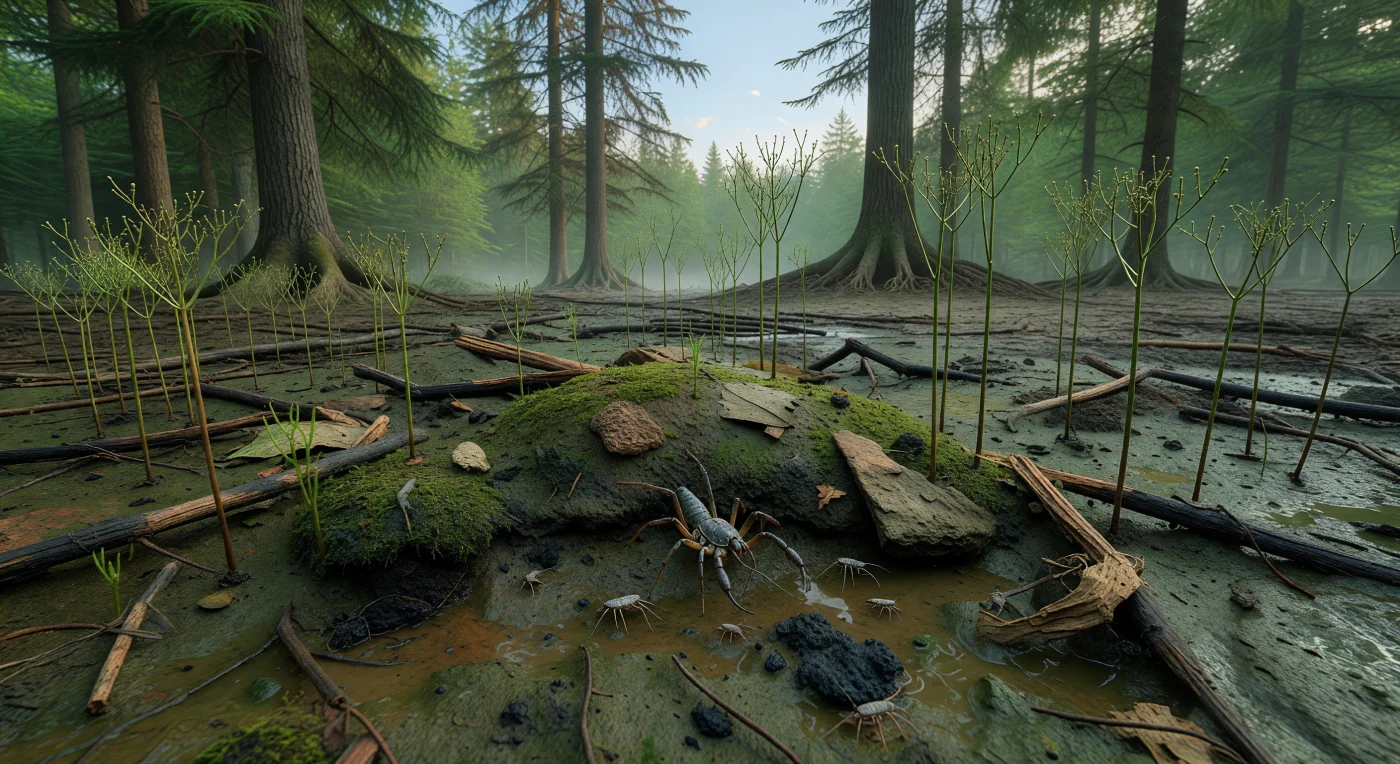
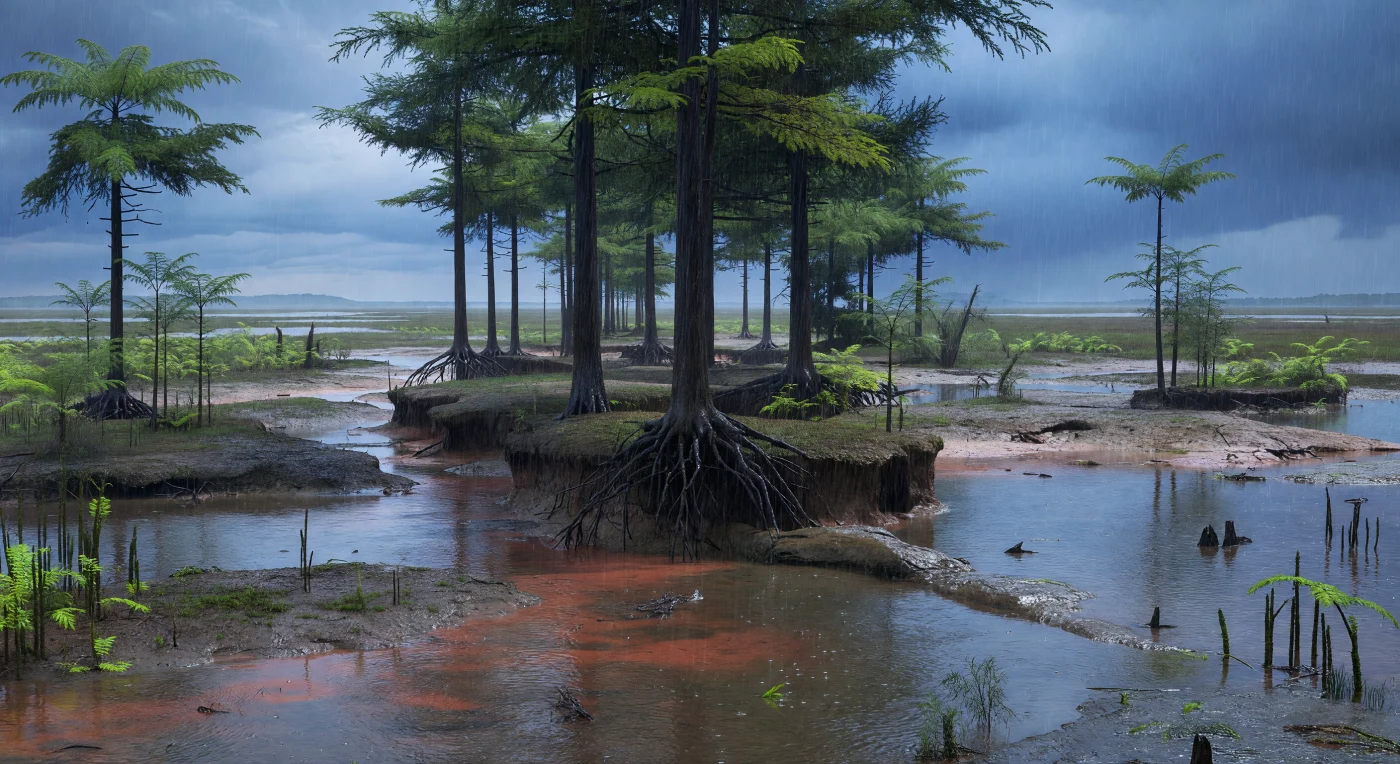
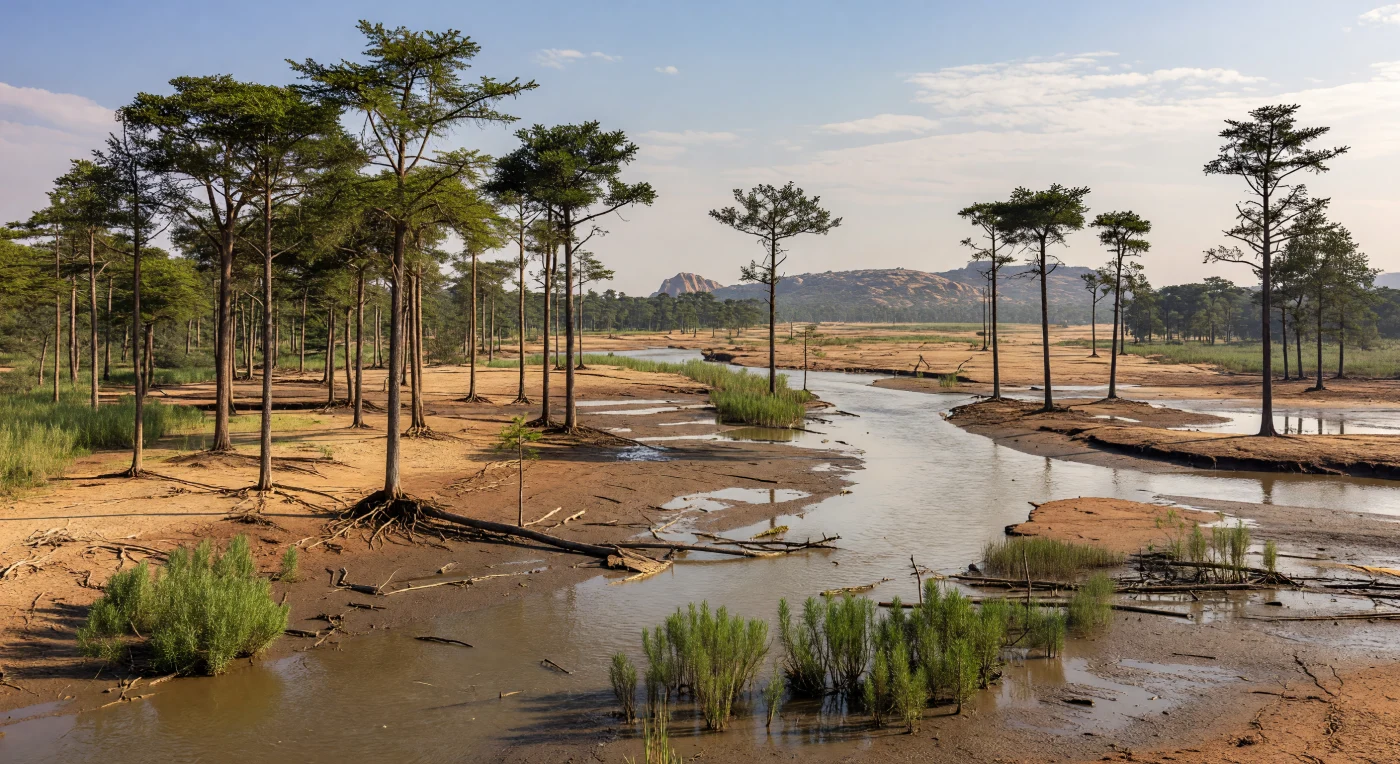
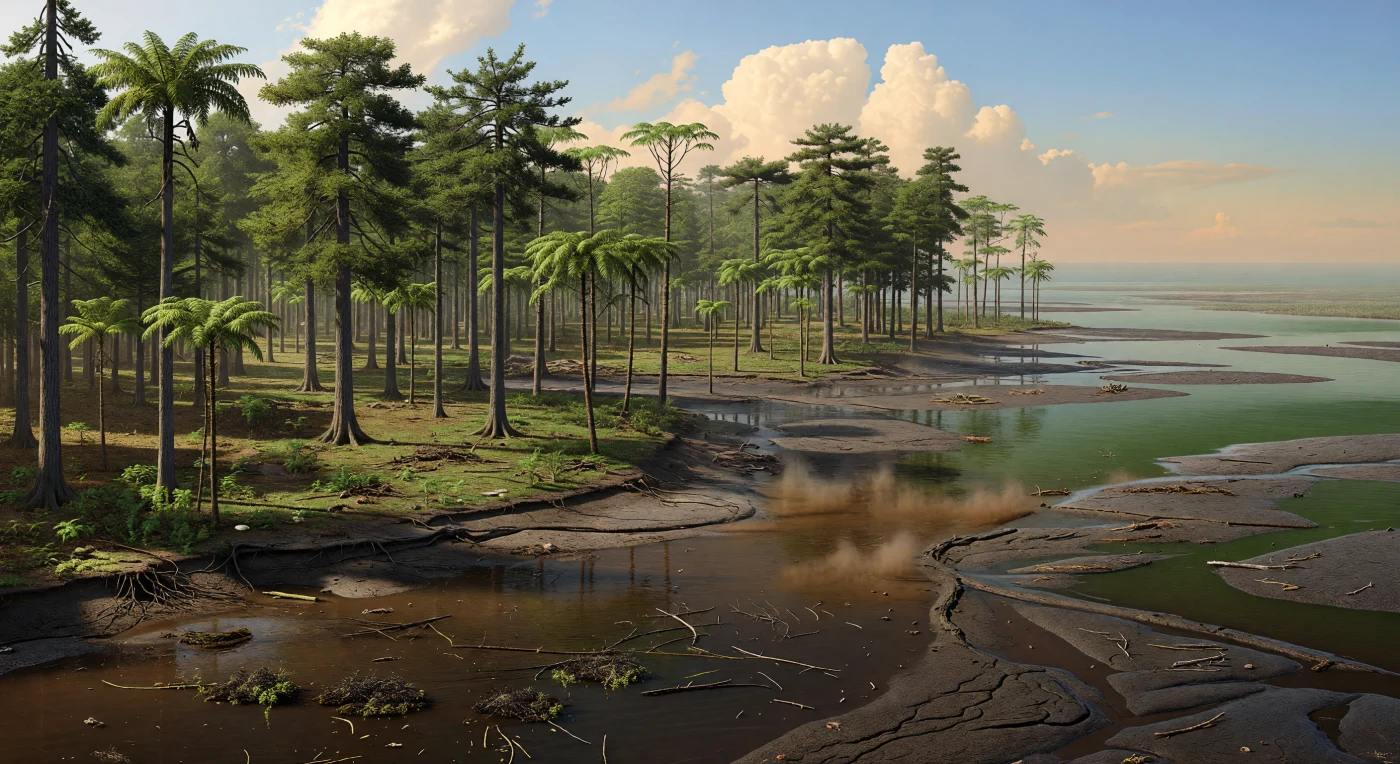
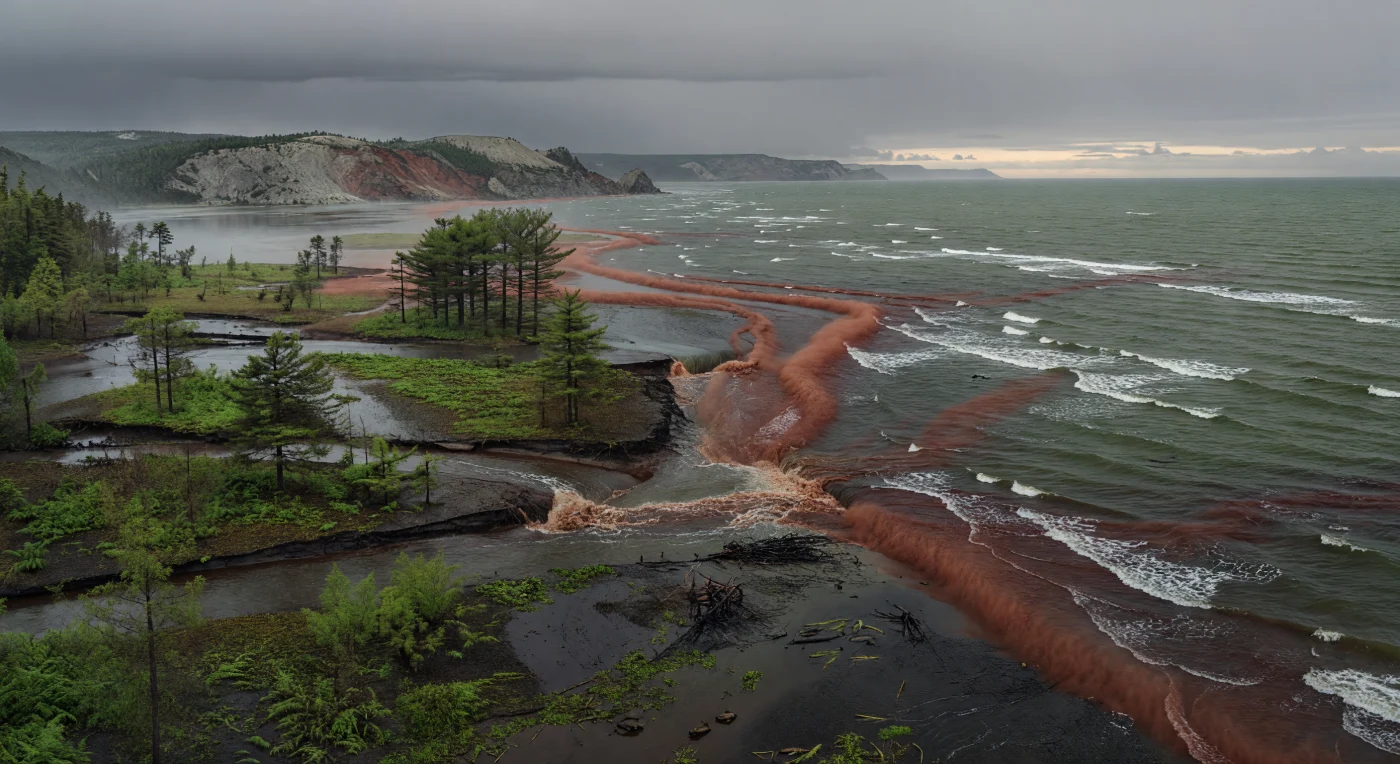
Along a humid Late Devonian estuary on the margin of Laurussia, some of Earth’s first forests send muddy, tannin-stained runoff into a warm shallow sea about 380–360 million years ago. Towering Archaeopteris trees and smaller cladoxylopsids such as Wattieza line silty channels, while low Drepanophycus covers wet banks and driftwood gathers on tidal flats. This kind of forested delta helped transform Devonian coastal oceans by increasing sediment and nutrient delivery, linking the rise of land plants with changing marine ecosystems where early fishes, including small bony fishes and placoderms, cruised the brackish shallows.
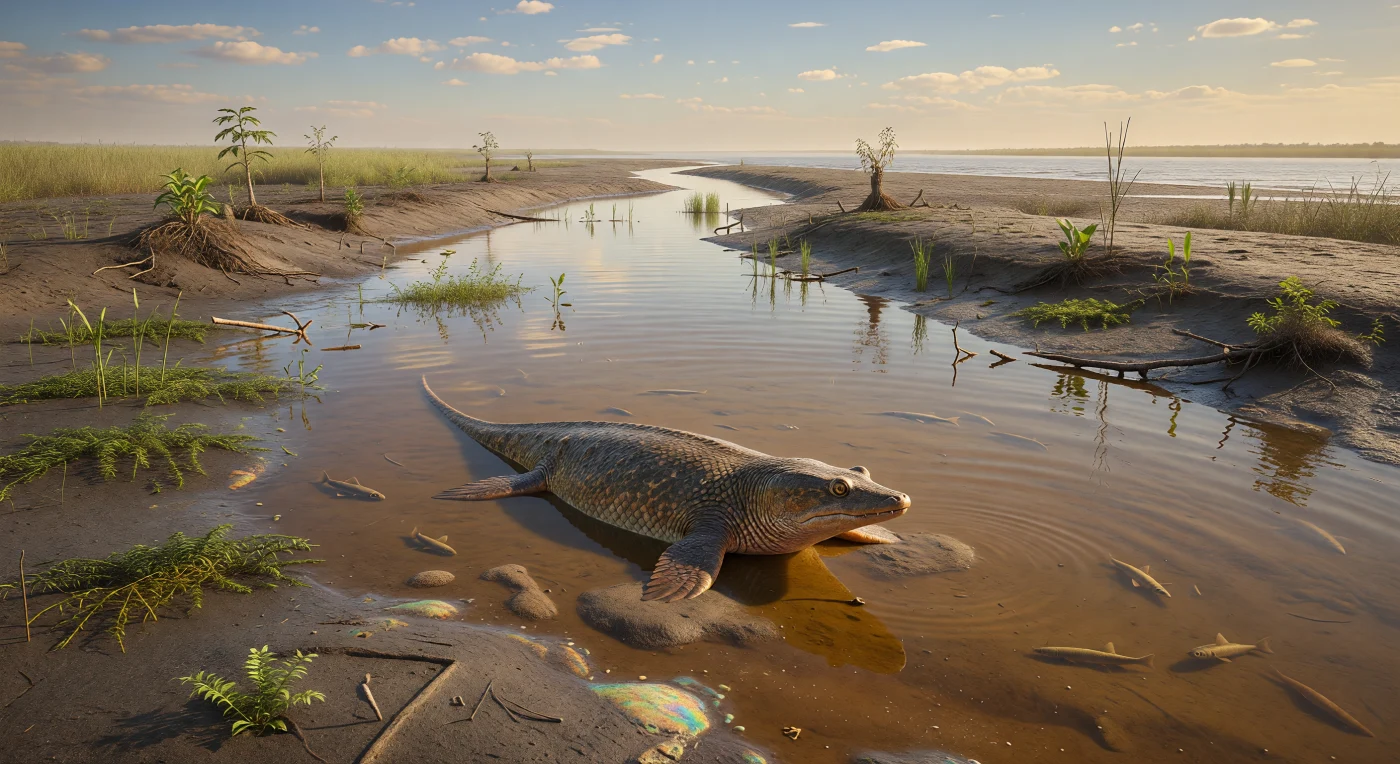
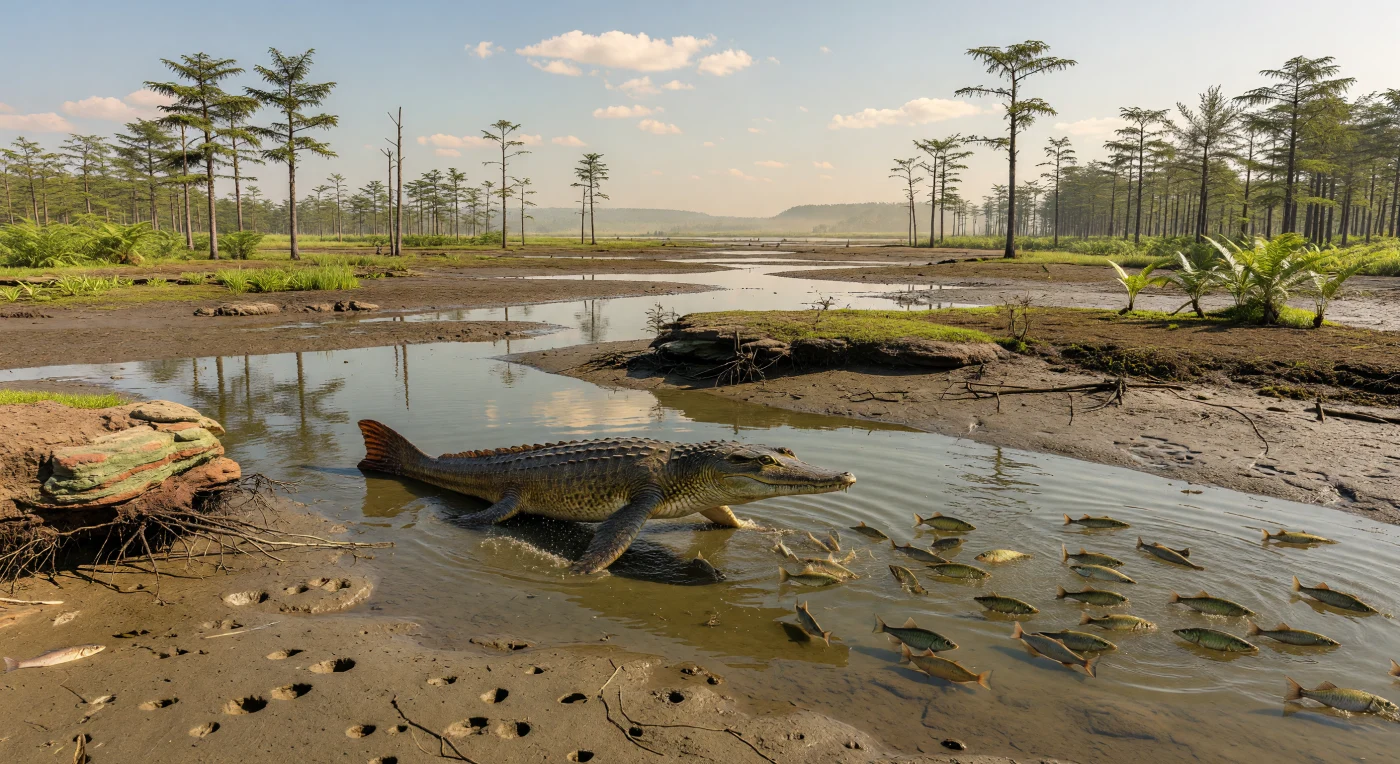
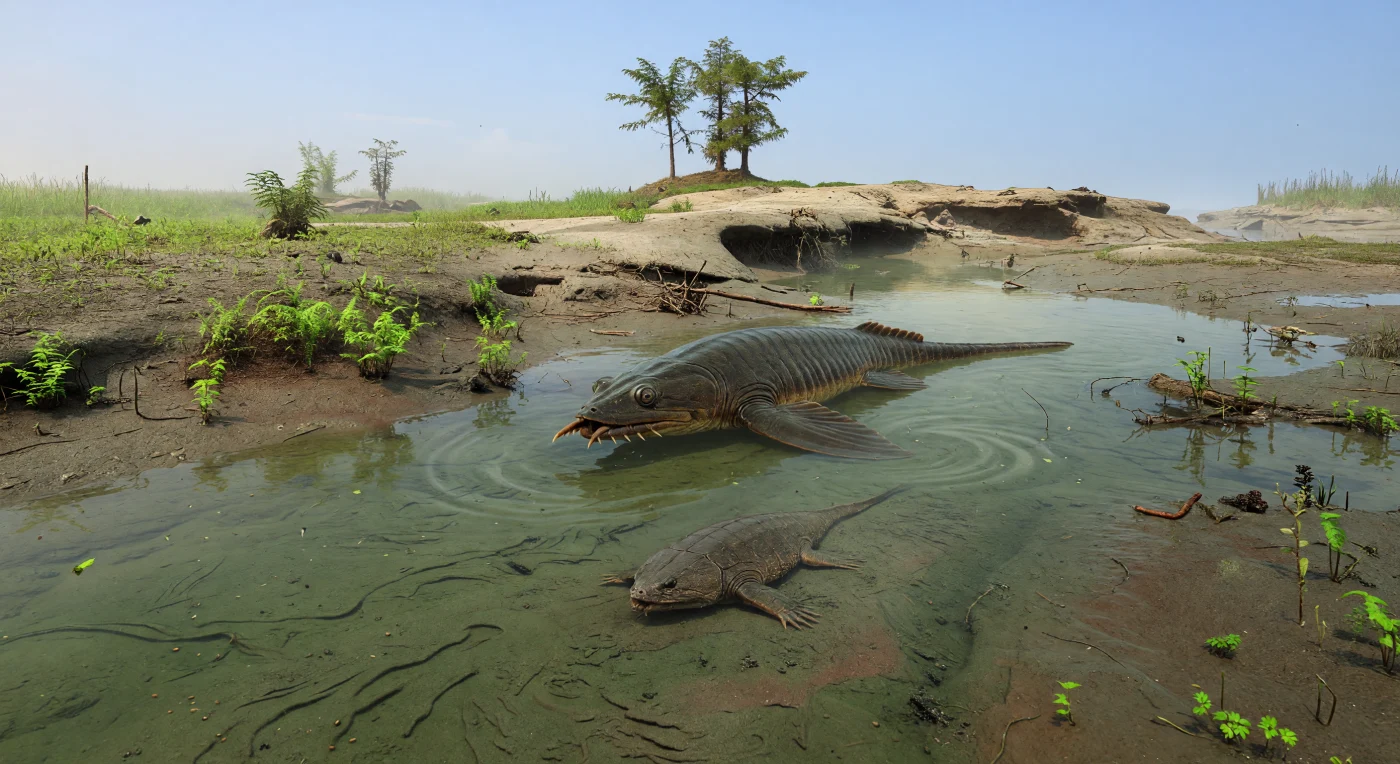
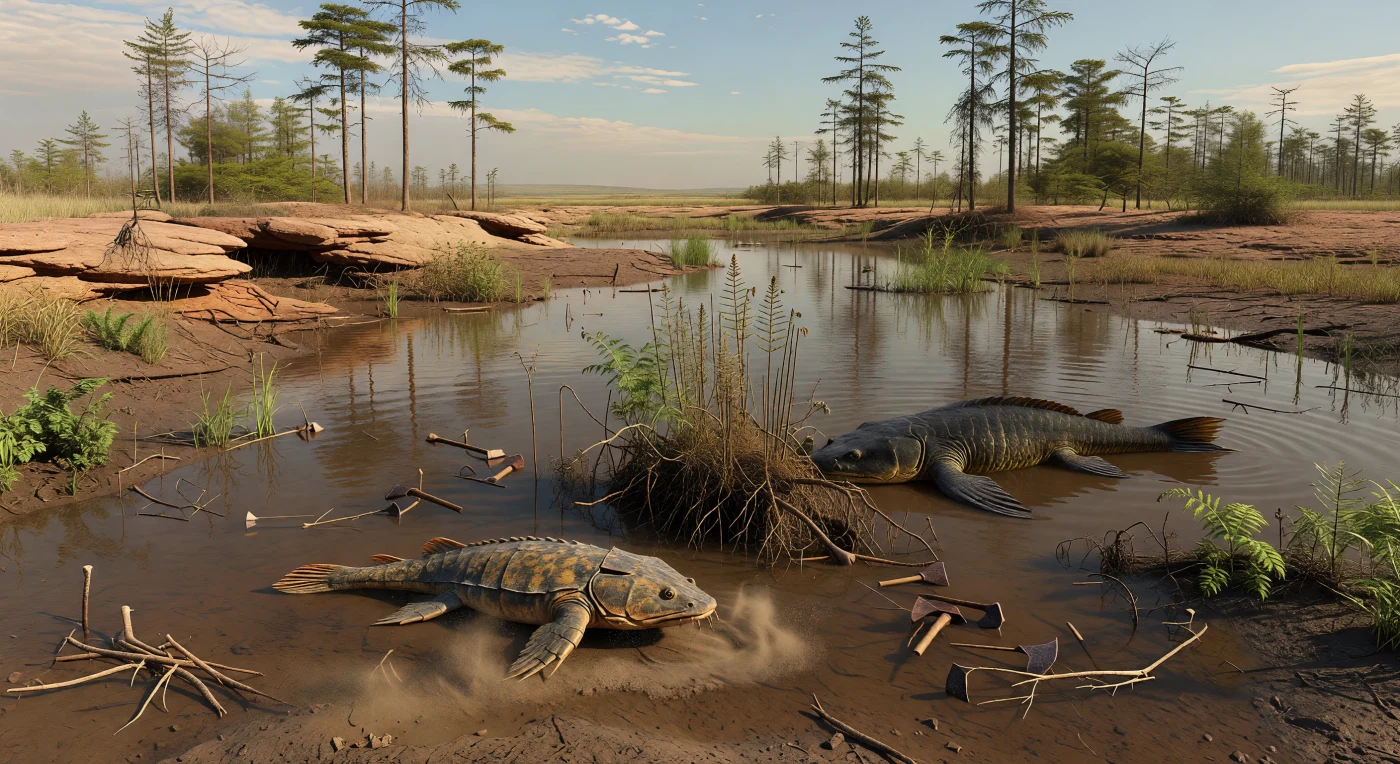
In a Late Devonian tidal creek about 375 million years ago, the stem tetrapod Tiktaalik roseae lies half-submerged in brackish, tea-brown water, its flat head, upward-facing eyes, and sturdy, wrist-like pectoral fins revealing adaptations for life in extremely shallow channels. The muddy banks are lined with early vascular plants and woody debris from some of Earth’s first forested landscapes, reflecting a coastal world where land and sea were becoming increasingly connected. This scene captures a pivotal stage in vertebrate evolution, when lobe-finned fishes were beginning to exploit the margins between water and land.
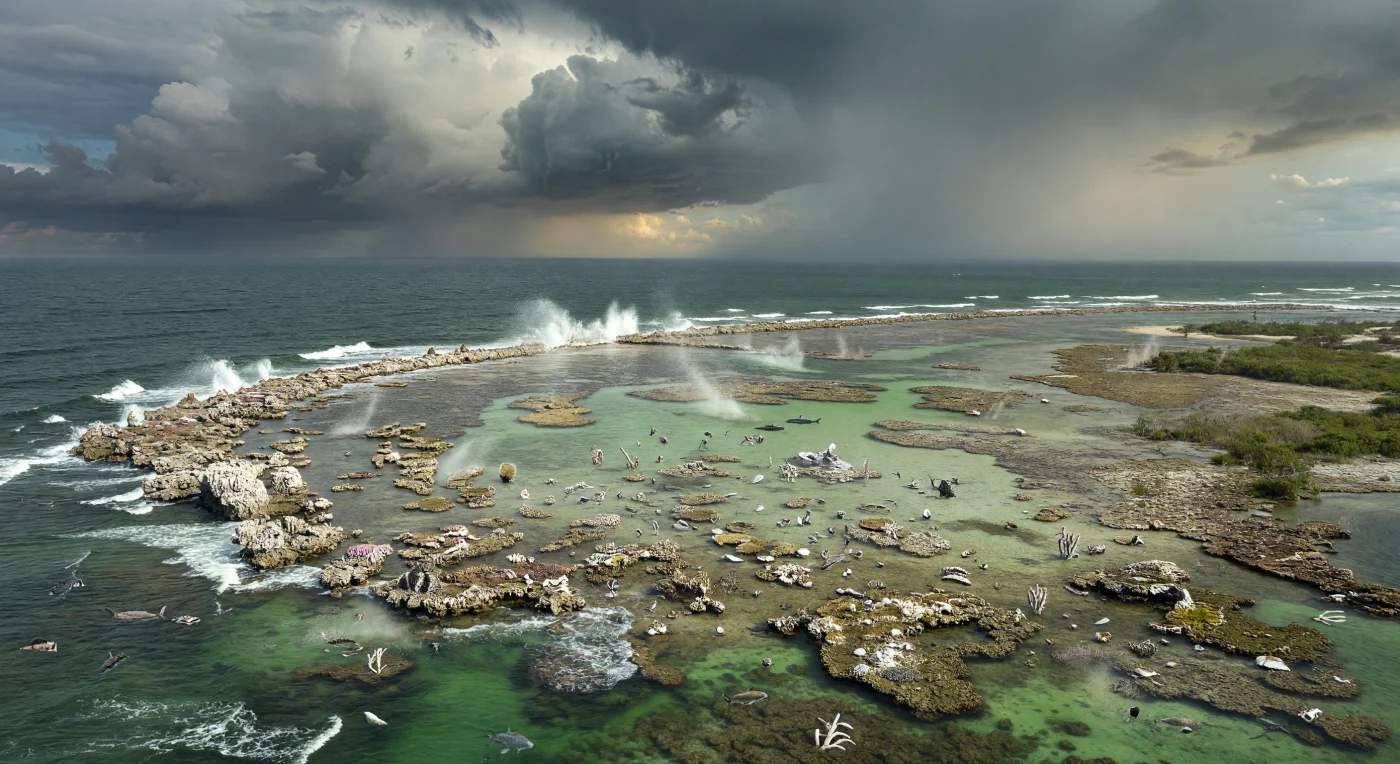
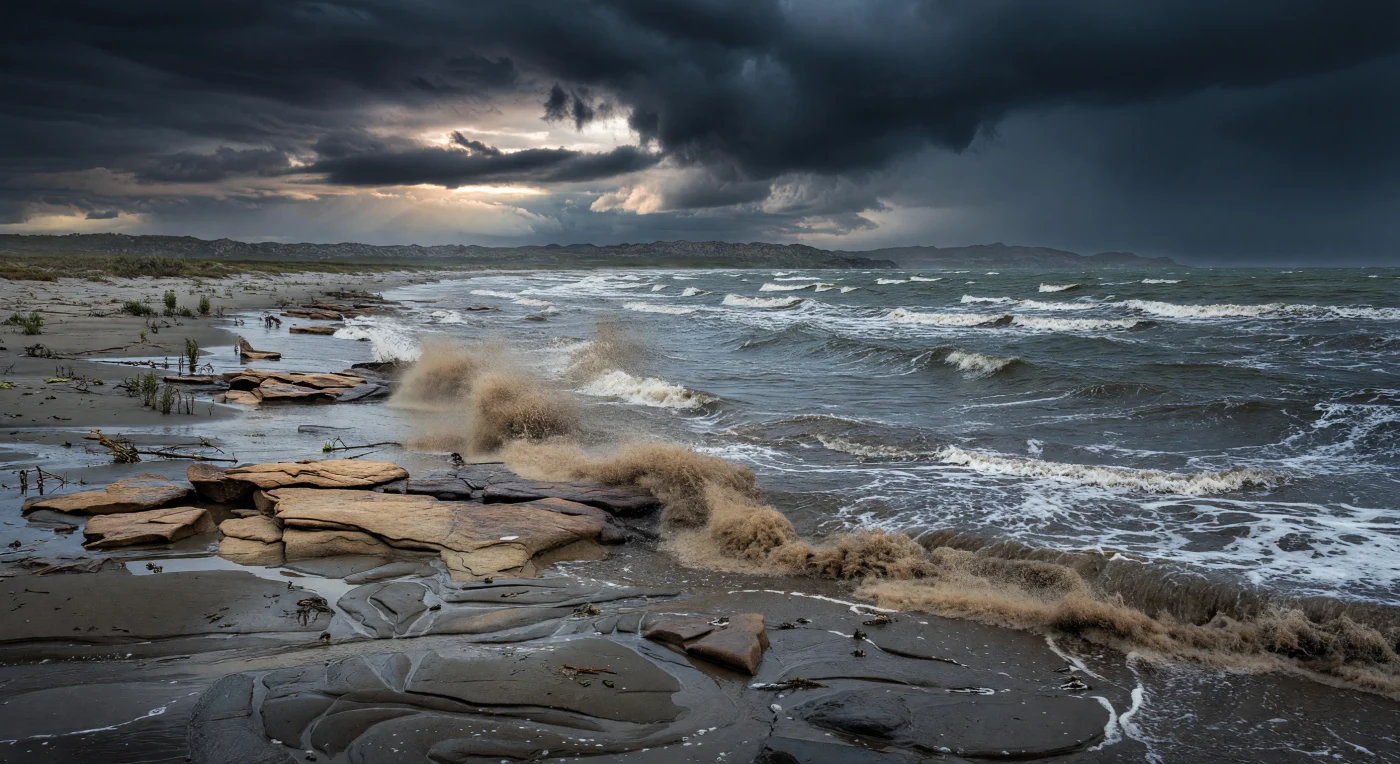
A tropical epicontinental sea in the Middle to Late Devonian, roughly 390–370 million years ago, is shown under the violence of a major storm as waves crash across a stromatoporoid–coral reef rim and sediment-choked lagoon waters swirl behind it. The reef is built not by modern corals, but by stromatoporoid sponges together with tabulate and rugose corals, while scattered placoderm fishes, early sharks, and orthocone cephalopods inhabit the waters beyond the breakers. Low carbonate islands on the shelf support only early vascular plants—lycopsids, zosterophyll-like vegetation, and progymnosperm growth—reflecting a time when the first expanding land floras were beginning to alter erosion, runoff, and shallow-marine ecosystems.