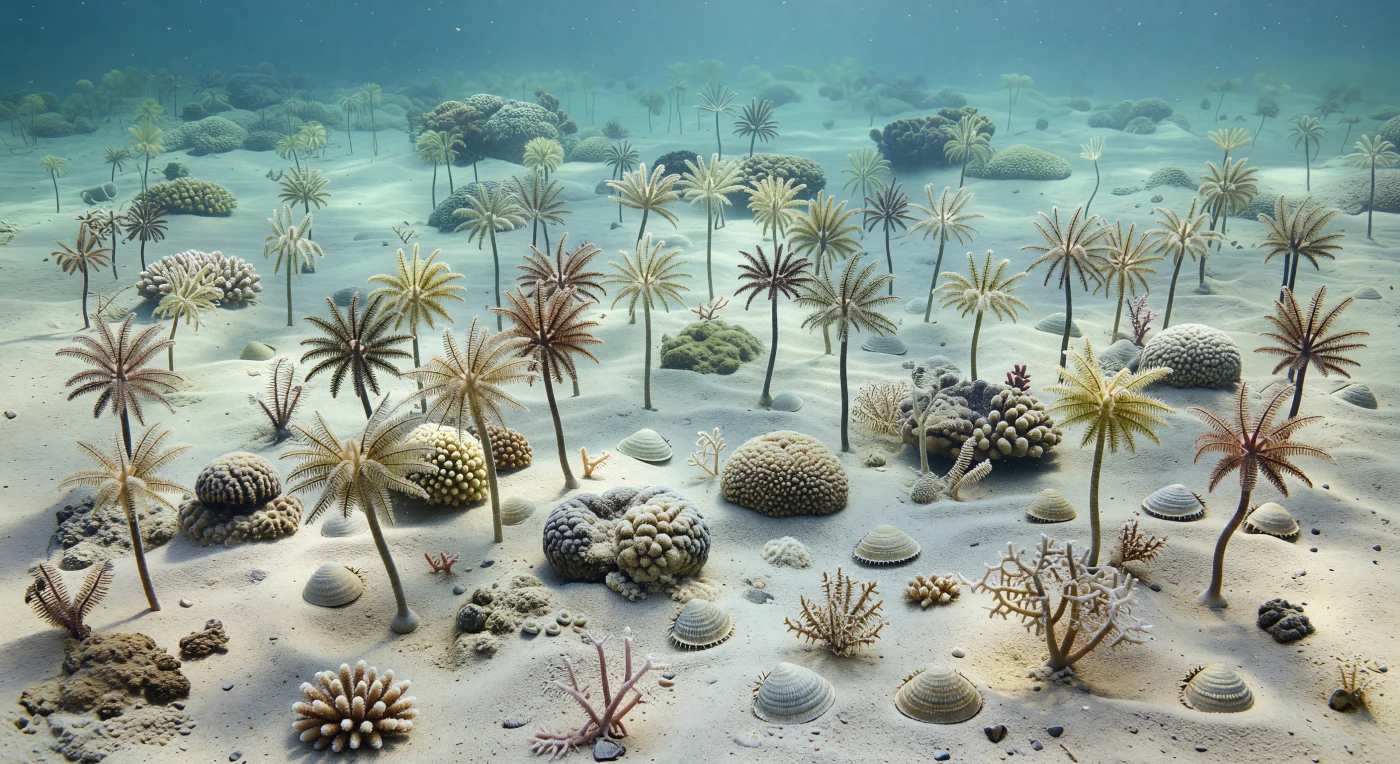
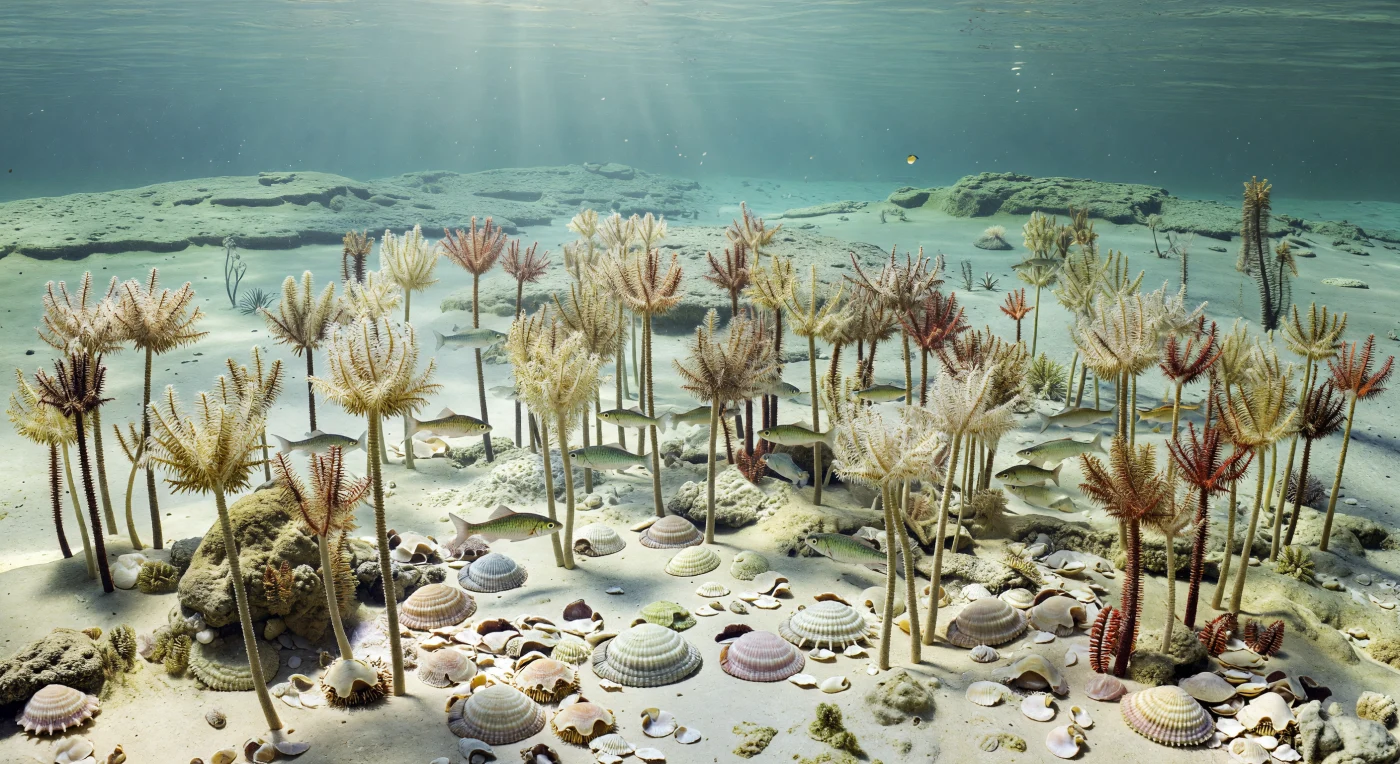
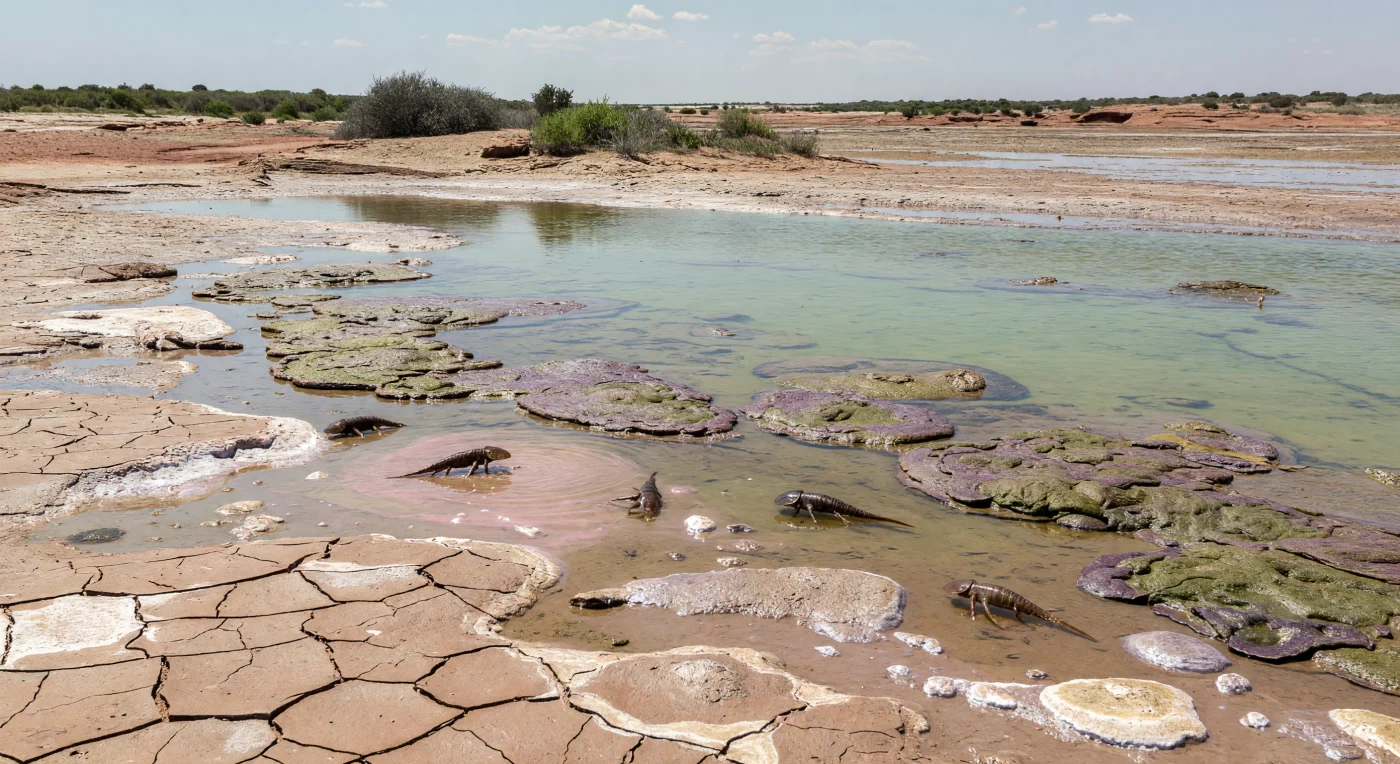
On a warm shallow carbonate shelf in the Late Carboniferous, about 320–300 million years ago, dense meadows of stalked crinoids such as Poteriocrinus and Platycrinites rise above a pale limestone seafloor littered with broken columnals and shell debris. Between them lie Productus brachiopods, lace-like Fenestella bryozoan colonies, and bud-shaped Pentremites blastoids, while small Phillipsia trilobites crawl across the bottom. This richly crowded scene captures the distinctive invertebrate communities that flourished in clear tropical epicontinental seas long before the age of dinosaurs.
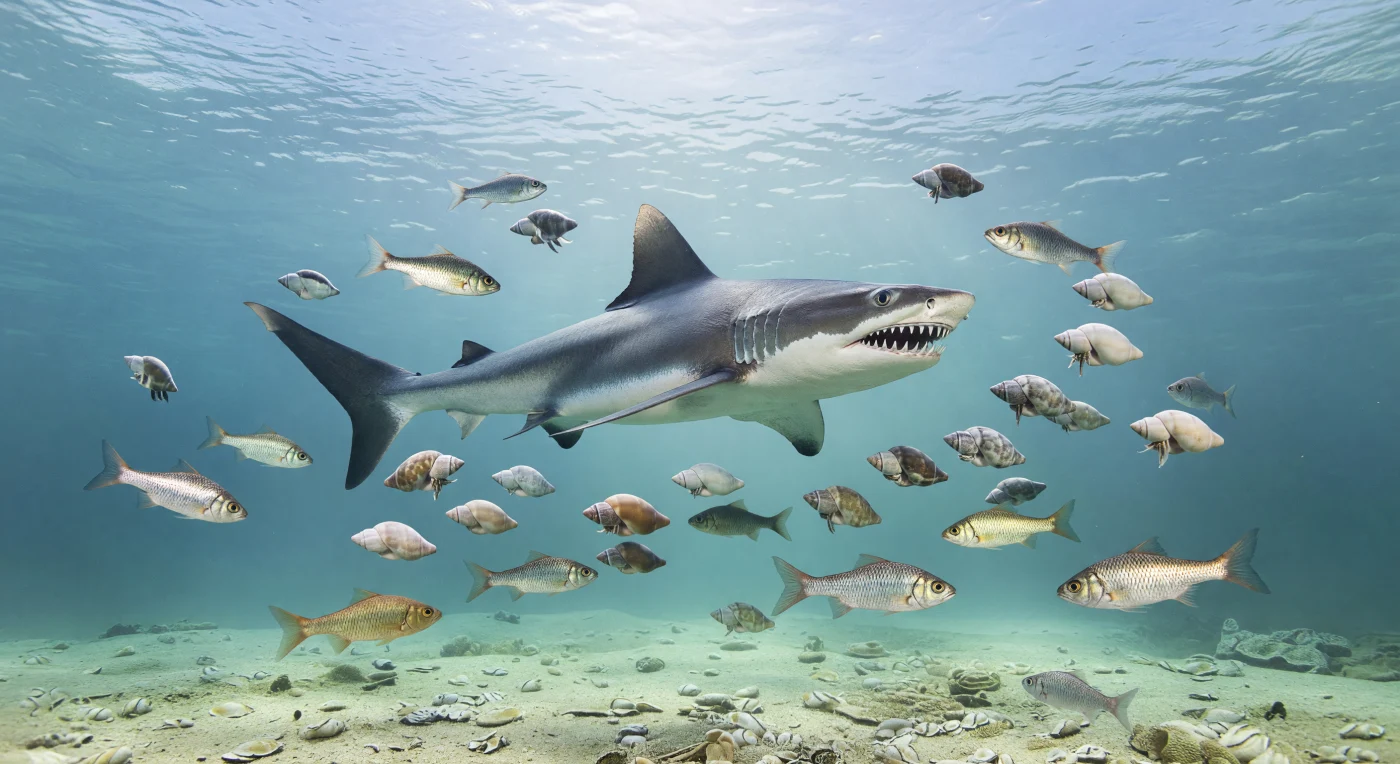
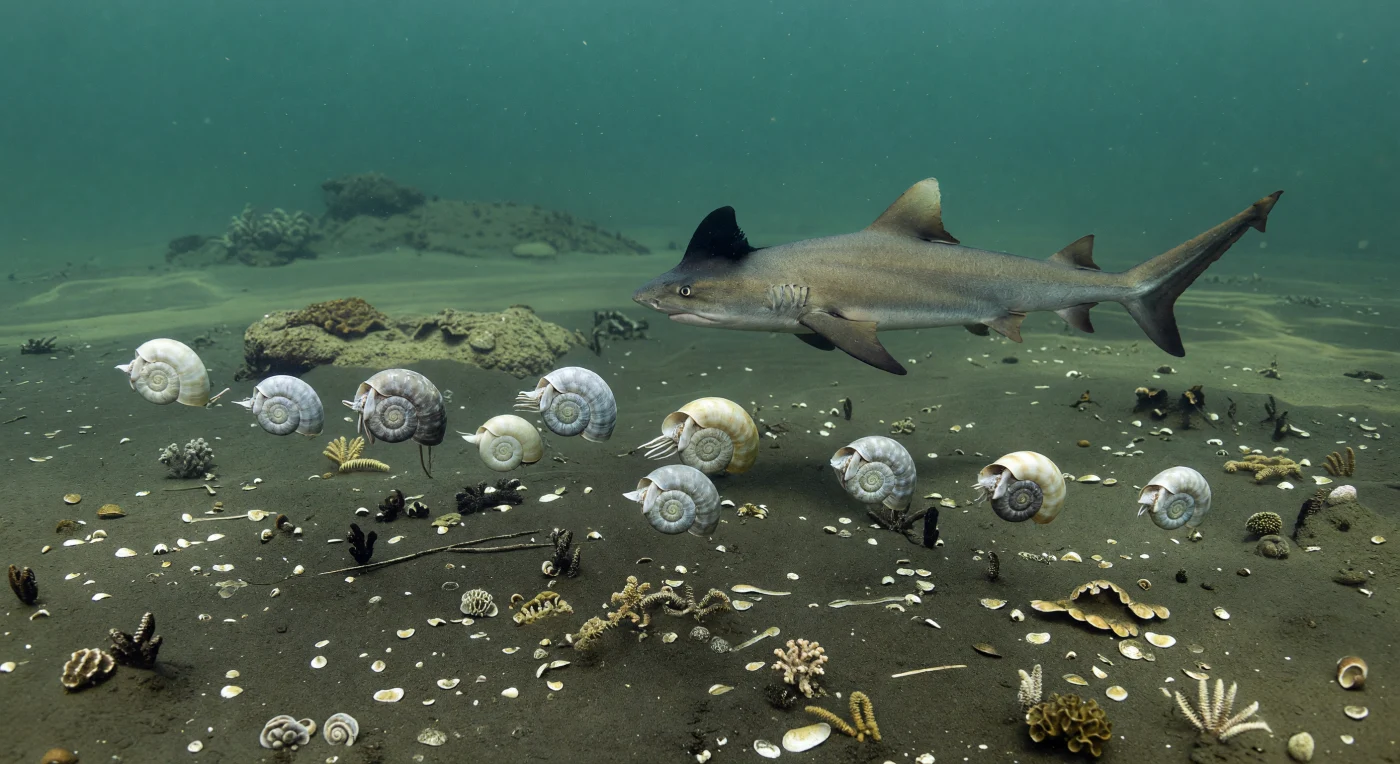
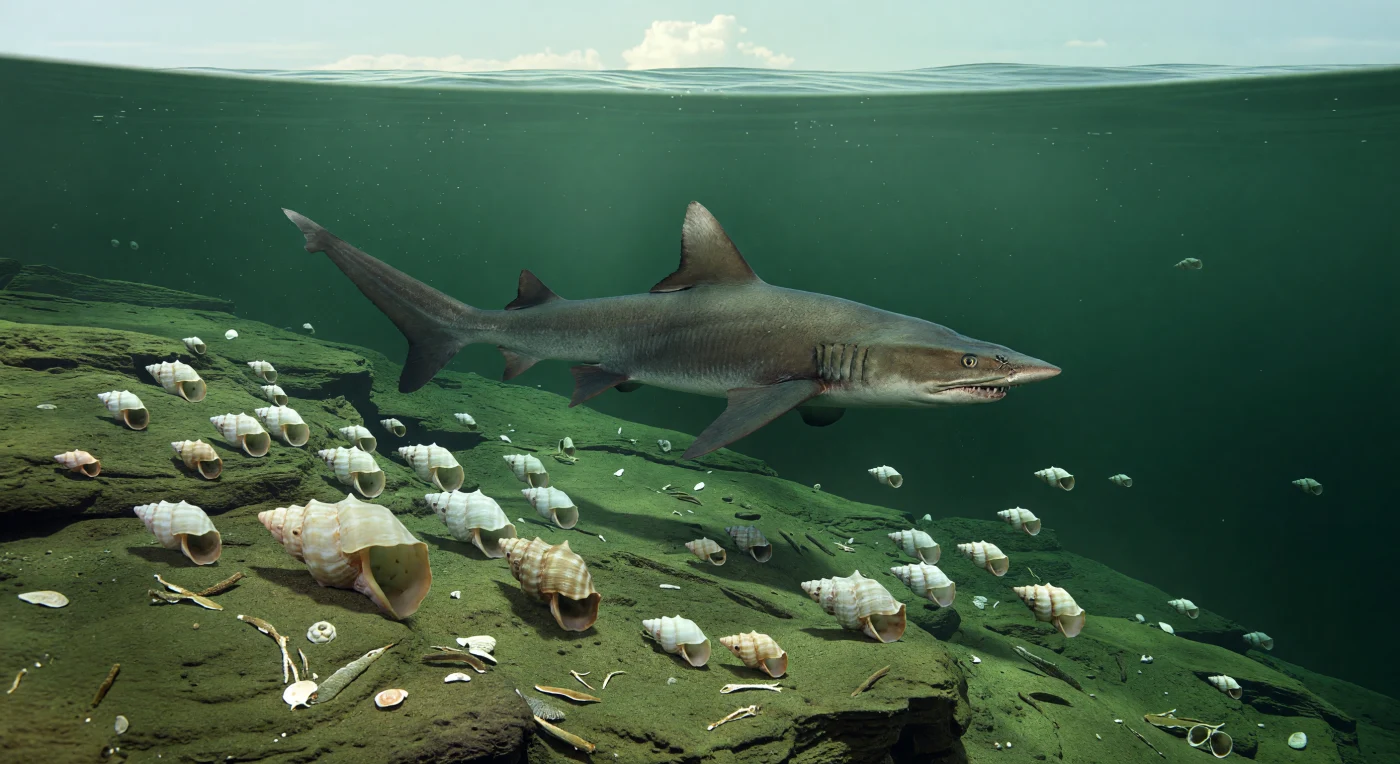
In a warm equatorial shelf sea of the Late Carboniferous, about 310–300 million years ago, an Edestus—an unusual shark relative armed with forward-projecting curved tooth whorls—surges through a school of small goniatites such as Goniatites and Cravenoceras, while slender Elonichthys scatter from the attack. The scene captures a typical Paleozoic marine ecosystem of Laurussia’s shallow epeiric seas, where sharks, ray-finned fishes, crinoid-rich carbonate bottoms, and externally shelled cephalopods flourished long before marine reptiles appeared.
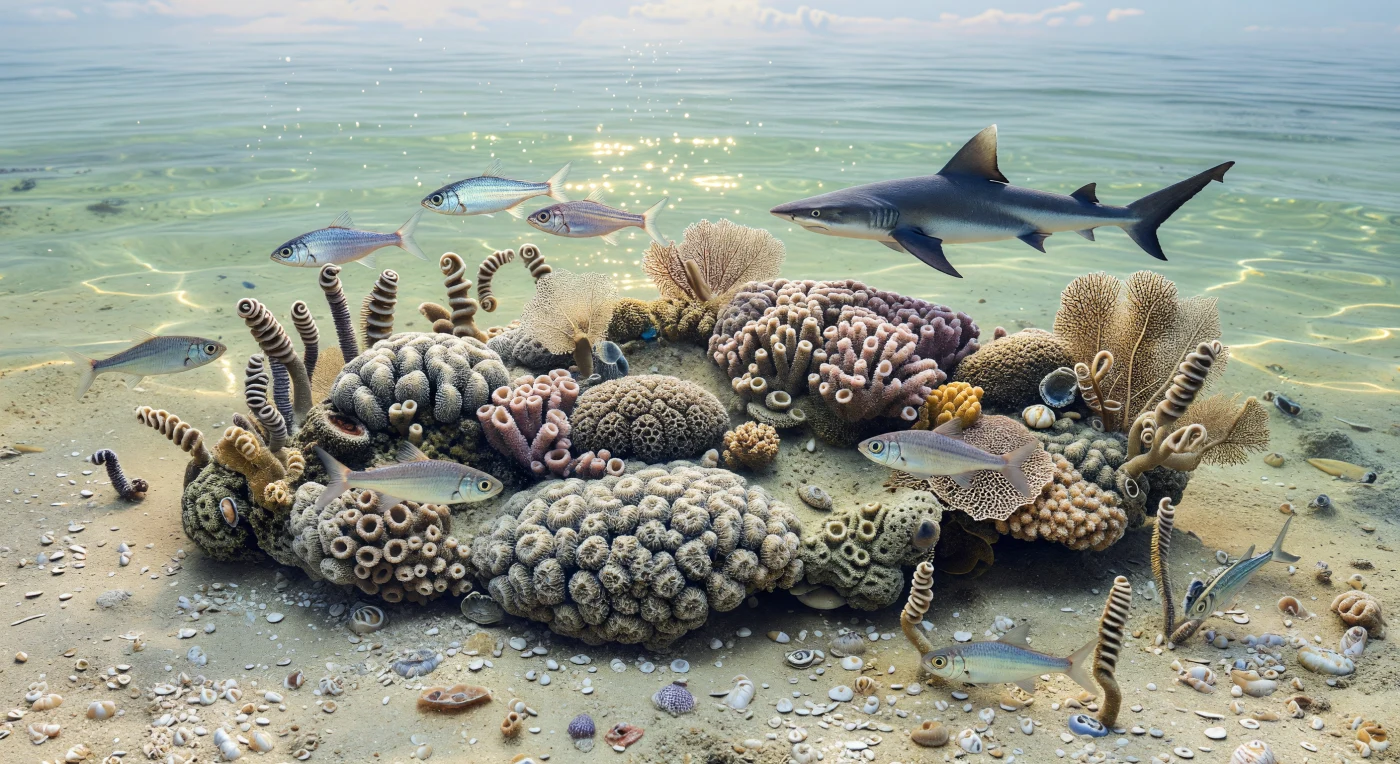
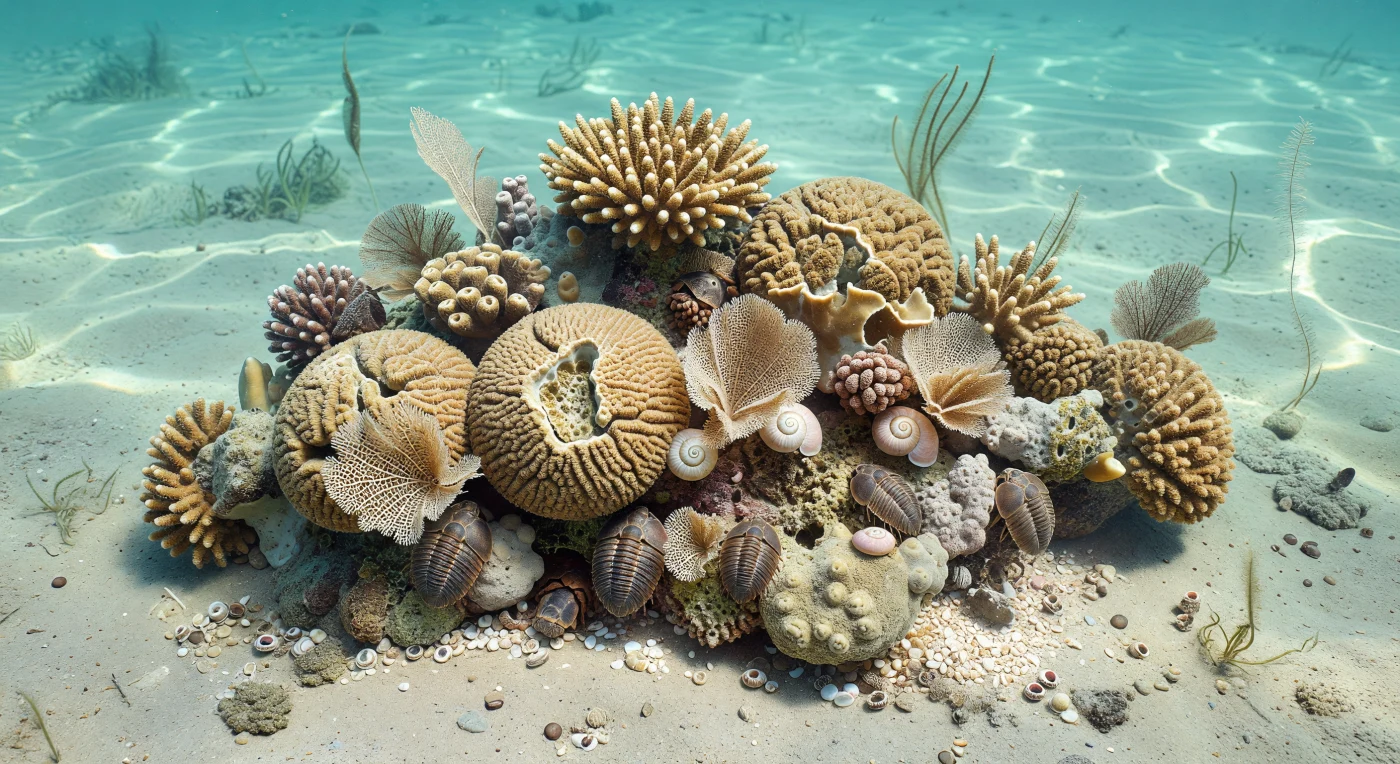
In a warm, shallow Carboniferous sea about 310 million years ago, a modest patch reef rises from pale carbonate mud and crinoid debris, built not by modern corals but by colonial rugose corals such as Lithostrotion, pipe-like Syringopora, and delicate bryozoans including the spiral Archimedes and netted Polypora. Small silvery Elonichthys dart through the sunlit water while a male Stethacanthus—an early shark with its distinctive “ironing-board” dorsal structure—cruises above the reef. Scenes like this were typical of tropical epicontinental shelves, where bryozoans, brachiopods, crinoids, and corals formed low-relief carbonate communities across broad inland seas.
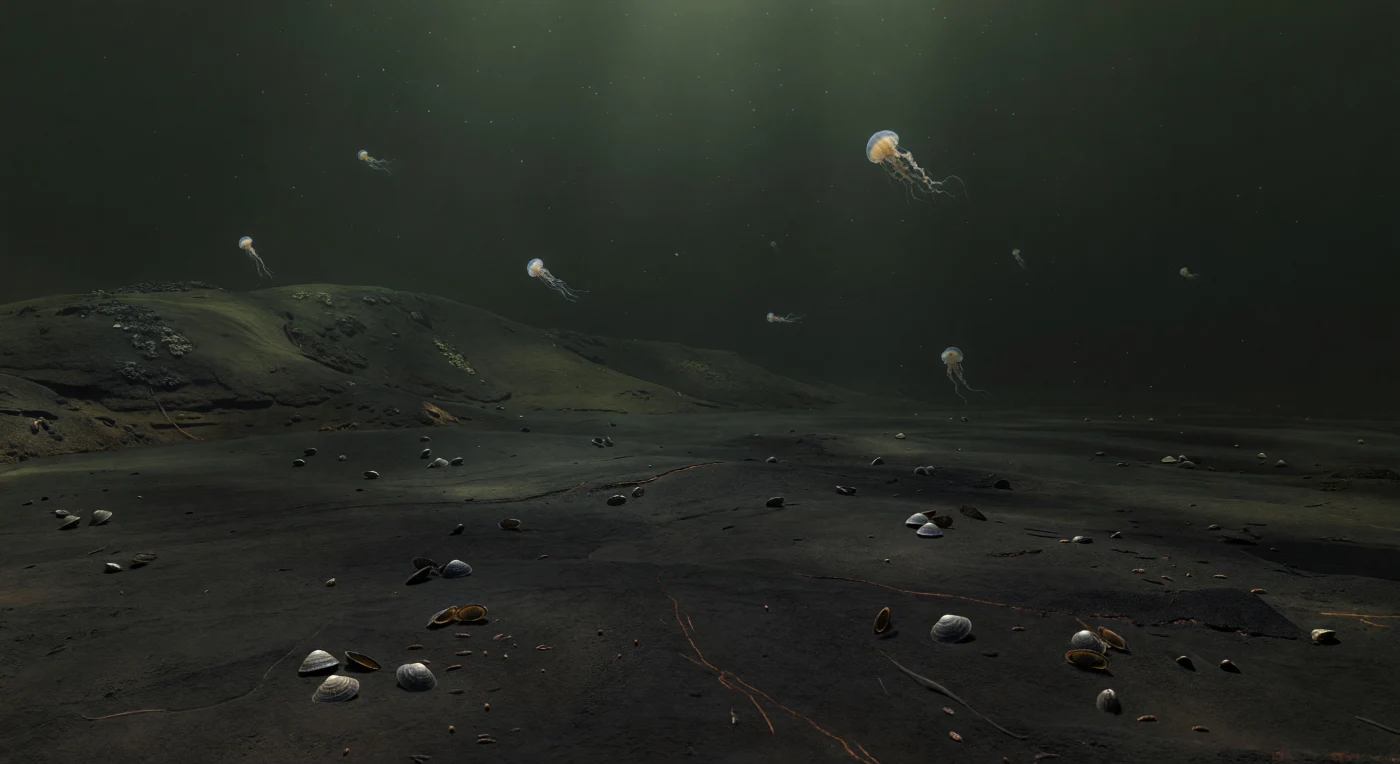
Along the dim outer slope of a Carboniferous marine basin, roughly 320–300 million years ago, the seafloor is blanketed in black organic mud under oxygen-poor water. A few delicate Posidonia bivalves rest half-sunken in the sediment while tiny ostracods dot the surface, and simple jellyfish drift above in the murky water column. Such quiet, stagnant basins accumulated the dark muds that later became black shales, preserving evidence of low-oxygen marine environments in the late Paleozoic.
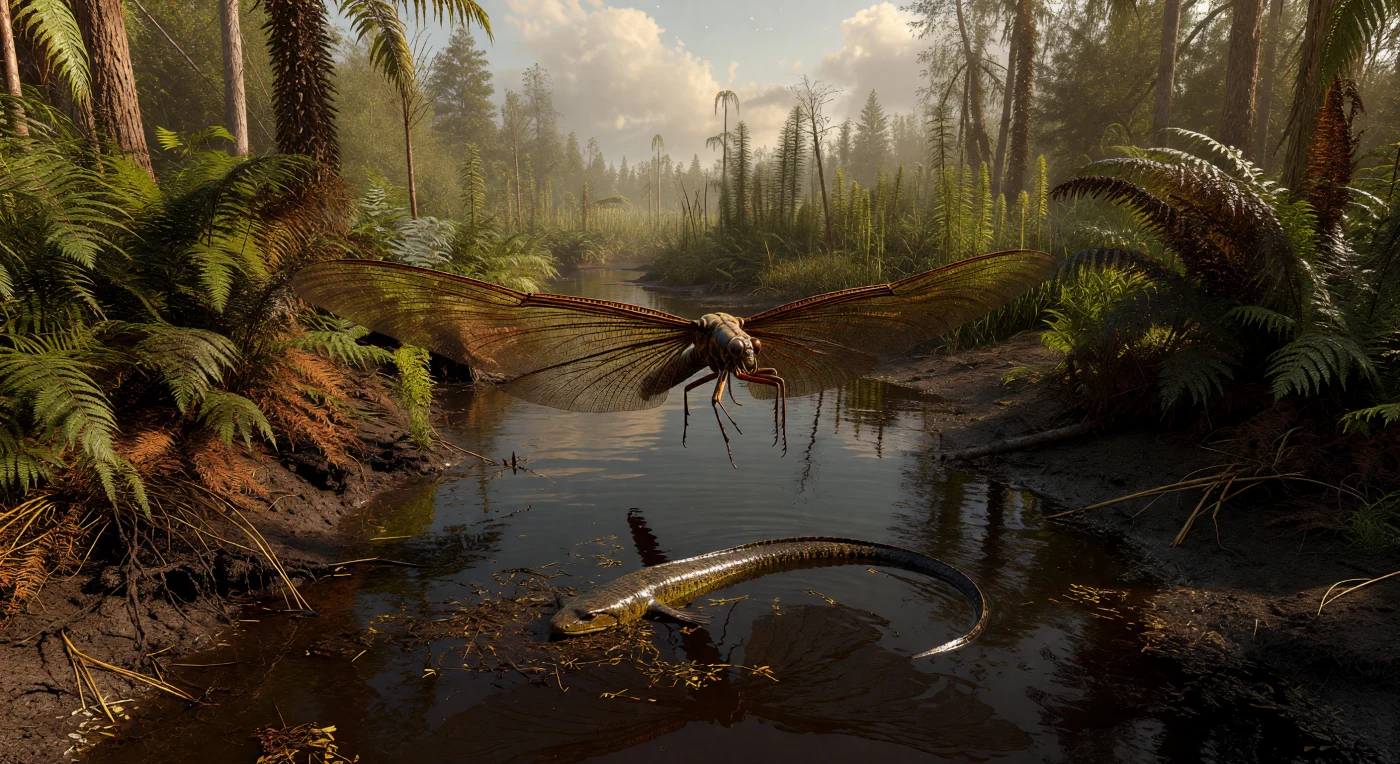
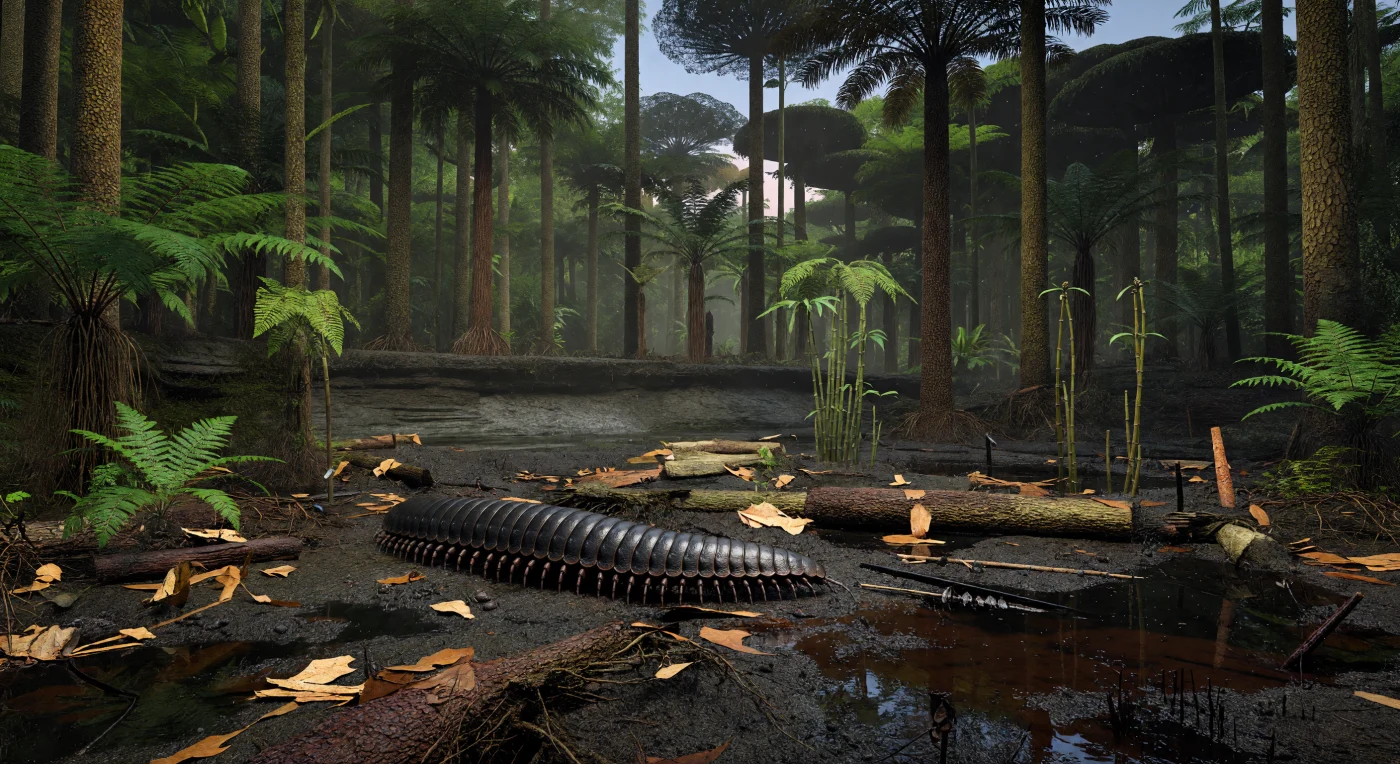
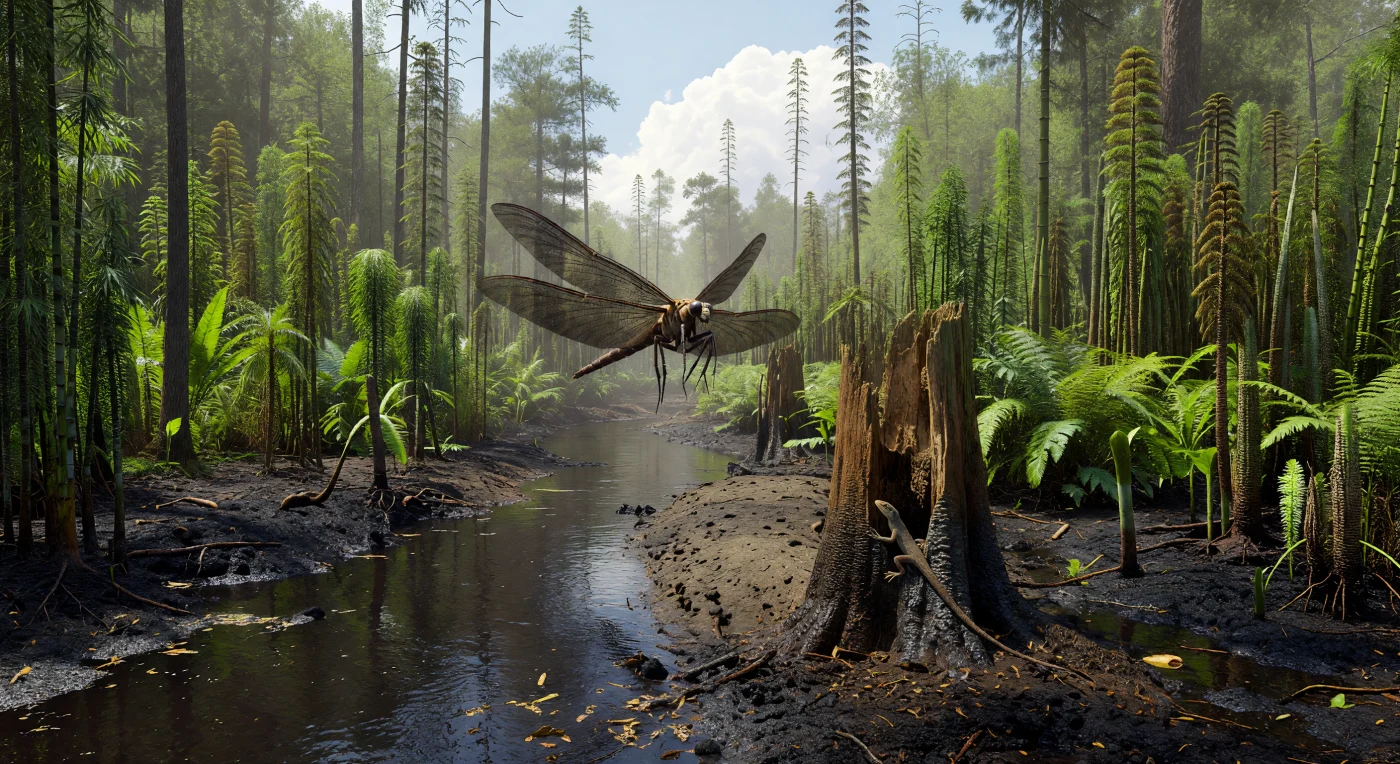
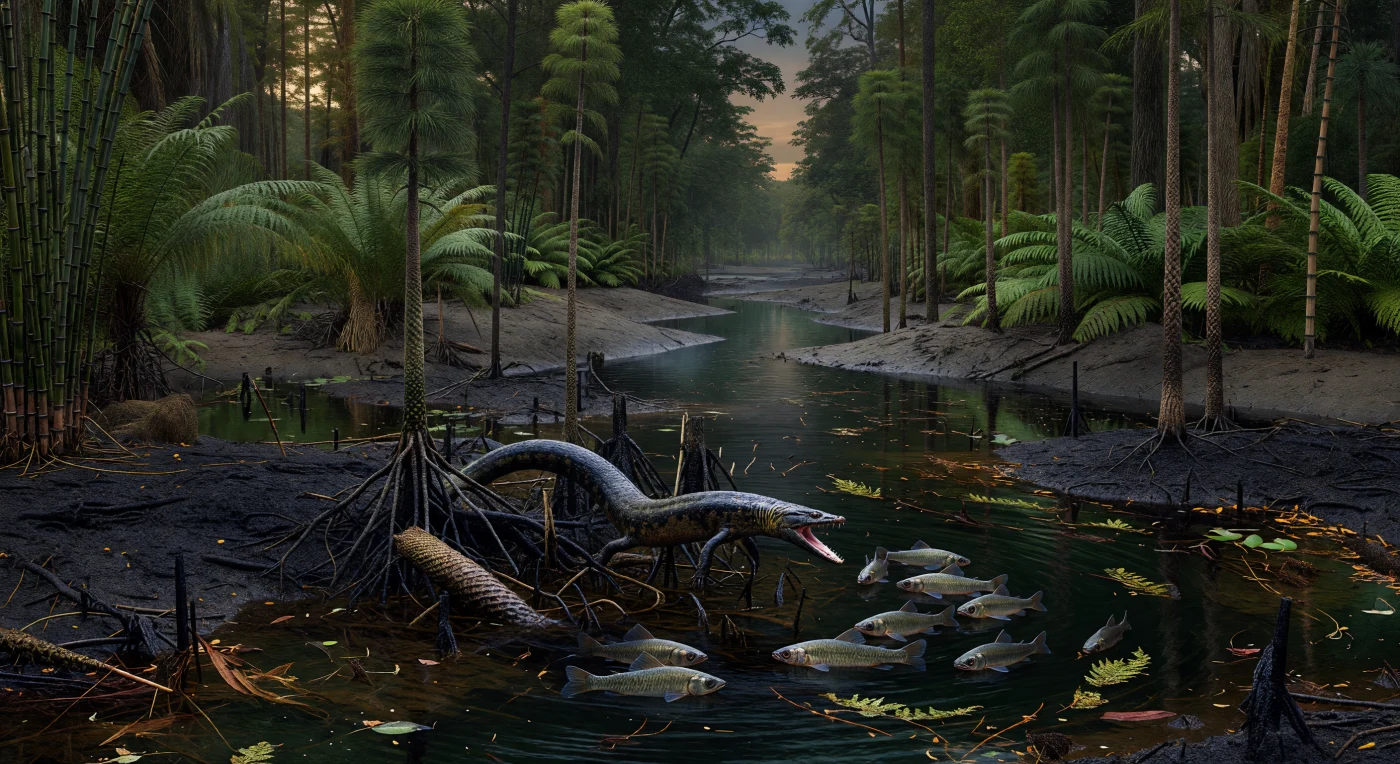
In the late Carboniferous, about 305 million years ago, a giant griffinfly, Meganeura, glides over a humid coal-swamp channel on the coastal lowlands of equatorial Euramerica. Below, the elongated amphibian Proterogyrinus lies nearly submerged in dark, tannin-rich water, surrounded by dense Pecopteris and Neuropteris foliage, with lycopsids and Calamites rising from the peaty mud beyond. This scene captures the lush, oxygen-rich wetlands that bordered Carboniferous epicontinental seas, where enormous flying insects and early tetrapods thrived long before dinosaurs appeared.
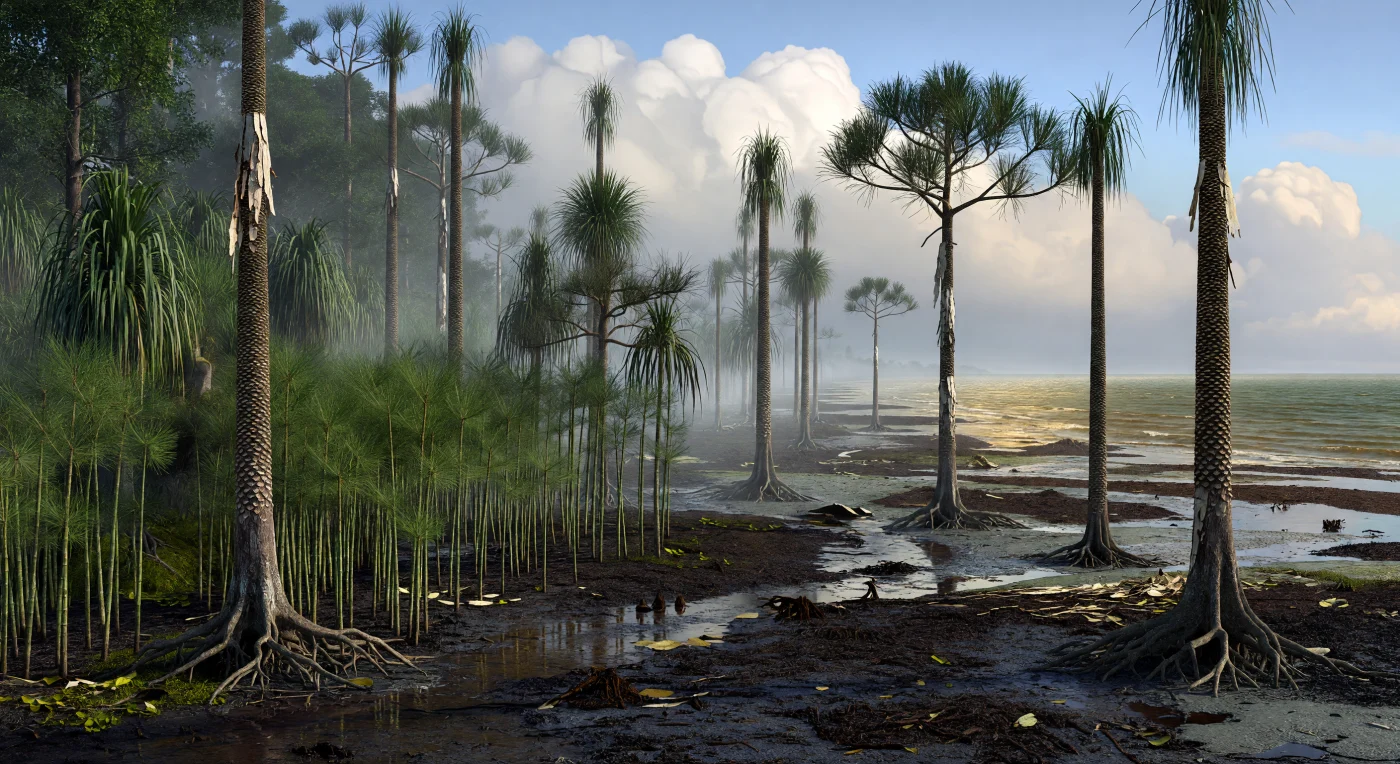
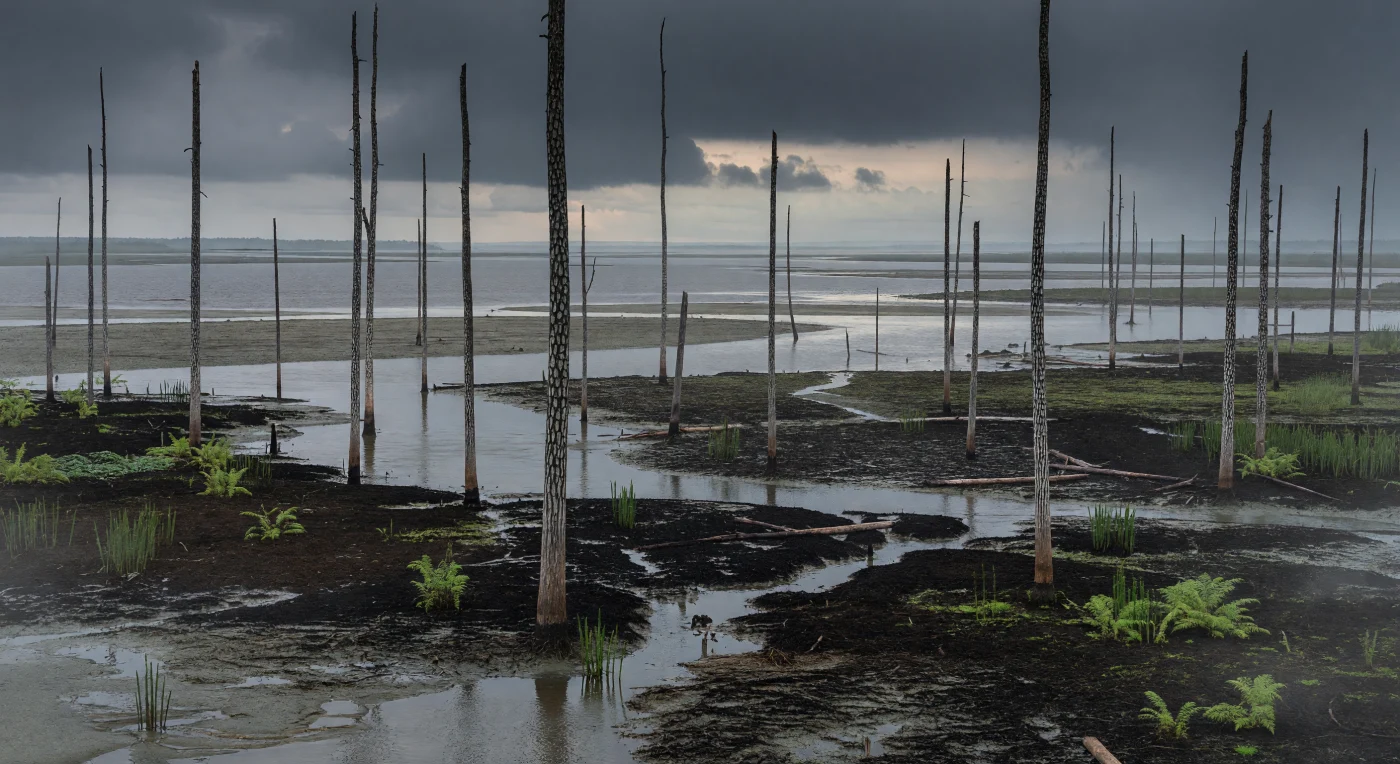
On this late Carboniferous coastline of equatorial Laurussia, about 315–305 million years ago, giant coal-swamp plants dominate the waterlogged peat flats behind a retreating shallow sea. Towering lycopsid trees such as Lepidodendron and Sigillaria rise above thickets of Calamites, while Cordaites occupy slightly drier levees and sprawling Stigmaria root systems spread through the dark peat. The muddy tidal creek, brackish lagoons, and layered cyclothem sediments in the distance reflect the sea-level fluctuations that helped create the vast coal deposits for which the Pennsylvanian is famous.
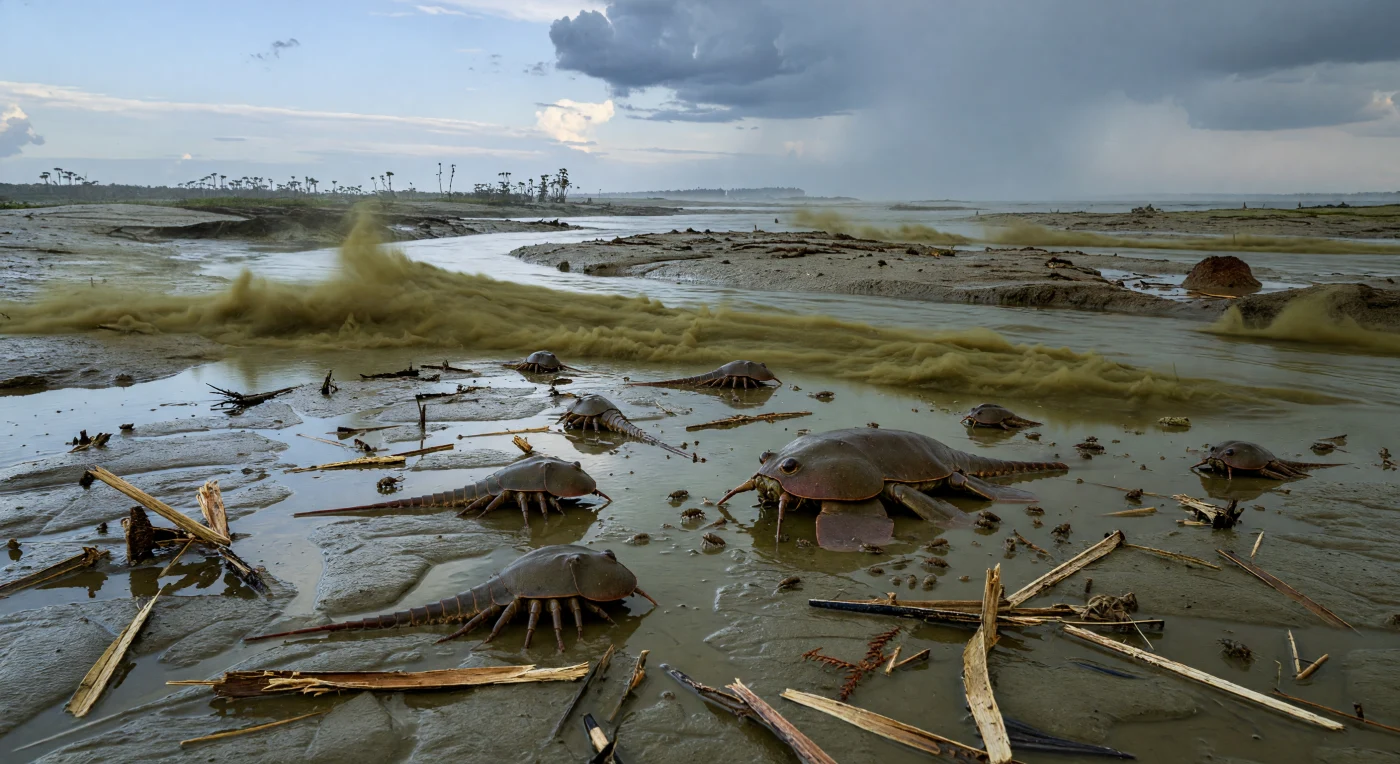
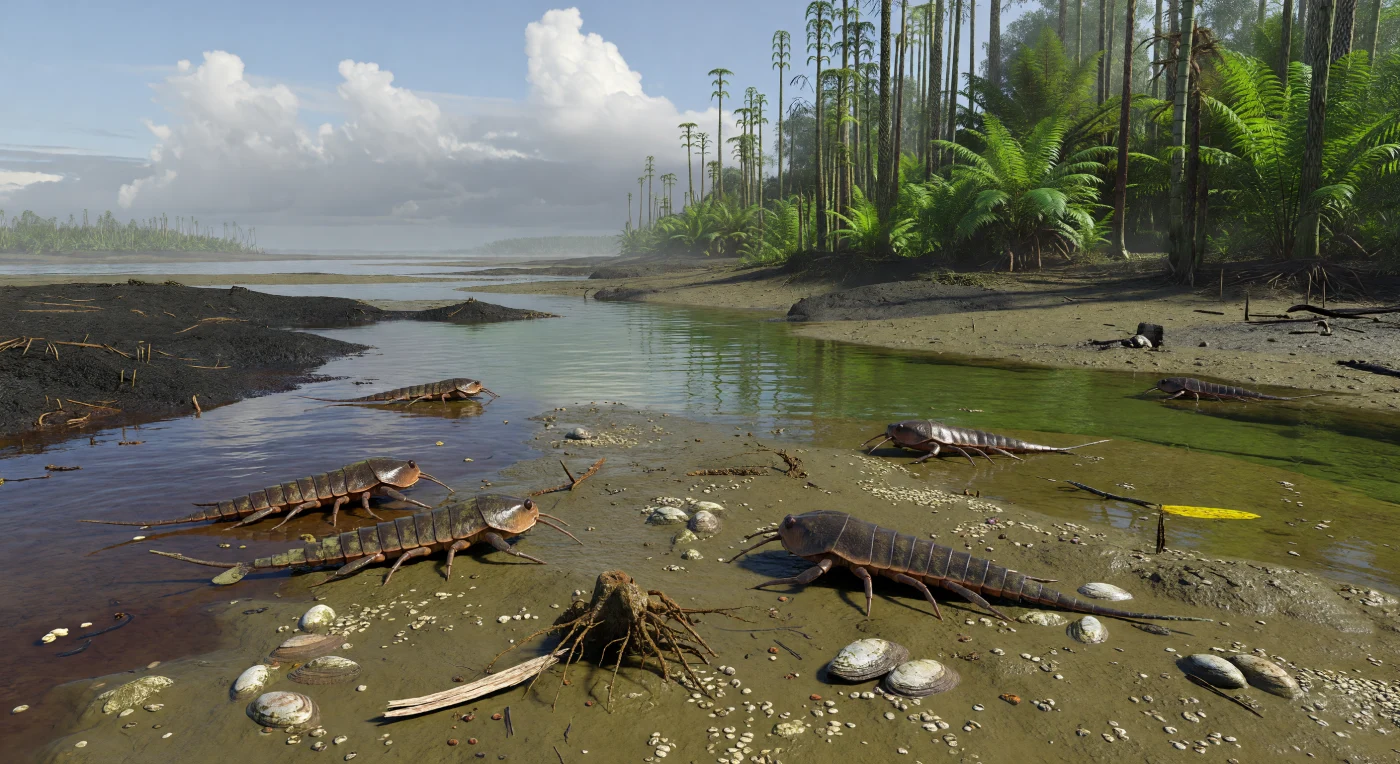
On a muddy Carboniferous estuary about 320–300 million years ago, horseshoe crab relatives such as Euproops crawl across rippled tidal flats beside the larger eurypterid Adelophthalmus, while tiny pygocephalomorph crustaceans gather among stranded fragments of lycopsid and cordaitalean plants washed down from nearby coal swamps. This brackish, sediment-choked delta setting captures a common Late Paleozoic coastal environment, where river-borne mud and stormy tides shaped broad mudflats at the edge of shallow epicontinental seas.
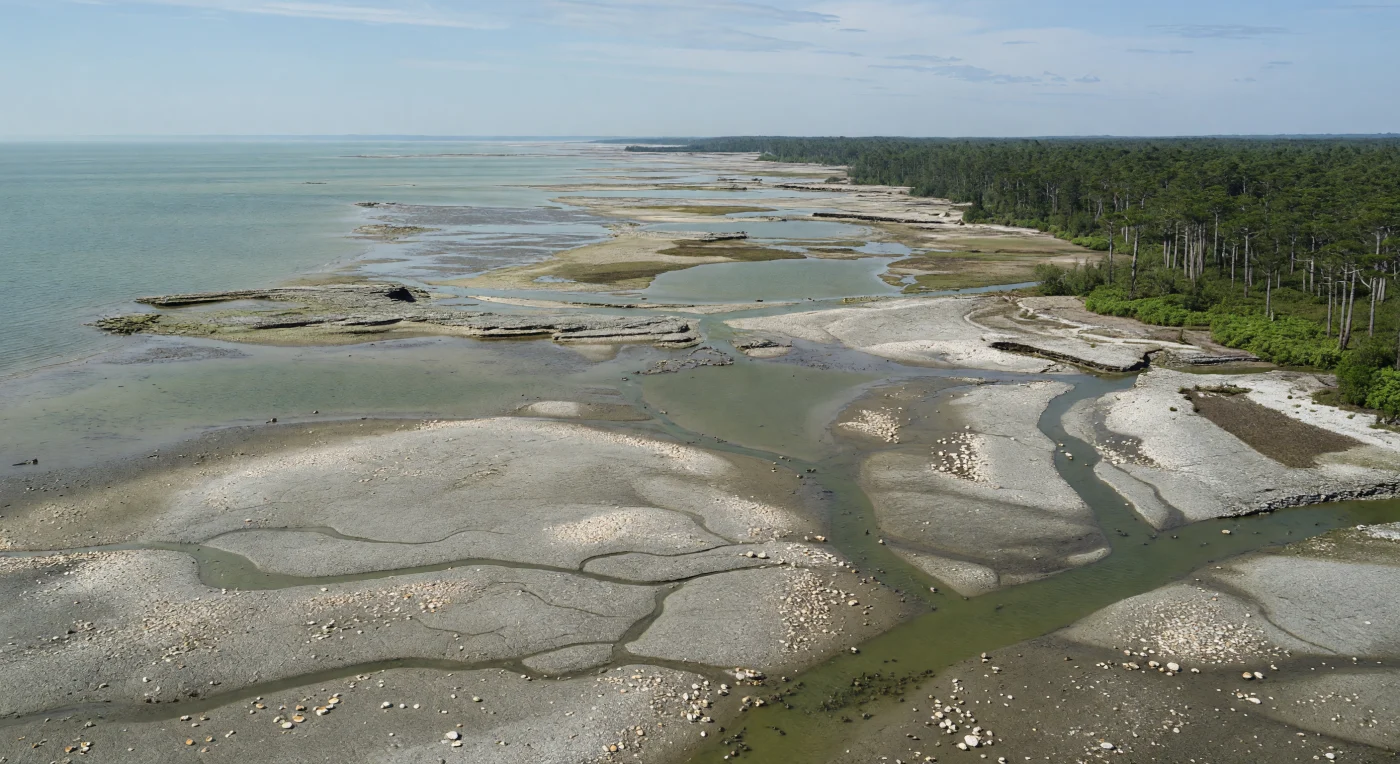
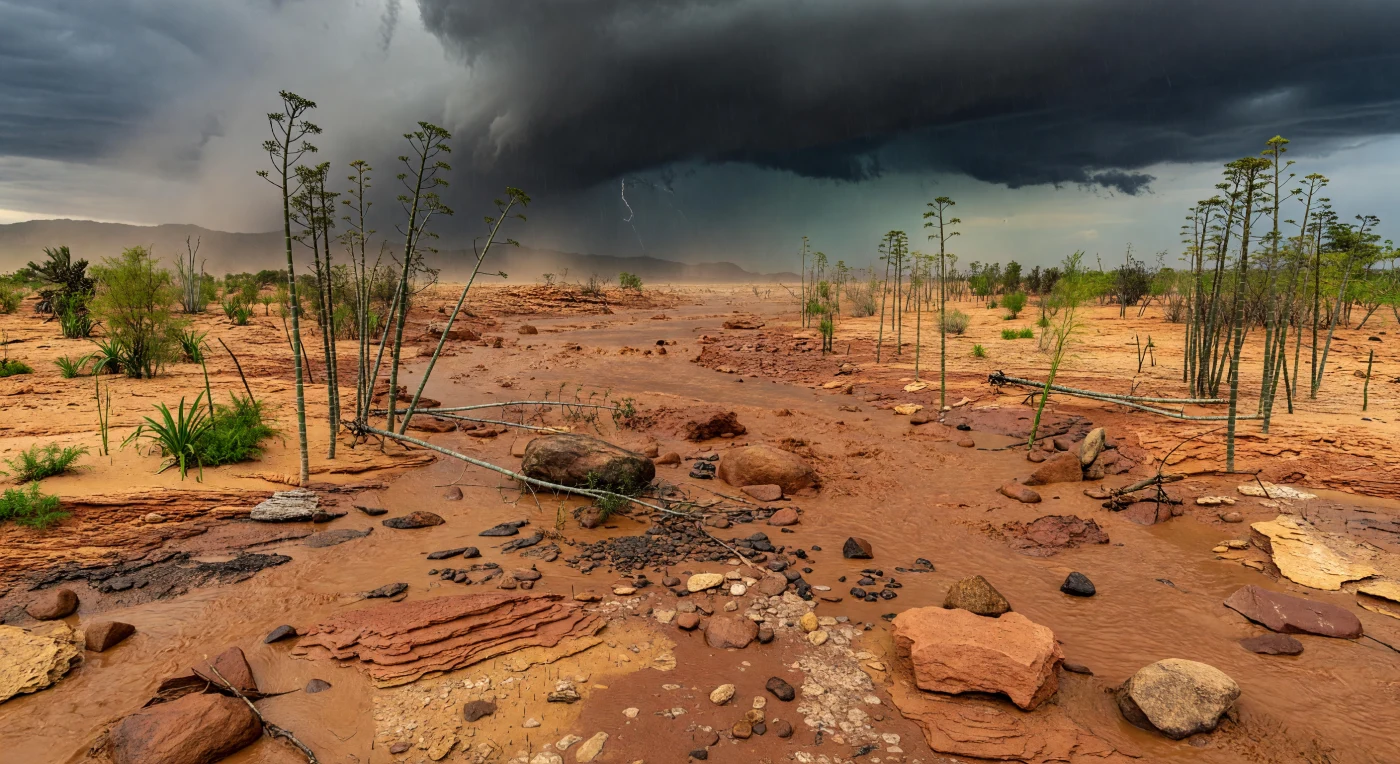
During the Late Carboniferous, about 310–300 million years ago, repeated growth of Gondwanan ice sheets caused sea level to fall and exposed broad tropical carbonate flats along shallow epicontinental seas. This reconstruction shows gray-beige limestone mudflats cut by braided channels and isolated lagoons, with shell debris from brachiopods, crinoids, and bryozoans scattered across the surface, while coal-swamp forests of Lepidodendron, Sigillaria, Calamites, and seed ferns stand at the inland margin. The alternating limestone, shale, siltstone, and coal layers visible in coastal scarps record the cyclothems formed by these repeated glacial transgressions and regressions.