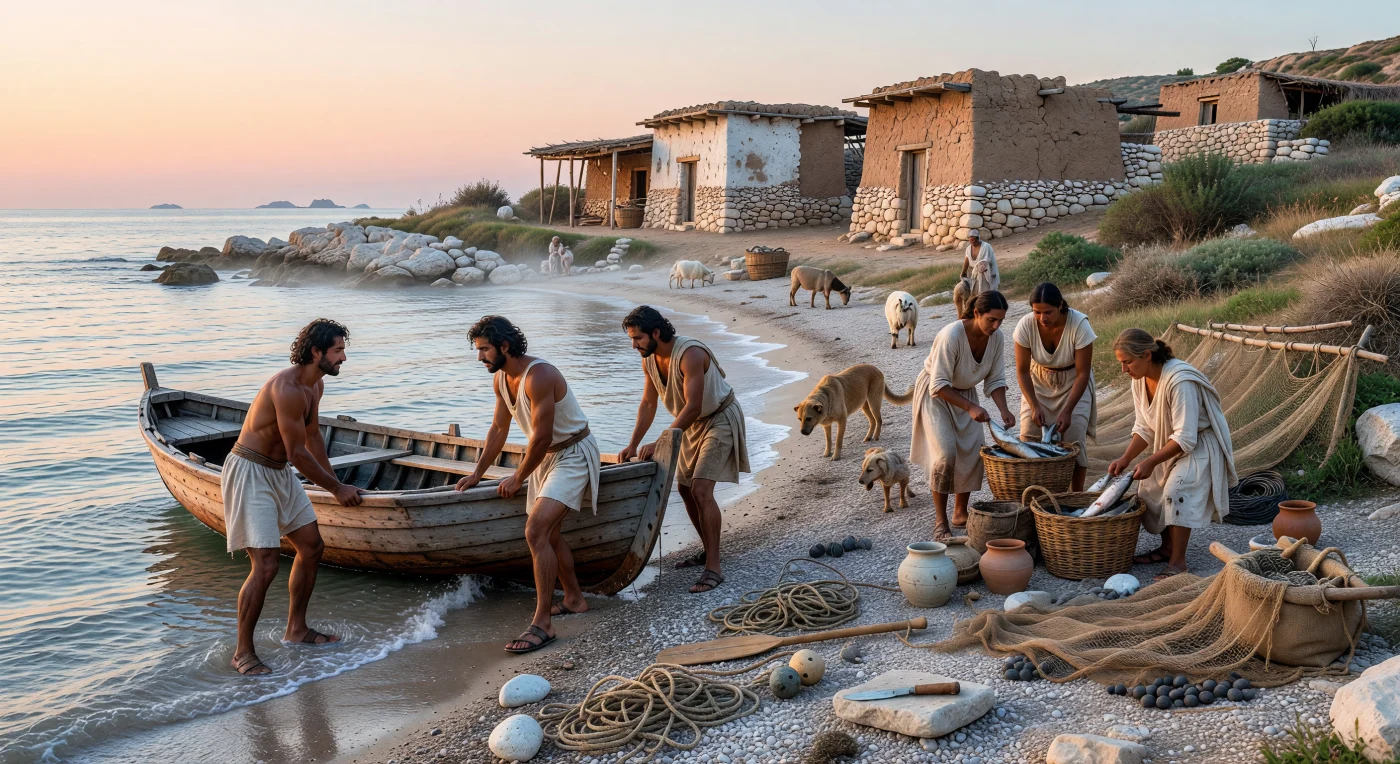
At first light on an Aegean shore, fishermen and their families launch a small wooden boat while women sort mullet beside drying flax nets weighted with lead sinkers. The modest houses of stone and mudbrick, wicker baskets, terracotta jars, goats, and village dog evoke the working world of a 4th-century BC Greek coastal community. Far from the marble temples often associated with Classical Greece, scenes like this reflect the everyday maritime labor that sustained island and mainland settlements across the eastern Mediterranean.
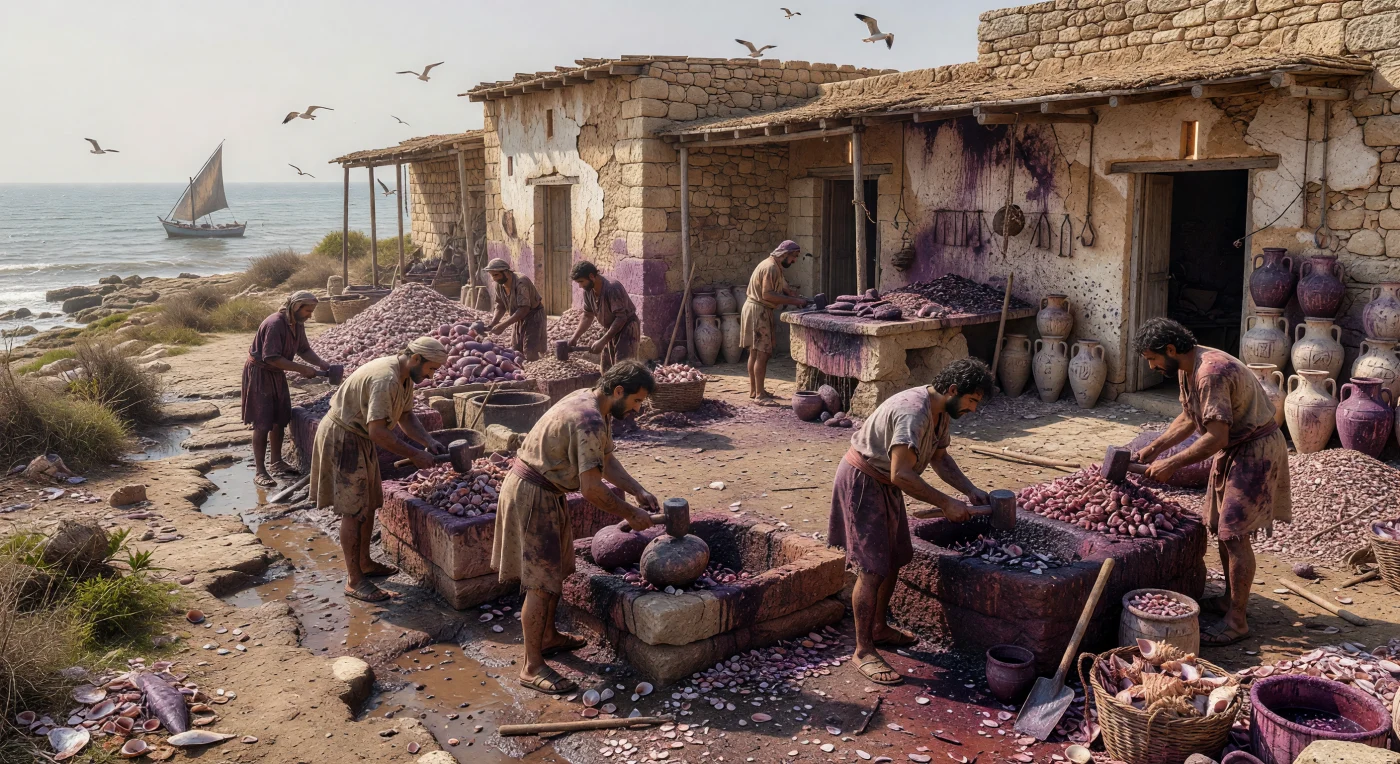
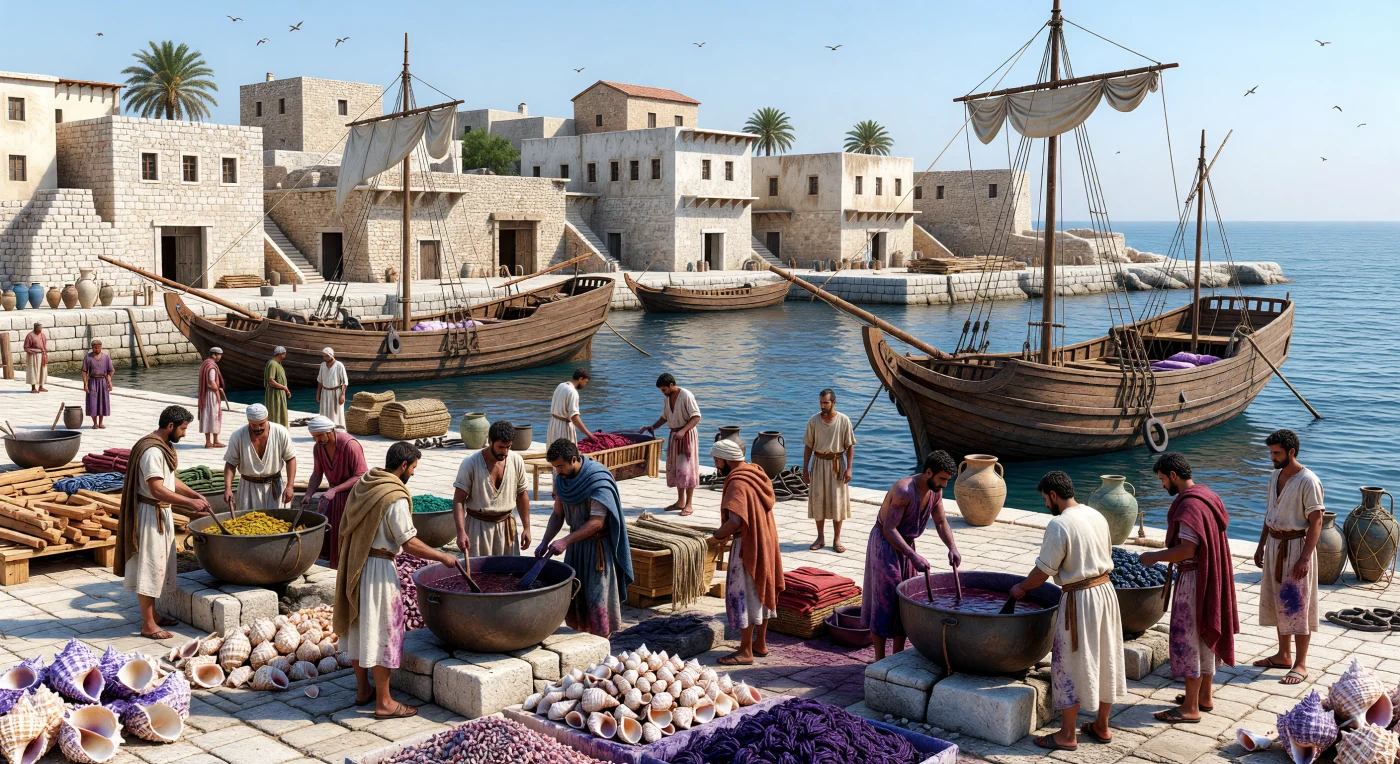
On the shoreline near Carthage, laborers in short wool tunics crush heaps of spiny murex shells beside stained stone vats, their work surrounded by shell mounds, baskets, amphorae, and the harsh glare of the Mediterranean sun. Such workshops produced the costly purple dye prized across the ancient world, a luxury extracted through foul-smelling, labor-intensive processes from marine mollusks. The scene reflects Carthage’s role in Punic maritime commerce during the 3rd century BC, where coastal industry linked North Africa to wider Mediterranean trade networks.

On the quays of Alexandria’s Great Harbor, laborers and merchants from across the eastern Mediterranean and the Nile world unload amphorae, grain sacks, and bundled goods beneath the bright light of the Egyptian coast. The scene reflects the late Ptolemaic period, when Alexandria was one of the busiest ports of Classical Antiquity, linking Egypt’s immense grain wealth to Greek, Levantine, Cypriot, and wider Mediterranean markets. In the distance, the towering Pharos lighthouse signals the city’s role as a cosmopolitan center of maritime trade, administration, and cultural exchange.
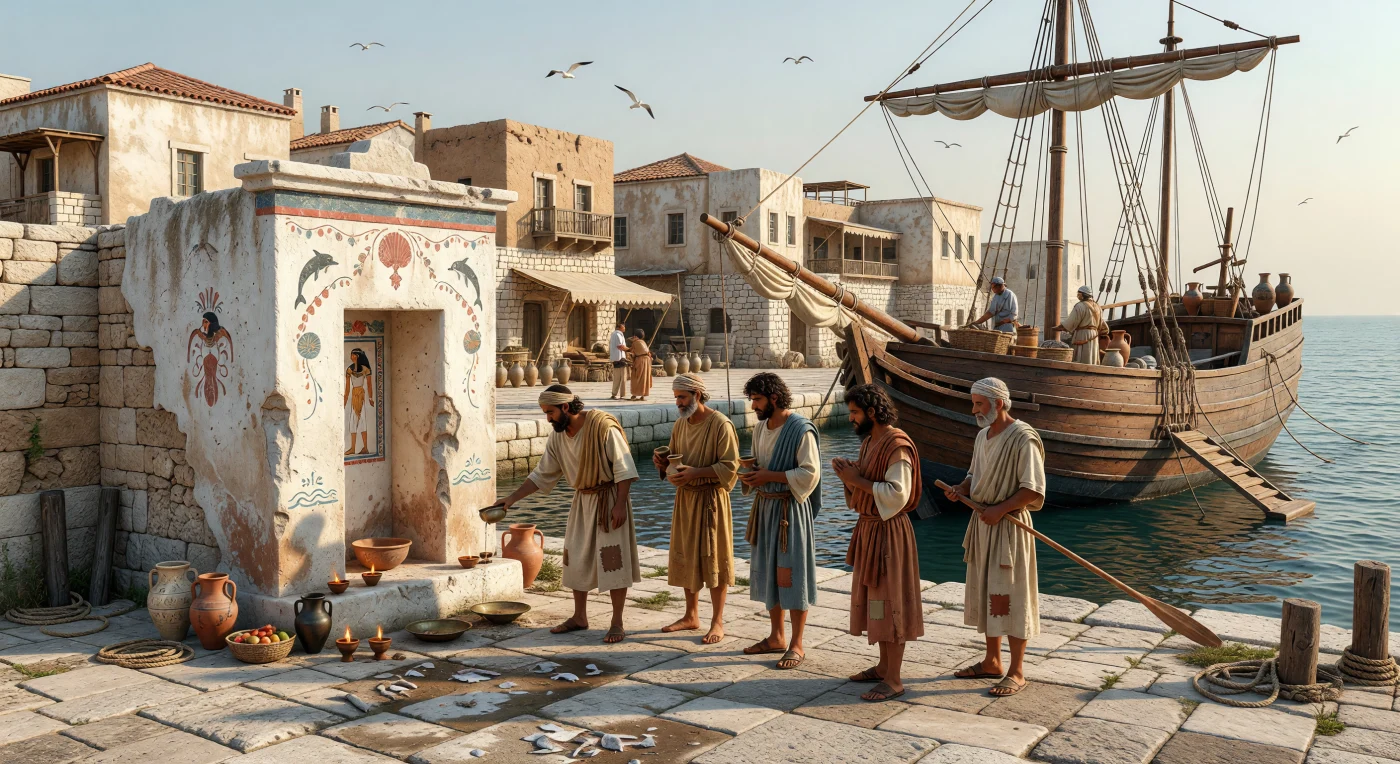
At first light on a Hellenistic quay in the eastern Mediterranean, sailors and merchants pause before a small stuccoed shrine of Isis Pelagia, protector of seafarers, to pour a libation before embarkation. Their belted chitons, simple cloaks, headscarves, amphorae, and the broad-beamed merchant ship with its furled square sail evoke the cosmopolitan ports of the 2nd century BC, where Greek, Egyptian, and Levantine traditions met in daily commerce and ritual. The scene captures the practical piety of ancient maritime life, when safe passage depended as much on divine favor as on seamanship.
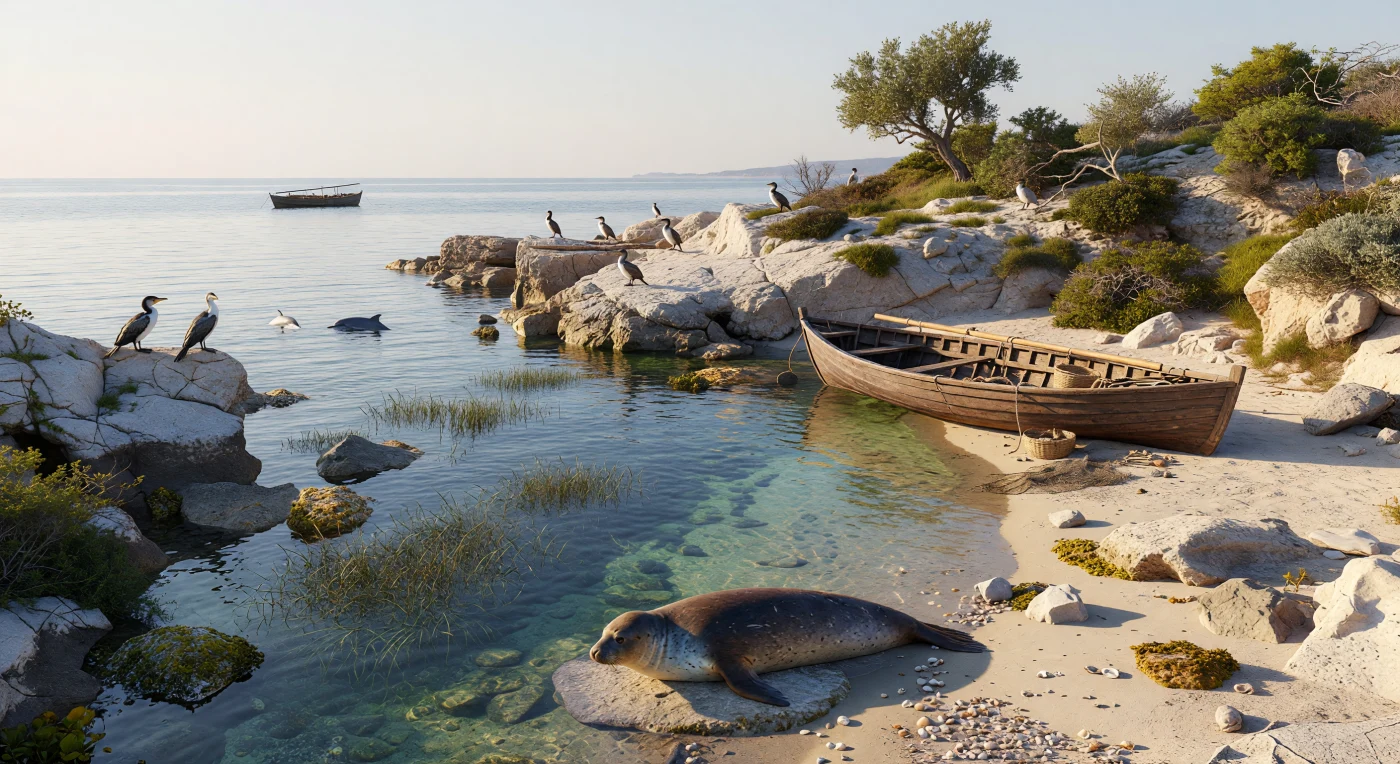
On a quiet eastern Mediterranean shore in the Hellenistic age, a Mediterranean monk seal basks on pale rocks above clear blue-green water, while cormorants perch nearby and dolphins surface farther offshore. Visible meadows of Posidonia seagrass and sparse salt-tolerant vegetation evoke the richness of ancient coastal ecosystems that sustained fishing communities across the Aegean and Levant. In the distance, a small beached fishing skiff hints at human presence without disturbing a scene that reflects the natural maritime world of the 3rd–2nd centuries BC.

On the Egyptian Red Sea coast at Berenike, porters, camel drivers, scribes, and officials animate a frontier harbor where desert caravan routes met maritime trade in the 1st century BC. Amphorae, ivory, and sacks of incense move between mud-brick storehouses and seagoing vessels built for Red Sea conditions, reflecting the port’s role under late Ptolemaic and early Roman Egyptian rule. The scene captures the cosmopolitan world of this entrepôt, where Egyptians, Arabs, Nubians, and other peoples of the Red Sea basin participated in exchanges linking the Nile Valley with Arabia, East Africa, and the wider Indian Ocean.

Greek triremes clash in a close-quarters naval battle in the 5th-century BC Aegean, their bronze rams smashing hulls while painted eyes glare above the waves. Crowded with rowers, helmsmen, marines, and officers in helmets and cuirasses, these long, narrow warships relied on speed, disciplined oar power, and ramming tactics such as the diekplous rather than heavy boarding alone. The scene evokes the maritime warfare that shaped the Classical Greek world, where control of the sea was essential to the power of rival poleis such as Athens, Corinth, and Sparta.
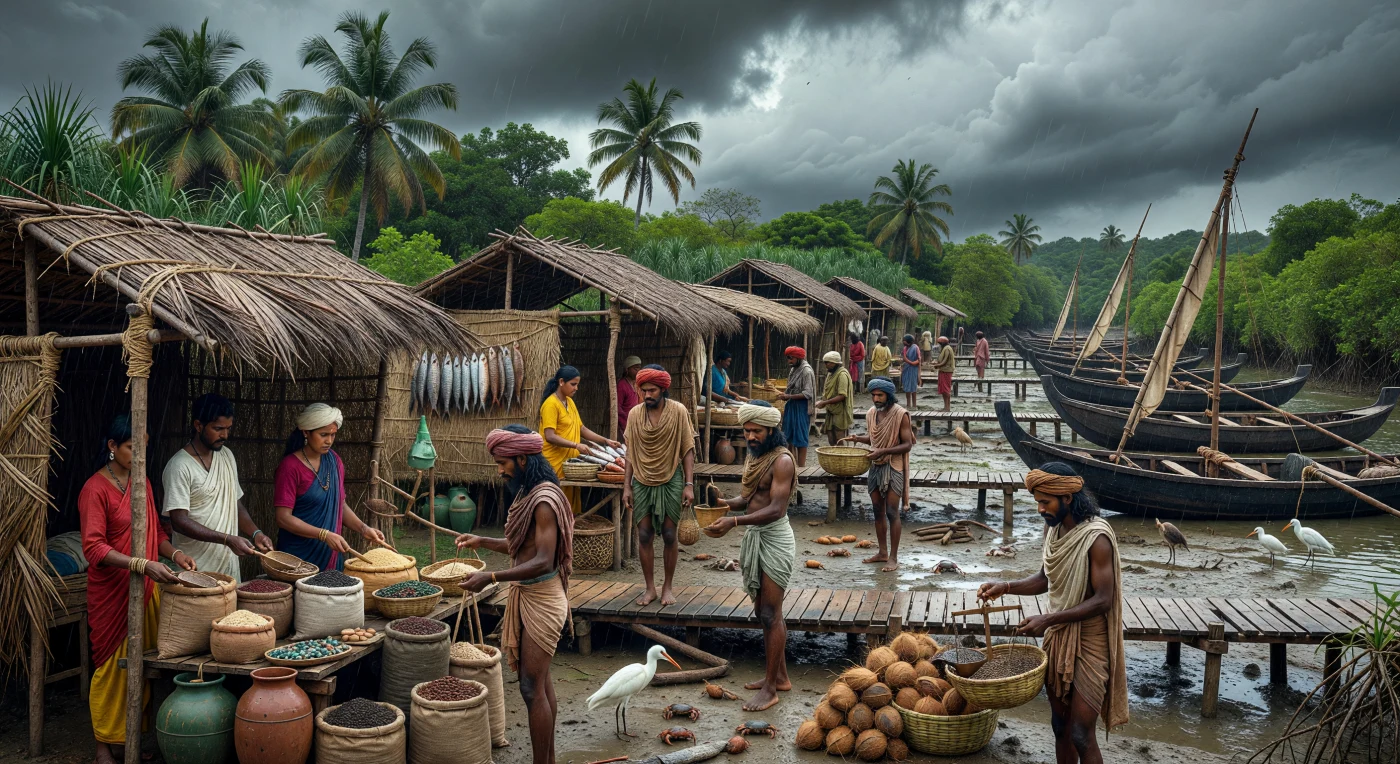
On the western coast of India in the late 1st century BC, a monsoon-season market unfolds beside a tidal estuary where merchants, fish sellers, and boatmen trade pepper, rice, coconuts, and dried fish under palm-thatch shelters. Sewn-plank boats with coir-lashed hulls crowd the brackish channels, reflecting the maritime technologies that linked coastal communities of the Arabian Sea long before the better-documented Roman trade boom of the 1st century AD. The scene evokes a humid, working shoreline economy shaped by seasonal rains, local fishing, and the early networks of Indian Ocean exchange.