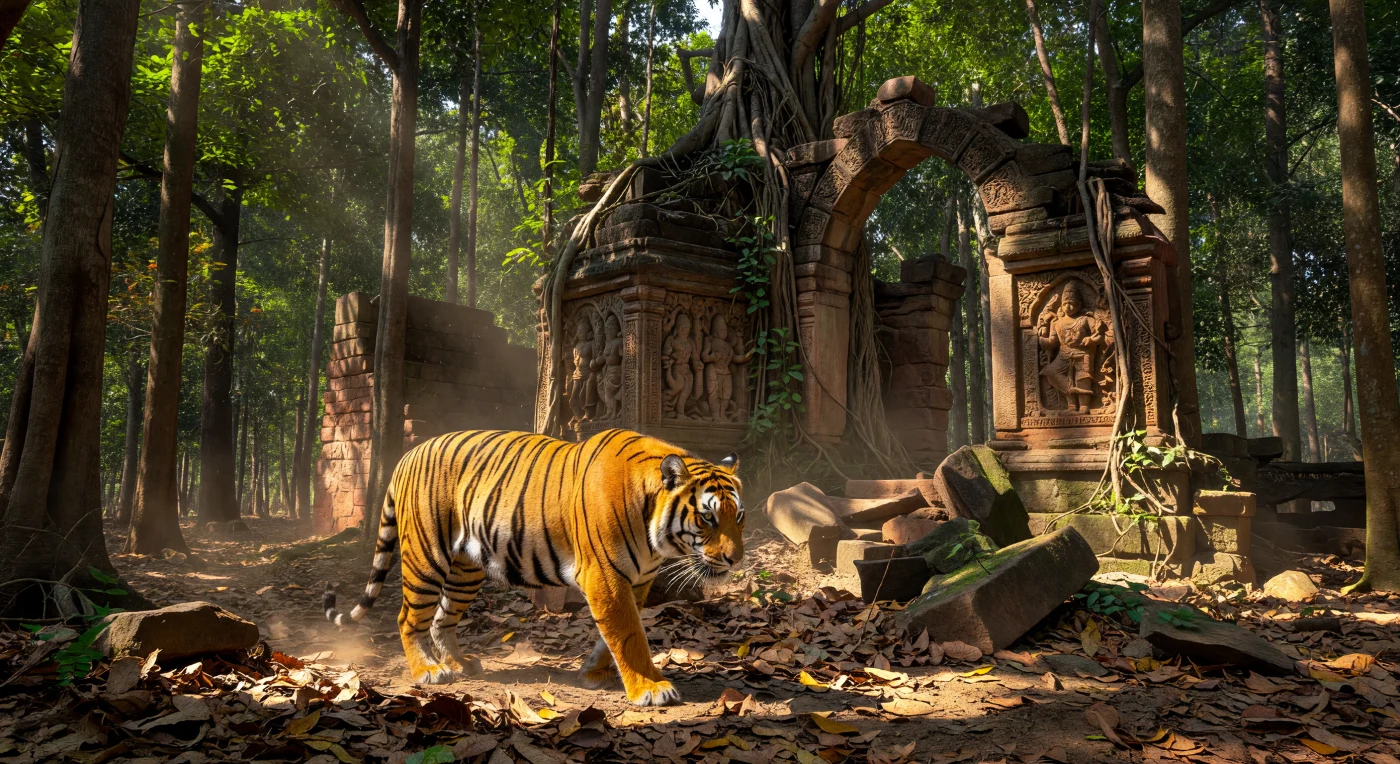
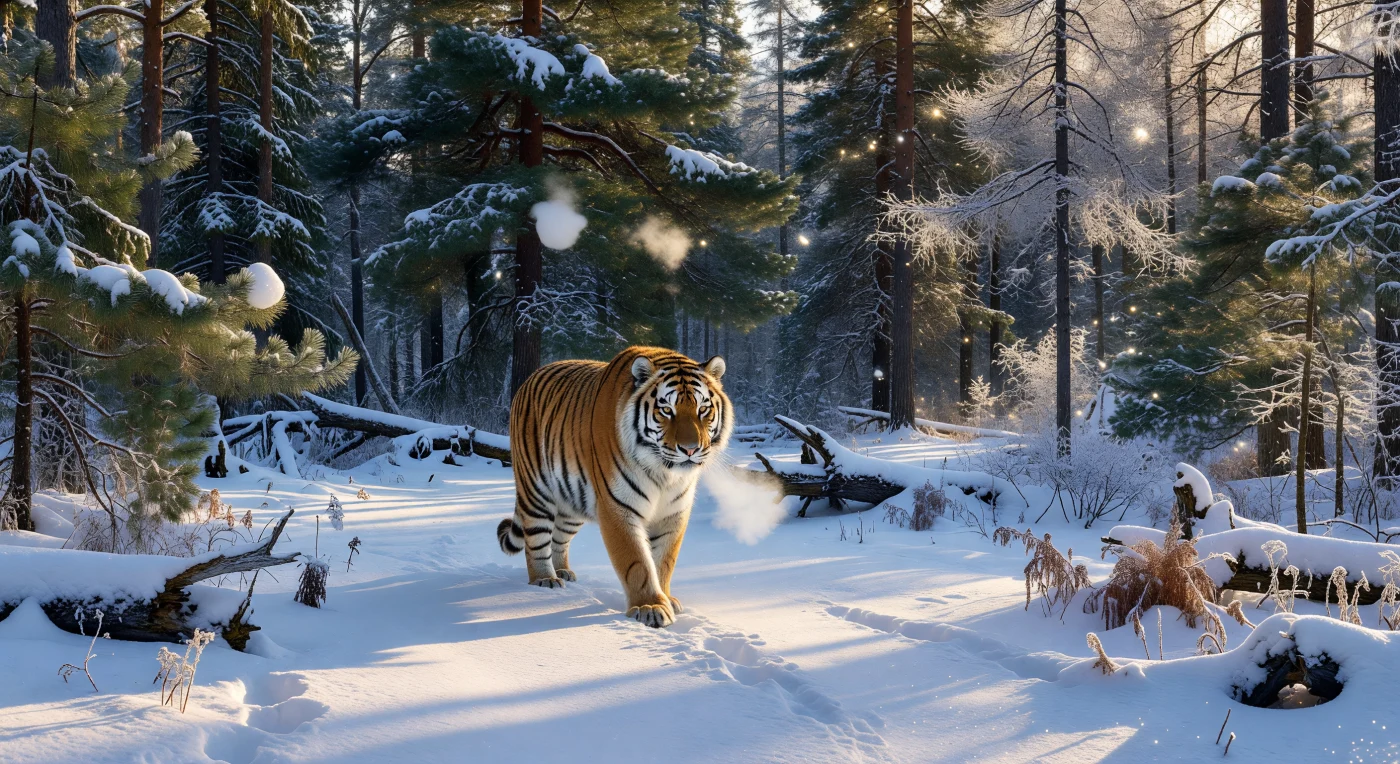
A massive Amur tiger, historically revered as the "Lord of the Mountain," prowls through the frost-laden Korean Red Pines of the Kaema Plateau during a late 19th-century winter morning. This scene captures the rugged interior of the Joseon Empire, where these apex predators were both feared and celebrated as sacred symbols of the land’s spiritual power. In the misty distance, a traditional Sansingak (mountain shrine) sits nestled in the valley, reflecting the deep-rooted connection between Korean folk religion and the wild, untamed wilderness of the Baekdu Mountains before the ecological shifts of the 20th century.

This scene captures the bustling Huangpu River circa 1895, showcasing the dramatic intersection of traditional Chinese maritime culture and Western industrial expansion along the Shanghai Bund. In the foreground, wooden junks with their distinctive battened sails navigate the silty waters alongside a massive British iron steamship, symbolizing the global transition from the age of sail to the era of steam. The background reveals the nascent skyline of the International Settlement, featuring the 1893 Custom House and neoclassical granite facades that reflect Shanghai's emergence as a premier global financial hub during the late Qing Dynasty.

In this scene from the late 19th-century Qing Dynasty, Han Chinese farmers and water buffalo navigate the intricate Hani rice terraces of Yunnan province during the morning harvest. The laborers are depicted wearing traditional indigo-dyed cotton and the mandatory Manchu queue, a hairstyle enforced by the ruling dynasty until 1912. These vast, hand-carved landscapes reflect a sophisticated agricultural heritage that remained the backbone of rural life in Southern China, even as coastal regions began to experience the industrial shifts of the Belle Époque.

This scene captures the bustling Ginza district of Tokyo circa 1895, showcasing the distinctive "Bricktown" architecture and the rapid Westernization that defined Japan’s Meiji period. An elite passenger in a wool frock coat and bowler hat travels by rickshaw past a woman pairing a traditional silk kimono with a European lace parasol, illustrating the cultural synthesis of the era. The presence of telegraph wires and gas lamps against the backdrop of red-brick Giyofu-style buildings highlights the transformative friction between centuries of tradition and the industrial modernity of the Belle Époque.
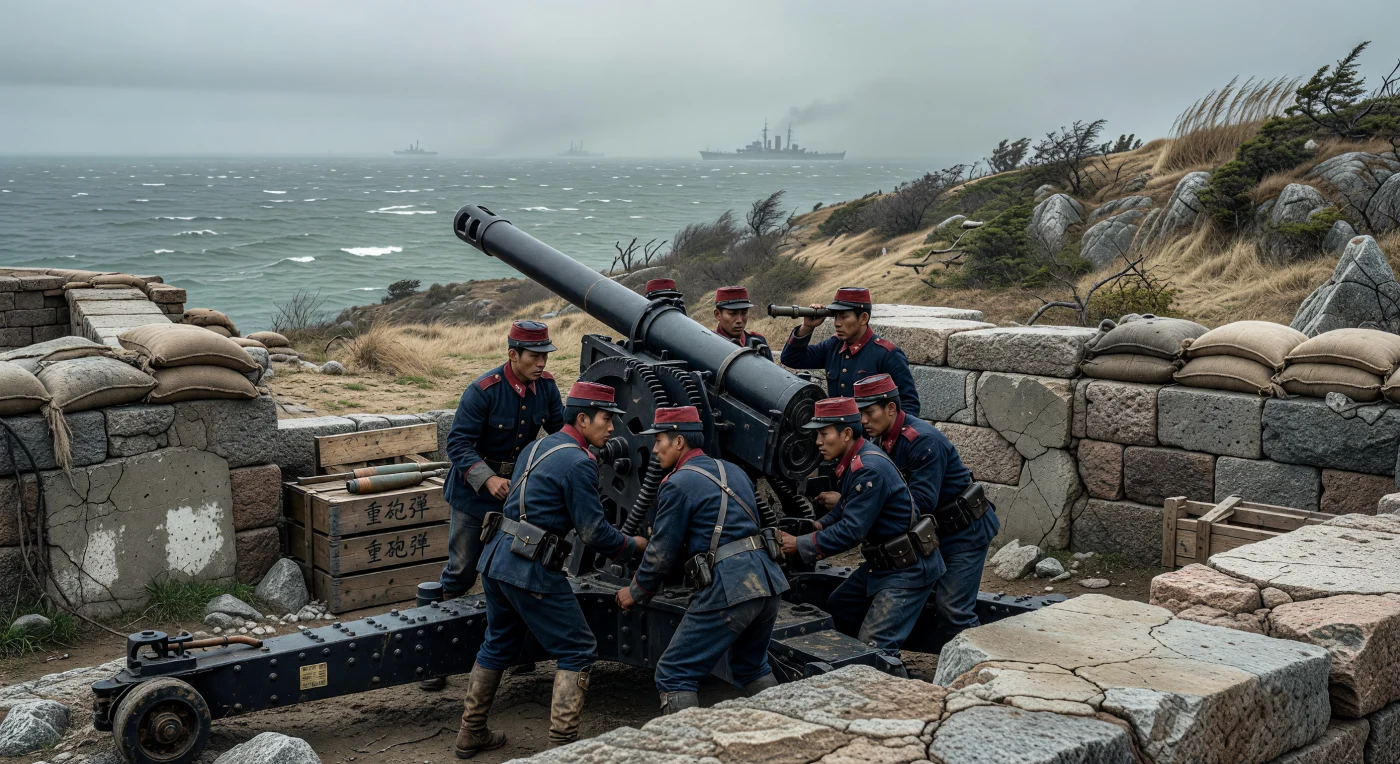
During the pivotal Siege of Port Arthur in 1904, Japanese Imperial Army soldiers in dark blue Meiji-era uniforms man a 28cm Krupp-designed howitzer atop the rugged Manchurian coastline. These massive siege guns were instrumental in neutralizing the Russian Pacific Fleet anchored in the Yellow Sea, signaling Japan's emergence as a modernized industrial power. The scene illustrates the harsh, cold conditions of the Russo-Japanese War, where traditional military discipline met the devastating scale and mechanical friction of early 20th-century heavy artillery.

Within the grey-brick courtyard of a traditional Beijing siheyuan, Manchu merchants meticulously inspect blocks of compressed brick tea and fine porcelain destined for international markets. Dressed in silk changshan and sporting the mandatory braided queues of the late Qing Dynasty, these traders manage a bustling warehouse filled with calligraphy-marked crates and bamboo-wrapped bundles. This scene, set around 1895, captures the sophisticated commercial networks of the tea trade, which remained a cornerstone of the East Asian economy during the global Belle Époque.

Two female Ama divers surface amidst the kelp forests of Japan’s Ise Coast during the mid-Meiji Era, their sun-bronzed forms clad in traditional white cotton koshimaki and tenugui headscarves. This scene captures a centuries-old maritime tradition where women, renowned for their lung capacity and resilience to cold, served as the primary harvesters of abalone and pearl oysters. Operating without goggles or breathing apparatus, these divers relied on hand-forged iron tools and floating cedar tubs to collect their catch from the rocky Pacific floor, embodying a vital and physically demanding pillar of Japanese coastal economy and culture before the advent of modern diving equipment.

This cinematic view depicts a bustling thoroughfare in late 19th-century Hanseong (Seoul), framed by a monumental timber and stone city gate characteristic of the Joseon dynasty. Commoners and scholars alike appear in traditional white cotton hanbok, reflecting the cultural identity of the "white-clad people" during a period of profound social stability and impending change. The juxtaposition of ancient architectural techniques with a single, nascent telegraph line captures Korea’s initial steps toward modernization during the global Belle Époque.