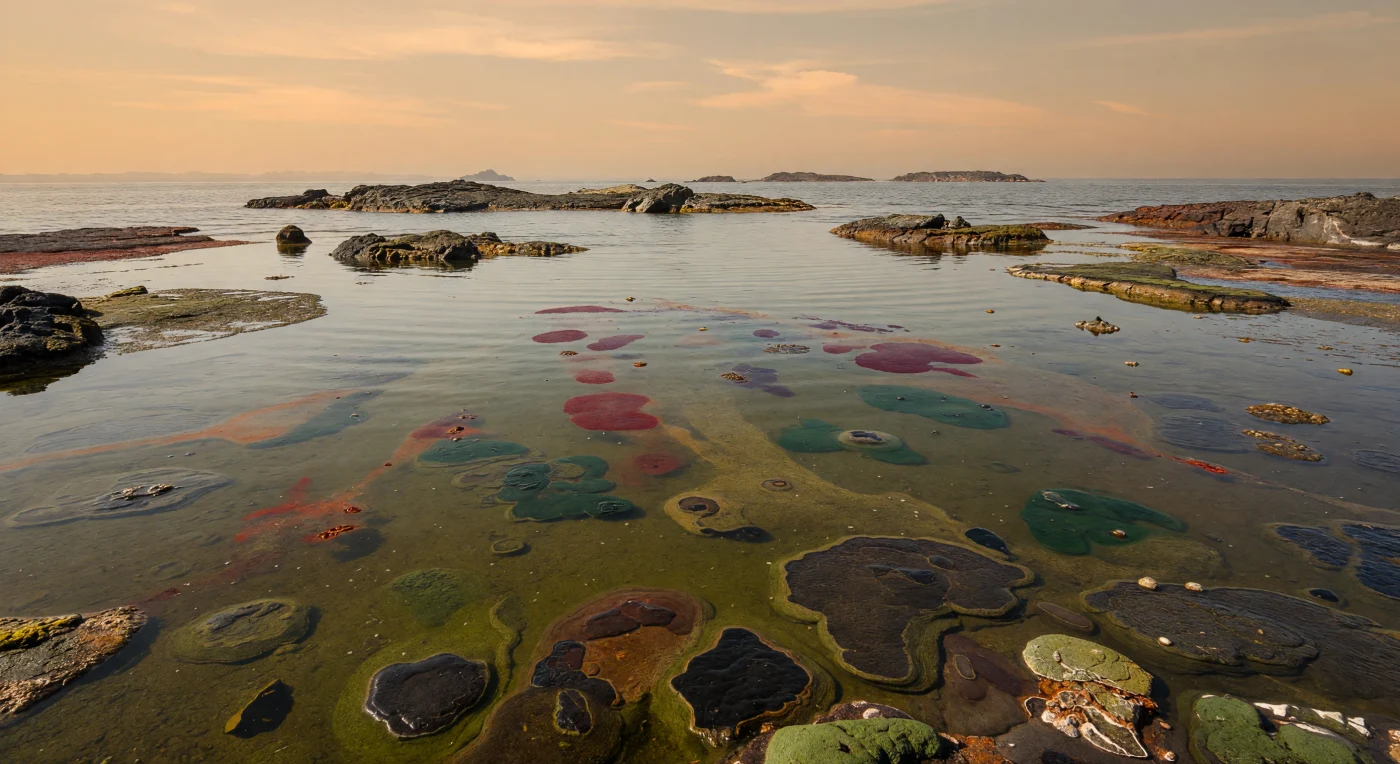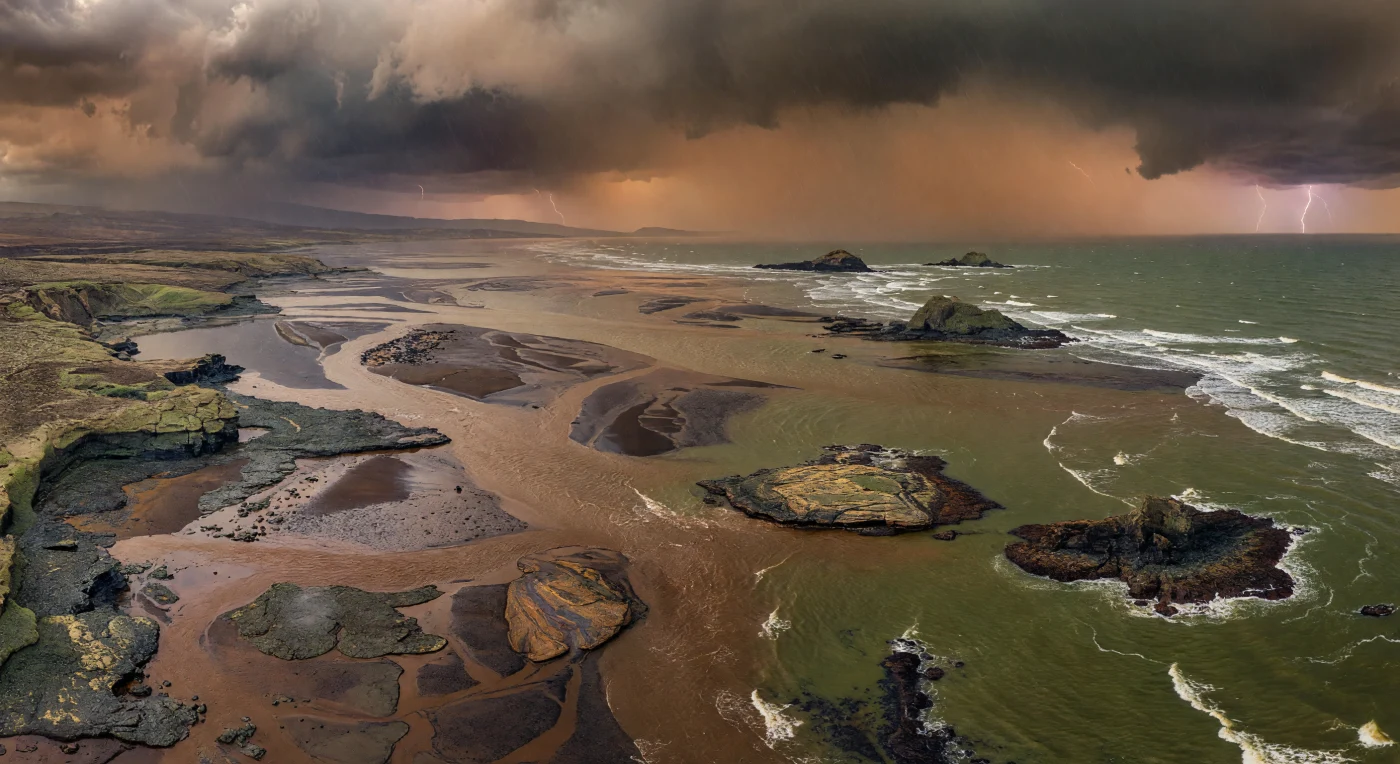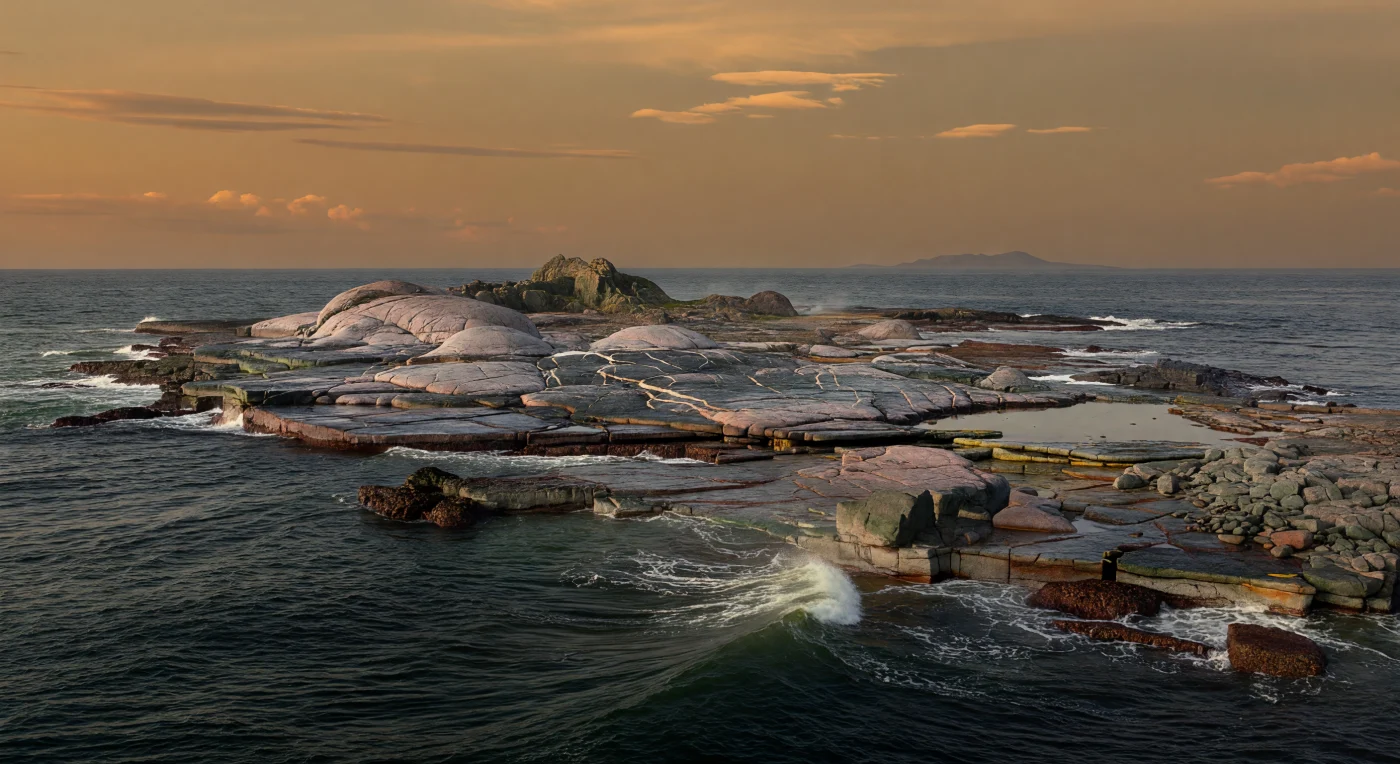
Around 3.2–2.8 billion years ago, some of Earth’s earliest stable continental crust rose only slightly above the sea as low rocky islands like this Archean craton shoreline. The scene shows bare pink-gray TTG granitoid and darker altered basalt washed by a mineral-rich ocean beneath a hazy, methane-tinged sky, with wave-cut benches, fractured slabs, and faint hydrothermal activity but no plants or animals on land. Such landscapes, preserved today in ancient cratons like parts of the Pilbara, Kaapvaal, and Superior provinces, record a world of emerging continents long before complex life transformed Earth’s surface.
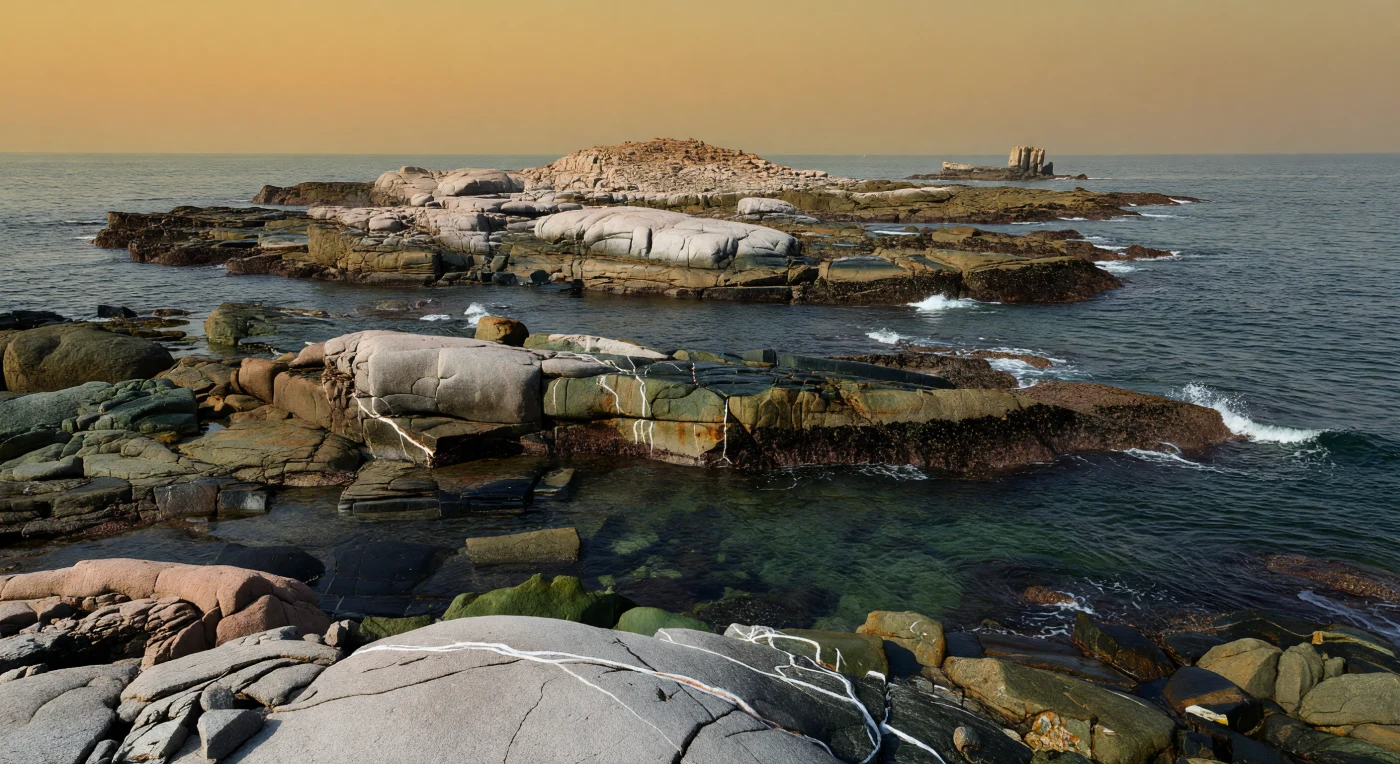
Around 3.2–2.8 billion years ago, small Archean cratons formed some of Earth’s first persistent land, rising only modestly above a vast global ocean. This scene shows a barren shoreline of pink-gray TTG crust (tonalite–trondhjemite–granodiorite) and dark basaltic to greenstone outcrops, cut by waves into slick benches beneath a methane-hazed amber sky lit by the faint young Sun. No plants or animals existed on land at this time; at most, only microscopic microbial films may have occupied protected wet crevices along these harsh, rocky coasts.
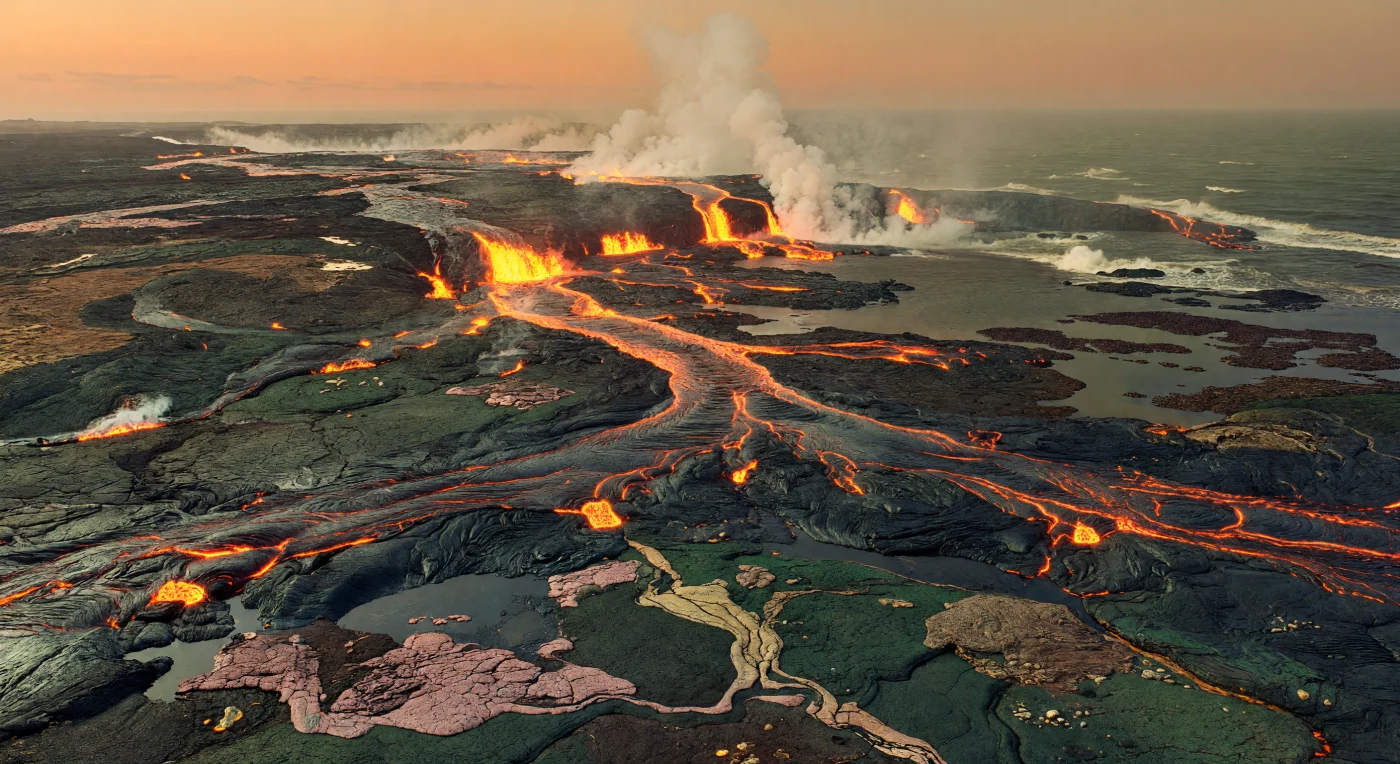
Around 3.2–2.7 billion years ago in the Archean Eon, an intensely hot komatiite eruption sweeps across a barren volcanic plain on one of Earth’s early cratons. Thin, fast-moving ultramafic lava glows orange-white as it races through braided channels, crusting over into glossy black plates split by incandescent cracks, while fumaroles, steam, and hydrothermal staining mark the fractured crust and shoreline. In the distance, the lava meets a shallow coastal basin beside TTG granitoid outcrops and greenstone terrain, where chemically unusual seas and possible microbial mats hint at some of the planet’s earliest surface ecosystems.
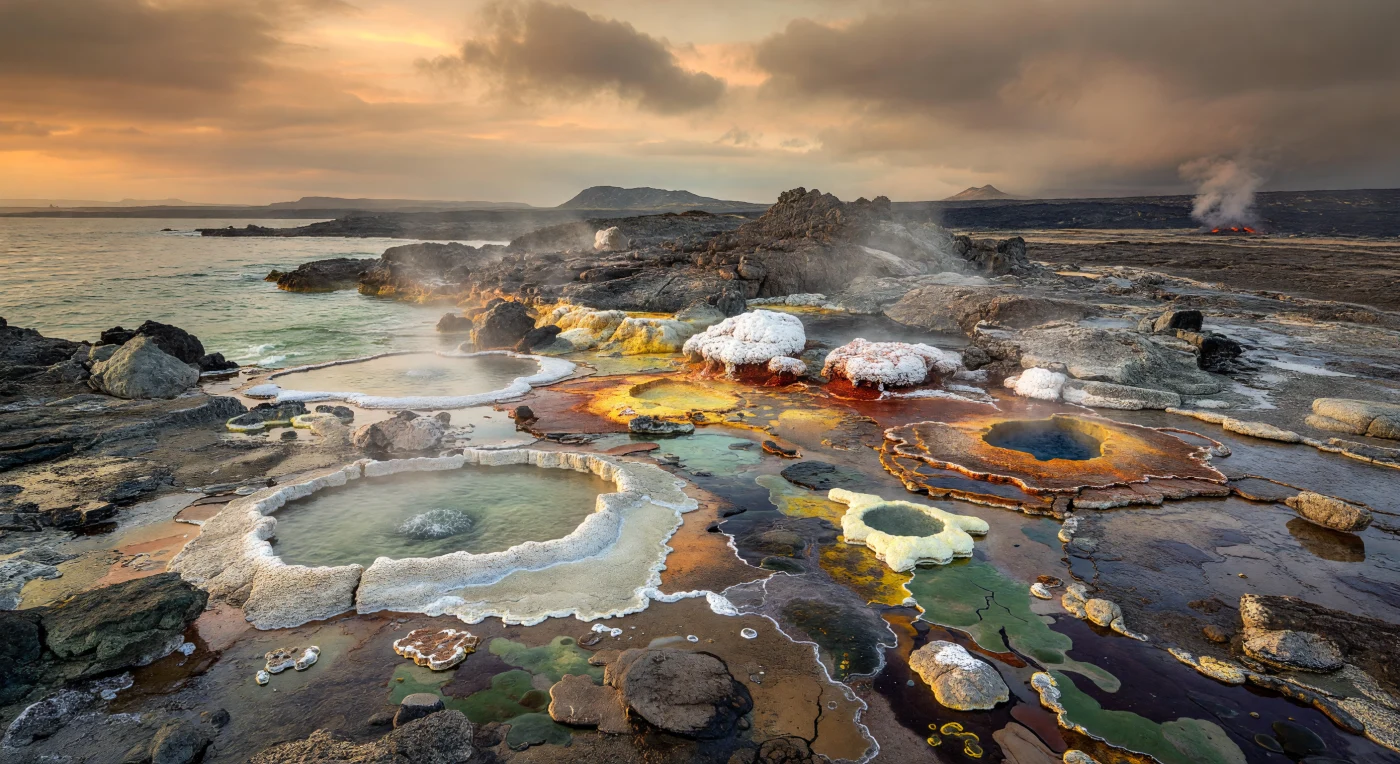
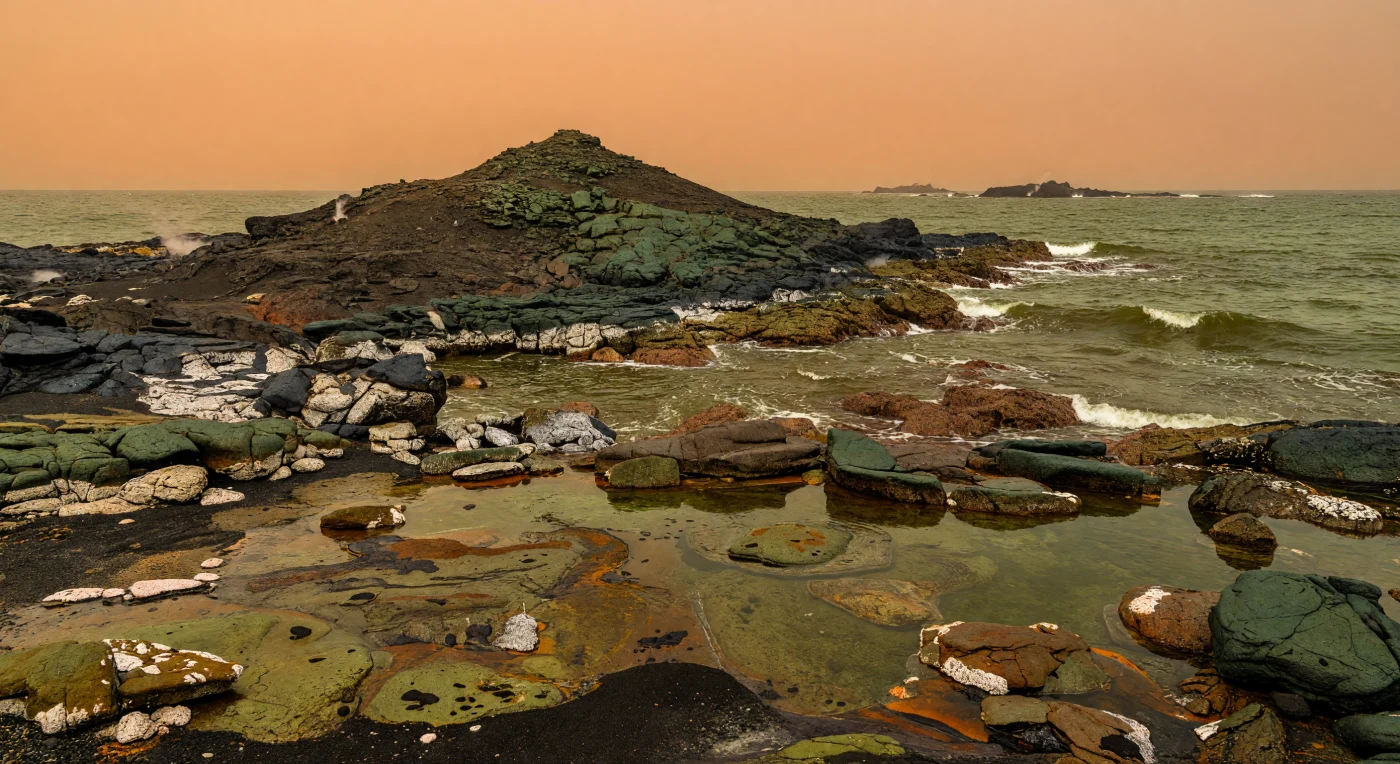
Around 3.2–2.8 billion years ago, an Archean craton margin may have looked like this: bare TTG granitoids and dark greenstone–komatiite rocks cut by steaming silica-rich hot springs, fumaroles, and shallow runoff channels. White siliceous sinter, red iron oxides, and yellow sulfur crust the hydrothermal ground, while life is represented only by thin microbial films clinging to persistently wet surfaces around the pools. Under a hazy, oxygen-poor sky, these emerging continental landscapes record some of Earth’s earliest stable land and the intimate link between volcanism, hydrothermal activity, and microbial ecosystems.
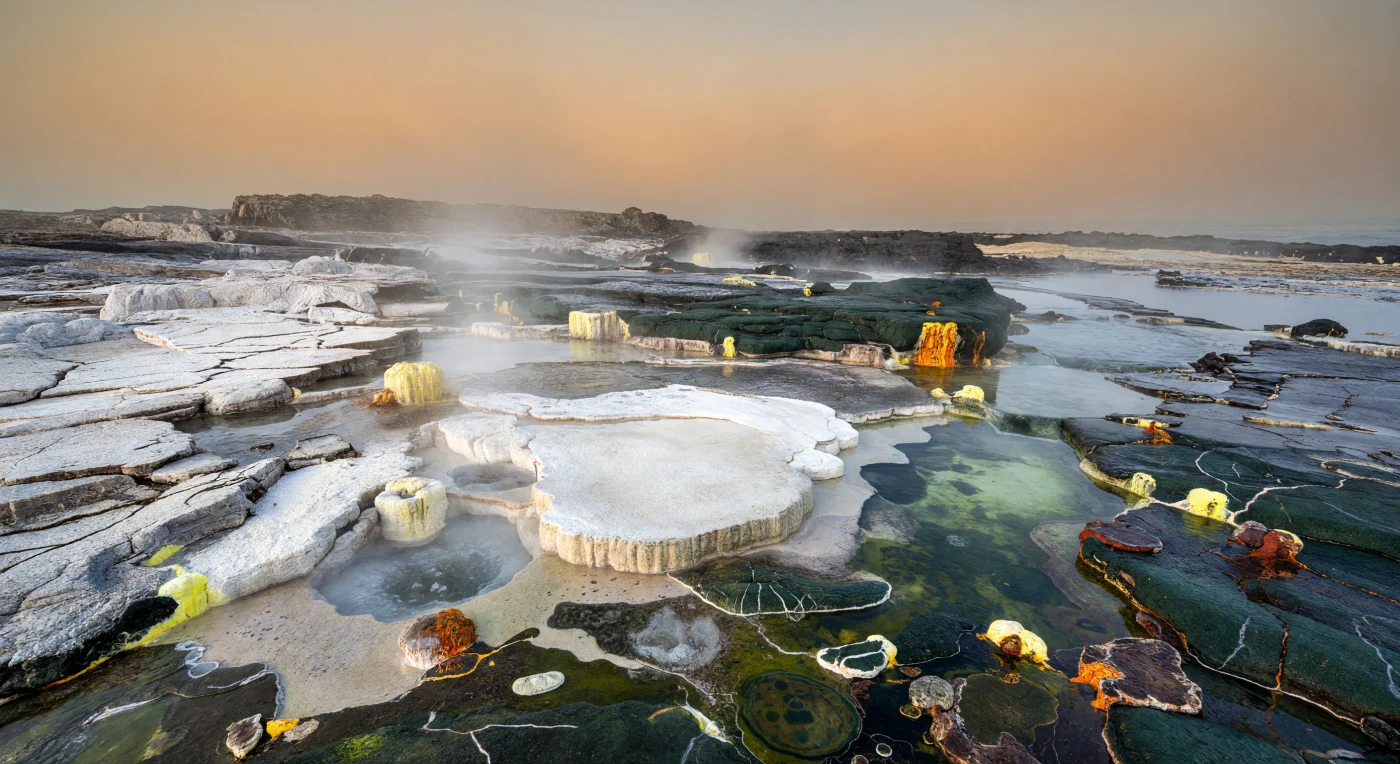
On a low, barren Archean craton margin about 2.9–2.7 billion years ago, silica-rich hot springs and fumaroles spread white sinter, red iron oxides, and yellow sulfur across fractured TTG granitoids and dark greenstone bedrock. Life is visible only as thin green-black to brown-purple microbial films clinging to wet rock beside steaming pools and runoff channels, while all dry surfaces remain starkly lifeless. This scene captures one of Earth’s earliest subaerial hydrothermal landscapes, where microbial communities may have endured on emergent continental crust under an oxygen-poor, haze-filled sky long before plants or animals existed.
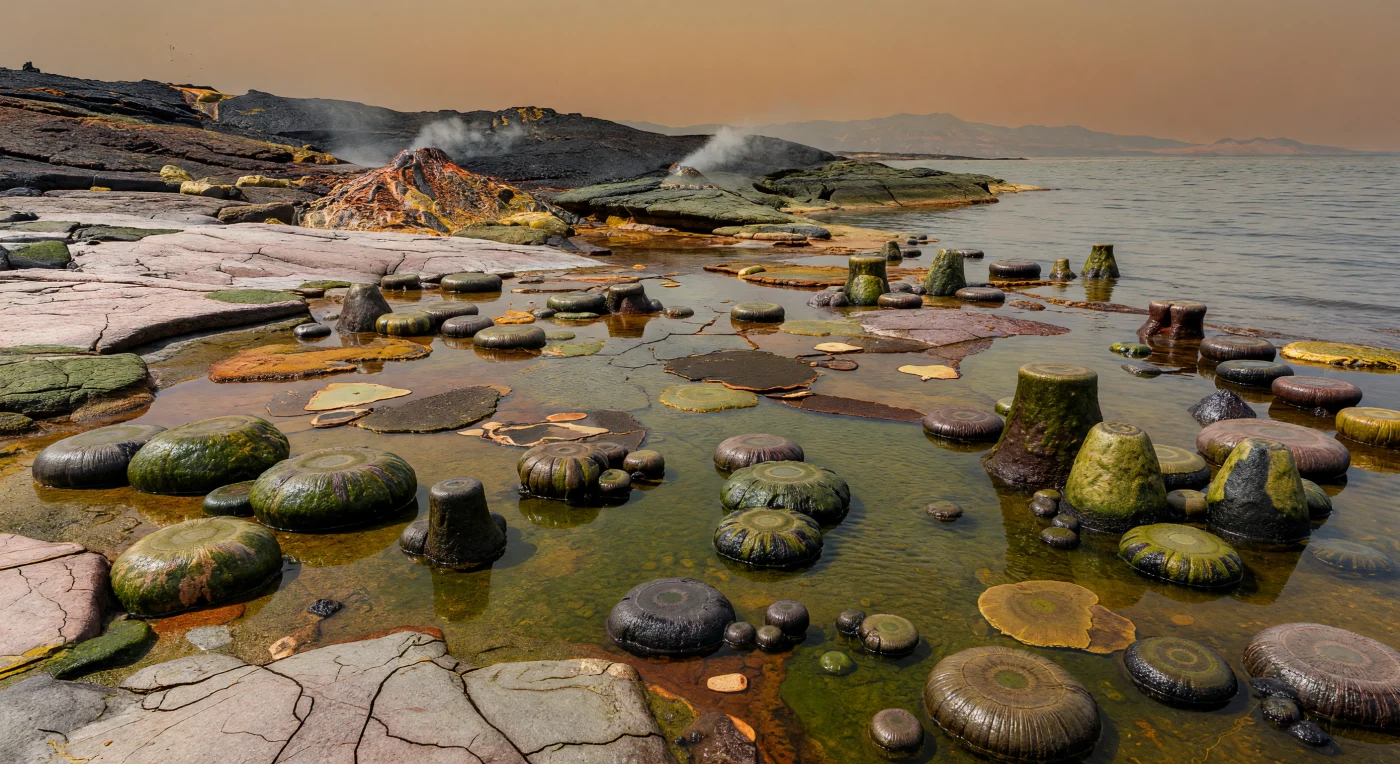
Along the edge of a small Late Archean craton, shallow ferruginous water laps around domal and sharply conical stromatolites built by microbial mats, including cyanobacteria-like colonies comparable to Eoentophysalis. These layered structures rise above a bare tidal flat of silica-rich sediments, iron-stained puddles, and fractured TTG and greenstone bedrock, with steaming hydrothermal vents and volcanic ridges in the background. The scene represents Earth roughly 2.7–2.5 billion years ago, when microbial communities dominated coastal ecosystems and continents were just beginning to emerge under a hazy, oxygen-poor sky.
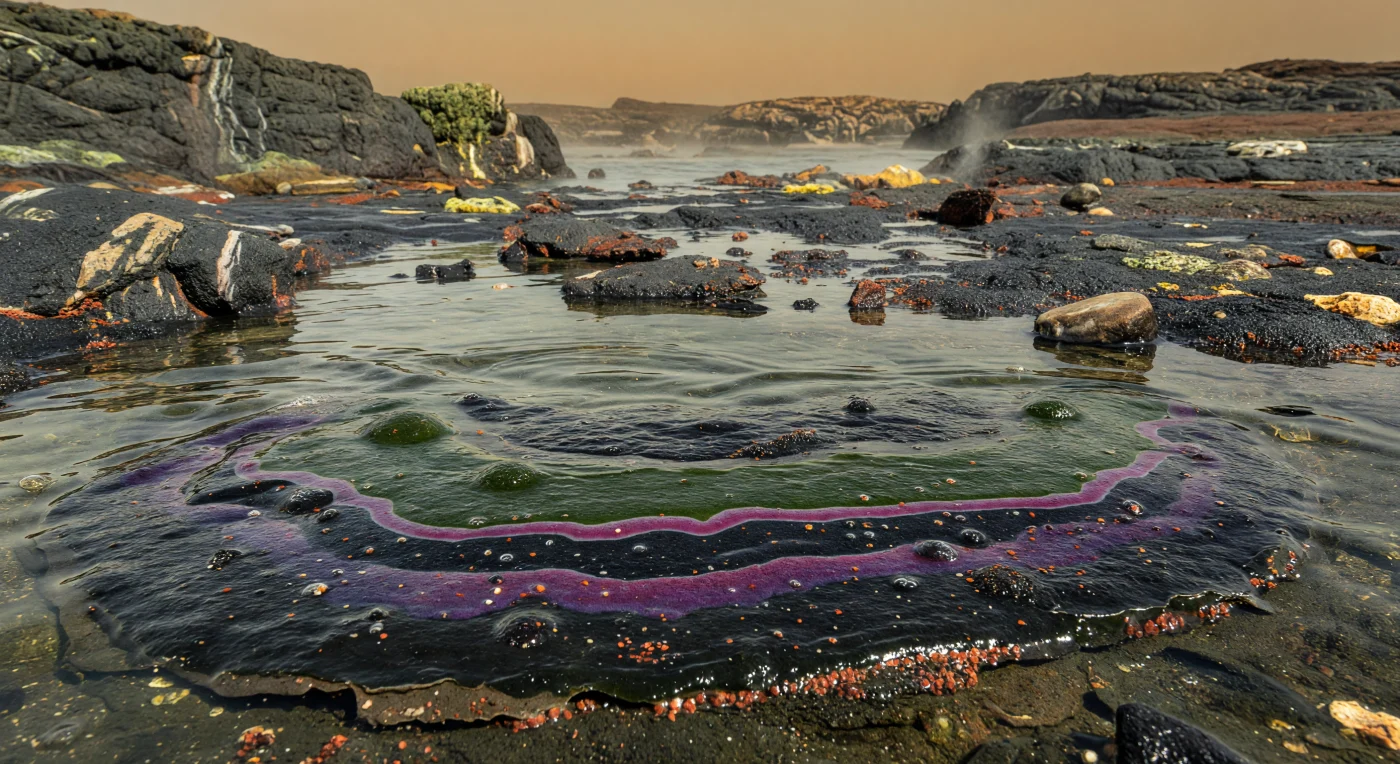
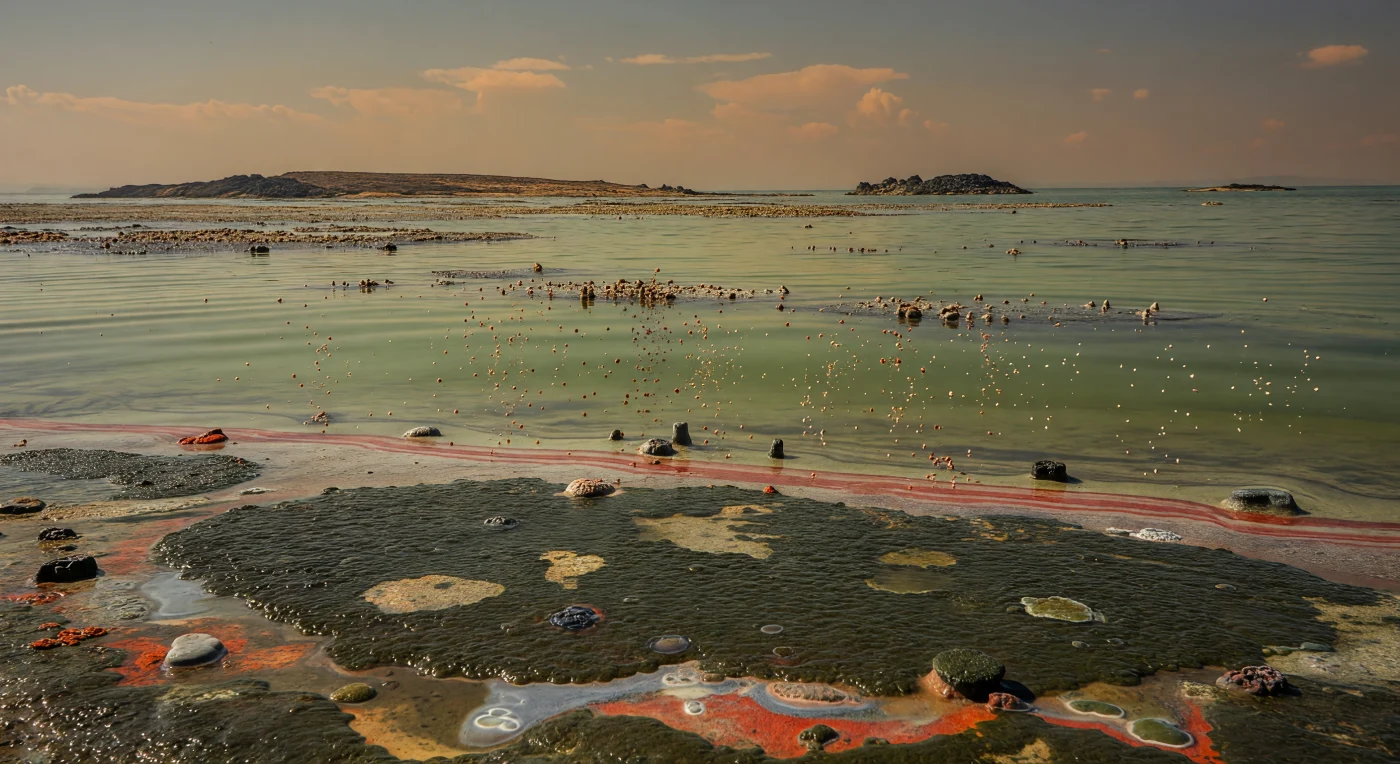
On a late Archean shoreline about 2.7–2.5 billion years ago, shallow hot water laps across a laminated microbial mat—the dominant visible ecosystem of its time. The slimy surface shows a dark photosynthetic layer above purple sulfur-bacterial bands and black anoxic sediment, with trapped gas bubbles, silica grains, and iron precipitates recording the chemistry of an oxygen-poor world. Bare TTG and basaltic rocks in the background place this scene on one of Earth’s earliest emerging cratonic margins, long before animals, plants, or true soils existed.
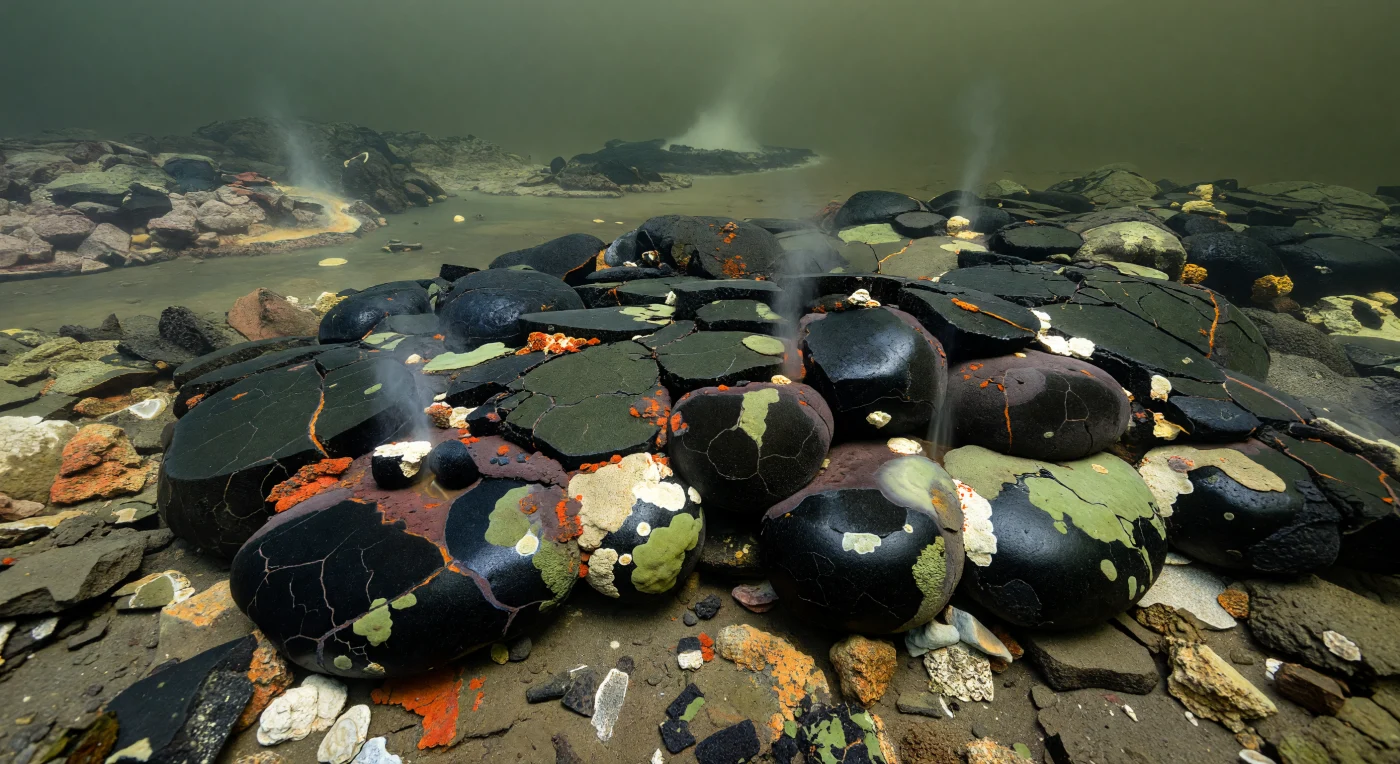
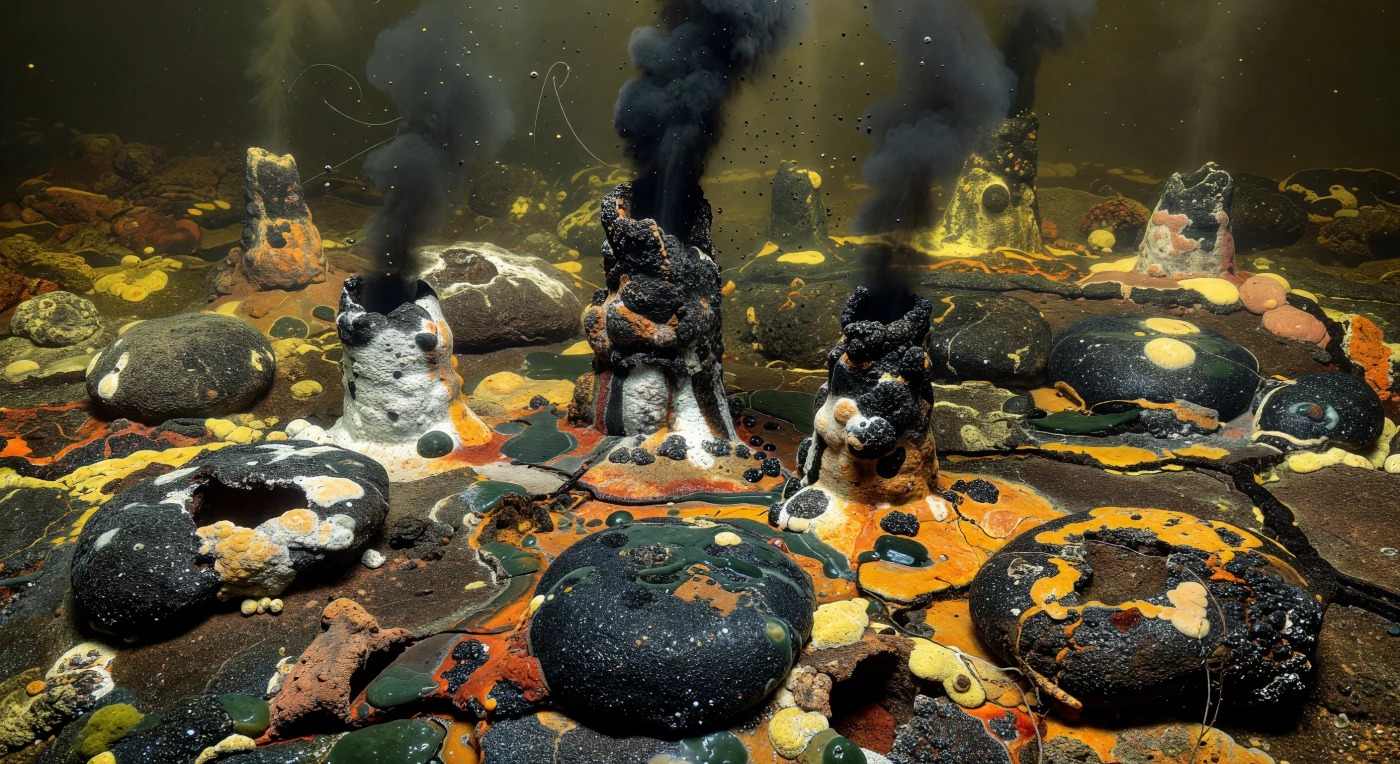
In this Archean nearshore seascape, bulbous pillow basalts lie heaped across the shallow seafloor, their dark quenched surfaces cracked by rapid cooling as hydrothermal fluids seep through fractures. Orange-red iron-rich precipitates, pale silica crusts, and thin microbial films coat the rock in places, while a low, barren proto-continent of TTG and greenstone rises faintly in the background. The scene represents Earth roughly 3.2–2.7 billion years ago, when volcanic oceanic crust, hydrothermal activity, and microbial life dominated coastal environments long before animals, plants, or oxygen-rich seas.
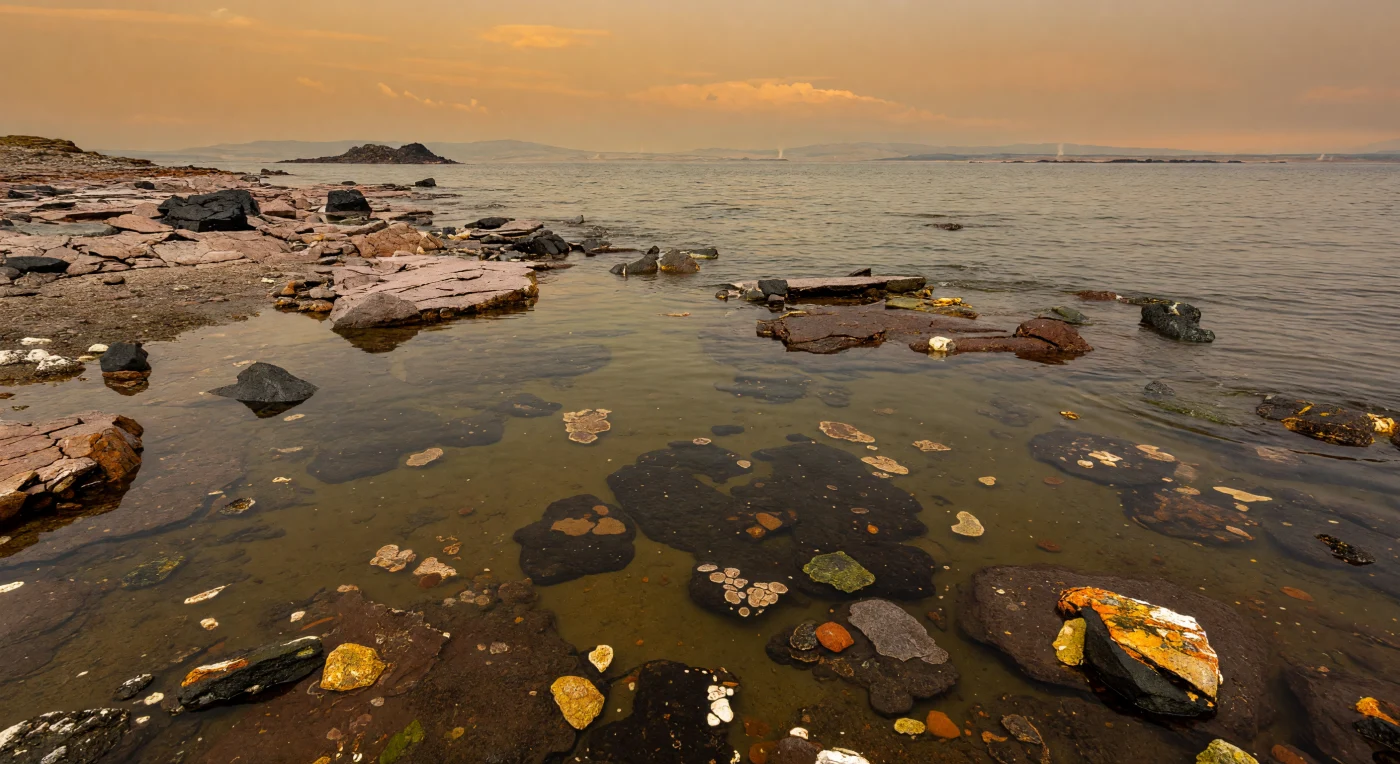
Along the margin of an emerging Archean craton, a shallow ferruginous sea laps against bare tonalite, basalt, and greenstone under a hazy orange sky, with no plants or animals to break the rocky shoreline. In the warm, iron-rich water, suspended microbes, patchy microbial mats, silica crusts, and a few low stromatolite-like domes hint at some of Earth’s earliest ecosystems. This scene represents nearshore environments roughly 3.2–2.7 billion years ago, when oxygen was scarce, continents were only beginning to stabilize, and microbial life dominated the planet.
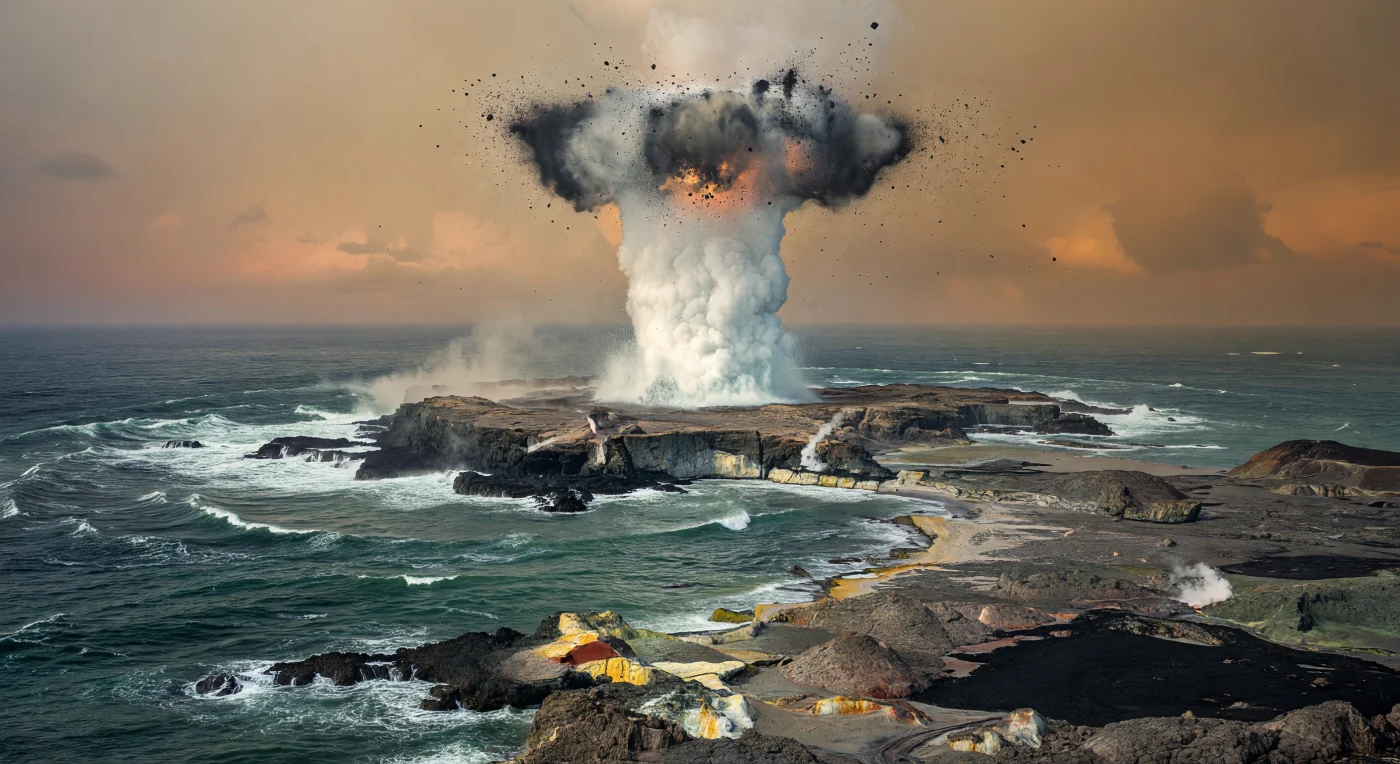
A giant meteorite slams into the ocean beside a small Archean craton, sending a towering white steam plume and dark ejecta skyward as tsunami waves race toward bare TTG and basaltic shores. Set in the Archean Eon about 3.2–2.8 billion years ago, this scene shows some of Earth’s earliest stable continental crust—low, rocky proto-continents surrounded by hot, chemically unusual seas beneath an oxygen-poor, haze-filled sky. The land is utterly barren, with no plants or animals, only volcanic rocks, hydrothermal stains, and fumaroles on a young planet still shaped by heavy impacts, intense volcanism, and the first emerging continents.