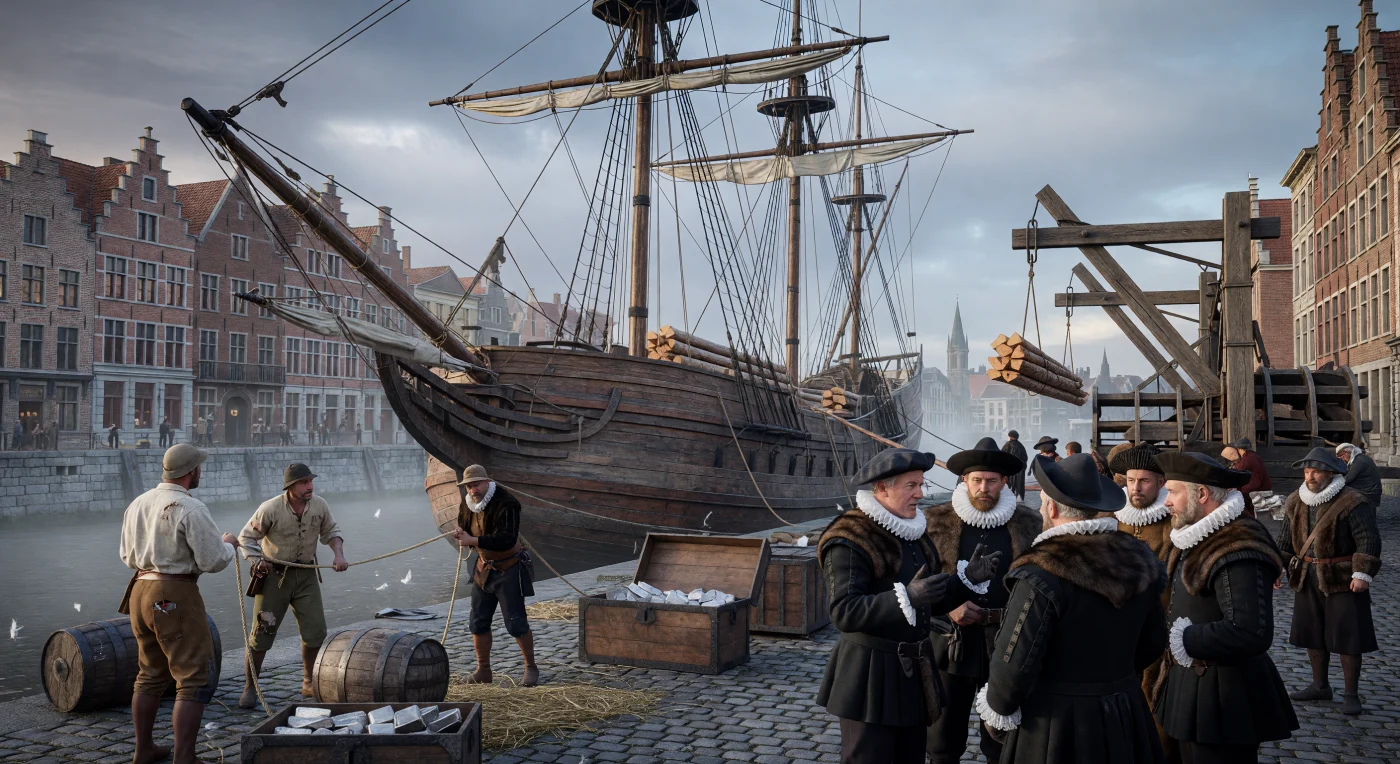
A Dutch fluyt, characterized by its pear-shaped hull and efficient maritime engineering, docks at the limestone quays of Antwerp to unload a cargo of Baltic timber and New World silver. Wealthy Flemish merchants, dressed in prestigious "Spanish Black" wool and elaborate starched ruffs, negotiate the exchange of goods while laborers operate massive wooden treadwheel cranes in the damp, misty air of the Little Ice Age. This scene captures the intersection of maritime innovation and globalized trade that defined the late 16th century, showcasing the Low Countries' role as a vital commercial hub between Northern Europe and the burgeoning Atlantic empires.
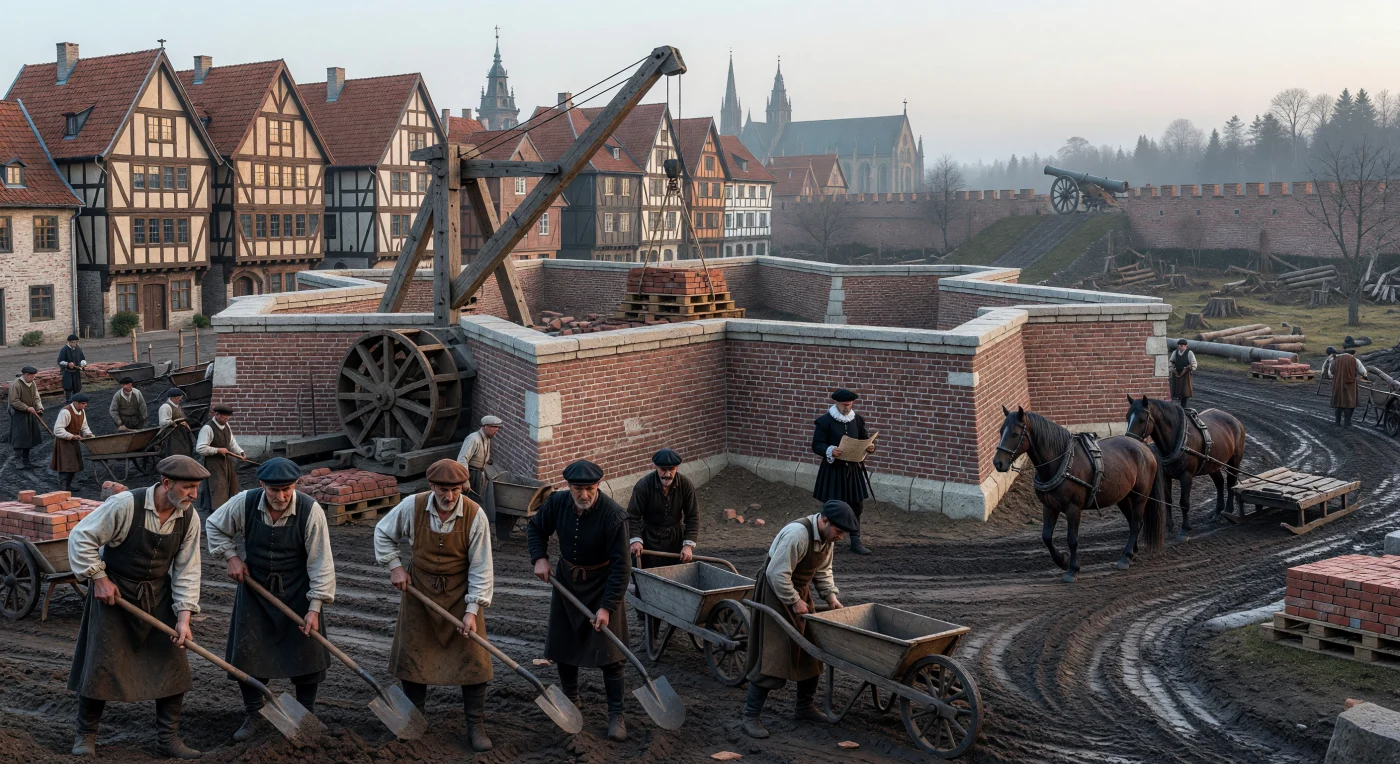
Laborers and master masons toil on the outskirts of a Northern European city to construct a star-shaped bastion, a revolutionary defensive design known as the *trace italienne*. Using wooden treadwheel cranes and iron-headed shovels, they build low, thick walls of brick and earth specifically engineered to deflect and absorb the impact of early modern gunpowder artillery. This scene illustrates the transition from medieval fortifications to sophisticated Renaissance engineering, set against a backdrop of high-gabled houses and the damp, misty atmosphere of the Little Ice Age.

This scene depicts a late 16th-century aristocratic boar hunt in Northern Europe, set against the brutal climate of the Little Ice Age. Noblemen in period-accurate attire—including fur-lined doublets and starched lace ruffs—pursue their quarry with greyhounds and specialized cross-guarded spears designed to withstand a boar's charge. The presence of a matchlock harquebus and the weathered, pockmarked faces of the hunters reflect the intersection of emerging technology and the harsh physical realities of Renaissance life.

A peasant family in late 16th-century Northern Europe gathers for a modest meal of vegetable pottage and dark rye bread within the dim interior of a timber-framed cottage. The scene reflects the harsh realities of the Little Ice Age, with the family dressed in coarse, undyed wool and using simple wooden spoons to eat from a communal bowl. Such domestic settings were typical for the rural population, whose lives were dictated by the rhythms of manual labor and the limited resources of the pre-industrial era.
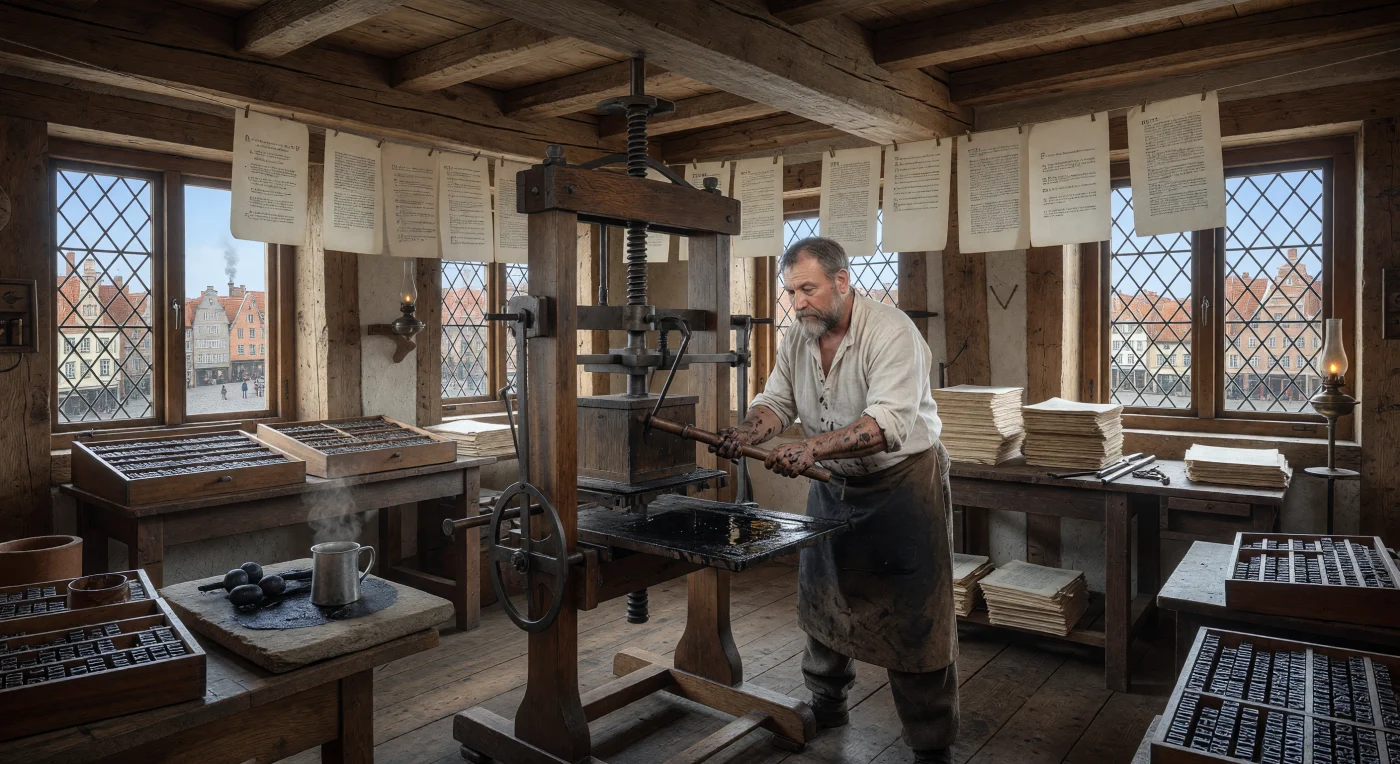
A master printer operates a massive wooden press in a sunlit Northern European workshop, his linen sleeves rolled up as he pulls the heavy bar to transfer ink to paper. This scene captures the 16th-century "printing revolution," where movable lead type and rag-based paper enabled the mass production of broadsheets and books, fundamentally transforming the spread of knowledge across the continent. The atelier features period-accurate timber-framing and leaded glass windows, reflecting the urban craftsmanship of a Hanseatic city during the transition from the Middle Ages to modernity. Surrounded by drying sheets and the tools of his trade, the printer embodies the combined intellectual and physical labor that fueled the Renaissance and the Reformation.

In this scene, a crew of 17th-century Basque whalers maneuvers a wooden *chalupa* through the frigid, turbulent waters of the North Atlantic during a hunt. They are depicted pursuing a North Atlantic right whale, a species central to the period's burgeoning oil industry due to its slow speed and high blubber content. Clad in salt-encrusted wool and leather suited for the rigors of the Little Ice Age, these mariners represent a pivotal era of maritime expertise and the early globalization of European resource extraction.
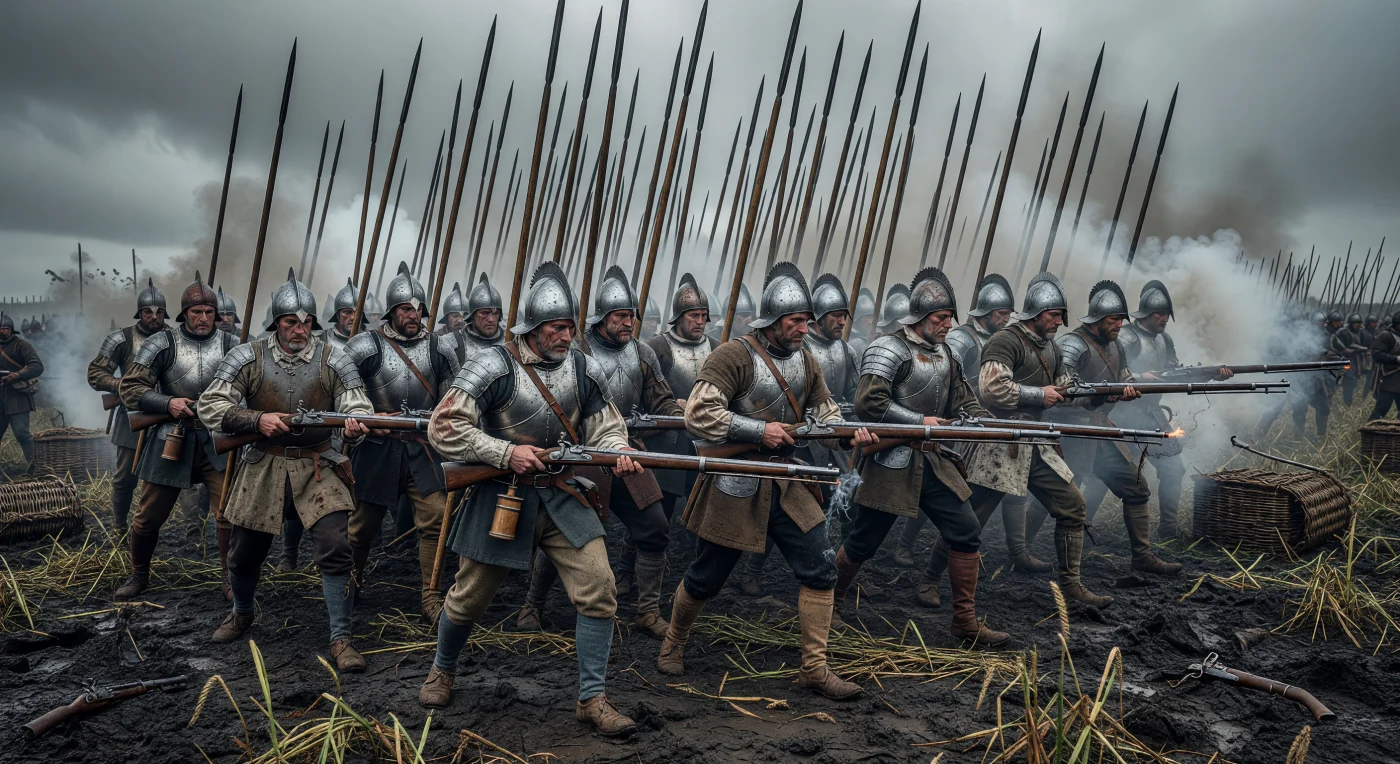
This scene depicts a disciplined "Pike and Shot" infantry formation on a muddy battlefield in the late 16th-century Low Countries, illustrating the tactical transition from medieval melee to early modern gunpowder warfare. Soldiers clad in iron peascod breastplates and high-combed morion helmets stand amidst a dense thicket of five-meter ash-wood pikes, while musketeers in the foreground navigate the complex and dangerous process of reloading matchlock harquebuses. The heavy, overcast sky and sulfurous black powder smoke capture the atmospheric grit of the "Little Ice Age," a period when these massive, slow-moving squares dominated European conflicts and reshaped the continent's political landscape.

Aristocrats perform a stately pavane across a checkered marble floor, epitomizing the rigid social decorum of a late 16th-century Italian court. The figures are dressed in the height of period fashion, featuring starched cartwheel ruffs, silk doublets, and wide wheel farthingales designed to project status and power through restrictive, opulent silhouettes. This scene captures the formal atmosphere of the Late Renaissance, where classical architecture and heavy wool tapestries provided a grand yet chilly backdrop to the disciplined choreography of noble life.