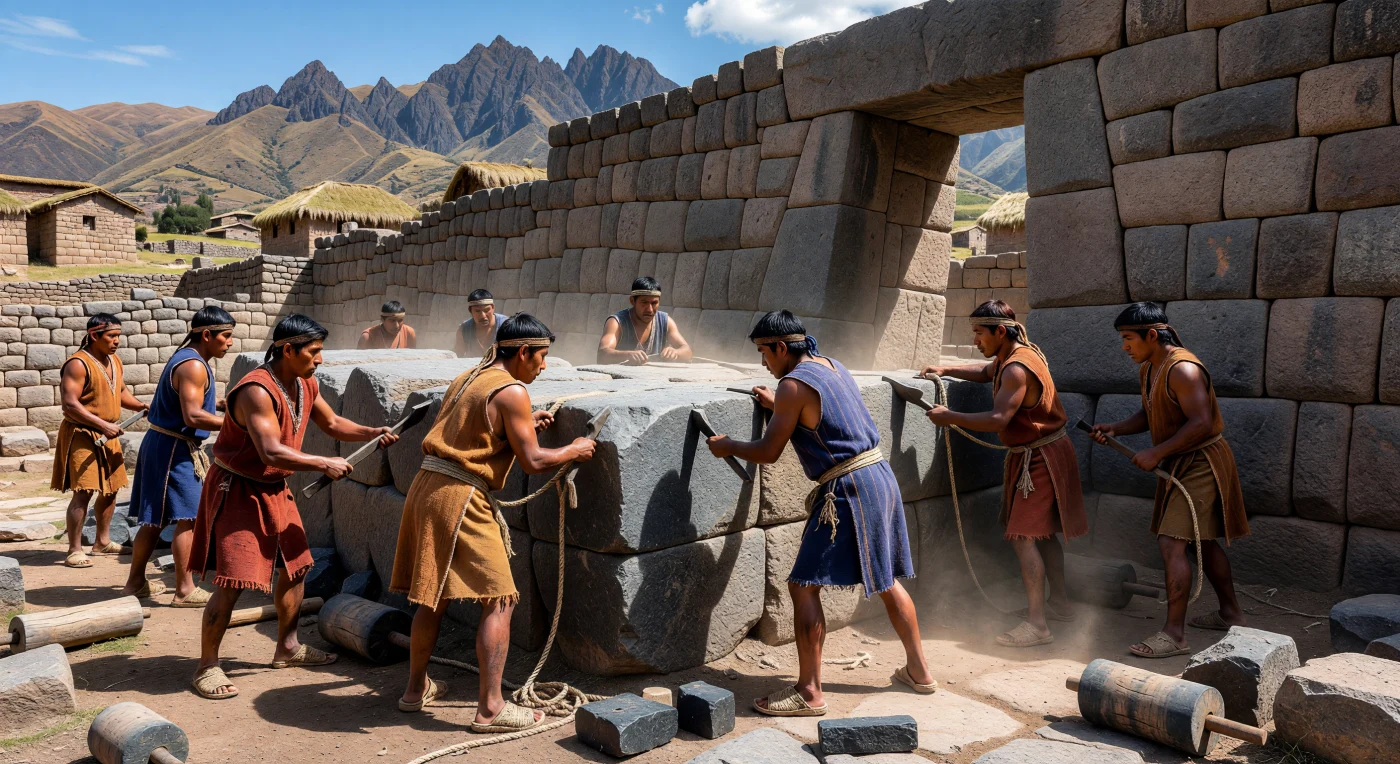
In 15th-century Cusco, Quechua masons skillfully maneuver a massive andesite block into place using bronze levers and braided ichu grass ropes. The scene illustrates the sophisticated "Inca masonry" technique, where stones were carved with precise angles to interlock perfectly without mortar, providing exceptional stability against the region's frequent earthquakes. Dressed in durable alpaca wool *unkus*, these laborers represent the organized workforce of the Tawantinsuyu, who transformed the high Andean landscape into a monumental imperial capital without the use of iron tools or the wheel.
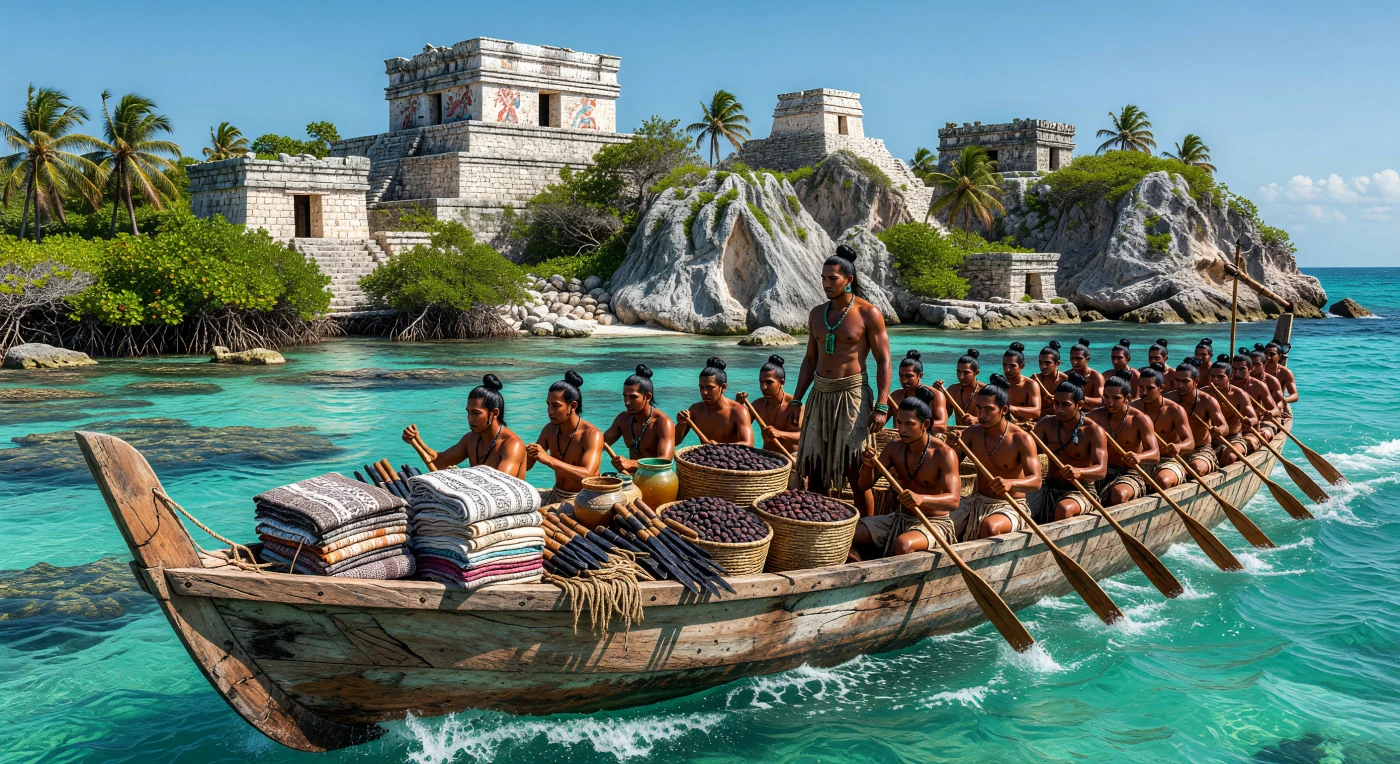
A massive Maya trading vessel, carved from a single cedar trunk, navigates the turquoise waters beneath the walled city of Tulum in the late 15th century. This scene illustrates the vibrant maritime commerce of the Postclassic period, where large dugout canoes manned by dozens of rowers transported high-value goods like fermented cacao beans, textiles, and obsidian across the Caribbean. In the background, the iconic "El Castillo" temple rises from the limestone cliffs, its brilliant white lime stucco and painted friezes serving as a vital landmark for seafaring merchants.
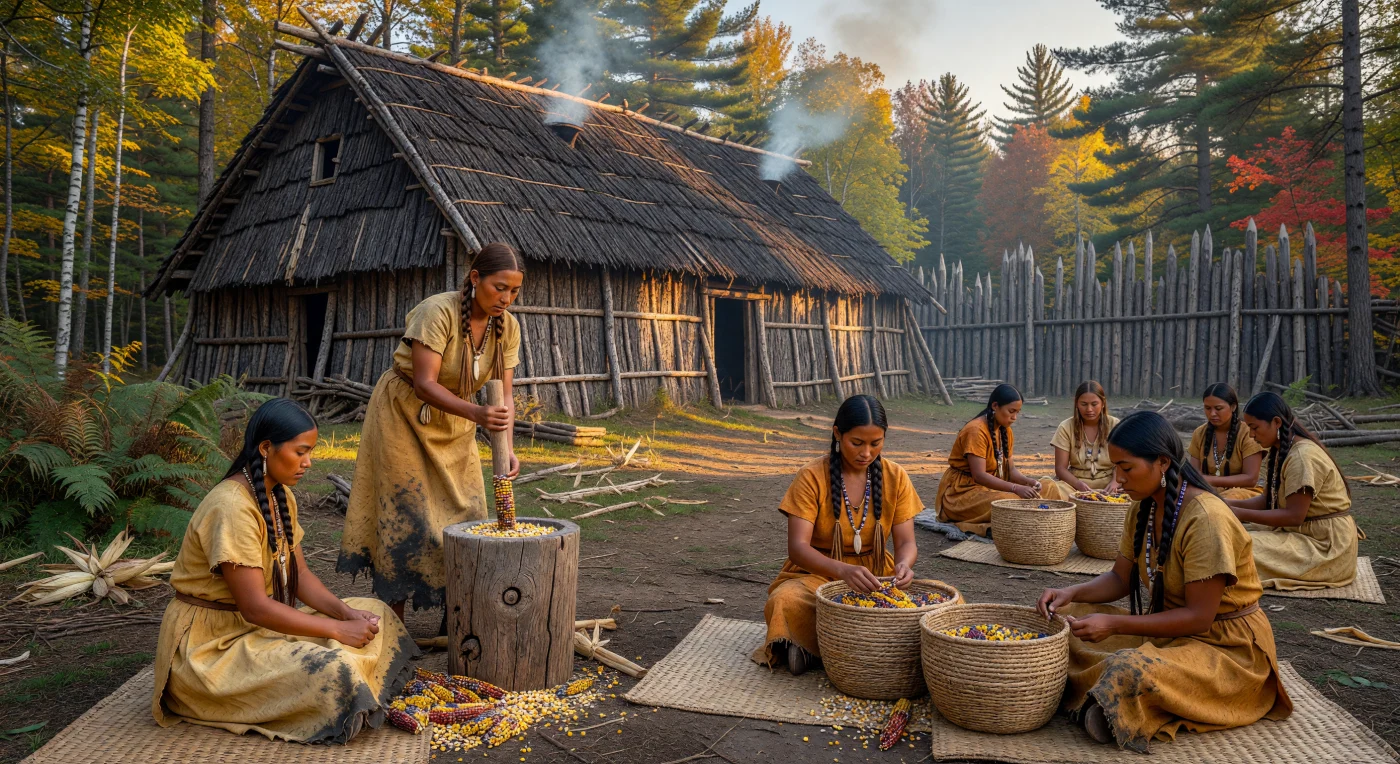
Haudenosaunee women process flint corn using traditional wooden mortars and pestles, a vital communal task that sustained the agricultural societies of the Northeast woodlands during the 15th century. In the background stands a monumental longhouse, a sophisticated structure of elm bark and saplings designed to house multiple related families under a matrilineal social system. This village, fortified by a defensive timber palisade, illustrates the complex social organization and architectural ingenuity of the Iroquoian peoples in the era preceding European contact.

Mexica farmers, or macehualtin, tend to the highly productive chinampa gardens on the shallow waters of Lake Texcoco during the late 15th century. These artificial islands, meticulously constructed from layers of aquatic vegetation and nutrient-rich mud, were anchored by the deep roots of huejote (willow) trees to create a sustainable agricultural system that supported the massive population of Tenochtitlan. In the distance, the Great Temple and the white-stuccoed palaces of the imperial capital shimmer beneath the volcanic peaks of the Valley of Mexico, illustrating the peak of Aztec engineering and urban planning.

A massive herd of American Plains Bison (*Bison bison bison*) thunders across the virgin tallgrass prairie of the mid-15th century, a scene capturing the Great Plains at the height of the pre-Columbian era. This vast ecosystem was defined by the rhythmic migration of millions of bison, whose grazing and movement shaped the biodiversity of the continent's interior long before the introduction of the horse or modern fencing. In the distance, a lone gray wolf observes the herd from a granite outcrop, illustrating the raw, balanced predator-prey dynamics of the untouched North American wilderness.
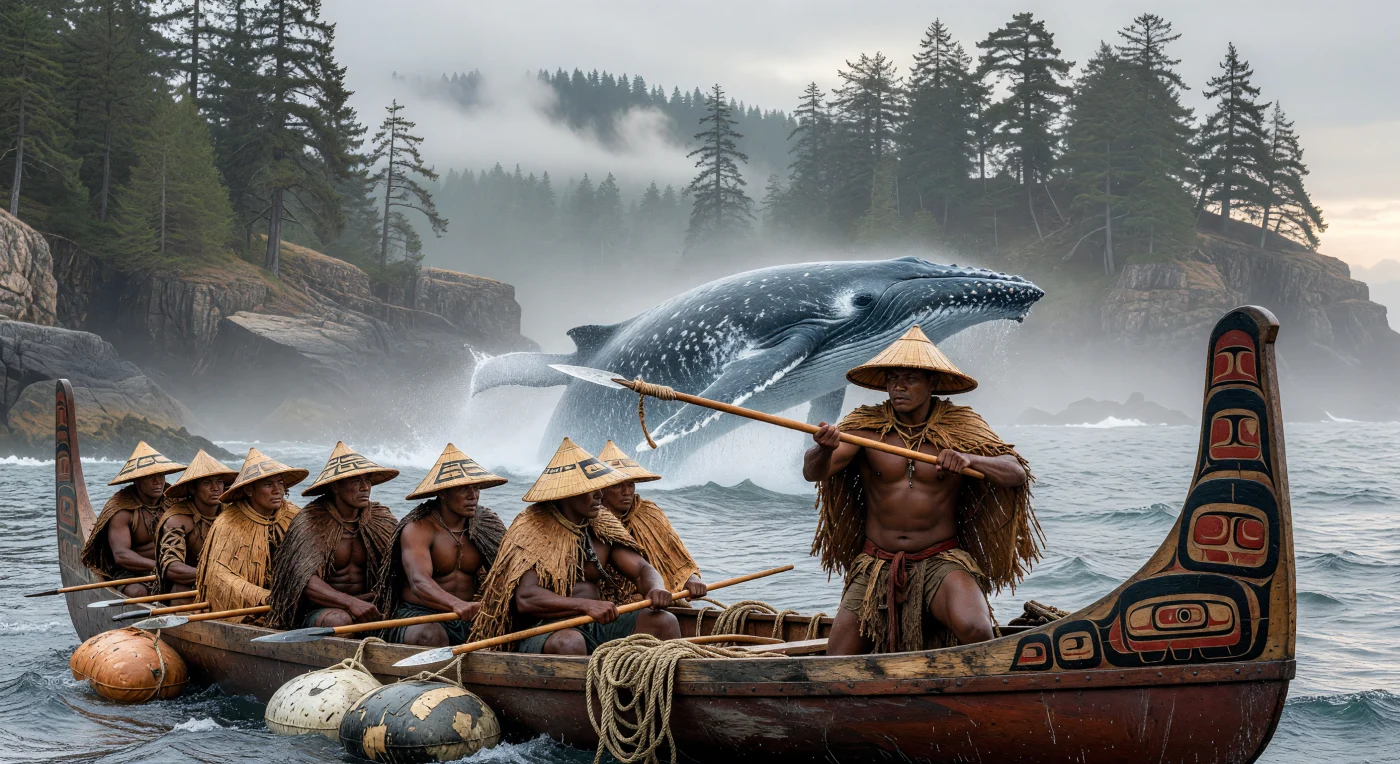
Nuu-chah-nulth hunters navigate a massive red cedar dugout canoe through the misty waters off Vancouver Island, pursuing a breaching gray whale with precision and traditional skill. This high-stakes scene illustrates the sophisticated maritime technology of the 15th-century Pacific Northwest, featuring yew-wood harpoons tipped with mussel shells and inflated sealskin floats used to tire the massive animal. For these coastal communities, the whale was a sacred source of sustenance and oil, and the successful hunt represented the pinnacle of social prestige and spiritual preparation.
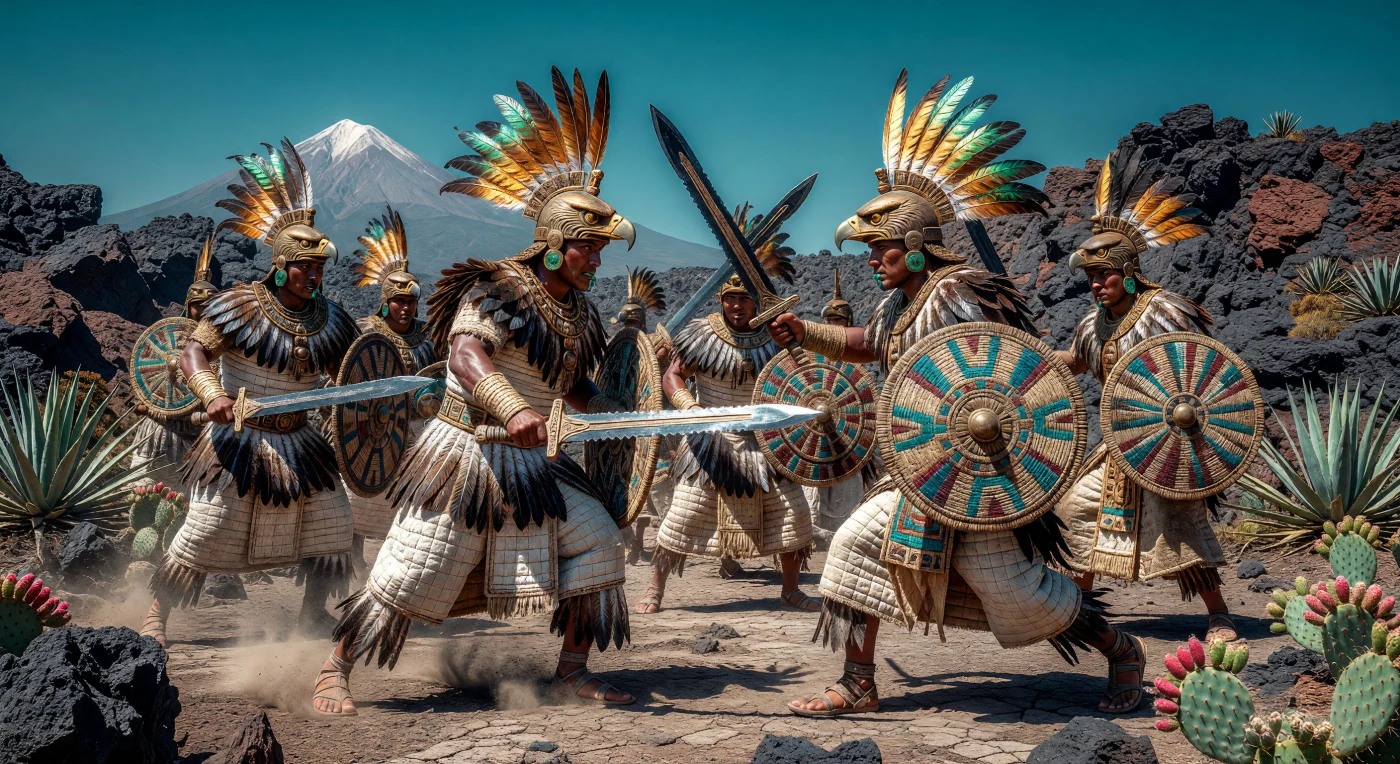
Elite Aztec Eagle Warriors (Cuāuhtli) engage in ritual combat on a volcanic plateau, clad in brine-hardened quilted cotton armor and ornate helmets adorned with eagle and quetzal feathers. They wield the macuahuitl, a formidable oak broadsword inset with razor-sharp obsidian blades, showcasing the sophisticated lithic technology of 15th-century Mesoamerica. These elite combatants belonged to a prestigious military order within the Mexica Empire, where their high status was signaled by intricate feather-work shields and precious jade ornaments.

The Sapa Inca, divine ruler of the Tawantinsuyu, is depicted here in a grand 15th-century procession, carried upon an ornate litter adorned with hammered gold. He wears a masterfully woven alpaca unku featuring tocapu heraldic squares and the mascapaicha royal fringe, symbolizing his supreme authority over the vast Andean empire. The scene highlights the architectural precision of mortarless imperial masonry and the use of the quipu, a sophisticated knotted-string system essential for managing the empire’s complex administration and census data.

Andean fishermen navigate the high-altitude waters of Lake Titicaca aboard traditional boats crafted from tightly bound totora reeds, a sustainable technology utilized for over a millennium. During the late 15th-century Inca Empire, these laborers harvested endemic fish using hand-knotted vegetable fiber nets to support the region’s complex subsistence economy. The surrounding landscape showcases the sophisticated infrastructure of the Tawantinsuyu, featuring precision-engineered agricultural terraces and state-managed storage huts set against the formidable, snow-capped peaks of the Cordillera Real.