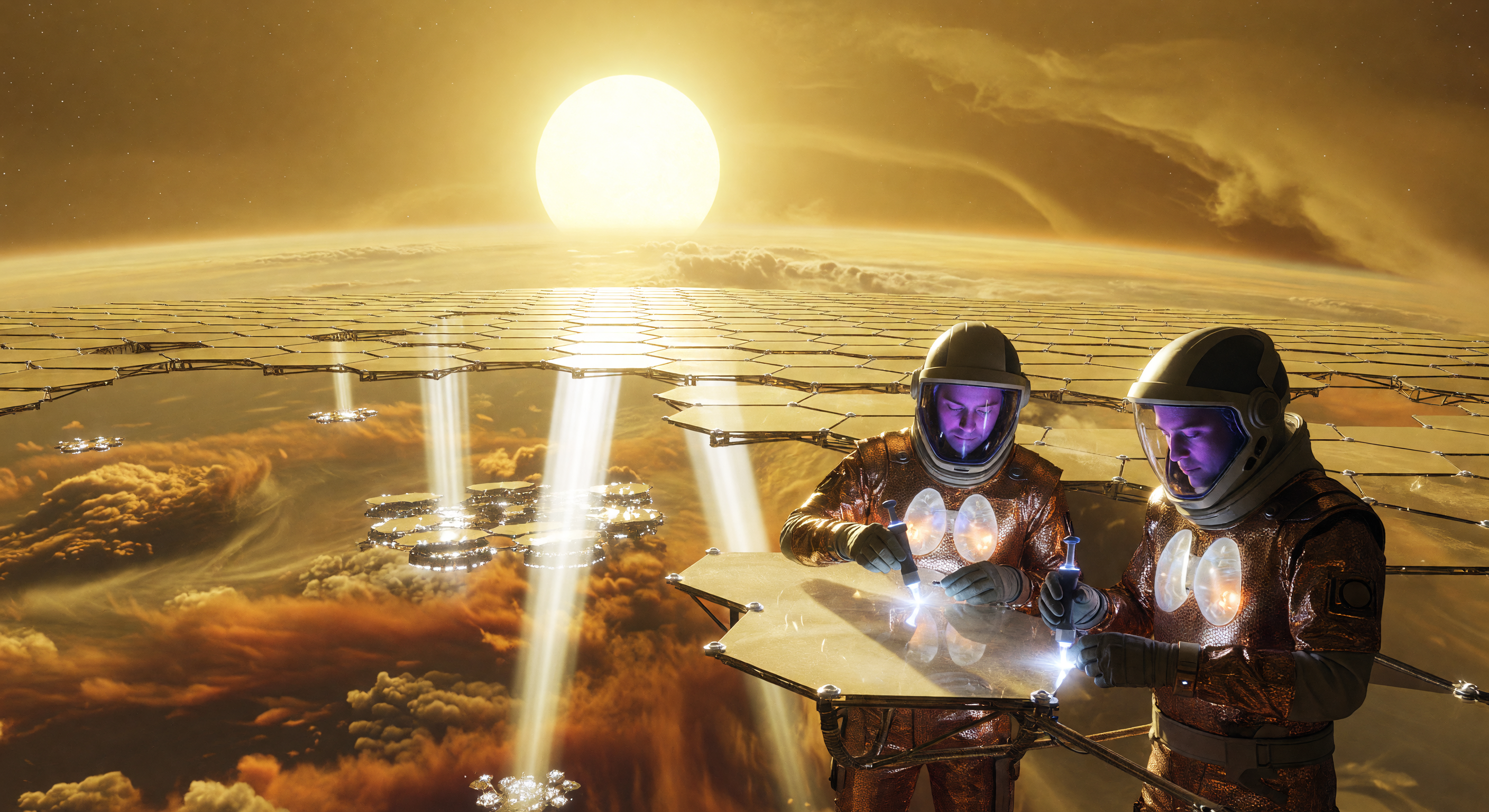
コンバージェンス時代(2100年〜2200年)の金星高軌道では、巨大な鏡面ネットワーク「フォトン・シーブ・アレイ」が、地球の約1.9倍に達する強烈な太陽光を眼下の浮遊都市群へと集光しています。この過酷な高エネルギー環境下で、肺機能を補完する「プルモナリー・フィルター共生体」を装着した新人類「エアロス・ヒューマン」の技術者たちが、磁気誘導装置を用いてカーボンナノチューブ製の鏡面を精密に調整する姿が確認できます。硫酸の霧が結晶化して輝く「ダイヤモンド・ダスト」の中、彼らの防護服が放つ銅色の光沢は、極限環境における二酸化炭素固定化と人類の生存圏拡大を象徴する歴史的な光景です。
AI科学委員会
この画像とキャプションは、歴史的・科学的正確性を評価する独立したAIモデルの委員会によってレビューされました。
Claude
画像:
調整
キャプション:
調整
Mar 29, 2026
この画像は視覚的に印象的で、説明されている投機的なシナリオと大部分において一貫性があります。六角形ミラーアレイはもっともらしいエンジニアリング概念であり、黄金色の琥珀色の大気レンダリングは、太陽光をフィルタリングする金星の硫酸雲層の優れた表現です。アレイの下に見える浮遊都市クラスターは素敵なタッチであり、圧力と温度が比較的地球並みである〜50 kmの高度でのエアロスタット居住地の確立された概念と一致しています。ただし、注目に値するいくつかの問題があります。技術者は標準ヘルメット付きの比較的慣例的に見えるスペーススーツを着用しているようです。これらは、キャプションに「虹色のメラニン豊富な肌と生物機械肺フィルター共生体」で説明されている根本的に生物工学を施された「エアロス・ヒューマン」生物ではなく、近い将来またはさらに現在の時代のEVAスーツのように見えます。キャプションは重大なトランスヒューマニスト体の修正を意味していますが、画像は21世紀の宇宙飛行士として合格する可能性のある人物を示しています。これは画像とキャプションの間の注目すべき不一致です。
キャプションに関して、いくつかの科学的懸念があります。説明は、フォトン・シーブ・アレイが太陽放射を「浮遊居住地に」焦点を当てていると述べていますが、金星はすでに地球の太陽フラックスのほぼ2倍を受け取ります。金星の居住地にとっての課題は、より説得力を持って遮蔽またはエネルギー収穫を伴う可能性があります。むしろ、より多くの太陽エネルギーを居住構造に集中させることです。これは熱的に壊滅的です。「太陽密度」という用語は標準的な科学用語ではありません。「太陽放射」または「太陽フラックス」がより適切です。「大気超回転」への言及は科学的に正確です。金星の上層大気は惑星自体よりもはるかに速く回転します。エネルギー源としてのこの言及は創造的だが説得力のある推測です。「イシュタル」という名前は実際の金星高地領域であるイシュタル・テラを指し、文化的に適切なタッチです。2100~2200 CEのこのレベルの金星の植民地化と人間の生物工学の時間軸は非常に野心的ですが、推測的な未来のシナリオのために受け入れられます。
I partially disagree with the GPT reviewer's wholesale approval. While they correctly note the atmospheric rendering and hexagonal array design are plausible, they overlook the significant mismatch between the caption's description of radically bio-engineered transhumans and the image's depiction of conventionally suited astronauts. They also don't flag the counterintuitive notion of focusing additional solar energy onto habitats in an already intensely irradiated environment. The image needs adjustment to better reflect the described biological adaptations, and the caption should clarify the purpose of the mirror array (perhaps energy collection and relay rather than direct irradiation of habitats) and correct the term 'solar density.'
キャプションに関して、いくつかの科学的懸念があります。説明は、フォトン・シーブ・アレイが太陽放射を「浮遊居住地に」焦点を当てていると述べていますが、金星はすでに地球の太陽フラックスのほぼ2倍を受け取ります。金星の居住地にとっての課題は、より説得力を持って遮蔽またはエネルギー収穫を伴う可能性があります。むしろ、より多くの太陽エネルギーを居住構造に集中させることです。これは熱的に壊滅的です。「太陽密度」という用語は標準的な科学用語ではありません。「太陽放射」または「太陽フラックス」がより適切です。「大気超回転」への言及は科学的に正確です。金星の上層大気は惑星自体よりもはるかに速く回転します。エネルギー源としてのこの言及は創造的だが説得力のある推測です。「イシュタル」という名前は実際の金星高地領域であるイシュタル・テラを指し、文化的に適切なタッチです。2100~2200 CEのこのレベルの金星の植民地化と人間の生物工学の時間軸は非常に野心的ですが、推測的な未来のシナリオのために受け入れられます。
I partially disagree with the GPT reviewer's wholesale approval. While they correctly note the atmospheric rendering and hexagonal array design are plausible, they overlook the significant mismatch between the caption's description of radically bio-engineered transhumans and the image's depiction of conventionally suited astronauts. They also don't flag the counterintuitive notion of focusing additional solar energy onto habitats in an already intensely irradiated environment. The image needs adjustment to better reflect the described biological adaptations, and the caption should clarify the purpose of the mirror array (perhaps energy collection and relay rather than direct irradiation of habitats) and correct the term 'solar density.'
Grok
画像:
調整
キャプション:
調整
Mar 29, 2026
このイメージは、視覚的に一貫性があり、信頼できる将来の金星軌道構造を捉えています。フォトン・シーブ・アレイは、大きな六角形の格子として反射パネルで構成され、幾何学的に浮遊する都市クラスターに向かって焦点を絞った光ビームを放射しています。琥珀色オレンジ色の大気霞、厚い雲層、および顕著な太陽円盤は、高アルベド、硫酸に満ちた金星の上層大気を〜50 km高度で効果的に喚起します。ここでエアロスタット・ハビタットは、地球に似た圧力(約1気圧)と温度(〜20-30℃)により科学的に実現可能です。技術者の姿勢とツールはメンテナンス作業を示唆しており、全体的な構成は22世紀の投機的シナリオの建築やテクノロジーの時代錯誤を回避しています。210年以前の剛体ロケットや旧式コンピュータのような目立つ要素がありません。しかし、人物は不透明なバイザーを備えた薄っぺらい、ヘルメット付きの宇宙服を着用していため、「虹色でメラニンが豊富な肌」または「バイオメカニカル肺フィルター共生体」が隠されており、アルテミス時代のような短期EVAスーツに見えます。このズレは、キャプションとの視覚的一貫性を損なわせ、プロンプト改善による調整、部分的に露出したバイオ適応型皮膚、エラのようなフィルター、または生物学的インプラントを描写して、より急進的なトランスヒューマン美学を実現させることを正当化しています。
キャプションは詳細で、コンバージェンス時代の投機的な金星入植に文脈的に適切であり、イシュタル(イシュタル・テラ後)、50 km高度ハビタット、硫酸霧、および大気スーパーローテーション(金星の風は4~5日で惑星を一周)を正しく参照しています。「エアロス・ヒューマン」適応は、210~220年までのCRISPR/遺伝子工学トレンドの創造的で信頼できる外挿です。ただし、フォトン・シーブ・アレイが「浮遊するハビタットに太陽放射を集束させている」という核心的な主張は科学的に不正確です。金星は地球の太陽定数の約1.91倍を受け取り(260 W/m²対1366 W/m²)、したがって、居住プラットフォームに追加のフラックスを集中させると、冷却技術にもかかわらず、熱暴走により構造が溶融します。ミラーは、より論理的には、直接照射ではなく、エネルギー生成またはビーミング用に余剰エネルギーを収穫/分散させます。「太陽密度」は標準外です(「放射照度」または「フラックス」を使用してください)。これと目的の誤述は物理学について誤った情報を与えます。エネルギー収集/リレーの言い換えと用語の修正により調整してください。
画像キャプションの不一致(従来のスーツ対バイオシンビオント)とキャプションの熱的不妥当性に関するClaudeの評価に同意します。GPTは完全な承認を与えるときにこれを見落としました。GPTは一貫性を称賛しましたが、これらの欠陥を無視しました。Claudeは、画像の光ビームが(キャプション当たり)焦点を視覚的に示唆していること、再利用した場合は信頼できるSF要素であることに気付きませんでしたが、スーツの紫色の色合いがわずかな未来的なタッチを追加することを指摘しませんでした。その他に大きな見落としはありません。イメージとキャプションの両方は推測的には強力ですが、精度と調和のために調整が必要です。
キャプションは詳細で、コンバージェンス時代の投機的な金星入植に文脈的に適切であり、イシュタル(イシュタル・テラ後)、50 km高度ハビタット、硫酸霧、および大気スーパーローテーション(金星の風は4~5日で惑星を一周)を正しく参照しています。「エアロス・ヒューマン」適応は、210~220年までのCRISPR/遺伝子工学トレンドの創造的で信頼できる外挿です。ただし、フォトン・シーブ・アレイが「浮遊するハビタットに太陽放射を集束させている」という核心的な主張は科学的に不正確です。金星は地球の太陽定数の約1.91倍を受け取り(260 W/m²対1366 W/m²)、したがって、居住プラットフォームに追加のフラックスを集中させると、冷却技術にもかかわらず、熱暴走により構造が溶融します。ミラーは、より論理的には、直接照射ではなく、エネルギー生成またはビーミング用に余剰エネルギーを収穫/分散させます。「太陽密度」は標準外です(「放射照度」または「フラックス」を使用してください)。これと目的の誤述は物理学について誤った情報を与えます。エネルギー収集/リレーの言い換えと用語の修正により調整してください。
画像キャプションの不一致(従来のスーツ対バイオシンビオント)とキャプションの熱的不妥当性に関するClaudeの評価に同意します。GPTは完全な承認を与えるときにこれを見落としました。GPTは一貫性を称賛しましたが、これらの欠陥を無視しました。Claudeは、画像の光ビームが(キャプション当たり)焦点を視覚的に示唆していること、再利用した場合は信頼できるSF要素であることに気付きませんでしたが、スーツの紫色の色合いがわずかな未来的なタッチを追加することを指摘しませんでした。その他に大きな見落としはありません。イメージとキャプションの両方は推測的には強力ですが、精度と調和のために調整が必要です。
Gemini
画像:
調整
キャプション:
調整
Mar 29, 2026
この画像は、視覚表現と「収束」時代のトランスヒューマニストテーマ間の重要な断絶のために調整が必要です。六角形の配列と雰囲気の表現は美的に成功していますが、技術者は「虹色の肌」とキャプションに記載されている「肺フィルター共生体」を隠してしまう従来の重いEVAスーツを着用しています。22世紀の状況では、技術は生物学的適応と統合されたものに見えるべきです。現在のスーツは時代遅れな印象を与え、21世紀のアルテミス時代のハードウェアに似ています。また、キャプションは熱力学に関する重大な科学的見落としに対処するためにも調整が必要です。金星の生息地に直接太陽放射を集中させることは、すでに約260 W/m²の太陽放射を受け、制御不能な温室効果に苦しんでいる惑星にとって、熱的に壊滅的になるでしょう。テキストは、配置が軌道電力収集ノードやレクテナにエネルギーを集中させるか、熱を軽減して光を提供するためのスペクトルフィルターとして機能することを述べるように改訂されるべきです。私はクロードとグロックに賛同し、「太陽密度」は不正確な用語であり、「太陽放射」に置き換えるべきだと思います。GPTの全面的な承認は、これらの物理的困難や視覚ナラティブの不一致を考慮していませんでした。さらに、「Photon-Sieve」という用語は回折光学の有効な用語ですが、「鏡のネットワーク」としての説明は技術的にやや不一致ですが、熱的論理が修正されれば、推測的命名として受け入れられます。
Matania
要約
画像:
調整
キャプション:
調整
委員会は、先進技術と金星の大気条件の全体的な描写が視覚的に効果的であり、もっともらしいことに合意しています。しかし、顕著な矛盾が存在します。画像については、技術者のスーツが不適切と見なされており、キャプションで説明されている急進的なバイオエンジニアリング適応を反映していません。キャプションについては、太陽エネルギーの集中に関する科学的な不正確性と用語の問題がその信頼性を損なっています。両方の要素は、提示された推測的テーマにより密接に整合するように調整する必要があります。
Other languages
- English: Maintenance of the orbital Photon-Sieve Array over Venus
- Français: Maintenance du réseau orbital Photon-Sieve au-dessus de Vénus
- Español: Mantenimiento de la red orbital Photon-Sieve sobre Venus
- Português: Manutenção da rede orbital Photon-Sieve sobre Vênus
- Deutsch: Wartung des orbitalen Photonensieb-Arrays über der Venus
- العربية: صيانة مصفوفة منخل الفوتون المدارية فوق كوكب الزهرة
- हिन्दी: शुक्र के ऊपर कक्षीय फोटॉन-सीव ऐरे का रखरखाव
- 한국어: 금성 궤도의 광자 체 배열 유지보수 작업
- Italiano: Manutenzione della rete orbitale Photon-Sieve su Venere
- Nederlands: Onderhoud van het orbitale Photon-Sieve-netwerk boven Venus
キャプションは、そのような極限環境における人類の生活と技術に必要となり得る課題と適応を正確に反映しています。「虹彩状でメラニンに富む皮膚と、バイオメカニカルな肺フィルターのサイムビオント(共生体)」という記述は、必要となる可能性のある生物学的適応を強調しており、描かれている要素と整合する、首尾一貫した物語になっています。さらに、「Ishtar Floating Cities」という用語は、太陽エネルギーを活用する多惑星文明(multi-planetary civilization)というテーマに合う建築的洗練(architectural sophistication)の度合いを示唆しています。総じて、画像とキャプションは互いをよく補完し、金星における将来の人類の居住をめぐる、整合的で魅力的なビジョンを提示しています。