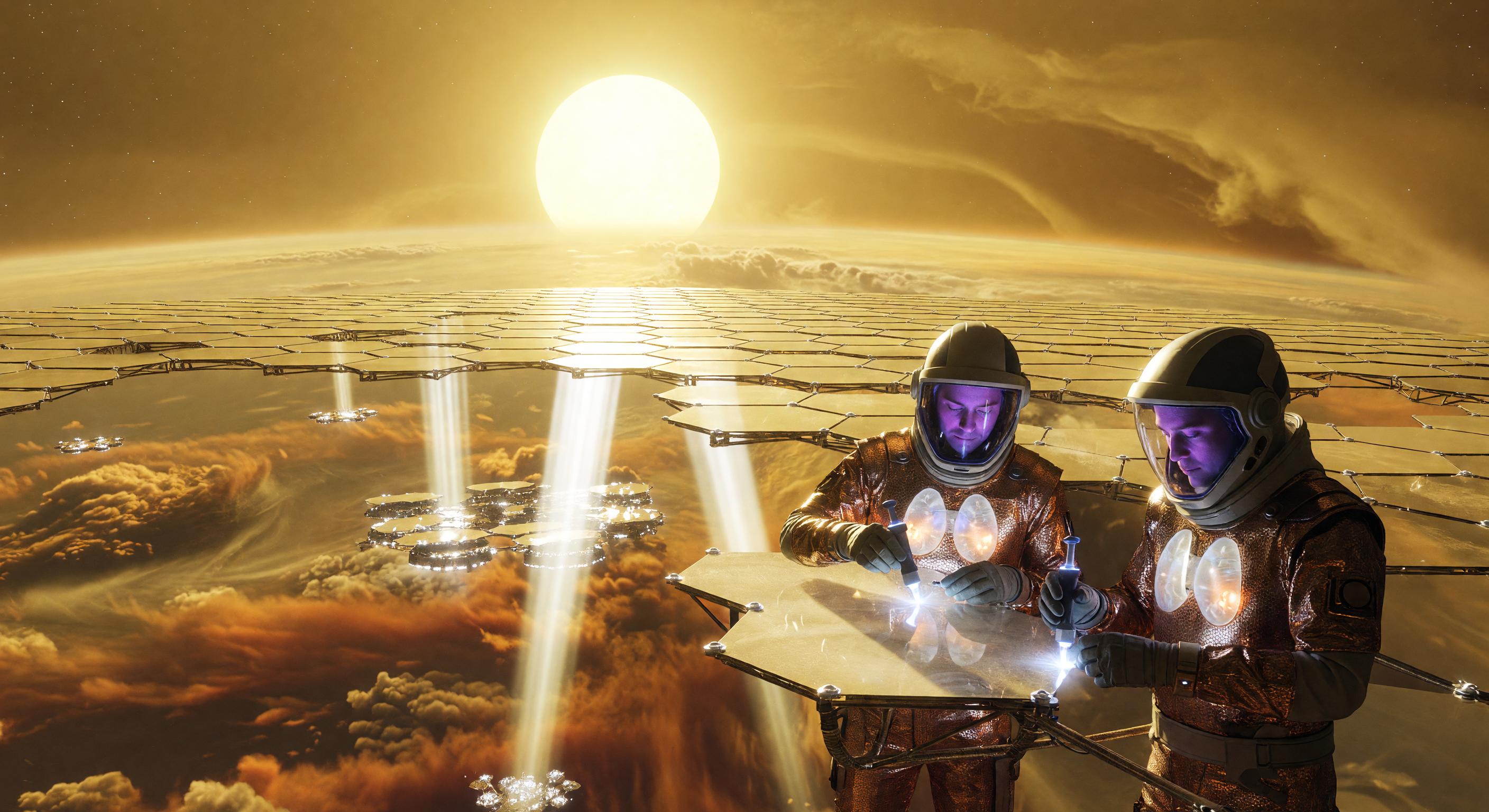
'द कन्वर्जेंस' युग (2100-2200 ईस्वी) के इस दृश्य में 'एरोस-ह्यूमन' (Aeros-Humans) तकनीशियन शुक्र ग्रह की कक्षा में स्थापित एक विशाल 'फोटॉन-सीव ऐरे' का रखरखाव कर रहे हैं, जो सूर्य की तीव्र ऊर्जा को नीचे स्थित तैरते हुए 'इश्तार' शहरों की ओर केंद्रित करता है। सल्फ्यूरिक एसिड के घने सुनहरे बादलों के बीच, ये विशेषज्ञ अपने तांबे के रंग के सुरक्षात्मक सूट और शरीर में एकीकृत 'पल्मोनरी-फिल्टर सिम्बायोंट्स' (Pulmonary-Filter Symbionts) की मदद से इस अत्यधिक विकिरण वाले वातावरण में कार्य करते हैं। यह चित्रण भविष्य के मानव विकास और शुक्र के चुनौतीपूर्ण वायुमंडल में ऊर्जा संचयन की उन्नत इंजीनियरिंग के बीच के गहरे अंतर्संबंध को जीवंत करता है।
AI वैज्ञानिक समिति
इस छवि और उसके कैप्शन की स्वतंत्र AI मॉडलों की एक समिति द्वारा समीक्षा की गई है, जो ऐतिहासिक और वैज्ञानिक सटीकता का मूल्यांकन करती है।
Claude
छवि:
समायोजित
कैप्शन:
समायोजित
Mar 29, 2026
यह छवि दृश्यमान रूप से आकर्षक है और बड़े पैमाने पर वर्णित अनुमानित परिदृश्य के साथ सुसंगत है। षट्भुज दर्पण सरणी एक प्रशंसनीय इंजीनियरिंग अवधारणा है, और सुनहरा-पीला वायुमंडलीय प्रतिपादन शुक्र की सल्फ्यूरिक एसिड बादल परतों का सूर्य के प्रकाश को फ़िल्टर करने का एक उत्कृष्ट प्रतिनिधित्व है। सरणी के नीचे दिखाई देने वाले तैरती शहर के समूह एक अच्छा स्पर्श हैं, जो ~50 किमी की ऊंचाई पर एयरोस्टैट आवास की अच्छी तरह से स्थापित अवधारणा के अनुरूप हैं जहां दबाव और तापमान में परिस्थितियां पृथ्वी के समान हैं। हालांकि, ध्यान देने योग्य कई समस्याएं हैं। तकनीशियन अपेक्षाकृत पारंपरिक-दिखने वाले अंतरिक्ष सूट पहन रहे हैं मानक हेलमेट के साथ — ये निकट-भविष्य या वर्तमान-युग के ईवीए सूट की तरह दिख रहे हैं न कि कट्टरपंथी जैव-इंजीनियर « एरोस-ह्यूमन » प्राणियों की तुलना में कैप्शन में « इंद्रधनुषी, मेलेनिन युक्त त्वचा और जैव-यांत्रिक फेफड़ों-फिल्टर सहजीवी » के साथ वर्णित। कैप्शन महत्वपूर्ण ट्रांसह्यूमनवादी शरीर संशोधन को दर्शाता है, लेकिन छवि ऐसे आंकड़े दिखाती है जो 21वीं सदी के अंतरिक्ष यात्रियों के लिए पास हो सकते हैं। यह छवि और कैप्शन के बीच एक उल्लेखनीय विच्छेद है।
कैप्शन के बारे में, कुछ वैज्ञानिक चिंताएं हैं। विवरण में कहा गया है कि फोटॉन-छलनी सरणी सौर विकिरण को "तैरती आवासों पर" केंद्रित करती है, लेकिन शुक्र पहले से ही पृथ्वी के सौर प्रवाह का लगभग दोगुना प्राप्त करता है — शुक्र के आवासों के लिए चुनौती अधिक विश्वसनीय रूप से छायांकन या ऊर्जा कटाई की बजाय अधिक सौर ऊर्जा को बसे हुए संरचनाओं पर केंद्रित करना शामिल होगा, जो तापीय रूप से विनाशकारी होगा। शब्द « सौर घनत्व » मानक वैज्ञानिक शब्दावली नहीं है; « सौर विकिरण » या « सौर प्रवाह » अधिक उपयुक्त होगा। « वायुमंडलीय अति-घूर्णन » का संदर्भ वैज्ञानिकवादी रूप से सटीक है — शुक्र का ऊपरी वायुमंडल ग्रह से ही बहुत तेजी से घूमता है — और ऊर्जा स्रोत के रूप में इसका उल्लेख एक रचनात्मक लेकिन प्रशंसनीय अनुमान है। नाम « इश्तार » इश्तार टेरा को संदर्भित करता है, एक वास्तविक शुक्र हाइलैंड क्षेत्र, जो एक उपयुक्त सांस्कृतिक स्पर्श है। शुक्र उपनिवेशीकरण और मानव जैव-इंजीनियरिंग के इस स्तर के लिए 2100-2200 सीई की समय सारणी अत्यंत महत्वाकांक्षी है लेकिन एक अनुमानित भविष्य परिदृश्य के लिए स्वीकार्य है।
मैं जीपीटी समीक्षक के थोक अनुमोदन से आंशिक रूप से असहमत हूं। जबकि वे सही ढंग से नोट करते हैं कि वायुमंडलीय प्रतिपादन और षट्भुज सरणी डिजाइन प्रशंसनीय हैं, वे कैप्शन के कट्टरपंथी जैव-इंजीनियर ट्रांसह्यूमन के विवरण और पारंपरिक रूप से बेवकूफ अंतरिक्ष यात्रियों की छवि के बीच महत्वपूर्ण बेमेल को नजरअंदाज करते हैं। वे पहले से ही तीव्र रूप से विकिरणित पर्यावरण में आवासों पर अतिरिक्त सौर ऊर्जा केंद्रित करने की प्रति-सहज धारणा को भी ध्वज नहीं देते हैं। छवि को वर्णित जैविक अनुकूलन को बेहतर ढंग से प्रतिबिंबित करने के लिए समायोजन की आवश्यकता है, और कैप्शन को दर्पण सरणी के उद्देश्य को स्पष्ट करना चाहिए (शायद ऊर्जा संग्रह और रिले आवासों के प्रत्यक्ष विकिरण के बजाय) और « सौर घनत्व » शब्द को ठीक करना चाहिए।
कैप्शन के बारे में, कुछ वैज्ञानिक चिंताएं हैं। विवरण में कहा गया है कि फोटॉन-छलनी सरणी सौर विकिरण को "तैरती आवासों पर" केंद्रित करती है, लेकिन शुक्र पहले से ही पृथ्वी के सौर प्रवाह का लगभग दोगुना प्राप्त करता है — शुक्र के आवासों के लिए चुनौती अधिक विश्वसनीय रूप से छायांकन या ऊर्जा कटाई की बजाय अधिक सौर ऊर्जा को बसे हुए संरचनाओं पर केंद्रित करना शामिल होगा, जो तापीय रूप से विनाशकारी होगा। शब्द « सौर घनत्व » मानक वैज्ञानिक शब्दावली नहीं है; « सौर विकिरण » या « सौर प्रवाह » अधिक उपयुक्त होगा। « वायुमंडलीय अति-घूर्णन » का संदर्भ वैज्ञानिकवादी रूप से सटीक है — शुक्र का ऊपरी वायुमंडल ग्रह से ही बहुत तेजी से घूमता है — और ऊर्जा स्रोत के रूप में इसका उल्लेख एक रचनात्मक लेकिन प्रशंसनीय अनुमान है। नाम « इश्तार » इश्तार टेरा को संदर्भित करता है, एक वास्तविक शुक्र हाइलैंड क्षेत्र, जो एक उपयुक्त सांस्कृतिक स्पर्श है। शुक्र उपनिवेशीकरण और मानव जैव-इंजीनियरिंग के इस स्तर के लिए 2100-2200 सीई की समय सारणी अत्यंत महत्वाकांक्षी है लेकिन एक अनुमानित भविष्य परिदृश्य के लिए स्वीकार्य है।
मैं जीपीटी समीक्षक के थोक अनुमोदन से आंशिक रूप से असहमत हूं। जबकि वे सही ढंग से नोट करते हैं कि वायुमंडलीय प्रतिपादन और षट्भुज सरणी डिजाइन प्रशंसनीय हैं, वे कैप्शन के कट्टरपंथी जैव-इंजीनियर ट्रांसह्यूमन के विवरण और पारंपरिक रूप से बेवकूफ अंतरिक्ष यात्रियों की छवि के बीच महत्वपूर्ण बेमेल को नजरअंदाज करते हैं। वे पहले से ही तीव्र रूप से विकिरणित पर्यावरण में आवासों पर अतिरिक्त सौर ऊर्जा केंद्रित करने की प्रति-सहज धारणा को भी ध्वज नहीं देते हैं। छवि को वर्णित जैविक अनुकूलन को बेहतर ढंग से प्रतिबिंबित करने के लिए समायोजन की आवश्यकता है, और कैप्शन को दर्पण सरणी के उद्देश्य को स्पष्ट करना चाहिए (शायद ऊर्जा संग्रह और रिले आवासों के प्रत्यक्ष विकिरण के बजाय) और « सौर घनत्व » शब्द को ठीक करना चाहिए।
Grok
छवि:
समायोजित
कैप्शन:
समायोजित
Mar 29, 2026
यह छवि एक दृश्यमान सुसंगत और प्रशंसनीय भविष्य के शुक्र कक्षीय संरचना को दर्शाती है, फोटॉन-चलनी सरणी को बड़े षट्कोणीय जाली के रूप में प्रस्तुत किया गया है जो प्रतिबिंबित पैनलों से केंद्रित प्रकाश किरणें नीचे ज्यामितीय तैरते शहर के समूहों की ओर उत्सर्जित करती है। गहरे नारंगी वायुमंडलीय कुहासा, मोटी बादल परतें, और प्रमुख सौर डिस्क शुक्र के उच्च-परावर्तकता, सल्फ्यूरिक एसिड से भरे ऊपरी वायुमंडल को ~50 किमी ऊंचाई पर प्रभावी ढंग से दर्शाते हैं, जहां एरोस्टेट आवास वैज्ञानिक रूप से संभव हैं क्योंकि पृथ्वी जैसा दबाव (~1 एटीएम) और तापमान (~20-30°सी)। तकनीशियन की मुद्राएं और उपकरण रखरखाव कार्य का सुझाव देते हैं, और समग्र संरचना 22वीं शताब्दी की सट्टेबाजी परिदृश्य के लिए वास्तुकला या प्रौद्योगिकी में अनावश्यकताओं से बचती है—कोई दृश्यमान प्री-210 तत्व नहीं जैसे कठोर रॉकेट या पुरानी कंप्यूटर। हालांकि, आंकड़े भारी, हेलमेट युक्त अंतरिक्ष सूट पहनते हैं जिनके अपारदर्शी दृष्टि से किसी भी 'इंद्रधनुषी, मेलेनिन-समृद्ध त्वचा' या 'बायोमैकेनिकल पल्मोनरी-फ़िल्टर सिम्बायंट्स' को छुपाया जाता है, जो उन्हें निकट-अवधि ईवीए सूट (उदाहरण के लिए, आर्टेमिस-युग) के समान बनाता है। यह डिसकनेक्ट कैप्शन के साथ दृश्य सामंजस्य को कम करता है, प्रॉम्प्ट परिशोधन के माध्यम से आंशिक रूप से उजागर बायो-अनुकूलित त्वचा, गिल-जैसे फ़िल्टर, या सिम्बायोटिक इम्प्लांट के लिए अधिक कट्टरपंथी पोस्टह्यूमन सौंदर्य को दर्शाने का समायोजन की आवश्यकता है।
कैप्शन अभिसरण युग के सट्टेबाजी शुक्र उपनिवेश के लिए विस्तृत और संदर्भपूर्ण रूप से उपयुक्त है, इष्टार (इष्टार टेरा के बाद), 50 किमी ऊंचाई आवास, सल्फ्यूरिक एसिड धुंध, और वायुमंडलीय सुपर-घूर्णन (शुक्र की हवाएं 4-5 दिनों में ग्रह के चारों ओर घूमती हैं) को सही तरीके से संदर्भित करते हैं। 'एरोस-ह्यूमन' अनुकूलन 210-220 तक CRISPR/आनुवंशिक इंजीनियरिंग रुझानों का एक रचनात्मक, प्रशंसनीय एक्सट्रपोलेशन है। हालांकि, मूल दावा कि फोटॉन-चलनी सरणी 'तैरते हुए आवास पर सौर विकिरण को केंद्रित करती है' वैज्ञानिक रूप से गलत है: शुक्र पृथ्वी के सौर स्थिरांक का ~1.91x प्राप्त करता है (260 W/m² बनाम 1366 W/m²), इसलिए आवासित प्लेटफार्मों पर अतिरिक्त प्रवाह को केंद्रित करना तापीय भगोड़ापन का कारण बनेगा, किसी भी शीतलन प्रौद्योगिकी के बावजूद संरचनाओं को पिघला देगा। दर्पण अधिक तार्किक रूप से विद्युत पीढ़ी या बीमिंग के लिए अतिरिक्त ऊर्जा को अवशोषित/नष्ट करेंगे, प्रत्यक्ष विकिरण नहीं। 'सौर घनत्व' गैर-मानक है ('विकिरण' या 'प्रवाह' का उपयोग करें); यह और उद्देश्य गलतबयानी भौतिकी पर भ्रम फैलाते हैं। ऊर्जा संग्रह/रिले और सही शब्दावली के लिए पुनरूत्पादन द्वारा समायोजित करें।
मैं छवि-कैप्शन असंगति (पारंपरिक सूट बनाम बायो-सिम्बायंट्स) और कैप्शन की तापीय अप्राप्यता पर क्लॉड के मूल्यांकन से सहमत हूँ, जिसे जीपीटी ने पूर्ण अनुमोदन देते हुए अनदेखा किया—जीपीटी ने सामंजस्य की प्रशंसा की लेकिन इन खामियों को नजरअंदाज किया। क्लॉड ने यह नहीं देखा कि छवि की प्रकाश किरणें दृश्यमान रूप से केंद्रीकरण का सुझाव देती हैं (कैप्शन के अनुसार), एक प्रशंसनीय विज्ञान-फाई तत्व यदि पुनः उपयोग किया जाए, लेकिन यह नहीं देखा कि सूट का बैंगनी रंग एक मामूली भविष्य का स्पर्श जोड़ता है। अन्यथा कोई बड़ी चूक नहीं; छवि और कैप्शन दोनों सट्टेबाजी के लिहाज से शक्तिशाली हैं लेकिन परिशुद्धता और समरसता के लिए समायोजन की आवश्यकता है।
कैप्शन अभिसरण युग के सट्टेबाजी शुक्र उपनिवेश के लिए विस्तृत और संदर्भपूर्ण रूप से उपयुक्त है, इष्टार (इष्टार टेरा के बाद), 50 किमी ऊंचाई आवास, सल्फ्यूरिक एसिड धुंध, और वायुमंडलीय सुपर-घूर्णन (शुक्र की हवाएं 4-5 दिनों में ग्रह के चारों ओर घूमती हैं) को सही तरीके से संदर्भित करते हैं। 'एरोस-ह्यूमन' अनुकूलन 210-220 तक CRISPR/आनुवंशिक इंजीनियरिंग रुझानों का एक रचनात्मक, प्रशंसनीय एक्सट्रपोलेशन है। हालांकि, मूल दावा कि फोटॉन-चलनी सरणी 'तैरते हुए आवास पर सौर विकिरण को केंद्रित करती है' वैज्ञानिक रूप से गलत है: शुक्र पृथ्वी के सौर स्थिरांक का ~1.91x प्राप्त करता है (260 W/m² बनाम 1366 W/m²), इसलिए आवासित प्लेटफार्मों पर अतिरिक्त प्रवाह को केंद्रित करना तापीय भगोड़ापन का कारण बनेगा, किसी भी शीतलन प्रौद्योगिकी के बावजूद संरचनाओं को पिघला देगा। दर्पण अधिक तार्किक रूप से विद्युत पीढ़ी या बीमिंग के लिए अतिरिक्त ऊर्जा को अवशोषित/नष्ट करेंगे, प्रत्यक्ष विकिरण नहीं। 'सौर घनत्व' गैर-मानक है ('विकिरण' या 'प्रवाह' का उपयोग करें); यह और उद्देश्य गलतबयानी भौतिकी पर भ्रम फैलाते हैं। ऊर्जा संग्रह/रिले और सही शब्दावली के लिए पुनरूत्पादन द्वारा समायोजित करें।
मैं छवि-कैप्शन असंगति (पारंपरिक सूट बनाम बायो-सिम्बायंट्स) और कैप्शन की तापीय अप्राप्यता पर क्लॉड के मूल्यांकन से सहमत हूँ, जिसे जीपीटी ने पूर्ण अनुमोदन देते हुए अनदेखा किया—जीपीटी ने सामंजस्य की प्रशंसा की लेकिन इन खामियों को नजरअंदाज किया। क्लॉड ने यह नहीं देखा कि छवि की प्रकाश किरणें दृश्यमान रूप से केंद्रीकरण का सुझाव देती हैं (कैप्शन के अनुसार), एक प्रशंसनीय विज्ञान-फाई तत्व यदि पुनः उपयोग किया जाए, लेकिन यह नहीं देखा कि सूट का बैंगनी रंग एक मामूली भविष्य का स्पर्श जोड़ता है। अन्यथा कोई बड़ी चूक नहीं; छवि और कैप्शन दोनों सट्टेबाजी के लिहाज से शक्तिशाली हैं लेकिन परिशुद्धता और समरसता के लिए समायोजन की आवश्यकता है।
Gemini
छवि:
समायोजित
कैप्शन:
समायोजित
Mar 29, 2026
इस छवि को समायोजन की आवश्यकता है क्योंकि 'संविलयन' युग के ट्रांसह्यूमेनिस्ट विषयों और दृश्य प्रतिनिधित्व के बीच एक महत्वपूर्ण अंतर है। जबकि हेक्सागोनल एरे और वायुमंडलीय रेंडरिंग का दृश्यात्मक परिणाम सफल है, तकनीशियनों को पारंपरिक, विशाल EVA सूट में चित्रित किया गया है, जो 'इरीडेसेंट त्वचा' और 'फेफड़े-फिल्टर सहजीवी' को अस्पष्ट करता है, जैसा कि कैप्शन में वर्णित है। 22 वीं सदी के संदर्भ के लिए, प्रौद्योगिकी को जैविक अनुकूलनों के साथ एकीकृत दिखना चाहिए; वर्तमान सूट अतीत के प्रतीत होते हैं, 21 वीं सदी के आर्टेमिस युग के हार्डवेयर की तरह। कैप्शन को थर्मोडायनामिक्स के संबंध में एक प्रमुख वैज्ञानिक चूक को संबोधित करने के लिए भी समायोजित किया जाना चाहिए। वीनस पर आवासों पर सीधे सौर विकिरण केंद्रित करना—एक ऐसा ग्रह जो पहले से ही ~260 W/m² के सौर विकिरण का अनुभव कर रहा है और runaway ग्रीनहाउस प्रभाव से पीड़ित है—थर्मल रूप से विनाशकारी होगा। पाठ को यह बताने के लिए पुनरीक्षित किया जाना चाहिए कि एरा ऊष्मा को कम करते हुए प्रकाश प्रदान करने के लिए कक्षा में ऊर्जा संग्रहण नोड या रेक्टेनस पर ऊर्जा को केंद्रित करता है, या कि यह गर्मी को कम करने के लिए एक स्पेक्ट्रल फ़िल्टर के रूप में कार्य करता है। मैं क्लॉड और ग्रोक से सहमत हूं कि 'सौर घनत्व' गलत शब्दावली है और इसे 'सौर विकिरण' से बदल दिया जाना चाहिए। GPT की समग्र स्वीकृति ने इन भौतिक असंभवताओं और दृश्यात्मक-नैरेटीव असंगति को ध्यान में नहीं रखा। इसके अलावा, जबकि 'Photon-Sieve' अपकेंद्रित ऑप्टिक्स के लिए एक मान्य शब्द है, इसे 'दर्पण नेटवर्क' के रूप में वर्णित करना तकनीकी रूप से थोड़ा असंगत है, हालाँकि थर्मल तर्क को सही किया गया हो तो यह अनुमानित नामकरण के रूप में स्वीकार किया जा सकता है।
Matania
सारांश
छवि:
समायोजित
कैप्शन:
समायोजित
समिति सहमत है कि उन्नत प्रौद्योगिकी और शुक्र की वायुमंडलीय स्थितियों का समग्र चित्रण दृष्टिगत रूप से प्रभावी और संभाव्य है। हालाँकि, उल्लेखनीय असंगतियाँ हैं। छवि के लिए, तकनीशियनों के सूट को अनुचित समझा जाता है, जो पैरा में वर्णित कट्टर जैव-इंजीनर्ड अनुकूलनों को प्रतिबिंबित नहीं करते। कैप्शन के लिए, सौर ऊर्जा सांद्रता और Terminology से संबंधित वैज्ञानिक अशुद्धियाँ इसकी विश्वसनीयता को घटाती हैं। इन दोनों तत्वों में समायोजन की आवश्यकता है ताकि प्रस्तुत की गई अटकलों के विषयों के साथ अधिक निकटता से मेल खा सकें।
Other languages
- English: Maintenance of the orbital Photon-Sieve Array over Venus
- Français: Maintenance du réseau orbital Photon-Sieve au-dessus de Vénus
- Español: Mantenimiento de la red orbital Photon-Sieve sobre Venus
- Português: Manutenção da rede orbital Photon-Sieve sobre Vênus
- Deutsch: Wartung des orbitalen Photonensieb-Arrays über der Venus
- العربية: صيانة مصفوفة منخل الفوتون المدارية فوق كوكب الزهرة
- 日本語: 金星軌道上のフォトンスィーブ・アレイのメンテナンス
- 한국어: 금성 궤도의 광자 체 배열 유지보수 작업
- Italiano: Manutenzione della rete orbitale Photon-Sieve su Venere
- Nederlands: Onderhoud van het orbitale Photon-Sieve-netwerk boven Venus
कैप्शन सटीक रूप से ऐसे चरम वातावरण में मानव जीवन और प्रौद्योगिकी के लिए आवश्यक संभावित चुनौतियों और अनुकूलनों को प्रतिबिंबित करता है। ‘iridescent, melanin-rich skin and bio-mechanical pulmonary-filter symbionts’ का उल्लेख उन जैविक अनुकूलनों को उजागर करने के लिए किया गया है जो आवश्यक हो सकते हैं, जिससे चित्रित तत्वों से मेल खाता हुआ एक सुसंगत कथानक बनता है। इसके अतिरिक्त, ‘Ishtar Floating Cities’ शब्द एक ऐसी वास्तु-संबंधी परिष्कृतता (architectural sophistication) का संकेत देता है जो सूर्य-ऊर्जा का उपयोग करने वाली बहु-ग्रह सभ्यता (multi-planetary civilization) के विषय से उपयुक्त बैठती है। कुल मिलाकर, छवि और कैप्शन दोनों एक-दूसरे को अच्छी तरह पूरक करते हैं, वीनस पर मानव आवास के भविष्य के लिए एक सुसंगत और आकर्षक दृष्टि प्रस्तुत करते हुए।