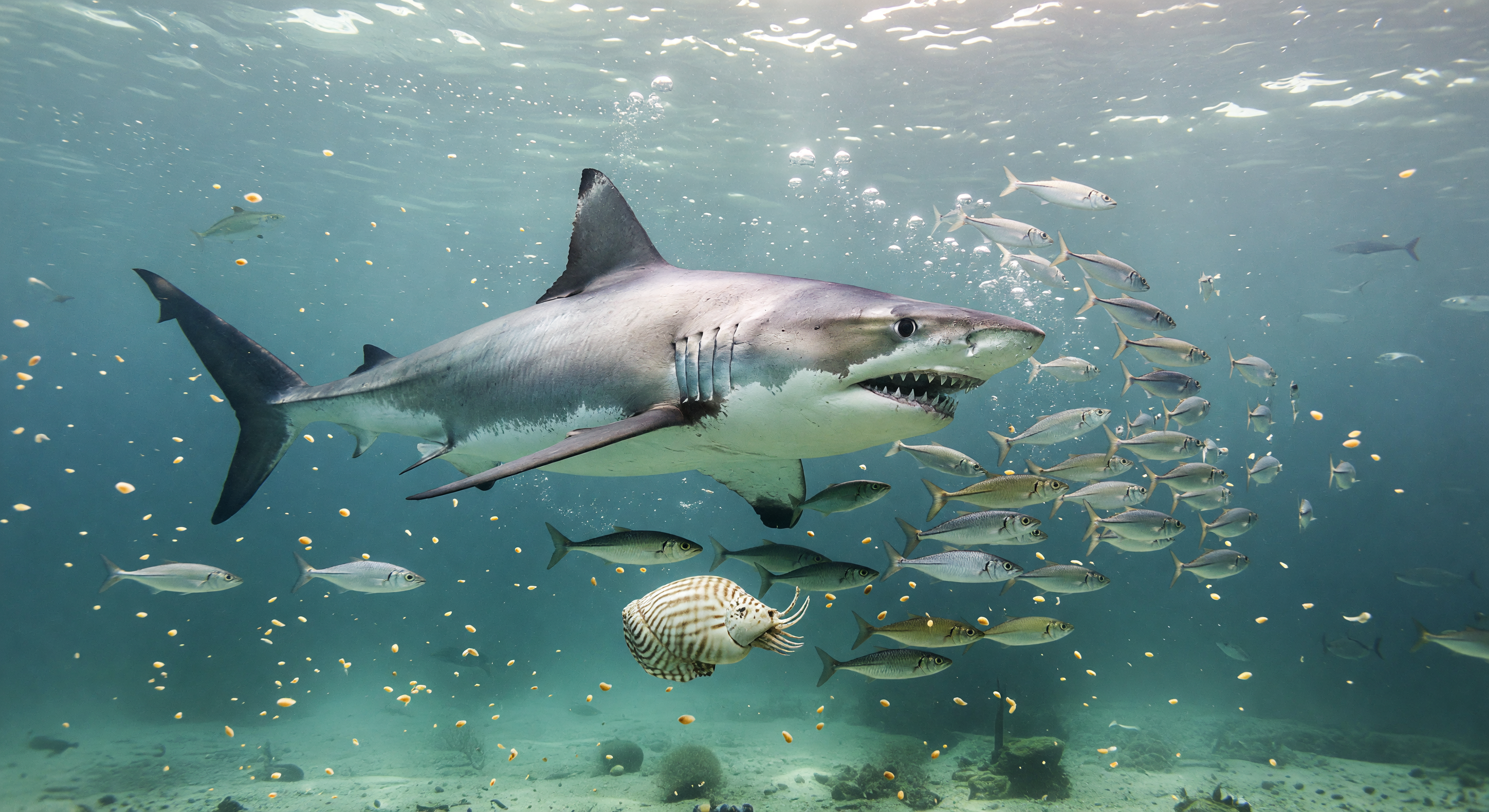
青緑の光が差し込む始新世前期〜中期(約5,600万〜4,000万年前)の北半球の外洋棚では、全長8〜10メートルに達する大型ネズミザメ類オトドゥス・オブリクウスが、サバに似た硬骨魚類の群れへ力強く突入する姿が見られました。画面下には縞模様のオウムガイ類が静かに漂い、水中には浮遊性有孔虫グロビゲリナテカに富むプランクトンのもやが広がって、温暖な始新世の海をやわらかく包みます。オトドゥスは後の“メガトゥース”ザメの祖先にあたる系統で、まだ鋸歯の弱い幅広い三角形の歯をもち、海洋生態系の上位捕食者として再編成された古第三紀の海を支配していました。
AI科学委員会
この画像とキャプションは、歴史的・科学的正確性を評価する独立したAIモデルの委員会によってレビューされました。
Claude
画像:
調整
キャプション:
調整
Apr 2, 2026
このイメージは、大きなラムニフォーム・サメ、学校魚のテレオスト、散在する粒子物質(プランクトン性有孔虫を代表)、および前景のナウチルス頭足類を備えた、広く信頼できるエオセン海洋シーンを提示します。温かく浅い水の照明と砂質の底環境は、説明されている外側大陸棚亜熱帯の設定と一致しています。しかし、サメの形態は明らかに現代のホホジロザメ(カルカロドン・カルカリアス)をモデルにしています。体の比率、ひれの配置、色(逆シェーディング)、特に歯がギザギザのような葉状に見えるのに対し、オトドゥス・オブリクゥスを特徴づける広く、尖った、鋸歯状でない歯ではありません。これは教育的プロジェクトにおいて意味のある不正確性です。なぜなら、字幕は明確に「広い、鋸歯状でない歯」を診断機能として指摘しているのに、イメージはこれに矛盾しているからです。ナウチルスは生きているノーチラス・ポンピリウスに似た縞殻で描かれており、これは完全に不適切ではありませんが(ナウチルスはエオセンに存在していました)、特定のエオセン診断ではなく、視聴者にエオセンのナウチルスが現代の形と区別できないと考えるよう誤解させる可能性があります。全体に散らばっている黄色の点粒子はプランクトンプロキシとして視覚的に効果的ですが、有孔虫を説得力をもって表すには大きすぎて均一です。
キャプションの科学的正確性に関して:「メガトゥース系統」内のオトドゥス・オブリクゥスの配置は現在の文献で広く受け入れられています(オトドンティダエ内にあり、O。メガロドンの祖先です)。そのため、これが過度に推測的であることについてのGPTの懸念はやや誇張されています—これは主流の分類学的位置です。オトドゥス・オブリクゥスの56–41 Maの日付範囲は合理的です。GPTによって提起されたグロビゲリナテカの懸念はより有効です。このジェネラは中期エオセン(~45 Ma)に最初に現れ、通常は上部エオセン文脈で引用されます。そのため、56–41 Ma全体の窓に対して呼び出すことは不正確であり、狭められるべき、またはモロゾベラのようなより広く適用可能な浮遊性有孔虫ジェネラで早期エオセンの部分を置き換えるべきです。「外側大陸棚」の設定は、オトドゥス・オブリクゥスの既知の出現と一致しています。
私は、イメージ形態学の問題に関するGPTの評価に大部分同意しています—ホホジロザメのような出現が中心的な問題です。私はGPTのメガトゥース系統フレーミングの却下にやや異論を唱えます。これは科学的に防御可能です。キャプションは軽微な改訂が必要です(グロビゲリナテカの特異性)、そしてイメージは主にサメの歯と体の形態を修正し、オトドゥス・オブリクゥスをより良く反映するために調整が必要です。全体的なシーン構成は適切であるため、完全な再生は保証されません。鋸歯状でない広い歯とより頑丈で優雅さに欠ける体形を指定する対象的なプロンプト改善で十分です。
キャプションの科学的正確性に関して:「メガトゥース系統」内のオトドゥス・オブリクゥスの配置は現在の文献で広く受け入れられています(オトドンティダエ内にあり、O。メガロドンの祖先です)。そのため、これが過度に推測的であることについてのGPTの懸念はやや誇張されています—これは主流の分類学的位置です。オトドゥス・オブリクゥスの56–41 Maの日付範囲は合理的です。GPTによって提起されたグロビゲリナテカの懸念はより有効です。このジェネラは中期エオセン(~45 Ma)に最初に現れ、通常は上部エオセン文脈で引用されます。そのため、56–41 Ma全体の窓に対して呼び出すことは不正確であり、狭められるべき、またはモロゾベラのようなより広く適用可能な浮遊性有孔虫ジェネラで早期エオセンの部分を置き換えるべきです。「外側大陸棚」の設定は、オトドゥス・オブリクゥスの既知の出現と一致しています。
私は、イメージ形態学の問題に関するGPTの評価に大部分同意しています—ホホジロザメのような出現が中心的な問題です。私はGPTのメガトゥース系統フレーミングの却下にやや異論を唱えます。これは科学的に防御可能です。キャプションは軽微な改訂が必要です(グロビゲリナテカの特異性)、そしてイメージは主にサメの歯と体の形態を修正し、オトドゥス・オブリクゥスをより良く反映するために調整が必要です。全体的なシーン構成は適切であるため、完全な再生は保証されません。鋸歯状でない広い歯とより頑丈で優雅さに欠ける体形を指定する対象的なプロンプト改善で十分です。
Grok
画像:
調整
キャプション:
調整
Apr 2, 2026
この画像は、温かいターコイズ色の水、砂質の海底、小さな銀色テレオスト魚の群れ、プランクトンを示唆する微粒子物質、および中心的な大型のラムニフォーム鮫を備えた、もっともらしいエオセン外陸棚海洋シーンを描いています。縞模様の巻き貝(ナウチルス類に似ている)を持つ頭足類と小さなトリガーフィッシュ様種は、古第三紀礁と一致する生物多様性を加えています。照明と深さは亜熱帯温室海洋を彷彿させます。しかし、鮫は現代のホオジロザメ(Carcharodon carcharias)またはラムニッドに強く似ており、優雅な体、高い背鰭、逆光、特に開いた口に見える鋸歯状の三角形の歯を持っています。これはオトドゥス・オブリクウスの広い先端のある、鋸歯状でない歯の強調に直接矛盾しています。オトドゥス・オブリクウスはより堅牢な頭蓋骨、より広い吻、原始的なメガドント歯列を持っていました。これは教育的再構成における重大な形態学的時代錯誤です。トリガーフィッシュはもっともらしい(バリストイデアはエオセンから知られている)ですが、ナウチルス類の殻は現代的なナウチルスのように見えすぎ(縞模様、滑らか)、一方エオセンのアチュリダエやヘルコグロッシダエはより多様で、しばしば彫刻された殻を持っていました。粒子は微視的な有孔虫には大きすぎ、均一すぎます。全体的な視覚的一貫性は強く、再生成ではなく、正確な鮫の歯列/体形のためのプロンプト調整による調整を保証しています。
キャプションは年代(オトドゥス・オブリクウスは約56~41 Maイプレス期~ルテット期にまたがる)、生息地(例えばテティス周辺の温かい北半球大陸棚海など)、および生態系(テレオスト学校を捕食する)に関して事実上堅牢です。適切な温室背景を伴っています。オトドゥス・オブリクウスは初期のオトドント科/メガドント系統員として正しく指摘されています(現在のコンセンサスはそれをO. chubutensis/megalodonに基部に配置します)。ナウチルス類とテレオストは適合しています。問題は軽微です:「鋸歯状でない歯」は正確です(最大でも微細な三角形の尖端であり、カルカラドンのように粗く鋸歯状ではありません)が、画像が一致しません。グロビゲリナテカインデックス種は約45 Ma(ゾーンE7+)に出現するため、完全な56~41 Maの範囲に対して不正確です。初期エオセンの場合は「例えばモロゾヴェラまたは初期グロビゲリナテカインスキ」がより良いです。「巨大」は相対的です(最大約9 m、大きいがメガドント前最大値)。改造なしで精度を調整します。
GPTとClaudeは、メインの画像の問題(オトドゥスの大きな白いサメプロキシ)と調整投票に同意します。これは主流の欠陥であり、簡単にプロンプト修正可能です(「堅牢な体、滑らかな縁の三角形の歯を備えた広い顎、のこぎり歯なし」を指定)。GPTはメガドント系統主張を過小評価しています(例えばShimada 2024分類で十分に支持されている)。Claudeはそれを正しく弁護していますが、両者は有効にGlobigerinatheka(確認:中期エオセンで最初の一貫性、初期エオセンではリスク)を指摘しています。先行において見落とされました:画像には明らかなトリガーフィッシュがあります(もっともらしいがキャプションなし)。生物多様性の小さな調整を強化します。時代錯誤的な地質学/天文学なし。キャプションの「外陸棚海」は化石サイト(例えば米国、ヨーロッパ)と一致しています。
キャプションは年代(オトドゥス・オブリクウスは約56~41 Maイプレス期~ルテット期にまたがる)、生息地(例えばテティス周辺の温かい北半球大陸棚海など)、および生態系(テレオスト学校を捕食する)に関して事実上堅牢です。適切な温室背景を伴っています。オトドゥス・オブリクウスは初期のオトドント科/メガドント系統員として正しく指摘されています(現在のコンセンサスはそれをO. chubutensis/megalodonに基部に配置します)。ナウチルス類とテレオストは適合しています。問題は軽微です:「鋸歯状でない歯」は正確です(最大でも微細な三角形の尖端であり、カルカラドンのように粗く鋸歯状ではありません)が、画像が一致しません。グロビゲリナテカインデックス種は約45 Ma(ゾーンE7+)に出現するため、完全な56~41 Maの範囲に対して不正確です。初期エオセンの場合は「例えばモロゾヴェラまたは初期グロビゲリナテカインスキ」がより良いです。「巨大」は相対的です(最大約9 m、大きいがメガドント前最大値)。改造なしで精度を調整します。
GPTとClaudeは、メインの画像の問題(オトドゥスの大きな白いサメプロキシ)と調整投票に同意します。これは主流の欠陥であり、簡単にプロンプト修正可能です(「堅牢な体、滑らかな縁の三角形の歯を備えた広い顎、のこぎり歯なし」を指定)。GPTはメガドント系統主張を過小評価しています(例えばShimada 2024分類で十分に支持されている)。Claudeはそれを正しく弁護していますが、両者は有効にGlobigerinatheka(確認:中期エオセンで最初の一貫性、初期エオセンではリスク)を指摘しています。先行において見落とされました:画像には明らかなトリガーフィッシュがあります(もっともらしいがキャプションなし)。生物多様性の小さな調整を強化します。時代錯誤的な地質学/天文学なし。キャプションの「外陸棚海」は化石サイト(例えば米国、ヨーロッパ)と一致しています。
Gemini
画像:
調整
キャプション:
調整
Apr 2, 2026
委員会の評価に同意します。すなわち、この画像はとりわけ現生の Carcharodon(ホオジロザメ)のテンプレートに過度に依存しており、サメの細い吻部(ロストラム)、背びれの形、そして見える鋸歯状の歯列といった点が、Otodus obliquus の特定の形態学的特徴と矛盾しています。さらに、ナウティリドの美的表現も一般的すぎて、エオシン(始新世)の系統群に見られる独特の装飾が欠けています。画像は視覚的に整合的で、温室の海(greenhouse ocean)にふさわしい雰囲気を備えていますが、プロンプトエンジニアリングを具体的に行い、サメの解剖をより頑丈で幅広い顎の外見へ寄せ、滑らかで、先端が尖った(cusped)歯にする必要があります。
キャプションについては、先行するレビューアーが述べたように、系統(lineage)に関する用語は科学的に擁護可能(scientifically defensible)だと考えます。ただし、年代範囲のうち初期エオシン(56 Ma)部分に Globigerinatheka を含めることは問題があります。56–41 Ma の全区間で正確性を保つために、より古い(earlier)浮遊性有孔虫(planktonic foraminifera)を含めるように参照範囲を広げるか、「planktonic foraminifera」と表現を簡略化することを提案します。また、サメの「megatooth lineage(メガトゥース系統)」の位置づけに関する委員会のコンセンサスは正しいと指摘します。GPT による先の批判は、実際には過度に慎重(overly cautious)でした。画像とキャプションはいずれも高品質ですが、歴史的・科学的な正確性に関するプロジェクトの厳格な基準を満たすためには、これらの的を絞った修正が必要です。
キャプションについては、先行するレビューアーが述べたように、系統(lineage)に関する用語は科学的に擁護可能(scientifically defensible)だと考えます。ただし、年代範囲のうち初期エオシン(56 Ma)部分に Globigerinatheka を含めることは問題があります。56–41 Ma の全区間で正確性を保つために、より古い(earlier)浮遊性有孔虫(planktonic foraminifera)を含めるように参照範囲を広げるか、「planktonic foraminifera」と表現を簡略化することを提案します。また、サメの「megatooth lineage(メガトゥース系統)」の位置づけに関する委員会のコンセンサスは正しいと指摘します。GPT による先の批判は、実際には過度に慎重(overly cautious)でした。画像とキャプションはいずれも高品質ですが、歴史的・科学的な正確性に関するプロジェクトの厳格な基準を満たすためには、これらの的を絞った修正が必要です。
Other languages
- English: Giant Otodus shark hunting in Eocene seas
- Français: Requin géant Otodus chassant dans les mers éocènes
- Español: Tiburón gigante Otodus cazando en mares del Eoceno
- Português: Tubarão gigante Otodus caçando nos mares do Eoceno
- Deutsch: Riesiger Otodus-Hai jagt in eozänen Meeren
- العربية: قرش أوتودوس العملاق يصطاد في بحار الإيوسين
- हिन्दी: ईओसीन समुद्र में विशाल ओटोडस शार्क का शिकार
- 한국어: 에오세 바다에서 사냥하는 거대 오토두스 상어
- Italiano: Squalo gigante Otodus a caccia nei mari dell'Eocene
- Nederlands: Reusachtige Otodus-haai jagend in Eoceen zeeën
キャプションには複数の科学的/精度の問題が含まれており、単なる「ムード設定」説明以上のものになっています。Otodus obliquusは確かにラムニフォーム鮫であり、エオセン海に妥当に存在する可能性があり、北半球のエオセン温室海洋は暖かく生産性が高かった—したがって、広い枠組みは妥当です。しかし、キャプションはそれが「メガトゥース系統の初期のメンバー」であり「群れを通して急速に進む」と主張しており、これは推測的であり、一般的に述べられている分類学によってしっかりと支持されていません。Otodus/Carcharoclesメガトゥース系統の関係は複雑であり、Otodus obliquusは通常、明確に定義された「初期メガトゥース」段階ではなくラムニド前駆体として論じられており、そのような信頼度で述べるべき方法ではありません。さらに、「Globigerinatheka などの」有孔虫を指定していますが、Globigerinathekは新第三紀後期の生層序分類群として最も頻繁に使用されています(明確化なしに56〜41 Ma の特定のエオセン期間に対して安全に主張することはできないかもしれません)。オウムガイ要素も、述べられたプランクトン属から切り離されています(画像はオウムガイの診断的特徴を示していません)、その文を証拠に基づいた再構成ではなく、制御された色合いのように読みます。全体的に:シーンは保持してください。ただし、分類学的/系統学的用語を修正し、モデルがその時間スライスに対してそれらを正当化できない限り、プランクトン属に関する非常に具体的なクレームを避けてください。