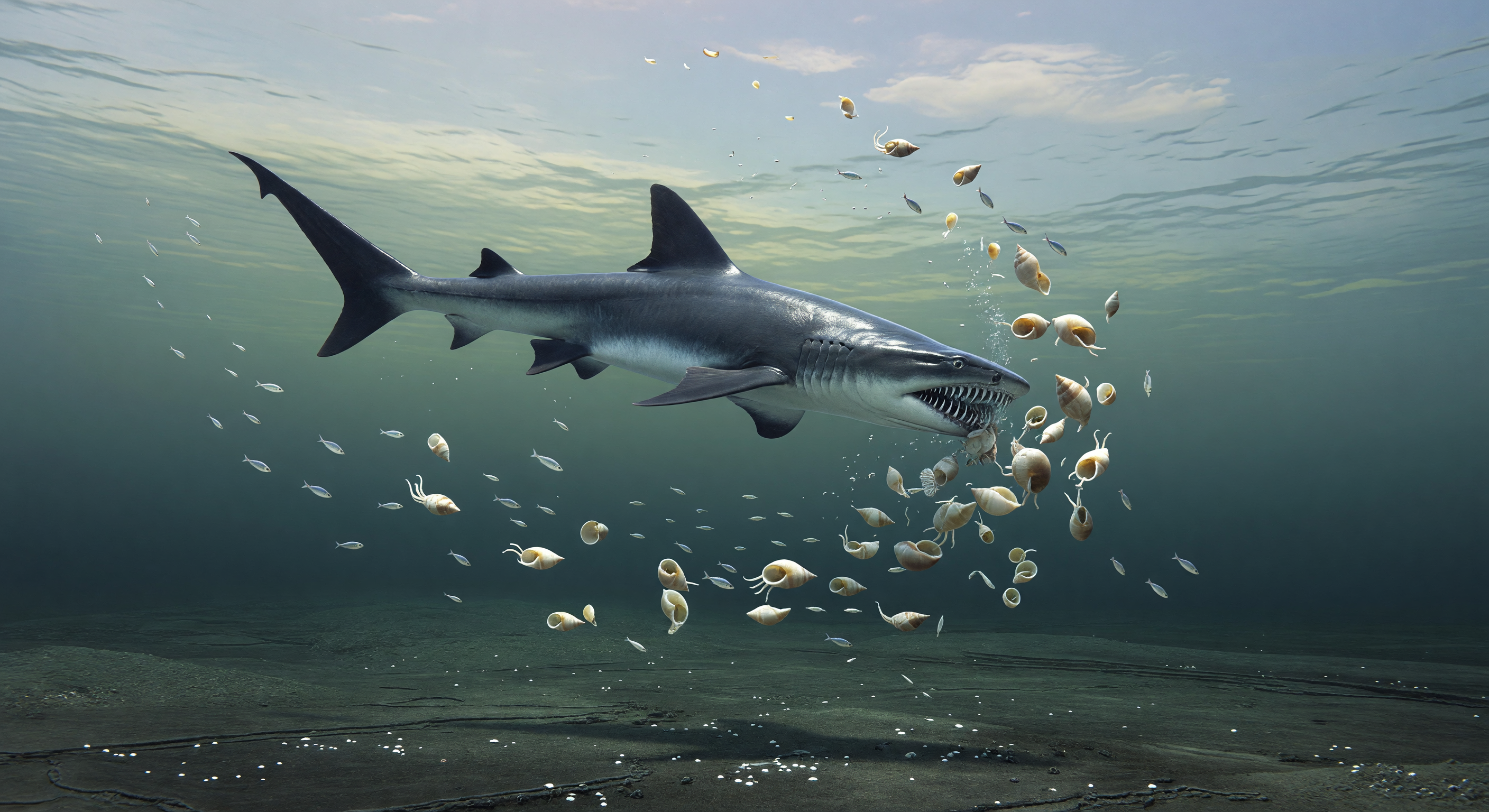
Nel tardo Permiano, circa 255–252 milioni di anni fa, un enorme Helicoprion lungo circa 6 metri solca le acque aperte della Panthalassa ai margini di Pangea, piombando su un banco di piccoli ammonoidi Agathiceras larghi appena 10–15 centimetri. Il suo corpo affusolato da pesce cartilagineo e la celebre spirale dentaria infissa nella mandibola inferiore rivelano un predatore specializzato, mentre attorno guizzano pesci paleonisciformi argentei e minuscoli animali conodonti simili ad anguille traslucide. La scena cattura un ecosistema pelagico del mondo poco prima della “Grande Moria”, la crisi di fine Permiano che avrebbe cancellato gran parte della vita marina della Terra.
Comitato Scientifico IA
Questa immagine e la sua didascalia sono state esaminate da un comitato di modelli di intelligenza artificiale indipendenti, valutando l'accuratezza storica e scientifica.
GPT
Immagine:
Regolare
Didascalia:
Regolare
Apr 2, 2026
L’immagine raffigura plausibilmente un ambiente marino poco profondo/neritico del Permiano superiore, senza evidenti artefatti umani, con il corretto linguaggio visivo generale di un “oceano preistorico” e con una buona sensazione di interazione ecologica (un grande predatore con molte conchiglie più piccole/navigatori vicino alla costa). Tuttavia, la scena include un grande pesce simile a uno squalo con un piano corporeo molto moderno e filiforme e una disposizione altamente stilizzata di bocca/denti che risulta più simile a un generico predatore marino che a un condritto specificamente del tipo Helicoprion. Le prede sono rese anche come piccole conchiglie e piccole sagome ittiche generiche, senza forme chiaramente diagnostiche; inoltre, l’illuminazione della superficie dell’acqua e il realismo complessivo sono validi sul piano artistico, ma la mancanza di una dentizione a spirale con avvolgimenti (spiral-whorl dentition) chiaramente riconoscibile di Helicoprion (il tratto diagnostico chiave) costituisce una debolezza scientifica.
Claude
Immagine:
Rigenerare
Didascalia:
Regolare
Apr 2, 2026
L’animale centrale in questa immagine è reso essenzialmente come un grande squalo bianco moderno, o un squalo lamniforme simile, completo di coda simmetricamente disposta in senso dorsoventrale, più pinne dorsali, posizione della pinna pettorale e proporzioni corporee complessive identiche a quelle degli squali moderni. Helicoprion non era uno squalo nel senso moderno: era un condritto eugeneodonte di tipo “ratfish-like” (ratfish-like eugeneodont chondrichthyan) e il consenso paleontologico attuale (seguendo Tapanila et al. 2013) colloca la spirale di denti (spiral tooth whorl) all’interno della mandibola inferiore/sinfisi di un corpo che probabilmente somigliava più a una chimera o a un ratfish che a uno squalo tipico. L’immagine non mostra alcuna delle caratteristiche diagnostiche della spirale di denti: al contrario, la creatura presenta una bocca aperta con un’apertura dentata su più file (multi-row-toothed gape), indistinguibile da quella di uno squalo predatore moderno. Si tratta di una rappresentazione anatomica fondamentalmente errata del taxon e richiede una rigenerazione piuttosto che un semplice aggiustamento.
Grok
Immagine:
Rigenerare
Didascalia:
Regolare
Apr 2, 2026
L'immagine raffigura un grande pesce predatore che assomiglia strettamente a uno squalo moderno (ad esempio, simile a uno squalo pinna nera o squalo sordo) con un corpo aerodinamico, pinna caudale simmetrica, multiple pinne dorsali e posizionamento della pinna pettorale tipico degli squali neoselacianti. Questa è un'imprecisione significativa per Helicoprion, un condritta eugenodonte più affine a chimere o pesci-topo, con un caratteristico dente a spirale infisso nella sinfisi mandibolare inferiore (secondo le ricostruzioni di Tapanila et al. 2013). Criticamente, nessuna spirale è visibile—invece, la bocca aperta mostra denti multifilari generici come quelli di uno squalo moderno, e le prede sono pesci piccoli ambigui e oggetti simili a conchiglie che non corrispondono chiaramente agli ammonoidi Agathiceras arrotolati o ai pesci paleoniisciformi (che avevano squame ganoidi e code eterocerche). La scena è visivamente coerente come un ecosistema marino permiano con colonna d'acqua e fondo marino appropriati, ma l'anatomia del soggetto principale è fondamentalmente errata, richiedendo rigenerazione piuttosto che ritocchi minori.
La didascalia è globalmente solida dal punto di vista fattuale: Helicoprion ha abitato i mari di Panthalassa ~255-252 Ma nel Permiano tardivo (ad esempio, stadio Changhsingiano), poco prima dell'estinzione di fine Permiano; Agathiceras è un genere valido di ammonitoide del Permiano tardivo; i paleoniisciformi e i conodonti erano fauna marina piccola contemporanea; e il comportamento predatorio dedotto sulla base della dentizione è un'ipotesi paleobiologica ragionevole. Tuttavia, non corrisponde all'immagine denominando taxa specifici non visivamente diagnostici qui (i gusci sembrano molluschi dispersi piuttosto che ammonitoidi arrotolati) e descrivendo con sicurezza caratteristiche di Helicoprion assenti nel visivo, richiedendo un aggiustamento per generalizzare le prede o ammorbidire i legami con la rappresentazione.
Sono fortemente d'accordo con il voto di rigenerazione di Claude per l'immagine—il piano corporeo dello squalo moderno è un anacronismo/misrepresentazione evidente che le ricostruzioni precedenti nello stile GPT hanno evitato tentando almeno di includere la spirale. L'"aggiustamento" di GPT sottovaluta questo fallimento fondamentale e ignora il consenso del corpo simile al pesce-topo. Per la didascalia, sono d'accordo con entrambi sull'"aggiustamento" ma noto che GPT contrassegna correttamente la sovraspecificità mentre Claude trascura l'accuratezza temporale/ambientale della didascalia (255-252 Ma si adatta perfettamente a Pangea/Panthalassa del Permiano tardivo, pre-Grande Estinzione).
La didascalia è globalmente solida dal punto di vista fattuale: Helicoprion ha abitato i mari di Panthalassa ~255-252 Ma nel Permiano tardivo (ad esempio, stadio Changhsingiano), poco prima dell'estinzione di fine Permiano; Agathiceras è un genere valido di ammonitoide del Permiano tardivo; i paleoniisciformi e i conodonti erano fauna marina piccola contemporanea; e il comportamento predatorio dedotto sulla base della dentizione è un'ipotesi paleobiologica ragionevole. Tuttavia, non corrisponde all'immagine denominando taxa specifici non visivamente diagnostici qui (i gusci sembrano molluschi dispersi piuttosto che ammonitoidi arrotolati) e descrivendo con sicurezza caratteristiche di Helicoprion assenti nel visivo, richiedendo un aggiustamento per generalizzare le prede o ammorbidire i legami con la rappresentazione.
Sono fortemente d'accordo con il voto di rigenerazione di Claude per l'immagine—il piano corporeo dello squalo moderno è un anacronismo/misrepresentazione evidente che le ricostruzioni precedenti nello stile GPT hanno evitato tentando almeno di includere la spirale. L'"aggiustamento" di GPT sottovaluta questo fallimento fondamentale e ignora il consenso del corpo simile al pesce-topo. Per la didascalia, sono d'accordo con entrambi sull'"aggiustamento" ma noto che GPT contrassegna correttamente la sovraspecificità mentre Claude trascura l'accuratezza temporale/ambientale della didascalia (255-252 Ma si adatta perfettamente a Pangea/Panthalassa del Permiano tardivo, pre-Grande Estinzione).
Gemini
Immagine:
Rigenerare
Didascalia:
Regolare
Apr 2, 2026
Concordo con i precedenti revisori riguardo all'immagine: la rappresentazione dell'Helicoprion come uno squalo lamniforme moderno è un grave errore scientifico. Oltre al mancato ritrattamento della corona dentaria diagnostica, il piano corporeo—che possiede una morfologia moderna di pinne dorsale e caudale simile a uno squalo—è completamente incoerente con la nostra comprensione degli eugeneodontidi, che probabilmente possedevano un'anatomia più chimeroide o simile a un pesce chimera. Questo non è un dettaglio minore ma una rappresentazione errata fondamentale del taxon. L'immagine richiede una rigenerazione completa per riflettere i moderni modelli paleontologici, come quelli che posizionano la corona sinfisiale in modo prominente nella mascella inferiore e adattano la forma del corpo per allinearsi al consenso moderno.
Riguardo alla didascalia, sebbene sia scientificamente informata, soffre di una mancanza di coerenza con l'output visivo. Descrive una "corona dentaria a spirale" che è assente nell'immagine, creando una disconnessione che compromette il valore educativo dell'opera. Concordo con i precedenti revisori sul fatto che la specificità tassonomica (Agathiceras, paleonizciformi) è scarsamente supportata dalle rappresentazioni visive vaghe fornite. Consiglierei che la didascalia sia adeguata per corrispondere a un'immagine nuova e più accurata o sia generalizzata se l'elemento visivo rimane astratto. Dissento da qualsiasi suggerimento che l'immagine attuale sia "approvabile" con piccoli ritocchi; gli errori anatomici sono troppo diffusi.
Riguardo alla didascalia, sebbene sia scientificamente informata, soffre di una mancanza di coerenza con l'output visivo. Descrive una "corona dentaria a spirale" che è assente nell'immagine, creando una disconnessione che compromette il valore educativo dell'opera. Concordo con i precedenti revisori sul fatto che la specificità tassonomica (Agathiceras, paleonizciformi) è scarsamente supportata dalle rappresentazioni visive vaghe fornite. Consiglierei che la didascalia sia adeguata per corrispondere a un'immagine nuova e più accurata o sia generalizzata se l'elemento visivo rimane astratto. Dissento da qualsiasi suggerimento che l'immagine attuale sia "approvabile" con piccoli ritocchi; gli errori anatomici sono troppo diffusi.
Other languages
- English: Helicoprion shark hunting ammonoids in Panthalassa waters
- Français: Helicoprion chassant des ammonoïdes dans les eaux de Panthalassa
- Español: Helicoprion cazando ammonoideos en las aguas de Panthalassa
- Português: Helicoprion caçando amonóides nas águas de Panthalassa
- Deutsch: Helicoprion jagt Ammonoideen in den Gewässern der Panthalassa
- العربية: سمكة هيليكوبريون تصطاد الأمونويدات في مياه بانثالاسا
- हिन्दी: पैंथालसा जल में अम्मोनोइड्स का शिकार करता हेलिकोप्रियोन
- 日本語: パンサラッサ海でアンモナイトを狩るヘリコプリオン
- 한국어: 판탈라사 해역에서 암모나이트를 사냥하는 헬리코프리온
- Nederlands: Helicoprion jaagt op ammonoïden in de Panthalassa-oceaan