An inhabitant of the Sirius system displays the "Lithe-Long" aesthetic characteristic of the Interstellar Dawn era (3000–5000 CE), a period defined by the transition of humanity into a multi-stellar species. This individual exhibits biological adaptations for microgravity, including an elongated skeletal structure and multi-pupiled eyes evolved for the intense light of a binary star system. Silver fiber-optic Neural-Filaments emerge from the cranium, pulsing with bioluminescence to indicate active data processing, while a localized Gravity-Ring allows for the fluid movement of Aerogel Lace garments. This scene illustrates the "Substrate-Neutral" beauty of the fifth millennium, where technological integration and biological plasticity have fundamentally redefined the human form.

This portrait captures a "Lithe-Long" post-human aboard an Oort Cloud station during the Interstellar Dawn (c. 3000–5000 CE), an era marked by humanity’s transition into a multi-stellar species. The figure displays extreme biological adaptations to microgravity, including a 2.5-meter stature and elongated limbs, while wearing a self-repairing Myco-Silk skin-suit and an externalized structural support of iridescent carbon nanotubes. To maintain traditional aesthetics in deep space, the subject utilizes a "Gravity-Ring" to create a localized 1G field, allowing the aerogel lace to drape naturally against the backdrop of distant, ice-encrusted planetesimals. This scene illustrates the "Chrono-Adaptive" aesthetic, where sub-dermal Lumen-Ink and fiber-optic neural-filaments replaced traditional cosmetics to reflect the wearer’s internal physiological and data-processing states.
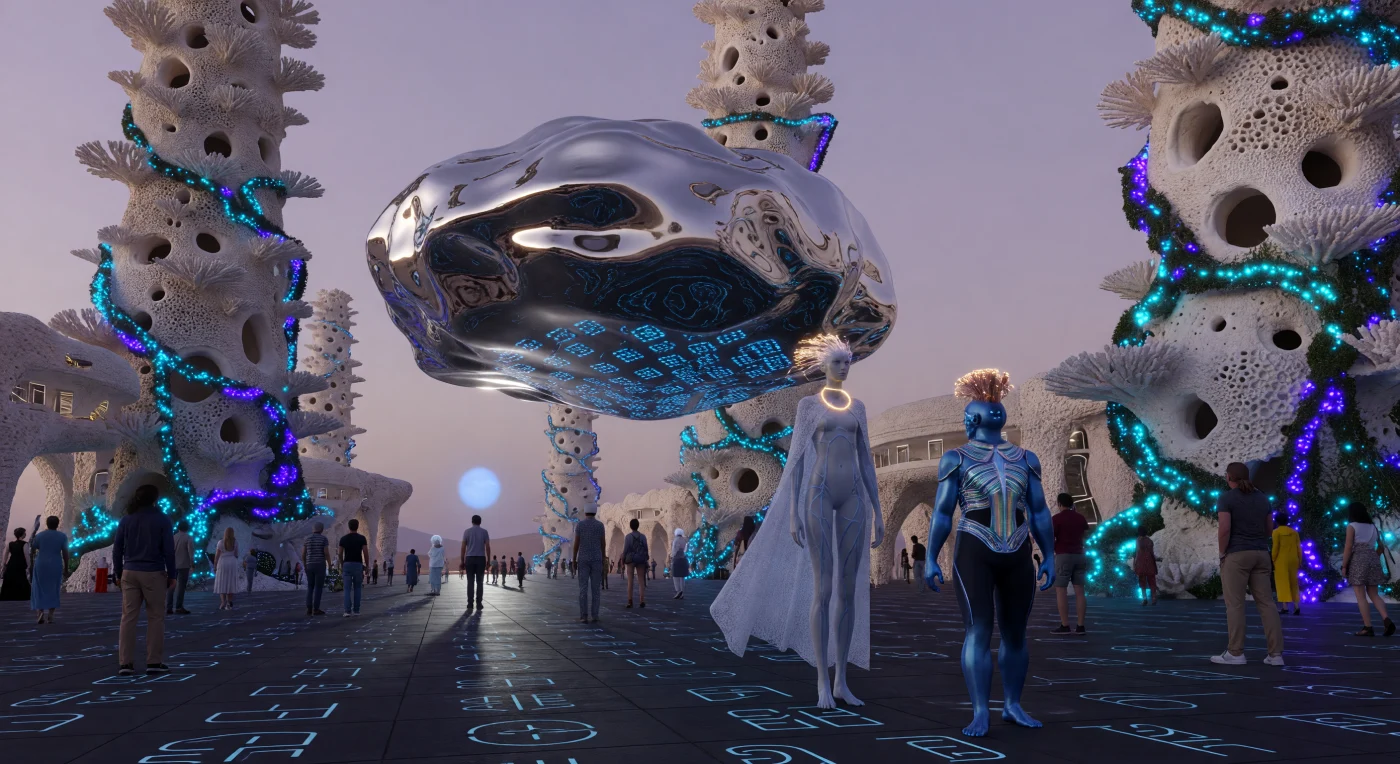
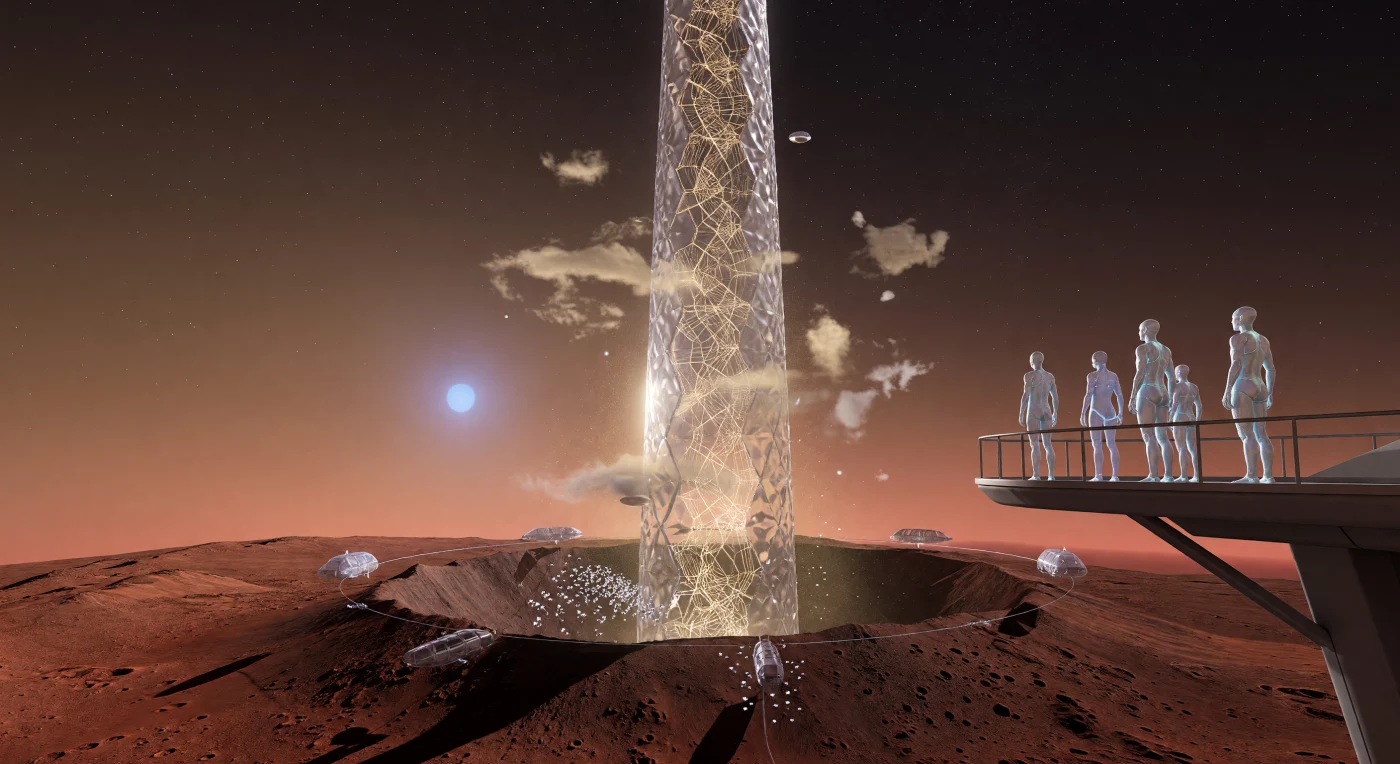
This reconstruction captures a Martian cultural hub during the Interstellar Dawn (3000–5000 CE), featuring a massive gravimetric sculpture of liquid mercury suspended amidst bio-engineered coral architecture. The scene illustrates the radical divergence of the human lineage into specialized post-human forms, such as the elongated "Lithe-Long" adapted for low-gravity environments and the silicon-reinforced "Crystalline Density" visitors from high-gravity exoplanets. Towering 200-meter calcium-silicate structures and UV-reactive bioluminescent flora demonstrate the era’s mastery of synthetic biology and the successful terraforming of the Martian atmosphere into a hospitable, if alien, biosphere.
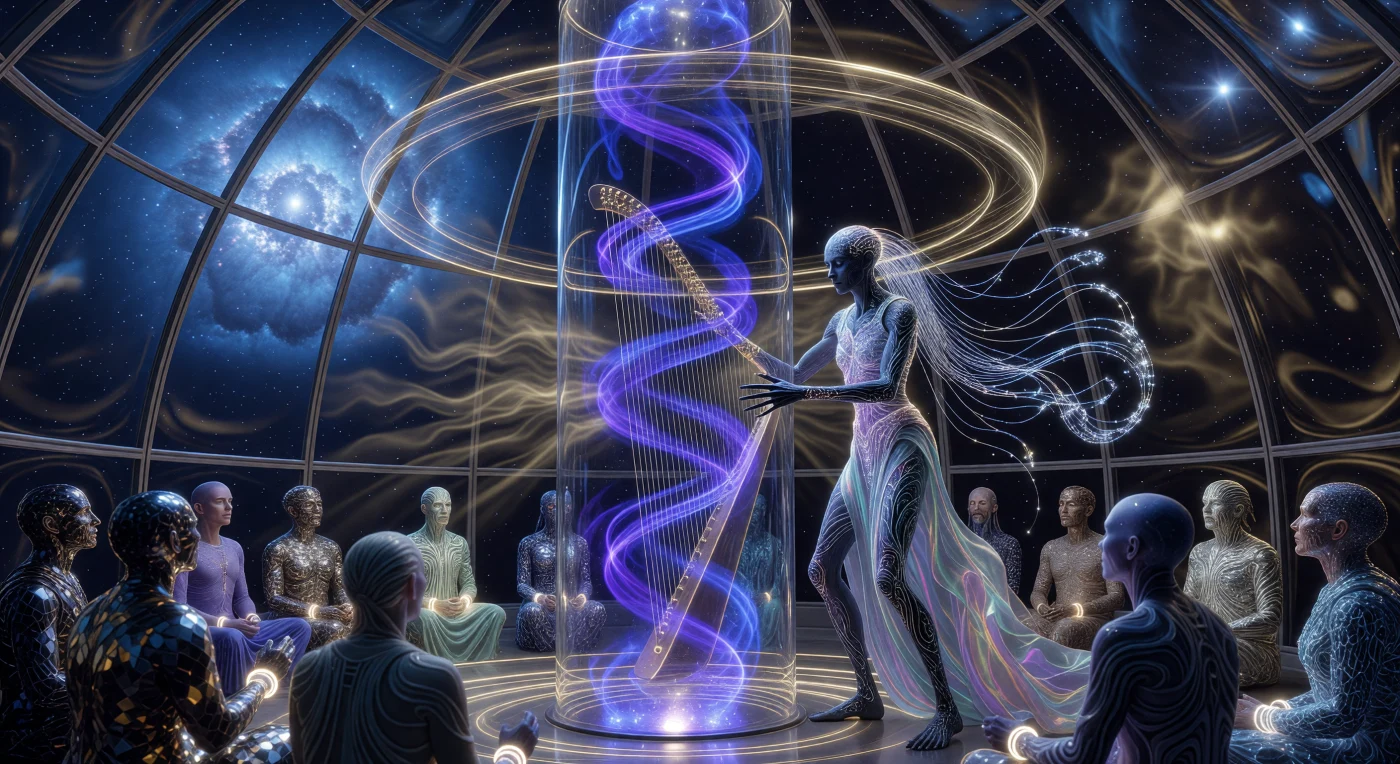
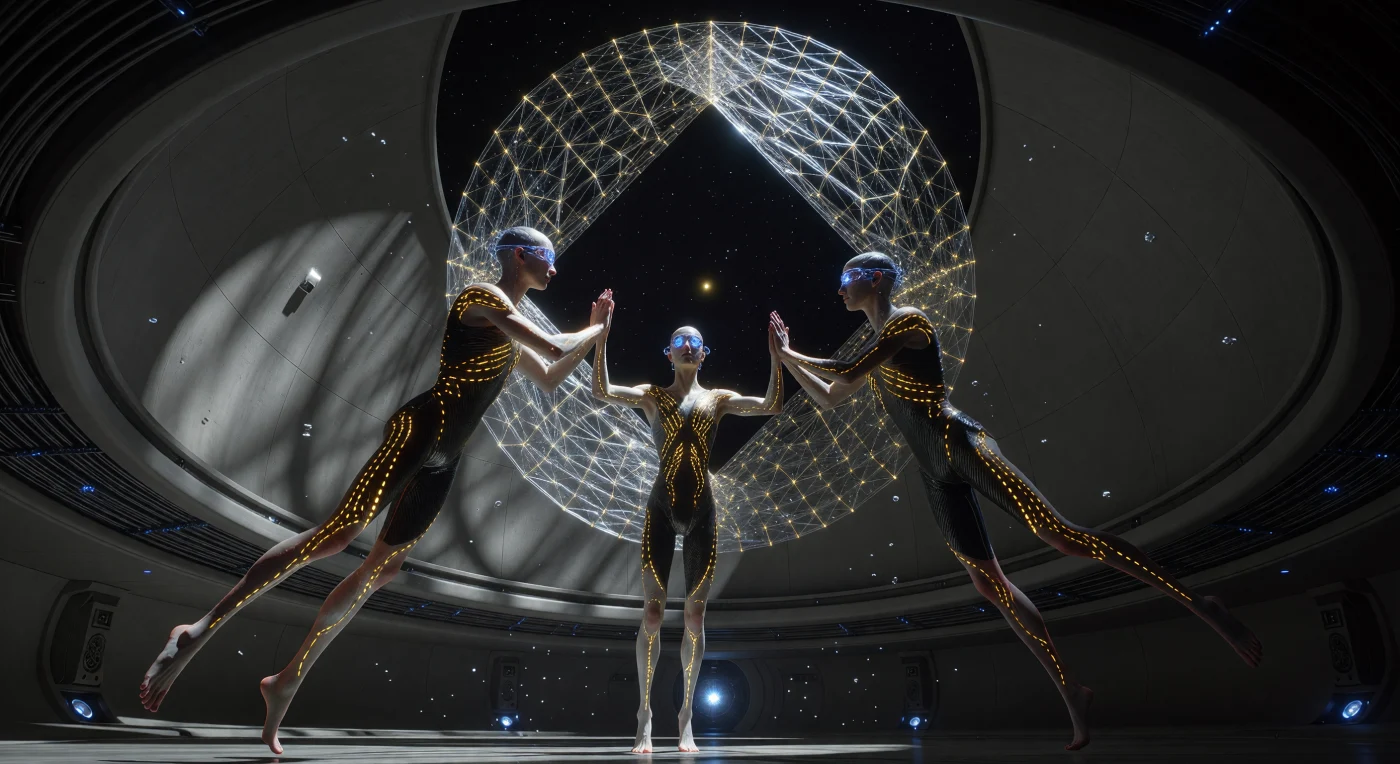
During the Interstellar Dawn (3000–5000 CE), the "Great Dispersal" saw post-humanity harness fundamental forces to create immersive works of art, such as this Plasma-Harp performance within an orbital geodesic spire. A spindly "Lithe-Long" musician manipulates magnetic fields to vibrate ionized neon and xenon gas inside a ten-meter diamond-glass cylinder, generating micro-tonal gravitational waves that resonate through the bodies of the diverse audience. Spectators, including "Crystalline Density" beings with silicon-reinforced skin and "Substrate-Neutral" forms in shifting programmable matter, experience the interplay of harsh stellar radiation and rhythmic plasma flickers. This era represents the pinnacle of environmental integration, where Myco-Silk fashion and gravimetric technology allowed for a pluralistic expression of beauty across the multi-stellar civilization.

A fleet of competitive light-sail vessels maneuvers through the turbulent lower corona of a G-type star during the prestigious Perihelion Sun-Sailing Race. Set during the Interstellar Dawn (3000–5000 CE), this era marks the "Great Dispersal," a period defined by humanity’s transition into a multi-stellar species through radical biological and technological adaptation. The scene captures a "Lithe-Long" pilot—a post-human subspecies evolved for low-gravity Oort Cloud environments—tethered via neural-filaments to a craft propelled by vast, iridescent dielectric-mirror sails. These high-stakes competitions showcase the era’s mastery over radiation pressure and "Exo-Skeleton Chic" functional fashion, reflecting a civilization that has turned the fundamental forces of the universe into a canvas for sport and art.

Set during the Interstellar Dawn (c. 3000–5000 CE), this scene illustrates a Solar-Pulse priest of the Oort-born lineage performing the Ritual of Integration aboard a high-altitude stellar observatory. The priest’s elongated "Lithe-Long" frame and fiber-optic neural-filaments showcase the era’s mastery of biological engineering, while their atomically thin gold foil robes utilize a wearable gravity-ring to simulate Earth-like draping in microgravity. Clutching a vial of "Relic-Soil," the figure stands as a bridge between humanity's terrestrial past and its multi-stellar future, silhouetted against the blinding radiation of a young blue-white star.

Set within an observation gallery orbiting Proxima Centauri in 4200 CE, this scene captures a "Lithe-Long" artist creating a Neo-Terran installation using reclaimed Earth mud and an ancient oak stump. Bathed in the deep crimson light of the red dwarf star, the artist’s elongated 2.7-meter frame and bioluminescent "Lumen-Ink" demonstrate the radical biological adaptations of the Interstellar Dawn era. To preserve the tactile nature of the terrestrial materials, a localized gravity-ring maintains a 1G field, creating a jarring, organic centerpiece amidst the sterile, microgravity environment of the carbon-ceramic habitat. This poignant display reflects the "Earth-Grief" movement, where multi-stellar humanity sought to reconnect with its lost planetary origins through sensory-stream art.
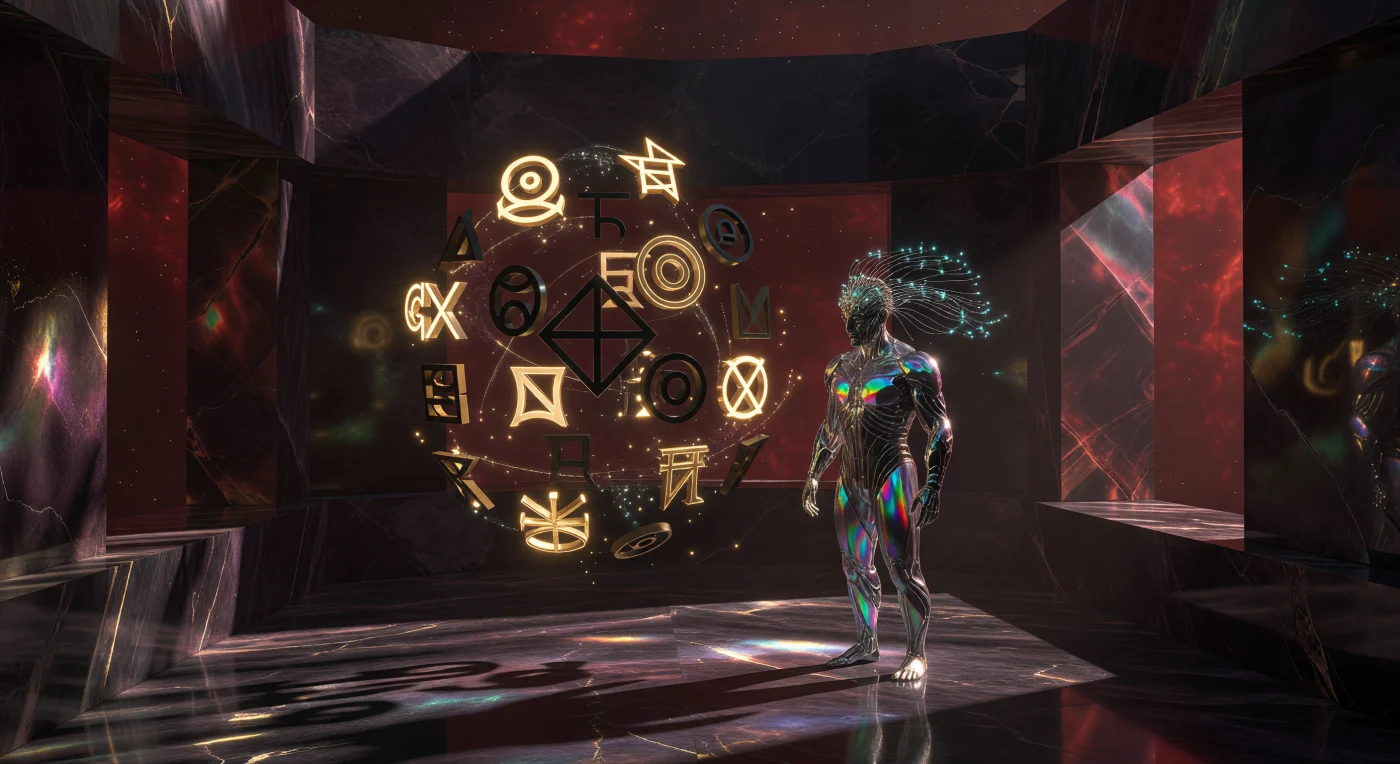
On the high-gravity world of Proxima b, a scholar of the "Crystalline Density" phenotype contemplates a rotating Glyph-Flow transmission during the Interstellar Dawn (c. 3000–5000 CE). The individual displays specialized biological adaptations for a 1.17g environment, including a compact, muscular frame and silicon-reinforced skin that catches the dim, crimson light of the red dwarf star Proxima Centauri. This scene illustrates the "Great Dispersal" era, a period defined by post-humanity’s mastery of genetic plasticity and advanced volumetric technology as they transitioned into a multi-stellar civilization.