A herd of small, muscular horses with distinctive erect manes gallops across the expansive Central Asian plateau, kicking up dust beneath a clear Mongolian sky. Beside a cluster of traditional white felt gers, nomads in period-accurate wool deels and distinctive tonsorial hairstyles manage the livestock that powered the 13th-century Mongol Empire. This depiction highlights the rugged endurance of the Mongol horse and the sophisticated nomadic culture that bridged Eastern and Western civilizations during the High Middle Ages.

This scene depicts the bustling harbor of Quanzhou during the 13th-century Southern Song Dynasty, then the premier maritime hub of the global "Silk Road of the Sea." A massive wooden junk, featuring innovative watertight bulkheads and bamboo-battened sails, unloads crates of precious Longquan celadon porcelain destined for international markets. On the granite quay, a Chinese official and Arab merchants negotiate trade using silver bullion, illustrating the cosmopolitan nature of a city where diverse cultures converged through commerce. The background showcases the sophisticated timber-frame architecture and complex *dougong* bracket systems characteristic of China’s medieval urban peak.

A 12th-century Buddhist monk carefully places a Goryeo celadon maebyeong vase, decorated with iconic inlaid crane motifs, onto a carved elmwood altar within a serene temple. The scene highlights the peak of Korean ceramic artistry and the "jusimpo" architectural style, where complex timber brackets support the heavy tiled roof of the traditional Hanok structure. Reflected in the monk's refined ramie robes and the presence of the underfloor ondol heating system, this portrayal illustrates the sophisticated cultural and spiritual life of the Goryeo Kingdom during East Asia’s High Middle Ages.
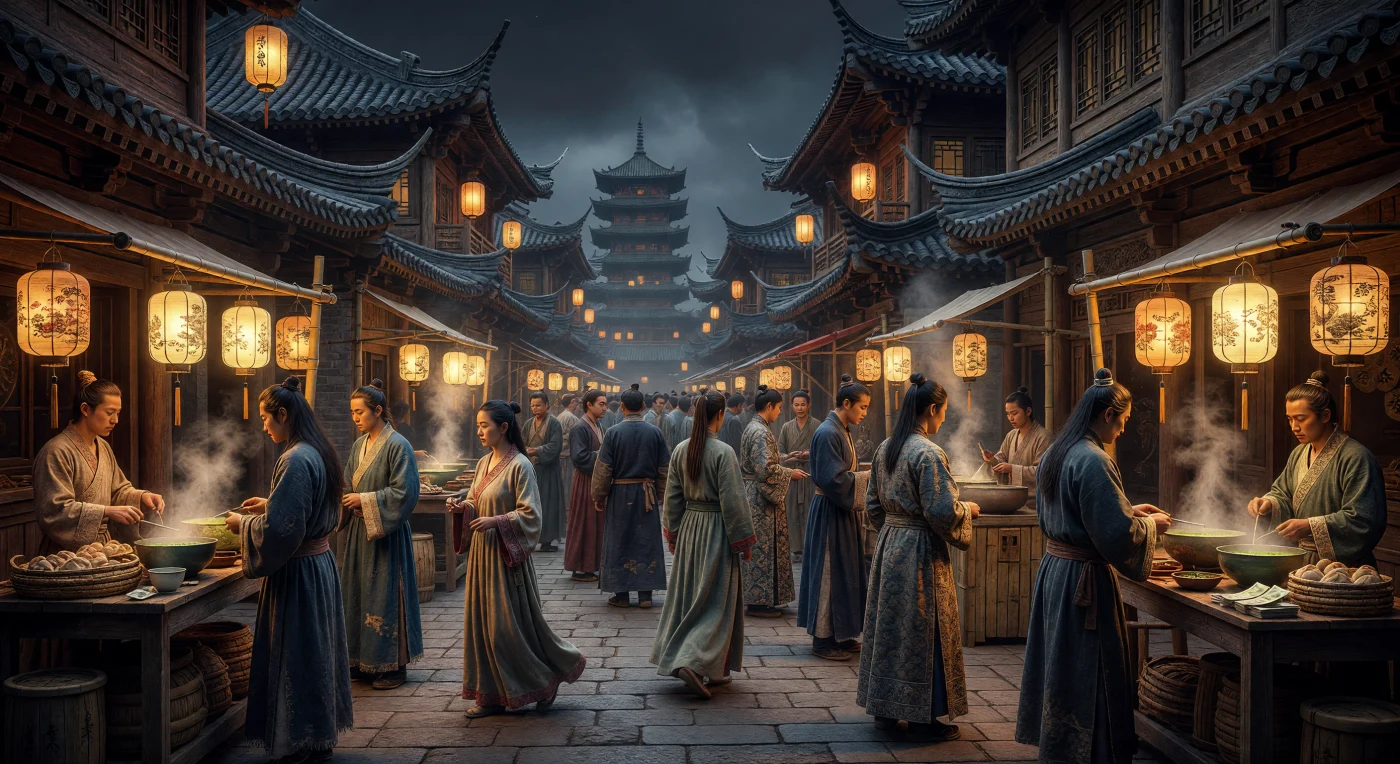
This scene captures the vibrant atmosphere of a night market in Kaifeng, the bustling capital of the Northern Song Dynasty around 1100 CE. Citizens dressed in traditional *ruqun* and indigo hemp robes navigate a landscape of multi-story timber structures featuring intricate *dougong* joinery and sweeping tiled roofs. As the world’s most populous medieval city, Kaifeng pioneered a sophisticated urban culture characterized by 24-hour commerce, the world's first paper currency, and a thriving tea trade served in distinctive dark stoneware.

In this 11th-century Song Dynasty workshop in Kaifeng, an artisan meticulously assembles the world’s first movable type using individual characters carved from fired clay. This revolutionary system, pioneered by the inventor Bi Sheng, involved arranging the characters within an iron frame coated with a specialized resin and wax mixture to hold them in place for printing on mulberry paper. The scene illustrates a pivotal moment in global technological history, showcasing the sophisticated craftsmanship and urban industrial culture that allowed for the mass production of literature and philosophy during China's High Middle Ages.
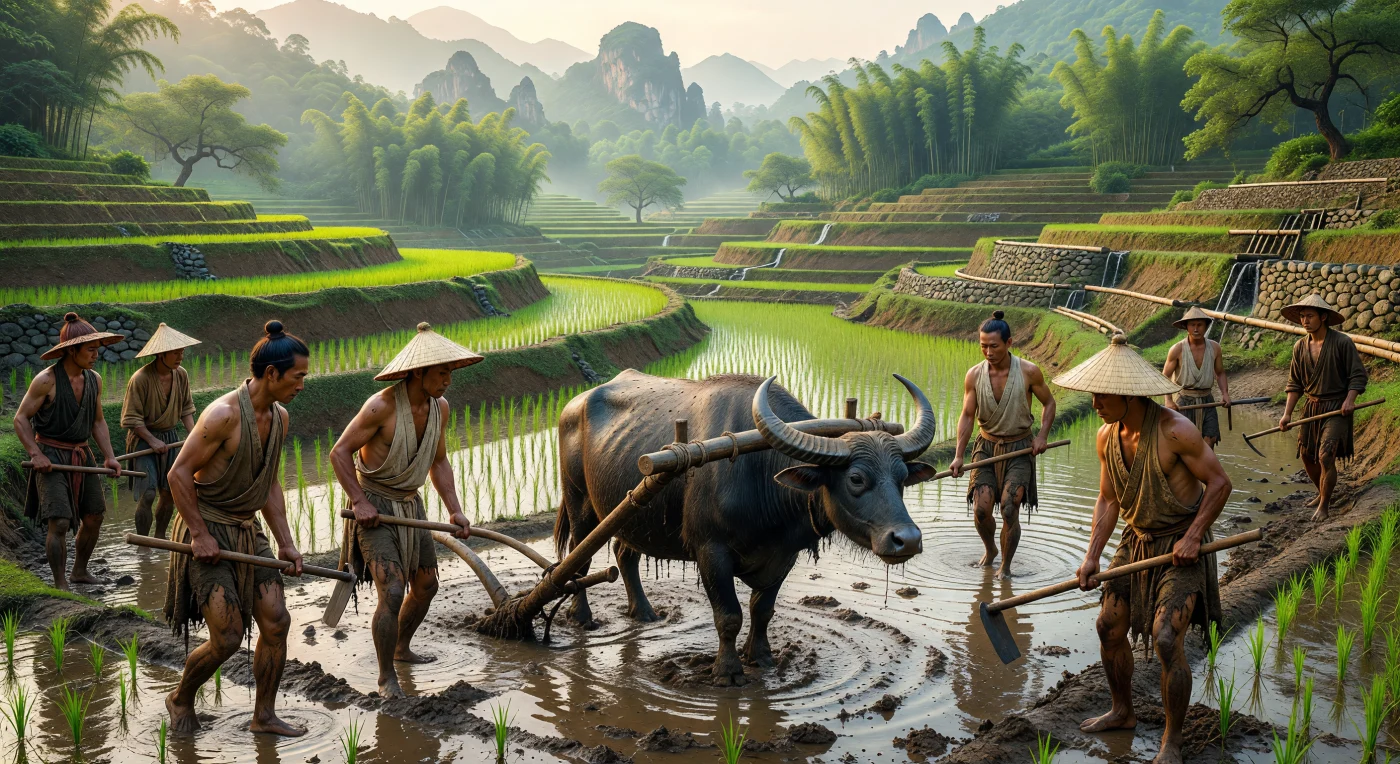
In the rugged terrain of 12th-century Southern China, Song Dynasty farmers labor alongside water buffalo to prepare flooded terraces for the planting of Champa rice. This drought-resistant, fast-ripening grain, introduced from Southeast Asia, revolutionized regional agriculture and supported a historic population boom that saw China become the first civilization to reach 120 million people. The scene highlights the period's sophisticated hydraulic engineering, featuring hand-laid stone reinforcements and bamboo irrigation systems that transformed steep hillsides into a highly productive agricultural heartland.

A high-ranking samurai of the 13th-century Kamakura period practices yabusame, or mounted archery, while riding a sturdy Kiso-breed horse through a provincial military outpost. He is outfitted in traditional O-yoroi armor, featuring a distinctive boxy silhouette and intricate silk lacing designed to protect elite cavalrymen during the early shogunate. This scene captures the transition of Japanese society toward a martial culture, where the discipline of the "Way of the Horse and Bow" defined the status and duty of the emerging warrior class.
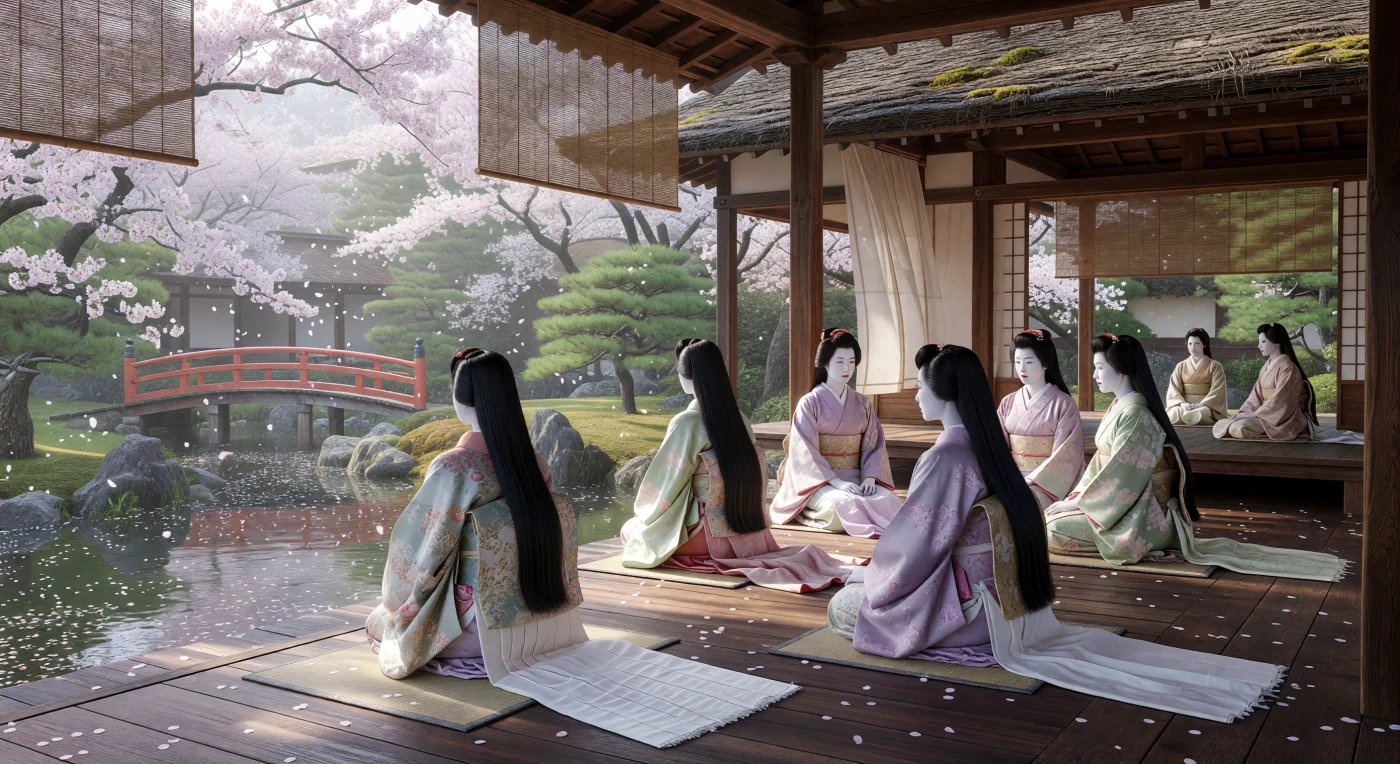
Noblewomen of the 11th-century Heian court are depicted on the polished cypress veranda of a shinden-zukuri estate, observing the ephemeral beauty of falling cherry blossoms. They wear the jūnihitoe, a complex arrangement of twelve silk layers whose specific color gradients, known as kasane no irome, reflect the seasonal transition of spring. This scene illustrates the aristocratic aesthetic of mono no aware—a poignant appreciation of transience—further highlighted by the traditional use of white face powder, blackened teeth (ohaguro), and the refined, open-air architecture of the Kyoto nobility.