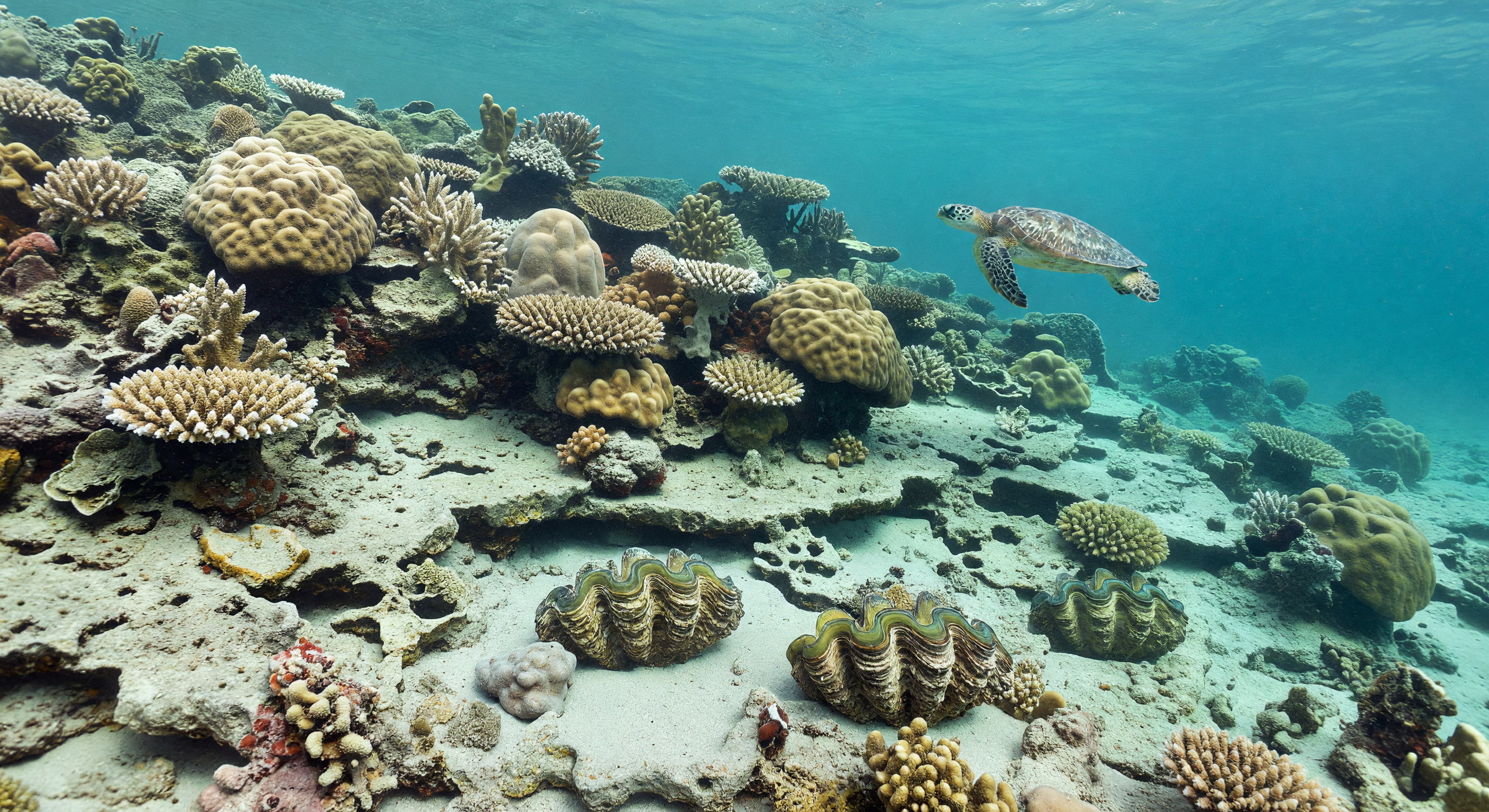
प्लीस्टोसीन से होलोसीन के संक्रमणकाल, लगभग 20,000 से 8,000 वर्ष पहले, हिमयुग के अंत में समुद्र-स्तर तेज़ी से बढ़ा तो उष्णकटिबंधीय प्रवाल-भित्तियाँ डूबती चूना-पत्थर की सीढ़ीनुमा सतहों पर पीछे हटते हुए ऊपर और तट की ओर फिर से बसने लगीं—इसी प्रक्रिया को “रीफ़ बैकस्टेपिंग” कहते हैं। इस दृश्य में साफ़ फ़िरोज़ी जल के नीचे शाखायुक्त एक्रोपोरा (Acropora) और गुंबदाकार पोरीटेस (Porites) की जीवित कॉलोनियाँ एक संकरी ढाल पर फैली हैं, जबकि नीचे पुरानी डूबी हुई कार्बोनेट छत पर विशाल क्लैम ट्रिडैक्ना गिगास (Tridacna gigas) टिके हैं और उनके ऊपर एक हरी समुद्री कछुआ, केलोनिया मायडस (Chelonia mydas), शांत भाव से तैर रहा है। यह दृश्य दिखाता है कि हिमयुगीन समुद्र कितने परिवर्तनशील थे, फिर भी उनमें आज के परिचित रीफ़ जीव गहरे समय की निरंतरता को सँजोए हुए थे।
Other languages
- English: Tropical coral reef backstepping during postglacial sea level rise
- Français: Recul d'un récif corallien tropical pendant la montée des eaux
- Español: Arrecife de coral tropical retrocediendo ante el ascenso del mar
- Português: Recuo de recife de coral tropical durante elevação do mar
- Deutsch: Tropisches Korallenriff weicht dem nacheiszeitlichen Meeresspiegelanstieg aus
- العربية: تراجع الشعاب المرجانية المدارية أثناء ارتفاع مستوى سطح البحر
- 日本語: 後氷期の海面上昇に伴い後退する熱帯サンゴ礁
- 한국어: 후빙기 해수면 상승으로 인해 후퇴하는 열대 산호초
- Italiano: Arretramento della barriera corallina tropicale durante l'innalzamento postglaciale
- Nederlands: Tropisch koraalrif trekt zich terug bij postglaciale zeespiegelstijging