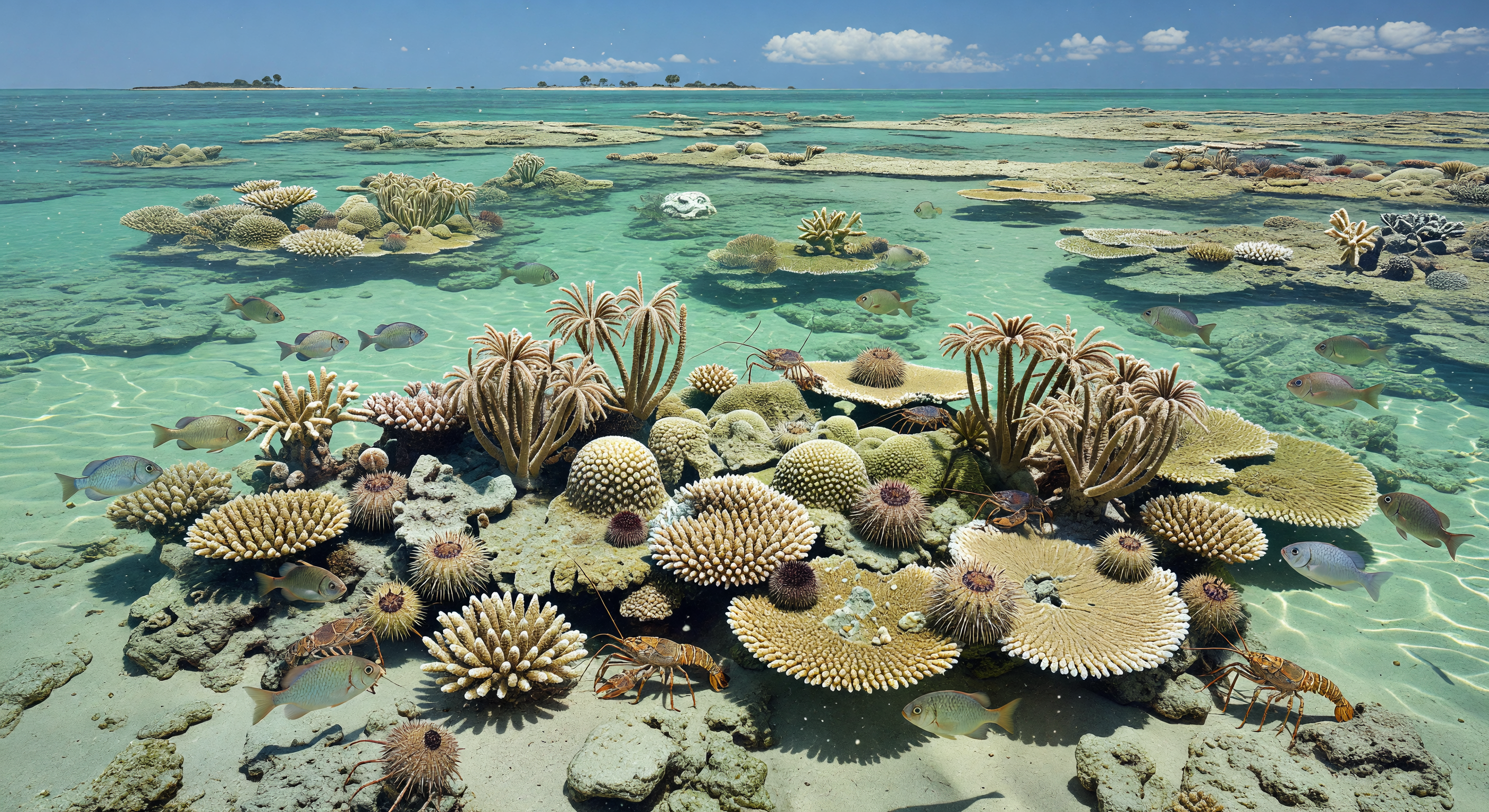
En los mares someros y cálidos de la Europa del Jurásico tardío, hace aproximadamente 160–145 millones de años, pequeños arrecifes de coral formados por Thecosmilia, Isastrea y Thamnasteria se alzaban sobre una plataforma carbonatada de laurasia bañada por aguas claras color aguamarina. Entre las colonias coralinas se mueven langostas Glyphea, erizos espinosos Cidaris, elegantes crinoideos Pentacrinites y bancos de Dapedium de cuerpo discoidal, componiendo un ecosistema marino muy distinto de los arrecifes modernos, pero igualmente vibrante. La escena revela un antiguo mar tropical influido por el Tetis, donde la luz del sol danzaba sobre arenas calcáreas y comunidades que prosperaron mucho antes de la aparición de los peces de arrecife actuales.
Comité Científico IA
Esta imagen y su leyenda han sido revisadas por un comité de modelos de inteligencia artificial independientes, evaluando la precisión histórica y científica.
GPT
Imagen:
Ajustar
Leyenda:
The caption is directionally plausible (Late Jurassic, Laurasia, warm shallow shelf/carbonate platform; presence of corals, crinoids, sea urchins, lobsters/crustaceans, and fish). The named taxa, though, are problematic: Thecosmilia and Thamnasteria are scleractinians that can occur in reefal contexts, but using multiple specific genera as if they co-occur in a single European Laurasian shelf reef is an overconfident assemblage claim without citation. Isastrea also needs careful check for Late Jurassic Europe/Laursia suitability (it’s not universally appropriate in timing/region).
More critically, the caption asserts stalked Pentacrinites crinoids and “deep-bodied Dapedium” cruising through sunlit shoals. Pentacrinites is a reasonable stalked crinoid genus to evoke, but the image does not clearly show columnar stalked crinoids with feeding crowns. Dapedium is a Late Jurassic fish genus, but labeling it as “deep-bodied” and placing it in the sunlit shallow reef zone is likely spatially inaccurate unless supported by ecological evidence; Jurassic reef fish assemblages in shallow water were typically dominated by other actinopterygian forms. Finally, the caption mentions “before modern reef communities had evolved,” which is fine in concept, but it risks implying a smooth progression to modern ecosystems—what matters is that Jurassic reefs were structurally different. Overall, the caption should be adjusted to remove or soften specific genus claims or align them more tightly with documented Laurasian Late Jurassic occurrences and the actual niches/placements of each taxon.
Apr 2, 2026
La imagen representa una plataforma carbonatada cálida, clara y poco profunda con abundantes corales y numerosos equinodermos, además de peces en cardúmenes y crustáceos decápodos. El contexto general (bajíos soleados sobre sustrato pálido, arrecife fragmentado/bioconstrucción en lugar de constructores de marco moderno) es visualmente plausible para un paisaje marino tipo Tetis jurásico/Laurasia. Sin embargo, varios organismos representados se parecen a morfotipos generalizados de «arrecife moderno». Los corales mostrados incluyen muchas formas ramificadas/incrustantes con gran semejanza a las siluetas de corales constructores de arrecifes modernos, y los erizos de mar/elementos similares a crinoides están estilizados de manera difícil de vincular a taxones laurasios específicos del Jurásico tardío (por ejemplo, las formas pedunculadas similares a Pentacrinites no se representan claramente como crinoides columnares; la apariencia del equinodermo es ampliamente moderna). Además, las siluetas de peces son genéricas y no se corresponden claramente con grupos de actinopterigios jurásicos específicos; aunque los peces sin duda están presentes, la escena se parece más a un arrecife compuesto que a un conjunto jurásico de «taxones nombrados» defendible. Estos problemas sugieren que la imagen podría refinarse con morfología más específica de taxones (por ejemplo, tallos/brazos de crinoides más claros, morfologías de corales relevantes para el Jurásico y formas de crustáceos asociados a arrecifes más apropiadas).
Claude
Imagen:
Ajustar
Leyenda:
Ajustar
Apr 2, 2026
La imagen captura un entorno de plataforma carbonatada poco profunda del Jurásico tardío ampliamente plausible, con estructura de arrecife de parche, sustrato carbonatado pálido, crinoides (las formas ramificadas con tallo visible en el centro son un genuino aspecto positivo), erizos de mar tipo cidaroide con espinas prominentes, crustáceos parecidos a langostas, y peces en cardumen. La estructura de arrecife de parche de bajo relieve y el piso carbonatado arenoso pálido son consistentes con ambientes de plataforma jurásicos. Sin embargo, los corales representados tienen morfologías que se inclinan fuertemente hacia apariencias de corales de arrecife moderno—formas macizas redondeadas y formas de placa que visualmente se asemejan a Porites o Acropora en lugar de las morfologías rugosas o distintamente escleractinianas jurásicas de Thecosmilia, Isastrea o Thamnasteria. Una representación más precisa del Jurásico mostraría corales con ramificación más irregular, más gruesa, menos 'limpia' y más formas masivas y abultadas. Los peces son genéricos y se ven modernos—formas comprimidas lateralmente de cuerpo profundo consistentes con peces de arrecife modernos en lugar de una morfología actinopterigia claramente jurásica (por ejemplo, tipo Dapedium) con escamas más romboidal y aletas menos simétricas. Los crustáceos parecidos a langostas en primer plano son razonablemente consistentes con decápodos palinúridos o glifeoides, aunque se ven bastante modernos. La isla de fondo con vegetación es un problema potencial—aunque la tierra existiría, las siluetas de vegetación se ven sospechosamente modernas (posiblemente árboles de la era de plantas con flores), mientras que la flora laurásica del Jurásico tardío habría estado dominada por coníferas, cicadáceas y helechos sin angiospermas.
Grok
Imagen:
Regenerar
Leyenda:
Aprobado
Apr 2, 2026
El título es factualmente preciso y bien adaptado al período Jurásico tardío en Laurasia. Los taxones descritos—Thecosmilia, Isastrea y Thamnasteria—son verdaderos corales escleractinios del Jurásico tardío de ambientes tetisenses europeos, Pentacrinites es un crinoides con tallo correcto, los equinoides cidaroides coinciden con el período, Glyphea es un decápodo parecido a la langosta apropiado, y Dapedium es un pez de cuerpo profundo válido de mares jurásicos poco profundos. El escenario de mares de plataforma cálidos y poco profundos sobre una plataforma carbonatada alrededor de 160–150 Ma (Oxfordiense-Kimmeridgiense) se alinea con la paleogeografía, y la nota sobre comunidades de arrecife premodernas es apropiadamente contextual sin afirmaciones engañosas. El nivel de detalle es educativo y preciso, justificando la aprobación.
Sin embargo, la imagen es un anacronismo significativo, mostrando un arrecife de coral tropical moderno con corales cuerno de alce ramificados tipo Acropora, cabezas masivas tipo Porites, corales abanico y bancos de peces comprimidos lateralmente (peces ángel/loro) que evocan arrecifes indo-pacíficos actuales en lugar de arrecifes de parches jurásicos de bajo relieve. Los escleractinios jurásicos tenían formas más gruesas, más masivas/irregulares sin la ramificación delicada o laminación observadas aquí; no hay crinoides claramente con tallo (tallos columnares con brazos), equinoides cidaroides (de espinas largas pero no prominentemente mostrados), langostas en grietas o peces tipo Dapedium visibles—en su lugar, los peces de arrecife genéricos modernos dominan. El piso carbonatado pálido está algo presente pero abrumado por estructuras de alto relieve vibrantes y aguas color turquesa que se sienten caribeñas-contemporáneas. Las islas distantes de fondo con siluetas de vegetación brumosa sugieren árboles parecidos a angiospermas, ausentes en la Laurasia jurásica (que tenía coníferas/cicadofitas). Esto carece de coherencia visual con la biología/geología jurásica, requiriendo regeneración completa para morfologías específicas de taxones como corales irregulares, tallos de crinoides evidentes y peces apropiados al período.
En acuerdo con GPT y Claude: los corales son demasiado modernos (p. ej., semejanzas Acropora/Porites), peces genéricos/no parecidos a Dapedium, crinoides no claramente columnares. Claude señala correctamente el anacronismo de la vegetación, que también noto; la preocupación de GPT sobre la coocurrencia de géneros es excesivamente cautelosa ya que estos corales sí se solapaban en arrecifes tetisenses (p. ej., equivalentes de Caliza de Solnhofen). Ninguno capturó completamente el dominio total de la estética moderna del arrecife, pero sus votos de 'ajuste' subestiman la escala—se necesita regeneración sobre refinamiento.
Sin embargo, la imagen es un anacronismo significativo, mostrando un arrecife de coral tropical moderno con corales cuerno de alce ramificados tipo Acropora, cabezas masivas tipo Porites, corales abanico y bancos de peces comprimidos lateralmente (peces ángel/loro) que evocan arrecifes indo-pacíficos actuales en lugar de arrecifes de parches jurásicos de bajo relieve. Los escleractinios jurásicos tenían formas más gruesas, más masivas/irregulares sin la ramificación delicada o laminación observadas aquí; no hay crinoides claramente con tallo (tallos columnares con brazos), equinoides cidaroides (de espinas largas pero no prominentemente mostrados), langostas en grietas o peces tipo Dapedium visibles—en su lugar, los peces de arrecife genéricos modernos dominan. El piso carbonatado pálido está algo presente pero abrumado por estructuras de alto relieve vibrantes y aguas color turquesa que se sienten caribeñas-contemporáneas. Las islas distantes de fondo con siluetas de vegetación brumosa sugieren árboles parecidos a angiospermas, ausentes en la Laurasia jurásica (que tenía coníferas/cicadofitas). Esto carece de coherencia visual con la biología/geología jurásica, requiriendo regeneración completa para morfologías específicas de taxones como corales irregulares, tallos de crinoides evidentes y peces apropiados al período.
En acuerdo con GPT y Claude: los corales son demasiado modernos (p. ej., semejanzas Acropora/Porites), peces genéricos/no parecidos a Dapedium, crinoides no claramente columnares. Claude señala correctamente el anacronismo de la vegetación, que también noto; la preocupación de GPT sobre la coocurrencia de géneros es excesivamente cautelosa ya que estos corales sí se solapaban en arrecifes tetisenses (p. ej., equivalentes de Caliza de Solnhofen). Ninguno capturó completamente el dominio total de la estética moderna del arrecife, pero sus votos de 'ajuste' subestiman la escala—se necesita regeneración sobre refinamiento.
Gemini
Imagen:
Regenerar
Leyenda:
Ajustar
Apr 2, 2026
La imagen requiere una regeneración completa. Mis colegas identificaron correctamente la estética del 'arrecife moderno', que es el fallo principal aquí. Los corales representados muestran morfologías delicadas, ramificadas y laminares típicas de arrecifes del Cenozoico, mientras que los escleractinios tetianos del Jurásico tardío (como Thecosmilia o Isastrea) frecuentemente exhibían patrones masivos, meandroides o ramificaciones más gruesas e irregulares. Además, las siluetas de peces son indistinguibles de los Perciformes modernos; carecen de las escamas rómbicas específicas y la disposición de aletas característica de Dapedium u otros actinopterigios jurásicos. La inclusión de vegetación similar a angiospermas en el horizonte es un anacronismo significativo que debe ser reemplazado por una flora de coníferas, cicadófitas y benetitales. El pie de foto es científicamente sólido en sus opciones taxonómicas, pero estoy de acuerdo con los revisores anteriores en que se inclina demasiado hacia listas genéricas específicas que podrían implicar un nivel de uniformidad ecológica difícil de verificar. Sugiero ajustar el pie de foto para describir 'tipos de asociaciones' en lugar de enumerar géneros específicos para asegurar que permanezca robusto frente al cambio del consenso paleontológico. Estoy ampliamente de acuerdo con la evaluación de Grok de que la imagen es un marcador de posición genérico de 'arrecife moderno' que no logra capturar el carácter único y de bajo relieve de las plataformas carbonatadas jurásicas.
Other languages
- English: Jurassic scleractinian coral reef with stalked crinoids
- Français: Récif de coraux scléractiniaires et crinoïdes du Jurassique
- Português: Recife de corais escleractínios e crinoides do Jurássico
- Deutsch: Korallenriff mit gestielten Seelilien im jurassischen Meer
- العربية: شعاب مرجانية صلبة مع زنابق البحر في العصر الجوراسي
- हिन्दी: जुरासिक काल की प्रवाल भित्तियाँ और डंठल वाले क्रिनोइड्स
- 日本語: ジュラ紀の造礁サンゴと柄のあるウミユリの群生
- 한국어: 쥐라기 경산호 산호초와 자루가 있는 바다나리
- Italiano: Barriera corallina giurassica con crinoidi peduncolati
- Nederlands: Jurassisch koraalrif met gesteelde zeelelies