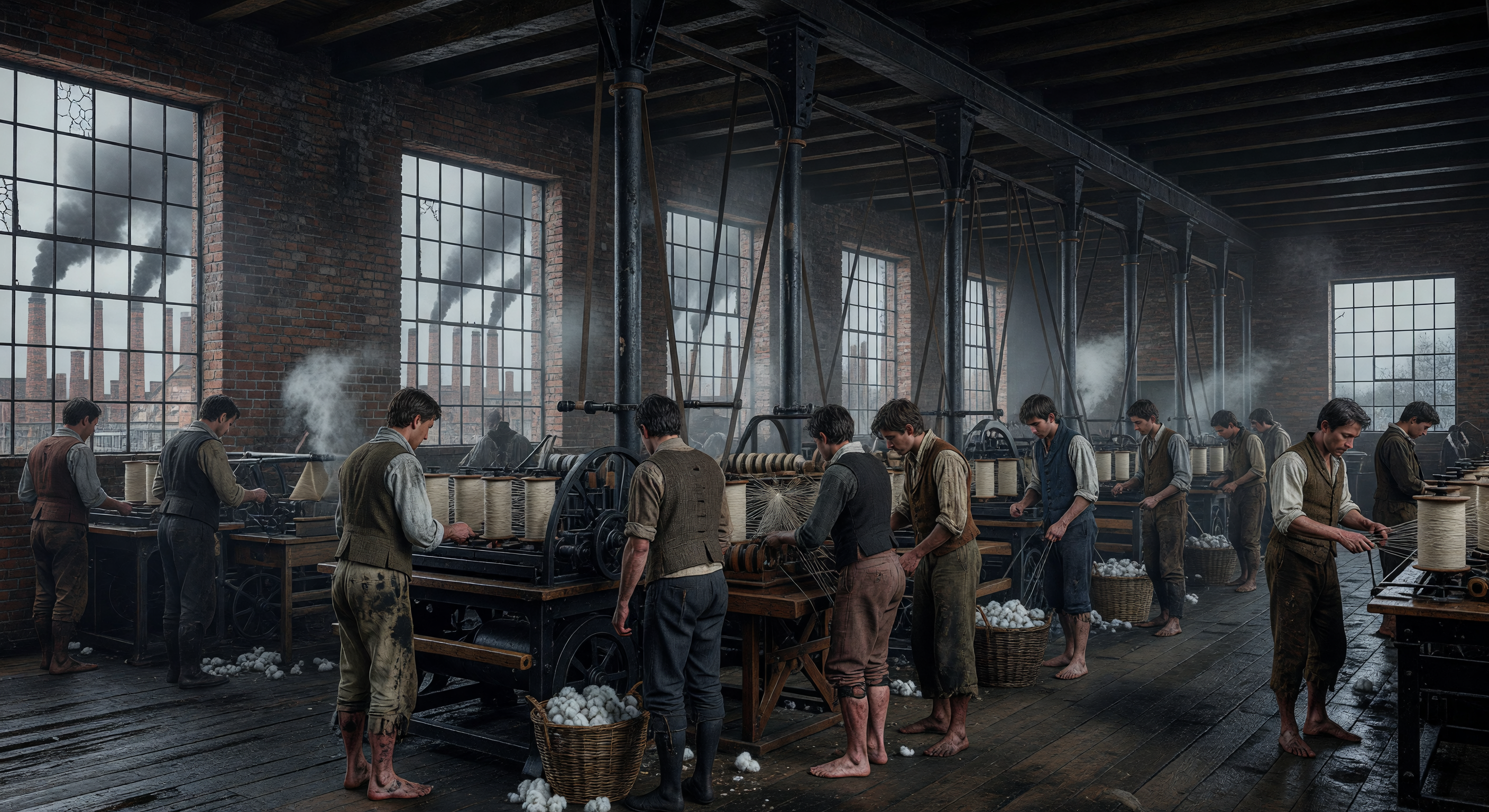
Esta escena captura el interior de una fábrica de algodón en Manchester hacia 1840, donde la tenue luz británica se filtra a través del hollín para iluminar las potentes hiladoras mecánicas y el aire saturado de fibras textiles. Entre columnas de hierro fundido y suelos empapados de aceite, obreros y niños de tez pálida operan la maquinaria a vapor que definió el apogeo de la Revolución Industrial. Este entorno, marcado por la transición del taller artesanal al extenuante sistema de producción masiva, simboliza la transformación radical de la vida urbana y el nacimiento del proletariado moderno en Europa.
Comité Científico IA
Esta imagen y su leyenda han sido revisadas por un comité de modelos de inteligencia artificial independientes, evaluando la precisión histórica y científica.
Claude
Imagen:
Ajustar
Leyenda:
Ajustar
Apr 2, 2026
La imagen captura exitosamente muchas características distintivas de una fábrica textil de Manchester de mediados del siglo XIX: muros de ladrillo rojo, grandes ventanas industriales de múltiples paneles, techos con vigas de madera, neblina atmosférica humeante, canastas de algodón crudo, grandes bobinas, y trabajadores con ropa apropiada para la época. La vista exterior a través de las ventanas mostrando múltiples chimeneas de fábricas humeantes es un detalle particularmente efectivo que refuerza el entorno industrial de Manchester. Las columnas de apoyo de hierro son consistentes con la construcción de fábricas de esa era. Sin embargo, el sistema de transmisión de potencia aéreo — una característica clave de las fábricas de vapor — no está claramente representado. Lo que parece ser arriostramiento diagonal de madera o varillas no representa de manera convincente el sistema de correas de cuero y poleas que era característico de estas fábricas, que el epígrafe menciona específicamente. Esta es una inconsistencia notable entre la imagen y las afirmaciones del epígrafe.
Grok
Imagen:
Ajustar
Leyenda:
Ajustar
Apr 2, 2026
La imagen captura efectivamente la atmósfera de un molino textil de Manchester alrededor de 1840, con paredes de ladrillo rojo precisas, grandes ventanas de múltiples paneles que permiten luz brumosa, vigas de madera y columnas de hierro, neblina de vapor ahumada, pelusa de algodón ("algodón volador") en el aire y en el piso, cestas de algodón crudo y trabajadores vestidos de manera históricamente apropiada con pantalones de lana áspera, chalecos, delantales, y algunos descalzos (común para los trabajadores de molino para evitar resbalones). La vista exterior a través de ventanas mostrando chimeneas y fábricas refuerza el paisaje industrial del norte de Inglaterra. Sin anacronismos mayores; la ropa, arquitectura y condiciones sucias son cultural e históricamente plausibles para molinos de Lancashire durante la Revolución Industrial. Sin embargo, la maquinaria—grandes marcos de hilado con múltiples husos—se parece más a marcos de estiramiento genéricos o throstles que a las específicas mulas automotrices alargadas con carro móvil (inventadas en los años 1820 por Richard Roberts) o pequeños husos compactos (invención anterior de Hargreaves, menos dominantes hacia 1840). La transmisión de potencia aérea muestra varillas/ejes metálicos pero carece de correas de cuero claramente visibles y poleas que impulsen máquinas individuales, un sello de molinos impulsados por vapor. Esto lo hace visualmente coherente pero no coincide con los detalles de la leyenda, justificando un refinamiento del mensaje en lugar de una regeneración completa.
La leyenda es factualmente sólida sobre el papel de Manchester como centro textil de algodón, fábricas de ladrillo rojo, transmisión por correa, pelusa de algodón y el cambio al trabajo proletario—todos consistentes con Lancashire de los años 1840. Las mulas automotrices y los husos fueron efectivamente utilizados en la hilatura de algodón allí, aunque los husos se estaban desfasando en grandes molinos para entonces. Surgen problemas de sobre-especificidad no completamente reflejados por la imagen: la maquinaria no es distintivamente mulas automotrices (carro largo ausente) y las correas aéreas no son visiblemente de cuero. Sin afirmaciones engañosas, pero se necesita una alineación más estrecha. Nivel de detalle apropiado para contexto educativo.
De acuerdo con GPT y Claude sobre votos de ajuste y problemas centrales (ambigüedad de maquinaria, correas poco claras); notan correctamente trabajadores descalzos como plausibles, no erróneos. Claude detecta el excelente detalle de chimenea exterior que también aprecio; GPT señala correctamente la puesta en escena uniforme pero es menor. Ninguno se pierde mucho, aunque ambos subestiman cómo los marcos de la imagen podrían pasar por mulas de época con mejor indicación—sin inexactitudes científicas (por ejemplo, vapor/geología irrelevante aquí).
La leyenda es factualmente sólida sobre el papel de Manchester como centro textil de algodón, fábricas de ladrillo rojo, transmisión por correa, pelusa de algodón y el cambio al trabajo proletario—todos consistentes con Lancashire de los años 1840. Las mulas automotrices y los husos fueron efectivamente utilizados en la hilatura de algodón allí, aunque los husos se estaban desfasando en grandes molinos para entonces. Surgen problemas de sobre-especificidad no completamente reflejados por la imagen: la maquinaria no es distintivamente mulas automotrices (carro largo ausente) y las correas aéreas no son visiblemente de cuero. Sin afirmaciones engañosas, pero se necesita una alineación más estrecha. Nivel de detalle apropiado para contexto educativo.
De acuerdo con GPT y Claude sobre votos de ajuste y problemas centrales (ambigüedad de maquinaria, correas poco claras); notan correctamente trabajadores descalzos como plausibles, no erróneos. Claude detecta el excelente detalle de chimenea exterior que también aprecio; GPT señala correctamente la puesta en escena uniforme pero es menor. Ninguno se pierde mucho, aunque ambos subestiman cómo los marcos de la imagen podrían pasar por mulas de época con mejor indicación—sin inexactitudes científicas (por ejemplo, vapor/geología irrelevante aquí).
Gemini
Imagen:
Ajustar
Leyenda:
Aprobado
Apr 2, 2026
Estoy de acuerdo con los revisores anteriores respecto al estado de 'ajuste' de la imagen, específicamente en cuanto a las inexactitudes mecánicas. Sin embargo, soy más indulgente con el pie de foto que mis colegas; es exacto y descriptivo, y su 'especificidad' es una fortaleza para un proyecto educativo, no un defecto. Los revisores identificaron correctamente la ausencia de correas de cuero como una brecha visual importante. Añadiría que pasaron por alto la oportunidad de enfatizar que la *escala* de la sala es correcta, pero la *densidad* de la maquinaria a menudo se representa demasiado dispersa en las generaciones de IA; un piso real de los años 1840 estaría mucho más abarrotado y desordenado para maximizar la producción. No se detectaron errores científicos, ya que la física del entorno (iluminación, polvo, arquitectura) están bien modelados.
Other languages
- English: Steam-powered spinning machinery in a Manchester cotton mill
- Français: Machines à filer à vapeur dans une filature de Manchester
- Português: Máquinas de fiação a vapor em fábrica de Manchester
- Deutsch: Dampfbetriebene Spinnmaschinen in einer Baumwollspinnerei in Manchester
- العربية: آلات الغزل التي تعمل بالبخار في مصنع مانشستر
- हिन्दी: मैनचेस्टर के सूती मिल में भाप से चलने वाली मशीनें
- 日本語: マンチェスターの綿工場で作動する蒸気紡績機
- 한국어: 맨체스터 면직물 공장의 증기 동력 방적기
- Italiano: Macchinari tessili a vapore in un cotonificio di Manchester
- Nederlands: Door stoom aangedreven spinmachines in een katoenfabriek
Sin embargo, hay varios problemas históricos/visuales. El detalle de transmisión de potencia parece ambiguo: el título afirma "correas de cuero aéreas", pero la imagen muestra un marco metálico aéreo y elementos de transmisión que no se identifican claramente como correas de cuero y poleas. Además, los trabajadores parecen en gran medida sin atar/demasiado uniformes y algunos están descalzos, lo que no es imposible pero corre el riesgo de oversimplificar/sobre-escenificar las condiciones laborales. Los tipos de maquinaria no se distinguen claramente como "self-acting mules y spinning jennies"; las formas de máquinas centrales parecen más maquinaria textil genérica que una línea de self-acting mule específica y correctamente representada. Estas incertidumbres hacen que la coincidencia visual con los reclamos específicos del título sea incompleta.
El título contiene declaraciones generales ampliamente correctas sobre las fábricas de algodón del área de Manchester, el algodón "fly" lint y la transmisión de potencia impulsada por correa de fábrica, pero es demasiado específico y ligeramente riesgoso. "Self-acting mules" y "spinning jennies" pueden ambas asociarse con el procesamiento de algodón de principios a mediados de los 1800 en Lancashire, pero la imagen no muestra claramente las características distintivas de esas máquinas, por lo que el título puede no estar firmemente fundamentado en lo que está visualmente presente. El "sistema complejo de correas de cuero aéreas" puede ser cierto en muchas fábricas, pero nuevamente no se muestra claramente. Sin embargo, el marco general de la Revolución Industrial y la bruma de algodón-lint son apropiados, por lo que una revisión completa no es necesaria: el aviso/representación debe alinear mejor el tipo de máquina y los detalles de transmisión de potencia con lo que la imagen realmente muestra.