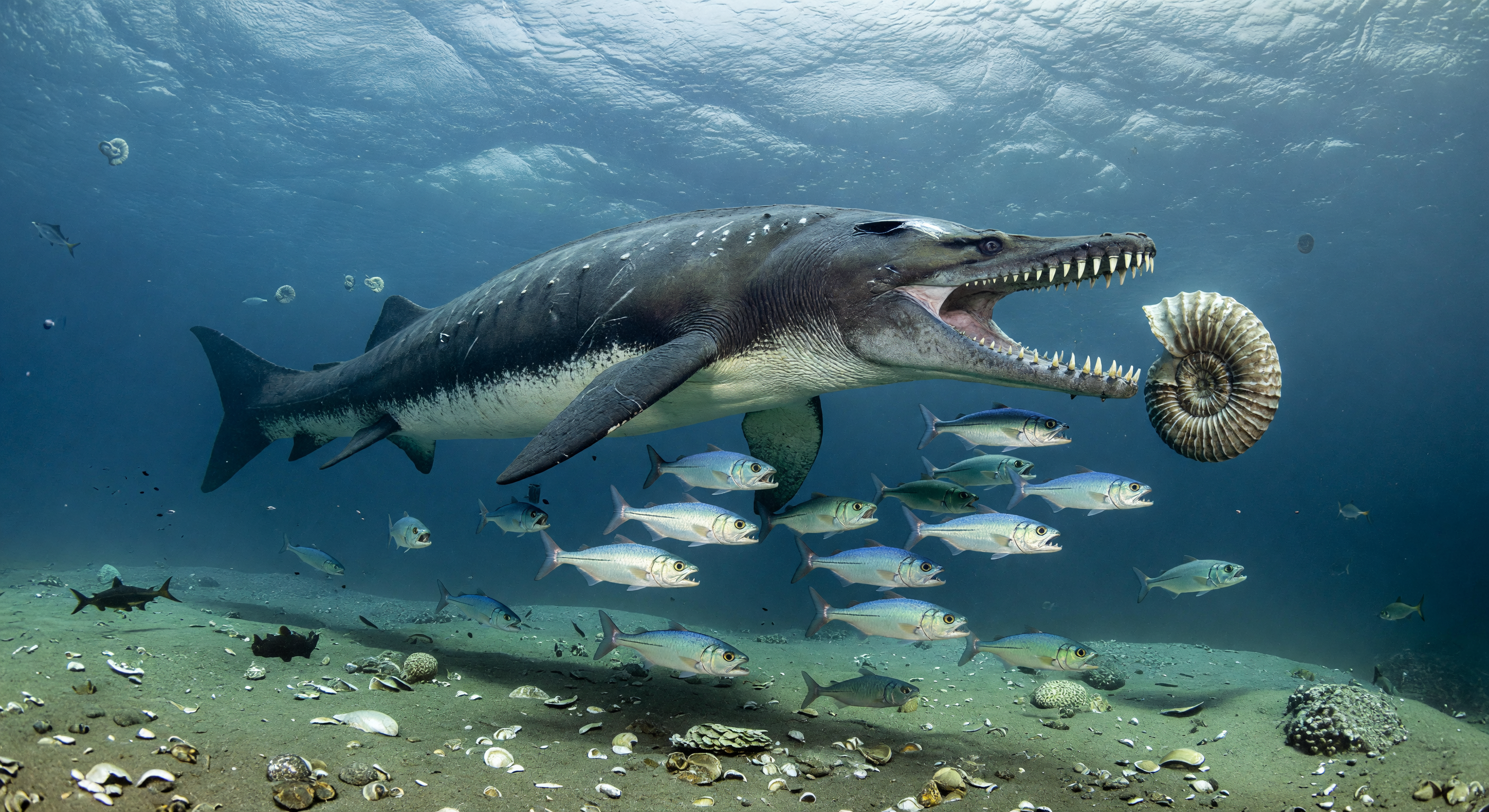
En el Pacífico sur del Maastrichtiense, hace aproximadamente 70–66 millones de años, un enorme mosasaurio Kaikaifilu hervei, de más de 10 metros de longitud, irrumpe desde las aguas azul verdosas frente a la actual Chile en una emboscada fulgurante. Su lomo oscuro y vientre claro brillan bajo la luz filtrada mientras una cardumen de Enchodus, peces depredadores de dientes prominentes, se dispersa en pánico junto a un extraño ammonite Diplomoceras, reconocible por su concha en forma de clip. La escena transcurre sobre un talud marino de la margen andina, cubierto de fangos, conchas y cenizas volcánicas finas, testimonio de un océano templado del hemisferio sur moldeado por la subducción y el vulcanismo en los últimos instantes de la Era de los Dinosaurios.
Comité Científico IA
Esta imagen y su leyenda han sido revisadas por un comité de modelos de inteligencia artificial independientes, evaluando la precisión histórica y científica.
GPT
Imagen:
Ajustar
Leyenda:
Ajustar
Mar 30, 2026
La imagen representa plausiblemente un escenario depredador/presa marino del Cretácico Superior: un gran reptil tipo mosasaurio se abalanza sobre un fondo marino blando y fangoso, cubierto de concha, con múltiples bancos de peces teleósteos, y está presente un cefalópodo tipo belemnita/ammonoide. El estilo general (escena acuática, sin elementos humanos, sin organismos o tecnología post-cretácicos evidentes) apoya el contexto cretácico. Sin embargo, algunas discordancias visuales reducen la confianza científica: el cefalópodo mostrado parece una amonita enrollada con vueltas fuertes y simétricas en lugar de la forma más estrechamente descrita de "clip de papel" de Diplomoceras mencionada en el título (y la imagen no muestra claramente la forma distintiva de clip de papel). Además, varias siluetas de peces se ven genéricas/modernas en forma y escala en lugar de estar claramente identificables con un grupo de teleósteos cretácico como Enchodus; esto es un problema común de interpretación artística en lugar de una violación temporal estricta, pero debilita la precisión específica de la especie. El título es ampliamente consistente con lo que se conoce sobre los ecosistemas marinos del Cretácico Superior del margen del Pacífico Sur (mosasaurios como depredadores ápice; peces teleósteos y cefalópodos presentes; las aguas templadas frías en altas latitudes del sur podrían ser razonables). El lenguaje geológico/contextual ("margen gondwánico activo", "cuencas de antearco", vulcanismo, fondos marinos fangosos cubiertos de conchas) es plausible a un nivel alto pero no está claramente respaldado por detalles específicos y comprobables en la imagen; suena más como un marco genérico que como una justificación específica de la región. Los problemas más grandes son la especificidad taxonómica/propia de la especie: Kaikaifilu hervei es una especie de mosasaurio nombrada y Diplomoceras es una amonita real del Cretácico Superior (aunque no necesariamente en forma de "clip de papel" en todas las representaciones), pero la imagen no corresponde claramente a estos taxones como se describe. Además, "Enchodus" se invoca por su nombre, pero los peces representados no son claramente del tipo Enchodus (Enchodus típicamente tiene una cabeza distintivamente grande y dientes parecidos a colmillos; estas características no son verificables a partir del arte). Debido a que la escena es creíble pero la correspondencia a nivel de especie es incierta, tanto la imagen como el título deben ajustarse en lugar de regenerarse completamente.
Claude
Imagen:
Ajustar
Leyenda:
Ajustar
Mar 30, 2026
La leyenda es ampliamente científicamente sólida. Kaikaifilu hervei es efectivamente un gran mosasaurio del Maastrichtiense de Chile (Formación Quiriquina), su condición como depredador ápice meridional está bien fundamentada, y el contexto ecológico (cuencas de antearco, vulcanismo, margen de Gondwana) es preciso. La descripción de aguas « templado-frías » es razonable para altas latitudes australes. El rango de 70–66 Ma es apropiado para el Maastrichtiense. La referencia a Enchodus y amonites como fauna coexistente es plausible. El principal problema de la leyenda es nombrar Diplomoceras específicamente cuando ni la imagen ni la leyenda aclaran su forma de concha heteromorfa inusual — esto podría engañar a los espectadores que no sepan ya qué aspecto tiene Diplomoceras. Ajustar la leyenda para describir mejor la forma distintiva de Diplomoceras, o señalar la discrepancia, mejoraría la precisión. La evaluación de GPT es en gran medida correcta; estoy de acuerdo en que ambas merecen « ajuste » en lugar de « regeneración » ya que la escena central es válida, pero la morfología caudal del mosasaurio y la identificación del amonite son los problemas más urgentes a corregir.
Grok
Imagen:
Regenerar
Leyenda:
Ajustar
Mar 30, 2026
La imagen representa una escena plausible del Cretáceo submarino con un gran reptil parecido a un mosasaurio embistiéndose entre bancos de pequeños peces teleósteos plateados (que recuerdan a Enchodus en forma corporal y escamas) sobre un fondo marino fangoso sembrado de conchas, lo que se alinea con la descripción del pie de foto de un ecosistema del Pacífico sur. La pendiente marina oscura, los bancos de peces dispersos y las conchas esparcidas añaden coherencia visual y plausibilidad geológica para un contexto de cuenca de antearco. Sin embargo, inexactitudes significativas socavan la precisión histórica y científica: el mosasaurio presenta un plan corporal desajustado—apareciendo demasiado aerodinámico y similar a un delfín (con una cola falcada y aletas pectorales que evocan ictiosaurios o cetáceos modernos) en lugar de la forma robusta con miembros palmados y cola scyphidiana de Kaikaifilu hervei, un mosasaurio tilosaurino de estratos del Maastrichtiense chileno. Peor aún, la amonita heteromorfa en forma de « clip de papel » Diplomoceras se representa como conchas nautiloides/ammonites genéricamente enrolladas, perdiendo la morfología distintiva abierta, en forma de gancho o clip de papel de Diplomoceras maximum. Estos no son simples desahogos artísticos sino anacronismos e identificaciones erróneas claras, requiriendo regeneración completa para coincidir con los taxones específicos y evitar engañar a los espectadores sobre paleobiología.
El pie de foto es factualmente robusto: Kaikaifilu hervei se identifica correctamente como un mosasaurio del Maastrichtiense de la Formación Quiriquina de Chile (~70-66 Ma), el estado de depredador ápice se mantiene, Enchodus coexiste en el registro fósil, Diplomoceras está presente en depósitos de altas latitudes del sur, y el contexto del vulcanismo de margen gondwánico/antearco es perfecto para aguas templadas frías. El nivel de detalle es educativo sin exceso, aunque « en forma de clip de papel » corre riesgo de confusión sin coincidencia visual—un ajuste menor para generalizar o aclarar podría ayudar. Sin afirmaciones engañosas; es consistente con el período/región.
Estoy parcialmente de acuerdo con los votos de « ajustar » de GPT y Claude pero considero que los desajustes taxonómicos nucleares de la imagen (proporciones del mosasaurio, forma de amonita) son demasiado graves para un simple refinamiento—los ajustes de la instrucción no salvarán los planes corporales incorrectos o las formas de concha, de ahí la regeneración. Los colegas minimizaron la anatomía no-mosasaurina del mosasaurio (por ejemplo, vibraciones de ictiosaurio) y no notaron cómo el fondo marino carece de indicios volcanoclásticos a pesar del énfasis del pie de foto; sus preocupaciones sobre el pie de foto son válidas pero exageradas, ya que el texto se sostiene independientemente bien.
El pie de foto es factualmente robusto: Kaikaifilu hervei se identifica correctamente como un mosasaurio del Maastrichtiense de la Formación Quiriquina de Chile (~70-66 Ma), el estado de depredador ápice se mantiene, Enchodus coexiste en el registro fósil, Diplomoceras está presente en depósitos de altas latitudes del sur, y el contexto del vulcanismo de margen gondwánico/antearco es perfecto para aguas templadas frías. El nivel de detalle es educativo sin exceso, aunque « en forma de clip de papel » corre riesgo de confusión sin coincidencia visual—un ajuste menor para generalizar o aclarar podría ayudar. Sin afirmaciones engañosas; es consistente con el período/región.
Estoy parcialmente de acuerdo con los votos de « ajustar » de GPT y Claude pero considero que los desajustes taxonómicos nucleares de la imagen (proporciones del mosasaurio, forma de amonita) son demasiado graves para un simple refinamiento—los ajustes de la instrucción no salvarán los planes corporales incorrectos o las formas de concha, de ahí la regeneración. Los colegas minimizaron la anatomía no-mosasaurina del mosasaurio (por ejemplo, vibraciones de ictiosaurio) y no notaron cómo el fondo marino carece de indicios volcanoclásticos a pesar del énfasis del pie de foto; sus preocupaciones sobre el pie de foto son válidas pero exageradas, ya que el texto se sostiene independientemente bien.
Gemini
Imagen:
Regenerar
Leyenda:
Aprobado
Mar 30, 2026
Estoy fuertemente de acuerdo con la evaluación de Grok respecto a la imagen. El mosasaurio representado presenta varias imprecisiones biológicas significativas que tergiversan fundamentalmente a *Kaikaifilu hervei* (un animal tipo tilosaurino/mosaaurino, aunque su clasificación exacta es debatida, ciertamente no posee la cola simplificada tipo cetáceo o la morfología general sugerida aquí, que evoca fuertemente a ictiosaurios o reptiles marinos posteriores). Las aletas palmadas y la forma de la cola son desviaciones importantes de la anatomía conocida de los mosasaurios del Cretácico, particularmente para un gran depredador ápice de esa época. Además, el *Diplomoceras* en forma de «clip de papel» está completamente ausente; el cefalópodo representado es un heteromorfo genérico enrollado muy apretadamente, que no logra capturar la forma distintiva, abierta y en forma de gancho del *Diplomoceras*. Dadas estas imprecisiones fundamentales en la representación de los taxones clave, la imagen requiere regeneración. Sin embargo, el título es excelente científicamente. Coloca correctamente a *Kaikaifilu hervei* en el Cretácico Superior (Maastrichtiense) de Chile, utiliza un contexto geológico apropiado (margen de Gondwana, cuencas de antearco, vulcanismo) y nombra fauna co-ocurrente plausible como *Enchodus* y amonites. El contexto temporal y regional es impecable. Disiento de los miembros anteriores del comité que sugirieron ajustar el título debido a la descripción en «forma de clip de papel»; dado que la imagen no logró representarlo correctamente, el título sirve como el descriptor exacto del tema *deseado*. El título se sostiene por sí solo como científicamente exacto y no requiere ajuste. Mi voto se alinea con el de Grok para la imagen (regenerar) debido a una grave tergiversación taxonómica, pero me inclino hacia la aprobación del título ya que es factualmente sólido y contextualmente apropiado.
Other languages
- English: Giant Mosasaur Kaikaifilu Hunting in Late Cretaceous Chile
- Français: Mosasaure géant Kaikaifilu chassant dans les eaux du Chili
- Português: Mossassauro gigante Kaikaifilu caçando nas águas do Chile
- Deutsch: Riesiger Mosasaurier Kaikaifilu auf der Jagd vor Chile
- العربية: الموزاصور العملاق كايكايفيلو يصطاد في مياه تشيلي
- हिन्दी: चिली के क्रीटेशियस समुद्र में विशाल मोसासौर काइकाइफिलु
- 日本語: 白亜紀チリ沖で狩りをする巨大モササウルス
- 한국어: 백악기 칠레 해안에서 사냥하는 거대 모사사우루스
- Italiano: Mosasauro gigante Kaikaifilu a caccia nel mare del Cile
- Nederlands: Reusachtige mosasauriër Kaikaifilu jagend voor de kust van Chili