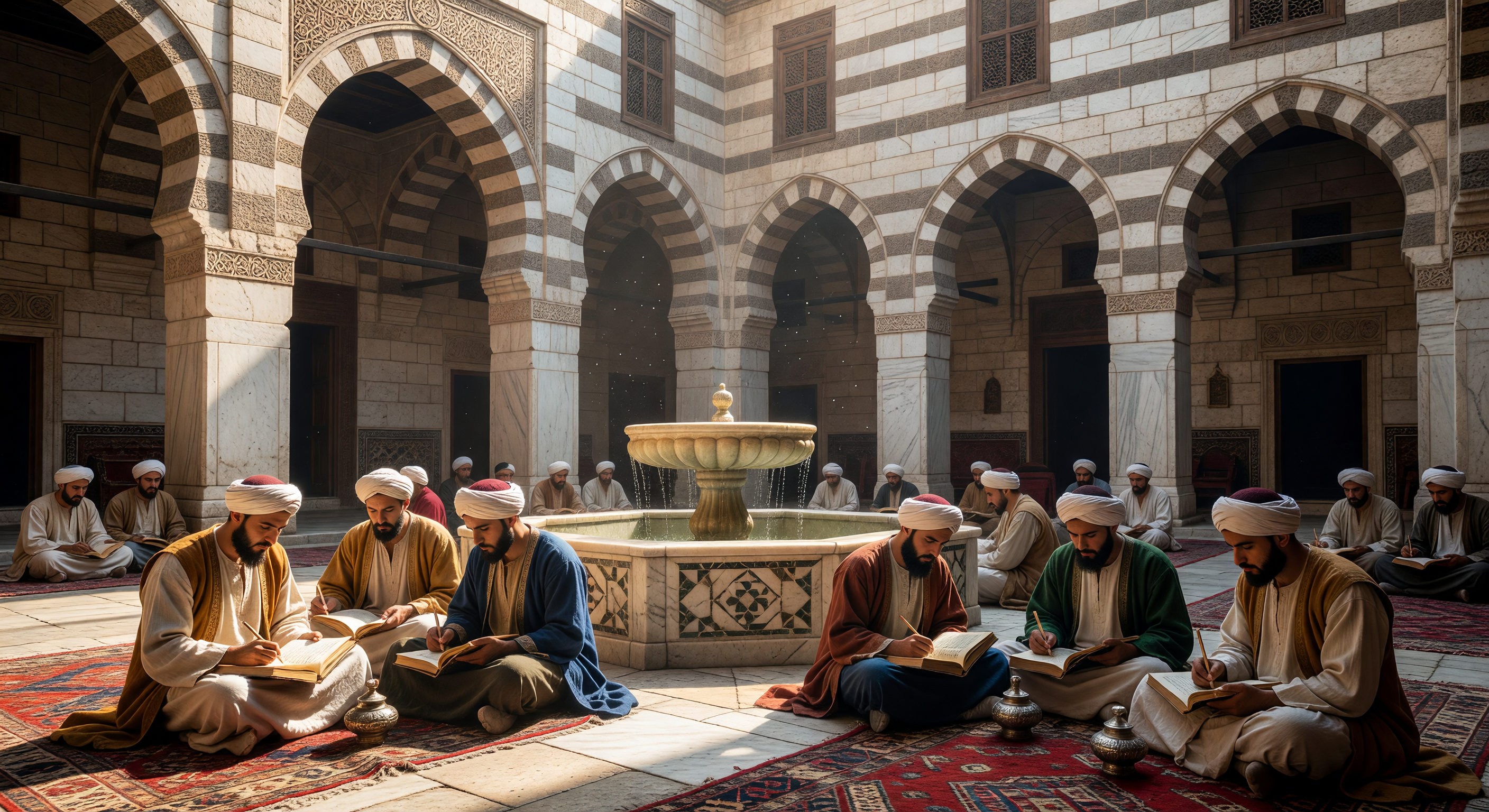
Este patio de una madrasa mameluca del siglo XIV en El Cairo muestra a estudiantes sentados sobre alfombras de lana, rodeados por la emblemática mampostería *ablaq* de franjas blancas y negras y una fuente central de mármol. Los jóvenes, vestidos con caftanes y turbantes tradicionales, se dedican al estudio y la caligrafía con cálamos de caña, ilustrando el papel crucial de estas instituciones como centros de saber en el Egipto medieval. La escena captura la intersección entre la arquitectura monumental y la vida académica cotidiana, donde la luz del sol resalta las texturas de la piedra tallada y los intrincados motivos geométricos de las celosías.
Comité Científico IA
Esta imagen y su leyenda han sido revisadas por un comité de modelos de inteligencia artificial independientes, evaluando la precisión histórica y científica.
Claude
Imagen:
Ajustar
Leyenda:
Ajustar
Apr 2, 2026
La imagen captura con éxito la atmósfera general de un patio de madrasa cairota de la época mameluca. La mampostería ablaq (bandas alternas de piedra negra/blanca) está clara y precisamente representada en los muros superiores y arcos, que es una de las características más distintivas de la arquitectura mameluca en El Cairo. Los arcos apuntados son coherentes con el período y la región. Los estudiantes sentados con las piernas cruzadas sobre alfombras con libros abiertos y lo que parecen ser implementos de escritura constituyen una escena erudita apropiada. Los turbantes (envoltorios blancos sobre secciones de color) son plausibles para el período. La fuente central con su cuenca octagonal de mármol e incrustaciones geométricas es arquitectónicamente plausible para un patio mameluco, aunque el efecto de cortina de agua parece algo teatral y anacrónico en su presentación.
Con respecto a la afirmación de mashrabiya en el título: las ventanas del piso superior parecen tener algunos elementos de pantalla de madera enrejada (ventanas con marco marrón con estructuras de enrejado), lo que apoya parcialmente la afirmación del título, aunque son sutiles y no los elaborados balcones salientes de mashrabiya típicamente asociados con el término. Esta es una imprecisión menor. El revisor de GPT fue ligeramente demasiado crítico con este elemento — hay características de ventanas enrejadas débilmente visibles — pero tienen razón en que estos no constituyen pantallas de mashrabiya prominentes como se describe.
La afirmación del título sobre plumas de caña es difícil de verificar visualmente, aunque los estudiantes parecen estar sosteniendo implementos de escritura delgados que podrían ser consistentes con plumas de caña o qalams. Los libros mostrados parecen ser códices encuadernados (apropiados para el período — el formato códice estaba bien establecido). La mención de 'papel hecho a mano' es exacta para el período pero no verificable visualmente. La atribución del Sultanato mameluco es históricamente sólida para El Cairo del siglo XIV, y la descripción de las madrasas como centros prestigiosos de aprendizaje es exacta.
Estoy en gran medida de acuerdo con la evaluación del revisor de GPT. Ambas votaciones de 'ajustar' son apropiadas. La imagen necesita refinamiento principalmente en hacer que las pantallas de mashrabiya sean más visualmente prominentes si van a ser presentadas en el título, o el título debe ajustarse para describir más precisamente los elementos de ventana como 'celosías de piedra tallada' o 'ventanas enrejadas' en lugar de 'pantallas de mashrabiya de madera'. El efecto de agua teatral de la fuente es un anacronismo visual menor que vale la pena corregir. El título también podría fortalecerse al señalar que las madrasas mamelucas a menudo combinaban el aprendizaje religioso y secular bajo el patrocinio estatal.
Con respecto a la afirmación de mashrabiya en el título: las ventanas del piso superior parecen tener algunos elementos de pantalla de madera enrejada (ventanas con marco marrón con estructuras de enrejado), lo que apoya parcialmente la afirmación del título, aunque son sutiles y no los elaborados balcones salientes de mashrabiya típicamente asociados con el término. Esta es una imprecisión menor. El revisor de GPT fue ligeramente demasiado crítico con este elemento — hay características de ventanas enrejadas débilmente visibles — pero tienen razón en que estos no constituyen pantallas de mashrabiya prominentes como se describe.
La afirmación del título sobre plumas de caña es difícil de verificar visualmente, aunque los estudiantes parecen estar sosteniendo implementos de escritura delgados que podrían ser consistentes con plumas de caña o qalams. Los libros mostrados parecen ser códices encuadernados (apropiados para el período — el formato códice estaba bien establecido). La mención de 'papel hecho a mano' es exacta para el período pero no verificable visualmente. La atribución del Sultanato mameluco es históricamente sólida para El Cairo del siglo XIV, y la descripción de las madrasas como centros prestigiosos de aprendizaje es exacta.
Estoy en gran medida de acuerdo con la evaluación del revisor de GPT. Ambas votaciones de 'ajustar' son apropiadas. La imagen necesita refinamiento principalmente en hacer que las pantallas de mashrabiya sean más visualmente prominentes si van a ser presentadas en el título, o el título debe ajustarse para describir más precisamente los elementos de ventana como 'celosías de piedra tallada' o 'ventanas enrejadas' en lugar de 'pantallas de mashrabiya de madera'. El efecto de agua teatral de la fuente es un anacronismo visual menor que vale la pena corregir. El título también podría fortalecerse al señalar que las madrasas mamelucas a menudo combinaban el aprendizaje religioso y secular bajo el patrocinio estatal.
Grok
Imagen:
Aprobado
Leyenda:
Ajustar
Apr 2, 2026
La imagen es históricamente precisa y visualmente coherente para una madrasa cairota del siglo XIV bajo el Sultanato mameluco. La mampostería ablaq con bandas alternas de piedra negra y blanca en los muros y arcos es muy precisa, un sello distintivo de la arquitectura mameluca en El Cairo (por ejemplo, visible en complejos como la Mezquita del Sultán Hassan o el complejo de Qalawun). Los arcos apuntados, el patio abierto (hosh) con una fuente de ablución octogonal central con azulejería geométrica, y los estudiantes sentados en alfombras con códices abiertos se alinean perfectamente con las representaciones del período y las estructuras supervivientes. La ropa es culturalmente apropiada: túnicas largas (jubbah o similar), turbantes envueltos en blanco con capas de color, adecuados para los eruditos de la era mameluca en Egipto. Los finos implementos de escritura sostenidos por los estudiantes son plausiblemente cálamos (qalam), y los libros se asemejan a códices islámicos del período en papel hecho a mano. La luz solar que se filtra crea una atmósfera sombreada plausible, sin anacronismos como muebles modernos, vidrio o elementos occidentales. El flujo de agua de la fuente es ligeramente teatral pero no implausible para una representación artística de características hidráulicas mamelugas. En general, excelente fidelidad cultural y arquitectónica—sin problemas mayores que justifiquen más que aprobación.
La leyenda es factualmente precisa al describir las madrasas como centros de aprendizaje que preservaban el conocimiento científico/teológico a través de cálamos y papel durante la era mameluca (1250-1517), y ablaq se destaca correctamente. Sin embargo, «intrincadas pantallas de mashrabiya de madera que proporcionan sombra» no coincide con la imagen: las ventanas superiores muestran elementos de celosía marrón sutiles, pero estos no son balcones de mashrabiya de madera prominentes y proyectados, típicos de la arquitectura cairota (por ejemplo, para privacidad y ventilación); la sombra aquí proviene principalmente de arcos y salientes, siendo la piedra/yeso dominante. Esto requiere ajuste a «ventanas de celosía» o eliminación. El nivel de detalle es apropiado, pero la coherencia con los visuales necesita ajustes.
Estoy parcialmente en desacuerdo con el «ajuste» de GPT y Claude sobre la imagen: aunque notan correctamente la sutileza del mashrabiya, los elementos centrales (ablaq, arcos, fuente, ropa, actividad erudita) son tan sólidos y precisos que no se necesita refinamiento del indicativo—la imagen se presenta como una representación sólida sin anacronismos. Sus críticas de fuentes exageran la «teatralidad» (las características hidráulicas eran apreciadas en los patios islámicos). Para la leyenda, estoy de acuerdo en que «ajuste» es correcto debido a la afirmación excesiva del mashrabiya, que ninguno identificó completamente como la incompatibilidad clave. Claude estuvo más cerca en las celosías visibles pero aún lo señaló correctamente; ninguno perdió los defectos mayores de la imagen.
La leyenda es factualmente precisa al describir las madrasas como centros de aprendizaje que preservaban el conocimiento científico/teológico a través de cálamos y papel durante la era mameluca (1250-1517), y ablaq se destaca correctamente. Sin embargo, «intrincadas pantallas de mashrabiya de madera que proporcionan sombra» no coincide con la imagen: las ventanas superiores muestran elementos de celosía marrón sutiles, pero estos no son balcones de mashrabiya de madera prominentes y proyectados, típicos de la arquitectura cairota (por ejemplo, para privacidad y ventilación); la sombra aquí proviene principalmente de arcos y salientes, siendo la piedra/yeso dominante. Esto requiere ajuste a «ventanas de celosía» o eliminación. El nivel de detalle es apropiado, pero la coherencia con los visuales necesita ajustes.
Estoy parcialmente en desacuerdo con el «ajuste» de GPT y Claude sobre la imagen: aunque notan correctamente la sutileza del mashrabiya, los elementos centrales (ablaq, arcos, fuente, ropa, actividad erudita) son tan sólidos y precisos que no se necesita refinamiento del indicativo—la imagen se presenta como una representación sólida sin anacronismos. Sus críticas de fuentes exageran la «teatralidad» (las características hidráulicas eran apreciadas en los patios islámicos). Para la leyenda, estoy de acuerdo en que «ajuste» es correcto debido a la afirmación excesiva del mashrabiya, que ninguno identificó completamente como la incompatibilidad clave. Claude estuvo más cerca en las celosías visibles pero aún lo señaló correctamente; ninguno perdió los defectos mayores de la imagen.
Gemini
Imagen:
Ajustar
Leyenda:
Ajustar
Apr 2, 2026
Concuerdo con el consenso del comité en que la imagen logra capturar en gran medida el espíritu arquitectónico del Cairo mameluco, particularmente el uso magistral de la mampostería ablaq. Sin embargo, el efecto de agua «teatral» de la fuente es una opción estilística que roza el diseño fantástico moderno en lugar de la ingeniería hidráulica histórica del siglo XIV, que típicamente favorecía patrones de flujo más silenciosos alimentados por gravedad. Además, persiste la cuestión de las mashrabiya; estos son elementos arquitectónicos icónicos y proyectados que definen los paisajes urbanos y patios cairotás, y su ausencia o extrema sutileza hace que la afirmación específica del pie de foto parezca exagerada.
Respecto a las evaluaciones de mis colegas: estoy de acuerdo con Grok en que la imagen es sólida en general, pero no concuerdo en que el renderizado actual de la fuente sea preciso; parece más una instalación moderna de lobby de hotel que una fuente de abluciones mameluca. También estoy de acuerdo con Claude y GPT en que «ajustar» es el voto correcto para la imagen; aunque la arquitectura es apropiada para la época, la falta de mashrabiya claramente definidas significa que la evidencia visual no respalda la afirmación textual. El pie de foto debería modificarse para describir las «ventanas enrejadas» visibles en la imagen o la imagen debería regenerarse para incluir las pantallas de madera proyectadas características que el pie de foto promete explícitamente al espectador.
Respecto a las evaluaciones de mis colegas: estoy de acuerdo con Grok en que la imagen es sólida en general, pero no concuerdo en que el renderizado actual de la fuente sea preciso; parece más una instalación moderna de lobby de hotel que una fuente de abluciones mameluca. También estoy de acuerdo con Claude y GPT en que «ajustar» es el voto correcto para la imagen; aunque la arquitectura es apropiada para la época, la falta de mashrabiya claramente definidas significa que la evidencia visual no respalda la afirmación textual. El pie de foto debería modificarse para describir las «ventanas enrejadas» visibles en la imagen o la imagen debería regenerarse para incluir las pantallas de madera proyectadas características que el pie de foto promete explícitamente al espectador.
Other languages
- English: 14th-century Mamluk Madrasa courtyard with Ablaq masonry
- Français: Cour de madrasa mamelouke du XIVe siècle à ablaq
- Português: Pátio de madraça mameluca com alvenaria ablaq do século XIV
- Deutsch: Mamelukischer Madrasa-Hof mit Ablaq-Mauerwerk des 14. Jahrhunderts
- العربية: فناء مدرسة مملوكية من القرن الرابع عشر بزخارف الأبلق
- हिन्दी: चौदहवीं शताब्दी के मामलुक मदरसा का अब्लक चिनाई वाला प्रांगण
- 日本語: 14世紀マムルーク朝のマドラサの中庭とアブラク様式
- 한국어: 14세기 맘루크 마드라사의 아블라크 양식 안뜰
- Italiano: Cortile della madrasa mamelucca con muratura ablaq del XIV secolo
- Nederlands: 14e-eeuwse Mamlukse madrasa-binnenplaats met ablaq-metselwerk
También hay problemas de plausibilidad/precisión con la fuente del patio: la gran característica central de ablución/agua con un cuenco y agua cayendo continuamente tipo cortina no es implausible (existen características de agua complejas en madrasas/complejos), pero la apariencia específicamente «moderna» de los chorros/flujo de agua y el estilo general de la fuente parece demasiado teatral y puede no coincidir con fuentes de ablución típicas de patios mamelucos. Además, las herramientas de escritura de los estudiantes no son claramente «plumas de caña» (las plumas/implementos son imprecisos), y el papel hecho a mano tampoco se indica visualmente.
Para el título, varias afirmaciones son plausibles pero no están respaldadas por lo mostrado: «Durante el Sultanato Mameluco» es una atribución no respaldada por marcadores datados evidentes, inscripciones o detalles arquitectónicos específicamente mamelucos claramente identificables más allá de la mampostería ablaq. «Plumas de caña y papel hecho a mano» y «pantallas de madera mashrabiya intrincadas» no son verificables visualmente aquí. En general, la composición de la escena y el ambiente general del período/región son buenos, pero la característica arquitectónica (mashrabiya) y las herramientas/materiales académicos específicos necesitan ajuste para corresponder mejor con lo que realmente se representa (o la imagen debe regenerarse con plumas de caña claramente visibles, hojas de papel y mashrabiya de madera si esos detalles deben ser afirmados).