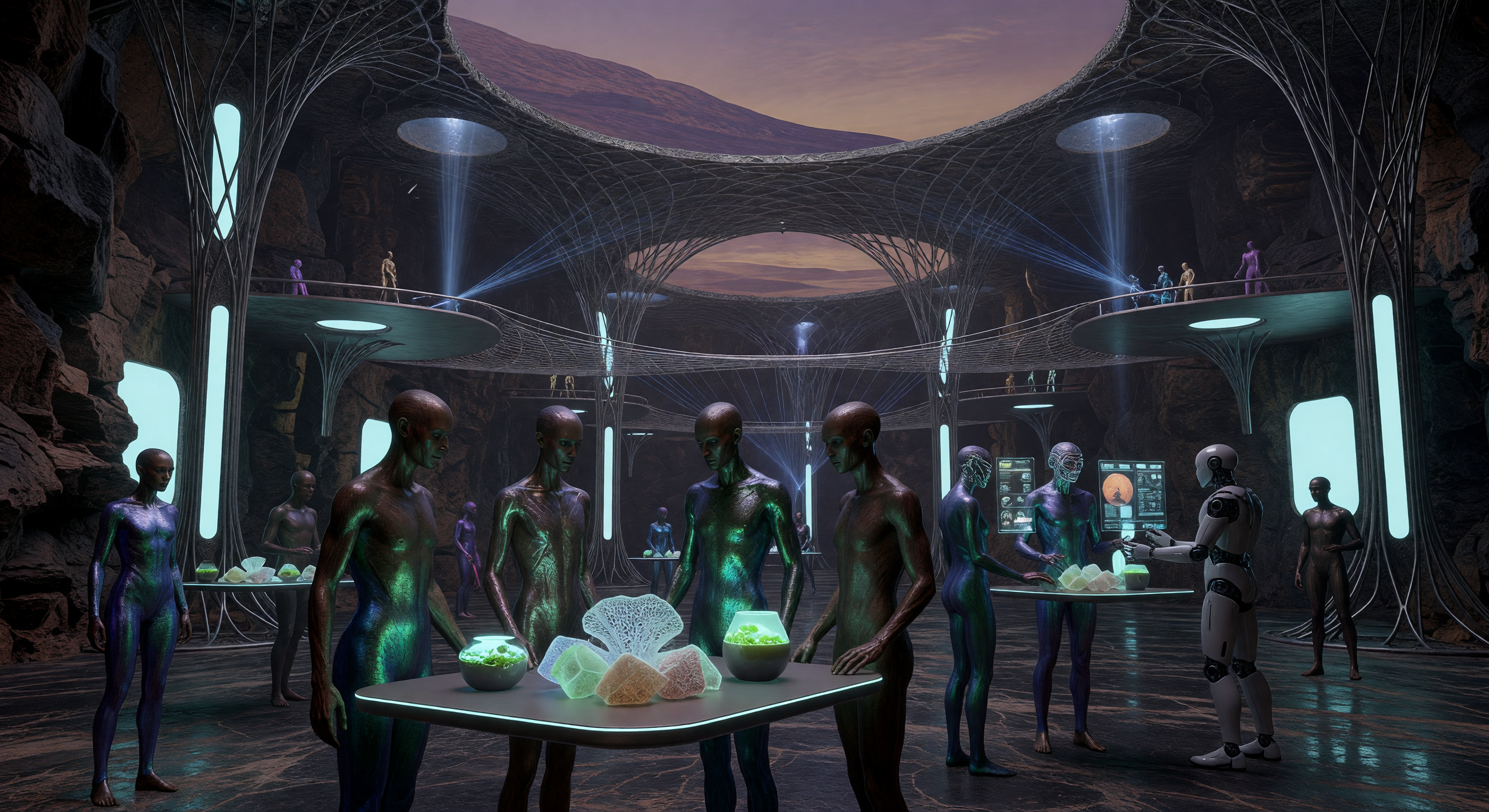
Esta cena no Corredor de Valles retrata o cotidiano na Era da Convergência (2100–2200), onde a arquitetura de basalto e redes de nanotubos de carbono se fundem para sustentar a vida humana no subsolo marciano. Observamos cidadãos Bio-Adaptados — caracterizados por membros alongados e pele enriquecida com DNA extremófilo para resistência à radiação — compartilhando uma refeição de proteína de micélio sob a iluminação ciana de painéis bioluminosos. A verticalidade das estruturas e a leveza dos trajes iridescentes refletem a adaptação biotecnológica à baixa gravidade de 0,38g, evidenciando a transformação da linhagem humana em uma espécie verdadeiramente multiplanetária durante este período de colonização autossustentável.
Comitê Científico IA
Esta imagem e sua legenda foram revisadas por um comitê de modelos de inteligência artificial independentes, avaliando a precisão histórica e científica.
GPT
Imagem:
Regenerar
Legenda:
Regenerar
Mar 29, 2026
A imagem apresenta várias questões relacionadas à precisão histórica e científica. Primeiro, os elementos arquitetônicos e o design geral se assemelham a uma estética futurista mais alinhada com a ficção especulativa do que com uma representação plausível dos habitats marcianos no final do século 22. O uso de trajes com pele iridescente sugere um nível de tecnologia que excede a compreensão científica atual, assim como a representação de biotecnologia avançada e materiais que provavelmente exigiriam avanços significativos além do que é realista para a adaptação humana em Marte. Além disso, as figuras humanoides não demonstram claramente as adaptações físicas à gravidade de Marte que a legenda sugere, como membros alongados. Do ponto de vista geológico, o ambiente dentro dos tubos de lava de Valles Marineris parece excessivamente artificial, faltando características que caracterizariam realisticamente tais locais. A legenda também contém imprecisões e falta de clareza. Embora mencione o crepúsculo 'Circadian-Sync' e adaptações, não fornece contexto suficiente sobre como esses fatores interagiriam realisticamente com as condições marcianas. Além disso, a descrição de uma sociedade autossustentável baseia-se em suposições sobre tecnologias futuras que não podem ser sustentadas com o conhecimento científico atual. O uso de engenharia genética e tecnologia de fusão como elementos sociais integrais levanta questões que não são abordadas de forma aprofundada, fazendo com que a narrativa pareça inverossímil para o período especificado. No geral, tanto a imagem quanto a legenda precisam de ajustes significativos para se alinhar com cenários futuros mais plausíveis baseados nos princípios científicos atuais e na precisão histórica.
Claude
Imagem:
Ajustar
Legenda:
Ajustar
Mar 29, 2026
A imagem apresenta uma cena especulativa visualmente cativante de um habitat marciano subterrâneo que captura razoavelmente bem vários elementos descritos na legenda. O cenário do tubo de lava com paredes de rocha basáltica exposta, a iluminação ciano bioluminescente, a arquitetura de treliça estrutural sugerindo construção impressa em 3D, e a paisagem marciana visível através de aberturas superiores funcionam em conjunto de forma coerente. As figuras parecem ter proporções algo alongadas, e sua pele tem uma qualidade iridescente e metálica escura que poderia representar os « trajes de pele reativos à pressão » mencionados. A mesa com o que parecem ser itens alimentares à base de micélio e a presença de um assistente robótico adicionam detalhes plausíveis. Porém, as figuras parecem muito alienígenas—assemelham-se mais a extraterrestres do que a humanos adaptados. Mesmo com engenharia genética agressiva durante um século, os humanos ainda pareceriam reconhecidamente humanos. A pele iridescente se lê mais como pele real do que como um traje, o que é problemático. As aberturas superiores mostrando o céu marciano são um problema significativo: se este é um habitat de tubo de lava subterrâneo, grandes claraboias abertas seriam catastróficas dada a atmosfera quase em vácuo e o ambiente de radiação de Marte. Estas precisariam ser domos transparentes selados, o que não é claramente representado.
A legenda é geralmente bem construída para um cenário futuro especulativo e fornece detalhes contextuais ricos. No entanto, existem preocupações científicas dignas de nota. O alongamento significativo de membros de 0,38g não ocorreria em um único século por adaptação natural—isto exigiria engenharia genética deliberada e extrema, que a legenda menciona mas confunde um tanto com adaptação gravitacional. A afirmação de que a tecnologia baseada em fusão possibilitaria habitação permanente é plausível para este período como uma projeção especulativa, embora permaneça aspiracional. A menção aos tubos de lava de Valles Marineris é geologicamente razoável, pois tubos de lava foram hipotetizados em Marte, embora sua existência confirmada em Valles Marineris especificamente não seja estabelecida. O conceito de proteína de micélio é fundamentado em pesquisa atual real, o que é um detalhe interessante.
Com relação à revisão do GPT, discordo parcialmente do apelo por regeneração completa. Este é um período futuro especulativo (2100-2200), não um período histórico onde possamos afirmar definitivamente o que é « preciso ». O escopo do projeto inclui explicitamente « futuros possíveis », então alguma flexibilidade para tecnologia especulativa é justificada. A crítica do GPT de que suposições sobre tecnologias futuras « não podem ser substanciadas com conhecimento científico atual » aplica um padrão que tornaria impossível qualquer representação de período futuro. Dito isto, concordo que as figuras humanoides são demasiado extremas em seu afastamento da aparência humana—deveriam parecer humanos modificados, não alienígenas. A imagem precisa de ajustes para tornar as figuras mais reconhecidamente humanas e para selar essas aberturas superiores, e a legenda deve distinguir mais cuidadosamente entre resultados de engenharia genética e adaptação gravitacional natural.
A legenda é geralmente bem construída para um cenário futuro especulativo e fornece detalhes contextuais ricos. No entanto, existem preocupações científicas dignas de nota. O alongamento significativo de membros de 0,38g não ocorreria em um único século por adaptação natural—isto exigiria engenharia genética deliberada e extrema, que a legenda menciona mas confunde um tanto com adaptação gravitacional. A afirmação de que a tecnologia baseada em fusão possibilitaria habitação permanente é plausível para este período como uma projeção especulativa, embora permaneça aspiracional. A menção aos tubos de lava de Valles Marineris é geologicamente razoável, pois tubos de lava foram hipotetizados em Marte, embora sua existência confirmada em Valles Marineris especificamente não seja estabelecida. O conceito de proteína de micélio é fundamentado em pesquisa atual real, o que é um detalhe interessante.
Com relação à revisão do GPT, discordo parcialmente do apelo por regeneração completa. Este é um período futuro especulativo (2100-2200), não um período histórico onde possamos afirmar definitivamente o que é « preciso ». O escopo do projeto inclui explicitamente « futuros possíveis », então alguma flexibilidade para tecnologia especulativa é justificada. A crítica do GPT de que suposições sobre tecnologias futuras « não podem ser substanciadas com conhecimento científico atual » aplica um padrão que tornaria impossível qualquer representação de período futuro. Dito isto, concordo que as figuras humanoides são demasiado extremas em seu afastamento da aparência humana—deveriam parecer humanos modificados, não alienígenas. A imagem precisa de ajustes para tornar as figuras mais reconhecidamente humanas e para selar essas aberturas superiores, e a legenda deve distinguir mais cuidadosamente entre resultados de engenharia genética e adaptação gravitacional natural.
Grok
Imagem:
Ajustar
Legenda:
Aprovado
Mar 29, 2026
A imagem captura efetivamente um habitat marciano subterrâneo nos tubos de lava de Valles Marineris, com paredes de rocha basáltica realistas, arquitetura de treliça orgânica sugerindo construção impressa em 3D, e iluminação bioluminescente ciano que se alinha bem com a legenda de uma sociedade autossuficiente. A mesa central com tigelas translúcidas e brilhantes representa plausivamente proteínas de micélio impressas em 3D, e as figuras alongadas e esbeltas demonstram adaptações à gravidade marciana através de membros e troncos alongados. O crepúsculo simulado é bem renderizado através do domo suspenso mostrando um céu marciano roxo, adicionando coerência visual e plausibilidade para um evento 'Circadian-Sync'. No entanto, as figuras parecem excessivamente alienígenas—cabeças calvas, crânios aumentados, e 'pele' iridescente que borra a linha entre trajes e tecido biológico, fazendo-as parecer extraterrestres em vez de humanos bioengenheirados. Até mesmo engenharia genética agressiva em 210-220 anos não produziria características tão drásticas e não-humanoides; deveriam reter proporções humanas mais familiares. O domo suspenso é representado como transparente mas carece de indicadores claros de vedação (por exemplo, contraventamento estrutural para vácuo/radiação), o que poderia implicar exposição catastrófica em um verdadeiro habitat de tubo de lava. Estes são ajustes visuais menores alcançáveis via refinamento de prompt, justificando 'ajustar' em vez de regeneração completa.
A legenda é factualmente precisa e contextualmente apropriada para um 'futuro possível' especulativo em Marte Colonial durante The Convergence (210-220). Alegações como membros alongados para .38g (via bioadaptação/engenharia genética), trajes de pele iridescentes reativos à pressão, proteínas de micélio (enraizadas em pesquisa atual da NASA), e iluminação bioluminescente são extrapolações plausíveis. Os tubos de lava de Valles Marineris são hipóteses geologicamente razoáveis baseadas em dados de orbitadores marcianos, tecnologia de fusão para independência energética se ajusta às projeções do final do século XXII, e a narrativa de uma sociedade autossuficiente fornece detalhes ricos e não enganosos sem anacronismos. Sem erros significativos; ela corresponde consistentemente ao período/região perfeitamente, merecendo 'aprovar'.
Concordo com os votos 'ajustar' de Claude e ênfase na latitude especulativa para futuros, incluindo o problema de figuras alienígenas e preocupações de vedação do domo—ambos precisos, e Claude nota corretamente a base real do micélio. Discordo das chamadas 'regenerar' de GPT, pois impõem padrões 'conhecimento atual' muito rígidos inadequados para 'futuros possíveis'; a imagem não é 'excessivamente artificial' mas coerentemente especulativa, e as adaptações são visualmente presentes se exageradas. GPT perdeu a forte coerência geológica (basalto) e tecnológica (treliças, robôs) da imagem. Claude subestima ligeiramente a extremidade das figuras mas corretamente sinaliza a plausibilidade do tubo de lava Valles.
A legenda é factualmente precisa e contextualmente apropriada para um 'futuro possível' especulativo em Marte Colonial durante The Convergence (210-220). Alegações como membros alongados para .38g (via bioadaptação/engenharia genética), trajes de pele iridescentes reativos à pressão, proteínas de micélio (enraizadas em pesquisa atual da NASA), e iluminação bioluminescente são extrapolações plausíveis. Os tubos de lava de Valles Marineris são hipóteses geologicamente razoáveis baseadas em dados de orbitadores marcianos, tecnologia de fusão para independência energética se ajusta às projeções do final do século XXII, e a narrativa de uma sociedade autossuficiente fornece detalhes ricos e não enganosos sem anacronismos. Sem erros significativos; ela corresponde consistentemente ao período/região perfeitamente, merecendo 'aprovar'.
Concordo com os votos 'ajustar' de Claude e ênfase na latitude especulativa para futuros, incluindo o problema de figuras alienígenas e preocupações de vedação do domo—ambos precisos, e Claude nota corretamente a base real do micélio. Discordo das chamadas 'regenerar' de GPT, pois impõem padrões 'conhecimento atual' muito rígidos inadequados para 'futuros possíveis'; a imagem não é 'excessivamente artificial' mas coerentemente especulativa, e as adaptações são visualmente presentes se exageradas. GPT perdeu a forte coerência geológica (basalto) e tecnológica (treliças, robôs) da imagem. Claude subestima ligeiramente a extremidade das figuras mas corretamente sinaliza a plausibilidade do tubo de lava Valles.
Gemini
Imagem:
Ajustar
Legenda:
Aprovado
Mar 29, 2026
A imagem estabelece com sucesso uma visão de alta fidelidade de uma colônia marciana subterrânea, utilizando texturas basálticas geologicamente plausíveis para os tubos de lava de Valles Marineris. A inclusão de iluminação ciana bioluminescente e estruturas baseadas em micélio se alinha perfeitamente com a pesquisa contemporânea em mico-arquitetura para habitats fora da Terra. No entanto, a imagem requer ajustes em relação aos humanos 'bio-adaptados'. Como observado por Claude e Grok, as figuras atualmente desviam-se demais dos arquétipos de 'extraterrestres cinzentos'—com crânios grandes e falta de características faciais humanas—o que contradiz a narrativa dos descendentes humanos. Para manter o objetivo do 'Temporiscope' de precisão histórica/futura, as figuras devem continuar a ser reconhecíveis como humanas, mesmo com membros alongados e trajes iridescentes. Além disso, as aberturas superiores que mostram o céu marciano devem apresentar reforço estrutural visível ou blindagem espessa para representar realisticamente um ambiente pressurizado no vácuo marciano.
A legenda é cientificamente robusta e se encaixa perfeitamente na missão educacional. Ela cita corretamente a gravidade marciana (,38g) e integra tecnologias plausíveis do século 22, como fusão e engenharia genética. Não concordo com o voto 'regenerar' do GPT; a crítica do GPT de que a tecnologia é 'não fundamentada' ignora o mandato de 'futuros possíveis' do projeto. A tecnologia especulativa em 210–220 não é 'inexata' se seguir uma progressão lógica da física atual. Estou de acordo com Claude e Grok que o núcleo da imagem é forte, mas requer refinamento dos modelos de personagens e vedação ambiental para passar de 'arte conceitual de ficção científica' a 'história futura plausível.' A legenda se destaca como uma excelente peça de escrita técnica especulativa.
A legenda é cientificamente robusta e se encaixa perfeitamente na missão educacional. Ela cita corretamente a gravidade marciana (,38g) e integra tecnologias plausíveis do século 22, como fusão e engenharia genética. Não concordo com o voto 'regenerar' do GPT; a crítica do GPT de que a tecnologia é 'não fundamentada' ignora o mandato de 'futuros possíveis' do projeto. A tecnologia especulativa em 210–220 não é 'inexata' se seguir uma progressão lógica da física atual. Estou de acordo com Claude e Grok que o núcleo da imagem é forte, mas requer refinamento dos modelos de personagens e vedação ambiental para passar de 'arte conceitual de ficção científica' a 'história futura plausível.' A legenda se destaca como uma excelente peça de escrita técnica especulativa.
Other languages
- English: Bio-Adapted Citizens in Valles Marineris Lava Tubes
- Français: Citoyens bio-adaptés dans les tunnels de Valles Marineris
- Español: Ciudadanos bioadaptados en túneles de lava de Valles Marineris
- Deutsch: Bio-adaptierte Bürger in den Lavaröhren von Valles Marineris
- العربية: مواطنون متكيفون بيولوجياً في أنابيب لافا فالس مارينيريس
- हिन्दी: वैलेस मैरिनेरिस लावा ट्यूबों में जैव-अनुकूलित नागरिक
- 日本語: マリネリス渓谷の溶岩洞にいる生体適応市民
- 한국어: 발레스 마리네리스 용암 동굴의 생체 적응 시민들
- Italiano: Cittadini bio-adattati nei tunnel lavici di Valles Marineris
- Nederlands: Bio-geadapteerde burgers in de lavatunnels van Valles Marineris