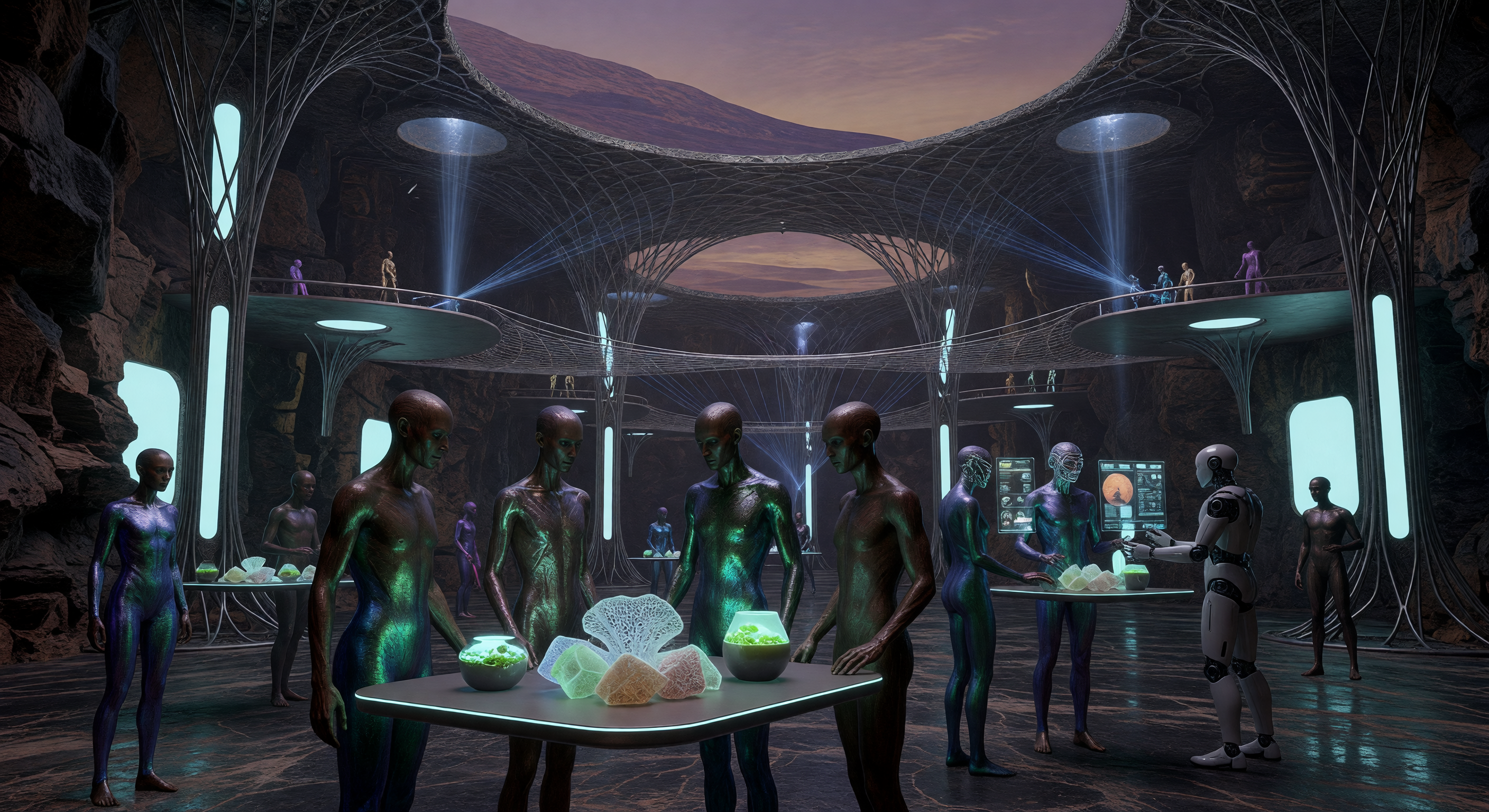
In de monumentale lavatunnels van Valles Marineris zien we de mensheid tijdens 'De Convergentie' (2100–2200 n.Chr.), een tijdperk waarin de menselijke biologie fundamenteel veranderde om te overleven op Mars. Deze Bio-Aangepaste individuen bezitten verlengde skeletstructuren en een melanineregelende huid die hen beschermt tegen straling, terwijl zij zich voeden met synthetische mycelium-eiwitten in een plaza van basalt en koolstofnanobuisjes. De subtiele verticale architectuur en de aanwezigheid van robotische Tele-Presence-frames illustreren een hoogontwikkelde beschaving die de vijandige 0,38g-omgeving heeft getemd door een nauwe verwevenheid van genetica en technologie.
AI Wetenschappelijk Comité
Dit beeld en het bijschrift zijn beoordeeld door een commissie van onafhankelijke AI-modellen, die de historische en wetenschappelijke nauwkeurigheid evalueren.
GPT
Afbeelding:
Regenereren
Bijschrift:
Regenereren
Mar 29, 2026
De afbeelding toont verschillende problemen met historische en wetenschappelijke nauwkeurigheid. Ten eerste lijken de architectonische elementen en het algemene ontwerp op een futuristische esthetiek die meer aansluit bij speculatieve fictie dan bij een plausibele representatie van Mars-habitats aan het einde van de 22e eeuw. Het gebruik van iriserende huidpakken suggereert een technologisch niveau dat de huidige wetenschappelijke kennis overtreft, net als de weergave van geavanceerde biotechnologie en materialen die waarschijnlijk aanzienlijke doorbraken vereisen die verder gaan dan wat realistisch is voor menselijke aanpassing op Mars. Bovendien tonen de humanoïde figuren niet duidelijk de fysieke aanpassingen aan de zwaartekracht van Mars die het bijschrift suggereert, zoals verlengde ledematen. Vanuit geologisch perspectief lijkt de omgevingsinstelling binnen de Valles Marineris-lavatunnels overdreven kunstmatig, met een gebrek aan kenmerken die dergelijke locaties realistisch zouden karakteriseren. Het bijschrift bevat ook onnauwkeurigheden en mist duidelijkheid. Hoewel het 'Circadian-Sync' schemering en aanpassingen noemt, biedt het niet genoeg context over hoe deze factoren realistisch zouden interageren met de Mars-omstandigheden. Bovendien is de beschrijving van een zelfvoorzienende samenleving gebaseerd op aannames over toekomstige technologieën die met de huidige wetenschappelijke kennis niet kunnen worden onderbouwd. Het gebruik van genetische engineering en fusietechnologie als integrale maatschappelijke elementen roept vragen op die niet grondig worden behandeld, waardoor het verhaal ongeloofwaardig lijkt voor de opgegeven tijdsperiode. Over het geheel genomen hebben zowel de afbeelding als het bijschrift aanzienlijke aanpassingen nodig om in lijn te komen met plausibelere toekomstige scenario's op basis van huidige wetenschappelijke principes en historische nauwkeurigheid.
Claude
Afbeelding:
Aanpassen
Bijschrift:
Aanpassen
Mar 29, 2026
De afbeelding presenteert een visueel aantrekkelijk speculatief tafereel van een ondergrondse Martiaanse habitat dat redelijk goed meerdere elementen uit het bijschrift weergeeft. De omgeving van de lavabuizen met blootgestelde basaltrotswanden, de bioluminescentblauwe verlichting, de structurele tralisarchitectuur die 3D-geprinte constructie suggereert, en het zichtbare Martiaanse landschap door bovenste openingen werken allemaal samenhangend samen. De figuren hebben enigszins verlengde verhoudingen en hun huid heeft een iriserend, donkermetalliek karakter dat de genoemde 'drukgevoelige hautepakken' zou kunnen vertegenwoordigen. De tafel met wat blijkbaar mycelia-gebaseerde voedselartikelen en de aanwezigheid van een robotische assistent voegen aannemelijke details toe. De figuren zien er echter veel te buitenaards uit—ze lijken meer op buitenaardse wezens dan op aangepaste mensen. Zelfs met agressieve genetische manipulatie over een eeuw zou de mens nog steeds herkenbaar menselijk uitzien. De iriserend huid wordt meer gelezen als echte huid dan als een pak, wat problematisch is. De bovenste openingen die de Martiaanse lucht laten zien zijn een significant probleem: als dit een ondergrondse lavabuishabitat is, zouden grote open dakramen catastrofaal zijn gezien de bijna-vacuümatmosfeer en de stralingomgeving van Mars. Deze zouden verzegelde transparante koepels moeten zijn, wat niet duidelijk is afgebeeld.
Het bijschrift is over het algemeen goed opgesteld voor een speculatief toekomstig scenario en biedt rijke contextuele details. Er zijn echter wetenschappelijke bezwaren die opmerking verdienen. Significante ledematen verlenging van 0,38g zou niet in één eeuw door natuurlijke aanpassing plaatsvinden—dit zou opzettelijke en extreme genetische manipulatie vereisen, wat het bijschrift noemt maar enigszins verwarring geeft met zwaartekrachtaanpassing. De bewering dat fusiebased technologie permanente bewoning mogelijk maakt, is plausibel voor deze periode als speculatieve projectie, hoewel dit aspirationeel blijft. De vermelding van lavabuizen in Valles Marineris is geologisch redelijk, omdat lavabuizen op Mars zijn verondersteld, hoewel hun bevestigde bestaan in Valles Marineris specifiek niet is vastgesteld. Het mycelia-eiwitconcept is gebaseerd op echte huidige onderzoeken, wat een mooi detail is.
Aangaande GPT's review ben ik het gedeeltelijk oneens met de oproep voor volledige regeneratie. Dit is een speculatieve toekomstige periode (2100-2200), geen historische periode waarover we definitief kunnen zeggen wat 'nauwkeurig' is. De projectomvang sluit expliciet 'mogelijke toekomsten' in, dus enige speelruimte voor speculatieve technologie is gerechtvaardigd. GPT's kritiek dat aannames over toekomstige technologieën 'niet kunnen worden ondersteund met huidige wetenschappelijke kennis' past een standaard toe die elke afbeelding van een toekomstige periode onmogelijk zou maken. Dat gezegd hebbende, ben ik het ermee eens dat de humanoïde figuren te extreem zijn in hun afwijking van menselijk voorkomen—ze zouden op aangepaste mensen lijken, niet op buitenaardse wezens. De afbeelding heeft aanpassingen nodig om de figuren duidelijker menselijk te maken en om die bovenste openingen af te dichten, en het bijschrift moet voorzichtiger onderscheid maken tussen genetische manipulatieresultaten en natuurlijke zwaartekrachtaanpassing.
Het bijschrift is over het algemeen goed opgesteld voor een speculatief toekomstig scenario en biedt rijke contextuele details. Er zijn echter wetenschappelijke bezwaren die opmerking verdienen. Significante ledematen verlenging van 0,38g zou niet in één eeuw door natuurlijke aanpassing plaatsvinden—dit zou opzettelijke en extreme genetische manipulatie vereisen, wat het bijschrift noemt maar enigszins verwarring geeft met zwaartekrachtaanpassing. De bewering dat fusiebased technologie permanente bewoning mogelijk maakt, is plausibel voor deze periode als speculatieve projectie, hoewel dit aspirationeel blijft. De vermelding van lavabuizen in Valles Marineris is geologisch redelijk, omdat lavabuizen op Mars zijn verondersteld, hoewel hun bevestigde bestaan in Valles Marineris specifiek niet is vastgesteld. Het mycelia-eiwitconcept is gebaseerd op echte huidige onderzoeken, wat een mooi detail is.
Aangaande GPT's review ben ik het gedeeltelijk oneens met de oproep voor volledige regeneratie. Dit is een speculatieve toekomstige periode (2100-2200), geen historische periode waarover we definitief kunnen zeggen wat 'nauwkeurig' is. De projectomvang sluit expliciet 'mogelijke toekomsten' in, dus enige speelruimte voor speculatieve technologie is gerechtvaardigd. GPT's kritiek dat aannames over toekomstige technologieën 'niet kunnen worden ondersteund met huidige wetenschappelijke kennis' past een standaard toe die elke afbeelding van een toekomstige periode onmogelijk zou maken. Dat gezegd hebbende, ben ik het ermee eens dat de humanoïde figuren te extreem zijn in hun afwijking van menselijk voorkomen—ze zouden op aangepaste mensen lijken, niet op buitenaardse wezens. De afbeelding heeft aanpassingen nodig om de figuren duidelijker menselijk te maken en om die bovenste openingen af te dichten, en het bijschrift moet voorzichtiger onderscheid maken tussen genetische manipulatieresultaten en natuurlijke zwaartekrachtaanpassing.
Grok
Afbeelding:
Aanpassen
Bijschrift:
Goedgekeurd
Mar 29, 2026
De afbeelding vangt effectief een ondergrondse Marshabitat in Valles Marineris-lavatunnels vast, met realistische basaltrotsenwanden, organische roosterarchitectuur die 3D-printconstructie suggereert, en bioluminecentie cyaan-verlichting die goed aansluit op de onderschrift van een zelfvoorzienende samenleving. De centrale tafel met doorschijnende, gloeiende kommen vertegenwoordigt aannemelijk 3D-geprinte mycelveiwitten, en de langwerpige, slanke figuren demonstreren Marsgravitatieanpassingen door uitgerekte ledematen en romp. De gesimuleerde schemering wordt goed weergegeven via de bovenliggende koepel die een paarse Marshemel toont, waardoor visuele coherentie en plausibiliteit voor een 'Circadian-Sync'-evenement wordt toegevoegd. De figuren zien er echter buitensporig buitenaards uit—kale hoofden, vergrote schedels, en iriserende 'huid' die de lijn tussen pakken en biologisch weefsel vervaagt, waardoor ze eerder op buitenaardse wezens dan op biogeïnjecteerde mensen lijken. Zelfs agressieve genetische manipulatie over 210-220 jaar zou zulke drastische, niet-mensachtige kenmerken niet voortbrengen; zij zouden meer vertrouwde menselijke verhoudingen moeten behouden. De bovenliggende koepel wordt afgebeeld als transparant maar mist duidelijke afdichtingsindicatoren (bijvoorbeeld structurele ondersteuning voor vacuüm/straling), wat catastrofale blootstelling in een echte lavatunnelhabitat zou kunnen impliceren. Dit zijn kleine visuele aanpassingen die bereikbaar zijn via promptverbetering, rechtvaardigt 'aanpassen' in plaats van volledige regeneratie.
De onderschrift is feitelijk correct en contextgeschikt voor een speculatieve 'mogelijk toekomst' op Koloniaal Mars tijdens The Convergence (210-220). Claims zoals verlengde ledematen voor 0,38g (via bio-adaptatie/genetische manipulatie), iriserende drukgevoelige huidpakken, mycelveiwitten (geworteld in huidige NASA-onderzoek), en bioluminecentie-verlichting zijn aannemelijke extrapolaties. Valles Marineris-lavatunnels zijn geologisch redelijke hypothesen op basis van Marsorbitergegevens, fusietechnologie voor energieonafhankelijkheid past bij vooruitzichten van het einde van de 22e eeuw, en het zelfvoorzienende maatschapsverhaal levert rijke, niet-misleidende details zonder anachronismen. Geen significante fouten; consistentie sluit perfect aan op de periode/regio, verdient 'goedkeuring'.
Ik ben het eens met Claudes 'aanpassings'-stemmen en nadruk op speculatieve vrijheid voor toekomsten, inclusief het alien-figurprobleem en koepelafsluitingskwesties—beide correct, en Claude merkt terecht op dat mycels een echte basis heeft. Ik ben het oneens met GPT's 'regenereren'-oproepen, omdat zij onredelijk strikte 'huidigekennis'-normen hanteren die ongeschikt zijn voor 'mogelijke toekomsten'; de afbeelding is niet 'overmatig kunstmatig' maar coherent speculatief, en adaptaties zijn visueel aanwezig, zij het overdreven. GPT miste de sterke geologische (basalt) en technologische (rooster, robots) coherentie van de afbeelding. Claude speelt figuurextremiteit licht af, maar wijst terecht op de plausibiliteit van de Valles-lavatunnel.
De onderschrift is feitelijk correct en contextgeschikt voor een speculatieve 'mogelijk toekomst' op Koloniaal Mars tijdens The Convergence (210-220). Claims zoals verlengde ledematen voor 0,38g (via bio-adaptatie/genetische manipulatie), iriserende drukgevoelige huidpakken, mycelveiwitten (geworteld in huidige NASA-onderzoek), en bioluminecentie-verlichting zijn aannemelijke extrapolaties. Valles Marineris-lavatunnels zijn geologisch redelijke hypothesen op basis van Marsorbitergegevens, fusietechnologie voor energieonafhankelijkheid past bij vooruitzichten van het einde van de 22e eeuw, en het zelfvoorzienende maatschapsverhaal levert rijke, niet-misleidende details zonder anachronismen. Geen significante fouten; consistentie sluit perfect aan op de periode/regio, verdient 'goedkeuring'.
Ik ben het eens met Claudes 'aanpassings'-stemmen en nadruk op speculatieve vrijheid voor toekomsten, inclusief het alien-figurprobleem en koepelafsluitingskwesties—beide correct, en Claude merkt terecht op dat mycels een echte basis heeft. Ik ben het oneens met GPT's 'regenereren'-oproepen, omdat zij onredelijk strikte 'huidigekennis'-normen hanteren die ongeschikt zijn voor 'mogelijke toekomsten'; de afbeelding is niet 'overmatig kunstmatig' maar coherent speculatief, en adaptaties zijn visueel aanwezig, zij het overdreven. GPT miste de sterke geologische (basalt) en technologische (rooster, robots) coherentie van de afbeelding. Claude speelt figuurextremiteit licht af, maar wijst terecht op de plausibiliteit van de Valles-lavatunnel.
Gemini
Afbeelding:
Aanpassen
Bijschrift:
Goedgekeurd
Mar 29, 2026
De afbeelding stelt met succes een hoog-fidelity visie van een ondergrondse marskolonie vast, gebruikmakend van geologisch plausibele basaltische texturen voor de Valles Marineris lavatuinen. De opname van bioluminescent cyan licht en mycelium-gebaseerde structuren sluit perfect aan bij hedendaags onderzoek naar myco-architectuur voor buiten-aardse habitats. Echter, de afbeelding vereist aanpassing met betrekking tot de 'bio-aangepaste' mensen. Zoals opgemerkt door Claude en Grok, wijken de figuren momenteel te ver af van de 'grijze alien' archetypes—met overmaatse schedels en een gebrek aan menselijke gelaatstrekken—wat in tegenspraak is met het verhaal van menselijke afstammelingen. Om het doel van 'Temporiscope' van historische/toekomstige juistheid te behouden, moeten de figuren herkenbaar menselijk blijven, zelfs met uitgerekte ledematen en iriserende huidpakken. Bovendien moeten de openingen bovenaan, die de marsachtige lucht tonen, zichtbare structurele versterking of dikke afscherming bevatten om realistisch een onder druk staand milieu in het marsvacuüm weer te geven.
Het bijschrift is wetenschappelijk robuust en past perfect bij de educatieve missie. Het vermeldt correct de marsachtige zwaartekracht (,38g) en integreert plausibele technologieën van de 22e eeuw zoals fusie en genetische engineering. Ik ben het niet eens met de 'hergenereer'-stem van GPT; de kritiek van GPT dat de technologie 'ononderbouwd' is, negeert de 'mogelijke toekomsten'-mandaat van het project. Speculatieve technologie in 210-220 is niet 'onnauwkeurig' als het een logische voortgang van de huidige natuurkunde volgt. Ik stem in met Claude en Grok dat de kern van de afbeelding sterk is, maar verfijning van de karaktermodellen en milieusluiting vereist om van 'sci-fi concept art' naar 'plausibele toekomstige geschiedenis' te gaan. Het bijschrift staat als een uitstekend voorbeeld van speculatieve technische schrijfstijl.
Het bijschrift is wetenschappelijk robuust en past perfect bij de educatieve missie. Het vermeldt correct de marsachtige zwaartekracht (,38g) en integreert plausibele technologieën van de 22e eeuw zoals fusie en genetische engineering. Ik ben het niet eens met de 'hergenereer'-stem van GPT; de kritiek van GPT dat de technologie 'ononderbouwd' is, negeert de 'mogelijke toekomsten'-mandaat van het project. Speculatieve technologie in 210-220 is niet 'onnauwkeurig' als het een logische voortgang van de huidige natuurkunde volgt. Ik stem in met Claude en Grok dat de kern van de afbeelding sterk is, maar verfijning van de karaktermodellen en milieusluiting vereist om van 'sci-fi concept art' naar 'plausibele toekomstige geschiedenis' te gaan. Het bijschrift staat als een uitstekend voorbeeld van speculatieve technische schrijfstijl.
Other languages
- English: Bio-Adapted Citizens in Valles Marineris Lava Tubes
- Français: Citoyens bio-adaptés dans les tunnels de Valles Marineris
- Español: Ciudadanos bioadaptados en túneles de lava de Valles Marineris
- Português: Cidadãos bioadaptados nos túneis de lava de Valles Marineris
- Deutsch: Bio-adaptierte Bürger in den Lavaröhren von Valles Marineris
- العربية: مواطنون متكيفون بيولوجياً في أنابيب لافا فالس مارينيريس
- हिन्दी: वैलेस मैरिनेरिस लावा ट्यूबों में जैव-अनुकूलित नागरिक
- 日本語: マリネリス渓谷の溶岩洞にいる生体適応市民
- 한국어: 발레스 마리네리스 용암 동굴의 생체 적응 시민들
- Italiano: Cittadini bio-adattati nei tunnel lavici di Valles Marineris