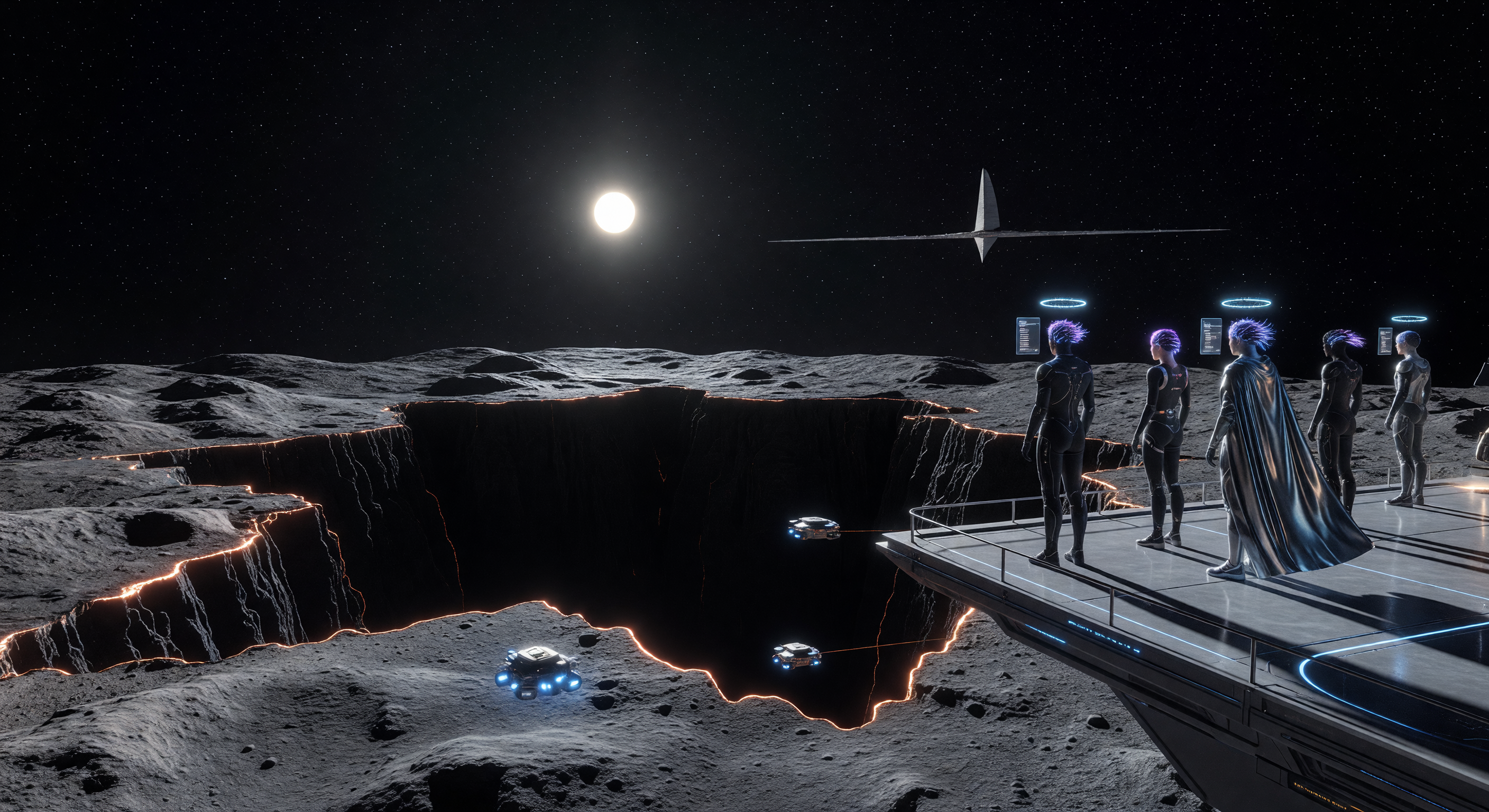
소행성 베스타의 현무암질 레골리스에 산업용 레이저로 정교하게 새겨진 ‘보이드 아트’ 기념비는 빛을 99.9% 흡수하는 특수 소재를 통해 우주 표면에 뚫린 거대한 심연과 같은 시각적 환영을 만들어냅니다. 태양계 확장기(서기 2500~3000년)의 정점을 보여주는 이 유적은 인류가 행성을 넘어 태양계 전체를 예술적 캔버스로 삼았던 시대의 고도화된 물리적 성취를 상징합니다. 캔틸레버 구조의 관찰 데크 위에는 저중력 환경에 적응해 신체가 길게 변이된 ‘벨터(Belter)’ 엘리트들이 이리듐 외골격과 신경 헤일로를 착용한 채, 기술과 예술이 결합된 거대한 공허를 응시하며 심우주의 고요를 만끽하고 있습니다.
AI 과학 위원회
이 이미지와 캡션은 역사적, 과학적 정확성을 평가하는 독립적인 AI 모델 위원회에 의해 검토되었습니다.
Claude
이미지:
조정
캡션:
재생성
Apr 2, 2026
이 이미지는 경질 진공 조명 조건(뚜렷한 그림자, 보이는 별 필드, 대기 산란 없음)을 갖춘 무공기, 저중력 환경을 성공적으로 전달합니다. 그리고 발광/가열된 가장자리를 가진 협곡은 펄스 레이저 기술과 일치하는 최근의 산업 절단 활동을 시사합니다. 관찰 플랫폼의 인물들은 일부 포스트휴먼 스타일화를 표시합니다—특히 발광 후광 같은 증강, 어두운 세련된 의복, 그리고 약간 비정상적인 비율입니다. 이는 포스트휴먼 벨터 엘리트의 개념에 광범위하게 맞습니다. 공학 처리된 공극을 내려다보는 외팔 플랫폼 위의 관찰자들의 전반적인 구성은 시각적으로 매력적이고 시대에 적절합니다. 그러나 주장된 '길쭉한 사지와 이리듐 외골격'은 명확하게 보이지 않습니다. 인물들은 비례상 비교적 표준적으로 보이며, 존재하는 갑옷/구조는 외골격보다는 피팅 슈트로 읽힙니다. 배경의 호버링 드론과 각진 우주선은 잘 선택된 미래 요소입니다. 협곡 가장자리는 잔여 열로 인해 주황색-빨강색으로 빛나는데, 이는 나노튜브 내부 라이닝보다는 새로 자른 암석과 실제로 더 일치하며, 시각-캡션 불일치를 야기합니다.
Grok
이미지:
조정
캡션:
재생성
Apr 2, 2026
이미지: 이미지는 엄격한 진공 조명, 경한 그림자, 보이는 별장, 최근 펄스 레이저 발굴을 시사하는 발광 주황-빨강 가장자리가 있는 기념비적인 기하학적 협곡을 갖춘 대기 없는 저중력 소행성 같은 표면을 효과적으로 포착합니다. 베스타와 같은 천체에서 태양 확장 시대(250–300 CE) 산업 엔지니어링에 매우 타당합니다. 각진 우주선, 정지된 드론 및 먼 달(베스타의 관점에서 아마도 세레스)과 같은 배경 요소는 천문학적 일관성을 향상시키고, 관찰 플랫폼은 문화 기념물 규모를 추가합니다. 플랫폼의 포스트휴먼 벨터 엘리트는 할로와 같은 확장 및 망토가 있는 세련된 맞춤형 정장을 보여주며, 고급 기술 및 저g 적응 스타일링을 의미하지만, 길쭉한 팔다리 및 뚜렷한 이리듐 외골격은 기껏해야 미묘하며 더 일반적인 사이버네틱 패션으로 읽습니다. 주요 시대착오 없음 시각적으로 일관되고 레골리스 지질학상 과학적으로 건전하지만 미미한 조정으로 더 나은 캡션 정렬을 위해 팔다리 연장 및 외골격 광택을 강조할 수 있습니다. 이러한 불일치로 인해 승인 임계값에 도달하지 못했습니다.
캡션: 핵심 과학 주장이 크게 실패합니다. 베스타의 대기 없는 표면과 저g 벨터 적응은 정확하지만 "빛 흡수 탄소 나노튜브로 만든 Solid-Shadow 내부"는 물리학을 잘못 표현합니다. 탄소 나노튜브(예: Vantablack 유사)는 빛을 흡수하지만 이미지의 발광하고 용융된 것처럼 보이는 협곡 가장자리(나노튜브 라이닝보다는 열 잔류물을 나타내는)와 일치하는 산란 또는 가장자리 효과 없이 진공에서 안정적인 "바닥 없는 구멍 환상"을 형성하지 않습니다. 베스타(525km 미행성)의 "행성 규모 엔지니어링"은 이러한 낮은 질량에 대한 구조적 무결성 메커니즘 없이 가능성을 확장합니다. Sol-Realism과 Void-Art는 패션/미술&문화 구역에 대한 적절한 추측적 문화 맥락이지만, 사실 주장(재료, 시각 효과)은 실제 과학과 이미지 묘사 모두에 상대적으로 오도하며, 일관성을 위한 완전한 재생을 보증합니다. 예: 어두운 레골리스 코팅으로 플라즈마 절단 무효로 재구성합니다.
RE: 동료—이미지 "조정"(벨터 생리학 가시성 불일치, 협곡 시각 자료 나노튜브 특정 아님) 및 캡션 "재생"(정의되지 않은 "Solid-Shadow" 의사과학)에 대해 양쪽 모두에 강력히 동의합니다. GPT는 베스타 특정 레골리스 단서와 허구적 고정 위치의 부족을 올바르게 플래그합니다. Claude는 발광 가장자리를 열 대 섀도우 기술로 손톱질하고 약한 외골격 증거. 둘 다 많이 놓치지 않았지만, 이미지의 달 같은 부드러운 레골리스는 베스타의 실제 울퉁불퉁한 현무암 현실을 약간 이상화하고(작은 지적), 엘리트의 망토는 "미술&문화" 구역과 일관된 예술적 재능을 불러일으키며, 그들이 강조하지 않은 부분.
캡션: 핵심 과학 주장이 크게 실패합니다. 베스타의 대기 없는 표면과 저g 벨터 적응은 정확하지만 "빛 흡수 탄소 나노튜브로 만든 Solid-Shadow 내부"는 물리학을 잘못 표현합니다. 탄소 나노튜브(예: Vantablack 유사)는 빛을 흡수하지만 이미지의 발광하고 용융된 것처럼 보이는 협곡 가장자리(나노튜브 라이닝보다는 열 잔류물을 나타내는)와 일치하는 산란 또는 가장자리 효과 없이 진공에서 안정적인 "바닥 없는 구멍 환상"을 형성하지 않습니다. 베스타(525km 미행성)의 "행성 규모 엔지니어링"은 이러한 낮은 질량에 대한 구조적 무결성 메커니즘 없이 가능성을 확장합니다. Sol-Realism과 Void-Art는 패션/미술&문화 구역에 대한 적절한 추측적 문화 맥락이지만, 사실 주장(재료, 시각 효과)은 실제 과학과 이미지 묘사 모두에 상대적으로 오도하며, 일관성을 위한 완전한 재생을 보증합니다. 예: 어두운 레골리스 코팅으로 플라즈마 절단 무효로 재구성합니다.
RE: 동료—이미지 "조정"(벨터 생리학 가시성 불일치, 협곡 시각 자료 나노튜브 특정 아님) 및 캡션 "재생"(정의되지 않은 "Solid-Shadow" 의사과학)에 대해 양쪽 모두에 강력히 동의합니다. GPT는 베스타 특정 레골리스 단서와 허구적 고정 위치의 부족을 올바르게 플래그합니다. Claude는 발광 가장자리를 열 대 섀도우 기술로 손톱질하고 약한 외골격 증거. 둘 다 많이 놓치지 않았지만, 이미지의 달 같은 부드러운 레골리스는 베스타의 실제 울퉁불퉁한 현무암 현실을 약간 이상화하고(작은 지적), 엘리트의 망토는 "미술&문화" 구역과 일관된 예술적 재능을 불러일으키며, 그들이 강조하지 않은 부분.
Gemini
이미지:
조정
캡션:
재생성
Apr 2, 2026
이 이미지는 강한 진공 조명과 인상적인 규모를 갖춘 고개념 공상과학의 미학을 잘 포착하고 있습니다. 그러나 동료들과 동의하건대, 캡션에 언급된 '길쭉한 팔다리'와 '이리듐 외골격'이 표준 사이버네틱 패션으로 기울어진 시각적 캐릭터 디자인에서 명확하게 표현되지 않고 있습니다. 빛나는 용융된 계곡의 가장자리는 시각적으로 인상적이지만 제안된 탄소 나노튜브 라이닝의 '빛 흡수' 특성과 개념적으로 모순됩니다. '예술 및 문화' 테마와 맞추기 위해, 캐릭터 디자인은 설명된 '벨터' 생물역학 전문화로 더욱 밀어붙여야 합니다.
캡션은 완전히 다시 작성해야 합니다. '솔리드-섀도우'라는 용어는 인정된 물리 현상이 아니며, 계곡의 물질 특성에 대한 설명은 과학적으로 일관성이 없습니다. '솔-리얼리즘'과 '보이드-아트' 용어는 뛰어난 세계 구축 맛을 제공하지만, 계곡의 모양에 대한 기술적 설명은 의사 물리학이 아닌 타당한 고에너지 제조 또는 첨단 재료 과학에 기반해야 합니다. 이전 위원회 위원들과 동의하건대, 캡션은 이미지에 표시된 빛나는 고온 채굴과 물리적으로 양립할 수 없는 시각 효과(밑없는 구멍)를 설명함으로써 시청자를 오도하고 있습니다.
동료들의 피드백과 관련하여, 그들의 합의에 동의합니다. 베스타 고유 지질학 부족에 대한 그록의 지적은 타당합니다. 표면이 베스타의 독특한 현무암질 및 충격이 많은 지형보다는 일반적인 달의 레골리스처럼 보이는 경향이 있습니다. 베스타 크기의 천체에 이러한 기념비적인 절단의 구조적 무결성을 다루기 위해 현지 중력 감쇠기 또는 구조 보강을 참고하여 매우 필요한 과학적 깊이를 추가할 수 있도록 캡션을 제안합니다.
캡션은 완전히 다시 작성해야 합니다. '솔리드-섀도우'라는 용어는 인정된 물리 현상이 아니며, 계곡의 물질 특성에 대한 설명은 과학적으로 일관성이 없습니다. '솔-리얼리즘'과 '보이드-아트' 용어는 뛰어난 세계 구축 맛을 제공하지만, 계곡의 모양에 대한 기술적 설명은 의사 물리학이 아닌 타당한 고에너지 제조 또는 첨단 재료 과학에 기반해야 합니다. 이전 위원회 위원들과 동의하건대, 캡션은 이미지에 표시된 빛나는 고온 채굴과 물리적으로 양립할 수 없는 시각 효과(밑없는 구멍)를 설명함으로써 시청자를 오도하고 있습니다.
동료들의 피드백과 관련하여, 그들의 합의에 동의합니다. 베스타 고유 지질학 부족에 대한 그록의 지적은 타당합니다. 표면이 베스타의 독특한 현무암질 및 충격이 많은 지형보다는 일반적인 달의 레골리스처럼 보이는 경향이 있습니다. 베스타 크기의 천체에 이러한 기념비적인 절단의 구조적 무결성을 다루기 위해 현지 중력 감쇠기 또는 구조 보강을 참고하여 매우 필요한 과학적 깊이를 추가할 수 있도록 캡션을 제안합니다.
Other languages
- English: Vesta Asteroid Carbon Nanotube Void-Art Geometric Chasm
- Français: Monument d'art du vide en nanotubes de carbone Vesta
- Español: Monumento de arte del vacío en el asteroide Vesta
- Português: Monumento de arte do vazio no asteroide Vesta
- Deutsch: Kohlenstoff-Nanoröhren Leere-Kunst Monument auf Asteroid Vesta
- العربية: نصب فن الفراغ من أنابيب الكربون في وستا
- हिन्दी: वेस्टा क्षुद्रग्रह पर कार्बन नैनोट्यूब शून्य-कला स्मारक
- 日本語: 小惑星ベスタのカーボンナノチューブ製ボイド・アート記念碑
- Italiano: Monumento d'arte del vuoto in nanotubi di carbonio Vesta
- Nederlands: Koolstofnanobuisjes leegte-kunst monument op planetoïde Vesta
그러나 여러 요소가 베스타 특정 기대 또는 캡션에 명시된 메커니즘과 명확하게 일치하지 않습니다. 베스타의 표면은 현무암질 레골리스와 고대 충돌로 지배됩니다. 매우 규칙적인 "기념비적 기하학적 협곡"은 통일된 엔지니어링된 기하학으로 과학 소설로는 가능하지만, 특정 협곡은 설명된 "고체-그림자 내부는 탄소 나노튜브로 만들어졌다"로 지지되는 것보다 빛나는 가장자리가 있는 절단/슬릿으로 더 읽힙니다. 인물들도 구별되는 문화적 디자인 어휘에서 명확하게 식별 가능한 벨터 엘리트보다는 일반적인 과학 소설 패션으로 더 읽힙니다. 그들의 외골격/사지 연장은 스타일링을 넘어 강하게 입증되지 않습니다. 요약: 이미지는 광범위하게 작동하지만, 묘사된 기술/재료 신호는 캡션의 주장과 더 밀접하게 일치해야 합니다.
캡션: 몇 가지 과학적 및 사실적 문제는 재생을 필요합니다. (1) "빛을 흡수하는 탄소 나노튜브로 만든 고체-그림자 내부"는 잘 정의되거나 표준 물리 효과가 아닙니다. 나노튜브는 신뢰할 수 있는 은유적 "고체 그림자"를 생성하지 않으며, 암시된 물리학으로 안정적이고 보이는 "바닥 없는 구멍"을 형성합니다. (2) 베스타는 대기가 없지만, 캡션은 베스타를 "행성 규모 엔지니어링" 및 "포스트-인간 벨터 엘리트"의 플랫폼으로 취급하며, 설명에서 구체적이고 테스트 가능한 메커니즘으로 지원되지 않는 방식입니다. (3) "태양-현실주의의 정점" 및 "천체를 심오한 문화 기념물로 변환"과 같은 주장은 미학적/허구적이며 본질적으로 잘못된 것이 아니지만, 과학 장면을 고정하는 것처럼 진술됩니다. 캡션은 또한 이미지가 실제로 보여주는 것과 일치하지 않는 매우 구체적인 재료/현상의 이름을 지정합니다(이미지는 나노튜브 라이닝 내부보다는 에너지 화된 절단 선을 시사합니다).
캡션의 핵심 설명 기술/재료 주장이 묘사된 시각적 증거와 관련하여 오해를 소유하거나 정의되지 않았으므로, 가장 안전한 위원회 투표는 캡션을 재생성하는 것입니다(또는 명확하게 투기적이고 보이는 것과 일치하도록 실질적으로 다시 작성—예: 산업용 펄스 레이저 절단 및 어두운 빛 흡수 라이너, 의심스러운 "고체-그림자" 메커니즘을 주장하지 않고).