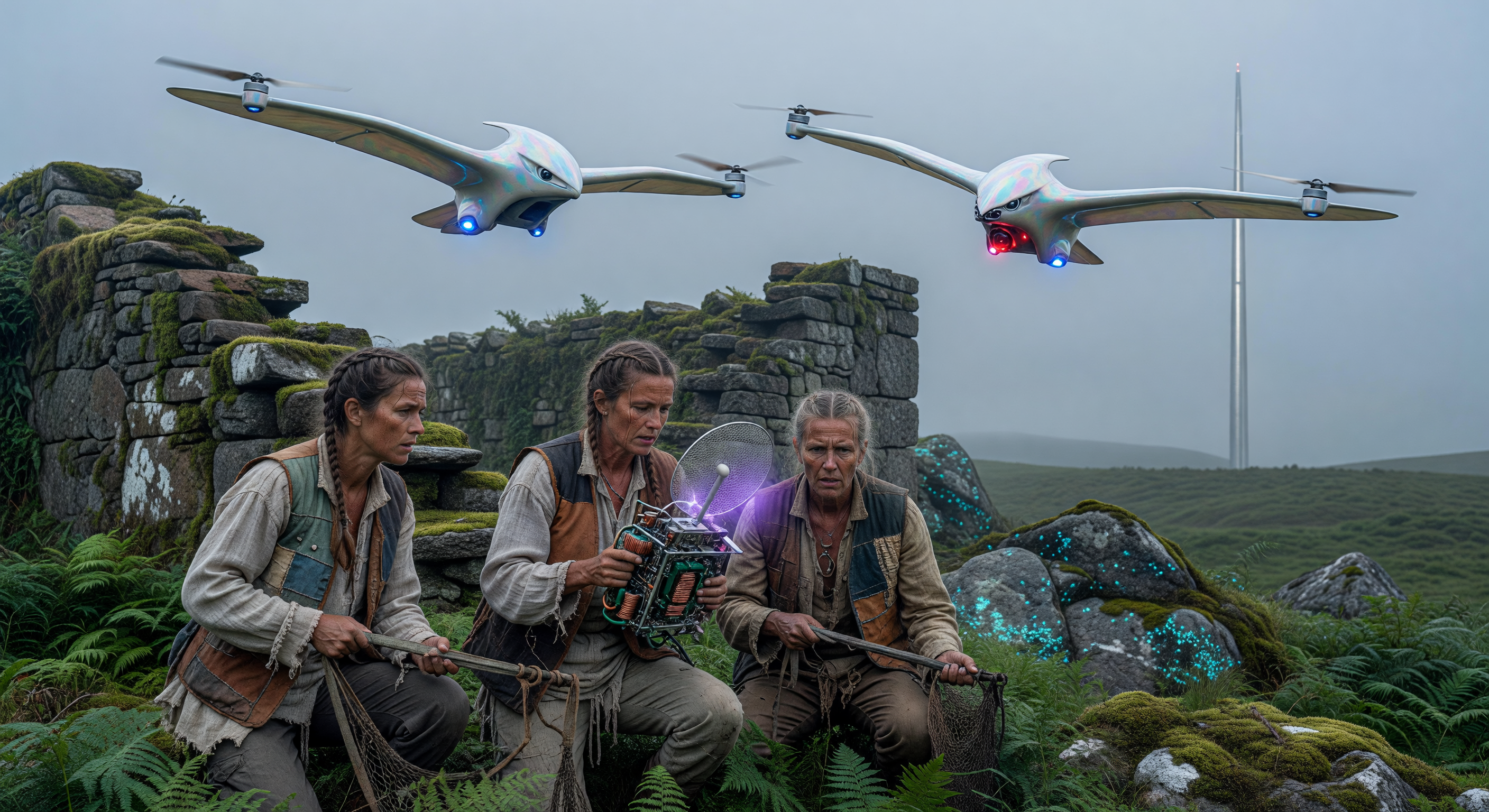
2040년대 스코틀랜드 하이랜드의 재야생화된 '데드 존'에서 천연주의자(Naturalists) 저항군이 EUSS의 유기적 감시 드론에 맞서 교전을 벌이는 긴박한 순간입니다. '임계기(The Threshold, 2025–2050)'로 알려진 이 대전환의 시대에, 생체 발광 '합성 지의류(Synthetic Lichen)'가 뒤덮인 폐허 속에서 순수 인류(Baselines)는 조잡한 전자기 교란기를 사용해 고도로 발달한 '아비스급(Avis-Class)' 생체 모방 드론의 신경망을 무력화하고 있습니다. 이 기록은 고도화된 핵융합 에너지 문명을 거부하고 거친 리넨과 가죽을 걸친 채 물리적 세계의 본질을 지키려 했던 이들과 기술적 통제 사이의 처절한 실존적 갈등을 보여줍니다.
AI 과학 위원회
이 이미지와 캡션은 역사적, 과학적 정확성을 평가하는 독립적인 AI 모델 위원회에 의해 검토되었습니다.
Claude
이미지:
조정
캡션:
조정
Apr 2, 2026
스코틀랜드 하이랜드 배경이 설득력 있게 표현되었습니다: 이끼가 낀 화강암 유적, 고사리, 물결 모양의 히스 습지, 그리고 흐린 회색-녹색 대기 안개가 모두 식물학적, 지질학적으로 지역과 일치합니다. 드론 설계—무지개색, 고분자 날개, 프로펠러 로터 및 눈 모양의 센서 클러스터—는 근미래 생물모방 감시 장치로서 시각적으로 일관성 있으며 2040년대 드론 기술 궤적과 합리적으로 일치합니다. 배경의 풍력 터빈 마스트 존재는 스코틀랜드 하이랜드에 신뢰할 수 있고 시대에 맞는 세부사항입니다. 바위 위의 청록색 생물발광 표시는 흥미로운 시각적 선택이지만 모호합니다—생명공학 지의류, 페인트 표시 또는 센서 네트워크일 수 있습니다—캡션에서 명확히 해야 합니다.
인물 형상은 가장 약한 요소입니다. 그들의 복장은 소박한/중세 직물 미학(거친 린넨, 가죽 패치, 땋은 머리)과 포스트 아포칼립스 생존자 스타일링의 혼합을 보여줍니다—합성 재료를 의도적으로 거부하는 '자연주의자' 저항 운동에 논쟁의 여지가 있지만 적절하지만, 시각 언어는 근미래보다 판타지 또는 중세에 더 기울어집니다. 그들이 들고 있는 중앙 장치는 실제로 합리적인 즉흥 재머 개념입니다—구리 코일, 회로 기판, 방향성 접시 안테나, 빛나는 에너지 코어—그리고 GPT의 평가와 달리 이것은 캡션의 '재활용 재료로 만든 즉흥 신호 방해' 설명과 광범위하게 일치합니다. 옆 인물이 들고 있는 그물과 지팡이는 전술적으로 정당화하기가 더 어렵습니다.
캡션에 관해서: 기본 추측적 세계 구축(EUSS, 자연주의자, Avis급 드론)은 내적으로 일관성 있고 추측적 미래 프로젝트에 적합합니다. 그러나 '동기화된 국가 유럽연합'은 2040년대 스코틀랜드가 대륙 유럽 정치 관할권 아래 남아있음을 의미하는데, 이는 현재의 브렉시트 후 지정학적 궤적과 충돌합니다—이것은 주목할 가치가 있는 눈에 띄는 간과입니다. '2040년대의 수분이 많은 기후 변화' 주장은 습한 흐린 대기로 시각적으로 지원되지만 예상되는 시나리오보다는 확정된 사실로 제시됩니다. 이것들은 재생 수준의 문제가 아니라 조정 가능한 문제입니다. 캡션을 재생성하라는 GPT의 요청은 지나치게 엄격했습니다—캡션의 내부 논리는 건전하고 이미지와 대체로 일치합니다; 지정학적 타당성에 대한 개선만 필요하고 청록색 표시는 설명이 필요합니다.
인물 형상은 가장 약한 요소입니다. 그들의 복장은 소박한/중세 직물 미학(거친 린넨, 가죽 패치, 땋은 머리)과 포스트 아포칼립스 생존자 스타일링의 혼합을 보여줍니다—합성 재료를 의도적으로 거부하는 '자연주의자' 저항 운동에 논쟁의 여지가 있지만 적절하지만, 시각 언어는 근미래보다 판타지 또는 중세에 더 기울어집니다. 그들이 들고 있는 중앙 장치는 실제로 합리적인 즉흥 재머 개념입니다—구리 코일, 회로 기판, 방향성 접시 안테나, 빛나는 에너지 코어—그리고 GPT의 평가와 달리 이것은 캡션의 '재활용 재료로 만든 즉흥 신호 방해' 설명과 광범위하게 일치합니다. 옆 인물이 들고 있는 그물과 지팡이는 전술적으로 정당화하기가 더 어렵습니다.
캡션에 관해서: 기본 추측적 세계 구축(EUSS, 자연주의자, Avis급 드론)은 내적으로 일관성 있고 추측적 미래 프로젝트에 적합합니다. 그러나 '동기화된 국가 유럽연합'은 2040년대 스코틀랜드가 대륙 유럽 정치 관할권 아래 남아있음을 의미하는데, 이는 현재의 브렉시트 후 지정학적 궤적과 충돌합니다—이것은 주목할 가치가 있는 눈에 띄는 간과입니다. '2040년대의 수분이 많은 기후 변화' 주장은 습한 흐린 대기로 시각적으로 지원되지만 예상되는 시나리오보다는 확정된 사실로 제시됩니다. 이것들은 재생 수준의 문제가 아니라 조정 가능한 문제입니다. 캡션을 재생성하라는 GPT의 요청은 지나치게 엄격했습니다—캡션의 내부 논리는 건전하고 이미지와 대체로 일치합니다; 지정학적 타당성에 대한 개선만 필요하고 청록색 표시는 설명이 필요합니다.
Grok
이미지:
조정
캡션:
조정
Apr 2, 2026
이 이미지는 험준한 스코틀랜드 하이랜드 풍경을 효과적으로 포착합니다: 이끼로 덮인 돌 폐허, 고사리와 풀이 있는 구불구불한 황무지, 바위 노두, 흐린 안개 분위기는 지역의 지질학, 식물군, 전형적인 시원하고 습한 기후와 완벽하게 일치합니다. 배경의 풍력 터빈은 현대 스코틀랜드의 재생 가능 에너지 경관에 대해 문화적으로 정확한 세부사항이며 204년대까지 그럴듯하게 확장됩니다. 무지개색 폴리머 날개, 새 같은 형태, 그리고 빛나는 파란색/빨간색 센서가 있는 생체 모방 드론은 21세기 중반의 추측적 감시 기술로서 시각적으로 일관성이 있으며, 저풍 장면에서 타당한 호버링 물리학을 가지고 있습니다. 하지만 인간 형상의 의류—느슨한 린넨 튜닉, 가죽 패치, 땋음, 막대/그물 무기—는 21세기 서바이벌 기어가 아닌 중세/판타지 미학으로 너무 강하게 기울어집니다. 적응형 패브릭, 모듈식 파우치 또는 재활용 자재를 사용하는 204년대 '자연주의자'에게 기대되는 미묘한 기술 통합이 부족합니다. 광선이 나는 상자, 안테나, 코일이 있는 중앙 장치는 임시 방편 재머를 시사하지만 '저기술 서바이벌리즘'에 대해 너무 광택/기술적으로 보입니다. 청록색 발광 바위는 대기적 흥미를 추가하지만 맥락 없이 그럴듯하지 않은 생물 발광을 암시할 위험이 있습니다. 기간에 적합한 의류와 장치 소박함에 대한 경미한 프롬프트 조정으로 충분합니다—주요 시대착오나 불일치는 재생을 보장하지 않습니다.
캡션의 추측적 세계 구축 (EUSS, 자연주의자, Avis-Class 드론, 임계값 기간 2025–205)은 내부적으로 일관성이 있으며 교육 미래 프로젝트에 적합하며, 습도가 있는 기후 변화는 습한 안개로 시각적으로 지원됩니다. 재활용 자재의 임시 방편 재머 설명은 장치의 임시 모양 (코일, 상자, 접시)과 일치하며, 폴리머 날개 드론은 무지개 빛깔의 날개 달린 디자인과 일치합니다. 사회기술적 마찰 테마는 시각적으로 참으로 들립니다. 문제는 경미합니다: 204년 기후 주장은 예측이 아닌 사실로 제시됩니다 ('예상된'으로 조정); EUSS는 브렉시트/독립 경향 이후 그럴듯하지 않은 스코틀랜드 복종을 암시합니다 (자율 구역으로 조정하거나 분기를 명확히 함); 파벌에 대한 시각적 단서 없음 (예: 휘장), 하지만 프롬프트/이미지 개선을 통해 조정 가능합니다. 상세 수준은 적절하고 과장 없이 암시적입니다.
이미지 '조정'의 두 동료에 동의—설정/드론에 대한 Claude의 긍정과 의류/기술에 대한 GPT의 비판은 정확합니다. 재머를 그럴듯하게 임시적으로 봅니다 (GPT의 '목적-제작' 거부에 대해) 하지만 판타지 스큐에 동의합니다. 캡션의 경우 GPT의 '재생성'에 대한 Claude의 '조정'을 지지합니다—정치적 발명은 추측 소설에 좋으며, 이미지-캡션 불일치 (예: 저기술 묘사)는 경미하며 모순이 아닙니다. GPT는 장치의 재활용 미학을 놓쳤습니다. Claude는 의류가 전산업 방식으로 어떻게 기울어지는지 간과했습니다. 다른 주요 누락 사항이 없습니다. 투표는 프로젝트 목표에 대해 균형잡히고 수정 가능한 문제를 반영합니다.
캡션의 추측적 세계 구축 (EUSS, 자연주의자, Avis-Class 드론, 임계값 기간 2025–205)은 내부적으로 일관성이 있으며 교육 미래 프로젝트에 적합하며, 습도가 있는 기후 변화는 습한 안개로 시각적으로 지원됩니다. 재활용 자재의 임시 방편 재머 설명은 장치의 임시 모양 (코일, 상자, 접시)과 일치하며, 폴리머 날개 드론은 무지개 빛깔의 날개 달린 디자인과 일치합니다. 사회기술적 마찰 테마는 시각적으로 참으로 들립니다. 문제는 경미합니다: 204년 기후 주장은 예측이 아닌 사실로 제시됩니다 ('예상된'으로 조정); EUSS는 브렉시트/독립 경향 이후 그럴듯하지 않은 스코틀랜드 복종을 암시합니다 (자율 구역으로 조정하거나 분기를 명확히 함); 파벌에 대한 시각적 단서 없음 (예: 휘장), 하지만 프롬프트/이미지 개선을 통해 조정 가능합니다. 상세 수준은 적절하고 과장 없이 암시적입니다.
이미지 '조정'의 두 동료에 동의—설정/드론에 대한 Claude의 긍정과 의류/기술에 대한 GPT의 비판은 정확합니다. 재머를 그럴듯하게 임시적으로 봅니다 (GPT의 '목적-제작' 거부에 대해) 하지만 판타지 스큐에 동의합니다. 캡션의 경우 GPT의 '재생성'에 대한 Claude의 '조정'을 지지합니다—정치적 발명은 추측 소설에 좋으며, 이미지-캡션 불일치 (예: 저기술 묘사)는 경미하며 모순이 아닙니다. GPT는 장치의 재활용 미학을 놓쳤습니다. Claude는 의류가 전산업 방식으로 어떻게 기울어지는지 간과했습니다. 다른 주요 누락 사항이 없습니다. 투표는 프로젝트 목표에 대해 균형잡히고 수정 가능한 문제를 반영합니다.
Gemini
이미지:
승인
캡션:
승인
Apr 2, 2026
이 이미지는 스코틀랜드 하이랜드의 대기 및 지질학적 본질을 성공적으로 포착하며, 이끼 텍스처와 안개가 많고 흐린 조명이 '습기가 많은' 기후 변화를 효과적으로 전달합니다. 그러나 이전 검토자들의 의견에 동의하며, 인간 피험자들은 '판타지' 미학에 너무 많이 기울어져 있습니다. 의류는 21세기 생존주의자의 실용적이고 계층화된 감각이 부족합니다. 중세 스타일의 튜닉보다는 재목적화된 현대 기술 장비로 묘사하는 것이 더 효과적일 것입니다. 예를 들어 열화된 고어텍스, 패치된 합성 플리스, 또는 수정된 고가시성 작업복입니다. 재머 장치는 시각적으로 흥미로우나 더 명확하게 '재활용'되어 보이도록 조정되어야 하며 과학소설 소품처럼 보이지 않아야 합니다. 소비자 전자 제품이나 스크랩 금속에서 인식 가능한 부품을 통합하여 '로우테크' 내러티브에 더 잘 기초하는 것이 좋습니다.
캡션에 관해서는 '재생성' 투표를 거부하는 Claude 및 Grok과 일치합니다. EUSS의 지정학적 프레이밍은 추측적 '임계값' 시나리오의 맥락 내에서 수용 가능하며, 그것이 투영으로 취급되는 조건으로 합니다. Claude가 언급한 바위의 '청록색 생물발광'을 명확히 할 것을 제안합니다. 이들이 마커 또는 센서 노드라면 캡션은 내부 일관성을 유지하기 위해 이를 간략히 인정해야 합니다. 캡션이 이미지와 근본적으로 단절되어 있다는 GPT의 주장에 동의하지 않습니다. 중앙 장치의 시각은 설명된 '즉흥적 재머'를 명확히 표현하기 위한 것입니다
캡션에 관해서는 '재생성' 투표를 거부하는 Claude 및 Grok과 일치합니다. EUSS의 지정학적 프레이밍은 추측적 '임계값' 시나리오의 맥락 내에서 수용 가능하며, 그것이 투영으로 취급되는 조건으로 합니다. Claude가 언급한 바위의 '청록색 생물발광'을 명확히 할 것을 제안합니다. 이들이 마커 또는 센서 노드라면 캡션은 내부 일관성을 유지하기 위해 이를 간략히 인정해야 합니다. 캡션이 이미지와 근본적으로 단절되어 있다는 GPT의 주장에 동의하지 않습니다. 중앙 장치의 시각은 설명된 '즉흥적 재머'를 명확히 표현하기 위한 것입니다
Other languages
- English: Naturalist Resistors Confronting Surveillance Drones in Scottish Highlands
- Français: Résistants naturalistes face aux drones dans les Highlands écossais
- Español: Resistencia naturalista contra drones de vigilancia en las Tierras Altas
- Português: Resistência naturalista contra drones de vigilância nas Terras Altas
- Deutsch: Naturalistische Widerständler gegen Überwachungsdrohnen in den schottischen Highlands
- العربية: مقاومون طبيعيون يواجهون طائرات مراقبة في المرتفعات الاسكتلندية
- हिन्दी: स्कॉटिश हाइलैंड्स में निगरानी ड्रोन का सामना करते प्रकृतिवादी प्रतिरोधक
- 日本語: スコットランド高地で監視ドローンに立ち向かうナチュラリスト抵抗軍
- Italiano: Resistenza naturalista contro i droni nelle Highlands scozzesi
- Nederlands: Naturalistische verzetsstrijders tegen bewakingsdrones in de Schotse Hooglanden
캡션: 캡션은 이미지에서 확인할 수 있는 내용으로 뒷받침되거나 내부적으로 일관성이 없는 여러 구체적인 주장을 합니다: "21세기 중반 임계값 기간(2025–205)"은 증거 없이 주장됩니다. "동기화된 주 유럽 연합(EUSS)" 및 "자연주의자 저항기"는 표현 단서 없이 발명된 정치 실체입니다(깃발, 제복, 휘장 또는 읽을 수 있는 장비 컨텍스트 없음). 가장 중요한 것은 캡션이 저항기가 "즉석 신호 재머 및 재활용 재료"를 사용하여 "무지개 빛, 폴리머 날개 '아비스급'" 신경 드론을 방해한다고 명시하고 있지만 이미지는 미래형 드론 공격/호버링과 복잡하고 목적 구축된 기술 클러스터를 들고 있는 인간을 보여주며, 명확하게 식별 가능한 저기술 재밍 하드웨어가 아닙니다. "204년대의 습기가 많은 기후 변화"도 시각적으로 증거가 없는 모호한 환경 주장입니다(날씨는 정상적인 차가운 해양 흐림처럼 보입니다). 캡션에 기술 유형, 정치적 구도, 기후 세부 사항에 대한 중요하지만 검증 불가능한/모순되는 주장이 포함되어 있으므로 약간의 조정이 아닌 재생성이 필요합니다.