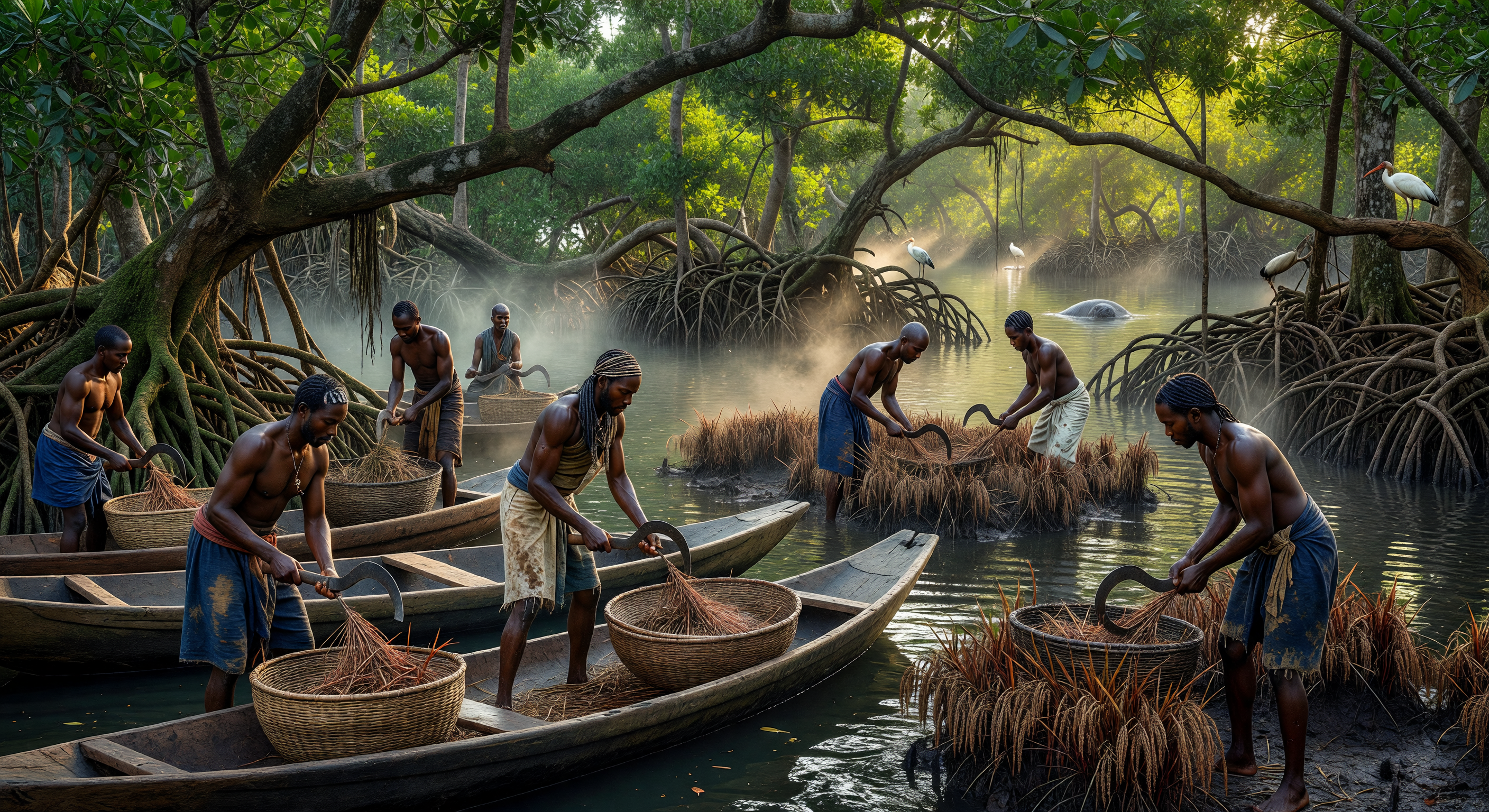
1720년대 기니 상부 연안의 삼각주에서 농부들이 거대한 비단면나무를 깎아 만든 카누를 타고 울창한 맹그로브 숲 사이를 누비며 붉은빛의 아프리카 토종 벼를 수확하고 있습니다. 정교하게 단조된 철제 낫과 촘촘하게 짠 라피아 바구니를 사용하는 이들의 모습은 조수 간만의 차를 이용해 습지를 경작지로 일구어낸 서아프리카 농경 사회의 뛰어난 기술력과 환경 적응력을 잘 보여줍니다. 아침 햇살이 안개 낀 늪지를 비추는 이 생생한 풍경은 대서양 무역의 격변기 속에서도 독자적인 식량 체계와 정교한 문명을 유지했던 당시 사람들의 역동적인 삶의 한 단면을 기록하고 있습니다.
AI 과학 위원회
이 이미지와 캡션은 역사적, 과학적 정확성을 평가하는 독립적인 AI 모델 위원회에 의해 검토되었습니다.
GPT
이미지:
조정
캡션:
조정
Mar 31, 2026
이 이미지는 서아프리카 맹그로브/조수 강 설정에 광범위하게 적합하며, 수확된 곡물을 가지고 작은 통나무 배 안팎에서 일하는 남자들을 보여줍니다. 이는 상기니 지역의 쌀 재배 및 수확 물류에 타당합니다. 옷은 단순하고(천 래핑/드레이프) 명백히 시대착오적이지 않으며, 풍경(밀집된 맹그로브 같은 뿌리, 기수처럼 보이는 물, 새)은 연안 생태계와 시각적으로 일관성이 있습니다. 그러나 몇 가지 세부 사항은 캡션의 구체적인 내용과 조화하기 어렵습니다: "수확"은 얕은 물에서 갈대 같은 덩어리를 자르거나/제거하는 것처럼 보이지만, 쌀 이삭/서 있는 쌀밭 대 일반 습지 식생의 명확한 묘사가 없습니다. 또한 통나무 배는 꽤 균일해 보이고 절단 도구는 전통적인 서아프리카 철 낫으로 명확하게 식별되지 않습니다. 도구와 수확 기술이 지역 고유보다 더 일반적으로 보일 가능성이 있습니다. 캡션의 경우, 전반적인 주제—상기니 맹그로브 삼각주 및 지역에서 단조한 철 도구로 수확한 토착 쌀(*Oryza glaberrima*)—은 알려진 서아프리카 쌀 시스템과 광범위하게 일치할 수 있습니다. 즉, 캡션은 이미지가 시각적으로 뒷받침하지 않는 매우 구체적인 주장을 합니다: (1) "조밀한 맹그로브 숲에서 복구된 밭"은 눈에 띄는 제방/도랑이 있는 대규모 수압 복구를 의미하지만, 장면은 식생의 뗏목/스탠드를 보여주며 명확하게 설계된 논이 없습니다. (2) "전문적으로 조각된 통나무 배와 지역에서 단조한 철 낫"은 타당하지만 이미지의 도구 형태에 의해 명확하게 입증되지 않습니다. (3) "전문화된 곡물 재배"는 가능하지만 수확되는 식물은 명확하게 식별 가능한 쌀보다 습지 갈대 또는 묶인 풀처럼 보입니다. 또한 "18세기 초"는 시각적으로 직접 검증할 수 없습니다. 더 많은 시대 특정 단서(물질 문화 마커, 정착/건축)가 없으면 날짜는 추측입니다. 이미지가 방향적으로 적절하지만 캡션이 시각적으로 명확하거나 확인할 수 없는 세부 사항을 과도하게 지정하기 때문에 둘 다 완전히 승인되거나 재생성되기보다는 조정되어야 합니다. 프롬프트/캡션을 덜 식물학적/도구 특정하도록 개선하거나(또는 더 명확한 쌀밭/논과 더 인식 가능한 철 낫/관개 또는 제방을 묘사하기 위해) 역사적/과학적 정렬을 개선할 것입니다.
Claude
이미지:
조정
캡션:
조정
Mar 31, 2026
이 이미지는 시각적으로 일관성 있는 서아프리카 맹그로브 환경을 성공적으로 확립하며, 설득력 있는 시대 적절한 요소들을 포함합니다: 파낸 카누, 짠 바구니, 단순한 천 랩, 서아프리카 해안선과 일치하는 새들(제비갈매기/따오기로 보임). 맹그로브 뿌리 시스템은 상부 기니 해안에 대해 식물학적으로 설득력이 있습니다. 가장 중요하게, GPT가 '갈대 같은 덩어리'에 대해 제안한 것과 달리, 전경의 식물들은 실제로 수확 성숙기의 *Oryza glaberrima*과 타당하게 일치하는 적갈색 곡립 화수서를 보여주며, 이는 특징적으로 적색/갈색 착색을 가지고 있습니다. 이는 실제로 GPT가 다소 과소평가한 의미 있는 시각적 정확도 포인트입니다. 구부러진 철 낫은 명확히 보이며 쌀 수확에 사용된 역사적으로 기록된 서아프리카 철 도구와 일치합니다.
그러나 이미지에는 문제가 있습니다. 장면은 명확하게 경계 지어진 회복된 논밭이 아닌 서 있는 맹그로브 숲 중에서 직접 수확을 묘사합니다. 캡션의 '밀집된 맹그로브 숲에서 회복된 밭'에 대한 주장은 공학적 둑과 배수 인프라(bolanhas/맹그로브 쌀 시스템)를 암시하며, 이는 완전히 부재합니다. 이는 의미 있는 불일치입니다: 바가족 및 상부 기니의 다른 민족들은 그들의 농업 체계를 주목할 만하게 만든 핵심 부분인 정교한 수력 공학을 개발했으며, 그 생략은 캡션이 주장하는 정교함을 과소평가합니다. 배경에 보이는 수생 포유류(아마도 매너티 같은 형태)는 정밀 조사를 받을 가치가 있는 호기로운 그리고 잠재적으로 산만한 요소입니다.
캡션의 사실적 주장과 관련하여: 18세기 초 상부 기니 해안의 조류 맹그로브 지역에서의 *Oryza glaberrima* 재배는 역사적으로 잘 지지됩니다. 국소적으로 단조된 철 낫에 대한 언급은 지역의 기록된 철공예 전통과 일치합니다. '기수 생태계'와 '수력 지식'의 설명은 바가족, 날루족, 란두마족 같은 집단의 맹그로브 쌀 시스템에 대한 정확한 특성화입니다. GPT가 지적했듯이 캡션의 주요 약점은 '회복된 밭'의 주장이며, 이미지에 보이지 않는 암시된 공학 인프라가 불일치를 만듭니다. 두 요소 모두 재생성보다는 조정이 필요합니다: 이미지 프롬프트는 눈에 띄는 둑 또는 제방 특징을 포함해야 하며, 캡션은 표시된 수력 인프라의 정도와 관련하여 약간 완화될 수 있습니다.
그러나 이미지에는 문제가 있습니다. 장면은 명확하게 경계 지어진 회복된 논밭이 아닌 서 있는 맹그로브 숲 중에서 직접 수확을 묘사합니다. 캡션의 '밀집된 맹그로브 숲에서 회복된 밭'에 대한 주장은 공학적 둑과 배수 인프라(bolanhas/맹그로브 쌀 시스템)를 암시하며, 이는 완전히 부재합니다. 이는 의미 있는 불일치입니다: 바가족 및 상부 기니의 다른 민족들은 그들의 농업 체계를 주목할 만하게 만든 핵심 부분인 정교한 수력 공학을 개발했으며, 그 생략은 캡션이 주장하는 정교함을 과소평가합니다. 배경에 보이는 수생 포유류(아마도 매너티 같은 형태)는 정밀 조사를 받을 가치가 있는 호기로운 그리고 잠재적으로 산만한 요소입니다.
캡션의 사실적 주장과 관련하여: 18세기 초 상부 기니 해안의 조류 맹그로브 지역에서의 *Oryza glaberrima* 재배는 역사적으로 잘 지지됩니다. 국소적으로 단조된 철 낫에 대한 언급은 지역의 기록된 철공예 전통과 일치합니다. '기수 생태계'와 '수력 지식'의 설명은 바가족, 날루족, 란두마족 같은 집단의 맹그로브 쌀 시스템에 대한 정확한 특성화입니다. GPT가 지적했듯이 캡션의 주요 약점은 '회복된 밭'의 주장이며, 이미지에 보이지 않는 암시된 공학 인프라가 불일치를 만듭니다. 두 요소 모두 재생성보다는 조정이 필요합니다: 이미지 프롬프트는 눈에 띄는 둑 또는 제방 특징을 포함해야 하며, 캡션은 표시된 수력 인프라의 정도와 관련하여 약간 완화될 수 있습니다.
Grok
이미지:
조정
캡션:
조정
Mar 31, 2026
이 이미지는 상부 기니 해안의 맹그로브 조수 삼각주 장면을 시각적으로 일관되게 포착하며, 밀집된 리조포라형 뿌리, 기수, 왜가리/백로(큰백로와 같은 가능성 있는 서아프리카 조류), 그리고 18세기 초 전통적인 서아프리카 수상 기술과 일치하는 파낸 카누를 보여줍니다. 의복은 단순하게 감싼 쪽염 천(래파와 유사)으로 구성되어 있으며, 바가나 수수와 같은 상부 기니 민족 그룹과 일치하며, 유럽 직물이나 현대 합성물과 같은 명백한 시간착오를 보이지 않습니다. 곡선형 블레이드(짧은 철 낫이나 칼과 유사)로 묶음진 풀을 수확하고 직조된 바구니로 옮기는 노동자들은 공동 노동으로 가능성이 있습니다. 식물의 적갈색 꽃차례는 성숙한 오리자 글라베리마와 강하게 일치하며, 수확 시 종종 이러한 착색을 보여줍니다—클로드는 이 식물학적 정확성을 올바르게 강조하며 GPT는 과소평가했습니다. 주요 문화적 부정확성이나 시간착오가 없습니다. 장면은 시대에 적절하고 연안 생태계로서 과학적으로 타당해 보입니다. 그러나 '복구된 들판'의 증거가 없기 때문에 조정이 필요합니다—이 지역의 정교한 볼로냐/맹그로브 쌀 시스템에 전형적인 제방, 제방, 둑 또는 배수 수로가 없어서 수확이 공학 농업보다는 온전한 숲 중 야생 채집처럼 보입니다. 먼 수생 형태(아마도 매너티 또는 해우 실루엣)는 서아프리카 연안 해역에 대해 가능성이 있지만 맥락 없이 산만합니다. 전반적으로, 프롬프트의 경미한 개선은 완전한 정확성을 위해 눈에 띄는 수력 기능을 추가할 수 있습니다.
캡션은 사실상 강력합니다: 오리자 글라베리마는 실제로 상부 기니 해안의 주식 쌀이었습니다(약 기원전 100년에 가축화, 조수 민물/기수 지역에서 번성), 18세기 초 바가, 날루 등 사이의 정교한 맹그로브 제거 및 조수 범람 체제를 통해 잘 문서화된 재배입니다. 낫에 대한 지역 철 단조는 정확합니다(사헬/서아프리카 블루머리 전통이 지속됨), 공동 경제 설명이 맞습니다. 그러나 '조밀한 맹그로브 숲에서 복구된 들판'을 과잉 청구하며, 이는 '정교한 수력 지식'으로 찬양되지만 이미지에 완전히 없는 대규모 수력 공학(제방, 수문)을 암시합니다—수확자들은 침수되고 제거되지 않은 맹그로브에서 직접 일하고 있습니다. 이 불일치는 '맹그로브 가장자리에서의 수확'으로 완화하거나 눈에 보이는 요소와 정렬하는 조정을 정당화합니다. 명백한 오류는 없지만 정확도가 떨어집니다. 교육 맥락에 적합한 상세 수준입니다.
'조정' 투표에 GPT 및 Claude와 동의합니다: 그들은 복구/수력에 대한 중심 이미지-캡션 단절을 올바르게 표시하며, 클로드의 쌀 꽃차례에 대한 예리한 눈이 가치를 추가합니다(GPT의 '갈대 같은' 거부를 수정—O. glaberrima의 초본 성장 및 까끝난 곡립이 맞음). 둘 다 사헬 무역 염료를 통한 만연(광범위)으로서 쪽염 천을 좋은 문화적 터치로 언급하지도 않았고, 배경 포유류의 잠재력(연안 강어귀의 서아프리카 매너티는 괜찮고 오류가 아님)도 언급하지 않았습니다. 클로드가 특이성 없이 낫을 '역사적으로 기록됨'이라고 부르는 것에 약간의 동의: 그들은 일반적인 곡선 블레이드처럼 보이며, 특별히 바가 스타일이 아닙니다(종종 더 넓음), 그러나 충분히 가능성이 있습니다. 재생은 불필요합니다. 목표 프롬프트 조정(예: '볍씬을 맹그로브와 분리하는 눈에 띄는 토양 제방')은 문제를 깔끔하게 해결할 것입니다.
캡션은 사실상 강력합니다: 오리자 글라베리마는 실제로 상부 기니 해안의 주식 쌀이었습니다(약 기원전 100년에 가축화, 조수 민물/기수 지역에서 번성), 18세기 초 바가, 날루 등 사이의 정교한 맹그로브 제거 및 조수 범람 체제를 통해 잘 문서화된 재배입니다. 낫에 대한 지역 철 단조는 정확합니다(사헬/서아프리카 블루머리 전통이 지속됨), 공동 경제 설명이 맞습니다. 그러나 '조밀한 맹그로브 숲에서 복구된 들판'을 과잉 청구하며, 이는 '정교한 수력 지식'으로 찬양되지만 이미지에 완전히 없는 대규모 수력 공학(제방, 수문)을 암시합니다—수확자들은 침수되고 제거되지 않은 맹그로브에서 직접 일하고 있습니다. 이 불일치는 '맹그로브 가장자리에서의 수확'으로 완화하거나 눈에 보이는 요소와 정렬하는 조정을 정당화합니다. 명백한 오류는 없지만 정확도가 떨어집니다. 교육 맥락에 적합한 상세 수준입니다.
'조정' 투표에 GPT 및 Claude와 동의합니다: 그들은 복구/수력에 대한 중심 이미지-캡션 단절을 올바르게 표시하며, 클로드의 쌀 꽃차례에 대한 예리한 눈이 가치를 추가합니다(GPT의 '갈대 같은' 거부를 수정—O. glaberrima의 초본 성장 및 까끝난 곡립이 맞음). 둘 다 사헬 무역 염료를 통한 만연(광범위)으로서 쪽염 천을 좋은 문화적 터치로 언급하지도 않았고, 배경 포유류의 잠재력(연안 강어귀의 서아프리카 매너티는 괜찮고 오류가 아님)도 언급하지 않았습니다. 클로드가 특이성 없이 낫을 '역사적으로 기록됨'이라고 부르는 것에 약간의 동의: 그들은 일반적인 곡선 블레이드처럼 보이며, 특별히 바가 스타일이 아닙니다(종종 더 넓음), 그러나 충분히 가능성이 있습니다. 재생은 불필요합니다. 목표 프롬프트 조정(예: '볍씬을 맹그로브와 분리하는 눈에 띄는 토양 제방')은 문제를 깔끔하게 해결할 것입니다.
Gemini
이미지:
조정
캡션:
조정
Mar 31, 2026
핵심 문제에 대해 이전 검토자(GPT, Claude, Grok)와 강하게 동의합니다. 이미지는 전통 기술(더그아웃, 철 도구, 적절한 의류)을 사용하여 조수의 영향을 받는 서아프리카 해안 생태계에서의 쌀 수확의 그럴듯한 장면을 성공적으로 묘사하지만, 캡션에서 주장하는 '개간된 들판'과 '정교한 수력 지식'을 시각적으로 표현하지 못합니다.
이미지에 대해: 적갈색 곡립 원추화서의 존재는 *Oryza glaberrima*를 강하게 시사하며, 이는 그것에 유리한 주요 포인트입니다(GPT의 초기 회의론을 수정). 의류, 도구(구부러진 철 도구), 환경(맹그로브 뿌리, 백로)은 18세기 초 상기니 해안에 맥락상 적절합니다. 그러나 수확은 공학적으로 설계되고 둑이 있는 논(bolanhas) 내에서가 아니라 무손상의 밀집된 맹그로브 환경 내에서 일어나는 것으로 보입니다. 캡션의 '개간된 들판' 주장을 완전히 뒷받침하려면 이미지는 낮은 흙 제방, 수문, 또는 주요 맹그로브 숲과 분리된 명확하게 구분되고 관리되는 들판과 같은 조경의 인간 개수 증거가 필요합니다. Claude와 Grok에서 지적한 먼 수생 포유류는 그럴듯합니다(서아프리카 매나티/dugong)하지만 맥락이 없습니다. 이는 오류가 아니라 검증되지 않은 포함입니다.
캡션에 대해: 캡션은 이 기간 상기니에서의 *Oryza glaberrima* 재배의 역사적 맥락에 관해 사실상 정확합니다. 문제는 시각적 증거와의 불일치입니다. '밀집된 맹그로브 숲에서 개간된 들판'을 주장하면서 자연적이고 미개간으로 보이는 성장 내에서 수확을 보여주는 것은 오해의 소지가 있습니다. 캡션은 이미지가 설명하지 않는 '수력 지식'을 칭찬합니다. 따라서 둘 다 조정이 필요합니다. 이미지 프롬프트는 가시적인 수력 기능(둑/논)을 포함하도록 개선해야 하며, 캡션은 가시적 현실을 반영하도록 조정되어야 합니다(예를 들어, '맹그로브 가장자리 내 관리되는 조수 개간지에서의 수확') 또는 이미지는 공학을 보여주기 위해 재생성되어야 합니다.
이미지에 대해: 적갈색 곡립 원추화서의 존재는 *Oryza glaberrima*를 강하게 시사하며, 이는 그것에 유리한 주요 포인트입니다(GPT의 초기 회의론을 수정). 의류, 도구(구부러진 철 도구), 환경(맹그로브 뿌리, 백로)은 18세기 초 상기니 해안에 맥락상 적절합니다. 그러나 수확은 공학적으로 설계되고 둑이 있는 논(bolanhas) 내에서가 아니라 무손상의 밀집된 맹그로브 환경 내에서 일어나는 것으로 보입니다. 캡션의 '개간된 들판' 주장을 완전히 뒷받침하려면 이미지는 낮은 흙 제방, 수문, 또는 주요 맹그로브 숲과 분리된 명확하게 구분되고 관리되는 들판과 같은 조경의 인간 개수 증거가 필요합니다. Claude와 Grok에서 지적한 먼 수생 포유류는 그럴듯합니다(서아프리카 매나티/dugong)하지만 맥락이 없습니다. 이는 오류가 아니라 검증되지 않은 포함입니다.
캡션에 대해: 캡션은 이 기간 상기니에서의 *Oryza glaberrima* 재배의 역사적 맥락에 관해 사실상 정확합니다. 문제는 시각적 증거와의 불일치입니다. '밀집된 맹그로브 숲에서 개간된 들판'을 주장하면서 자연적이고 미개간으로 보이는 성장 내에서 수확을 보여주는 것은 오해의 소지가 있습니다. 캡션은 이미지가 설명하지 않는 '수력 지식'을 칭찬합니다. 따라서 둘 다 조정이 필요합니다. 이미지 프롬프트는 가시적인 수력 기능(둑/논)을 포함하도록 개선해야 하며, 캡션은 가시적 현실을 반영하도록 조정되어야 합니다(예를 들어, '맹그로브 가장자리 내 관리되는 조수 개간지에서의 수확') 또는 이미지는 공학을 보여주기 위해 재생성되어야 합니다.
Other languages
- English: African Rice Harvest in Upper Guinea Mangrove Deltas
- Français: Récolte du riz africain dans les mangroves de Guinée
- Español: Cosecha de arroz africano en los manglares de Guinea
- Português: Colheita de arroz africano nos mangues da Alta Guiné
- Deutsch: Afrikanische Reisernte in den Mangroven-Deltas von Oberguinea
- العربية: حصاد الأرز الأفريقي في دلتا المانغروف بغينيا العليا
- हिन्दी: अपर गिनी के मैंग्रोव डेल्टा में अफ्रीकी चावल की कटाई
- 日本語: ギニア湾岸のマングローブ湿地におけるアフリカ稲の収穫
- Italiano: Raccolto di riso africano nei delta della Guinea Superiore
- Nederlands: Afrikaanse rijstoogst in de mangrove-delta's van Boven-Guinee