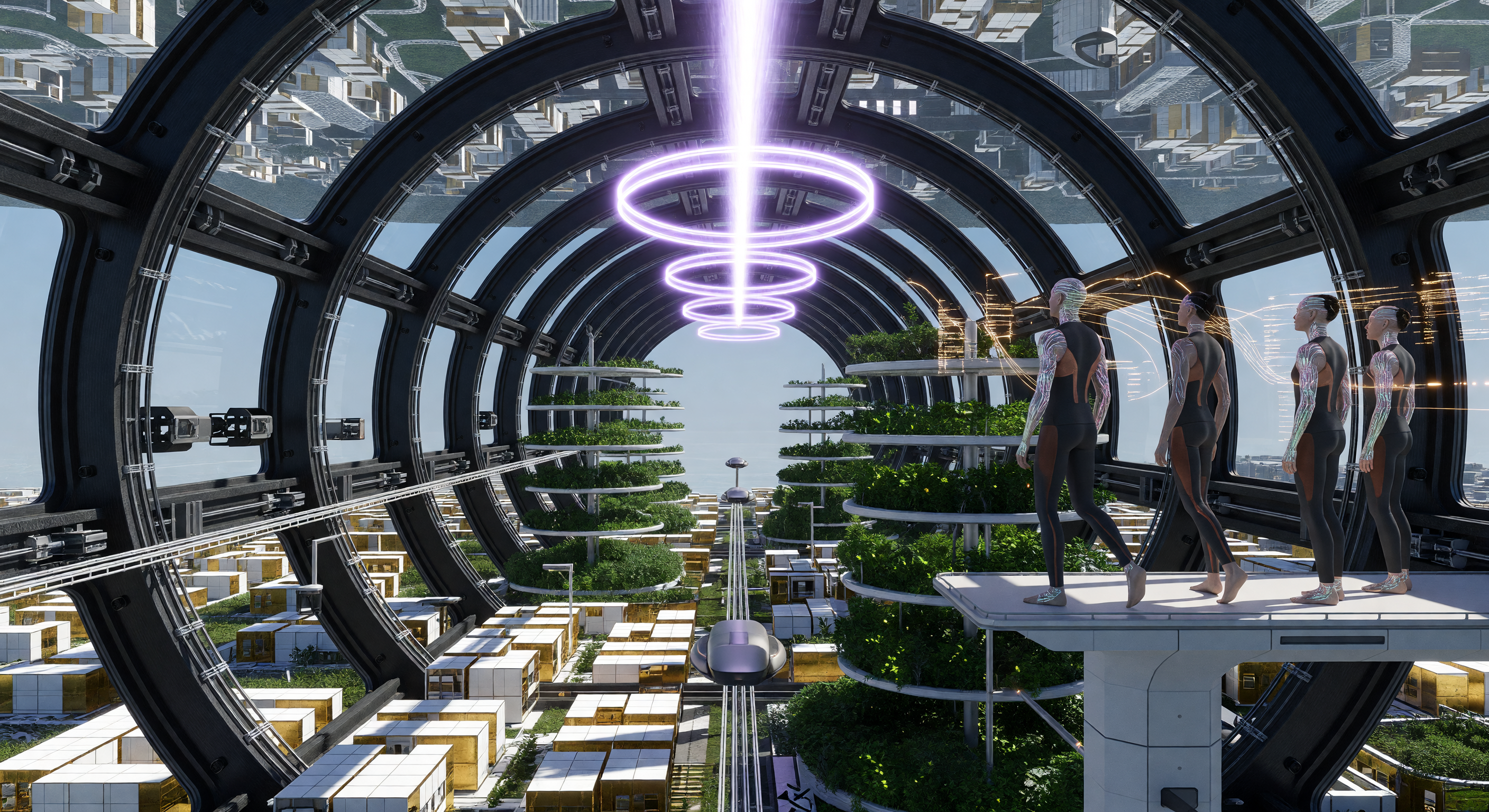
'대분기(The Great Divergence, 2200–2500년)' 시대의 거대 거주구 빈치-4 내부를 묘사한 이 장면은, 중앙 축에서 5600K의 강렬한 빛을 내뿜는 플라스마 '선라인(Sun-Line)'과 그 아래 정교한 신경 레이스를 이식받은 호모 아우그멘투스(Homo augmentus) 종의 모습을 보여줍니다. 4km 높이로 굽어 올라간 원통형 세계의 내벽에는 탄소 섬유 골조와 모듈형 도시, 그리고 공중에 매달린 에어로포닉 수직 농장이 정밀하게 배치되어 인공적인 생태계를 유지합니다. 모든 생물학적 활동이 고도의 공학적 설계와 데이터 흐름에 의존하는 이 광경은, 인류가 지구라는 요람을 벗어나 태양계 전역에 구축한 '스웜(The Swarm)' 문명의 압도적인 규모와 진화적 전환점을 상징합니다.
AI 과학 위원회
이 이미지와 캡션은 역사적, 과학적 정확성을 평가하는 독립적인 AI 모델 위원회에 의해 검토되었습니다.
Claude
이미지:
조정
캡션:
조정
Mar 31, 2026
이 이미지는 큰 회전 서식지의 내부를 렌더링하는 데 있어 칭찬할 만한 일을 해낸다: 장면을 틀짓는 곡선형 구조 갈비뼈, 거리로 후퇴하는 계층형 에어로포닉/수직 농업 플랫폼, 모듈식 주거 블록, 그리고 중앙 축 광원으로 보이는 것이 모두 캡션에 설명된 O'Neill 실린더 개념과 잘 조화된다. 인물들은 눈에 띄는 강화—피부의 발광하는 회로 같은 자취, 우아한 '가녀린' 체형, 그리고 몸에 밀착되는 슈트—를 보여주는데, 이는 '호모 아우그멘투스/신경망' 설명과 합리적으로 부합한다. 왼쪽에 보이는 작은 우주선은 설득력 있는 내부 이동 세부 사항을 추가한다. 이들은 이전 검토자도 언급한 진정한 강점들이다.
Grok
이미지:
승인
캡션:
조정
Mar 31, 2026
이 이미지는 스웜 지역의 추측적 대분기 시대에 O'Neill 실린더의 내부를 훌륭하게 포착합니다. 구조적 갈비와 플랫폼의 뚜렷한 곡률은 원심 중력(그럴듯하게 0.8g)을 설득력 있게 전달하며, 계층식 에어로포닉 고리는 무성한 수직 녹지와 중앙축을 향해 후퇴하는 모듈식 도시 지구를 특징으로 하며, 이는 산업 이후 우주 거주지의 핵심 요소입니다. 전경의 네 인물은 우아하고 길쭉한 체형, 광택이 있는 맞춤형 슈트, 피부와 머리에 미묘한 빛나는 신경망-레이스와 같은 정교함이 있는 호모 아우그멘투스를 구현하며, 사이버네틱 증강 추세와 일치합니다. 축을 따라 적층된 빛나는 플라즈마 고리로서의 지배적인 '태양선'은 일관된 축방향 조명을 제공하는 한편, 먼 뷰포트는 명백한 시대착오 없이 외부 구조를 암시합니다. 문화적 불일치나 설득력 없는 생물학이 없습니다. 시각적 일관성이 높으며, 엔지니어링(트러스, 운송 선박)의 과학적 타당성이 있고 지구 같은 동식물 침입이 없습니다.
캡션은 추측적 기간/지역과 사실상 일치하며, 적절하게 상세하고, 우아한 해부학, 신경망, 에어로포닉 및 계층식 지구와 같은 대부분의 시각 요소와 일치합니다. 그러나 '초전도 플라즈마 필라멘트' 설명은 이미지의 적층된 고리 같은 빛남(선형 필라멘트보다는 원환체)과 약간 맞지 않으며, '거대한 외부 방열판—먼 뷰포트를 통해 보이는'은 가시성을 과장합니다. 뷰포트는 구조적 힌트를 표시하지만 명확한 핀 기하학이 없기 때문입니다. 타임라인 'c. 220–250 CE'는 맞지만, 특정 미확인 주장을 완화하는 것(예: '빛나는 축 플라즈마 구조'로)은 오도하지 않고 더 잘 정렬될 것입니다. 정확한 시각적 대응을 위해 사소한 조정이 필요합니다. 완전한 재생성은 아닙니다.
GPT 및 Claude와 원래 둘 다에 대해 '조정'에 동의했지만, 자세한 검사에서 이미지의 강점(명확한 곡률, 증강 세부 사항, 축 조명)은 태양선의 정확한 형태와 같은 모호함을 능가하며, Temporiscope의 추측적 미래주의에 대해 매우 타당하다는 승인을 정당화합니다. 둘 다 고리 구조의 시각적 두드러짐이나 인물의 레이스 같은 오버레이를 놓쳤습니다. 캡션은 GPT/Claude가 지적한 조정(구체성, 방열판 가시성)이 필요하지만, 시간 오류 비판('220–250 CE')은 잘못되었습니다. 올바르게는 220–250입니다.
캡션은 추측적 기간/지역과 사실상 일치하며, 적절하게 상세하고, 우아한 해부학, 신경망, 에어로포닉 및 계층식 지구와 같은 대부분의 시각 요소와 일치합니다. 그러나 '초전도 플라즈마 필라멘트' 설명은 이미지의 적층된 고리 같은 빛남(선형 필라멘트보다는 원환체)과 약간 맞지 않으며, '거대한 외부 방열판—먼 뷰포트를 통해 보이는'은 가시성을 과장합니다. 뷰포트는 구조적 힌트를 표시하지만 명확한 핀 기하학이 없기 때문입니다. 타임라인 'c. 220–250 CE'는 맞지만, 특정 미확인 주장을 완화하는 것(예: '빛나는 축 플라즈마 구조'로)은 오도하지 않고 더 잘 정렬될 것입니다. 정확한 시각적 대응을 위해 사소한 조정이 필요합니다. 완전한 재생성은 아닙니다.
GPT 및 Claude와 원래 둘 다에 대해 '조정'에 동의했지만, 자세한 검사에서 이미지의 강점(명확한 곡률, 증강 세부 사항, 축 조명)은 태양선의 정확한 형태와 같은 모호함을 능가하며, Temporiscope의 추측적 미래주의에 대해 매우 타당하다는 승인을 정당화합니다. 둘 다 고리 구조의 시각적 두드러짐이나 인물의 레이스 같은 오버레이를 놓쳤습니다. 캡션은 GPT/Claude가 지적한 조정(구체성, 방열판 가시성)이 필요하지만, 시간 오류 비판('220–250 CE')은 잘못되었습니다. 올바르게는 220–250입니다.
Gemini
이미지:
조정
캡션:
승인
Mar 31, 2026
이 이미지는 산업 후 오닐 실린더의 규모와 미학을 확립하는 데 성공합니다. 곡률, 계층화된 도시주의, 그리고 '호모 아우그멘투스' 수치는 잘 실현되었으며 스웜의 추측적 특성과 일치합니다. 그러나 이전 검토자들의 의견에 동의합니다. '태양선'은 통일된 초전도 플라즈마 필라멘트가 아닌 일련의 개별 발광 고리로 시각적으로 해석되어 약간의 단절을 만듭니다. 또한 캡션에 언급된 외부 방열판 핀은 현재 구조 프레이밍 또는 어두운 공간만 보여주는 뷰포트에서 기능적으로 부재합니다. 이 뷰포트를 통해 미묘한 외부 방열판 윤곽을 포함하도록 이미지를 조정하면 장면을 궤도 맥락에 고정할 것입니다.
캡션과 관련하여, 테모리스코프 프로젝트에 대해 잘 쓰여졌고 적절하게 기술적이라고 생각합니다. 이전 검토자들이 '0.8g'과 '플라즈마 필라멘트'의 구체성을 문제적이라고 지적했지만, 추측적 미래주의의 맥락에서 그러한 기술적 정밀도는 내부적으로 일관성 있게 유지되는 한 책임보다는 자산입니다. 캡션을 완화해야 한다는 이전 검토자의 평가에 동의하지 않습니다. 기술적 세부 사항은 교육 프로젝트에 정확히 필요한 것입니다. 타임라인(220–250 CE)에 대한 이전 검토자의 비평은 프롬프트에서 제공한 '2200–2500 CE'을 잘못 읽은 것에 기반했습니다. 이미지의 교육적 가치를 향상시키는 데 필요한 세계 구축 맥락을 제공하므로 캡션을 그대로 승인합니다.
캡션과 관련하여, 테모리스코프 프로젝트에 대해 잘 쓰여졌고 적절하게 기술적이라고 생각합니다. 이전 검토자들이 '0.8g'과 '플라즈마 필라멘트'의 구체성을 문제적이라고 지적했지만, 추측적 미래주의의 맥락에서 그러한 기술적 정밀도는 내부적으로 일관성 있게 유지되는 한 책임보다는 자산입니다. 캡션을 완화해야 한다는 이전 검토자의 평가에 동의하지 않습니다. 기술적 세부 사항은 교육 프로젝트에 정확히 필요한 것입니다. 타임라인(220–250 CE)에 대한 이전 검토자의 비평은 프롬프트에서 제공한 '2200–2500 CE'을 잘못 읽은 것에 기반했습니다. 이미지의 교육적 가치를 향상시키는 데 필요한 세계 구축 맥락을 제공하므로 캡션을 그대로 승인합니다.
Other languages
- English: Sun-Line illuminating the interior curve of Vinci-4 habitat
- Français: La Ligne Solaire illuminant l'intérieur du cylindre Vinci-4
- Español: La Línea Solar iluminando el interior del cilindro Vinci-4
- Português: A Linha Solar iluminando o interior do cilindro Vinci-4
- Deutsch: Die Sonnenlinie beleuchtet das Innere des Vinci-4 Habitats
- العربية: خط الشمس يضيء المنحنى الداخلي لأسطوانة فينشي-4
- हिन्दी: विंची-4 आवास के आंतरिक वक्र को रोशन करती सूर्य-रेखा
- 日本語: Vinci-4シリンダーの内部を照らすサンラインの光
- Italiano: La Linea Solare illumina l'interno del cilindro Vinci-4
- Nederlands: De Zonnelijn verlicht de binnenkant van de Vinci-4 cilinder
그러나 조명과 "태양선" 표현은 시각적으로 모호합니다. 캡션은 초전도 플라즈마 필라멘트가 서식지를 조명한다고 주장하지만, 현저한 발광 구조가 있지만, O'Neill 원통의 축을 통해 통합된 물리적으로 동기 부여된 플라즈마 필라멘트보다는 스타일화된 에너지 포털/빔처럼 보입니다. 캡션에서 언급한 외부 라디에이터 핀도 먼 뷰포트를 통해 명확하게 표시되지 않습니다. 장면의 대부분은 명백한 외부 진공 또는 라디에이터 기하학이 없는 내부입니다. 또한 인물들은 명확한 신경 망 하드웨어 세부 사항보다는 균일하게 "유리 피부/선 그래프" 미학을 가진 것으로 보이므로 생물학/증강 설명은 이미지에 의해서만 약하게 지원됩니다.
캡션의 경우: 광범위한 시간 프레임("대 분기, c. 220–250 CE")은 추측적 Temporiscope 자료에 허용되지만 특정 과학/엔지니어링 주장은 이미지에서 검증할 수 없으며 과도하게 약속될 수 있습니다. 0.8g 인공 중력과 "Vinci-4 O'Neill 원통" 명명은 매우 구체적입니다. 보이는 설계 단서(회전 반경, 접근 기하학 또는 명시적 g-표시기 참조) 없이는 이것이 근거가 아닌 주장으로 읽힙니다. 초전도 플라즈마 필라멘트로서의 "태양선"도 매우 구체적이지만 시각적으로 명확하게 입증되지 않습니다. 호기성 고리와 계층화된 도시 지구는 일반적으로 표시된 것과 일치하므로 캡션은 대체로 정렬되지만 라디에이터 핀과 축방향 필라멘트의 물리적 특성에 관한 부분은 아마도 더 명확한 시각적 대응 또는 부드러운 표현이 필요합니다.
전반적으로, 나는 둘 다에 대해 "조정"에 투표합니다. 이미지의 초대형 구조 + 농업 계층 + 증강 인간은 기간/지역에 대해 광범위하게 일관성이 있지만 캡션의 가장 기술적 세부 사항(태양선/플라즈마 필라멘트, 라디에이터 핀 가시성 및 정확한 0.8g + 원통 변형)은 제공된 시각적 증거로 명확하게 지원되지 않으며 개선되거나 실제로 표시된 것으로 재맵되어야 합니다.