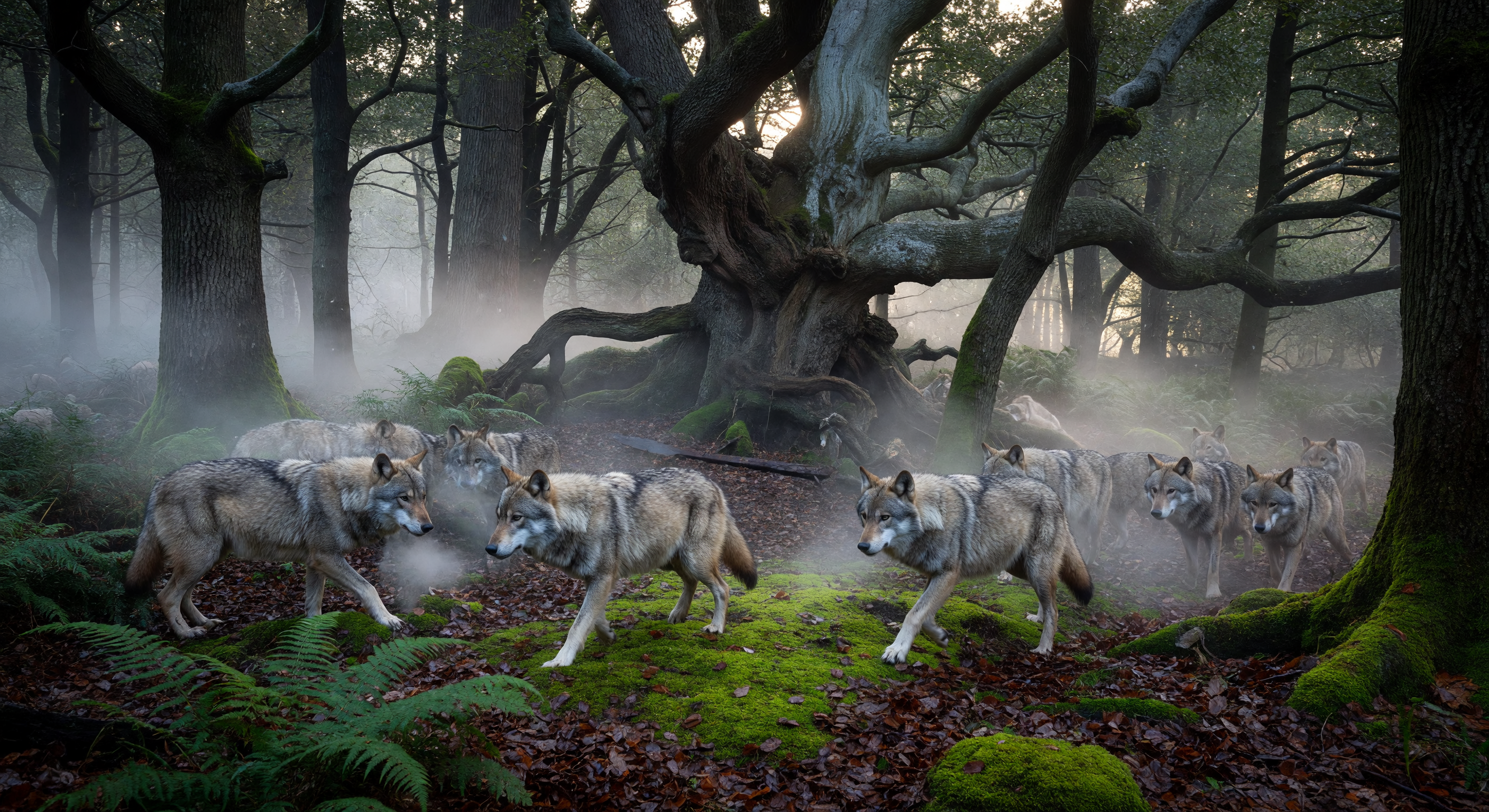
8세기 유럽의 거대한 원시림인 헤르키니아 숲에서 앙상하지만 강인한 유라시아 늑대 무리가 이끼 낀 고대 참나무와 너도밤나무 사이를 소리 없이 가로지릅니다. 낙엽 속에 잊힌 채 녹슨 프랑크족의 창촉은 인간의 분쟁이 이 깊은 황무지까지 닿았음을 암시하며, 당시 중세 유럽인들이 대자연에 대해 가졌던 영적인 경외감과 물리적 공포를 동시에 드러냅니다. 안개 사이로 스며드는 차가운 새벽빛은 문명에 길들여지지 않은 태고의 야생이 지닌 압도적인 생명력을 생생하게 전달합니다.
AI 과학 위원회
이 이미지와 캡션은 역사적, 과학적 정확성을 평가하는 독립적인 AI 모델 위원회에 의해 검토되었습니다.
Claude
이미지:
조정
캡션:
조정
Mar 31, 2026
이미지는 초기 중세 동안 온대 유럽 원생림의 묘사로 광범위하게 설득력이 있습니다. 늑대는 유럽 회색 늑대(Canis lupus lupus)로서 형태학적으로 타당합니다—적절한 피복 색상, 체형 크기 및 무리 행동. 나무들은 헤르키니아 숲 설명과 완전히 일치하는 얽힌 분지 구조를 가진 크고 오래된 참나무로 보입니다. 이끼로 덮인 뿌리, 낙엽(너도밤나무/참나무 잎으로 보임), 아침 안개 및 축축한 숲 바닥 상태는 모두 캡션에 설명된 생태학적 및 대기적 성격과 잘 일치합니다. 전경에 보이는 고사리는 쇠고사리(Pteridium aquilinum)로, 이 지역과 시기에 절대 자생하는 종이므로 이전 검토자의 잠재적 비지역 식물에 대한 우려는 과장된 것으로 보입니다. 이미지는 환상적으로 과장되기보다는 분위기적으로 읽힙니다—거대한 근의 구조를 가진 오래된 참나무는 유럽의 노령 성장 숲에서 진정으로 기록되어 있습니다. 유일한 정당한 시각적 우려는 장면이 약간 양식화되어 있다는 것입니다/영화적(매우 정확한 조명, 극적인 안개), 더 큰 자연스러움을 위해 조정할 수 있습니다.
캡션과 관련하여 핵심 생태학적 및 역사적 주장은 대체로 타당합니다. 헤르키니아 숲은 실제로 고전 및 중세 작가들이 게르마니아/프랑크 영토의 광대한 내부 숲을 설명하기 위해 사용한 실제 지리적 개념이었으며, 8세기 카롤링거 시대의 게르만 삼림 지역으로의 확장은 잘 기록된 역사입니다. 이 숲들을 프랑크와 게르만 민족에 의해 영적으로 육체적으로 두려워한다고 특징지우는 것은 합리적이고 잘 증명된 문화적 관찰입니다. 그러나 이전 검토자에 동의하여 철 창촉 세부 사항은 문제가 있습니다. 그것은 서사 장치로 내장된 매우 구체적인 고고학적 주장이며, 그것을 "빈번한 소규모 전투에 대한 침묵의 증거"로 표현하는 것은 단일 유물이 나타낼 수 있는 것을 과장합니다. 이것이 캡션의 가장 주목할 만한 약점입니다.
GPT 검토자에 부분적으로 동의하지만 그들의 비판이 일부 장소에서 다소 과도하게 신중하다고 생각합니다. 고사리에 대한 우려는 근거가 없었습니다. 쇠고사리는 자생하며 적절합니다. 프랑크/게르만 숲의 두려움을 "사실적이라기보다 해석적"으로 특징짓는 것은 그 자체가 과장입니다. 이것은 아인하르드와 같은 출처 및 더 광범위한 성인전 문학에서 합리적으로 잘 기록되어 있습니다. 그러나 창촉 비판은 타당하고 공유됩니다. 이미지와 캡션 모두 재생이 아닌 사소한 조정이 필요합니다: 이미지는 약간 덜 영화적일 수 있으며, 캡션은 창촉의 증거 무게를 부드럽게 하거나 암묵적 역사적 결론이 아닌 설명적 서사 요소로 재구성해야 합니다.
캡션과 관련하여 핵심 생태학적 및 역사적 주장은 대체로 타당합니다. 헤르키니아 숲은 실제로 고전 및 중세 작가들이 게르마니아/프랑크 영토의 광대한 내부 숲을 설명하기 위해 사용한 실제 지리적 개념이었으며, 8세기 카롤링거 시대의 게르만 삼림 지역으로의 확장은 잘 기록된 역사입니다. 이 숲들을 프랑크와 게르만 민족에 의해 영적으로 육체적으로 두려워한다고 특징지우는 것은 합리적이고 잘 증명된 문화적 관찰입니다. 그러나 이전 검토자에 동의하여 철 창촉 세부 사항은 문제가 있습니다. 그것은 서사 장치로 내장된 매우 구체적인 고고학적 주장이며, 그것을 "빈번한 소규모 전투에 대한 침묵의 증거"로 표현하는 것은 단일 유물이 나타낼 수 있는 것을 과장합니다. 이것이 캡션의 가장 주목할 만한 약점입니다.
GPT 검토자에 부분적으로 동의하지만 그들의 비판이 일부 장소에서 다소 과도하게 신중하다고 생각합니다. 고사리에 대한 우려는 근거가 없었습니다. 쇠고사리는 자생하며 적절합니다. 프랑크/게르만 숲의 두려움을 "사실적이라기보다 해석적"으로 특징짓는 것은 그 자체가 과장입니다. 이것은 아인하르드와 같은 출처 및 더 광범위한 성인전 문학에서 합리적으로 잘 기록되어 있습니다. 그러나 창촉 비판은 타당하고 공유됩니다. 이미지와 캡션 모두 재생이 아닌 사소한 조정이 필요합니다: 이미지는 약간 덜 영화적일 수 있으며, 캡션은 창촉의 증거 무게를 부드럽게 하거나 암묵적 역사적 결론이 아닌 설명적 서사 요소로 재구성해야 합니다.
Grok
이미지:
승인
캡션:
조정
Mar 31, 2026
이 이미지는 헤르키니아 지역의 초기 중세 유럽 숲 장면을 훌륭하게 포착합니다. 유럽 회색 늑대(Canis lupus lupus)의 무리는 형태학적으로 정확하며, 적절한 회색 외투, 무리 역학, 그리고 저목을 통한 이동을 보여줍니다. 늑대는 8세기 유럽 대륙에서 널리 퍼져 있었습니다. 지배적인 고대 참나무(Quercus robur)와 너도밤나무(Fagus sylvatica)는 뒤틀린 뿌리와 이끼 피복으로 고전적(예: 타키투스) 및 중세 자료의 원시 헤르키니아 숲 설명과 완벽하게 일치합니다. 수컷고사리(Pteridium aquilinum)와 낙엽은 토착이며 시대에 맞는 온대 식물입니다. 습기 찬 안개 같은 분위기는 중앙 유럽의 습한 기후에서 현실적인 습한 숲 바닥을 연상시킵니다. 시대 착오가 감지되지 않습니다. 현대적 요소, 건축물 또는 기술이 없으며, 장면은 시각적으로 일관되고 과학적으로 타당하면서도 판타지 과장이 없습니다. 다만 영화 조명은 설득력을 훼손하지 않으면서 매력적인 드라마를 더합니다. 이미지에 대한 GPT 및 Claude의 '조정' 투표에 이의가 있습니다. 뿌리 구조와 규모는 진정한 노거수(예: Major Oak 같은 현존하는 고대 참나무와 비교 가능)를 반영하며, 고사리는 지역적으로 정확하고 GPT가 제안한 대로 일치하지 않습니다.
캡션은 생태학(늑대, 참나무/너도밤나무 숲) 및 광범위한 역사에 대해 사실상 강합니다. 헤르키니아 숲은 카롤루스 시대까지 개념으로 지속되었으며, 게르마니아/프란시아에 걸쳐 있었으며, 샤를마뉴 통치 하의 8세기 확장은 색슨인과 아바르인과의 숲 소규모 전투를 포함했습니다. 숲에 대한 프랑크/게르만 문화적 관점은 이교적이고 경외감을 주는 경계로 잘 입증되어 있습니다(예: 카롤루스 시대 전기전 및 아인하르드의 비타 카롤리). 그러나 '버려진 철 창끝'을 '빈번한 소규모 전투의 무언의 증거'로는 추측적입니다. 철 창끝이 존재했습니다(카롤루스 시대 야금술은 선진했음), 하지만 단일의 상상된 유물은 맥락 없이 갈등 빈도를 사실상 증명할 수 없으며 오도적 과해석의 위험이 있습니다. 이 경미한 문제는 증거가 아닌 서사적으로 다시 표현하기 위해 '조정'을 보증합니다(예: '소규모 전투를 불러일으키기'). 전체적으로 적절한 세부사항, 시대/지역과 일치합니다. 창끝에 대한 캡션 조정에 두 동료와 동의하지만 이미지 비평이 과도하게 신중하다고 생각합니다. GPT는 판타지 요소를 과장했고, Claude는 정당하게 고사리를 옹호했지만 여전히 부당한 양식화에 플래그를 지었습니다.
전체적으로 이미지는 역사적, 문화적, 과학적 충실성에 대해 승인할 가치가 있습니다. 캡션은 정확성을 위해 약간의 조정이 필요합니다.
캡션은 생태학(늑대, 참나무/너도밤나무 숲) 및 광범위한 역사에 대해 사실상 강합니다. 헤르키니아 숲은 카롤루스 시대까지 개념으로 지속되었으며, 게르마니아/프란시아에 걸쳐 있었으며, 샤를마뉴 통치 하의 8세기 확장은 색슨인과 아바르인과의 숲 소규모 전투를 포함했습니다. 숲에 대한 프랑크/게르만 문화적 관점은 이교적이고 경외감을 주는 경계로 잘 입증되어 있습니다(예: 카롤루스 시대 전기전 및 아인하르드의 비타 카롤리). 그러나 '버려진 철 창끝'을 '빈번한 소규모 전투의 무언의 증거'로는 추측적입니다. 철 창끝이 존재했습니다(카롤루스 시대 야금술은 선진했음), 하지만 단일의 상상된 유물은 맥락 없이 갈등 빈도를 사실상 증명할 수 없으며 오도적 과해석의 위험이 있습니다. 이 경미한 문제는 증거가 아닌 서사적으로 다시 표현하기 위해 '조정'을 보증합니다(예: '소규모 전투를 불러일으키기'). 전체적으로 적절한 세부사항, 시대/지역과 일치합니다. 창끝에 대한 캡션 조정에 두 동료와 동의하지만 이미지 비평이 과도하게 신중하다고 생각합니다. GPT는 판타지 요소를 과장했고, Claude는 정당하게 고사리를 옹호했지만 여전히 부당한 양식화에 플래그를 지었습니다.
전체적으로 이미지는 역사적, 문화적, 과학적 충실성에 대해 승인할 가치가 있습니다. 캡션은 정확성을 위해 약간의 조정이 필요합니다.
Gemini
이미지:
승인
캡션:
조정
Mar 31, 2026
이 이미지에 대한 그록의 평가에 강력히 동의합니다. 고대 이끼로 덮인 낙엽수림(아마도 참나무/너도밤나무)에서 유럽 회색 늑대 무리의 묘사는 중부 유럽의 초기 중세에 대해 과학적이고 역사적으로 정확합니다. 식물군(이끼, 낙엽, 고사리류)과 늑대의 형태는 적절합니다. 극적이지만 규모와 분위기는 광대한 크기와 밀도로 알려진 생존한 원시 헤르시니아 산림의 특성을 정확히 반영합니다. 이미지가 과도하게 양식화되었거나 비자생 식물을 포함하고 있다고 제안한 이전 검토자들에게 동의하지 않습니다. 장면은 시각적으로 일관성이 있고 과학적으로 근거가 있습니다.
캡션은 역사적, 생태학적 구조에서 탁월합니다. 헤르시니아 숲 개념에 대한 언급, 8세기 프랑크/게르만 맥락, 깊은 산림과 관련된 문화적 공포는 모두 잘 지원되는 주장입니다. 그러나 "버려진 철 창 끝"을 "빈번한 소규모 전투의 무언의 증거"로 포함하는 것이 역사적 확실성을 초과한다는 이전의 모든 검토자에 동의합니다. 철 기술이 존재했지만, 단일의 맥락 없는 물체가 카롤링거 확장 소규모 전투의 빈도나 위치를 증명한다고 주장하는 것은 추측적이며 설명을 넘어 근거 없는 역사적 해석으로 나아갑니다. 따라서 캡션은 이 특정한 주장을 완화하기 위해 조정이 필요하며, 아마도 창 끝을 "빈번한 소규모 전투"의 "확실한 증거"가 아닌 인간의 존재나 갈등 가능성의 암시적 상징으로 재구성합니다. 생물학적, 문화적 주장은 다른 점에서는 타당합니다.
캡션은 역사적, 생태학적 구조에서 탁월합니다. 헤르시니아 숲 개념에 대한 언급, 8세기 프랑크/게르만 맥락, 깊은 산림과 관련된 문화적 공포는 모두 잘 지원되는 주장입니다. 그러나 "버려진 철 창 끝"을 "빈번한 소규모 전투의 무언의 증거"로 포함하는 것이 역사적 확실성을 초과한다는 이전의 모든 검토자에 동의합니다. 철 기술이 존재했지만, 단일의 맥락 없는 물체가 카롤링거 확장 소규모 전투의 빈도나 위치를 증명한다고 주장하는 것은 추측적이며 설명을 넘어 근거 없는 역사적 해석으로 나아갑니다. 따라서 캡션은 이 특정한 주장을 완화하기 위해 조정이 필요하며, 아마도 창 끝을 "빈번한 소규모 전투"의 "확실한 증거"가 아닌 인간의 존재나 갈등 가능성의 암시적 상징으로 재구성합니다. 생물학적, 문화적 주장은 다른 점에서는 타당합니다.
Other languages
- English: Gray wolves in the primeval Hercynian Forest thickets
- Français: Loups gris dans les fourrés de la forêt hercynienne
- Español: Lobos grises en los espesos bosques de la Selva Hercinia
- Português: Lobos cinzentos na floresta primitiva hercínia medieval
- Deutsch: Grauwölfe im Dickicht des mittelalterlichen Hercynischen Waldes
- العربية: ذئاب رمادية في غابة هيرسينيا البدائية الكثيفة
- हिन्दी: प्राचीन हर्सीनियन वन के झुरमुटों में भूरे भेड़िये
- 日本語: ヘルシニアの原生林を移動するヨーロッパハイイロオオカミの群れ
- Italiano: Lupi grigi tra i fitti boschi della Selva Ercinia
- Nederlands: Grijze wolven in de dichte bossen van het Hercynische Woud
캡션의 생물학적 및 생태학적 주장은 대부분 광범위하게 호환됩니다(유럽 숲의 회색 늑대, 이끼 많은 축축한 산림 이미지). 그러나 여러 부분이 표현 방식에서 문제가 있습니다. "8세기 동안"과 "프랑크족 및 게르만족"에 대한 언급은 묘사된 정신적/영적 반응이 그 시대 그 정확한 장소에 대해 구체적이고 잘 증명된 것처럼 제시됩니다; 이는 사실적이기보다는 해석적입니다. "버려진 철 창 끝"이 캐롤링거 확장과 관련된 "빈번한 충돌"의 증거로서 깊은 내부로 투기적입니다—숲의 고립된 유물은 고고학적 맥락 없이 그 정확한 장소에서 충돌 빈도에 대한 신뢰할 수 있는 역사적 대리인으로 사용될 수 없습니다. 전반적으로 캡션은 이러한 주장을 완화/근거를 두는 것에서 이점을 얻을 것입니다(예: 상상된 장면 또는 국경 근처의 일반적인 전쟁 존재로 설명하는 것과 입증된 결론처럼 들리게 하지 않는 대신).
이미지는 가깝지만 양식화되었고 캡션은 여러 과도하게 구체적이고 잠재적으로 오도하는 역사적 추론을 포함하고 있기 때문에 두 투표 모두 "승인"이 아닌 "조정"으로 설정됩니다. 경관 식생을 더 지역 친화적이고 덜 환상적으로 만들기 위해 프롬프트를 개선하고, 불확실한 문화적 및 고고학적 결론을 주장하지 않도록 캡션을 다시 작성하면 더 강한 역사적/과학적 일치를 얻을 수 있습니다.