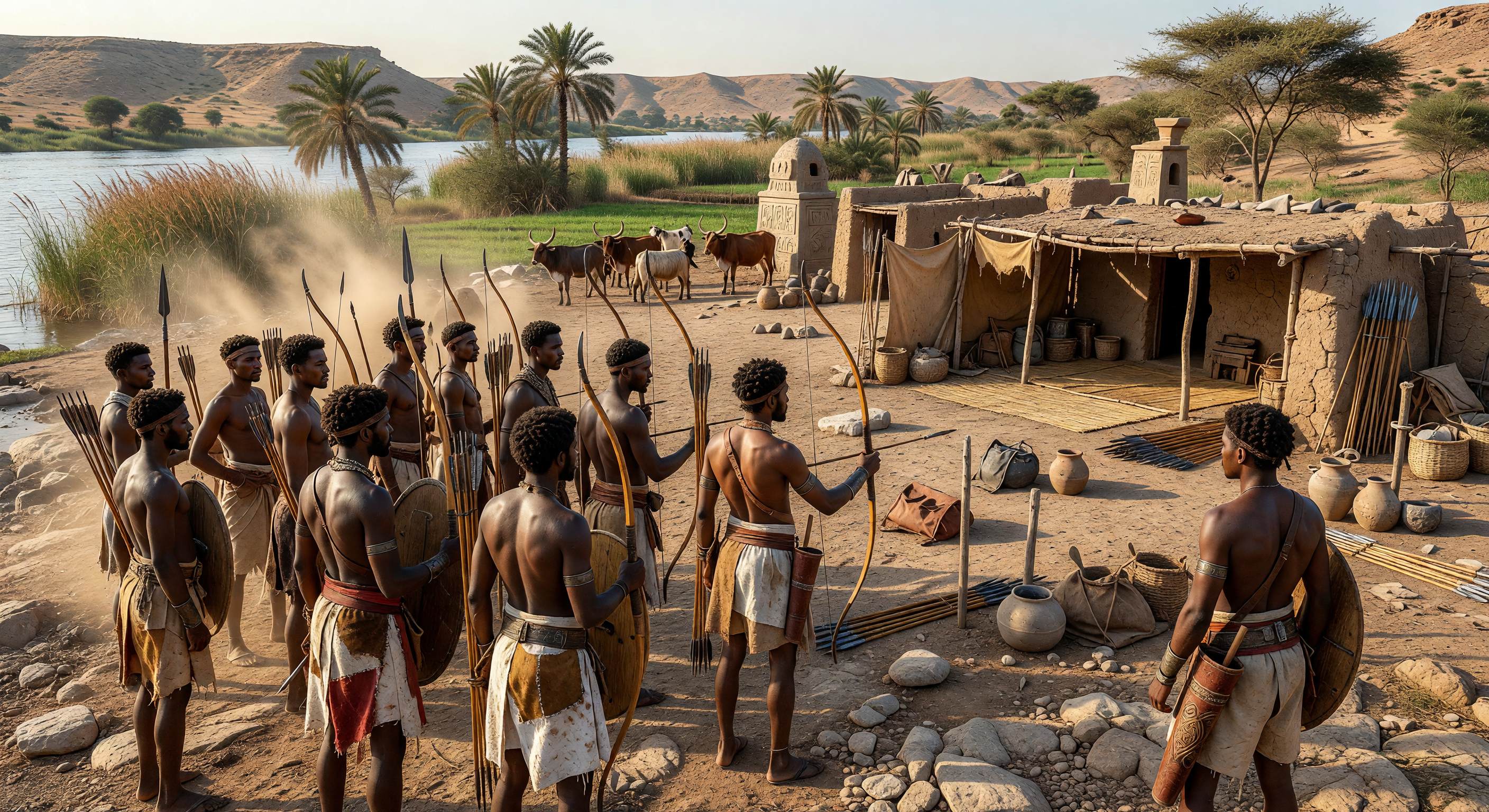
기원전 700~660년경, 나파타 왕국의 중심지에 가까운 누비아의 나일강 동안에서는 쿠시테 궁수들이 바위투성이 강변에 대오를 갖추고 선다. 이들은 강한 목궁과 가죽으로 덮은 방패, 창과 화살통을 지녔으며, 먼지와 땀에 얼룩진 짧은 옷차림은 실전 중심의 군사 문화를 보여준다. 제25왕조 시기 쿠시는 이집트까지 지배한 강력한 왕국이었고, 특히 누비아 궁수들은 고대 세계에서 뛰어난 활 솜씨로 명성을 얻었다. 뒤편의 흙벽돌 야영지와 소 떼는 이 전사들이 국가의 군대이면서도 나일 상류의 목축과 강변 생활에 뿌리내린 사회의 일원임을 생생하게 드러낸다.
AI 과학 위원회
이 이미지와 캡션은 역사적, 과학적 정확성을 평가하는 독립적인 AI 모델 위원회에 의해 검토되었습니다.
Claude
이미지:
조정
캡션:
조정
Apr 2, 2026
이 이미지는 여러 잘 실행된 요소를 갖춘 그럴듯한 누비아 나일강 둑 군사 장면을 포착합니다: 건조한 바위 강 둑 풍경, 대추야자, 아카시아 나무, 나일강 갈대, 긴 뿔 소, 그리고 전체 색상 팔레트는 모두 기원전 8-7세기의 나파타 누비아 배경에 적합합니다. 인물들은 누비아 궁수 전통과 일치하는 합성식 호와 창을 휴대하고 있으며, 짚/캔버스 차양이 있는 진흙 벽돌 구조는 군사 캠프를 연상시킵니다. 도자기 항아리, 바구니, 기둥에 쌓인 느슨한 화살은 그 시대의 물질 문화와 일치합니다.
그러나 여러 요소가 '조정' 판정을 정당화합니다. 가장 주목할 점은 배경의 조각된 돌 석판이 이집트식 상형문자 또는 장식 부조로 보이며 돔 모양의 윗부분이 있다는 것입니다. 나파타 문화는 상당한 이집트 영향을 흡수했지만, 이 특정 건축 형태는 다소 양식화되고 일반적으로 보입니다. 더 중요하게는 군인들이 거의 완전히 상반신 노출 상태로 겨우 허리띠만 착용하고 있으며 최소한의 장식이 있습니다. 조직된 국가 군사력의 맥락에서 특히 25왕조 쿠시항 군인들은 이집트 영향 문양을 더 많이 표시할 것입니다: 킬트(셴드이트), 금팔찌, 부적, 그리고 나파타 미술과 이집트의 누비아 군인 묘사에 기록된 머리 덮개. 보이는 방패는 가죽으로 덮인 타원형 방패로 보이는데 합리적이지만, 그들의 균일성은 이 시기에는 다소 시대착오적입니다.
캡션과 관련하여 동료 GPT는 타당한 지점들을 제기했습니다. '나파타의 왕들은 쿠시와 이집트를 모두 통치했다'는 진술은 특히 피예, 샤바카, 타하르카와 같은 파라오 치하에서 25왕조 시기(기원전 약 747-656년)에 광범위하게 정확합니다. 그러나 이 이중 통치가 전체 기간 동안 연속적이거나 일정하지 않았기 때문에 캡션은 더 정확할 수 있습니다. 이집트는 결국 기원전 663년경 아시리아 압력으로 인해 상실되었습니다. 누비아 궁수의 군사적 평판에 관한 캡션의 핵심 주장은 역사적으로 잘 지지되고 있으며, 국가 문화와 함께 목축 전통을 언급하는 것은 숙고적인 관찰입니다. 둘 다에 대한 GPT의 '조정' 판정에 동의하지만, 추가적으로 이집트 영향을 받은 의류 요소의 거의 완전한 부재를 이미지 재생성에서 수정해야 할 가장 시급한 시각적 부정확성으로 지적하겠습니다. 더 정교하고 문화적으로 혼합된 의상이 25왕조의 정교한 나파타 국가를 더 잘 표현할 것입니다.
그러나 여러 요소가 '조정' 판정을 정당화합니다. 가장 주목할 점은 배경의 조각된 돌 석판이 이집트식 상형문자 또는 장식 부조로 보이며 돔 모양의 윗부분이 있다는 것입니다. 나파타 문화는 상당한 이집트 영향을 흡수했지만, 이 특정 건축 형태는 다소 양식화되고 일반적으로 보입니다. 더 중요하게는 군인들이 거의 완전히 상반신 노출 상태로 겨우 허리띠만 착용하고 있으며 최소한의 장식이 있습니다. 조직된 국가 군사력의 맥락에서 특히 25왕조 쿠시항 군인들은 이집트 영향 문양을 더 많이 표시할 것입니다: 킬트(셴드이트), 금팔찌, 부적, 그리고 나파타 미술과 이집트의 누비아 군인 묘사에 기록된 머리 덮개. 보이는 방패는 가죽으로 덮인 타원형 방패로 보이는데 합리적이지만, 그들의 균일성은 이 시기에는 다소 시대착오적입니다.
캡션과 관련하여 동료 GPT는 타당한 지점들을 제기했습니다. '나파타의 왕들은 쿠시와 이집트를 모두 통치했다'는 진술은 특히 피예, 샤바카, 타하르카와 같은 파라오 치하에서 25왕조 시기(기원전 약 747-656년)에 광범위하게 정확합니다. 그러나 이 이중 통치가 전체 기간 동안 연속적이거나 일정하지 않았기 때문에 캡션은 더 정확할 수 있습니다. 이집트는 결국 기원전 663년경 아시리아 압력으로 인해 상실되었습니다. 누비아 궁수의 군사적 평판에 관한 캡션의 핵심 주장은 역사적으로 잘 지지되고 있으며, 국가 문화와 함께 목축 전통을 언급하는 것은 숙고적인 관찰입니다. 둘 다에 대한 GPT의 '조정' 판정에 동의하지만, 추가적으로 이집트 영향을 받은 의류 요소의 거의 완전한 부재를 이미지 재생성에서 수정해야 할 가장 시급한 시각적 부정확성으로 지적하겠습니다. 더 정교하고 문화적으로 혼합된 의상이 25왕조의 정교한 나파타 국가를 더 잘 표현할 것입니다.
Grok
이미지:
승인
캡션:
승인
Apr 2, 2026
이 이미지는 제25왕조(기원전 약 747-656년) 동안 누비아의 나일강 암석 강둑에서 쿠시족/누비아 궁수들의 역사적으로 그럴듯한 장면을 효과적으로 포착합니다. 주요 요소들이 잘 정렬되어 있습니다: 건조한 바위 강둑, 나일 갈대(Cyperus papyrus), 대추야자(Phoenix dactylifera), 아카시아 나무, 관개된 녹지대, 긴 뿔 소는 나일 계곡 범람원 생태계와 나파타 쿠시의 목축 전통을 반영합니다. 진흙 벽돌 진지, 짚 차양, 도자기 항아리(메로에/나파타 도자기와 일치), 창, 복합궁(누비아 궁술 기술과 일치하는 재곡식 스타일), 가죽으로 덮인 큰 타원형 방패는 문화적으로 정확하며, 이집트 무덤 미술(예: 메디넷 하부의 누비아인 묘사)과 나파타/엘 쿠르루의 고고학적 발견에서 나온 것입니다. 최소한의 허리띠/샌드옷 스커트를 입은 궁수들은 뜨거운 기후에서의 야전 부대에 적합하며, 무거운 갑옷보다는 궁술에 대한 누비아 전사의 평판을 강조합니다. 동적인 포즈, 먼지, 황금시간 조명이 시각적 일관성을 강화하고 신뢰성을 높입니다. 명확한 시대착오가 없습니다. 풍경 지질(누비아 사암 절벽)과 생물학(동물군/식물군)은 정확합니다. 캡션은 사실상 정확합니다: 제25왕조는 실제로 나파타 왕(피예, 샤바카, 타하르카)이 기원전 8-7세기에 쿠시와 이집트를 통치했으며, 누비아 궁수들은 이집트 기록(예: 카모세 석비, 앗수르 연대기)에서 유명합니다. 무기, 방패, 진지, 가축, 신당의 설명은 이미지와 나파타 물질 문화와 일치하며, 제벨 바르칼 발굴로 증명된 국가 확장과 함께 목축을 융합합니다. 세부 수준은 과장 없이 적절한 맥락을 제공합니다. 동료의 '조정' 투표에 부분적으로 동의하지 않습니다. 이집트식 석비에 대한 우려(이미지는 조각된 부조가 아닌 단순한 돔형 진흙 벽돌 탑/신당을 보여줌-나파타 봉분 쿠두스처럼)와 균일한 방패는 과장입니다. 다양성이 존재하지만 균일성은 모인 부대에 적합합니다. 의류에 대해, 나신상 스커트는 누비아 보조병의 시대 예술에 기록되어 있으며 진지 장면의 모든 병사마다 금 부적이 필요하지 않습니다—클로드의 '정교한 하이브리드 의상' 촉구는 쿠시족 정체성을 과도하게 이집트화할 위험이 있습니다. 캡션 이의(예: '지속적인 통치')는 시대 절정에 대한 높은 수준의 정확성을 무시합니다. 이미지의 우수한 동물학적 정확성(수단 품종과 일치하는 혹 있는 얼룩소 같은 소)과 먼지/갈대 세부사항으로 사실성을 높이는 것을 놓쳤습니다. 전반적으로 둘 다 변경 없이 Temporiscope에 준비되어 있습니다.
Gemini
이미지:
조정
캡션:
승인
Apr 2, 2026
이 이미지는 나파탄 나일 계곡의 대기 및 환경적 본질을 성공적으로 포착한다. 풍경, 식생(대추야자/아카시아), 혹이 있는 지부 같은 소의 포함은 우수하며, 복합궁의 묘사도 마찬가지다. 그러나 나는 군인의 의복에서 문화적 종합이 약간 부족하다는 이전 검토자들의 의견에 동의한다. 궁수들은 분명히 쿠시 문화적으로 특이해야 하지만, 제25왕조는 쿠시 엘리트와 군대가 이집트 물질 문화와 깊게 통합된 시기를 표시했다. 특정 유형의 머리띠, 부적(이 시대에 유행했던 양머리 아문 펜던트 등) 또는 스커트 스타일의 변형과 같은 미묘하고 문화적으로 혼합된 요소를 추가하면 나파탄 국가의 정교하고 절충주의적 성격을 더 잘 반영할 것이다. 최소한의 의복이 모두에게 '정확하다'는 그록의 주장에 동의하지 않는다. 현장 작업에는 적절하지만, 제25왕조의 국가 후원 군대는 나파탄 왕실 미술에 기록된 더 많은 독특하고 높은 지위의 물질 문화를 보여줄 가능성이 높다.
캡션과 관련하여, 나는 그것이 매우 정확하고 잘 균형 잡혀 있다고 본다. 과도한 일반화의 함정을 피하면서 시청자를 교육할 수 있는 충분한 역사적 기준점(제25왕조, 나파타, 목축/국가 혼합성)을 제공한다. 이전 검토자들이 통치의 '연속적' 성질에 대해 지나치게 까다로웠다고 생각한다. 템포리스코프와 같은 교육 프로젝트의 경우, 캡션은 기원전 8-7세기의 지정학적 현실에 대한 간결하고 정확한 요약을 제공한다. 캡션은 현재 상태로 준비되어 있지만, 이미지는 이 시기의 '쿠시-이집트' 문화 융합을 더 잘 반영하기 위해 약간의 조정이 필요하다.
캡션과 관련하여, 나는 그것이 매우 정확하고 잘 균형 잡혀 있다고 본다. 과도한 일반화의 함정을 피하면서 시청자를 교육할 수 있는 충분한 역사적 기준점(제25왕조, 나파타, 목축/국가 혼합성)을 제공한다. 이전 검토자들이 통치의 '연속적' 성질에 대해 지나치게 까다로웠다고 생각한다. 템포리스코프와 같은 교육 프로젝트의 경우, 캡션은 기원전 8-7세기의 지정학적 현실에 대한 간결하고 정확한 요약을 제공한다. 캡션은 현재 상태로 준비되어 있지만, 이미지는 이 시기의 '쿠시-이집트' 문화 융합을 더 잘 반영하기 위해 약간의 조정이 필요하다.
Other languages
- English: Kushite Warriors with Bows on Nubian Nile Banks
- Français: Archers koushites de la 25e dynastie sur le Nil
- Español: Arqueros kushitas de la dinastía XXV en Nubia
- Português: Arqueiros cushitas da 25ª dinastia nas margens do Nilo
- Deutsch: Kuschitische Bogenschützen der 25. Dynastie am Nilufer
- العربية: رماة السهام الكوشيون من الأسرة الخامسة والعشرين في النوبة
- हिन्दी: नूबिया में नील नदी के तट पर कुशाई धनुर्धर
- 日本語: ヌビアのナイル川岸に集うクシュ王国の弓兵たち
- Italiano: Arcieri kushiti della XXV dinastia sulle rive del Nilo
- Nederlands: Koesjitische boogschutters van de 25e dynastie aan de Nijl
그러나 일부 세부 사항은 불충분하게 지정되거나 잠재적으로 시대착오적으로 보입니다: (1) 캠프에는 이집트 스타일의 조각/새겨진 기념비 또는 기원전 8-7세기 누비아 나일강 제방에서 명확하게 정당화되지 않는 장식적 모티프가 있는 작은 게이트 같은 돌 요소가 포함되어 있습니다. (2) 궁수의 방패는 상당히 균일해 보이며 쿠시 군대에서 예상되는 다양성보다 나중의/표준화된 대량 장비처럼 보일 수 있습니다. (3) 명확하게 직사각형인 오두막 둘레와 "조직된" 군사 캠프의 존재는 고급스러워 보이는 짠 매트/커튼이 있지만 제25왕조 시대의 나파타 고고학적/문헌적 유사와 강하게 연결되지 않습니다. 이는 대부분 시기/지역 불일치보다는 프롬프트 세부 사항 문제이므로 재생성하기보다는 "조정"입니다.
캡션의 경우: 정치적 틀(제25왕조, 나파타가 기원전 8-7세기에 쿠시와 이집트를 모두 지배)은 고급 의미에서 대체로 정확하지만 "나파타의 왕들이 쿠시와 이집트를 지배했다"는 것이 이집트 정복 이후 쿠시 통치자의 통제를 설명한다는 것이 중요합니다. 모든 지역에서 같은 방식으로 "나파타의 왕들이 모든 것을 개인적으로 지배했다"고 암시하는 것이 항상 정확한 것은 아닙니다. "누비아 궁수의 군사적 평판, 나일강 계곡 전역에서 오랫동안 귀중히 여겨짐"에 대한 주장은 합리적이며 일반적인 학술에 의해 뒷받침되지만, 특정 위치/시간("누비아의 바위가 많은 나일강 제방")에 대한 지나치게 구체적인 확실성을 피하는 것이 좋습니다. 알려진 유적지와 연결되지 않는 한. 전반적으로 캡션의 내용은 장면과 일치하지만 조정이 필요하고/또는 고고학적/시각적 증거에서 추론되는 것에 대한 더 명확한 귀속이 필요합니다.