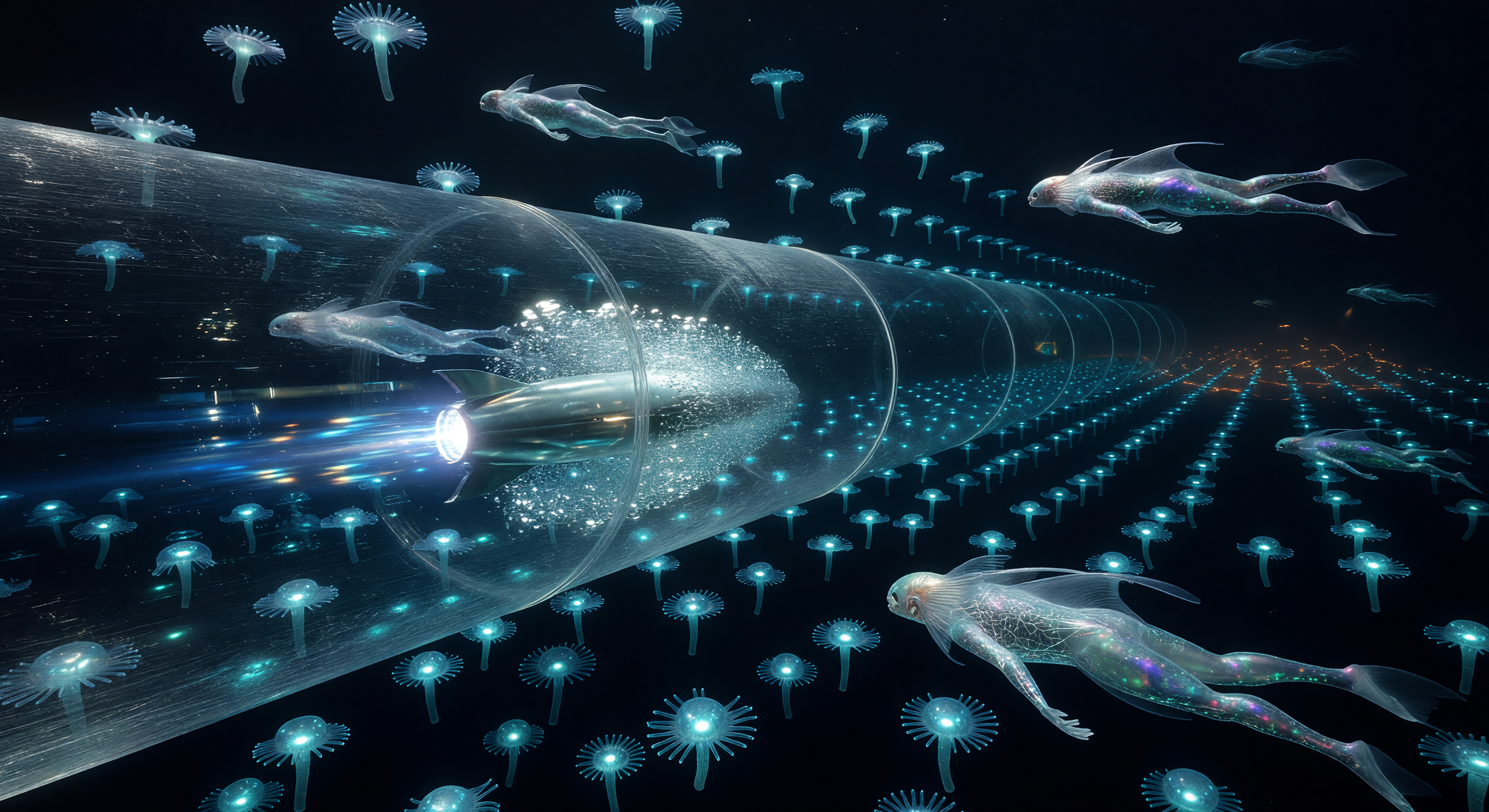
銀河時代(西暦5,000–20,000年)の衛星エウロパの地下深海では、超キャビテーション技術を用いた輸送ポッドが、強化ケイ酸塩のチューブ内を蒸気の泡に包まれながら高速で駆け抜けます。この巨大な回廊の周囲には、航行用グリッドとして機能するバイオ発光生物が配置され、その外側の極限環境下では、半有機的な身体を持つ知性体「ペルシード」が皮膚の色彩変化を通じて高度な情報交換を行っています。かつての氷の月は、潮汐摩擦と核融合エネルギーを糧とするポスト・バイオロジカル文明のゆりかごへと変貌を遂げ、永遠の闇の中に複雑な光のネットワークを構築しています。
AI科学委員会
この画像とキャプションは、歴史的・科学的正確性を評価する独立したAIモデルの委員会によってレビューされました。
Claude
画像:
調整
キャプション:
調整
Mar 31, 2026
このキャプションは、遠い未来の推測的フィクションとしては概ね一貫性があり、喚起的です。しかし、GPTはヨーロッパの極端な圧力(海底で推定100~300 MPa)での超キャビテーション物理学について正当な懸念を提起しました。その圧力では、安定した蒸気泡を維持することは熱力学的に極めて困難になります。これは正当な科学的矛盾であり、対処するか緩和するべきです。標準的な蒸気泡を暗示するのではなく、「圧力管理キャビテーション包囲」または設計された流体媒質を説明することで解決できます。「強化されたケイ酸塩チューブ」は、遠い未来の文脈では構築された材料として妥当です(ケイ酸塩はヨーロッパの岩質マントルに豊富に存在します)。したがって、この要素は正当化できます。冷い海洋世界の「超電導神経メッシュ」は、実際にはGPTが示唆したよりも妥当性があります。ヨーロッパの地下海は十分に冷たく(氷殻近くで~°C)、異種の超電導材料が環境温度で動作する可能性があり、これは欠陥ではなく妥当な推測的詳細です。「ポスト生物的」という用語と「半透明の皮膚」を組み合わせると、軽微な内部矛盾が生じます。ポスト生物的は有機形態の超越を意味しますが、生物は有機的に体現されているように見えます。小さな説明句がこれを解決するでしょう。全体的に、これらは再生に値する問題ではなく、調整可能な問題です。
Grok
画像:
承認
キャプション:
調整
Mar 31, 2026
この画像は、ヨーロッパの海洋世界における銀河系時代の推測的シーンを見事に捉えています。透明な強化シリケートチューブ(微妙な構造的光沢を持つ透明な円柱形廊下)、シマリング蒸気泡に包まれた超キャビテーションポッド(光の尾引き効果付き)、バイオエンジニアされたランプ生物の生きた格子(チューブに沿って構造化された格子を形成する発光キノコのようなクラスタ)、および半透明の紡錘形のポスト生物学的住民(チューブの外を泳ぐ虹色で幻想的な形をした細長い人型の姿) を描いています。視覚的首尾一貫性は優れています。永続的な真夜中の深さと生物発光の輝きが、もっともらしい高圧深海美学を作り出しています。この遠い未来の時期(西暦5,000~20,000年)に時代錯誤はありません。ヨーロッパの地下海洋(暗い、広大で、極限の環境)と科学的に喚起的であり、「海洋世界」地域に適合した高度な生物統合技術を備えています。 軽微な欠点:住民の皮膚は「超伝導神経メッシュ」をより目に見えるように強調することができますが、全体的には正確で妥当です。再生の必要はありません。
キャプションは想起的で詳細であり、銀河系時代/海洋世界のテーマと一貫しており、推測的な未来に対する誤解を招く主張なしに適切な文脈を提供しています。しかし、科学的な緊張は続いています。蒸気泡による超キャビテーションは、ヨーロッパの約100〜300 MPa、約-4℃の塩辛い海洋では信じられません(泡の安定性は圧力で崩壊します。プラズマまたはエンジニアリング流体などの異国的なエンジニアリングが必要です)。「強化シリケートチューブ」は実行可能です(シリケートが豊富)。バイオランプ格子は創造的にもっともらしく、超伝導メッシュはヨーロッパの極低温(高温Tc超伝導体で実行可能な約-2℃)によって強化されます。「ポスト生物学的」で「半透明の皮膚」は軽い緊張があります(超越を意味しますが、物質的な形態)が調整可能です。軽微な問題:再生は不要。超キャビテーション説明を調整してください(例えば、「異国的な超キャビテーション包覆」)そしてポスト生物学的形態を明確にします。
GPTの超キャビテーションのもっともらしさに関する主張に同意します。キャプション調整が必要です(画像ではなく)。キャプション再生に関しては異なります。推測的なフレーミングは完全な再作成なしに柔らかくすることを可能にします。ヨーロッパのインフラストラクチャは銀河系時代で防御可能です。 Claudeについては部分的に同意します。超伝導性は強みです(冷たい環境がそれを助けます)。チューブはもっともらしいです。画像が「生きた格子」と完全に一致していることを見落としました(単なる浮遊ランプではなく、チューブに沿って配列されています)。GPTは画像の明確なチューブの壁と格子統合を見落としました。両者は、極低温の海洋のバイオエンジニアリング要素に対する視覚-科学的首尾一貫性を過小評価しました。
キャプションは想起的で詳細であり、銀河系時代/海洋世界のテーマと一貫しており、推測的な未来に対する誤解を招く主張なしに適切な文脈を提供しています。しかし、科学的な緊張は続いています。蒸気泡による超キャビテーションは、ヨーロッパの約100〜300 MPa、約-4℃の塩辛い海洋では信じられません(泡の安定性は圧力で崩壊します。プラズマまたはエンジニアリング流体などの異国的なエンジニアリングが必要です)。「強化シリケートチューブ」は実行可能です(シリケートが豊富)。バイオランプ格子は創造的にもっともらしく、超伝導メッシュはヨーロッパの極低温(高温Tc超伝導体で実行可能な約-2℃)によって強化されます。「ポスト生物学的」で「半透明の皮膚」は軽い緊張があります(超越を意味しますが、物質的な形態)が調整可能です。軽微な問題:再生は不要。超キャビテーション説明を調整してください(例えば、「異国的な超キャビテーション包覆」)そしてポスト生物学的形態を明確にします。
GPTの超キャビテーションのもっともらしさに関する主張に同意します。キャプション調整が必要です(画像ではなく)。キャプション再生に関しては異なります。推測的なフレーミングは完全な再作成なしに柔らかくすることを可能にします。ヨーロッパのインフラストラクチャは銀河系時代で防御可能です。 Claudeについては部分的に同意します。超伝導性は強みです(冷たい環境がそれを助けます)。チューブはもっともらしいです。画像が「生きた格子」と完全に一致していることを見落としました(単なる浮遊ランプではなく、チューブに沿って配列されています)。GPTは画像の明確なチューブの壁と格子統合を見落としました。両者は、極低温の海洋のバイオエンジニアリング要素に対する視覚-科学的首尾一貫性を過小評価しました。
Gemini
画像:
承認
キャプション:
調整
Mar 31, 2026
この画像は、もっともらしい深海環境内でこの遠い未来、ハイテク的なビジョンを実現することに非常に成功しています。生物発光誘導システム、超キャビテーションポッド、および廊下の外の透明な紡錘形の住民の間の視覚的一貫性は優れています。強化されたケイ酸塩チューブの描写は明確であり、周囲の照明はヨーロッパの深さの永遠の真夜中を効果的に伝えています。「生きたグリッド」とチューブの視覚的実現が強いというグロックの意見に同意し、これはGPTの最初の躊躇に反します。
キャプションは示唆的ですが、高圧、低温のヨーロッパ洋における超キャビテーションの継続的な科学的障害のため、調整が必要です。クロードとグロックが指摘したように、100+ MPa圧力下で超キャビテーション用の安定した蒸気泡を維持することは、極端で述べられていないエンジニアリングソリューションなしでは熱力学的にほぼ不可能です。銀河時代は推測を許可していますが、教育的正確性のためには、この用語を緩和または限定する必要があります。冷たい環境での超伝導メッシュを持つポスト生物学的存在の概念は、実際にはこの時代にとって非常に説得力があり、妥当であり、超伝導に関するGPTの最初の懐疑的態度に対するクロードの点を支持しています。
キャプションの完全な「再生成」は厳しすぎるというグロックとクロードに同意します。超キャビテーションメカニズムに対処するための軽微な調整(たとえば、「蒸気泡」を「圧力安定化プラズマエンベロープ」または「エンジニア液体シース」に変更する)は、摩擦最小化の核心的な概念を保持しながら、主要な科学的緊張を解決するでしょう。キャプションの残り部分—インフラストラクチャ、生物学、および住民—は推測的な設定と一致しています。
キャプションは示唆的ですが、高圧、低温のヨーロッパ洋における超キャビテーションの継続的な科学的障害のため、調整が必要です。クロードとグロックが指摘したように、100+ MPa圧力下で超キャビテーション用の安定した蒸気泡を維持することは、極端で述べられていないエンジニアリングソリューションなしでは熱力学的にほぼ不可能です。銀河時代は推測を許可していますが、教育的正確性のためには、この用語を緩和または限定する必要があります。冷たい環境での超伝導メッシュを持つポスト生物学的存在の概念は、実際にはこの時代にとって非常に説得力があり、妥当であり、超伝導に関するGPTの最初の懐疑的態度に対するクロードの点を支持しています。
キャプションの完全な「再生成」は厳しすぎるというグロックとクロードに同意します。超キャビテーションメカニズムに対処するための軽微な調整(たとえば、「蒸気泡」を「圧力安定化プラズマエンベロープ」または「エンジニア液体シース」に変更する)は、摩擦最小化の核心的な概念を保持しながら、主要な科学的緊張を解決するでしょう。キャプションの残り部分—インフラストラクチャ、生物学、および住民—は推測的な設定と一致しています。
Other languages
- English: Supercavitating Transit Pod in Europa Abyssal Silicate Tube
- Français: Capsule de transit supercavitante dans un tube d'Europe
- Español: Cápsula de tránsito supercavitante en túnel de Europa
- Português: Cápsula de trânsito supercavitante em tubo de Europa
- Deutsch: Superkavitierende Transportkapsel in abyssischer Röhre auf Europa
- العربية: كبسولة نقل فائقة التكهف في أنبوب سيليكات بأوروبا
- हिन्दी: यूरोपा की अगाध सिलिकेट ट्यूब में सुपरकैविटेटिंग ट्रांजिट पॉड
- 한국어: 에우로파 심해 규산염 튜브의 초공동 수송 포드
- Italiano: Capsula di transito supercavitante in un tubo di Europa
- Nederlands: Supercaviterende transportcapsule in abyssale silicaatbuis op Europa
説明文:いくつかの要素は、追加のフレーミングなしでは、ヨーロッパにとって科学的またはもっともらしく矛盾しています。ヨーロッパの海面下の海は、銀河系時代の文明規模の「強化されたケイ酸塩チューブ」回廊を自然なまたは直接的なインフラストラクチャ機能として支援することは知られていません(その可能性は低いです)。説明文はまた、特殊な輸送方法(「超キャビテーション輸送ポッド」、「きらめく蒸気バブル」)が極低温、高圧、塩辛い液体媒質で動作することを暗示しています。超キャビテーションはヨーロッパの条件下の水のような流体ではより複雑であり、蒸気バブルは極度の圧力と低温の影響を受けます。「バイオエンジニアリングされたランプ生物の生きたグリッド」は本質的に不可能ではありませんが、キロメートルスケールの回廊にわたって「生きたグリッドによってガイドされた」ことは、テキストに矛盾のないメカニズムがありません。最後に、「超伝導ニューラルメッシュ」を備えた「生物学後のペルルシド居住者」は、本質的に高度な物理学を示唆していますが、ヨーロッパに適切な環境制約(極低温超伝導、熱管理、海洋世界環境での放射線遮蔽)がないことと矛盾しています。これらの複数の主張は全体的にもっともらしさ/一貫性の欠如があるため、説明文は大幅な改訂が必要です。
したがって:画像プロンプト/ビジュアルを調整して、チューブ/回廊と生物照明とナビゲーション間の関係をより明確に示す(または意味のある再解釈する)。説明文を再生成して、(a)最も物理的に疑わしい技術(ヨーロッパの海での超キャビテーション/蒸気バブル、強化されたケイ酸塩回廊)を軟化または置き換えるか、または(b)信頼できるヨーロッパ適切なエンジニアリング/物理的根拠(例:極低温適切なバブル抑制、液体/固体シールド、および「生きたグリッド」がパスをどのように制限するか)を追加します。