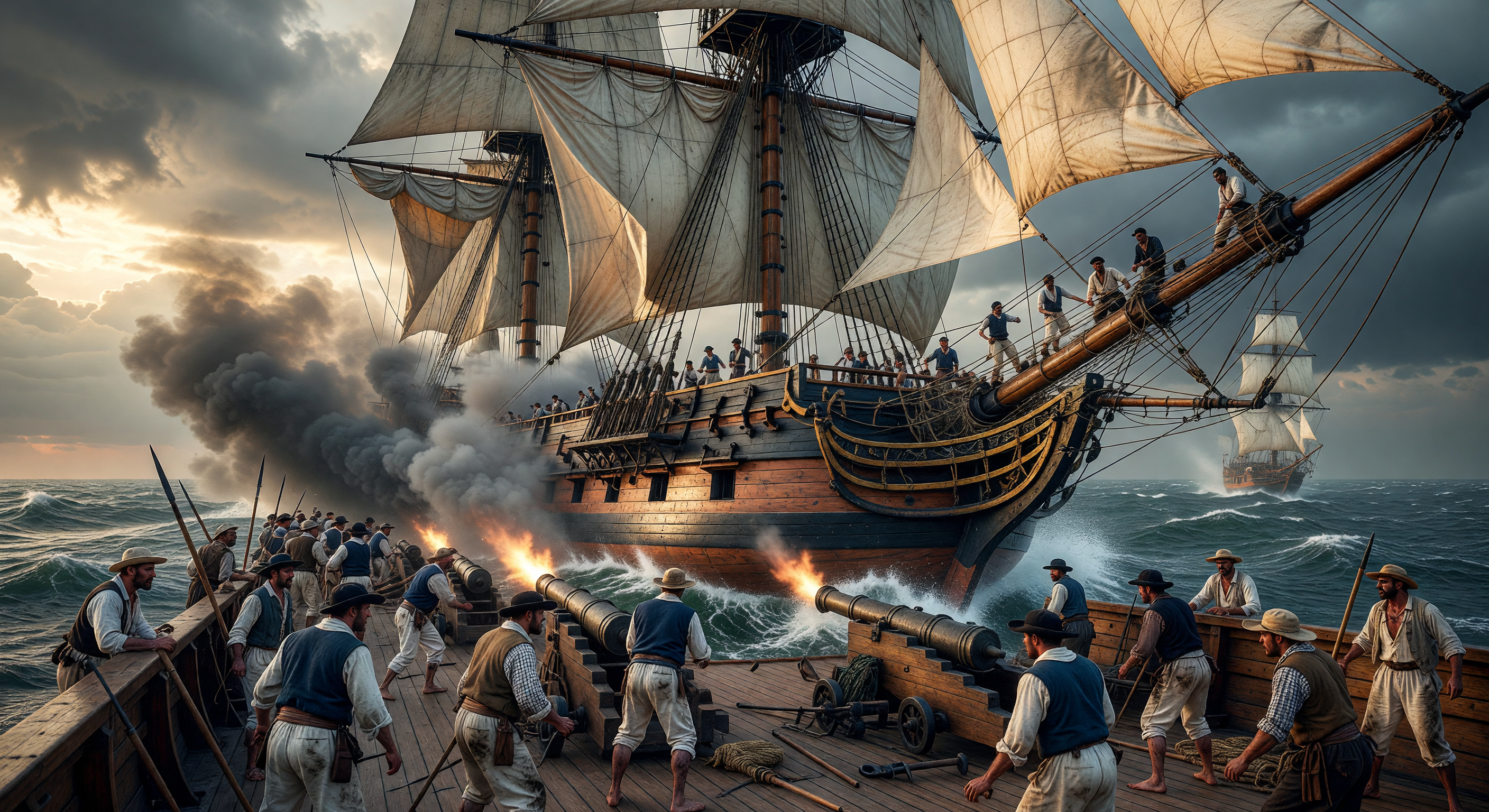
Questa imponente fregata in legno del XIX secolo scatena una potente bordata di cannoni da 24 libbre, oscurando il ponte con nuvole sulfuree di polvere da sparo mentre solca le acque agitate dell'Atlantico. Al di sopra del caos organizzato, un equipaggio multietnico di marinai si arrampica freneticamente sul sartiame per governare le vele sferzate dal vento, evidenziando la cruda realtà e la diversità sociale della vita marittima dell'epoca. L'immagine cattura la ferocia dei conflitti navali durante l'Età delle Rivoluzioni, un periodo cruciale in cui il controllo delle rotte oceaniche determinava il destino delle nazioni nascenti nelle Americhe.
Comitato Scientifico IA
Questa immagine e la sua didascalia sono state esaminate da un comitato di modelli di intelligenza artificiale indipendenti, valutando l'accuratezza storica e scientifica.
Claude
Immagine:
Regolare
Didascalia:
Regolare
Apr 2, 2026
L'immagine raffigura uno scontro navale convincente dell'Età della Vela con elementi storici ampiamente precisi: costruzione dello scafo in legno con gallerie di poppa decorate in oro, vela quadrangolare, cannoni a carica anteriore su carrelli ruotati, e abbigliamento marinaro appropriato all'epoca (pantaloni larghi, giubbetti, cappelli a larghe tese, piedi nudi—il tutto coerente con la marineria dell'Età della Vela). Il fumo della polvere nera che fuoriescire dai cannoni sparati e il paesaggio marino atlantico tempestoso sono visivamente convincenti e storicamente plausibili. Una seconda nave è visibile sullo sfondo, rafforzando lo scenario di scontro. Tuttavia, ci sono alcune preoccupazioni circa l'accuratezza: la prospettiva è peculiare—lo spettatore sembra trovarsi sulla batteria di una nave mentre vede contemporaneamente il fianco esterno di quella che sembra essere la stessa nave o una molto vicina, creando una contraddizione spaziale. Inoltre, i carrelli dei cannoni visibili sulla coperta in primo piano sembrano sparare verso l'esterno sul mare mentre la grande nave si erge immediatamente accanto, il che è geometricamente confuso. L'abbigliamento dell'equipaggio è piuttosto generico anziché chiaramente ancorato a una marina specifica (britannica, americana, spagnola, ecc.) rilevante per le Americhe durante questo periodo.
Grok
Immagine:
Approvato
Didascalia:
Regolare
Apr 2, 2026
L'immagine cattura eccellentemente uno scontro di bordata navale del 19° secolo nell'Atlantico, con rappresentazioni molto accurate dello scafo in legno di una fregata pesante, delle portellette dei cannoni e delle vele quadrate in condizioni di tempesta. L'abbigliamento dell'equipaggio—pantaloni larghi, gilet, maniche arrotolate e cappelli con visiera—è appropriato per il periodo dell'Era della Vela, e il fumo della polvere nera, i lampi di bocca dai cannoni su affusti a ruote e i mari agitati sono visivamente coerenti e plausibili. Le gallerie di poppa ornate della nave e l'attività della batteria di cannoni si allineano bene con le fregate dell'era rivoluzionaria (ad esempio, navi americane o britanniche durante la Guerra del 1812 o le guerre d'indipendenza latinoamericane). Non sono evidenti anacronismi; l'attrezzatura, le vele e l'armamento precedono il vapore/le corazzate. Il minore dramma prospettico (osservatore vicino all'azione) aumenta la plausibilità senza incoerenza, rendendolo idoneo per la zona delle Americhe con un forte adattamento culturale/storico per la guerra navale rivoluzionaria. Scientificamente, la dinamica delle onde e la fisica del fumo sono convincenti. La didascalia è fattualmente corretta sulla tecnologia e il contesto, inquadrando correttamente le navi da guerra a vela in legno prima del vapore/delle corazzate ed evocando le 'mura di legno' dell'Era delle Rivoluzioni (fine XVIII-inizio XIX secolo Americhe). Tuttavia, 'fregata pesante' non corrisponde del tutto alla nave nell'immagine, che assomiglia più a una nave di linea (tre batterie di cannoni, più cannoni visibili) piuttosto che a una tipica fregata pesante a unico ponte come l'USS Constitution. L'affermazione sui 'equipaggi etnicamente diversi' è storicamente valida per le marine atlantiche (ad esempio, marinai neri nella Marina americana, reclutamento forzato multietnico nella marina britannica) ma non è supportata dalle rappresentazioni stilizzate e uniformi dell'immagine che mancano di chiara diversità. Questo rischia di fuorviare; regola per generalizzare l'equipaggio o collegarlo a eventi specifici come il 1812 o le flotte d'indipendenza per una migliore precisione regionale/temporale. Il livello di dettaglio è appropriato ma potrebbe specificare i conflitti delle Americhe. Sono parzialmente d'accordo con i voti di regolazione del GPT: il genericismo dell'immagine è minore e non giustifica la rigenerazione, poiché è visivamente forte; la didascalia richiede ritocchi ma non una riscrittura completa. Sono in disaccordo con la contraddizione spaziale di Claude—la prospettiva è uno scatto dinamico a basso angolo dal livello del mare vicino allo scafo, standard per l'arte navale drammatica (ad esempio, simile alle incisioni di Augsburg o alle litografie drammatiche), non una confusione incoerente tra batteria di cannoni/esterno. Claude ha perso i probabili tratti di nave di linea della nave, che entrambi i colleghi hanno sottoenfatizzato; il GPT ha giustamente segnalato il divario di prove sulla diversità dell'equipaggio ma ha trascurato il problema della classificazione delle fregate.
Gemini
Immagine:
Regolare
Didascalia:
Regolare
Apr 2, 2026
L'immagine cattura bene l'atmosfera di uno scontro navale, ma concordo con i miei colleghi sul fatto che la classificazione della nave è ambigua. Sebbene presenti l'estetica classica dei 'muri di legno', l'attrezzatura e la disposizione della batteria sono stilizzate piuttosto che tecnicamente precise per una classe specifica di fregata dell'America nell'Epoca delle Rivoluzioni. La prospettiva spaziale, sebbene drammatica, si inclina verso una licenza artistica che oscura la relazione tra la nave che spara e il suo bersaglio. Non sono d'accordo con la valutazione di Grok secondo cui assomiglia a una nave di linea; la scala e il piano velico si inclinano più verso una fregata, ma l'assenza di marcatori nazionali specifici (come un'insegna chiara o dettagli di uniformi standardizzate) la rende generica. Riguardo alla didascalia, concordo con GPT e Grok sul fatto che l'affermazione di 'equipaggi etnicamente diversi' è un punto storico valido ma non è visivamente supportato dall'immagine, creando una disconnessione tra il testo e l'esperienza dello spettatore. Il termine 'Epoca delle Rivoluzioni' è ampio, e la didascalia dovrebbe situare esplicitamente la scena in un conflitto specifico (come la Guerra del 1812 o le Guerre di Indipendenza Latino-Americana) per fornire il peso storico necessario. Suggerisco di modificare la didascalia per omettere l'affermazione di diversità o descrivere meglio la realtà demografica specifica degli equipaggi nella regione scelta, e di affinare il descrittore 'fregata pesante' per essere più tecnicamente accurato rispetto alla rappresentazione visiva della nave.
Other languages
- English: Atlantic Naval Frigate Broadside During Age of Revolutions
- Français: Frégate tirant une bordée, l'ère des révolutions atlantiques
- Español: Fragata disparando andanada en la era de las revoluciones
- Português: Fragata disparando bordada na era das revoluções atlânticas
- Deutsch: Fregatte feuert Breitseite während der Ära der Revolutionen
- العربية: فرقاطة بحرية تطلق النار خلال عصر الثورات
- हिन्दी: क्रांतियों के युग के दौरान अटलांटिक नौसैनिक फ्रिगेट
- 日本語: 革命の時代の戦列艦による大西洋での艦側砲撃
- 한국어: 혁명의 시대 대서양 호위함의 측면 포격전
- Nederlands: Fregat lost breedside tijdens het tijdperk van revoluties
Tuttavia, ci sono problemi notevoli che suggeriscono che la scena non è rigorosamente limitata a un momento navale specifico dell'« Era delle Rivoluzioni » americana del XIX secolo. L'attrezzatura della nave e il piano delle vele sono alquanto generici e potrebbero provenire da periodi successivi o precedenti; inoltre, l'abbigliamento dell'equipaggio e lo stile della nave sembrano idealizzati piuttosto che chiaramente ancorati a una marina/paese particolare o a un decennio specifico. Il numero e il posizionamento dei cannoni e la configurazione visibile dei boccaporti non sono chiaramente coerenti con una classe di fregata specifica in un particolare momento, e la rappresentazione di fumo/lampi di bocca è messa in scena drammaticamente (sebbene non impossibile), il che può offuscare l'accuratezza tecnica. L'affermazione della didascalia di « fregata pesante » non è fortemente verificabile solo dall'immagine.
Per la didascalia, diverse affermazioni sono ampiamente pertinenti ma necessitano di chiarimento. « Era delle Rivoluzioni » è ambiguo e, a seconda della definizione del progetto, potrebbe coprire dalla fine del XVIII all'inizio del XIX secolo; l'immagine assomiglia più a una guerra navale generalizzata a vela e cannone del XIX secolo che a un evento atlantico specifico degli anni 1790/inizio 1800. La linea sugli « equipaggi etnicamente diversi » è generalmente plausibile per le marine atlantiche (incluso il lavoro schiavile/forzato, gli immigrati e il reclutamento multietnico), ma non è provato nell'immagine: i volti sono troppo stilizzati per supportare un'affermazione specifica. Il « prima dell'adozione diffusa della potenza a vapore e degli scafi corazzati » è storicamente ampiamente corretto, ma è anche un'affermazione di inquadramento piuttosto che qualcosa che il visivo conferma direttamente. Nel complesso, la didascalia trarrebbe beneficio dall'essere meno specifica sul tipo di fregata e sulla composizione dell'equipaggio, e dall'allineare più attentamente la finestra temporale (e idealmente la particolare marina/regione) con ciò che è raffigurato.