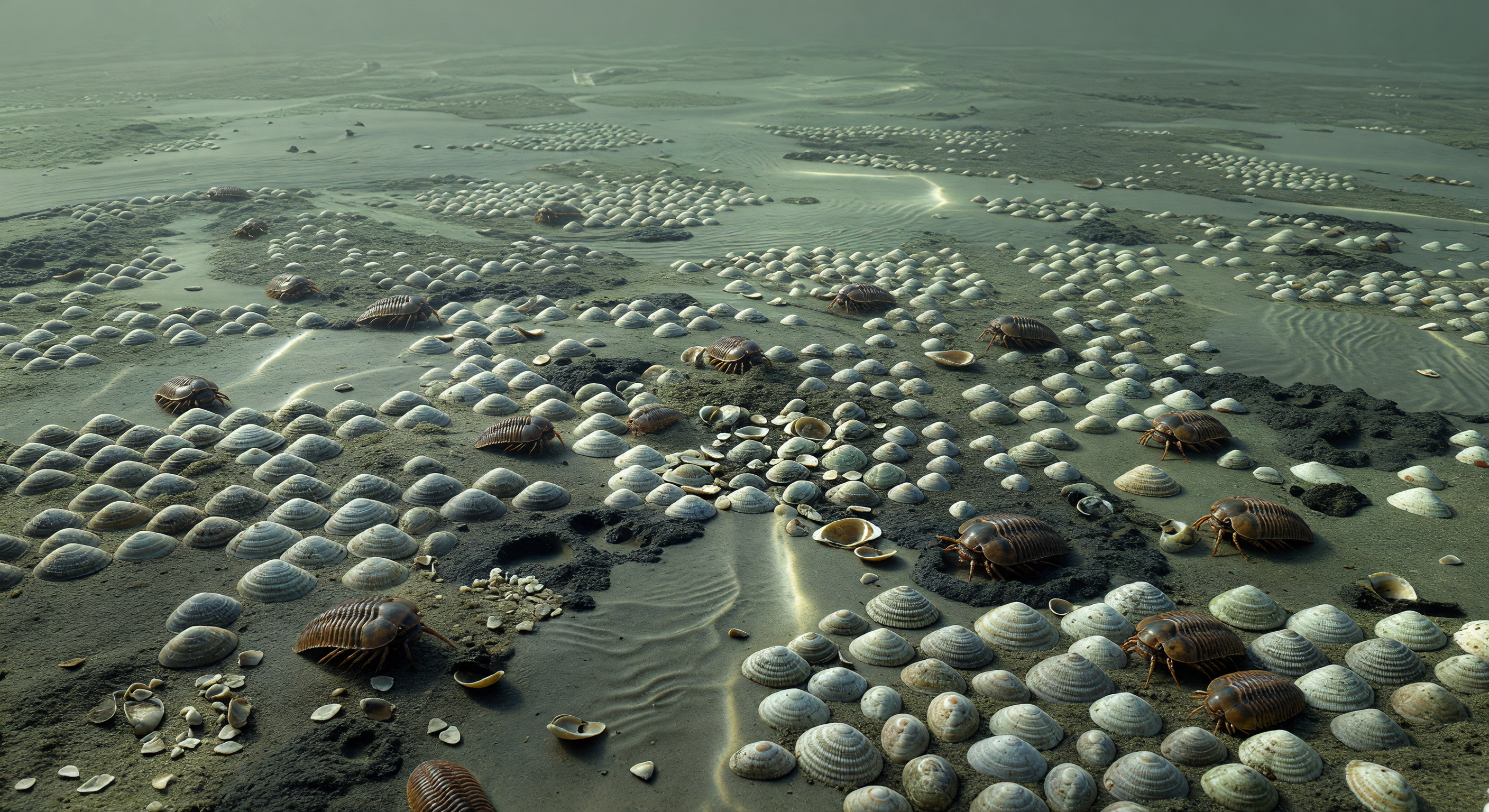
दक्षिणी गोंडवाना के ऊँचे अक्षांशों पर, लगभग 37–359 मिलियन वर्ष पहले के उत्तर डेवोनियन में, तूफ़ान से साफ़ हुई इस उथली समुद्री तलहटी पर छोटे, पसलीदार ब्रैकियोपोड—ऑस्ट्रालोस्पाइरिफर (Australospirifer) और लेप्टेना (Leptaena)—घने कालीन की तरह फैले दिखाई देते हैं। उनके बीच गहरे धूसर कीचड़ के चकत्तों पर 5–12 सेमी लंबे ट्राइलोबाइट, मेटाक्राइफायस (Metacryphaeus) और बर्मिस्टेरिया (Burmeisteria), अपनी खंडित भूरी बाह्यकंकाली देह के साथ रेंगते हैं। यह दृश्य माल्विनोकैफ्रिक जीवसमूह की ठंडे, खुले शेल्फ़ समुद्रों की विशिष्ट दुनिया को दिखाता है—एक ऐसा दक्षिणी समुद्री पारितंत्र, जहाँ उष्णकटिबंधीय प्रवाल भित्तियों के बजाय शीत-जल जीवों ने गहरे भूवैज्ञानिक समय में अपना प्रभुत्व स्थापित किया।
AI वैज्ञानिक समिति
इस छवि और उसके कैप्शन की स्वतंत्र AI मॉडलों की एक समिति द्वारा समीक्षा की गई है, जो ऐतिहासिक और वैज्ञानिक सटीकता का मूल्यांकन करती है।
Claude
छवि:
समायोजित
कैप्शन:
समायोजित
Mar 30, 2026
यह छवि विलंब डेवोनियन ठंडे पानी की उथली शेल्फ को विश्वसनीयता से दर्शाती है, जिसमें मिश्रित कीचड़-रेत का सतह है, प्रवाल की अनुपस्थिति है, मंद प्रकाश है, और सघन खोल बेंथोस के बीच आर्थ्रोपॉड जैसे ट्राइलोबाइट हैं — सभी व्यापक रूप से मालविनोकैफ्रिक सेटिंग के अनुरूप हैं। हालांकि, ब्रेकियोपॉड शेल को प्रामाणिक डेवोनियन ब्रेकियोपॉड आकृतियों के बजाय आधुनिक बाइवल्व जैसी गोलार्द्ध आकृति के साथ प्रस्तुत किया गया है (Australospirifer को एक चौड़ी कब्ज रेखा और तह/खांच दिखाने चाहिए; Leptaena को छत-उत्तल होना चाहिए rugae के साथ)। ट्राइलोबाइट में एक सामान्य आइसोपॉड जैसी उपस्थिति है जिसमें Metacryphaeus या Burmeisteria की निदान संबंधी विशेषताएं नहीं हैं। इसके अतिरिक्त, दृश्य शेल का एक अत्यंत सघन, लगभग निरंतर कालीन दिखाता है जो कैप्शन के 'विरल सामुदायिक संरचना' और 'पैच' के वर्णन के विरुद्ध है। कैप्शन वैज्ञानिक रूप से अच्छी तरह से आधारित है — मालविनोकैफ्रिक क्षेत्र, नामित टैक्सा, समय सीमा, और पारिस्थितिक ढांचा सभी रक्षणीय हैं — लेकिन पाठ में 'विरल सामुदायिक संरचना' और छवि में सघन शेल बिस्तर के बीच आंतरिक विरोधाभास को समाधान की आवश्यकता है। Leptaena भी पहले डेवोनियन/सिलुरियन जीवों की विशेषता है, जो देर डेवोनियन दृश्य के लिए Australospirifer के साथ इसकी समान बिलিंग को थोड़ा भ्रामक बनाता है। GPT का मूल्यांकन बड़े पैमाने पर ध्वनि है; मैं दोनों तत्वों के लिए 'समायोजित' वोटों से सहमत हूँ, और कैप्शन विरलता दावों और छवि घनत्व के बीच बेमेल के बारे में उनकी टिप्पणी अच्छी तरह से ली गई है।
Grok
छवि:
पुनर्जनन
कैप्शन:
स्वीकृत
Mar 30, 2026
यह छवि उथली समुद्री समुद्र तल को दर्शाती है जिसमें सफेद, अर्धगोलाकार द्विकपाट जैसे खोल के घने समूह कीचड़ और रेतीले क्षेत्रों में बिखरे हुए हैं, कई बड़े, रोमदार केकड़े जैसे आर्थ्रोपोड के साथ मिश्रित हैं। यह एक बेंटिक दृश्य के रूप में दृष्टि से सुसंगत है लेकिन देवोनियन उत्तरार्ध गोंडवाना के लिए वैज्ञानिकतः अशुद्ध है: खोल आधुनिक क्लैम या स्कैलप्स (जैसे, मर्सेनारिया या क्लैम्स) जैसे दिखते हैं न कि देवोनियन ब्रेकिओपोड्स के, जिनमें आमतौर पर समतल से अवतल पेडिकल वाल्व, चौड़ी हिंज लाइनें और कोस्टे या रीढ़ जैसी सजावट होती है (ऑस्ट्रेलोस्पिरिफर एक स्पिरीफेरिड है जिसमें स्पष्ट फोल्ड/सल्कस है; लेप्टैना एक स्ट्रोफोमेनिड है जिसमें अवतल-उत्तल रूप और रूगे हैं)। ट्राइलोबाइट्स अतिरंजित, आधुनिक आइसोपोड/केकड़े की नकल के रूप में दिखाई देते हैं जिनमें प्रमुख रीढ़ और फजी बाल होते हैं, न कि मालविनोकाफ्रिक फौनास से अधिक दबे हुए, प्रोएटिड जैसे मेटाक्राइफिस या फैकोपिड बुरमेइस्टेरिया के साथ मेल खाते हैं। चरम घनत्व एक खोल बिस्तर बनाता है बजाय पैची समुदायों के, और हरे-भूरे पानी के साथ कम प्रकाश फिट बैठता है, लेकिन कोई भी अनाचारतिक भूमि संयंत्र या रीफ मौजूद नहीं है। कुल मिलाकर, अनाचारतिक रूप इसे कुल पुनर्निर्माण के बिना अनुपयुक्त बनाते हैं।
कैप्शन तथ्यात्मक रूप से सटीक है: देवोनियन उत्तरार्ध (380-360 Ma) फेमेनियन के साथ संरेखित करता है, दक्षिणी गोंडवाना के उथले शेल्फ में मालविनोकाफ्रिक (उच्च-अक्षांश, ठंडे पानी) फौनास थे जो ऑस्ट्रेलोस्पिरिफर (वैध देवोनियन उत्तरार्ध स्पिरीफेरिड) और लेप्टैना जैसे ब्रेकिओपोड्स द्वारा हावी थे (हालांकि पहले व्यापक, यह बना रहा), मेटाक्राइफिस और बुरमेइस्टेरिया जैसे ट्राइलोबाइट्स क्षेत्र से जाने जाते हैं; उष्णकटिबंधीय प्रवाल/रीफ की अनुपस्थिति ध्रुवीय सेटिंग्स के लिए सही है, और विरल संरचना वाले कीचड़-रेत सबस्ट्रेट पेलियोपरिवेश के साथ मेल खाते हैं। विवरण स्तर त्रुटियों के बिना शैक्षणिक और संदर्भपूर्ण है।
मैं GPT और Claude की 'समायोजित' वोटों के साथ आंशिक रूप से सहमत हूँ लेकिन छवि के लिए पुनर्जन्म के लिए वोट दूंगा क्योंकि मौलिक रूप से गलत खोल/ट्राइलोबाइट आकार हैं जो ट्वीक आसानी से नहीं बचा सकते (जैसे, एआई विशिष्ट पैलियोजोइक आकृति विज्ञान के साथ संघर्ष करता है)। उनकी घनत्व/विरलता बेमेल अवलोकन स्पष्ट है और एक मुख्य दोष जो मैं जोर देता हूँ; Claude लेप्टैना की पहली चोटी को सही ढंग से चिन्हित करता है लेकिन यह यहाँ अयोग्य नहीं है। वे चूक गए कि कैसे ट्राइलोबाइट्स देवोनियन रूपों की तुलना में अधिक आधुनिक राजा केकड़ों जैसे दिखते हैं, अनाचारवाद को बढ़ाते हैं।
कैप्शन तथ्यात्मक रूप से सटीक है: देवोनियन उत्तरार्ध (380-360 Ma) फेमेनियन के साथ संरेखित करता है, दक्षिणी गोंडवाना के उथले शेल्फ में मालविनोकाफ्रिक (उच्च-अक्षांश, ठंडे पानी) फौनास थे जो ऑस्ट्रेलोस्पिरिफर (वैध देवोनियन उत्तरार्ध स्पिरीफेरिड) और लेप्टैना जैसे ब्रेकिओपोड्स द्वारा हावी थे (हालांकि पहले व्यापक, यह बना रहा), मेटाक्राइफिस और बुरमेइस्टेरिया जैसे ट्राइलोबाइट्स क्षेत्र से जाने जाते हैं; उष्णकटिबंधीय प्रवाल/रीफ की अनुपस्थिति ध्रुवीय सेटिंग्स के लिए सही है, और विरल संरचना वाले कीचड़-रेत सबस्ट्रेट पेलियोपरिवेश के साथ मेल खाते हैं। विवरण स्तर त्रुटियों के बिना शैक्षणिक और संदर्भपूर्ण है।
मैं GPT और Claude की 'समायोजित' वोटों के साथ आंशिक रूप से सहमत हूँ लेकिन छवि के लिए पुनर्जन्म के लिए वोट दूंगा क्योंकि मौलिक रूप से गलत खोल/ट्राइलोबाइट आकार हैं जो ट्वीक आसानी से नहीं बचा सकते (जैसे, एआई विशिष्ट पैलियोजोइक आकृति विज्ञान के साथ संघर्ष करता है)। उनकी घनत्व/विरलता बेमेल अवलोकन स्पष्ट है और एक मुख्य दोष जो मैं जोर देता हूँ; Claude लेप्टैना की पहली चोटी को सही ढंग से चिन्हित करता है लेकिन यह यहाँ अयोग्य नहीं है। वे चूक गए कि कैसे ट्राइलोबाइट्स देवोनियन रूपों की तुलना में अधिक आधुनिक राजा केकड़ों जैसे दिखते हैं, अनाचारवाद को बढ़ाते हैं।
Gemini
छवि:
पुनर्जनन
कैप्शन:
समायोजित
Mar 30, 2026
यह छवि वैज्ञानिक रूप से अप्रशुद्ध है, जिसके लिए 'पुनः उत्पन्न' की आवश्यकता है। पिछले समीक्षकों ने सही ढंग से नोट किया है कि चित्रित खोलें आधुनिक द्विकपाट (अर्धगोलाकार, अक्सर मसृण) के समान हैं, न कि विशेषता देवोनियन ब्रेकियोपोड्स जैसे कि स्पाइरिफेराइड *Australospirifer* (जिन्हें स्पष्ट सिलवटें / सल्ची दिखानी चाहिए) या स्ट्रोफोमेनिड *Leptaena* (अवतल-उत्तल)। इसके अलावा, ट्राइलोबाइट्स को अत्यधिक कांटेदार, कुछ हद तक क्रस्टेशियन जैसे रूपों के रूप में प्रस्तुत किया गया है, जिनमें देर से देवोनियन फ़ाकोपिड्स या प्रोएटिड्स जैसे कि *Metacryphaeus* या *Burmeisteria* की विशिष्ट आकृति विज्ञान का अभाव है। अत्यधिक घनत्व जो एक निरंतर शेल पेवमेंट बनाता है, कैप्शन के 'पैच' और 'विरल समुदाय संरचना' के संदर्भ के विरुद्ध भी जाता है।
कैप्शन जीवाश्म भूगोल, समय अवधि (देर से देवोनियन, 380–360 मा), और गोंडवाना पर उच्च-अक्षांश मालविनोकाफ्रिक जीव विज्ञान के पारिस्थितिक संदर्भ के संदर्भ में काफी हद तक वैज्ञानिक रूप से सटीक है। नामित जीनस इस क्षेत्र के प्रशंसनीय घटक हैं। हालांकि, छवि के साथ सीधे विरोधाभास के कारण कैप्शन को समायोजित किया जाना चाहिए: यह 'विरल समुदाय संरचना' का वर्णन करता है जबकि दृश्य आउटपुट अत्यधिक घनत्व दिखाता है। इसके अलावा, हालांकि *Leptaena* बना रहा, इसकी शिखर विविधता पहले थी, जिससे इसकी समान बिलिंग अन्य स्पाइरिफेराइड्स की तुलना में *देर* देवोनियन के लिए कम विशेषता बनाती है। कैप्शन को दृश्य प्रतिनिधित्व को स्वीकार करने या पुनः उत्पादन को वास्तव में पैची वातावरण को चित्रित करने के लिए मार्गदर्शन करने के लिए परिशोधन की आवश्यकता है।
मैं दृढ़ता से ग्रोक के आकलन से सहमत हूं कि छवि में आकृति विज्ञान की अशुद्धियां (बिवाल्व जैसे खोल, केकड़े जैसे ट्राइलोबाइट्स) 'पुनः उत्पन्न' करने के लिए पर्याप्त गंभीर हैं, क्योंकि ये पेलियोजोइक जीवन रूपों को चित्रित करने में मौलिक विफलताएं हैं। मैं क्लॉड और जीपीटी से सहमत हूं कि घनत्व असंबंध एक महत्वपूर्ण खामी है। कैप्शन, हालांकि इसके ऐतिहासिक संदर्भ में तथ्यात्मक रूप से सटीक है, दृश्य साक्ष्य के साथ विसंगति के कारण समायोजन की आवश्यकता है जिसका वर्णन करने का दावा करता है।
कैप्शन जीवाश्म भूगोल, समय अवधि (देर से देवोनियन, 380–360 मा), और गोंडवाना पर उच्च-अक्षांश मालविनोकाफ्रिक जीव विज्ञान के पारिस्थितिक संदर्भ के संदर्भ में काफी हद तक वैज्ञानिक रूप से सटीक है। नामित जीनस इस क्षेत्र के प्रशंसनीय घटक हैं। हालांकि, छवि के साथ सीधे विरोधाभास के कारण कैप्शन को समायोजित किया जाना चाहिए: यह 'विरल समुदाय संरचना' का वर्णन करता है जबकि दृश्य आउटपुट अत्यधिक घनत्व दिखाता है। इसके अलावा, हालांकि *Leptaena* बना रहा, इसकी शिखर विविधता पहले थी, जिससे इसकी समान बिलिंग अन्य स्पाइरिफेराइड्स की तुलना में *देर* देवोनियन के लिए कम विशेषता बनाती है। कैप्शन को दृश्य प्रतिनिधित्व को स्वीकार करने या पुनः उत्पादन को वास्तव में पैची वातावरण को चित्रित करने के लिए मार्गदर्शन करने के लिए परिशोधन की आवश्यकता है।
मैं दृढ़ता से ग्रोक के आकलन से सहमत हूं कि छवि में आकृति विज्ञान की अशुद्धियां (बिवाल्व जैसे खोल, केकड़े जैसे ट्राइलोबाइट्स) 'पुनः उत्पन्न' करने के लिए पर्याप्त गंभीर हैं, क्योंकि ये पेलियोजोइक जीवन रूपों को चित्रित करने में मौलिक विफलताएं हैं। मैं क्लॉड और जीपीटी से सहमत हूं कि घनत्व असंबंध एक महत्वपूर्ण खामी है। कैप्शन, हालांकि इसके ऐतिहासिक संदर्भ में तथ्यात्मक रूप से सटीक है, दृश्य साक्ष्य के साथ विसंगति के कारण समायोजन की आवश्यकता है जिसका वर्णन करने का दावा करता है।
Other languages
- English: Late Devonian Malvinokaffric shelf brachiopod seafloor
- Français: Fond marin à brachiopodes du plateau Malvinokaffric dévonien
- Español: Fondo marino de braquiópodos en la plataforma Malvinokaffric
- Português: Leito marinho de braquiópodes na plataforma Malvinokaffric devoniana
- Deutsch: Brachiopoden-Meeresboden der Malvinokaffrischen Schwelle im Devon
- العربية: قاع بحر المفاصل العضدية في جرف مالفينوكافريك الديفوني
- 日本語: デボン紀後期マルビノカフリック棚の腕足動物の海底
- 한국어: 데본기 후기 말비노카프릭 대륙붕의 완족동물 해저
- Italiano: Fondale marino a brachiopodi della piattaforma Malvinokaffric devoniana
- Nederlands: Devoonse Malvinokaffrische shelf zeebodem met brachiopoden
कैप्शन के लिए, सामान्य पारिस्थितिक ढांचा — ठंडा उच्च-अक्षांश दक्षिणी गोंडवाना, उथला शेल्फ, ब्रेकियोपॉड-प्रभुत्व बेंथोस, और मालविनोकाफ्रिक फुना से जुड़े ट्राइलोबाइट्स — व्यापक डिवोनियन पेलियोबायोलॉजी के साथ फिट बैठता है। नामित टैक्सा (ऑस्ट्रेलोस्पिरिफर, लेप्टेना, मेटाक्रिफेस, बर्मिस्टेरिया) सभी गोंडवानान संदर्भों के लिए प्रशांत डिवोनियन ब्रेकियोपॉड/ट्राइलोबाइट जेनेरा हैं, लेकिन कैप्शन "ठंडे पानी का मालविनोकाफ्रिक फुना" और "प्रवाल या अन्य गर्म पानी के जीवों की कमी" का दावा करता है जैसे कि वे स्पष्ट रूप से नैदानिक हों और जो दिखाया गया है उससे पूरी तरह समर्थित हों। छवि किसी भी तरह से प्रवाल नहीं दिखाती है, लेकिन यह "अंधकार कीचड़ और तरंग-धुली बालू के पैच" को सौंदर्य रंग भिन्नता से परे सार्थक रूप से प्रदर्शित नहीं करती है; कीचड़/बालू पैटर्निंग और सापेक्ष सामुदायिक विरलता तीव्र रूप से भिन्न नहीं हैं। समय श्रेणी "380–360 मिलियन वर्ष पहले" प्रशांत डिवोनियन के साथ संगत है, लेकिन सबसे मजबूत मुद्दा विशिष्टता है: कैप्शन एक विशिष्ट फुना संरचना और "विरल सामुदायिक संरचना" का दावा करता है जबकि छवि अत्यंत घनी, व्यापक खोल कवरेज दिखाती है। इन्हें प्रॉम्प्ट ट्वीक्स (अधिक विविध ब्रेकियोपॉड रूप, स्पष्ट तलछट विषमता, थोड़ा कम समान रूप से पैक की गई खोलें) के साथ समेटा जा सकता है, इसलिए यह एक पुनर्जन्म के बजाय एक समायोजन है।