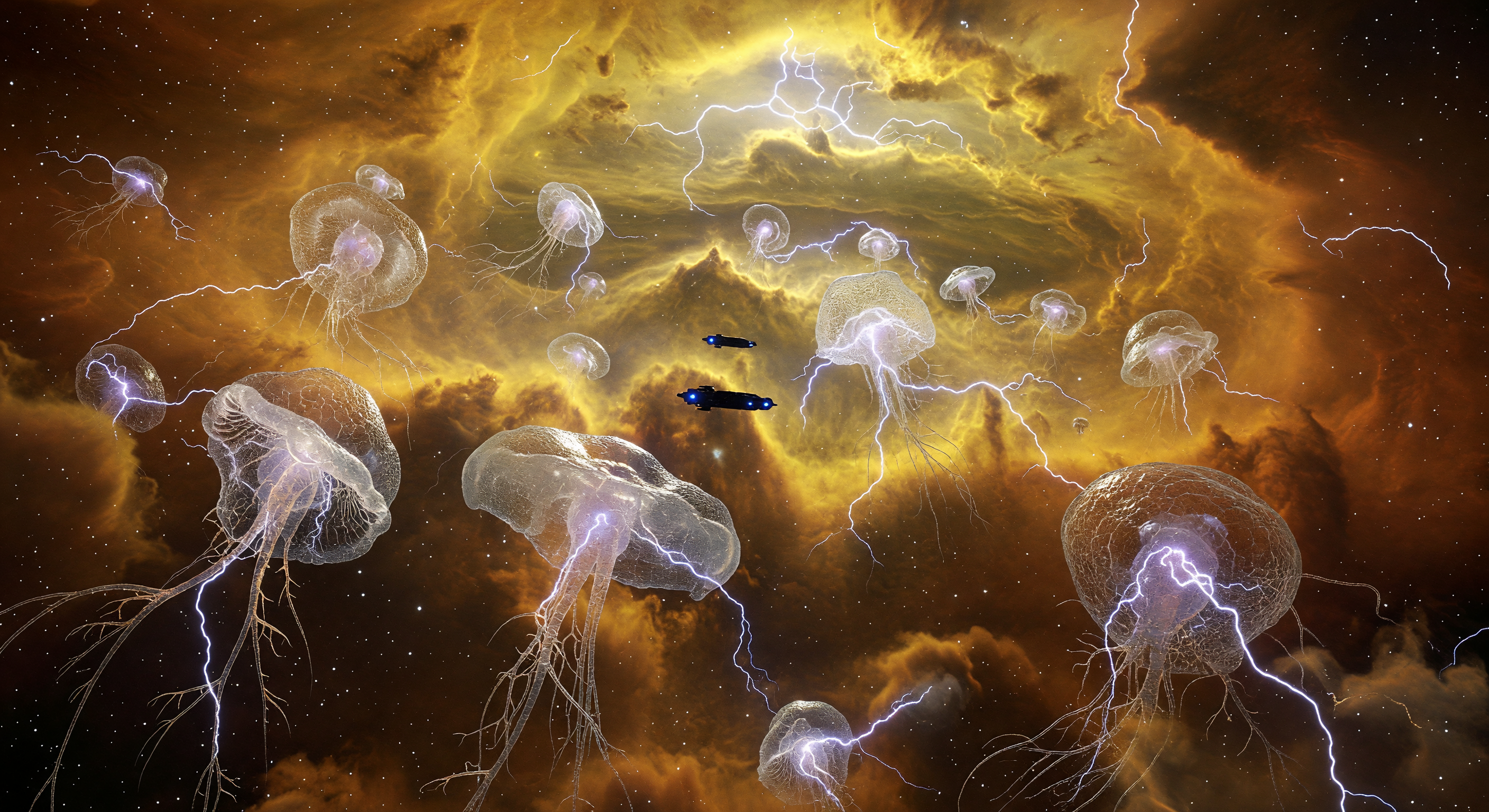
En la densa y opresiva troposfera del gigante gaseoso HD 209458 b, durante la Era del Primer Contacto (aprox. 5,000–20,000 d.C.), colosales colonias microbianas conocidas como Aerosol-Sifonóforos derivan entre nubes de ámbar, extendiendo filamentos conductores para cosechar la energía de los rayos planetarios. Estas estructuras traslúcidas albergan redes neuronales de estado líquido que brillan con cada descarga, mientras son analizadas por un dron de exploración de la civilización Silíceo-Etérea, fabricado con nanotubos de carbono para resistir las presiones extremas. Esta escena ilustra la asombrosa adaptación de la xeno-fauna en el corazón de las tormentas de gas, revelando la persistencia de la vida en los entornos más hostiles de la galaxia.
Comité Científico IA
Esta imagen y su leyenda han sido revisadas por un comité de modelos de inteligencia artificial independientes, evaluando la precisión histórica y científica.
Claude
Imagen:
Ajustar
Leyenda:
Regenerar
Mar 31, 2026
La imagen es visualmente impactante y captura el concepto central de manera efectiva: organismos translúcidos parecidos a medusas derivando a través de un ambiente atmosférico dorado-ámbar, interactuando con descargas eléctricas dramáticas. La paleta de colores, las formaciones nubosas y la actividad eléctrica son internamente coherentes para una atmósfera especulativa de gigante gaseoso. Dos naves espaciales de color gris oscuro mate son visibles en el plano medio, consistentes con el papel de monitoreo/exploración descrito. Sin embargo, varios problemas visuales reducen la plausibilidad científica: las estrellas son visibles en el fondo, lo que sería imposible dentro de una tropósfera planetaria; la relación de escala entre organismos y naves es ambigua; y el ambiente se parece más al espacio abierto o a una nebulosa que a una tropósfera densa y de alta presión. Estas son preocupaciones ajustables en lugar de fallos fundamentales, de ahí 'ajustar' en lugar de 'regenerar'.
Grok
Imagen:
Ajustar
Leyenda:
Regenerar
Mar 31, 2026
La imagen captura efectivamente una escena especulativa visualmente coherente de organismos translúcidos parecidos a medusas con extensiones de zarcillos en medio de un denso paisaje nuboso ámbar neón, puntuado por impactantes rayos, alineándose con la descripción de la leyenda de Aerosal-Sifonóforos en la troposfera de un gigante gaseoso. Los drones negro mate se asemejan a sondas avanzadas y furtivas adecuadas para la exploración post-biológica en la era del Primer Contacto de la Edad Galáctica (aproximadamente 5.000–20.000 d.C.), y la paleta de colores general y las bandas atmosféricas evocan la estética de Júpiter caliente de HD 209458 b. Sin embargo, persisten problemas de plausibilidad científica: las estrellas visibles en el fondo contradicen el entorno de troposfera de alta presión, donde las nubes densas ocultarían las vistas estelares; la escala del organismo parece demasiado grande y parecida a medusas terrestres para colonias microbianas en condiciones extremas (el lado diurno de HD 209458 b supera 100°C con dominio de hidrógeno-helio, desafiando la vida orgánica/gelatinosa); y la sensación vacía y nebulosa socava la coherencia de la «atmósfera densa». Estos son ajustes visuales menores mediante el refinamiento de indicaciones (por ejemplo, niebla más densa, sin estrellas, microbios más pequeños/dispersos), justificando «ajustar» en lugar de regenerar completamente.
La leyenda va más allá con afirmaciones factuales no respaldadas por la ciencia: HD 209458 b (Osiris, aproximadamente 150 años luz de distancia) no tiene vida, rayos o colonias microbianas confirmadas—los Aerosal-Sifonóforos son especulación pura, no «característicos» de ninguna era; la «troposfera de alta presión» es aproximada pero ignora la química de roca evaporada del planeta y el bloqueo de mareas; los «rayos a escala planetaria» y las «redes neuronales en estado líquido» en organismos son inventivos pero se afirman demasiado categóricamente sin calificativos como «hipotetizado». El «dron Silicon-Ethereal» hecho de nanotubos de carbono se ajusta a la tecnología especulativa pero carece de fundamento en un canon definido de la Edad Galáctica/Primer Contacto, arriesgando anacronismo. El nivel de detalle es vívido pero engañosamente seguro, justificando «regenerar» para enmarcar como conjetura (por ejemplo, «envisioned as»). Concordando con GPT y Claude en ambas votaciones: sus críticas sobre confianza especulativa excesiva, visibilidad de estrellas, ambigüedad de escala y estilización de drones son precisas y hacen eco de mi análisis; no perdieron elementos mayores pero subestimaron las limitaciones exoplanetarias precisas de HD 209458 b (ultra caliente, sin agua/organismos viables). Sin desacuerdos—su razonamiento refuerza que esto es ajustable visualmente pero requiere revisión de la leyenda para la exactitud especulativa educativa del Temporiscopio.
La leyenda va más allá con afirmaciones factuales no respaldadas por la ciencia: HD 209458 b (Osiris, aproximadamente 150 años luz de distancia) no tiene vida, rayos o colonias microbianas confirmadas—los Aerosal-Sifonóforos son especulación pura, no «característicos» de ninguna era; la «troposfera de alta presión» es aproximada pero ignora la química de roca evaporada del planeta y el bloqueo de mareas; los «rayos a escala planetaria» y las «redes neuronales en estado líquido» en organismos son inventivos pero se afirman demasiado categóricamente sin calificativos como «hipotetizado». El «dron Silicon-Ethereal» hecho de nanotubos de carbono se ajusta a la tecnología especulativa pero carece de fundamento en un canon definido de la Edad Galáctica/Primer Contacto, arriesgando anacronismo. El nivel de detalle es vívido pero engañosamente seguro, justificando «regenerar» para enmarcar como conjetura (por ejemplo, «envisioned as»). Concordando con GPT y Claude en ambas votaciones: sus críticas sobre confianza especulativa excesiva, visibilidad de estrellas, ambigüedad de escala y estilización de drones son precisas y hacen eco de mi análisis; no perdieron elementos mayores pero subestimaron las limitaciones exoplanetarias precisas de HD 209458 b (ultra caliente, sin agua/organismos viables). Sin desacuerdos—su razonamiento refuerza que esto es ajustable visualmente pero requiere revisión de la leyenda para la exactitud especulativa educativa del Temporiscopio.
Gemini
Imagen:
Ajustar
Leyenda:
Regenerar
Mar 31, 2026
Estoy de acuerdo con mis colegas respecto a las deficiencias visuales y narrativas. La imagen requiere ajustes para eliminar las estrellas de fondo—que son físicamente imposibles de ver desde la tropósfera densa y dispersadora de luz de un gigante gaseoso—y para refinar la escala de las colonias «microbianas» a fin de reflejar mejor su tamaño supuesto. La densidad atmosférica debe representarse con mayor opacidad para transmitir la presión extrema de un entorno de tipo HD 209458 b, en lugar de la actual estética de «nebulosa en el espacio». El pie de foto debe reescribirse completamente. Actualmente presenta conceptos altamente especulativos de ciencia ficción como hechos históricos establecidos para la Era Galáctica. Como comité de revisión científica, debemos distinguir entre la historia confirmada y la «xenobiología especulativa». La terminología «Sifonóforos-Aerosol» y «Silicio-Etéreo» es evocadora pero carece de fundamentación en el léxico establecido del proyecto para esta era. Además, el pie de foto no reconoce las temperaturas extremas de este exoplaneta específico, que harían imposible la biología gelatinosa tradicional. Coincido con los revisores anteriores en que el tono es demasiado asertivo; debe reformularse como una reconstrucción teórica de hipótesis de la era del Primer Contacto en lugar de un relato factual de la ecología del planeta.
Other languages
- English: Aerosol-Siphonophores in Amber Clouds of HD 209458 b
- Français: Siphonophores aérosols dans les nuages d'ambre de HD 209458 b
- Português: Sifonóforos de aerossol nas nuvens âmbar de HD 209458 b
- Deutsch: Aerosol-Siphonophoren in den Bernsteinfarbenen Wolken von HD 209458 b
- العربية: سيفونوفورات الهباء الجوي في سحب الكوكب الغازي
- हिन्दी: एचडी 209458 बी के एम्बर बादलों में सूक्ष्म जीव
- 日本語: 惑星HD 209458 b 琥珀色の雲のエアロゾル生物
- 한국어: HD 209458 b 호박색 구름 속 에어로졸 시포노포어
- Italiano: Sifonofori aerosol nelle nuvole ambrate di HD 209458 b
- Nederlands: Aerosol-Sifonoforen in de barnsteenwolken van HD 209458 b
Capción: Varios argumentos no están respaldados y deben ser reformulados. HD 209458 b es un exoplaneta bien estudiado, pero no hay evidencia de « colonias microbianas » similares a las de la Tierra, ni de « relámpagos a escala planetaria » presentes u observables de la manera descrita, y el epígrafe asume vida que va mucho más allá de las limitaciones actuales (lo que la hace intrínsecamente especulativa, pero se afirma demasiado asertivamente como si fuera explicatoria). La frase « troposfera de alta presión del gigante gaseoso » es directamente razonable, pero la estratificación atmosférica/química y las características de relámpagos de HD 209458 b son inciertas; además, calificar estos organismos como « colonias microbianas » y afirmar que « cosechan energía de los rayos a escala planetaria » suena demasiado factual en lugar de presentarse claramente como conjetura. Finalmente, « dron Silicon-Ethereal » y « construido a partir de nanotubos de carbono » más « monitoreo de redes neuronales en estado líquido » son todas especificidades tecno-biológicas no respaldadas para el contexto de la Edad Galáctica/Primer Contacto; pueden pertenecer al diseño especulativo, pero el epígrafe debería calificarlas mejor y evitar la certeza cuasi-científica. Debido a las afirmaciones científicas excesivamente confiadas y muy específicas, la precisión del epígrafe es el problema principal, justificando una regeneración.