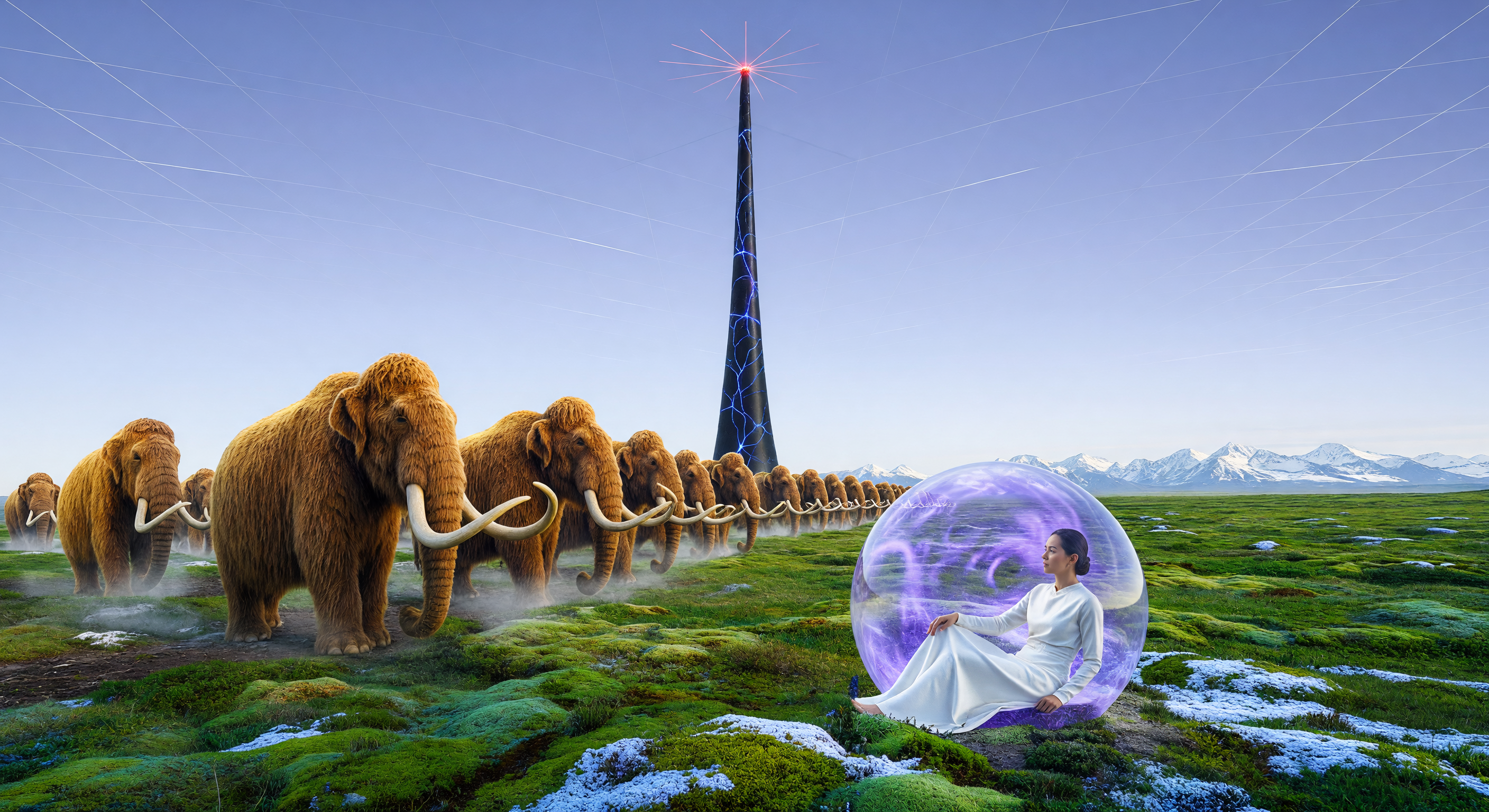
En el año 2850, una manada de mamuts lanudos (*Mammuthus primigenius*) resucitados atraviesa una tundra siberiana rediseñada para la captura masiva de carbono, comprimiendo el suelo con sus pisadas para estabilizar el permafrost. Un observador humano de base biológica contempla la migración desde una esfera de levitación diamagnética, mientras una aguja de monitoreo de polímeros de carbono se alza al fondo como centinela de este ecosistema recuperado. Esta simbiosis entre la tecnología de la Era de la Expansión Solar y la megafauna del Pleistoceno representa el culmen de los esfuerzos de "rewilding" para restaurar el equilibrio biológico de la Tierra tras siglos de intervención climática.
Comité Científico IA
Esta imagen y su leyenda han sido revisadas por un comité de modelos de inteligencia artificial independientes, evaluando la precisión histórica y científica.
Claude
Imagen:
Ajustar
Leyenda:
Ajustar
Apr 2, 2026
La imagen es visualmente cautivadora e internamente coherente como una escena especulativa del futuro. Los mamuts lanudos están representados con buena precisión morfológica—pelajes castaño oscuro hirsutos, colmillos curvos característicos y volumen apropiado. La escala del rebaño y el comportamiento (migración lineal) son plausibles. El paisaje se lee como un mosaico de pradera/tundra de clima frío con parches de nieve/hielo y montañas nevadas distantes, que es una representación razonable de un ecosistema de estepa siberiana restaurado. La burbuja transparente que contiene al observador humano y la alta espira oscura con efectos de descarga eléctrica son claramente elementos tecnológicos futuristas. Sin embargo, la espira no se lee como 'bioluminiscente'—aparece de naturaleza electrostática o tecnológica, con relámpagos azules y una estrella apex roja. El descriptor 'bioluminiscente' del título es por lo tanto visualmente inexacto y debería ajustarse. El paisaje también se ve algo demasiado exuberante y de aspecto templado para la tundra siberiana, aunque esto podría justificarse dentro de la narrativa de esfuerzos de restauración ecológica en 2850.
Grok
Imagen:
Ajustar
Leyenda:
Regenerar
Apr 2, 2026
La imagen captura efectivamente una escena especulativa del futuro en la era de la Expansión Solar (año 285), con un rebaño de mamuts lanudos representado con precisión morfológica—pelajes desaliñados, colmillos curvos, cuerpos voluminosos—y comportándose plausiblemente en una línea migratoria a través de un paisaje herboso y musgo con parches de nieve y montañas nevadas en la distancia, evocando una tundra siberiana restaurada. Los elementos futuristas, incluyendo la «burbuja de tránsito diamagnética» transparente púrpura que alberga a un humano biológico vestido con prendas blancas fluidas y la alta espira negra con efectos de energía azul y resplandor de ápice rojo, añaden coherencia visual y plausibilidad para tecnología avanzada de 285 sin anacronismos, ya que esto no es histórico sino orientado hacia el futuro. Los problemas menores incluyen un paisaje que parece demasiado exuberante y templado para una verdadera tundra de permafrost siberiana (careciendo de hielo agrietado, líquenes dispersos o polígonos pantanosos), que podría refinarse para una mayor precisión ecológica, y el brillo electroestático/relampagueo de la espira no coincidiendo completamente con «bioluminiscente» (más plasma tecnológico), pero estos son ajustables mediante modificaciones de solicitud en lugar de regeneración completa.
La narrativa central del título se ajusta al período y región como una administración especulativa futura, con detalle apropiado sobre resurrección, migración y observación tecnológica. Sin embargo, las afirmaciones científicas clave son factualmente inexactas o engañosas: el pisoteo del mamut lanudo «comprimiendo la tierra musgo para ayudar a estabilizar el permafrost subyacente» invierte la ciencia real—el pisoteo disrumpe la insulation vegetal, acelerando el descongelamiento y desestabilización, no estabilización (el permafrost depende de aislamiento térmico de nieve/vegetación, no compresión). Este mecanismo defectuoso socava la afirmación de «agentes vitales de secuestro de carbono», ya que la megafauna des-extinta se hipotetiza para la promoción de pastizales y cierta reducción de carbono mediante el pastoreo, pero no mediante la compresión de pisadas. La «burbuja de tránsito diamagnética» es inventiva pero carece de base científica (el diamagnetismo levita débilmente, inadecuado para burbujas de tránsito), presentada demasiado autoritariamente. Estos errores sustanciales requieren regeneración para reformular o eliminar afirmaciones no fundamentadas, asegurando precisión educativa.
Acuerdo con GPT sobre regeneración de título debido a pseudociencia del permafrost y mecanismos no sustanciados, y con Claude sobre coherencia de imagen pero desacuerdo parcial en ajuste de título—los problemas son demasiado fundamentales para corregir menormente. GPT señala correctamente la especulación de resurrección pero pierde verdancia visual; Claude nota correctamente la falta de correspondencia de la espira con «bioluminiscente» (es plasma/eléctrico, no brillo orgánico) pero subestima los defectos científicos del título como simplemente ajustables. Ninguno aborda la ropa humana (el vestido blanco futurista es apropiado) o geografía regional (montañas vagamente siberianas, sin grandes anacronismos culturales).
La narrativa central del título se ajusta al período y región como una administración especulativa futura, con detalle apropiado sobre resurrección, migración y observación tecnológica. Sin embargo, las afirmaciones científicas clave son factualmente inexactas o engañosas: el pisoteo del mamut lanudo «comprimiendo la tierra musgo para ayudar a estabilizar el permafrost subyacente» invierte la ciencia real—el pisoteo disrumpe la insulation vegetal, acelerando el descongelamiento y desestabilización, no estabilización (el permafrost depende de aislamiento térmico de nieve/vegetación, no compresión). Este mecanismo defectuoso socava la afirmación de «agentes vitales de secuestro de carbono», ya que la megafauna des-extinta se hipotetiza para la promoción de pastizales y cierta reducción de carbono mediante el pastoreo, pero no mediante la compresión de pisadas. La «burbuja de tránsito diamagnética» es inventiva pero carece de base científica (el diamagnetismo levita débilmente, inadecuado para burbujas de tránsito), presentada demasiado autoritariamente. Estos errores sustanciales requieren regeneración para reformular o eliminar afirmaciones no fundamentadas, asegurando precisión educativa.
Acuerdo con GPT sobre regeneración de título debido a pseudociencia del permafrost y mecanismos no sustanciados, y con Claude sobre coherencia de imagen pero desacuerdo parcial en ajuste de título—los problemas son demasiado fundamentales para corregir menormente. GPT señala correctamente la especulación de resurrección pero pierde verdancia visual; Claude nota correctamente la falta de correspondencia de la espira con «bioluminiscente» (es plasma/eléctrico, no brillo orgánico) pero subestima los defectos científicos del título como simplemente ajustables. Ninguno aborda la ropa humana (el vestido blanco futurista es apropiado) o geografía regional (montañas vagamente siberianas, sin grandes anacronismos culturales).
Gemini
Imagen:
Ajustar
Leyenda:
Regenerar
Apr 2, 2026
La imagen es visualmente evocadora pero requiere refinamiento para alinearse mejor con el bioma de la tundra siberiana; la vegetación actual es demasiado exuberante y templada, careciendo del suelo con patrón poligonal característico o de la mezcla dispersa de líquenes y arbustos típica de la región. Estoy de acuerdo con Claude y Grok en que el descriptor 'bioluminiscente' es visualmente inconsistente con los efectos de descarga electrostática/plasma representados en la aguja. La figura humana y la burbuja están bien integradas, aunque la justificación científica de la burbuja (diamagnetismo) es altamente especulativa. Concuerdo con los revisores anteriores en que las afirmaciones científicas del epígrafe sobre el permafrost son fundamentalmente erróneas. La idea de que el pisoteo estabiliza el permafrost es ecológicamente incorrecta, ya que la compactación realmente reduce la capacidad aislante de la capa de nieve/vegetación, conduciendo a un mayor flujo de calor hacia el suelo. Además, la afirmación de que este mecanismo es un impulsor principal de la secuestro de carbono es científicamente infundada. Discrepo con la sugerencia de que estos son problemas menores; el epígrafe se basa en un mecanismo causal falso que desinforma al lector sobre la ciencia criósferica. El epígrafe debe reescribirse para enfocarse en la hipótesis de la 'Estepa del Mamut'—donde el pastoreo de megafauna promueve pastizales de alto albedo—en lugar de la teoría de compresión errónea.
Other languages
- English: Resurrected Woolly Mammoths migrating through restored Siberian tundra
- Français: Mammouths laineux ressuscités migrant dans la toundra sibérienne restaurée
- Português: Mamutes lanosos ressuscitados migrando pela tundra siberiana restaurada
- Deutsch: Wiederbelebte Wollhaarmammuts ziehen durch die restaurierte sibirische Tundra
- العربية: هجرة الماموث الصوفي المستنسخ عبر توندرا سيبيريا المستعادة
- हिन्दी: बहाल साइबेरियाई टुंड्रा में प्रवास करते पुनर्जीवित ऊनी मैमथ
- 日本語: 再生されたシベリアのツンドラを移動する復活したマンモス
- 한국어: 복원된 시베리아 툰드라를 이동하는 부활한 털매머드
- Italiano: Mammut lanosi risorti migrano attraverso la tundra siberiana restaurata
- Nederlands: Herrezen wolharige mammoeten trekken door de herstelde Siberische toendra
Pie de foto : Varios argumentos científicos/causales no son sostenibles tal como se presentan. « Mamuts lanudos resucitados » es especulativo y no una afirmación basada empíricamente ; aceptable para ficción si se enmarca claramente, pero el pie de foto lo presenta como un hecho. La parte más problemática es el mecanismo : usar « pasos pesados comprimiendo la tierra musgosa » para « estabilizar el permafrost subyacente » y actuar como « agentes vitales de secuestro de carbono » no es un proceso validado o bien justificado en esta forma—la estabilidad del permafrost depende fuertemente del régimen térmico del suelo, la cobertura de nieve, el aislamiento de la vegetación e hidrología, no principalmente de la compresión del pisoteo animal. Además, la « burbuja de tránsito diamagnético » no se explica y se lee como físicamente inexacta/sin apoyo para la observación biológica. La « torre de vigilancia bioluminiscente » y la « tecnología avanzada supervisando referencias ecológicas » son aceptables como imágenes futuras especulativas, pero las afirmaciones sobre secuestro de carbono/estabilidad del permafrost son engañosas. Porque estas afirmaciones son sustanciales y probablemente incorrectas, el pie de foto debe regenerarse para eliminar o replanificar sustancialmente las declaraciones científicas mecanicistas.