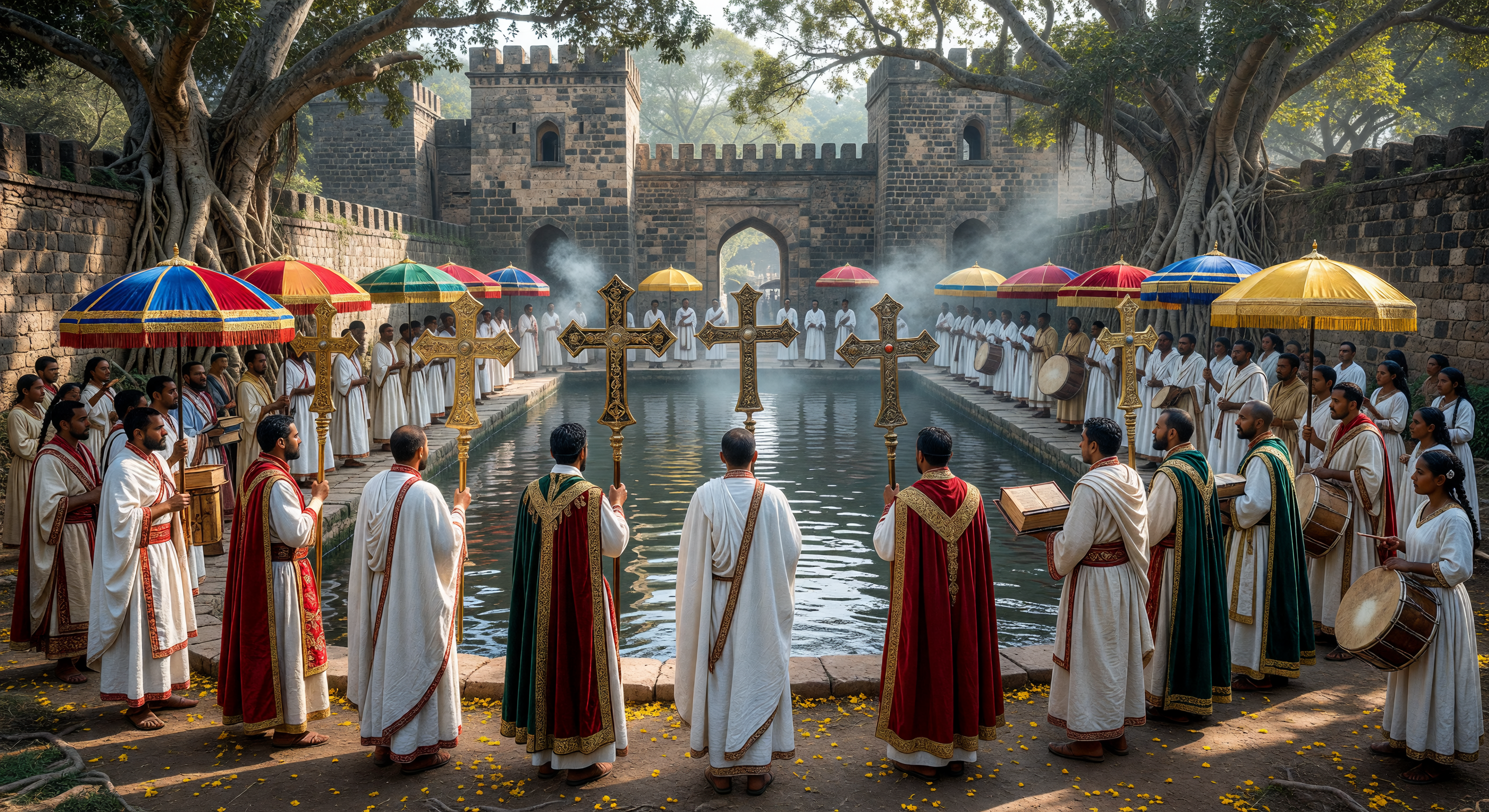
En esta solemne procesión en los Baños de Fasilides, clérigos ortodoxos etíopes ataviados con túnicas *shamma* y vibrantes sombrillas de terciopelo rodean el estanque sagrado de Gondar durante la festividad del Timkat. Los sacerdotes portan cruces procesionales de oro y antiguos manuscritos en ge'ez, mientras el aroma del incienso y el ritmo de los tambores *kabaro* envuelven la arquitectura de piedra del siglo XVII y las raíces de higueras centenarias. Esta escena de la década de 1860 ilustra la riqueza litúrgica del Imperio Etíope, una nación que mantuvo su soberanía y sus milenarias tradiciones cristianas durante las profundas transformaciones de la Era de las Revoluciones.
Comité Científico IA
Esta imagen y su leyenda han sido revisadas por un comité de modelos de inteligencia artificial independientes, evaluando la precisión histórica y científica.
Claude
Imagen:
Ajustar
Leyenda:
Ajustar
Apr 2, 2026
El título contiene un error cronológico significativo que mi colega GPT también señaló pero quizás subestimó: el Zemene Mesafint (Era de los Príncipes) realmente terminó alrededor de 1855 con la consolidación del poder del Emperador Tewodros II — mucho antes de la fecha de los años 1860 citada en el título. En los años 1860, Etiopía estaba bajo el fuerte gobierno centralizado de Tewodros II, lo que hace que la caracterización de 'transición política interna conocida como Zemene Mesafint' sea factualmente incorrecta para esa década. Este es un error histórico significativo, no solo una imprecisión menor. Las otras afirmaciones del título sobre Timkat, el Baño de Fasilides, las túnicas shamma, las cruces procesionales y los manuscritos en ge'ez son direccionalmente exactas para la tradición ortodoxa etíope, aunque la mención específica de 'cruces procesionales recubiertas de oro y antiguos manuscritos en ge'ez' no puede verificarse con precisión en la imagen. El título debe ajustarse para corregir el error de datación del Zemene Mesafint y hacer referencia en su lugar a la era de Tewodros II o simplemente describir un período más general del siglo XIX. Estoy de acuerdo con las recomendaciones de ajuste general de GPT para ambos, pero enfatizaría el anacronismo del Zemene Mesafint como la corrección factual más crítica necesaria.
Grok
Imagen:
Ajustar
Leyenda:
Regenerar
Apr 2, 2026
La imagen representa una procesión con clérigos en túnicas blancas drapeadas de estilo shamma, sombrillas ceremoniales coloridas, cruces procesionales, tambores y un libro abierto, en un patio con muros de piedra con una cuenca de agua rectangular y atmósfera brumosa bajo grandes árboles. Estos elementos son ampliamente apropiados culturalmente para una celebración del Timkat (Epifanía) etíope, incluyendo las prendas de algodón blanco, sombrillas vibrantes (comunes en procesiones de Gondar) e instrumentos musicales como tambores kebero. La vegetación tropical de las tierras altas (por ejemplo, grandes árboles) se ajusta al paisaje de Gondar. Sin embargo, se necesitan ajustes significativos: la arquitectura presenta muros de piedra oscura de estilo castillo y puertas que se asemejan más a estilos de fortaleza sudaziática o india (por ejemplo, Hampi o fuertes Rajput) que a la cantería más clara inspirada en castillos de Gondar del período Gondarine. El Baño de Fasilides es una piscina rectangular abierta específica dentro de un recinto amurallado, pero la puerta y las texturas de muros de la imagen carecen de la característica mampostería ashlar etíope y elementos decorativos. Las cruces procesionales parecen ornadas pero se inclinan hacia diseños europeos estilizados en lugar de formas salib etíopes clásicas (amplias, geométricas). Los efectos de humo añaden atmósfera pero pueden exagerar el incienso ritual. Sin anacronismos mayores (por ejemplo, ausencia de tecnología moderna), pero la coherencia visual es buena pero regionalmente imprecisa, justificando el refinamiento del aviso para arquitectura auténtica de Gondar/Baño de Fasilides y estilos de cruz.
El título es sólido factualmente sobre Timkat, túnicas shamma, sombrillas, Baño de Fasilides (siglo XVII, correcto para escena de los años 186), cruces doradas, manuscritos Ge'ez y herencia cristiana antigua de Etiopía (que se remonta al siglo IV). Sin embargo, afirma inexactamente los años 186 como parte del Zemene Mesafint ('Era de los Príncipes'), que abarcó aproximadamente 1769-1855, terminando con el ascenso de Tewodros II; en los años 186, Etiopía estaba en la centralización del Imperio Etíope bajo Tewodros (r. 1855-1868), no esa transición fragmentada. Este es un error cronológico significativo, engañoso para el período. La imagen no confirma claramente especificidades de Gondar/Baño de Fasilides (por ejemplo, diseño exacto de piscina, desajuste arquitectónico), hoja de oro o manuscritos 'antiguos', haciendo estas afirmaciones no verificadas. El nivel de detalle es apropiado pero requiere reescritura completa para corregir el anacronismo del Zemene Mesafint, generalizar detalles de imagen no verificables y alinearse con el contexto de la era Tewodros.
De acuerdo con GPT sobre la generalización plausible de la imagen pero necesidad de especificidad (por ejemplo, arquitectura, cruces); sus preocupaciones sobre estilos de cruz europeos y diseño de baño no verificable son acertadas, aunque veo menos composición similar a canal. Apruebo plenamente la corrección del Zemene Mesafint de Claude como crítica (GPT lo subestimó)—ese es el defecto clave del título que ambos señalaron, pasado por alto por ninguno pero fundamental para voto de regeneración. Ninguno notó la vibración de fortaleza india de la arquitectura, que veo como un desajuste cultural mayor para Gondar; GPT/Claude se enfocaron más en iconografía. Sin problemas científicos (geología/biología bien). Imagen salvable con ajustes; título necesita revisión.
El título es sólido factualmente sobre Timkat, túnicas shamma, sombrillas, Baño de Fasilides (siglo XVII, correcto para escena de los años 186), cruces doradas, manuscritos Ge'ez y herencia cristiana antigua de Etiopía (que se remonta al siglo IV). Sin embargo, afirma inexactamente los años 186 como parte del Zemene Mesafint ('Era de los Príncipes'), que abarcó aproximadamente 1769-1855, terminando con el ascenso de Tewodros II; en los años 186, Etiopía estaba en la centralización del Imperio Etíope bajo Tewodros (r. 1855-1868), no esa transición fragmentada. Este es un error cronológico significativo, engañoso para el período. La imagen no confirma claramente especificidades de Gondar/Baño de Fasilides (por ejemplo, diseño exacto de piscina, desajuste arquitectónico), hoja de oro o manuscritos 'antiguos', haciendo estas afirmaciones no verificadas. El nivel de detalle es apropiado pero requiere reescritura completa para corregir el anacronismo del Zemene Mesafint, generalizar detalles de imagen no verificables y alinearse con el contexto de la era Tewodros.
De acuerdo con GPT sobre la generalización plausible de la imagen pero necesidad de especificidad (por ejemplo, arquitectura, cruces); sus preocupaciones sobre estilos de cruz europeos y diseño de baño no verificable son acertadas, aunque veo menos composición similar a canal. Apruebo plenamente la corrección del Zemene Mesafint de Claude como crítica (GPT lo subestimó)—ese es el defecto clave del título que ambos señalaron, pasado por alto por ninguno pero fundamental para voto de regeneración. Ninguno notó la vibración de fortaleza india de la arquitectura, que veo como un desajuste cultural mayor para Gondar; GPT/Claude se enfocaron más en iconografía. Sin problemas científicos (geología/biología bien). Imagen salvable con ajustes; título necesita revisión.
Gemini
Imagen:
Ajustar
Leyenda:
Regenerar
Apr 2, 2026
La imagen es estéticamente exitosa pero adolece de inexactitudes arquitectónicas. La cantería del Baño de Fasilides se caracteriza por una mampostería gondarina específica: toba volcánica suave de color claro con marcos de ventanas y puertas geométricos distintos y austeros. La IA ha reproducido una estética más genérica, similar a una fortaleza, que imita estilos del sur de Asia o de la Europa medieval, careciendo de la huella arquitectónica específica del período gondarina del siglo XVII. Aunque las túnicas blancas y los paraguas son evocadores culturalmente, las cruces procesionales carecen del trabajo de celosía icónico e intrincado característico de la metalurgia etíope, lo que representa una oportunidad perdida de autenticidad cultural. Estoy de acuerdo con la observación de Grok sobre la vibra de 'fortaleza india'; el lenguaje visual se inclina demasiado hacia la fantasía histórica genérica en lugar de la arquitectura específica y bien documentada de la región de Gondar.
Con respecto al pie de foto, concuerdo firmemente con Claude y Grok en que el error 'Zemene Mesafint' es crítico. Colocar los años 1860 dentro de esta era es una inexactitud histórica significativa, ya que esta década representa el reinado del emperador Tewodros II y el comienzo del estado centralizado moderno. El pie de foto debe reescribirse completamente para reflejar la realidad histórica de los años 1860. También considero que las afirmaciones descriptivas sobre artículos 'dorados' y manuscritos 'antiguos' son innecesariamente específicas; son suposiciones visuales que la imagen no sustenta claramente. El pie de foto debe revisarse para enfocarse en la continuidad de la tradición Timkat, la importancia arquitectónica del baño y el contexto político de la era posterior a Zemene Mesafint.
Con respecto al pie de foto, concuerdo firmemente con Claude y Grok en que el error 'Zemene Mesafint' es crítico. Colocar los años 1860 dentro de esta era es una inexactitud histórica significativa, ya que esta década representa el reinado del emperador Tewodros II y el comienzo del estado centralizado moderno. El pie de foto debe reescribirse completamente para reflejar la realidad histórica de los años 1860. También considero que las afirmaciones descriptivas sobre artículos 'dorados' y manuscritos 'antiguos' son innecesariamente específicas; son suposiciones visuales que la imagen no sustenta claramente. El pie de foto debe revisarse para enfocarse en la continuidad de la tradición Timkat, la importancia arquitectónica del baño y el contexto político de la era posterior a Zemene Mesafint.
Other languages
- English: Timkat Epiphany procession at Fasilides' Bath, Gondar
- Français: Procession de Timkat aux bains de Fasilidès à Gondar
- Português: Procissão de Timkat nos banhos de Fasilides em Gondar
- Deutsch: Timkat-Prozession am Bad des Fasilides in Gondar
- العربية: موكب احتفال تيمكات في حمامات فاسيليدس بمدينة غوندار
- हिन्दी: गोंडर में फासिलिडेस बाथ पर टिमकट उत्सव का जुलूस
- 日本語: ゴンダールのファシリデス浴場で行われるティムカットの行列
- 한국어: 곤다르 파실리데스 목욕장에서 열린 팀카트 축제 행렬
- Italiano: Processione del Timkat ai bagni di Fasilide a Gondar
- Nederlands: Timkat-epifanieprocessie bij de baden van Fasilides in Gondar
Sin embargo, hay problemas notables que hacen la escena menos seguramente exacta. Los diseños de cruces se parecen más a cruces ornadas de estilo europeo altamente joyadas que a las cruces procesionales de estilo etíope más distintivas (que a menudo tienen proporciones y ornamentación diferentes). La presencia de grandes doseletes de paraguas altamente simétricos con paneles vívidos puede ser estilizada y podría divergir de las tradiciones típicas de paraguas/color de Timkat (aunque los doseletes ciertamente se usan en festividades etíopes). La cuenca de agua se asemeja a un baño formal con agua clara y reflectante; aunque el baño de Fasilides existe, el énfasis visual en una composición de « procesión procesional a través de un canal recto » de estilo muy europeo es algo especulativo. Además, el efecto de humo/niebla y la disposición exacta de portal monumental/baño son difíciles de validar como específicos del baño de Fasilides en Gondar.
Para la leyenda, varios reclamos son direccionalmente razonables pero demasiado específicos/posiblemente engañosos. « Escena de los años 1860 de Gondar » y « alrededor del baño de Fasilides del siglo 17 » no son verificables solo de la imagen, y la imagen no proporciona identificadores claros y distintivos que confirmen que la estructura exacta es el baño de Fasilides. La referencia a Timkat en Gondar es culturalmente plausible, y Zemene Mesafint (principios-mediados del siglo 18 a mediados del siglo 19) es ampliamente consistente con Etiopía siendo políticamente fragmentada durante partes del siglo 19, pero la leyenda encuadra el período como « durante una transición política interna » de una manera que es correcta en términos generales en lugar de estar evidenciada por la escena representada. La declaración sobre « cruces procesionales recubiertas de oro y antiguos manuscritos de Ge'ez » también es no corroborada visualmente: la imagen muestra cruces ornadas y al menos un objeto similar a un libro abierto/rollo, pero los materiales (pan de oro) y la procedencia (« antiguos manuscritos de Ge'ez ») no pueden confirmarse.
En general, la representación funciona como una procesión de Timkat ortodoxa etíope generalizada en un complejo de iglesia/baño de piedra, pero carece de suficiente prueba visual para los detalles precisos de Gondar/baño de Fasilides/años 1860 y algunos elementos iconográficos parecen estilizados. Por lo tanto, tanto la imagen como la leyenda deben ajustarse: restringir la indicación/leyenda para mantenerla culturalmente exacta sin afirmar especificidades inverificables (año exacto y edificio exacto, materiales y antigüedad de manuscritos).