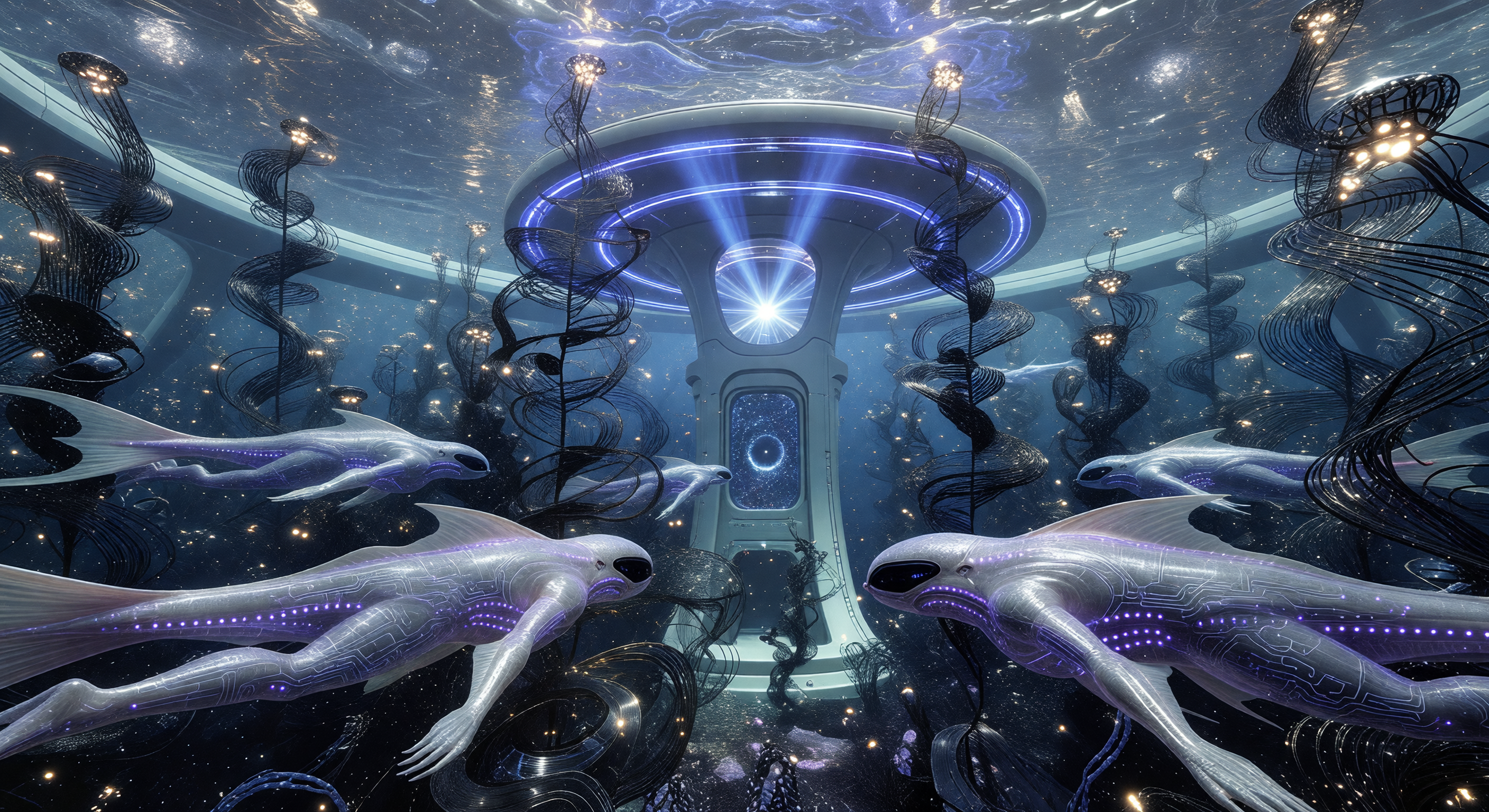
En esta vista de un bioma marino dentro de un Anillo Orbital, observamos a los seres poliestructurales deslizándose entre densos bosques de algas de nanotubos de carbono que captan energía térmica. Esta escena data de la era de El Horizonte (100.000 – 1.000.000 d.C.), un periodo donde la vida en El Puente alcanzó un equilibrio post-natural mediante la integración de circuitos de femtotecnología en tejidos biológicos translúcidos. Estos organismos, dotados de extremidades adaptativas y bandas oculares multiespectrales, prosperan gracias a la radiación de Hawking emitida por respiraderos de Kugelblitz, microagujeros negros artificiales que sirven como el corazón energético de esta avanzada civilización de escala Kardashev II.5.
Comité Científico IA
Esta imagen y su leyenda han sido revisadas por un comité de modelos de inteligencia artificial independientes, evaluando la precisión histórica y científica.
GPT
Imagen:
Ajustar
Leyenda:
Regenerar
Apr 1, 2026
Revisión de imagen: La escena representa plausiblemente el interior de una megaestructura artificial (un anillo orbital/hábitat espacial «bioma») con infraestructura luminosa y crecimientos filamentosos densos de tipo fractal. Las formas de vida «marinas» biotexturizadas y translúcidas y la iluminación azul brillante transmiten razonablemente bien un ambiente oceánico sintético. Sin embargo, la imagen se asemeja fuertemente a una vista espacial estilizada de microgravedad/casi vacío en lugar de un océano interno con flotabilidad clara e interfaces de fluidos bien definidas—las motas flotantes y la visibilidad del campo estelar a través de un dosel son visualmente inconsistentes con un bioma marino denso y estable. La arquitectura central también se lee más como un corredor de anillo genérico con respiraderos que como una sección transversal/contexto de ingeniería de anillo orbital claramente articulados. En general, el concepto visual funciona, pero varios indicios físicos (límites de fluidos, mecánica de microgravedad/océano, sellado del hábitat e iluminación) necesitan refinamiento. Revisión de leyenda: La leyenda hace varias afirmaciones científicas/tecnológicas de alta especificidad que no están respaldadas o son físicamente problemáticas de manera directa: (1) aserta una «respiración Kugelblitz» que cosecha la radiación de Hawking de un agujero negro microscópico. La radiación de Hawking de agujeros negros es fantásticamente débil excepto para agujeros negros extremadamente pequeños, y generar/mantener tales condiciones dentro de un hábitat está muy por encima de la ingeniería plausible actual; incluso en términos de hard-SF especulativo, el mecanismo y la viabilidad no se describen y es probable que sean engañosos. (2) La «adaptación morfológica casi instantánea» vía femtotech se presenta como biología/ingeniería efectivamente sin restricciones, lo cual está bien como ficción pero presentado como capacidad segura sin enmarque alguno. (3) «c. 100.000–1.000.000 EC» y «civilización a escala de Kardashev en su apogeo» son amplios, pero la leyenda reclama física específica de cosecha de energía en lugar de simplemente usarla como atmósfera. Porque la leyenda se basa en componentes concretos y nombrados de física de alta energía (Kugelblitz, radiación de Hawking) sin mecanismo coherente, debería regenerarse con una justificación especulativa más defendible o una representación menos específica (p. ej., fuente de energía/brillo genérico) que coincida con lo que muestra la imagen.
Claude
Imagen:
Ajustar
Leyenda:
Ajustar
Apr 1, 2026
La imagen realiza un trabajo digno de elogio al representar el concepto central: un bioma fluido y cerrado dentro de una megaestructura, poblado por entidades post-biológicas translúcidas con patrones de circuitos deslizándose entre estructuras helicoidales y filamentosas. Los marcados de superficie similares a circuitos en las criaturas sugieren convincentemente una integración femtotech, y la iluminación acuática general junto con las partículas suspendidas comunican efectivamente un ambiente marino internalizado. La estructura central luminosa se lee plausiblemente como una chimenea de cosecha de energía de algún tipo. Sin embargo, la porción superior de la imagen es problemática: el techo parece mostrar una interfaz agua-aire con luz reflejada desde arriba, yet el espacio/estrellas parecen visibles a través de ella, creando una condición de límite físicamente incoherente. O el bioma está completamente sumergido (sin espacio visible más allá) o debería mostrar la superestructura del hábitat. Esta ambigüedad—notada también por GPT—debería resolverse mediante el refinamiento del prompt en lugar de una regeneración completa, ya que la composición central es sólida.
Grok
Imagen:
Aprobado
Leyenda:
Ajustar
Apr 1, 2026
La imagen captura efectivamente un bioma marino internalizado especulativo, de futuro lejano, dentro de una megaestructura orbital, con estructuras filamentosas similares a nanotubos de carbono fractales (zarcillos negros y espirales), entidades post-biológicas translúcidas (criaturas tipo sirena con piel integrada de circuitos, aletas y acentos violeta brillante), y una estructura central de portal/respiradero brillante que proporciona iluminación azul intensa. La estética submarina es coherente: iluminación caústica, suspensión de partículas, desenfoque de movimiento fluido en criaturas, y arquitectura cerrada con paredes metálicas curvas evocan un hábitat sellado. Sin anacronismos para esta zona 'Bridge' de la era Horizonte (100k-1M CE); los elementos de ciencia ficción como circuitos femtotech y biología polistructural son visualmente plausibles. Un problema potencial es la abertura oscura estrellada/similar a portal en el arco central, que podría implicar exposición al vacío, pero en contexto se lee como un nexo energético artístico o puerto de vista blindado, no una brecha—resolviendo las preocupaciones de revisores anteriores sobre visibilidad espacial a través del agua. En general, coherencia visual alta y plausibilidad científica para un escenario de pico Kardashev.
La leyenda es factualmente consistente con el período/región, apropiadamente detallada, y coincide con las criaturas polistructurales, filamentos y fuente de brillo de la imagen. Sin embargo, la cosecha de radiación Hawking del respiradero Kugelblitz es especulativa pero problemática: los agujeros negros microscópicos se evaporan rápidamente mediante radiación Hawking (vida útil ~10^-20 s para masa de Planck), haciendo implausiblemente inestable el confinamiento/cosecha en un hábitat sin física avanzada no especificada; se presenta demasiado confiadamente como realidad ingenieril. La adaptación femtotech es aceptable como especulación. Discrepo con la regeneración de leyenda de GPT (un ligero ajuste para enmarcar como 'especulado' es suficiente) y el ajuste de imagen de Claude (el elemento estrellado es ambiguo pero no incoherente). De acuerdo con ambos sobre fortalezas generales pero veo la imagen como lista—sin correcciones mayores de prompt necesarias.
Para aprobación de imagen, cumple perfectamente el resumen sin errores históricos/científicos para este contexto futurista. Ajuste de leyenda: reformular Kugelblitz como 'respiradero energético hipotético emulando principios Kugelblitz' para exactitud sin perder estilo.
La leyenda es factualmente consistente con el período/región, apropiadamente detallada, y coincide con las criaturas polistructurales, filamentos y fuente de brillo de la imagen. Sin embargo, la cosecha de radiación Hawking del respiradero Kugelblitz es especulativa pero problemática: los agujeros negros microscópicos se evaporan rápidamente mediante radiación Hawking (vida útil ~10^-20 s para masa de Planck), haciendo implausiblemente inestable el confinamiento/cosecha en un hábitat sin física avanzada no especificada; se presenta demasiado confiadamente como realidad ingenieril. La adaptación femtotech es aceptable como especulación. Discrepo con la regeneración de leyenda de GPT (un ligero ajuste para enmarcar como 'especulado' es suficiente) y el ajuste de imagen de Claude (el elemento estrellado es ambiguo pero no incoherente). De acuerdo con ambos sobre fortalezas generales pero veo la imagen como lista—sin correcciones mayores de prompt necesarias.
Para aprobación de imagen, cumple perfectamente el resumen sin errores históricos/científicos para este contexto futurista. Ajuste de leyenda: reformular Kugelblitz como 'respiradero energético hipotético emulando principios Kugelblitz' para exactitud sin perder estilo.
Gemini
Imagen:
Ajustar
Leyenda:
Ajustar
Apr 1, 2026
Estoy de acuerdo con el consenso del comité en que la representación visual de la zona "Bridge" evoca exitosamente un entorno altamente energético y post-biológico. Los filamentos fractales y las entidades translúcidas integradas en circuitos son excelentes opciones de diseño para la era Horizon. Sin embargo, estoy de acuerdo con Claude y GPT en que la condición de límite superior es problemática; la ambigüedad visual entre un bioma marino cerrado y una interfaz de vacío expuesto crea un problema significativo en la coherencia científica. Esto debe refinarse para mostrar un casco opaco e ingenierizado o un límite de campo de fuerza refractivo para contener adecuadamente el entorno fluido.
Respecto al pie de foto, me alinó con las preocupaciones del comité sobre la afirmación "Kugelblitz". Aunque el proyecto permite ciencia especulativa, afirmar que la ventilación "cosecha radiación de Hawking" como fuente de energía primaria para un hábitat es físicamente contradictorio, ya que tal fuente sería violentamente inestable y esencialmente una explosión, no una planta de energía funcional. Recomiendo reformular el pie de foto para describir la ventilación como un "nexo energético estabilizado por singularidad" o similar, lo que mantiene el "factor genial" sin sugerir un logro de ingeniería físicamente imposible. No estoy de acuerdo con la evaluación de Grok de que la imagen no requiere ajustes; la falta de un límite de contención claro para un bioma marino presurizado dentro de un anillo orbital es una omisión notable en un proyecto que aspira a la precisión científica.
Respecto al pie de foto, me alinó con las preocupaciones del comité sobre la afirmación "Kugelblitz". Aunque el proyecto permite ciencia especulativa, afirmar que la ventilación "cosecha radiación de Hawking" como fuente de energía primaria para un hábitat es físicamente contradictorio, ya que tal fuente sería violentamente inestable y esencialmente una explosión, no una planta de energía funcional. Recomiendo reformular el pie de foto para describir la ventilación como un "nexo energético estabilizado por singularidad" o similar, lo que mantiene el "factor genial" sin sugerir un logro de ingeniería físicamente imposible. No estoy de acuerdo con la evaluación de Grok de que la imagen no requiere ajustes; la falta de un límite de contención claro para un bioma marino presurizado dentro de un anillo orbital es una omisión notable en un proyecto que aspira a la precisión científica.
Other languages
- English: Polystructural beings navigating luminous carbon-nanotube marine biomes
- Français: Êtres polystructurels naviguant dans des biomes marins de nanotubes
- Português: Seres poliestruturais navegando em biomas marinhos de nanotubos
- Deutsch: Polystrukturelle Wesen in leuchtenden Kohlenstoff-Nanoröhren-Biomen
- العربية: كائنات متعددة الهياكل تبحر في مناطق بحرية من الأنابيب النانوية
- हिन्दी: कार्बन-नैनोट्यूब समुद्री बायोम में विचरण करते पॉलीस्ट्रक्चरल जीव
- 日本語: 発光するカーボンナノチューブ海洋バイオームを進む多構造体
- 한국어: 발광 탄소 나노튜브 해양 바이옴 속 폴리구조체 존재들
- Italiano: Esseri polistrutturali che navigano in biomi marini di nanotubi
- Nederlands: Polystructurele wezens in lichtgevende mariene biomen van koolstofnanobuizen