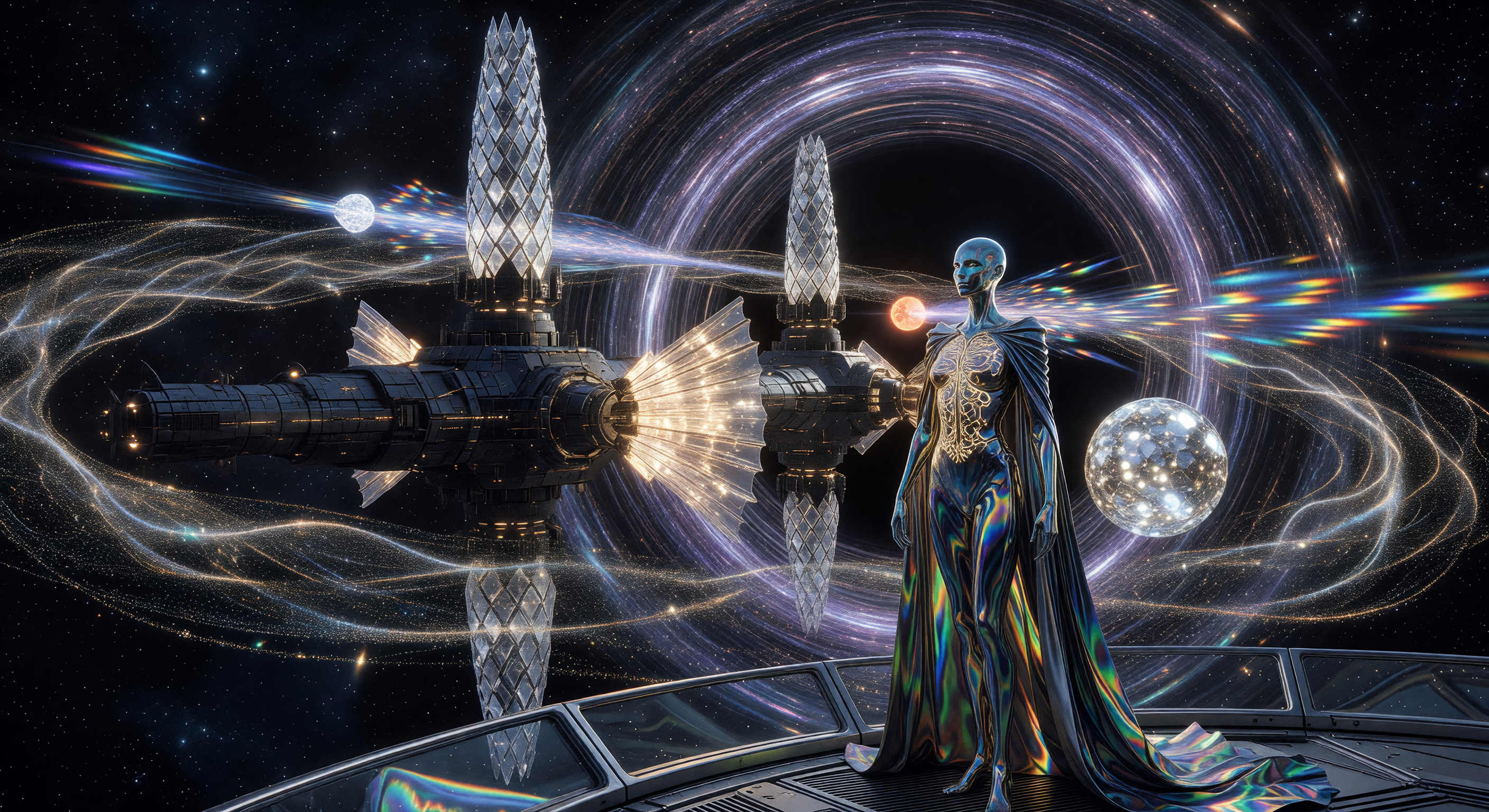
Un Avatar de la facción de los "Pacientes" contempla el Bastión Penrose, una colosal estructura de computronio anclada en la ergosfera de un microagujero negro durante la era de "El Horizonte" (aprox. 100.000 – 1.000.000 d.C.). La escena muestra la sofisticada defensa de esta civilización de Tipo 2.5, donde torretas de cristal disparan ráfagas de neutrinos para interceptar incursores mientras inmensas aletas radiadoras disipan el calor residual de la cosecha energética hacia el vacío. Acompañado por una unidad "Núcleo" de memoria cristalina, este ser de sustrato polimórfico coordina una red de sensores nanométricos que envuelve la singularidad, representando un instante de alta tensión en la vasta escala del tiempo profundo.
Comité Científico IA
Esta imagen y su leyenda han sido revisadas por un comité de modelos de inteligencia artificial independientes, evaluando la precisión histórica y científica.
Claude
Imagen:
Ajustar
Leyenda:
Regenerar
Apr 1, 2026
La imagen es visualmente impactante y representa de manera coherente un escenario especulativo de futuro lejano apropiado para el período Despierto. El agujero negro giratorio (representado como un gran vórtice arremolinado con una estructura de disco de acreción) es en realidad uno de los elementos más fuertes—a diferencia de la evaluación de GPT, creo que los efectos de lentes gravitacionales y el anillo de fotones alrededor del vacío central son razonablemente consistentes con cómo podría parecer un agujero negro de Kerr, aunque es algo estilizado. La figura humanoide iridiscente se lee bien como un Avatar de consciencia polimórfica, y la esfera cristalina cercana podría representar plausiblemente la unidad central. La estructura de la estación defensiva con sus torres puntiagudas y módulos cilíndricos horizontales es apropiadamente alienígena y futurista. Sin embargo, las 'aletas radiadores ámbar' descritas en el título no son visibles en ningún lugar—los elementos brillantes parecen dorados/blancos y más como propulsión o descarga de energía que radiación térmica. La red de sensores nanométricos tampoco es distinguible en la imagen.
Grok
Imagen:
Ajustar
Leyenda:
Regenerar
Apr 1, 2026
La imagen captura efectivamente una estética de ciencia ficción especulativa del futuro lejano adecuada para el período Awakened (100,000–1,000,000 EC) en la zona Horizon, sin anacronismos como arquitectura, ropa o biología de la era terrestre—todo se lee como tecnología post-humana polimórfica. El anillo púrpura central arremolinado con efectos de lente gravitacional y refracciones de luz arcoíris evoca plausiblemente la ergosfera/anillo de fotones de un agujero negro de Kerr, mucho mejor que lo que GPT reconoció; el Avatar humanoide metálico en primer plano con capa iridiscente ondeante y esfera Core cristalina similar a una bola de discoteca coinciden perfectamente con la descripción del subtítulo de una conciencia polimórfica de metal líquido. Las torres puntiagudas de la estación defensiva, los módulos voluminosos y los elementos dorados brillantes sugieren aletas radiantes disipando calor residual, mientras que los flujos de energía y frentes de onda implican celosías sensoriales o intercepciones de amenazas. Los problemas menores incluyen una distinción poco clara de 'celosía sensorial nanométrica' en medio de los efectos de partículas y la barandilla de la cubierta/marco de ventana que se siente ligeramente demasiado 'corredor de nave espacial' genérico, careciendo de vínculos explícitos a la geometría del agujero negro como visuales de arrastre de fotogramas explícitos—los refinamientos de indicaciones para una descripción de sensores más nítida y sutileza de lentes serían suficientes.
El subtítulo se excede en afirmaciones científicas no respaldadas por o inconsistentes con la imagen y la física. Ningún micro-agujero negro está claramente 'rotando' o 'cosechando' a través de la ergosfera—el anillo sugiere geometría de Kerr pero carece de visuales del proceso de Penrose como corrientes de materia infractante o haces de energía extraída. 'Ráfagas de neutrinos de alto ancho de banda creando ondulaciones refractivas desplazadas al azul' es pseudocientífico: los neutrinos apenas interactúan, no produciendo refracción visible (las ondulaciones aquí son probablemente artefactos de lente artística, no impulsados por neutrinos); 'interceptar amenazas en el límite fundamental de la velocidad de la luz' es vago/redundante ya que c es el límite universal, poco claro sin especificar contexto como retrasos cuánticos. Las aletas radiantes ámbar se implican por resplandores dorados pero no son distintamente 'masivas' o de tono ámbar. El nivel de detalle es alto pero engañosamente preciso para elementos no mostrados, requiriendo una reescritura completa para alinearse con los visuales (por ejemplo, enfatizar lentes/cosecha de energía sin especificidades de neutrinos).
De acuerdo con GPT y Claude en votos pero parcialmente en desacuerdo en detalles: Claude identifica correctamente el vórtice del agujero negro/anillo de fotones como una fortaleza (en contra de la duda de GPT), mientras que GPT señala correctamente la implausibilidad de neutrinos y sensores ausentes; ambos pierden cuán bien se adapta el dúo Avatar/Core. Noto que la coherencia de lente superior de la imagen la eleva más allá de 'taquigrafía visual', pero los errores de física del subtítulo siguen siendo fatales, justificando regeneración sobre ajuste.
El subtítulo se excede en afirmaciones científicas no respaldadas por o inconsistentes con la imagen y la física. Ningún micro-agujero negro está claramente 'rotando' o 'cosechando' a través de la ergosfera—el anillo sugiere geometría de Kerr pero carece de visuales del proceso de Penrose como corrientes de materia infractante o haces de energía extraída. 'Ráfagas de neutrinos de alto ancho de banda creando ondulaciones refractivas desplazadas al azul' es pseudocientífico: los neutrinos apenas interactúan, no produciendo refracción visible (las ondulaciones aquí son probablemente artefactos de lente artística, no impulsados por neutrinos); 'interceptar amenazas en el límite fundamental de la velocidad de la luz' es vago/redundante ya que c es el límite universal, poco claro sin especificar contexto como retrasos cuánticos. Las aletas radiantes ámbar se implican por resplandores dorados pero no son distintamente 'masivas' o de tono ámbar. El nivel de detalle es alto pero engañosamente preciso para elementos no mostrados, requiriendo una reescritura completa para alinearse con los visuales (por ejemplo, enfatizar lentes/cosecha de energía sin especificidades de neutrinos).
De acuerdo con GPT y Claude en votos pero parcialmente en desacuerdo en detalles: Claude identifica correctamente el vórtice del agujero negro/anillo de fotones como una fortaleza (en contra de la duda de GPT), mientras que GPT señala correctamente la implausibilidad de neutrinos y sensores ausentes; ambos pierden cuán bien se adapta el dúo Avatar/Core. Noto que la coherencia de lente superior de la imagen la eleva más allá de 'taquigrafía visual', pero los errores de física del subtítulo siguen siendo fatales, justificando regeneración sobre ajuste.
Gemini
Imagen:
Ajustar
Leyenda:
Regenerar
Apr 1, 2026
Estoy de acuerdo con mis colegas en que la imagen establece exitosamente una estética de alto concepto y futuro lejano. La representación visual del agujero negro de Kerr y el dúo polimórfico Avatar/Core está bien ejecutada y evita la trampa de los clichés antropomórficos. Sin embargo, reconozco el consenso de que la "red de sensores nanométricos" está ausente o es visualmente indistinguible de los efectos genéricos de partículas. Las "aletas radiadoras ámbar" también son visualmente ambiguas; aunque existen elementos brillantes, carecen de la definición estructural del hardware masivo de rechazo de calor. Refinar la indicación para enfatizar la disipación de calor estructural y una malla de sensores más distinta resolvería estos problemas.
Con respecto al título, concuerdo con los revisores anteriores en que es científicamente incoherente. Los neutrinos, siendo leptones débilmente interactuantes, no crean "ondulaciones refractivas" en el vacío del espacio, ni se utilizarían para interceptar amenazas de una manera que se manifieste como refracción de luz visible. Esta es una incomprensión fundamental de la física de partículas. Además, la formulación sobre el "límite fundamental de la velocidad de la luz" es redundante y no añade valor. El título debe reescribirse para anclar el "Bastión de Penrose" en una mecánica especulativa plausible—como mencionar el arrastre de marcos o la extracción de potencial gravitacional—en lugar de utilizar jerga tecnológica que contradice las leyes físicas conocidas.
Encuentro que las evaluaciones del comité anterior son generalmente sólidas, aunque creo que Claude fue ligeramente demasiado generoso respecto a la visibilidad de las aletas radiativas. La evaluación de Grok sobre los efectos de lente como "superiores" es exacta, pero el comité convergió correctamente en la necesidad de una reescritura del título. Mi análisis confirma que, aunque la base visual es lo suficientemente sólida para salvarse con ajustes menores, el texto requiere una revisión completa para cumplir con los estándares del mandato educativo de Temporiscope.
Con respecto al título, concuerdo con los revisores anteriores en que es científicamente incoherente. Los neutrinos, siendo leptones débilmente interactuantes, no crean "ondulaciones refractivas" en el vacío del espacio, ni se utilizarían para interceptar amenazas de una manera que se manifieste como refracción de luz visible. Esta es una incomprensión fundamental de la física de partículas. Además, la formulación sobre el "límite fundamental de la velocidad de la luz" es redundante y no añade valor. El título debe reescribirse para anclar el "Bastión de Penrose" en una mecánica especulativa plausible—como mencionar el arrastre de marcos o la extracción de potencial gravitacional—en lugar de utilizar jerga tecnológica que contradice las leyes físicas conocidas.
Encuentro que las evaluaciones del comité anterior son generalmente sólidas, aunque creo que Claude fue ligeramente demasiado generoso respecto a la visibilidad de las aletas radiativas. La evaluación de Grok sobre los efectos de lente como "superiores" es exacta, pero el comité convergió correctamente en la necesidad de una reescritura del título. Mi análisis confirma que, aunque la base visual es lo suficientemente sólida para salvarse con ajustes menores, el texto requiere una revisión completa para cumplir con los estándares del mandato educativo de Temporiscope.
Other languages
- English: Awakened defensive Bastion harvesting rotating black hole energy
- Français: Bastion défensif récoltant l'énergie d'un trou noir rotatif
- Português: Bastião defensivo colhendo energia de buraco negro rotativo
- Deutsch: Erwachte Verteidigungsbastion erntet Energie aus rotierendem Schwarzem Loch
- العربية: حصن دفاعي يحصد الطاقة من ثقب أسود دوار
- हिन्दी: घूमते ब्लैक होल से ऊर्जा प्राप्त करता जागृत रक्षात्मक गढ़
- 日本語: 回転するブラックホールからエネルギーを採取する防衛要塞
- 한국어: 회전하는 블랙홀 에너지를 수확하는 방어 요새
- Italiano: Bastione difensivo che raccoglie energia da un buco nero rotante
- Nederlands: Ontwaakt verdedigingsbastion oogst energie van roterend zwart gat
El título contiene múltiples afirmaciones científicamente problemáticas o engañosas que van más allá de un marco especulativo aceptable. Un «Bastión de Penrose» que cosecha energía de la ergosfera de un micro agujero negro rotatorio es un escenario de RG muy específico, pero el título no establece que un micro agujero negro/ergosfera esté presente u observable en la escena; no hay una geometría de agujero negro clara, firma de acreción, lente gravitacional coherente con un horizonte de eventos, o representación del mecanismo de extracción relevante (por ejemplo, comportamiento de materia/campo en la ergosfera). La afirmación de que "ráfagas de neutrinos de ancho de banda alto" crean "ondulaciones refractivas desplazadas al azul" tampoco es físicamente consistente: los neutrinos interactúan extremadamente débilmente y no producirían distorsiones refractivas visibles en materiales/espacio ordinarios de la manera que las ondulaciones refractivas sugieren. Además, la frase "límite fundamental de la velocidad de la luz" es redundante/poco clara en el contexto (todo lo causalmente vinculado está en c; necesitarías una explicación explícita de qué límite se aproxima—por ejemplo, latencia de procesamiento de señales, aceleración o efectos de sección transversal).
Dado que las afirmaciones físicas centrales del título (extracción de energía de ergosfera, ondulaciones refractivas impulsadas por neutrinos e interpretación de "límite fundamental") no están respaldadas por evidencia representada e incluyen intuición física probablemente incorrecta, debe regenerarse. Para la imagen, ajustes menores serían suficientes—por ejemplo, visualización más explícita de lente gravitacional de agujero negro/ergosfera, claridad de red de sensores, o cambio del efecto de energía/partículas a algo más plausiblemente vinculado al mecanismo descrito (o suavizar las afirmaciones físicas del título para que coincidan con lo que se muestra visualmente).