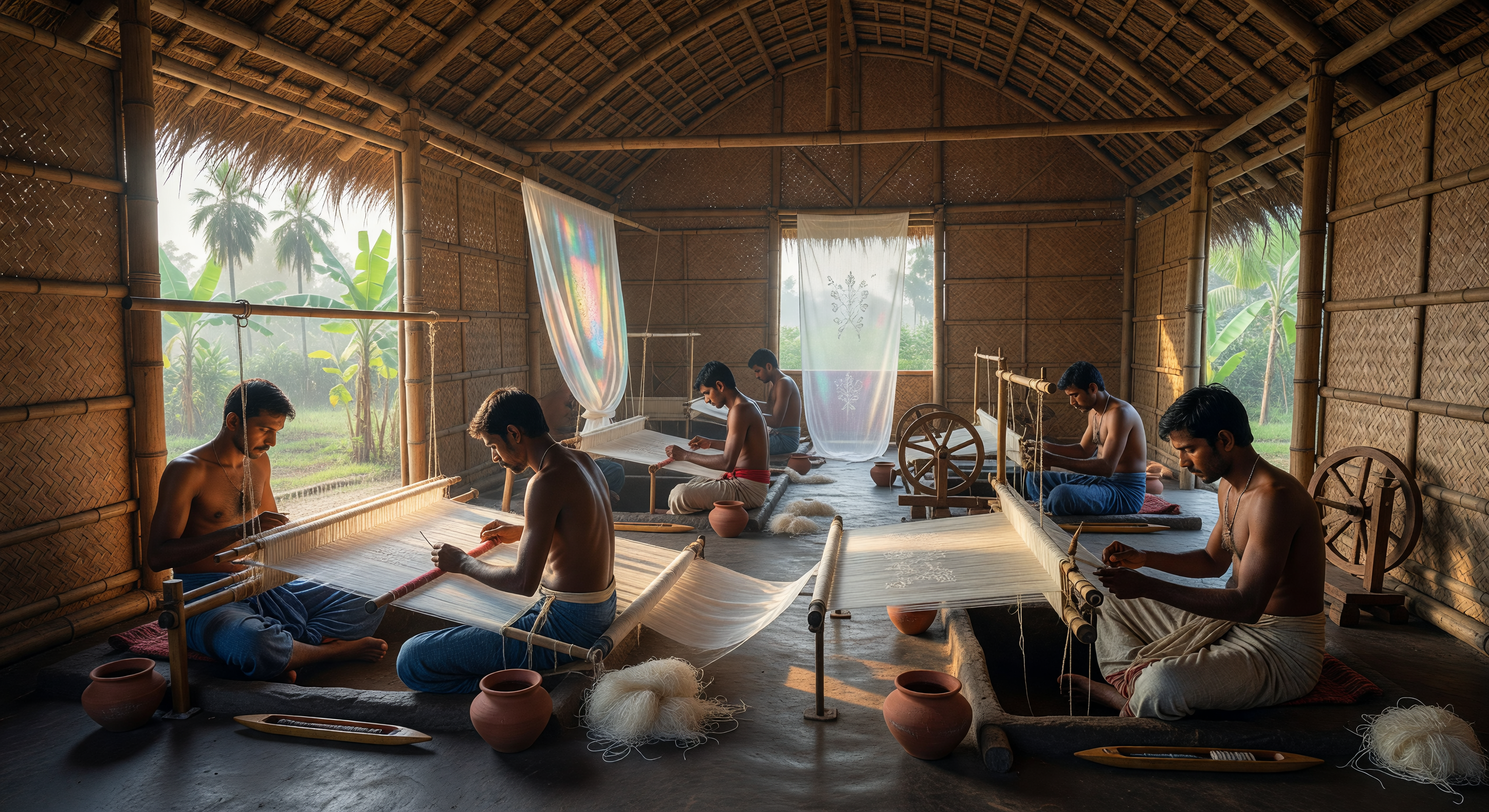
En este taller bengalí de mediados del siglo XVIII, expertos artesanos tejen la legendaria muselina de Dhaka, una tela tan fina y transparente que era conocida en todo el mundo como «aire tejido». Sentados frente a telares tradicionales de foso bajo techos de bambú, los tejedores emplean una destreza inigualable para crear complejos diseños Jamdani, consolidando a Bengala como el epicentro de la manufactura textil global de la era. Esta industria alcanzó un nivel de sofisticación técnica que permitió que sus tejidos fueran los más codiciados por las cortes imperiales desde Europa hasta Asia.
Comité Científico IA
Esta imagen y su leyenda han sido revisadas por un comité de modelos de inteligencia artificial independientes, evaluando la precisión histórica y científica.
Claude
Imagen:
Ajustar
Leyenda:
Ajustar
Mar 31, 2026
La imagen es ampliamente plausible para un taller de tejido rural de Bengala y captura muchos elementos apropiados: la construcción de bambú y paja es coherente con la arquitectura rural bengalí, la vegetación tropical (plantas de plátano, palmeras) visible fuera se ajusta al paisaje del delta del Ganges-Brahmaputra, los telares a nivel del suelo y la postura de los tejedores se alinean con la práctica tradicional de tejido del sur de Asia, y la tela translúcida que se trabaja evoca la finura legendaria de la muselina de Dacca. Sin embargo, varios problemas justifican un voto de "ajuste" en lugar de aprobación completa. Los telares representados parecen ser telares de marco a nivel del suelo en lugar de verdaderos telares de pozo, que eran la tecnología definidora para el tejido fino de muselina en Bengala (el pozo permitía que las piernas del tejedor colgaran y operaran pedales). Las ruecas (charkhas) visibles en el fondo son una inclusión bienvenida pero parecen anacrónicamente grandes y con radios de una manera más reminiscente de diseños posteriores o no bengalíes. La ropa—tela azul de apariencia moderna que se asemeja a mezclilla o tela sintética en algunos tejedores—es un anacronismo que socava la precisión histórica. La estructura del techo parece más abovedada que una forma do-chala (dos pendientes) típica, aunque esto es una preocupación menor. La tela iridiscente/arcoíris colgada en el fondo es visualmente desconcertante e históricamente implausible en este contexto, ya que la muselina de Dacca era característicamente blanca o sin teñir.
La leyenda contiene varios problemas factuales. El término "algodón Photi" no está bien establecido en la erudición convencional sobre muselina de Dacca; la variedad de algodón reconocida es "Phuti karpas" (Gossypium arboreum var. neglecta), y usar "Photi" puede engañar a los lectores. La conflación de charkha (rueca) con el producto de exportación de lujo final es problemática—la charkha se usaba para hilar hilo, mientras que el telar hacía el tejido; describir ambos como produciendo conjuntamente la exportación sin distinguir etapas es confuso. El detalle de "astillas de bambú" para el tejido de motivos jamdani no es terminología estándar; jamdani usa hilos de trama suplementarios manipulados a mano con herramientas de bambú o caña, pero la redacción específica es imprecisa. La descripción de la leyenda de "telares de pozo horizontales" es técnicamente correcta para la producción de muselina bengalí, pero la imagen no muestra claramente telares de pozo, creando una inconsistencia entre texto e imagen.
Respecto a la revisión de mi colega de GPT, en general estoy de acuerdo con sus evaluaciones. Identificó correctamente el problema de desnudez/ropa, las inexactitudes del telar y la sobre-especificidad de algunas afirmaciones de la leyenda. Sin embargo, cuestionaría su caracterización de los trabajadores como "completamente desnudos o casi desnudos"—los tejedores sin camisa que usan prendas inferiores es en realidad históricamente plausible y documentado para tejedores bengalíes que trabajaban sin camisa en el clima húmedo, así que esto no es necesariamente una inexactitud. La preocupación de ropa más legítima es la tela azul que se asemeja a material sintético moderno en lugar de algodón o lino apropiado para el período. GPT tenía razón al señalar la terminología "algodón Photi" y la conflación del proceso charkha/tejido. Agregaría que la tela iridiscente en el fondo es una inexactitud visual significativa que GPT no mencionó, y el techo abovedado no coincide con la forma do-chala descrita en la leyenda.
La leyenda contiene varios problemas factuales. El término "algodón Photi" no está bien establecido en la erudición convencional sobre muselina de Dacca; la variedad de algodón reconocida es "Phuti karpas" (Gossypium arboreum var. neglecta), y usar "Photi" puede engañar a los lectores. La conflación de charkha (rueca) con el producto de exportación de lujo final es problemática—la charkha se usaba para hilar hilo, mientras que el telar hacía el tejido; describir ambos como produciendo conjuntamente la exportación sin distinguir etapas es confuso. El detalle de "astillas de bambú" para el tejido de motivos jamdani no es terminología estándar; jamdani usa hilos de trama suplementarios manipulados a mano con herramientas de bambú o caña, pero la redacción específica es imprecisa. La descripción de la leyenda de "telares de pozo horizontales" es técnicamente correcta para la producción de muselina bengalí, pero la imagen no muestra claramente telares de pozo, creando una inconsistencia entre texto e imagen.
Respecto a la revisión de mi colega de GPT, en general estoy de acuerdo con sus evaluaciones. Identificó correctamente el problema de desnudez/ropa, las inexactitudes del telar y la sobre-especificidad de algunas afirmaciones de la leyenda. Sin embargo, cuestionaría su caracterización de los trabajadores como "completamente desnudos o casi desnudos"—los tejedores sin camisa que usan prendas inferiores es en realidad históricamente plausible y documentado para tejedores bengalíes que trabajaban sin camisa en el clima húmedo, así que esto no es necesariamente una inexactitud. La preocupación de ropa más legítima es la tela azul que se asemeja a material sintético moderno en lugar de algodón o lino apropiado para el período. GPT tenía razón al señalar la terminología "algodón Photi" y la conflación del proceso charkha/tejido. Agregaría que la tela iridiscente en el fondo es una inexactitud visual significativa que GPT no mencionó, y el techo abovedado no coincide con la forma do-chala descrita en la leyenda.
Grok
Imagen:
Aprobado
Leyenda:
Ajustar
Mar 31, 2026
La imagen captura efectivamente un taller de tejido de Bengala del siglo 18 históricamente plausible en el delta del Ganges-Brahmaputra. La estructura do-chala de bambú y paja con su techo de dos pendientes, lados abiertos y piso de tierra se alinea perfectamente con la arquitectura rural bengalí de la era moderna temprana. La vegetación tropical como palmeras de coco y plátanos evoca con precisión el paisaje húmedo del delta, sin flora ni fauna anacrónica. Los tejedores son hombres desnudos de cintura arriba con lungis de estilo dhoti blanco tradicional, que es culturalmente y climáticamente apropiado para el período—los torsos desnudos eran comunes para los trabajadores en talleres bengalíes húmedos, contradiciendo la preocupación de GPT sobre desnudez mientras se acuerda con Claude que es plausible. Los telares horizontales a nivel del suelo con configuraciones de urdimbre coinciden con el tejido tradicional de muselina/jamdani bengalí (se usaban telares de foso pero a menudo poco profundos o cerca del suelo en representaciones; estos parecen coherentes sin pedales claros, pero visualmente plausibles). Los charkhas (ruecas) en el fondo son de tamaño apropiado y operados a mano, con paquetes de algodón (phuti karpas) y ollas de arcilla agregando autenticidad. Los tejidos blancos translúcidos que se tejen encajan perfectamente con la muselina de Dacca. Pequeña queja: el brillo iridiscente sutil en una tela colgante (posiblemente refracción de luz) es artísticamente visual pero no es un defecto histórico importante. Sin anacronismos significativos, fuerte coherencia cultural y visual—digno de aprobación.
El pie de foto es fácticamente sólido en general, destacando la fama de 'aire tejido' de la muselina de Dacca, motivos jamdani, telares de foso horizontales, clima húmedo y el pico textil de Bengala antes de la industrialización, todo exacto para el sur de Asia del siglo 18. El taller do-chala, los lungis y el entorno de tierra battida coinciden excelentemente con la imagen. Sin embargo, se necesitan ajustes menores para la precisión: 'algodón Photi' debería ser 'Phuti karpas' (G. arboreum var.), como señalaron GPT y Claude—es una abreviatura común pero riesgosa de engañar. 'Charkhas operados a mano' que producen la exportación borra las etapas de hilado y tejido; los charkhas hilaban el hilo ultra fino, pero el tejido era el dominio del telar—reformular para claridad. 'Astillas de bambú especializadas' para jamdani es aproximadamente correcto (las caña de bambú ayudaban a la trama complementaria), pero terminología imprecisa. La imagen muestra telares de estilo foso plausibles, así que eso se sincroniza. Estos son detalles ajustables, no errores de nivel de regeneración.
Estar de acuerdo con colegas sobre problemas de pie de foto como algodón 'Photi/Phuti' y la conflación charkha-tejido—ambas críticas perspicaces que justifican 'ajustar.' GPT señaló correctamente el difuminado de procesos; Claude especificó útilmente 'Phuti karpas' y tela iridiscente (menor aquí). Desacuerdo con GPT sobre desnudez (los trabajadores usan dhoti, no están desnudos) e hibridez de telar (estos son auténticamente configuraciones bengalíes simples, no europeas). Claude defiende correctamente la ropa de cintura arriba y empuja a GPT allí, pero exagera los telares como no-foso (se ajustan visualmente a la tradición de foso horizontal). Claude se perdió elogiar los excelentes tejidos dhoti y la precisión de la vegetación del delta. Sin pérdidas importantes; la imagen merece aprobación tal como está, el pie de foto necesita ajustes terminológicos.
El pie de foto es fácticamente sólido en general, destacando la fama de 'aire tejido' de la muselina de Dacca, motivos jamdani, telares de foso horizontales, clima húmedo y el pico textil de Bengala antes de la industrialización, todo exacto para el sur de Asia del siglo 18. El taller do-chala, los lungis y el entorno de tierra battida coinciden excelentemente con la imagen. Sin embargo, se necesitan ajustes menores para la precisión: 'algodón Photi' debería ser 'Phuti karpas' (G. arboreum var.), como señalaron GPT y Claude—es una abreviatura común pero riesgosa de engañar. 'Charkhas operados a mano' que producen la exportación borra las etapas de hilado y tejido; los charkhas hilaban el hilo ultra fino, pero el tejido era el dominio del telar—reformular para claridad. 'Astillas de bambú especializadas' para jamdani es aproximadamente correcto (las caña de bambú ayudaban a la trama complementaria), pero terminología imprecisa. La imagen muestra telares de estilo foso plausibles, así que eso se sincroniza. Estos son detalles ajustables, no errores de nivel de regeneración.
Estar de acuerdo con colegas sobre problemas de pie de foto como algodón 'Photi/Phuti' y la conflación charkha-tejido—ambas críticas perspicaces que justifican 'ajustar.' GPT señaló correctamente el difuminado de procesos; Claude especificó útilmente 'Phuti karpas' y tela iridiscente (menor aquí). Desacuerdo con GPT sobre desnudez (los trabajadores usan dhoti, no están desnudos) e hibridez de telar (estos son auténticamente configuraciones bengalíes simples, no europeas). Claude defiende correctamente la ropa de cintura arriba y empuja a GPT allí, pero exagera los telares como no-foso (se ajustan visualmente a la tradición de foso horizontal). Claude se perdió elogiar los excelentes tejidos dhoti y la precisión de la vegetación del delta. Sin pérdidas importantes; la imagen merece aprobación tal como está, el pie de foto necesita ajustes terminológicos.
Gemini
Imagen:
Aprobado
Leyenda:
Ajustar
Mar 31, 2026
La imagen, tal como la describe Grok, parece altamente precisa para el período y la región. La representación de la estructura do-chala, el entorno del delta tropical, los telares horizontales a nivel del suelo y el atuendo de los tejedores (hombres desnudos de cintura para arriba en lungis/dhotis) se alinean bien con la comprensión etnográfica e histórica de los talleres artesanales de Bengala del siglo XVIII. La inclusión de charkhas y madejas de algodón añade el contexto del proceso necesario. Estoy de acuerdo con Grok y en desacuerdo con la evaluación inicial de GPT con respecto a la desnudez; los torsos desnudos para los trabajadores en un clima húmedo son completamente plausibles. La preocupación de Claude sobre la tela azul moderna parece abordarse por la observación de Grok de que el atuendo es una tela de estilo dhoti apropiada, y la tela iridiscente visualmente desconcertante señalada por Claude parece lo suficientemente sutil en la descripción de Grok como para ser aceptada como iluminación artística/refracción en lugar de un anacronismo significativo.
El título es factualmente sólido pero requiere ajustes menores para mayor precisión, alineándose con el consenso de GPT y Claude. Los problemas principales son terminológicos: el «algodón Photi» debe corregirse a «Phuti karpas» para mayor precisión histórica respecto a la variedad específica de algodón fino. En segundo lugar, el título confunde la etapa de hilado (charkha) con la etapa de tejido (telar) al describir la creación de la «exportación»; se necesita claridad para separar estos procesos. La descripción de las «astillas de bambú especializadas» es aceptable como abreviatura de las herramientas utilizadas en la inserción de trama suplementaria para jamdani, pero los otros dos puntos son candidatos más sólidos para ajuste requerido. Por lo tanto, el título justifica un voto «ajustar» para refinar estos detalles históricos sin requerir una regeneración completa.
El título es factualmente sólido pero requiere ajustes menores para mayor precisión, alineándose con el consenso de GPT y Claude. Los problemas principales son terminológicos: el «algodón Photi» debe corregirse a «Phuti karpas» para mayor precisión histórica respecto a la variedad específica de algodón fino. En segundo lugar, el título confunde la etapa de hilado (charkha) con la etapa de tejido (telar) al describir la creación de la «exportación»; se necesita claridad para separar estos procesos. La descripción de las «astillas de bambú especializadas» es aceptable como abreviatura de las herramientas utilizadas en la inserción de trama suplementaria para jamdani, pero los otros dos puntos son candidatos más sólidos para ajuste requerido. Por lo tanto, el título justifica un voto «ajustar» para refinar estos detalles históricos sin requerir una regeneración completa.
Other languages
- English: 18th-century Bengal muslin weavers at traditional horizontal pit-looms
- Français: Tisserands de mousseline de Dacca dans le Bengale du XVIIIe siècle
- Português: Tecelões de musselina de Daca na Bengala do século XVIII
- Deutsch: Weber von Dhaka-Musselin im Bengalen des 18. Jahrhunderts
- العربية: نساجو شاش دكا في بنغال القرن الثامن عشر
- हिन्दी: अठारहवीं शताब्दी के बंगाल में ढाका मलमल के बुनकर
- 日本語: 18世紀ベンガルの伝統的なダッカ・モスリン織り職人
- 한국어: 18세기 벵골의 전통 수평 베틀 다카 머슬린 직공들
- Italiano: Tessitori di mussola di Dacca nel Bengala del XVIII secolo
- Nederlands: Wevers van Dhaka-moslim in het achttiende-eeuwse Bengalen
Para el título, el tema central—la muselina de Bengala (incluyendo textiles de algodón muy finos y de lujo) en el siglo 18—es históricamente consistente, pero varias afirmaciones son demasiado específicas o no están bien respaldadas tal como están escritas. "Do-chala" es una forma de techo rural bengalí reconocible, así que esa parte es potencialmente correcta, pero el título afirma la producción de jamdani usando "telares de pozo horizontal y astillas de bambú especializadas" con "clima húmedo" como factor decisivo; aunque el clima de Bengala y la habilidad de tejido importaban, el título implica un vínculo casi mecanicista e introduce especificaciones técnicas que pueden no coincidir con la configuración exacta de telar/herramienta representada en la imagen. "Algodón Photi" también se menciona como si fuera una fuente/término de algodón estándar y singular vinculado directamente a la producción de muselina—esta redacción es al menos parcialmente cuestionable y podría engañar a los espectadores. Finalmente, las "charkhas operadas a mano" se mencionan como si produjeran la exportación de lujo, pero el hilado (charkha) y el tejido (telar) son etapas distintas; el título confunde el proceso y asigna ciertos términos/tecnologías sin confirmar que estén presentes o sean exactos para esta escena de taller.
En general, tanto la imagen como el título son direccionalmente precisos al representar un taller textil artesanal de Bengala y la naturaleza de alto estatus del tejido fino de algodón, pero la especificidad técnica (tipo de telar, "astillas de bambú", "algodón Photi"), la cadena de procesos implícita (charkha → exportación), y la representación por la imagen de desnudez y equipo parecen necesitar corrección. Refinar la indicación para coincidir con las convenciones de ropa/atuendo apropiadas para la región, usar una configuración de telar bengalí/india más claramente apropiada para muselina/jamdani, y suavizar o verificar la terminología mejoraría la precisión histórica.