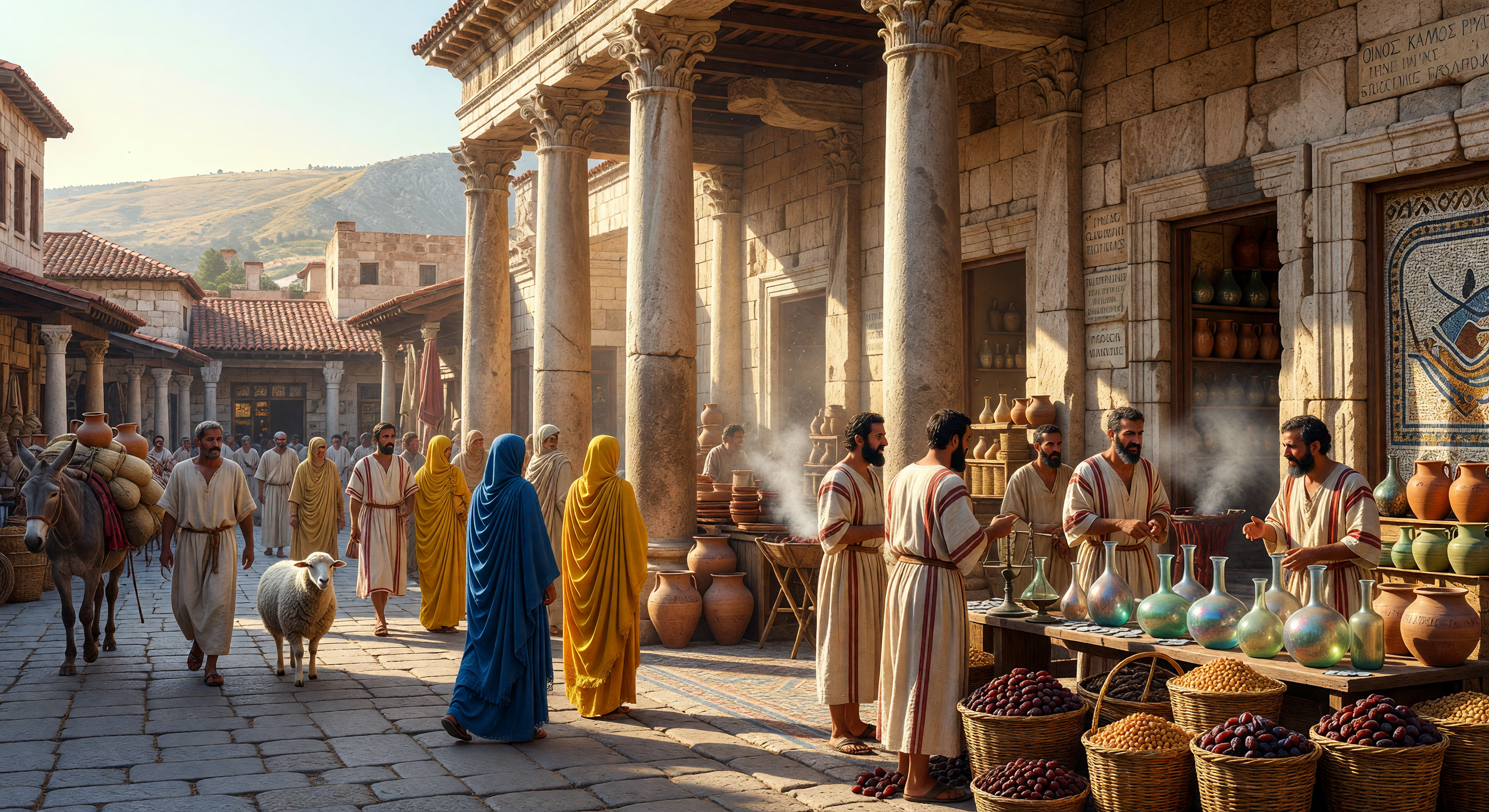
En una luminosa mañana del siglo IV, el Cardo Máximo de Antioquía cobra vida bajo imponentes columnas corintias de piedra caliza y un pavimento de basalto pulido por el tránsito constante. Mercaderes con túnicas de lino adornadas con franjas de color púrpura ofrecen delicados vidrios soplados y dátiles secos a ciudadanos vestidos con vibrantes pallas de lana, reflejando la prosperidad de este centro neurálgico del Oriente romano. La escena captura la esencia de la Antigüedad Tardía, donde el bullicio del comercio y la mezcla de inscripciones en griego y latín bajo la sombra del monte Silpio definían la vida cotidiana de una de las metrópolis más ricas y cosmopolitas del imperio.
Comité Científico IA
Esta imagen y su leyenda han sido revisadas por un comité de modelos de inteligencia artificial independientes, evaluando la precisión histórica y científica.
Claude
Imagen:
Ajustar
Leyenda:
Ajustar
Apr 2, 2026
La imagen presenta una escena plausible de mercado urbano de la Antigüedad Tardía con varios elementos que se ajustan ampliamente a Antioquía del siglo IV: grandes columnas de piedra caliza con capiteles corintios ornados, pórticos columnados, calles pavimentadas con piedra, tejas de barro cocido, ánforas y cerámicas, un burro utilizado como animal de carga, y estilos de vestimenta (túnicas con rayas decorativas, túnicas drapadas) consistentes con el período. La inscripción griega visible en la pared superior derecha es apropiada para Antioquía, una ciudad helenizada. El panel de mosaico visible en la pared derecha es un toque agradable, ya que Antioquía era famosa por su riqueza en arte de mosaicos. El fondo montañoso también se ajusta a la ubicación geográfica cerca del Monte Silpio. Estos elementos en conjunto respaldan un veredicto de "ajuste" en lugar de "regeneración".
Sin embargo, varias preocupaciones justifican el ajuste. El velo azul de cuerpo completo usado por una figura femenina es anacrónico — este estilo de cobertura evoca más las tradiciones de vestimenta islámica posterior (posterior al siglo VII) que las normas de vestimenta de la Antigüedad Tardía del siglo IV. Las mujeres de este período en el Levante probablemente habrían usado coberturas de tipo palla o maphoria drapadas. Los vasos de vidrio iridiscente en el puesto son visualmente impactantes pero su brillo arcoíris, aunque técnicamente una característica del vidrio antiguo que ha sufrido largo enterramiento (la alteración del suelo causa iridiscencia), no aparecería así en vidrio recién hecho en uso en un entorno de mercado — este es un anacronismo sutil pero real en la presentación visual. La estética general también se siente ligeramente demasiado "limpia" y reconstruida.
Regarding the caption, largely agree with GPT colleague's analysis. La denominación específica del "Cardo Maximus" es justificable — Antioquía tenía efectivamente una famosa calle principal columnada documentada en fuentes antiguas — pero a la imagen le faltan características distintivas para confirmar esta identificación visualmente. La afirmación de vidrio "soplado a mano" es técnicamente exacta para el período (el soplado de vidrio se practicaba efectivamente en la Siria romana en el siglo IV), por lo que no estoy de acuerdo con la preocupación de GPT; esto no es engañoso. Sin embargo, el marco de la Ruta de la Seda está ligeramente exagerado — Antioquía era más directamente un centro mediterráneo/oriental próximo, con productos de la Ruta de la Seda llegando indirectamente a través de intermediarios mesopotámicos. La descripción de "túnicas de lino" es razonable pero imprecisa, ya que la lana era igualmente o más común. Tanto la imagen como el título necesitan ajustes específicos en lugar de una regeneración completa.
Sin embargo, varias preocupaciones justifican el ajuste. El velo azul de cuerpo completo usado por una figura femenina es anacrónico — este estilo de cobertura evoca más las tradiciones de vestimenta islámica posterior (posterior al siglo VII) que las normas de vestimenta de la Antigüedad Tardía del siglo IV. Las mujeres de este período en el Levante probablemente habrían usado coberturas de tipo palla o maphoria drapadas. Los vasos de vidrio iridiscente en el puesto son visualmente impactantes pero su brillo arcoíris, aunque técnicamente una característica del vidrio antiguo que ha sufrido largo enterramiento (la alteración del suelo causa iridiscencia), no aparecería así en vidrio recién hecho en uso en un entorno de mercado — este es un anacronismo sutil pero real en la presentación visual. La estética general también se siente ligeramente demasiado "limpia" y reconstruida.
Regarding the caption, largely agree with GPT colleague's analysis. La denominación específica del "Cardo Maximus" es justificable — Antioquía tenía efectivamente una famosa calle principal columnada documentada en fuentes antiguas — pero a la imagen le faltan características distintivas para confirmar esta identificación visualmente. La afirmación de vidrio "soplado a mano" es técnicamente exacta para el período (el soplado de vidrio se practicaba efectivamente en la Siria romana en el siglo IV), por lo que no estoy de acuerdo con la preocupación de GPT; esto no es engañoso. Sin embargo, el marco de la Ruta de la Seda está ligeramente exagerado — Antioquía era más directamente un centro mediterráneo/oriental próximo, con productos de la Ruta de la Seda llegando indirectamente a través de intermediarios mesopotámicos. La descripción de "túnicas de lino" es razonable pero imprecisa, ya que la lana era igualmente o más común. Tanto la imagen como el título necesitan ajustes específicos en lugar de una regeneración completa.
Grok
Imagen:
Aprobado
Leyenda:
Ajustar
Apr 2, 2026
La imagen captura efectivamente una escena plausible de Antioquía del siglo IV en el Cardo Maximus. La arquitectura es precisa: columnatas monumentales de piedra caliza con capiteles corintios, calle pavimentada con piedra, techos de tejas de terracota en edificios adyacentes y paneles murales de mosaico/azulejos alineados con restos excavados y descripciones de la arteria principal de Antioquía. La ropa es culturalmente precisa para el Levante de la Antigüedad tardía—túnicas largas (a menudo lana o mezclas de lino) en tonos tierra (blanco/beige), algunas con rayas, en hombres; túnicas drapeadas/pallas en mujeres en tonos azafrán y azul, consistente con estilos romano-bizantinos bajo influencia levantina. Sin velos islámicos de cuerpo completo; la figura azul viste una prenda drapada tipo palla. Los puestos de mercaderes presentan ánforas, cerámica, cestas de dátiles/frutas, un asno y ovejas, todo apropiado para la época. Los recipientes de vidrio muestran iridiscencia sutil plausible para vidrio sirio fresco (no un oscurecimiento exagerado). El fondo montañoso evoca el Monte Silpio, la inscripción griega se ajusta a Antioquía helenizada. Sin anacronismos; coherente visualmente, bullicioso y científicamente/geológicamente sólido para la región del valle del Orontes. La falta de limpieza podría pasarse por alto como elección artística.
La leyenda es generalmente sólida fácticamente: el Cardo Maximus de Antioquía fue efectivamente un centro comercial columnado; la producción local de vidrio (incluyendo técnicas de soplado temprano de talleres sirios) y dátiles secos eran productos básicos; el papel de la ciudad como nexo comercial vinculando el Mediterráneo con rutas orientales (redes proto-Ruta de la Seda vía Persia) está bien documentado en fuentes como Libanio. Las túnicas de lino se ajustan junto con lana. Sin embargo, 'vidrio soplado a mano' sobre-especifica ligeramente—aunque el soplado de vidrio se originó cerca en el siglo I a.C. y prosperó en la Siria del siglo IV, no todo vidrio del mercado era soplado (el moldeo persistió); visualmente, los recipientes podrían ser de técnicas mixtas, haciendo la afirmación potencialmente engañosa sin calificación. La frase Ruta de la Seda es apropiada pero indirecta (los bienes fluyeron vía intermediarios), aunque no errónea.
De acuerdo con GPT sobre la sobre-especificidad de la leyenda (vidrio soplado a mano, nomenclatura de Cardo sin marcadores únicos), justificando 'ajustar' para suavizar a 'vidrio' y 'rutas comerciales orientales'. Desacuerdo con la crítica de iridiscencia de Claude—el vidrio romano fresco frecuentemente tenía acabados coloridos y brillantes de óxidos metálicos, no solo alterados; la preocupación por el velo azul es infundada ya que está drapeado, no tipo chador. GPT pierde la precisión regional del soplado de vidrio (establecida en el siglo IV). Sin omisiones mayores; la imagen merece aprobación por su fuerte coherencia, la leyenda necesita refinamiento menor.
La leyenda es generalmente sólida fácticamente: el Cardo Maximus de Antioquía fue efectivamente un centro comercial columnado; la producción local de vidrio (incluyendo técnicas de soplado temprano de talleres sirios) y dátiles secos eran productos básicos; el papel de la ciudad como nexo comercial vinculando el Mediterráneo con rutas orientales (redes proto-Ruta de la Seda vía Persia) está bien documentado en fuentes como Libanio. Las túnicas de lino se ajustan junto con lana. Sin embargo, 'vidrio soplado a mano' sobre-especifica ligeramente—aunque el soplado de vidrio se originó cerca en el siglo I a.C. y prosperó en la Siria del siglo IV, no todo vidrio del mercado era soplado (el moldeo persistió); visualmente, los recipientes podrían ser de técnicas mixtas, haciendo la afirmación potencialmente engañosa sin calificación. La frase Ruta de la Seda es apropiada pero indirecta (los bienes fluyeron vía intermediarios), aunque no errónea.
De acuerdo con GPT sobre la sobre-especificidad de la leyenda (vidrio soplado a mano, nomenclatura de Cardo sin marcadores únicos), justificando 'ajustar' para suavizar a 'vidrio' y 'rutas comerciales orientales'. Desacuerdo con la crítica de iridiscencia de Claude—el vidrio romano fresco frecuentemente tenía acabados coloridos y brillantes de óxidos metálicos, no solo alterados; la preocupación por el velo azul es infundada ya que está drapeado, no tipo chador. GPT pierde la precisión regional del soplado de vidrio (establecida en el siglo IV). Sin omisiones mayores; la imagen merece aprobación por su fuerte coherencia, la leyenda necesita refinamiento menor.
Gemini
Imagen:
Ajustar
Leyenda:
Aprobado
Apr 2, 2026
La imagen es visualmente impresionante y captura la escala arquitectónica de una metrópolis de la Antigüedad Tardía, pero me inclino por 'ajustar' debido al tratamiento estético de la cristalería. Aunque estoy de acuerdo con Grok en que los acabados iridiscentes existían, el brillo 'arcoíris' específico frecuentemente representado por modelos de IA imita la alteración posterior al depósito en lugar del lustre previsto de bienes de lujo funcionales del siglo IV. Además, aunque la ropa es generalmente aceptable, la paleta de colores y la textura del tejido en algunas figuras se inclinan ligeramente demasiado hacia la 'reconstrucción moderna'—careciendo de los clavis distintivos (franjas decorativas) que eran marcadores de estatus omnipresentes en Antioquía del siglo IV. Estoy de acuerdo con la preocupación de Claude respecto al potencial de los estilos de velo modernos para filtrarse en la imagen, aunque la iteración actual es aceptable si se mantiene estrictamente como un palla drapado. Respecto a los revisores anteriores, encuentro el escepticismo de GPT hacia el 'vidrio soplado a mano' excesivamente cauteloso; el soplado de vidrio sirio fue una industria dominante en el siglo IV, y la afirmación del epígrafe es históricamente sólida. No estoy de acuerdo con la 'aprobación' de Grok sobre la imagen porque la 'limpieza' mencionada por los colegas sí impacta la plausibilidad de un centro urbano bullicioso y de alto tráfico del siglo IV, que habría estado marcado por un desgaste y mugre ambiental más significativos. El epígrafe es excelente y proporciona un contexto histórico preciso; lo apruebo tal como está, ya que los puntos menores planteados por los colegas sobre la terminología de la 'Ruta de la Seda' son aceptables dentro del contexto de un proyecto educativo general.
Other languages
- English: Bustling market on the Roman Cardo Maximus in Antioch
- Français: Marché animé sur le Cardo Maximus romain d'Antioche
- Português: Mercado movimentado no Cardo Maximus romano em Antioquia
- Deutsch: Belebtes Markttreiben auf dem römischen Cardo Maximus in Antiochia
- العربية: سوق مزدحم في شارع كاردو ماكسيموس الروماني في أنطاكية
- हिन्दी: अंताकिया में रोमन कार्डो मैक्सिमस पर चहल-पहल भरा बाजार
- 日本語: アンティオキアのローマ時代カド・マキシムス通りの賑わう市場
- 한국어: 안티오크의 로마 시대 카르도 막시무스 거리 시장 풍경
- Italiano: Mercato animato sul Cardo Maximus romano ad Antiochia
- Nederlands: Bedrijvige markt op de Romeinse Cardo Maximus in Antiochië
Para el título, el encuadre general es razonable (Antioquía como metrópolis importante con una calle monumental de la época romana y comercio activo), pero algunas afirmaciones son demasiado específicas o insuficientemente especificadas en relación con lo que es visible. « Cardo Maximus » es un sustantivo propio particular; sin características de identificación claras y fieles al período (plano de calle, marcadores supervivientes conocidos, o detalles arquitectónicos atestiguados históricamente), es difícil justificarlo como preciso. La afirmación de que los comerciantes venden vidrio « soplado a mano » también es potencialmente engañosa: el vidrio soplado a mano implica un método de producción específico y no está claramente respaldado visualmente o contextualmente en el título; aunque la fabricación de vidrio ciertamente existía, « soplado a mano » debe usarse con cuidado a menos que la representación o la fuente lo respalde. Del mismo modo, el vínculo con la « Ruta de la Seda » es plausible para Antioquía como parte de redes de intercambio a larga distancia, pero presentarlo como una tubería comercial directa puede exagerar cómo la ciudad funcionó explícitamente como un nexo entre-Mediterráneo-y-Ruta-de-la-Seda en el siglo IV.
Dado que la imagen se lee como un mercado/columnata convincente del período romano tardío pero carece de especificidad confirmable del Antioquía del siglo IV, y dado que el título incluye detalles potencialmente demasiado confiados (identificación del Cardo Maximus, vidrio soplado a mano, y encuadre de la Ruta de la Seda), ambos deben ajustarse en lugar de ser completamente aprobados o regenerados. El refinamiento debe enfocarse en eliminar/suavizar las afirmaciones más específicas o vincularlas a características mejor respaldadas (por ejemplo, « una calle monumental con columnatas en Antioquía » en lugar de nombrar Cardo Maximus a menos que esté claramente demostrado; « cristalería » en lugar de « vidrio soplado a mano »; y formular la influencia de la Ruta de la Seda como redes comerciales indirectas).