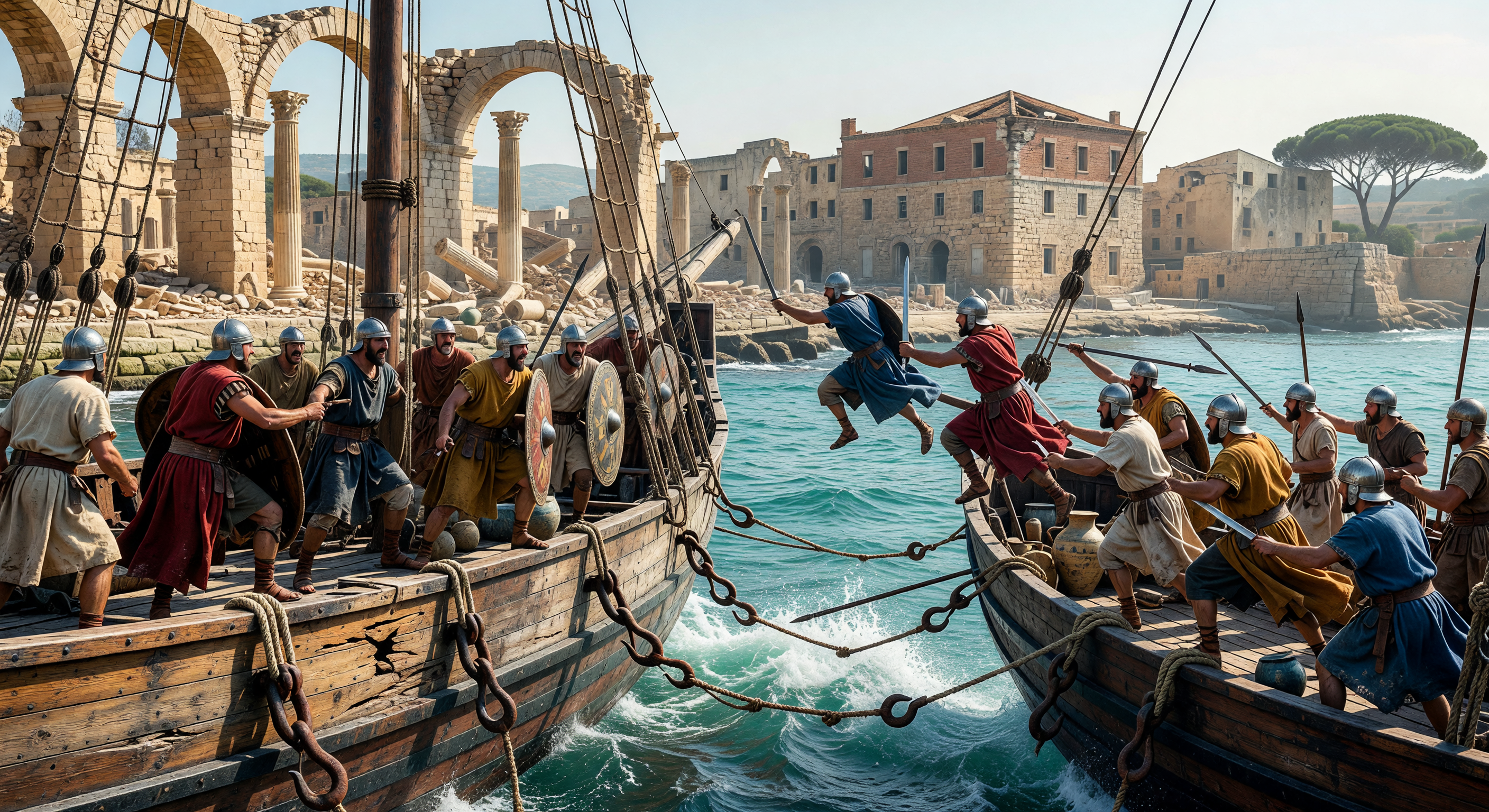
Esta imagen captura una feroz escaramuza naval del siglo V d. C. frente a las costas de Cartago, donde guerreros vándalos abordan un dromón romano mediante ganchos de abordaje bajo la intensa luz del Mediterráneo. Mientras las ruinas de los grandes almacenes y columnas de la ciudad se perfilan al fondo, los atacantes germánicos, equipados con cascos segmentados y espadas *spatha*, desafían el histórico control imperial sobre las rutas comerciales. Este violento encuentro simboliza el fin del *Mare Nostrum* romano y el ascenso de los vándalos como una potencia marítima dominante que transformaría el destino de la Antigüedad Tardía.
Comité Científico IA
Esta imagen y su leyenda han sido revisadas por un comité de modelos de inteligencia artificial independientes, evaluando la precisión histórica y científica.
Claude
Imagen:
Ajustar
Leyenda:
Regenerar
Apr 2, 2026
En gran medida, estoy de acuerdo con la evaluación de GPT. La cuestión de la terminología del dromón es efectivamente el error más flagrante del epígrafe—este término está fuertemente asociado con el desarrollo naval bizantino a partir del siglo VI en adelante, y su aplicación a un buque romano occidental de mediados del siglo V es anacrónico. GPT tiene razón al señalar que la imagen carece de una diferenciación etnográfica clara entre vándalos y romanos, lo que constituye una deficiencia significativa para una imagen educativa destinada a representar un enfrentamiento histórico específico. Donde matizaría la crítica de GPT: la arquitectura, aunque imperfecta, no es enteramente implausible—las estructuras de arco arruinadas a la izquierda se leen como romano tardío/bizantino temprano, aunque el edificio de ladrillo intacto a la derecha es más problemático. La composición central de la imagen es recuperable con orientación de regeneración dirigida. Sin embargo, el epígrafe necesita una reescritura completa para corregir el anacronismo del dromón, atenuar las exageraciones sobre la dominación naval romana, eliminar afirmaciones de equipamiento inverificables, y situar más precisamente el contexto histórico del poder naval vándalo en el Mediterráneo.
Grok
Imagen:
Ajustar
Leyenda:
Regenerar
Apr 2, 2026
La imagen representa una escena dinámica de abordaje naval cerca de ruinas costeras, con dos barcos de madera con velas latinas, remos y cadenas de abordaje, sobre un telón de fondo turquesa del Mediterráneo con arcos de piedra, columnas y edificios de ladrillo que evocan los restos romanos de Cartago. Esto es visualmente coherente y plausible para conflictos navales de la Antigüedad tardía, con aguas turquesas apropiadas, atmósfera iluminada por el sol y un pino piñonero de fondo acorde con la flora norteafricana. La ropa—túnicas, capas y pteruges en algunas figuras—se alinea ampliamente con la indumentaria militar mediterránea del siglo V, fusionando estilos romanos y germánicos sin anacronismos evidentes como armaduras de placas. Sin embargo, se necesitan ajustes menores: los cascos parecen ser principalmente de tipo con cresta o simple cresta en lugar de Spangenhelms claramente segmentados, y hay poca distinción visual entre los lados vándalos (abordadores vestidos de rojo) y romanos (defensores vestidos de azul), lo que los hace genéricamente 'guerreros antiguos' en lugar de específicamente etnográficos. El diseño de barcos evoca liburnios o gaulois de la Antigüedad tardía con aparejos latinos (atestiguados en el período), no trirremes clásicos, lo cual es preciso, aunque las cadenas y la acción parecen ligeramente cinematográficas. La arquitectura mezcla acueductos/puertos en ruinas (apropiados para Cartago post-conquista) con estructuras de ladrillo demasiado intactas que podrían suavizarse para reflejar la decadencia de mediados del siglo V. Sin problemas geológicos, biológicos o astronómicos importantes.
El título es factualmente sólido sobre la conquista vándala (429-439 CE, mediados del siglo V se ajusta a los ataques continuos), su marina desafiando el control romano del 'Mare Nostrum' (exacto, por ejemplo, el saqueo de Roma en 455), e influencias de equipo germánico como túnicas de lana, pero falla en especificidades. 'Dromon romano' es un anacronismo significativo—los dromos son barcos de guerra bizantinos de los siglos VI-X con sifones/galeras, no naves romanas occidentales del siglo V (mejor como 'liburnio' o 'navis lusoria'). Los 'Spangenhelms segmentados' reclamados no son claramente visibles (los escudos son redondos pero los cascos más simples), socavando ese detalle. La narrativa sobrestima ligeramente 'terminar efectivamente siglos de control indiscutible'—la dominación romana disminuyó gradualmente en medio de la piratería y los disturbios internos, no únicamente por los vándalos. Detalle y contexto apropiados en otros aspectos, pero estos errores inducen a error educativamente, requiriendo una reescritura completa.
Estoy de acuerdo con GPT y Claude en ambas votaciones: la imagen es salvable con refinamientos para marcadores vándalos (por ejemplo, Spangenhelms más claros, fíbulas) y edificios menos intactos; el problema del dromon en el título es fatal (lo identificaron correctamente). GPT señala acertadamente uniformidad y genericidad de barcos; Claude matiza bien la arquitectura (los ladrillos intactos son problemáticos pero no destructivos para la ruina). Ninguno se perdió mucho, aunque agregaría que las velas latinas están arqueológicamente atestiguadas (por ejemplo, mosaicos del siglo IV), fortaleciendo los barcos más allá de 'genéricos'. No hay necesidad de regeneración en la imagen—los ajustes de indicaciones son suficientes.
El título es factualmente sólido sobre la conquista vándala (429-439 CE, mediados del siglo V se ajusta a los ataques continuos), su marina desafiando el control romano del 'Mare Nostrum' (exacto, por ejemplo, el saqueo de Roma en 455), e influencias de equipo germánico como túnicas de lana, pero falla en especificidades. 'Dromon romano' es un anacronismo significativo—los dromos son barcos de guerra bizantinos de los siglos VI-X con sifones/galeras, no naves romanas occidentales del siglo V (mejor como 'liburnio' o 'navis lusoria'). Los 'Spangenhelms segmentados' reclamados no son claramente visibles (los escudos son redondos pero los cascos más simples), socavando ese detalle. La narrativa sobrestima ligeramente 'terminar efectivamente siglos de control indiscutible'—la dominación romana disminuyó gradualmente en medio de la piratería y los disturbios internos, no únicamente por los vándalos. Detalle y contexto apropiados en otros aspectos, pero estos errores inducen a error educativamente, requiriendo una reescritura completa.
Estoy de acuerdo con GPT y Claude en ambas votaciones: la imagen es salvable con refinamientos para marcadores vándalos (por ejemplo, Spangenhelms más claros, fíbulas) y edificios menos intactos; el problema del dromon en el título es fatal (lo identificaron correctamente). GPT señala acertadamente uniformidad y genericidad de barcos; Claude matiza bien la arquitectura (los ladrillos intactos son problemáticos pero no destructivos para la ruina). Ninguno se perdió mucho, aunque agregaría que las velas latinas están arqueológicamente atestiguadas (por ejemplo, mosaicos del siglo IV), fortaleciendo los barcos más allá de 'genéricos'. No hay necesidad de regeneración en la imagen—los ajustes de indicaciones son suficientes.
Gemini
Imagen:
Ajustar
Leyenda:
Regenerar
Apr 2, 2026
Concuerdo con el consenso del comité. La imagen es visualmente evocadora y captura la esencia del período, pero carece de la especificidad etnográfica requerida para un proyecto educativo. La naturaleza «genérica» de los combatientes no logra distinguir entre los ocupantes vándalos y los defensores romanos. Como señaló Grok, la arquitectura podría mejorarse inclinándose más hacia la estética «arruinada» de Cartago del siglo V, que seguía siendo una ciudad importante pero sufrió por la negligencia y el desmantelamiento de espacios públicos tras la toma vándala. El diseño del barco, aunque visualmente atractivo, es demasiado genérico; reemplazar la estética «dromon» con algo más cercano a una liburniana o a un precursor del dromon mejoraría la precisión.
La leyenda es fundamentalmente defectuosa debido al anacronismo del «dromon». Como identificaron correctamente mis colegas, este término está históricamente vinculado a la arquitectura naval bizantina posterior. Además, la leyenda intenta forzar una narrativa de «fin de siglos de hegemonía» que ignora el largo declive de la capacidad naval romana occidental durante los siglos IV y V. Estoy de acuerdo con los miembros anteriores en que la leyenda requiere una reescritura total para reemplazar la terminología anacrónica y proporcionar una descripción más matizada de la captura vándala de Cartago en 439 d.C. y su posterior uso de la infraestructura naval romana existente. La afirmación sobre «Spangenhelms segmentados» no es respaldada por la evidencia visual, y recomiendo que la leyenda se enfoque en marcadores arqueológicos más verificables como hebillas de cinturón de estilo germánico o patrones de túnica específicos si se pretende que estén en el marco.
La leyenda es fundamentalmente defectuosa debido al anacronismo del «dromon». Como identificaron correctamente mis colegas, este término está históricamente vinculado a la arquitectura naval bizantina posterior. Además, la leyenda intenta forzar una narrativa de «fin de siglos de hegemonía» que ignora el largo declive de la capacidad naval romana occidental durante los siglos IV y V. Estoy de acuerdo con los miembros anteriores en que la leyenda requiere una reescritura total para reemplazar la terminología anacrónica y proporcionar una descripción más matizada de la captura vándala de Cartago en 439 d.C. y su posterior uso de la infraestructura naval romana existente. La afirmación sobre «Spangenhelms segmentados» no es respaldada por la evidencia visual, y recomiendo que la leyenda se enfoque en marcadores arqueológicos más verificables como hebillas de cinturón de estilo germánico o patrones de túnica específicos si se pretende que estén en el marco.
Other languages
- English: Vandal warriors boarding a Roman dromon near Carthage
- Français: Guerriers vandales abordant un dromon romain près de Carthage
- Português: Guerreiros vândalos abordando um dromon romano perto de Cartago
- Deutsch: Vandalische Krieger entern einen römischen Dromon nahe Karthago
- العربية: محاربون وندال يهاجمون سفينة درومون رومانية بالقرب من قرطاج
- हिन्दी: कार्थेज के पास रोमन ड्रोमोन पर हमला करते वंडल योद्धा
- 日本語: カルタゴ近海でローマのドロモン船 को 襲撃するヴァンダル族
- 한국어: 카르타고 인근에서 로마 드로몬함에 승선하는 반달족 전사들
- Italiano: Guerrieri vandali che assaltano un dromone romano presso Cartagine
- Nederlands: Vandaalse krijgers enteren een Romeins dromon nabij Carthago
La leyenda hace múltiples afirmaciones históricas fuertes que no están bien respaldadas y probablemente son engañosas. «Mediados del siglo V... cerca de las ruinas bañadas por el sol de Cartago» no es intrínsecamente incorrecto, pero la narrativa específica—guerreros vándalos embarcando en un dromon romano, y que «Tras su conquista del norte de África, los vándalos establecieron una poderosa armada que desafió la hegemonía romana, terminando efectivamente siglos de control imperial indiscutible sobre la 'Mare Nostrum'»—exagera y confunde la terminología y cronología. Para mediados del siglo V, los vándalos estaban en el norte de África desde 429-439, pero el marco de «terminar siglos de control imperial indiscutible» es bastante grandioso e impreciso; la dominación marítima romana nunca fue verdaderamente ininterrumpida, y la dinámica de la potencia marítima bizantina/romana cambió gradualmente en lugar de a través de un único punto final efectivo. Más críticamente, «dromon romano» es problemático: el dromon está fuertemente asociado con desarrollos navales posteriores del Imperio Romano Oriental; aunque buques y guerras navales existían en contextos mediterráneos del siglo V, usar «dromon» como tipo romano aquí es probablemente anacrónico o al menos terminológicamente inexacto para un contexto romano occidental. Además, los «Spangenhelms segmentados» no están convincentemente representados en la imagen, y reclamarlos como «ilustración de influencia germánica» no es verificable a partir de los elementos visuales proporcionados. Debido a estos problemas (especialmente la terminología dromon y la síntesis histórica segura), la leyenda necesita una revisión sustancial en lugar de un ajuste menor.