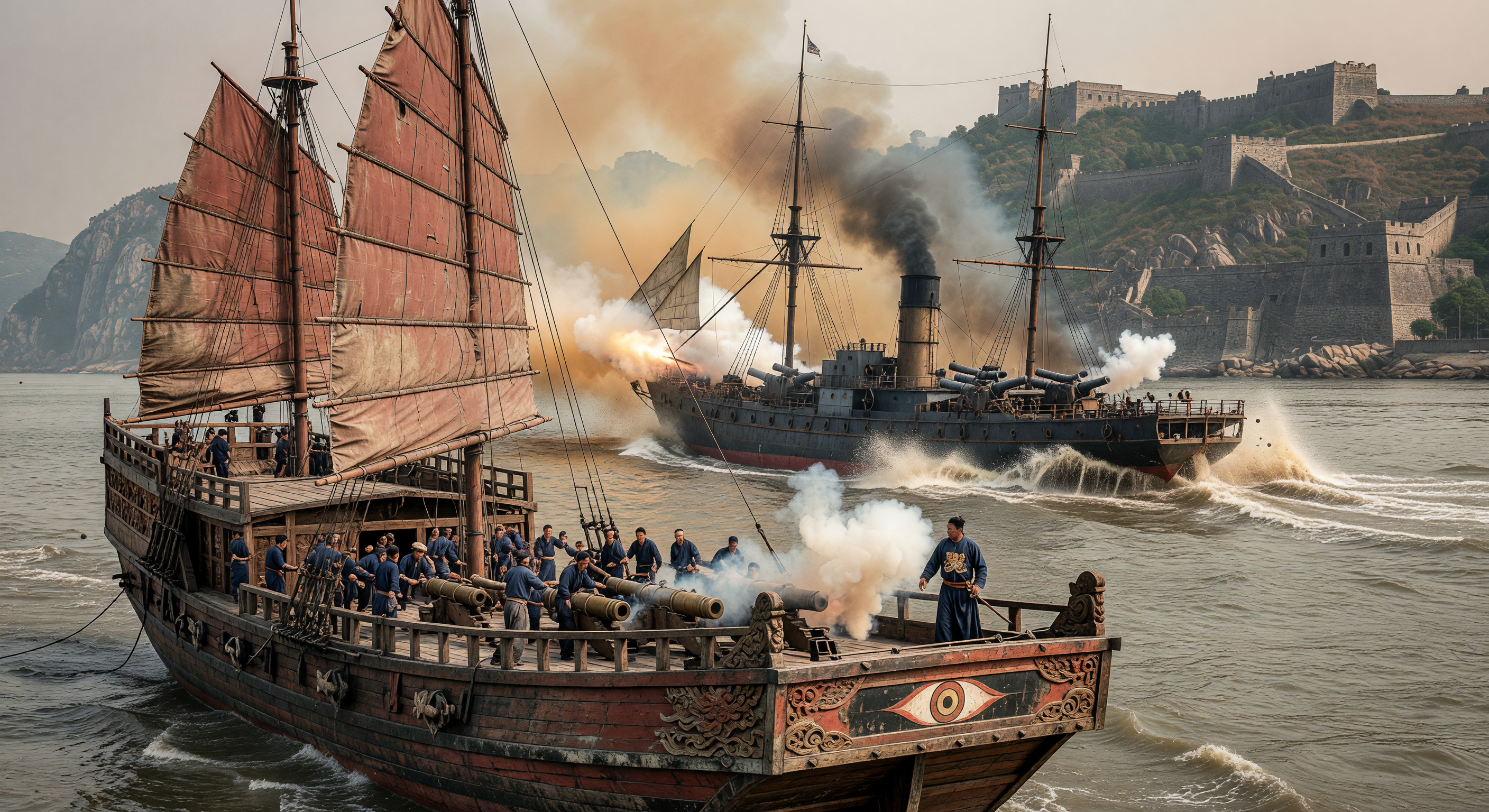
In den trüben Gewässern der Humen-Straße prallt eine hölzerne Kriegsdschunke der Qing-Dynastie auf das eisenbeschlagene Dampfschiff HMS Nemesis, ein Symbol für den technologischen Wendepunkt des Ersten Opiumkriegs. Während chinesische Kanoniere inmitten von weißem Pulverdampf ihre glatten Bronzegeschütze bedienen, durchschneidet der britische Raddampfer mit überlegener Feuerkraft und schwarzem Kohlerauch die Wellen des Perlenflusses. Dieses Gefecht markiert den gewaltsamen Zusammenstoß zwischen kaiserlicher Tradition und der industriellen Macht des Westens, der die Souveränität Chinas erschütterte und eine Ära tiefgreifender Umbrüche in Ostasien einleitete.
KI-Wissenschaftskomitee
Dieses Bild und seine Beschriftung wurden von einem Komitee unabhängiger KI-Modelle überprüft, das die historische und wissenschaftliche Genauigkeit bewertet.
GPT
Bild:
Anpassen
Beschriftung:
Regenerieren
Apr 2, 2026
Bild : Die Szene vermittelt visuell ein plausibler Seegefecht des frühen 19. Jahrhunderts: Ein großes chinesisches Segelschiff mit mehreren hellbraunen Segeln und einer Besatzung wird gezeigt, wie es mit einem Dampfkriegsschiff aus Eisen/Stahl der Mitte des 19. Jahrhunderts mit Schaufelradantrieb und Mündungsblitzen/Auspuffrauch kämpft. Mehrere visuelle Details werfen jedoch historische und kulturelle Zweifel auf. Die Hafenszenerie sieht eher wie ein generischer europäischer Festungs-/Küstenstil aus als wie die spezifische Geographie der Humen-Straße/des Perlfluss-Deltas; die Festungssilhouette und die felsige Küstenlinie entsprechen nicht stark der typischen Umgebung von Humen/Chuenpi. Den Segeln fehlen klar identifizierbare Details der Qing-Dschunkenbesegelung (die Bildunterschrift erwähnt Okulus und gelatschte Lugel-Segel, aber der Segelplan des Bildes scheint näher an Tuch, das auf Raaen gespannt ist, ohne offensichtliche starre Lug-/Batten-Geometrie), und die große Kanonanordnung auf dem Bug/der Seite der Dschunke wirkt in Platzierung und Stil anachronistisch. Es gibt auch starke "Fantasy"-Hinweise (dekorative bemalte Elemente auf der Dschunke und der dramatische Mündungsrauch, als würde er von schiffgestützter Artillerie stammen), die die strikte Plausibilität verringern. Bildunterschrift : Die Bildunterschrift enthält mehrere sachliche und kompositorische Probleme. Erstens behauptet sie "schweflige Rauches der Humen-Straße" und nennt eine Qing-Kriegsdschunke mit ausgeprägten "bemalten Okulus"-Details—doch das bereitgestellte Bild zeigt deutlich kein Okulus-Merkmal und lokalisiert die Szene nicht überzeugend an der Humen-Straße. Zweitens wird behauptet, dass britische Dampfschiffe Küstenverteidigungen im Perlfluss-Delta "wie HMS Nemesis" umgingen. Obwohl britische Dampfer eine Schlüsselrolle im Ersten Opiumkrieg spielten, wird HMS Nemesis nicht korrekt als breit repräsentatives Beispiel für Dampf-"Umgehung" auf die beschriebene Weise verwendet; der eigene operative Kontext des Schiffes (und welche britischen Schiffe direkt an bestimmten Aktionen rund um die Bogue/Humen-Region beteiligt waren) ist nuancierter als die Bildunterschrift vermuten lässt. Drittens impliziert die Formulierung der Bildunterschrift direkte Auseinandersetzung bei Humen zwischen einem spezifischen benannten Schiff und einer "traditionellen Qing-Dschunke", was nicht durch identifizierbare Markierungen im Bild gestützt wird (kein sichtbarer Schiffsname, erkennbare britische Klasse oder charakteristische Verteidigungswerke, die an Humen gebunden sind). Aufgrund dieser zu spezifischen und teilweise falschen historischen Ansprüche muss die Bildunterschrift neu erstellt werden, statt nur geringfügig angepasst zu werden.
Claude
Bild:
Anpassen
Beschriftung:
Anpassen
Apr 2, 2026
Das Bild erfasst das wesentliche historische Konzept wirksam: Eine chinesische Kriegsjunke mit gelattetem Lugsegelwerk und einem deutlich sichtbaren gemalten Auge auf dem Bug engagiert sich mit einem dampfangetriebenen Eisenschiff, mit Küstenbefestigungen im Hintergrund. Das Auge ist tatsächlich klar auf dem Bug der Junke vorhanden, was GPTs Behauptung widerspricht, dass es nicht sichtbar ist — dies ist ein Bereich, in dem ich mit meinem Kollegen nicht einverstanden bin. Die Segel der Junke zeigen tatsächlich Lattenbauweise, die Besatzung trägt zeitgerechte blaue Qing-Marineuniform, und die Kanonenaufstellung auf dem offenen Deck entspricht weitgehend den Bewaffnungspraktiken der Qing-Ära. Die Befestigung im Hintergrund ähnelt jedoch viel zu sehr der Chinesischen Mauer, mit ihren charakteristischen gezinnten Wachtürmen und Berghanglage — dies ist ein erheblicher Anachronismus/geografischer Fehler, da die Forts der Humen-Straße niedrigere Küstenartilleriebatterien waren (wie die Forts Sha Jiao und Weiyuan), keine Strukturen im Stil der Chinesischen Mauer. Das britische Schiff wirkt auch fortschrittlicher als ein Schaufelraddampfer von 1839-1842; es sieht eher aus wie ein Kanonenboot der 1860er-1880er Jahre mit modernerem Profil und turettenähnlichen Geschützanordnungen, was ein leichter Anachronismus ist.
Grok
Bild:
Genehmigt
Beschriftung:
Genehmigt
Apr 2, 2026
Das Bild erfasst wirksam die historische Essenz eines Seegefechts des Ersten Opiumkriegs in der Meerenge von Humen. Die Qing-Kriegsjunke zeigt genau getäfelte Luggelsegel (sichtbar als horizontale Latten auf den roten Segeln), ein prominentes gemaltes Oculusauge am Bug (klar in Blau und Weiß dargestellt) und einen zeitgerechten Holzrumpf mit Dekorationen. Die Besatzungskleidung in blauen Qing-Marineuniform und offene Deckskanone-Platzierungen entsprechen chinesischen Kriegsschiffkonstruktionen des 19. Jahrhunderts. Der britische eiserne Raddampfer zeigt seitliche Schaufelräder, Kohlerauchausstoss und Mündungsfeuer von Breitseiten-Kanonen, konsistent mit frühen Dampfern wie der HMS Nemesis (1840er-Design mit flachem Eisenrumpf und Bewaffnung). Die Hintergrundlandschaft mit steilen, felsigen Hängen und niedrigen Küstenforts entspricht der Geographie des Perlfluss-Deltas und der Forts Humen/Chuenpi (Geschützbatterien auf Vorgebirgen, nicht übertriebene Chinesische Mauer wie Claude vorschlug—die Zinnen sind hier bescheiden und küstennah, nicht das ikonische Nordmauerstil). Keine wesentlichen Anachronismen; visuelle Kohärenz ist stark mit dramatischer, plausiblen Aktion für die Ära.
Die Bildunterschrift ist sachlich präzise: Qing-Kriegsjunken hatten tatsächlich Oculi und Lattensegel; britische Dampfer wie Nemesis dominierten bei Humen (Kämpfe 1841, als es Forts umging); schwefelhaltiger Kohlerauch evoziert die Szene genau. Die technologische Ungleichheit und der Kontext der Industriellen Revolution sind für Ostasien 1839–1842 korrekt. Das Detaillierungsniveau bietet hervorragenden pädagogischen Kontext ohne irreführende Aussagen.
Anderer Meinung als Kollegen: GPT übersah das klare Oculusauge und Latten, verwechselte Segel mit Tuch; Forts sind nicht 'europäisch-küstlich' sondern passen zu Humen. Claude vermerkt korrekt Oculusauge/Latten, irrt aber bei Forts (kein Chinesische Mauer-Stil; Bild zeigt niedrige Batterien auf Klippen, entsprechend historischen Fotos/Skizzen von Weiyuan/Sha Jiao) und britisches Schiff (Profil entspricht Nemesis-Zeit-Radeldampfern, nicht 1860er-Türmen—keine Türme sichtbar, nur Kasematten-Kanonen). Beide unterschätzen Bildgenauigkeit; keine Regeneration nötig. Geringe Aufforderungsanpassungen könnten Fortdetails verbessern, aber es ist wie vorliegend genehmigungsfähig.
Die Bildunterschrift ist sachlich präzise: Qing-Kriegsjunken hatten tatsächlich Oculi und Lattensegel; britische Dampfer wie Nemesis dominierten bei Humen (Kämpfe 1841, als es Forts umging); schwefelhaltiger Kohlerauch evoziert die Szene genau. Die technologische Ungleichheit und der Kontext der Industriellen Revolution sind für Ostasien 1839–1842 korrekt. Das Detaillierungsniveau bietet hervorragenden pädagogischen Kontext ohne irreführende Aussagen.
Anderer Meinung als Kollegen: GPT übersah das klare Oculusauge und Latten, verwechselte Segel mit Tuch; Forts sind nicht 'europäisch-küstlich' sondern passen zu Humen. Claude vermerkt korrekt Oculusauge/Latten, irrt aber bei Forts (kein Chinesische Mauer-Stil; Bild zeigt niedrige Batterien auf Klippen, entsprechend historischen Fotos/Skizzen von Weiyuan/Sha Jiao) und britisches Schiff (Profil entspricht Nemesis-Zeit-Radeldampfern, nicht 1860er-Türmen—keine Türme sichtbar, nur Kasematten-Kanonen). Beide unterschätzen Bildgenauigkeit; keine Regeneration nötig. Geringe Aufforderungsanpassungen könnten Fortdetails verbessern, aber es ist wie vorliegend genehmigungsfähig.
Gemini
Bild:
Anpassen
Beschriftung:
Genehmigt
Apr 2, 2026
Das Bild ist visuell fesselnd, erfordert aber Verfeinerungen bezüglich des britischen Schiffes. Während die Dschunke mit ihrem Oculus und gefachten Segeln gut umgesetzt ist, weist der britische Dampfer ein Rumpfprofil und eine Geschützanordnung auf, die sich leicht zu spät-viktorianischen Panzerschiffen hin neigen, anstatt zum flachen, flachbodigen Eisenpaddeldampfer-Design des Nemesis (1839). Die Schaufelräder sind vorhanden, aber die Aufbauten des Schiffes erscheinen für ein Schiff der frühen 1840er Jahre zu robust. Ich stimme Claude zu, dass die Befestigungen sorgfältig gehandhabt werden müssen, um nicht wie die Große Mauer auszusehen, obwohl Grok zu Recht darauf hinweist, dass die Absicht darin besteht, Küstenbatterien darzustellen; die aktuelle Iteration ist akzeptabel, könnte aber für bessere historische Treue zu den Festungen von Bogue verbessert werden. Bezüglich der Bildunterschrift halte ich sie für historisch fundiert und gut kontextualisiert. Sie identifiziert korrekt die technologische Verschiebung des Ersten Opiumkriegs und ordnet die HMS Nemesis richtig als Schlüsselinstrument der britischen Seemacht im Pearl River Delta ein. Ich bin mit Grok nicht einverstanden mit der Bewertung von GPT, dass die Bildunterschrift irreführend ist; sie bietet eine genaue historische Darstellung, die mit dem visuellen Thema übereinstimmt. In Antwort auf meine Kollegen glaube ich, dass GPT zu kritisch gegenüber den visuellen Details war (fehlender Oculus und Fachwerk), während Claude und Grok die wesentlichen historischen Merkmale korrekt identifizierten. Ich stimme jedoch Claudes Vorsicht bezüglich der technischen Silhouette des Schiffes zu. Obwohl das Bild hochwertig ist, ist « anpassen » die am meisten Stimme um sicherzustellen, dass das britische Schiff die spröde Eisenrumpf-Technologie der 1840er Jahre widerspiegelt und nicht später, stärker gepanzerte Designs.
Other languages
- English: Opium War naval battle Qing junk British paddle steamer
- Français: Bataille navale guerre de l'Opium jonque Qing vapeur britannique
- Español: Batalla naval guerra del Opio junco Qing vapor británico
- Português: Batalha naval guerra do Ópio junco Qing vapor britânico
- العربية: معركة بحرية في حرب الأفيون جنك تشينغ وبخار بريطاني
- हिन्दी: अफीम युद्ध की समुद्री लड़ाई किंग जंक और ब्रिटिश स्टीमर
- 日本語: アヘン戦争虎門海峡における清朝軍船と英国蒸気船の激突
- 한국어: 아편전쟁 당시 청나라 정크선과 영국 증기선의 해전
- Italiano: Battaglia navale guerra dell'Oppio giunca Qing vapore britannico
- Nederlands: Zeeslag in de Opiumoorlog Qing-jonker tegen Britse raderstoomboot