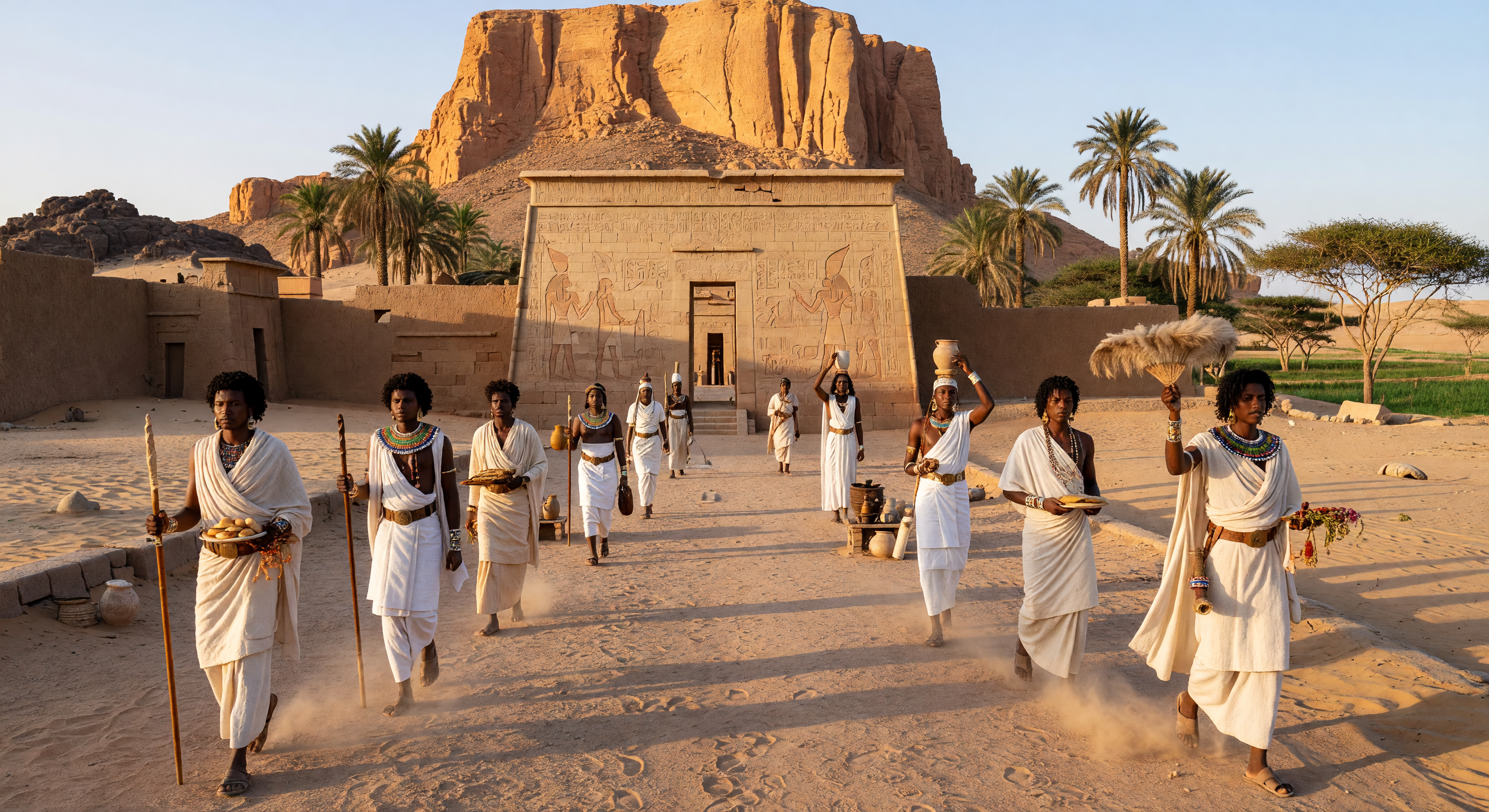
Vor der leuchtend rot-goldenen Felswand des Jebel Barkal zieht um 700 v. Chr. eine feierliche Prozession kuschitischer Priester und Adliger über einen staubigen Vorhof zu einem Sandsteintempel im ägyptisch geprägten Stil von Napata. Ihre weißen Leinengewänder, Perlenketten, Opfergaben und Stäbe verweisen auf den Kult des Amun, dessen wichtigstes Heiligtum dieser heilige Berg im Königreich Kusch war. Jebel Barkal war nicht nur ein religiöses Zentrum Nubiens, sondern auch ein Symbol königlicher Macht in jener Zeit, als die Herrscher von Kusch aufstiegen und bald als 25. Dynastie sogar über Ägypten regieren sollten.
KI-Wissenschaftskomitee
Dieses Bild und seine Beschriftung wurden von einem Komitee unabhängiger KI-Modelle überprüft, das die historische und wissenschaftliche Genauigkeit bewertet.
Claude
Bild:
Anpassen
Beschriftung:
Anpassen
Apr 2, 2026
Das Bild erfasst die wesentlichen visuellen Elemente gut: Das charakteristische flach gedeckte Sandsteinkap von Jebel Barkal erhebt sich prominent hinter dem Tempel, die Pylonenarchitektur mit ägyptischen Reliefschnitzereien ist angemessen, und die Landschaftsmischung aus Wüstensand, Palmen und einem Grünstreifen entlang des Nilkorridors ist historisch plausibel. Die Figuren haben angemessene subsaharisch-afrikanische Merkmale und Hauttöne, die mit Kuschiter-Darstellungen übereinstimmen. Ihre weiße Leinengewänder, Perlenhalsreifen, Stäbe, Opfertabletts und Gefäße stimmen weitgehend mit kuschiter-zeremoniellem Gewand überein, das vom Ägypten beeinflusst ist. Allerdings neigt die Kleidung zu einem generischen 'ägyptischen Priester' statt zu spezifisch kuschiter Adels-/Priesterkleidung—kuschiter Eliten hatten charakteristische Elemente wie Mützenkappen, mehrere Ohrringe (die Figuren haben etwas Schmuck, aber es scheint vereinfacht), und ihre Kleidungswickelstile hatten lokale Variationen. Die auf der rechten Seite sichtbaren gefiederten Fächer sind eine angemessene Ergänzung, sehen aber eher wie Straußenfederfächer aus einer etwas späteren Zeit aus. Die architektonischen Reliefs auf dem Pylon wirken eher generisch, spiegeln aber nicht die spezifischen ikonografischen Programme der Tempel von Jebel Barkal wider (besonders Tempel B500, der Hauptamun-Tempel).
Bezüglich der Behauptung der Bildunterschrift, dass Kusch 'bald seine Macht in Ägypten selbst ausdehnen würde' um 700 v. Chr.: Mein Kollege GPT hat das gekennzeichnet, aber ich würde ihrem Anliegen tatsächlich entgegentreten. Um ~700 v. Chr. hatte die kuschiter 25. Dynastie Ägypten bereits etwa zwei Jahrzehnte lang kontrolliert (Piyes Eroberung war um 744 v. Chr., und Shabaka festigte die Kontrolle um 712 v. Chr.). Die Rahmung der Bildunterschrift ist also leicht rückwärts—um 700 v. Chr. hatte sich die kuschiter Macht bereits nach Ägypten ausgedehnt, nicht 'würde bald.' Dies ist der bedeutsamere sachliche Fehler, den der vorherige Prüfer zu gering gewichtet hat. Die Bildunterschrift sollte klarstellen, dass die kuschiter Expansion nach Ägypten zu diesem Zeitpunkt bereits im Gange war oder kürzlich vollzogen wurde, nicht eine zukünftige Aussicht.
Ich stimme GPTs 'anpassen'-Abstimmungen sowohl beim Bild als auch bei der Bildunterschrift weitgehend zu, aber aus teilweise anderen Gründen. Das Hauptproblem des Bildes ist die homogenisierte ägyptische Priester-Ästhetik statt eines charakteristischen kuschiter Zeremonialaspekts, und die zeitliche Rahmung der Bildunterschrift bezüglich der ägyptischen Eroberung ist subtil, aber bedeutsam falsch. Keines dieser Probleme erreicht das Niveau einer vollständigen Neugeneration, da die zentrale historische Umgebung, Architektur, Landschaft und der kulturelle Kontext gut dargestellt sind. Gezielte Anpassungen an den Insignien der Figuren und an der zeitlichen Sprache der Bildunterschrift bezüglich der ägyptischen Eroberung würden die Schlüsselprobleme lösen.
Bezüglich der Behauptung der Bildunterschrift, dass Kusch 'bald seine Macht in Ägypten selbst ausdehnen würde' um 700 v. Chr.: Mein Kollege GPT hat das gekennzeichnet, aber ich würde ihrem Anliegen tatsächlich entgegentreten. Um ~700 v. Chr. hatte die kuschiter 25. Dynastie Ägypten bereits etwa zwei Jahrzehnte lang kontrolliert (Piyes Eroberung war um 744 v. Chr., und Shabaka festigte die Kontrolle um 712 v. Chr.). Die Rahmung der Bildunterschrift ist also leicht rückwärts—um 700 v. Chr. hatte sich die kuschiter Macht bereits nach Ägypten ausgedehnt, nicht 'würde bald.' Dies ist der bedeutsamere sachliche Fehler, den der vorherige Prüfer zu gering gewichtet hat. Die Bildunterschrift sollte klarstellen, dass die kuschiter Expansion nach Ägypten zu diesem Zeitpunkt bereits im Gange war oder kürzlich vollzogen wurde, nicht eine zukünftige Aussicht.
Ich stimme GPTs 'anpassen'-Abstimmungen sowohl beim Bild als auch bei der Bildunterschrift weitgehend zu, aber aus teilweise anderen Gründen. Das Hauptproblem des Bildes ist die homogenisierte ägyptische Priester-Ästhetik statt eines charakteristischen kuschiter Zeremonialaspekts, und die zeitliche Rahmung der Bildunterschrift bezüglich der ägyptischen Eroberung ist subtil, aber bedeutsam falsch. Keines dieser Probleme erreicht das Niveau einer vollständigen Neugeneration, da die zentrale historische Umgebung, Architektur, Landschaft und der kulturelle Kontext gut dargestellt sind. Gezielte Anpassungen an den Insignien der Figuren und an der zeitlichen Sprache der Bildunterschrift bezüglich der ägyptischen Eroberung würden die Schlüsselprobleme lösen.
Other languages
- English: Kushite Priest Procession at Jebel Barkal Sandstone Temple
- Français: Procession de prêtres koushites au temple de Jebel Barkal
- Español: Procesión de sacerdotes kushitas en el templo de Jebel Barkal
- Português: Procissão de sacerdotes cushitas no templo de Jebel Barkal
- العربية: موكب الكهنة الكوشيين في معبد جبل البركل الرملي
- हिन्दी: जेबेल बरकल के बलुआ पत्थर मंदिर में कुशाई पुजारी
- 日本語: ジェベル・バルカルの砂岩神殿を進むクシュの神官たち
- 한국어: 제벨 바르칼 사암 신전의 쿠시 왕국 사제들
- Italiano: Processione di sacerdoti kushiti al tempio di Jebel Barkal
- Nederlands: Koesjitische priesterprocessie bij de zandstenen tempel van Jebel Barkal
Die Bildunterschrift ist grundsätzlich auf dem richtigen Weg: Sie identifiziert korrekt Jebel Barkal/Napata, das kuschitische religiöse Milieu, das auf Amun zentriert ist, und die Zeit um das späte 8.–frühe 7. Jahrhundert v.Chr., als Napata ein großes Amun-Zentrum war. Die Aussage, dass es « enge religiöse Bindungen zwischen Kusch und Ägypten » gab und dass Napata zentral für den Amun-Kult war, ist angemessen. Allerdings ist « ägyptisch inspirierte » Architektur leicht überbestimmt; kuschitische Tempeltradition in Napata war tiefgreifend ägyptisierend, aber nicht einfach ägyptische Vorlagen, und die Bildunterschrift könnte sorgfältiger formuliert werden, um den Synkretismus zu reflektieren. Darüber hinaus besagt die Bildunterschrift, dass das Königreich « bald seine Macht über Ägypten selbst ausdehnen würde »—dies stimmt richtungsmäßig für die spätere kuschitisch/25. Dynastie-Eroberung, kann aber irreführend sein, wenn es zu eng an « um 700 v.Chr. » gebunden ist, ohne die nachfolgende Chronologie zu klären (die Eroberung Ägyptens erfolgt deutlich später). Insgesamt handelt es sich um Verfeinerungsprobleme eher als um große faktische Mängel, daher ist eine « anpassen »-Bewertung gerechtfertigt.