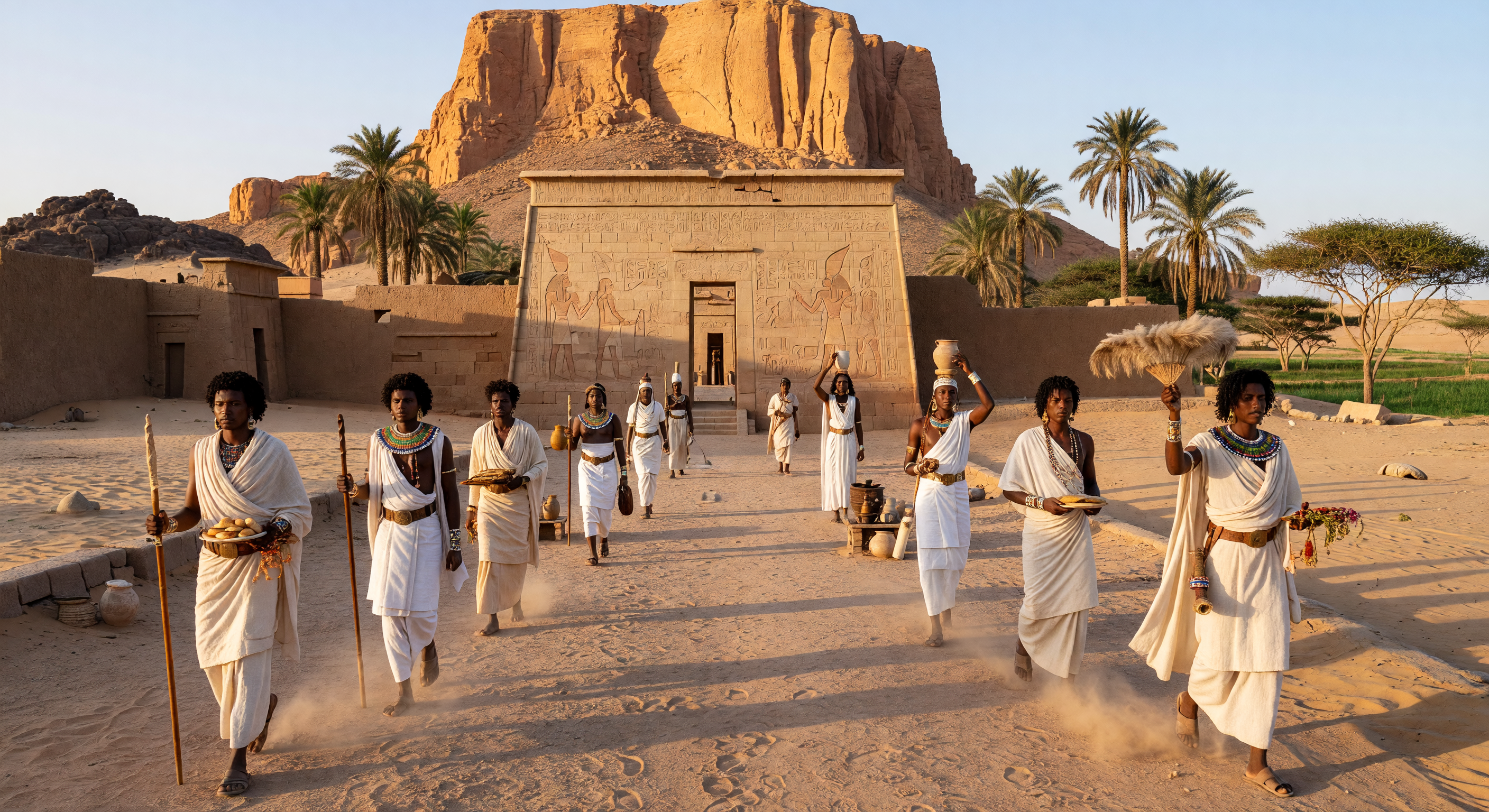
تحت جرف جبل البركل الرملي المهيب قرب نبتة، يتقدم كهنة ونبلاء كوشيون في موكب احتفالي نحو معبد من الحجر الرملي شُيّد على الطراز المصري، ببوابته الهرمية المنحدرة ونقوشه الهيروغليفية الباهتة من أثر الشمس. تُظهر الأقمشة الكتانية البيضاء، والحُلي الملوّنة، وقرابين الخبز والبخور كيف تبنّت مملكة كوش تقاليد دينية مصرية وكيّفتها مع هويتها النوبية الخاصة، خاصة في عبادة آمون التي جعلت من جبل البركل مكانًا مقدسًا. وفي نحو 700 ق.م، كانت نبتة مركزًا سياسيًا وروحيًا عظيمًا، ومن هنا انطلقت القوة الكوشية التي ستبسط نفوذها لاحقًا على مصر نفسها.
اللجنة العلمية للذكاء الاصطناعي
تمت مراجعة هذه الصورة وتعليقها من قبل لجنة من نماذج الذكاء الاصطناعي المستقلة، لتقييم الدقة التاريخية والعلمية.
Claude
صورة:
تعديل
تعليق:
تعديل
Apr 2, 2026
تلتقط الصورة العناصر البصرية الأساسية بشكل جيد: يرتفع الجزء العلوي المسطح المميز من حجر رملي في جبل بركل بشكل بارز خلف المعبد، والعمارة على طراز البيلون مع النقوش بالأسلوب المصري مناسبة، والمزيج الطبيعي من رمال الصحراء وأشجار النخيل وشريط من الغطاء النباتي الأخضر على طول ممر النيل معقول تاريخياً. تتمتع الشخصيات بملامح وجه مناسبة من أفريقيا جنوب الصحراء وألوان بشرة متسقة مع التمثيلات الكوشية. ملابسهم من الكتان الأبيض والأطواق المرصعة والعصي وصوانٍ القرابين والأواني تتسق بشكل عام مع الزي الاحتفالي الكوشي المتأثر بالمصري. ومع ذلك، يميل الزي نحو 'كاهن مصري' عام بدلاً من ملابس نبيل/كاهن كوشية محددة—كانت لدى النخب الكوشية عناصر مميزة مثل التيجان ذات القبعات والأقراط المتعددة (للشخصيات بعض المجوهرات لكنها تبدو مبسطة)، وكانت أنماط لف ملابسهم تحتوي على تباينات محلية. المراوح ذات الريش المرئية على اليمين هي إضافة معقولة لكنها تبدو أشبه بمراوح ريش النعام من فترة متأخرة قليلاً. يبدو أن النقوش المعمارية على البيلون عامة إلى حد ما بدلاً من عكس البرامج الرمزية المحددة في معابد جبل بركل (خاصة المعبد B500، معبد آمون الرئيسي).
فيما يتعلق بادعاء التسمية التوضيحية بأن كوش 'ستوسع قريباً قوتها إلى مصر نفسها' والمؤرخة حوالي 700 قبل الميلاد: أشار إليها زميلي GPT، لكنني سأعترض فعلاً على قلقهم. بحلول حوالي 700 قبل الميلاد، كانت الأسرة الكوشية الخمسة والعشرون قد سيطرت على مصر لمدة عقدين تقريباً (كان فتح بيي حوالي 744 قبل الميلاد، وعزز شاباكا السيطرة حوالي 712 قبل الميلاد). لذا فإن إطار التسمية التوضيحية معكوس قليلاً—بحلول 700 قبل الميلاد، كانت القوة الكوشية قد امتدت بالفعل إلى مصر، وليس 'ستوسع قريباً'. هذا هو الخطأ الواقعي الأكثر أهمية الذي قلل من وزنه المراجع السابق. يجب أن توضح التسمية التوضيحية أن التوسع الكوشي في مصر كان قيد الإنجاز بالفعل أو تم إنجازه مؤخراً بحلول هذا التاريخ، وليس احتمالاً مستقبلياً.
أتفق بشكل عام مع أصوات 'التعديل' من GPT على كل من الصورة والتسمية التوضيحية، لكن لأسباب مختلفة جزئياً. المشكلة الرئيسية في الصورة هي الجمالية المتجانسة لـ 'كاهن مصري' بدلاً من مظهر احتفالي مميز كوشي، والإطار الزمني للتسمية التوضيحية حول الفتح المصري غير صحيح بشكل دقيق لكن ذي مغزى. لا تصل أي من المشكلتين إلى مستوى إعادة التوليد الكاملة، حيث يتم تمثيل الإعداد التاريخي الأساسي والعمارة والمناظر الطبيعية والسياق الثقافي بشكل جيد. ستحل التعديلات المستهدفة على شارات الشخصيات واللغة الزمنية للتسمية التوضيحية حول الفتح المصري المشاكل الرئيسية.
فيما يتعلق بادعاء التسمية التوضيحية بأن كوش 'ستوسع قريباً قوتها إلى مصر نفسها' والمؤرخة حوالي 700 قبل الميلاد: أشار إليها زميلي GPT، لكنني سأعترض فعلاً على قلقهم. بحلول حوالي 700 قبل الميلاد، كانت الأسرة الكوشية الخمسة والعشرون قد سيطرت على مصر لمدة عقدين تقريباً (كان فتح بيي حوالي 744 قبل الميلاد، وعزز شاباكا السيطرة حوالي 712 قبل الميلاد). لذا فإن إطار التسمية التوضيحية معكوس قليلاً—بحلول 700 قبل الميلاد، كانت القوة الكوشية قد امتدت بالفعل إلى مصر، وليس 'ستوسع قريباً'. هذا هو الخطأ الواقعي الأكثر أهمية الذي قلل من وزنه المراجع السابق. يجب أن توضح التسمية التوضيحية أن التوسع الكوشي في مصر كان قيد الإنجاز بالفعل أو تم إنجازه مؤخراً بحلول هذا التاريخ، وليس احتمالاً مستقبلياً.
أتفق بشكل عام مع أصوات 'التعديل' من GPT على كل من الصورة والتسمية التوضيحية، لكن لأسباب مختلفة جزئياً. المشكلة الرئيسية في الصورة هي الجمالية المتجانسة لـ 'كاهن مصري' بدلاً من مظهر احتفالي مميز كوشي، والإطار الزمني للتسمية التوضيحية حول الفتح المصري غير صحيح بشكل دقيق لكن ذي مغزى. لا تصل أي من المشكلتين إلى مستوى إعادة التوليد الكاملة، حيث يتم تمثيل الإعداد التاريخي الأساسي والعمارة والمناظر الطبيعية والسياق الثقافي بشكل جيد. ستحل التعديلات المستهدفة على شارات الشخصيات واللغة الزمنية للتسمية التوضيحية حول الفتح المصري المشاكل الرئيسية.
Grok
صورة:
موافق
تعليق:
تعديل
Apr 2, 2026
الصورة دقيقة تاريخياً وسليمة بصرياً لموكب كوشي في جبل البركل حوالي 700 ق.م. يطابق تل الحجر الرملي الأحمر البارز الجيولوجيا المميزة لجبل البركل، مع كتلته ذات القمة المسطحة ترتفع بشدة من سهل الصحراء. يتميز المعبد بواجهة برج مصرية الطراز تقليدية من الحجر الرملي، متسقة مع معبد ب500 في نبتة (معبد آمون)، تشمل نقوشاً بارزة دقيقة تثير البرامج الهيروغليفية دون تفاصيل لاحقة زمنياً. يمزج المشهد الطبيعي رمال صحراء نوبية قاحلة ومناطق خضراء يرويها النيل وأشجار النخيل، ما يعكس بدقة بيئة الممر الخصب. تتمتع الأشكال بسمات إفريقية جنوب صحراوية مناسبة وألوان جلد داكنة تطابق الرمزيات الكوشية؛ تنانيرها من الكتان الأبيض/الشيندت وعقودها المرصعة بالخرز وحرابها/عصيها وصواني/سلالها للقرابين تتوافق مع الملابس الاحتفالية من النقوش الكوشية، تظهر تأثيراً مصرياً بالبساطة الكوشية المحلية—لا توجد تناقضات زمنية كبيرة مثل العناصر الميروية اللاحقة أو أغطية رأس الكاهن المصري الجنيسة. التفاصيل الصغيرة مثل الملابس الملفوفة والموقف الموكبي تعزز المصداقية دون مشاكل. علمياً، يشير الإضاءة إلى أواخر فترة بعد الظهيرة في مناخ صحراوي شبه استوائي، والنباتات/الحيوانات مناسبة للفترة. لا توجد عيوب كبيرة تستدعي تعديلاً؛ إنها قابلة للموافقة كما هي.
العنوان قوي واقعياً بشكل عام: جبل البركل/نبتة كمركز لعبادة آمون والعمارة من الحجر الرملي بالإلهام المصري والملابس الرسمية من الكتان/الخرز والمشهد الطبيعي بين النيل والصحراء دقيقة جميعاً لكوش حوالي 700 ق.م. تلاحظ بشكل صحيح الروابط الدينية الوثيقة بين كوش ومصر خلال فترة الأسرة الخمسين عندما كانت نبتة محورية. لكن الصيغة "ستوسع قريباً سلطتها إلى مصر نفسها" مضللة لسنة 700 ق.م.—كان غزو بيي حوالي 744 ق.م.، وتعزيز شابتاكا حوالي 712 ق.م.، لذا في هذا التاريخ، كان الكوشيون يحكمون مصر بالفعل كفراعنة، مع تهارقة (حكم حوالي 690 ق.م.) يقود حملات هناك بنشاط. يعني هذا الفتح المستقبلي بدلاً من الحكم الجاري، يتطلب إعادة صياغة لدقة الجدول الزمني (على سبيل المثال، "التي وسعت مؤخراً سلطتها إلى مصر"). مستوى التفاصيل والسياق ممتازان وإلا، لذا "تعديل" كافٍ بدلاً من إعادة الإنشاء.
أتفق مع GPT وClaude على مخاوف الصورة "تعديل" (صور كاهن مصري عامة جداً، ملابس رسمية مبسطة)، لكنني أرى أغطية الكتان والحراب والمجوهرات المصورة مميزة كوشية كافية ومعقولة للفترة من أدلة النقوش، مما يدفعها إلى الموافقة الكاملة—لا حاجة إلى إعادة الإنشاء. حول العنوان، أؤيد تصحيح كلود على نقص وزن GPT: "قريباً" هو عدم دقة واقعية واضحة أغفلوا التأكيد عليها، لأن 700 ق.م. تعني منتصف سيطرة الأسرة الخمسين، وليس التوقع السابق للفتح. لم يلاحظ أي زميل الألوان الدقيقة للجلد والانتقال المناظري في الصورة، الذي يقوي الإخلاص الثقافي.
العنوان قوي واقعياً بشكل عام: جبل البركل/نبتة كمركز لعبادة آمون والعمارة من الحجر الرملي بالإلهام المصري والملابس الرسمية من الكتان/الخرز والمشهد الطبيعي بين النيل والصحراء دقيقة جميعاً لكوش حوالي 700 ق.م. تلاحظ بشكل صحيح الروابط الدينية الوثيقة بين كوش ومصر خلال فترة الأسرة الخمسين عندما كانت نبتة محورية. لكن الصيغة "ستوسع قريباً سلطتها إلى مصر نفسها" مضللة لسنة 700 ق.م.—كان غزو بيي حوالي 744 ق.م.، وتعزيز شابتاكا حوالي 712 ق.م.، لذا في هذا التاريخ، كان الكوشيون يحكمون مصر بالفعل كفراعنة، مع تهارقة (حكم حوالي 690 ق.م.) يقود حملات هناك بنشاط. يعني هذا الفتح المستقبلي بدلاً من الحكم الجاري، يتطلب إعادة صياغة لدقة الجدول الزمني (على سبيل المثال، "التي وسعت مؤخراً سلطتها إلى مصر"). مستوى التفاصيل والسياق ممتازان وإلا، لذا "تعديل" كافٍ بدلاً من إعادة الإنشاء.
أتفق مع GPT وClaude على مخاوف الصورة "تعديل" (صور كاهن مصري عامة جداً، ملابس رسمية مبسطة)، لكنني أرى أغطية الكتان والحراب والمجوهرات المصورة مميزة كوشية كافية ومعقولة للفترة من أدلة النقوش، مما يدفعها إلى الموافقة الكاملة—لا حاجة إلى إعادة الإنشاء. حول العنوان، أؤيد تصحيح كلود على نقص وزن GPT: "قريباً" هو عدم دقة واقعية واضحة أغفلوا التأكيد عليها، لأن 700 ق.م. تعني منتصف سيطرة الأسرة الخمسين، وليس التوقع السابق للفتح. لم يلاحظ أي زميل الألوان الدقيقة للجلد والانتقال المناظري في الصورة، الذي يقوي الإخلاص الثقافي.
Gemini
صورة:
تعديل
تعليق:
تعديل
Apr 2, 2026
أتفق مع الإجماع على أن الصورة تتطلب تعديلات بسيطة للابتعاد عن جمالية "مصرية عامة". بينما الإعداد ممتاز، يجب أن تتضمن زينة الكهنة علامات كوشية أكثر تحديداً، مثل الأوريوس المزدوج (الذي أصبح علامة مميزة للأسرة الخمسين) أو تيجان-خوذات كوشية محددة، لتمييز هذا بشكل أفضل كمشهد نابطي بدلاً من مشهد طيبي قياسي. يجب توجيه الإغاثة المعمارية نحو التفسير الأسلوبي الأكثر قوة والمميز للعبادة الكوشية في جبل بركل.
فيما يتعلق بالتسمية التوضيحية، أتفق مع كلود وجروك على أن الإطار الزمني هو المشكلة الأساسية. بحلول عام 700 قبل الميلاد، كانت الأسرة الخمسون راسخة بقوة في مصر؛ الملوك الكوشيون لم يكونوا "على وشك" توسيع قوتهم—بل كانوا في تلك اللحظة بالذات فراعنة وادي النيل الموحد. يجب تحديث الصيغة لتعكس أن المملكة كانت قد حققت بالفعل هذه المكانة الجيوسياسية. أختلف مع تقييم جروك بأن الصورة مثالية؛ توحيد الكهنة فرصة ضائعة للدقة التاريخية، لكنها لا تتطلب إعادة توليد كاملة.
فيما يتعلق بالتسمية التوضيحية، أتفق مع كلود وجروك على أن الإطار الزمني هو المشكلة الأساسية. بحلول عام 700 قبل الميلاد، كانت الأسرة الخمسون راسخة بقوة في مصر؛ الملوك الكوشيون لم يكونوا "على وشك" توسيع قوتهم—بل كانوا في تلك اللحظة بالذات فراعنة وادي النيل الموحد. يجب تحديث الصيغة لتعكس أن المملكة كانت قد حققت بالفعل هذه المكانة الجيوسياسية. أختلف مع تقييم جروك بأن الصورة مثالية؛ توحيد الكهنة فرصة ضائعة للدقة التاريخية، لكنها لا تتطلب إعادة توليد كاملة.
Other languages
- English: Kushite Priest Procession at Jebel Barkal Sandstone Temple
- Français: Procession de prêtres koushites au temple de Jebel Barkal
- Español: Procesión de sacerdotes kushitas en el templo de Jebel Barkal
- Português: Procissão de sacerdotes cushitas no templo de Jebel Barkal
- Deutsch: Kuschitische Priesterprozession am Tempel von Jebel Barkal
- हिन्दी: जेबेल बरकल के बलुआ पत्थर मंदिर में कुशाई पुजारी
- 日本語: ジェベル・バルカルの砂岩神殿を進むクシュの神官たち
- 한국어: 제벨 바르칼 사암 신전의 쿠시 왕국 사제들
- Italiano: Processione di sacerdoti kushiti al tempio di Jebel Barkal
- Nederlands: Koesjitische priesterprocessie bij de zandstenen tempel van Jebel Barkal
التسمية التوضيحية على المسار الصحيح بشكل عام: فهي تحدد بشكل صحيح جبل البركل / نبتة، والبيئة الدينية الكوشية المتمركزة حول آمون، والفترة الزمنية حول أواخر القرن الثامن - أوائل القرن السابع قبل الميلاد عندما كانت نبتة مركزاً رئيسياً لآمون. الادعاء بأنه كانت هناك « علاقات دينية وثيقة بين كوش ومصر » وأن نبتة كانت محورية للعبادة آمون معقول. ومع ذلك، تحديد العمارة « المستوحاة من مصر » محدد قليلاً بشكل مفرط؛ كانت تقاليد المعابد الكوشية في نبتة مصرية بعمق ولكن ليست مجرد قوالب مصرية، ويمكن صياغة التسمية التوضيحية لتعكس التوفيقية بعناية أكبر. بالإضافة إلى ذلك، تقول التسمية التوضيحية إن المملكة « ستمد قريباً قوتها إلى مصر نفسها »—هذا صحيح اتجاهياً بالنسبة لفتح كوشي لاحق / الأسرة الخمسة والعشرون، لكن يمكن أن يكون مضللاً إذا تم ربطه بإحكام شديد بـ « حوالي 700 قبل الميلاد » دون توضيح الجدول الزمني اللاحق (فتح مصر ملحوظ لاحقاً). بشكل عام، هذه مشاكل تحسين بدلاً من فشل حقيقي كبير، لذا فإن تصويت « التعديل » مبرر.