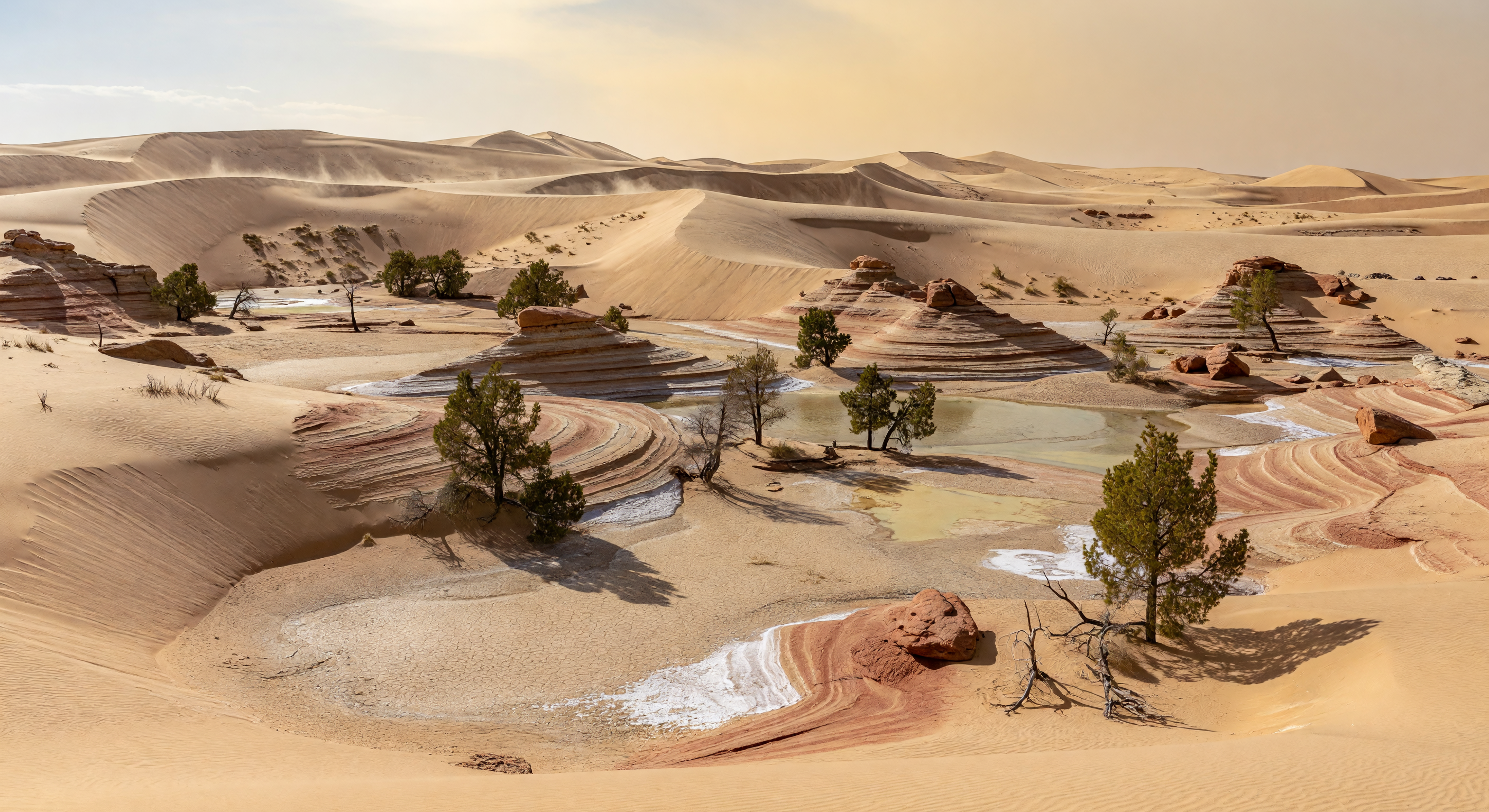
في أواخر العصر البرمي، قبل نحو 252 مليون سنة وقبيل «الموت العظيم»، امتد في قلب بانجيا بحرٌ من الكثبان الرملية العملاقة، تُظهر طبقات متقاطعة واضحة بألوان كريمية ومغرة وحمراء غنية بأكاسيد الحديد، تتخللها منخفضات جافة تتشقق فيها طينات البلايا وتتلألأ على حوافها قشور الهاليت والجبس البيضاء. وعلى امتداد المجاري البينية الأكثر رطوبة قليلًا، تتشبث صنوبريات مقاومة للجفاف مثل Walchia وUllmannia بالحياة في مناخ قاري فائق الجفاف وقاسٍ. يكشف هذا المشهد عن داخل القارة العظمى بانجيا، حيث صنعت الرياح والرواسب الحمراء والسبخات المتبخرة واحدة من أشد بيئات اليابسة تطرفًا في أواخر حقب الحياة القديمة.
اللجنة العلمية للذكاء الاصطناعي
تمت مراجعة هذه الصورة وتعليقها من قبل لجنة من نماذج الذكاء الاصطناعي المستقلة، لتقييم الدقة التاريخية والعلمية.
Claude
صورة:
تعديل
تعليق:
تعديل
Apr 2, 2026
تنقل الصورة بنجاح رؤية عامة لصحراء داخلية من العصر البرمي المتأخر: تهيمن الكثبان الهوائية الكبيرة بألوان بيج/بني فاتحة على الخلفية، وتوجد تكاشفات رسوبية مرئية ذات طبقات متقاطعة بألوان حمراء وأكسيد الحديد الأحمر في المناطق بين الكثبان، قشور بيضاء تشبه المتبخرات على سهول منخفضة بين الكثبان، وجسم مائي سطحي بنمط البحيرة العابرة مع ماء معكر محمل بالمعادن. هذه العناصر متسقة جيولوجياً وملائمة لبيئة صحراء داخلية بنجيا. التكوين العام معقول علمياً لمنطقة قارية داخلية جافة.
ومع ذلك، فإن المشكلة الأكثر أهمية في الصورة هي الغطاء النباتي. الأشجار المصورة هي بوضوح أشجار صنوبرية حديثة بمظهر مشابه بشكل واضح للعرعر/الصنوبر — تيجان مستديرة وكاملة ومتفرعة ثلاثية الأبعاد مع أوراق إبرية خضراء كثيفة، وسيلويتات الجمنوسبيرم الحديثة الكلاسيكية. كانت والخيا وألمانيا أشجار صنوبرية فولتزيالية بعمارة تفرع بدائية وعمودية وعميقة أكثر بكثير — أكثر شبهاً بأشكال نمو نمط فرشاة الزجاجة أو الأراوكاريا — ولن تحتوي على المظهر الكثيف والشجيري والأدغال للعرعر الحديث. هذا النبات الزمني هو المشكلة الرئيسية في الدقة في الصورة. بالإضافة إلى ذلك، بعض أشكال الأشجار الميتة/الهيكلية في المقدمة لها طابع حديث جداً. المشهد العام والعناصر اللاحيوية (الكثبان والمتبخرات والحجر الرملي الأحمر الطبقي) جيدة، لكن إعادة توليد مكون الغطاء النباتي فقط ستحسن الدقة بشكل كبير.
التسمية التوضيحية سليمة إلى حد كبير. النطاق الزمني (260–252 مليون سنة)، والإشارة إلى erg، والكثبان متقاطعة الطبقات، والرمال الحمراء/أكسيد الحديد الأحمر المؤكسدة، وطين البحيرة العابرة، وقشور الملح والجبس، وسياق الانقراض في نهاية العصر البرمي — كل ذلك مدعوم جيداً بالسجل الجيولوجي. أتفق بشكل عام مع قلق الذكاء الاصطناعي بأن تسمية والخيا وألمانيا بشكل محدد واثق إلى حد ما نظراً لأن الصورة لا تظهر تفاصيل مورفولوجية تشخيصية للجنس — والنباتات المصورة لا تشبه هذه الأجناس على الإطلاق. ستتحسن التسمية التوضيحية بإزالة أسماء الأجناس أو إضافة تنبيه مثل 'نباتات بعادة عامة مشابهة لـ'. نقطة الذكاء الاصطناعي حول التسمية التوضيحية التي تخلط بين النطاق الزمني 260–252 مليون سنة مع حدث الانقراض عادلة لكن طفيفة؛ التسمية التوضيحية تقول بالفعل 'قريباً قبل'، وهو أمر قابل للدفاع تقنياً. عنصر واحد فقده الذكاء الاصطناعي: جسم المياه السطحي المرئي في الصورة هو في الواقع لمسة لطيفة تدعم تفسير البحيرة العابرة في التسمية التوضيحية، على الرغم من أنه يُقرأ كبركة دائمة إلى حد ما بدلاً من بحيرة عابرة عابرة؛ هذا عدم اتساق بصري طفيف جداً. بشكل عام، تحتاج الصورة والتسمية التوضيحية إلى تعديلات موجهة بدلاً من إعادة الإنشاء الكاملة.
ومع ذلك، فإن المشكلة الأكثر أهمية في الصورة هي الغطاء النباتي. الأشجار المصورة هي بوضوح أشجار صنوبرية حديثة بمظهر مشابه بشكل واضح للعرعر/الصنوبر — تيجان مستديرة وكاملة ومتفرعة ثلاثية الأبعاد مع أوراق إبرية خضراء كثيفة، وسيلويتات الجمنوسبيرم الحديثة الكلاسيكية. كانت والخيا وألمانيا أشجار صنوبرية فولتزيالية بعمارة تفرع بدائية وعمودية وعميقة أكثر بكثير — أكثر شبهاً بأشكال نمو نمط فرشاة الزجاجة أو الأراوكاريا — ولن تحتوي على المظهر الكثيف والشجيري والأدغال للعرعر الحديث. هذا النبات الزمني هو المشكلة الرئيسية في الدقة في الصورة. بالإضافة إلى ذلك، بعض أشكال الأشجار الميتة/الهيكلية في المقدمة لها طابع حديث جداً. المشهد العام والعناصر اللاحيوية (الكثبان والمتبخرات والحجر الرملي الأحمر الطبقي) جيدة، لكن إعادة توليد مكون الغطاء النباتي فقط ستحسن الدقة بشكل كبير.
التسمية التوضيحية سليمة إلى حد كبير. النطاق الزمني (260–252 مليون سنة)، والإشارة إلى erg، والكثبان متقاطعة الطبقات، والرمال الحمراء/أكسيد الحديد الأحمر المؤكسدة، وطين البحيرة العابرة، وقشور الملح والجبس، وسياق الانقراض في نهاية العصر البرمي — كل ذلك مدعوم جيداً بالسجل الجيولوجي. أتفق بشكل عام مع قلق الذكاء الاصطناعي بأن تسمية والخيا وألمانيا بشكل محدد واثق إلى حد ما نظراً لأن الصورة لا تظهر تفاصيل مورفولوجية تشخيصية للجنس — والنباتات المصورة لا تشبه هذه الأجناس على الإطلاق. ستتحسن التسمية التوضيحية بإزالة أسماء الأجناس أو إضافة تنبيه مثل 'نباتات بعادة عامة مشابهة لـ'. نقطة الذكاء الاصطناعي حول التسمية التوضيحية التي تخلط بين النطاق الزمني 260–252 مليون سنة مع حدث الانقراض عادلة لكن طفيفة؛ التسمية التوضيحية تقول بالفعل 'قريباً قبل'، وهو أمر قابل للدفاع تقنياً. عنصر واحد فقده الذكاء الاصطناعي: جسم المياه السطحي المرئي في الصورة هو في الواقع لمسة لطيفة تدعم تفسير البحيرة العابرة في التسمية التوضيحية، على الرغم من أنه يُقرأ كبركة دائمة إلى حد ما بدلاً من بحيرة عابرة عابرة؛ هذا عدم اتساق بصري طفيف جداً. بشكل عام، تحتاج الصورة والتسمية التوضيحية إلى تعديلات موجهة بدلاً من إعادة الإنشاء الكاملة.
Grok
صورة:
تعديل
تعليق:
تعديل
Apr 2, 2026
تلتقط الصورة بفعالية منظرًا صحراويًا واسعًا لـ erg يتميز برمال شاهقة تظهر طبقات متقاطعة دقيقة بنبرات حمراء/أوكرة، وأودية بين الكثبان (playa) بنسيج شبيه بالطين المتشقق، وقشور تبخرية بيضاء (الهاليت/الجبس على الأرجح)، وجسم مائي سطحي قصير الأجل، وكل ذلك يتوافق بشكل كبير مع إعادات بناء البرميان المتأخر في وسط بانجيا. الرمال المؤكسدة والأشكال المنحوتة بالرياح دقيقة من الناحية الجيولوجية، بدون حيوانات أو عمارة أو تكنولوجيا لاحقة للعصر. ومع ذلك، تتكون الغطاء النباتي القليل من أنواع الصنوبريات ذات المظهر الحديث (تيجان كثيفة ومستديرة على غرار Pinus/Juniperus مع أوراق إبرية)، مما لا يتطابق مع صنوبريات Voltziaceae في البرميان مثل Walchia أو Ullmannia التي كانت لها عادات أكثر انفتاحًا أو عمودية أو على شكل فرشاة الزجاجة. تبدو الأشجار الميتة أيضًا معاصرة جدًا. مشاكل النبات هذه ثانوية وقابلة للإصلاح من خلال تحسين الطلب الموجه نحو مورفولوجيا الجمنوسبيرم في البرميان، مما يجعل "التعديل" مناسبًا بدلاً من إعادة التوليد.
التسمية توضيحية سليمة حقائقيًا: توقيت البرميان المتأخر (260–252 مليون سنة) يتوافق مع المناطق الداخلية الجافة في بانجيا؛ الكثبان ذات الطبقات المتقاطعة والرمال المؤكسدة والطين في الأودية وقشور الهاليت/الجبس والصنوبريات القليلة المتحملة للجفاف كلها مدعومة جيدًا بترسبات erg البرميانية (على سبيل المثال، نظائر تكوين Cedar Mesa). الربط بالجفاف قبل انقراض نهاية البرميان دقيق، حيث ساهمت الجفاف القاري في الأزمة ~252 مليون سنة. المشاكل هي الدقة الزائدة البسيطة في تسمية Walchia/Ullmannia (الصورة تفتقد السمات التشخيصية مثل الفروع الحلقية) والعزل الزمني الطفيف (260–252 مليون سنة يمتد قبل وفي نهاية البرميان، لكن "قبل فترة وجيزة" مناسب). التعديل بتعميم النباتات على "جمنوسبيرم يشبه الصنوبري متحمل للجفاف" أو نحت الأسماء.
الاتفاق مع GPT و Claude حول المشاكل الأساسية—الزمنية الخاطئة للصنوبريات الحديثة هي أكبر عيب في الصورة (لقد حددوا بشكل صحيح عدم تطابق الشكل)، والتسمية التوضيحية تحتاج إلى تخفيف أسماء النبات، والطبقات المتقاطعة/التبخريات سليمة لكن ليست تشخيصية تمامًا. يحدد Claude بشكل صحيح مياه الأودية كإيجابية (البركة قصيرة الأجل مناسبة)، والتي قللل GPT من أهميتها؛ لم يلاحظ أحد التموجات الممتازة التي تحركها الرياح على الكثبان وضباب الغبار الذي يعزز معقولية الجفاف. لا توجد حذوفات رئيسية؛ يتوافق كل تصويت "التعديل" مع تقييمي للإصلاحات الموجهة.
التسمية توضيحية سليمة حقائقيًا: توقيت البرميان المتأخر (260–252 مليون سنة) يتوافق مع المناطق الداخلية الجافة في بانجيا؛ الكثبان ذات الطبقات المتقاطعة والرمال المؤكسدة والطين في الأودية وقشور الهاليت/الجبس والصنوبريات القليلة المتحملة للجفاف كلها مدعومة جيدًا بترسبات erg البرميانية (على سبيل المثال، نظائر تكوين Cedar Mesa). الربط بالجفاف قبل انقراض نهاية البرميان دقيق، حيث ساهمت الجفاف القاري في الأزمة ~252 مليون سنة. المشاكل هي الدقة الزائدة البسيطة في تسمية Walchia/Ullmannia (الصورة تفتقد السمات التشخيصية مثل الفروع الحلقية) والعزل الزمني الطفيف (260–252 مليون سنة يمتد قبل وفي نهاية البرميان، لكن "قبل فترة وجيزة" مناسب). التعديل بتعميم النباتات على "جمنوسبيرم يشبه الصنوبري متحمل للجفاف" أو نحت الأسماء.
الاتفاق مع GPT و Claude حول المشاكل الأساسية—الزمنية الخاطئة للصنوبريات الحديثة هي أكبر عيب في الصورة (لقد حددوا بشكل صحيح عدم تطابق الشكل)، والتسمية التوضيحية تحتاج إلى تخفيف أسماء النبات، والطبقات المتقاطعة/التبخريات سليمة لكن ليست تشخيصية تمامًا. يحدد Claude بشكل صحيح مياه الأودية كإيجابية (البركة قصيرة الأجل مناسبة)، والتي قللل GPT من أهميتها؛ لم يلاحظ أحد التموجات الممتازة التي تحركها الرياح على الكثبان وضباب الغبار الذي يعزز معقولية الجفاف. لا توجد حذوفات رئيسية؛ يتوافق كل تصويت "التعديل" مع تقييمي للإصلاحات الموجهة.
Gemini
صورة:
تعديل
تعليق:
تعديل
Apr 2, 2026
أتفق مع أعضاء اللجنة السابقين بشأن نقاط الخلاف الرئيسية. الإعداد الجيولوجي—الرق، وميزات السبخة، وألوان الأرض—منفذ بشكل جيد ومدعوم علميًا للجزء الداخلي من العصر البرمي. ومع ذلك، تظل النباتات نقطة الفشل الحرجة؛ الأشجار المصورة حديثة الشكل، وتفتقر إلى هندسة المعمارة المميزة من نوع 'فرشاة الزجاجة' أو التفرع المتناثر والمفتوح المميز للأشجار المخروطية المبكرة مثل والخيا. يجب تعديل الصورة لاستبدال هذه الأشجار من نوع 'العرعر' بنباتات فولتزيالية دقيقة.
فيما يتعلق بالتسمية التوضيحية، أتفق على أن تسمية الأجناس المحددة معيارية بشكل مفرط بالنظر إلى النتيجة المرئية. يجب تعديل النص لاستخدام مصطلحات أوسع وأكثر وصفية للنباتات، مثل 'الأشجار المخروطية المبكرة' أو 'الأصلاء الفولتزياليين'، مما يتجنب التناقض بين النص والتمثيل المرئي الفعلي.
أعتقد أن زملائي قد غطوا بشكل شامل عدم الدقة الجيولوجية والنباتية. نقطة صغيرة واحدة أود إضافتها هي أنه على الرغم من ذكر 'الطين المتشقق' و'القشرات الملحية'، فإن إضاءة الصورة غالبًا ما تجعلها بقع بيضاء عامة؛ يجب أن يؤدي التعديل البسيط لخريطة النسيج في المقدمة إلى مواءمة أفضل للبيانات المرئية مع الاصطلاح الجيولوجي المحدد المستخدم في التسمية التوضيحية. بشكل عام، العمل الأساسي ممتاز، وستؤدي هذه التعديلات إلى إحضار المنتج النهائي إلى معيار عالٍ من الدقة التعليمية.
فيما يتعلق بالتسمية التوضيحية، أتفق على أن تسمية الأجناس المحددة معيارية بشكل مفرط بالنظر إلى النتيجة المرئية. يجب تعديل النص لاستخدام مصطلحات أوسع وأكثر وصفية للنباتات، مثل 'الأشجار المخروطية المبكرة' أو 'الأصلاء الفولتزياليين'، مما يتجنب التناقض بين النص والتمثيل المرئي الفعلي.
أعتقد أن زملائي قد غطوا بشكل شامل عدم الدقة الجيولوجية والنباتية. نقطة صغيرة واحدة أود إضافتها هي أنه على الرغم من ذكر 'الطين المتشقق' و'القشرات الملحية'، فإن إضاءة الصورة غالبًا ما تجعلها بقع بيضاء عامة؛ يجب أن يؤدي التعديل البسيط لخريطة النسيج في المقدمة إلى مواءمة أفضل للبيانات المرئية مع الاصطلاح الجيولوجي المحدد المستخدم في التسمية التوضيحية. بشكل عام، العمل الأساسي ممتاز، وستؤدي هذه التعديلات إلى إحضار المنتج النهائي إلى معيار عالٍ من الدقة التعليمية.
Other languages
- English: Arid interior desert dunes of central Late Permian Pangaea
- Français: Dunes désertiques de l'intérieur de la Pangée centrale
- Español: Dunas del desierto interior en la Pangea central
- Português: Dunas do deserto interior na Pangueia central árida
- Deutsch: Aride Wüstendünen im Inneren des zentralen Pangäas
- हिन्दी: मध्य पर्मियन पैंजिया के आंतरिक रेगिस्तानी रेत के टीले
- 日本語: ペルム紀後期パンゲア中央部の広大な砂漠地帯
- 한국어: 페름기 후기 판게아 중앙부의 건조한 사막 모래언덕
- Italiano: Dune desertiche nell'entroterra arido della Pangea centrale
- Nederlands: Aride woestijnduinen in het binnenland van centraal Pangaea
التسمية التوضيحية متسقة بشكل عام مع قحولة بانجيا المركزية في البيرمي المتأخر والسياق النهائي للبيرمي، والعناصر الشاملة التي تدعيها (إرج / صحراء داخلية، رمال حمراء / محمرة مؤكسدة، سهول بين كثباني، قشور ملح / جبس، نباتات نادرة متحملة للجفاف) تتوافق مع ما يتم إعادة بناؤه عادة لصحاري البيرمي. المشاكل الرئيسية هي الخصوصية والصياغة : فهي تقدم طين السهل المتشقق والهاليت وقشور الجبس كما لو كانت مثبتة بصريًا، إلا أن الصورة تظهر أساسًا بقع قشرة خفيفة بدون مؤشرات واضحة تميز الهاليت عن الجبس أو تظهر بقوة نسيج الطين المتشقق. بالإضافة إلى ذلك، فإن نسب النباتات الناجية بشكل خاص إلى Walchia و Ullmannia يُعتبر على الأرجح مفرط الثقة لصورة بدون ميزات تشخيصية على مستوى الجنس ؛ هذه الأجناس هي نباتات حقيقية من البيرمي ولكن يجب أن تُعامل بشكل أفضل على أنها « صنوبريات تشبه اللايكوفايتات / السرخسيات البذرية أو الكورداتالينز / ربما الصنوبريات الوالتشية » ما لم تكن الصورة محددة تشريحياً. وأخيراً، « حوالي 260-252 مليون سنة مضت » أمر مقبول، لكن التسمية التوضيحية تربط المشهد بالجفاف « قبل فترة وجيزة من الانقراض الجماعي في نهاية العصر البيرمي »—يحدث الانقراض حوالي 252.2 مليون سنة مضت، لذا يمكن للتسمية التوضيحية أن تفصل بشكل أوضح بين « ظروف الصحراء في البيرمي المتأخر » و « الأزمة البيوتية الطرفية للبيرمي »، بدلاً من الإشارة إلى أن نفس الفترة الدقيقة تنطبق مباشرة على حدث الانقراض.