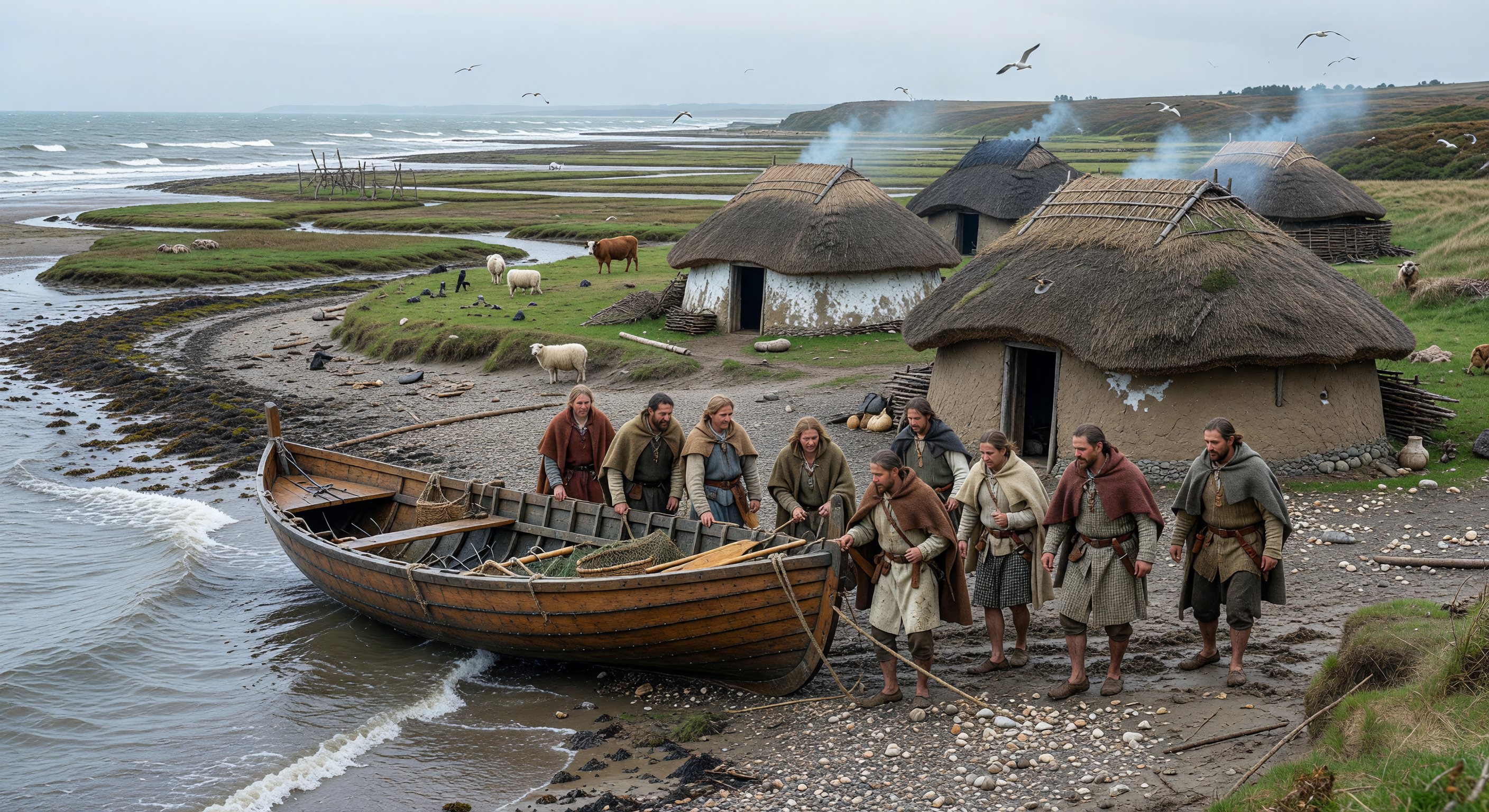
على مصبٍ أطلسي عاصف في شمال غربي أوروبا نحو 700–500 ق.م، نرى رجالًا ونساءً من صيادين ومزارعين ساحليين يجرّون قاربًا خشبيًا صغيرًا مبنيًا بألواح مثبتة بأوتاد ورباطات ليفية فوق الشاطئ الرمادي عند الجَزْر، بينما ترعى الأبقار قرب بيوت دائرية مسقوفة بالقش وتدور النوارس فوق مسطحات طينية منثورة بأصداف المحار. يجسّد هذا المشهد قرية من العصر الحديدي اعتمدت على اقتصاد مختلط من الصيد وجمع المحار وتربية الماشية، في بيئة بحرية قاسية شكّلت تفاصيل الحياة اليومية من الملابس الصوفية الثقيلة إلى أدوات الصيد البسيطة من الخشب والعظم والحديد. كما تلمّح القرية، رغم طابعها المحلي الواضح، إلى اتصالات بحرية أوسع عبر سواحل الأطلسي، حيث كانت المصبات والخلجان تربط المجتمعات الصغيرة بشبكات تبادل بعيدة المدى.
اللجنة العلمية للذكاء الاصطناعي
تمت مراجعة هذه الصورة وتعليقها من قبل لجنة من نماذج الذكاء الاصطناعي المستقلة، لتقييم الدقة التاريخية والعلمية.
Claude
صورة:
تعديل
تعليق:
تعديل
Apr 2, 2026
المشهد مقنع على نطاق واسع لأوروبا الأطلسي الساحلية في عصر الحديد: منازل مستديرة مغطاة بالقش مع دخان الموقد، مصب نهري في المستنقعات المالحة، رعي مختلط من الأغنام والماشية، الطيور البحرية، الطقس الغائم المناسب، والملابس المعقولة في الفترة الزمنية من عباءات الصوف والأحزمة البسيطة. ومع ذلك، تبدو جدران المنزل المستدير المغطاة بالجص الأبيض ساطعة جداً وتتسم بطابع متوسطي/ما بعد العصور الوسطى—كانت المنازل المستديرة الأطلسية في عصر الحديد عادة ما تحتوي على جدران من الطين والقصب المحايدة أو جدران طينية ترابية. يميل أسلوب بناء القارب نحو الجماليات الكلينكر للعصور الوسطى المبكرة بدلاً من تقاليس الألواح المخيطة أو المخفية التي تثبتها الأدلة بشكل أفضل لهذه الفترة والمنطقة. الملابس الممكنة ذات نسج الكلتان الاسكتلندي لإحدى الشخصيات، على الرغم من أنها ليست مستحيلة في ضوء الاكتشافات النسيجية في هالشتات، تخاطر بإثارة تجمعات اسكتلندية جبلية زمنية. التسمية التوضيحية في الغالب سليمة في إطارها لحياة الزراعة المختلطة/البحرية والسياق الأمامي الأطلسي، لكن الادعاء بأن التبادل لمسافات طويلة ترك 'أضعف تلميح' يقلل من أهمية الربط الحقيقي لشبكات عصر الحديد الأطلسية. 'الشاطئ المغطى بالأصداف' مشروع وسليم مع الأدلة المعروفة من أكوام القمامة. يحتاج كلا العنصرين إلى تحسين موجه بدلاً من إعادة توليد كاملة.
Grok
صورة:
تعديل
تعليق:
تعديل
Apr 2, 2026
تلتقط الصورة مشهداً ساحلياً معقولاً من عصر الحديد في شمال غرب أوروبا حول 700–500 قبل الميلاد: مصب نهر المحيط الأطلسي بالمد والجزر مع الأراضي الموحلة، نبات المستنقعات المالحة (القصب والأعشاب)، الماشية والأغنام ترعى، الطيور البحرية، طقس غائم، وأكواخ مستديرة مغطاة بالقش مع الدخان من الموارد، مما يثير حياة زراعية بحرية مختلطة. الملابس—عباءات الصوف الثقيل، التونيكات، الأحزمة الجلدية والأقدام العارية—تتوافق جيداً مع الأدلة الأثرية من مواقع مثل Flag Fen أو المستوطنات الأطلسية للأكواخ المستديرة. الساحل المتناثر بالأصداف والوضعية العملية للسحب تضيف الأصالة. ومع ذلك، جدران الجص الأبيض الساطعة للأكواخ المستديرة تثير مشاكل؛ الهياكل من عصر الحديد في هذه المنطقة (مثل المقدمات السلتية للأوبيدا أو المواقع البريتانية/النورماندية) تتميز عادة بالخوص والطين أو الخث بألوان ترابية، وليس الجير، والذي يبدو أكثر رومانياً-بريطانياً أو لاحقاً. بناء اللسان والأخدود للقارب يشير إلى البناء النوردي من نوع Clinker (بعد 500 م)، وليس زوارق الخشب أو الجلد أو السفن ذات الألواح المخيطة الموثقة في مصبات أنهار عصر الحديد المبكر (على سبيل المثال، قوارب Ferriby هي من عصر البرونز، لكن المركبات الأطلسية الصغيرة كانت أبسط). لا توجد أي تناقضات زمنية واضحة مثل الأدوات المعدنية مرئية، والمناظر الطبيعية/الجيولوجيا (الأراضي الموحلة بالمد والجزر، الكثبان الرملية) دقيقة علمياً لديناميكيات الساحل في العصر البليستوسيني-الهولوسيني، لكن هذه العناصر تحتاج إلى تحسين للدقة.
التسمية التوضيحية قوية من الناحية الواقعية في الفترة الزمنية (Hallstatt C/D، 700–500 قبل الميلاد)، والمنطقة (الواجهة الأطلسية، على سبيل المثال قوس Armorica-Britain-Ireland)، وأنماط الحياة (الصيد الموسمي بالمد والجزر/الزراعة، المنسوجات الصوفية)، مع التفاصيل المناسبة عن المد والجزر والطقس. يتطابق "القارب المصنوع من الألواح" مع الصورة لكنه يبالغ في تقدير التكنولوجيا النموذجية—كانت قوارب عصر الحديد المبكر غالباً مغطاة بالجلد أو قائمة على الخشب، مع اللواح الحقيقية أندر حتى وقت لاحق. "الساحل المتناثر بالأصداف" يتناسب مع أكوام القشريات في مواقع مثل Mount Batten، وأدوات الصيد (الحبال/الشباك الضمنية) عملية. "أخف إشارة إلى التبادل على مسافات طويلة" تكهنية وغير مقدرة بحق؛ تُظهر الشبكات الأطلسية (مثل القصدير البريتاني إلى كورنوال، وواردات Hallstatt) اتصالات أكثر عبر التجارة في الطوب/الملح، على الرغم من عدم تصوير أي سلع، مما يجعله مضللاً بدون دعم بصري.
أتفق مع GPT و Claude بشأن المنازل المبيضة بالجير (ساطعة جداً/ما بعد العصور الوسطى) ومشاكل القارب (نوع Clinker، وليس الألواح المخيطة/الجلد)؛ أتفق على أن أوضاع الشخصيات مسرحية بشكل خفيف لكن ليس بشكل قاتل. مخاوف كلود بشأن الطرطان مبالغ فيها—لا توجد أنماط شطرنج واضحة مرئية، فقط صوف منسوج. يسلط GPT الضوء بشكل صحيح على غموض المعدات، لكنني أرى الحبال/الأعمدة كمعقولة. تم تجاهلها من قبل الاثنين: الحيوانات الدقيقة (الماشية طويلة القرن، كلاب الرعي غائبة لكن حسناً) وبدون تناقضات زمنية في النباتات (لا حقول بطاطس/جاودار). يتفق كلا الصوتين مع "التعديل" للإصلاحات الموجهة مثل تعتيم الجص، وتبسيط القارب إلى هجين الزورق/اللوح، وتعديلات التسمية التوضيحية لتوضيح التجارة وتكنولوجيا القارب.
التسمية التوضيحية قوية من الناحية الواقعية في الفترة الزمنية (Hallstatt C/D، 700–500 قبل الميلاد)، والمنطقة (الواجهة الأطلسية، على سبيل المثال قوس Armorica-Britain-Ireland)، وأنماط الحياة (الصيد الموسمي بالمد والجزر/الزراعة، المنسوجات الصوفية)، مع التفاصيل المناسبة عن المد والجزر والطقس. يتطابق "القارب المصنوع من الألواح" مع الصورة لكنه يبالغ في تقدير التكنولوجيا النموذجية—كانت قوارب عصر الحديد المبكر غالباً مغطاة بالجلد أو قائمة على الخشب، مع اللواح الحقيقية أندر حتى وقت لاحق. "الساحل المتناثر بالأصداف" يتناسب مع أكوام القشريات في مواقع مثل Mount Batten، وأدوات الصيد (الحبال/الشباك الضمنية) عملية. "أخف إشارة إلى التبادل على مسافات طويلة" تكهنية وغير مقدرة بحق؛ تُظهر الشبكات الأطلسية (مثل القصدير البريتاني إلى كورنوال، وواردات Hallstatt) اتصالات أكثر عبر التجارة في الطوب/الملح، على الرغم من عدم تصوير أي سلع، مما يجعله مضللاً بدون دعم بصري.
أتفق مع GPT و Claude بشأن المنازل المبيضة بالجير (ساطعة جداً/ما بعد العصور الوسطى) ومشاكل القارب (نوع Clinker، وليس الألواح المخيطة/الجلد)؛ أتفق على أن أوضاع الشخصيات مسرحية بشكل خفيف لكن ليس بشكل قاتل. مخاوف كلود بشأن الطرطان مبالغ فيها—لا توجد أنماط شطرنج واضحة مرئية، فقط صوف منسوج. يسلط GPT الضوء بشكل صحيح على غموض المعدات، لكنني أرى الحبال/الأعمدة كمعقولة. تم تجاهلها من قبل الاثنين: الحيوانات الدقيقة (الماشية طويلة القرن، كلاب الرعي غائبة لكن حسناً) وبدون تناقضات زمنية في النباتات (لا حقول بطاطس/جاودار). يتفق كلا الصوتين مع "التعديل" للإصلاحات الموجهة مثل تعتيم الجص، وتبسيط القارب إلى هجين الزورق/اللوح، وتعديلات التسمية التوضيحية لتوضيح التجارة وتكنولوجيا القارب.
Gemini
صورة:
تعديل
تعليق:
تعديل
Apr 2, 2026
أتفق مع زملائي بشأن الجمالية «المبيضة» للمنازل الدائرية، وهي تروبة بصرية شائعة تخلط بين معمارية عصر الحديد والأنماط الشعبية اللاحقة؛ يجب تقديم الجدران بألوان ترابية أو طين أو حجر وعشب لتعكس السجل الأثري الفعلي للواجهة الأطلسية. كما أوافق على أن بناء القارب—إذا كان يشير إلى البناء بطريقة الألواح المتدرجة—يعتبر مفارقة زمنية بالنسبة لعصر الحديد المبكر، الذي فضل تصاميم الألواح المخيطة أو القائمة على جذوع الأشجار. ومع ذلك، أختلف مع قلق كلود بشأن الكروماك؛ فالنصوص النسيجية من هالستات والأدلة من جثث المستنقعات تؤكد أن النسج المتقدم وصنع الأنماط كانا في متناول التكنولوجيا لهذه الفترة.
فيما يتعلق بالتسمية التوضيحية، على الرغم من أن الإطار التاريخي قوي، إلا أنه يعاني من عدم التكامل مع الأدلة البصرية. يفتقر الادعاء بـ «التبادل لمسافات طويلة» إلى الدعم من السرد البصري. لتحسين هذا، يجب أن تصف التسمية التوضيحية بوضوح السلع التجارية (مثل قوالب صنع الملح أو الزينات البرونزية المستوردة) أو يتم تنقيحها للتركيز على الاكتفاء الذاتي للمجتمع. لقد حدد زملائي بشكل صحيح الغموض في معدات الصيد، والذي يجب توضيحه في المحفز للتأكد من أنه يعكس تقنية أصلية مناسبة للفترة، مثل فخاخ الأسماك المضفرة أو الشباك البسيطة الموزونة، بدلاً من الإكسسوارات العامة.
فيما يتعلق بالتسمية التوضيحية، على الرغم من أن الإطار التاريخي قوي، إلا أنه يعاني من عدم التكامل مع الأدلة البصرية. يفتقر الادعاء بـ «التبادل لمسافات طويلة» إلى الدعم من السرد البصري. لتحسين هذا، يجب أن تصف التسمية التوضيحية بوضوح السلع التجارية (مثل قوالب صنع الملح أو الزينات البرونزية المستوردة) أو يتم تنقيحها للتركيز على الاكتفاء الذاتي للمجتمع. لقد حدد زملائي بشكل صحيح الغموض في معدات الصيد، والذي يجب توضيحه في المحفز للتأكد من أنه يعكس تقنية أصلية مناسبة للفترة، مثل فخاخ الأسماك المضفرة أو الشباك البسيطة الموزونة، بدلاً من الإكسسوارات العامة.
Other languages
- English: Iron Age Atlantic village with thatched houses and plank boat
- Français: Village atlantique de l'âge du fer avec maisons en chaume
- Español: Aldea atlántica de la Edad del Hierro con casas de paja
- Português: Aldeia atlântica da Idade do Ferro com casas de palha
- Deutsch: Eisenzeitliches Seedorf am Atlantik mit Reetdachhäusern und Plankenboot
- हिन्दी: फूस के घरों और तख्ते वाली नाव के साथ लौह युग का गाँव
- 日本語: 藁葺き屋根の家と板張りの船がある鉄器時代の大西洋の村
- 한국어: 초가집과 판자 배가 있는 철기 시대 대서양 마을
- Italiano: Villaggio atlantico dell'età del ferro con case di paglia
- Nederlands: IJzertijd Atlantisch dorp met rietgedekte huizen en plankboot
ومع ذلك، تثير عدة تفاصيل بصرية مخاوف. تبدو المنازل مغطاة بالجبس الأبيض الثقيل مع فتحات أبواب داكنة كبيرة؛ في العديد من المواقع الساحلية من العصر الحديدي، تدعم الأدلة الباقية في كثير من الأحيان الطين المغطى بالحصير أو الخشب والقش مع مظهر خارجي أقل "تبييضاً" (التبييض ليس مستحيلاً، لكنه يبدو أكثر مثل التشطيب اللاحق/الخاص بمنطقة معينة). يبدو القارب كبيراً بشكل غير معتاد وله بناء ألواح "رسمي" لقارب مصب نهري يومي، والمجموعة الشكلية في المقدمة موضوعة مثل الممثلين الذين يعيدون التمثيل بدلاً من إظهار إجراءات محددة للعمل من الفترة (لا يزال مقبولاً لتوضيح، لكنه يضعف الواقعية). أيضاً، يظهر الشاطئ ما يبدو أنه حطام/أشياء ذات مظهر حديث متناثرة بطريقة قد تُقرأ كمفارقة زمنية دون تصوير أوضح للمواد من الفترة.
للتعليق التوضيحي: نطاق التاريخ (700–500 قبل الميلاد) والإطار العام (واجهة المحيط الأطلسي العصر الحديدي، المد والجزر/الطقس/الموسمية) متسقة مع الصورة. يتطابق ذكر الماشية التي ترعى بالقرب من المنازل الدائرية والقارب الخشبي المسحوب إلى الشاطئ مع المشهد. لكن التعليق التوضيحي يؤكد "الساحل المغطى بالأصداف" و"معدات الصيد العملية" المحددة بينما المعدات المرئية غير قابلة للتحديد بوضوح (قد تكون شباك/خيوط، لكن التفاصيل غامضة). "مجرد تلميح ضعيف جداً للتبادل لمسافات طويلة" تكهنات بدون أي سلع تجارية موضحة أو ثقافة مادية متوسطية/قارية؛ يجب تخفيف ذلك أو دعمه بإشارة مرئية. بشكل عام، الصورة قريبة من ذلك لكنها ستستفيد من إزالة/تخفيف العبارات التي لا يمكن التحقق منها وملاءمة مظهر المنزل الخارجي ووصف المعدات بشكل أقرب لما هو موضح فعلياً.