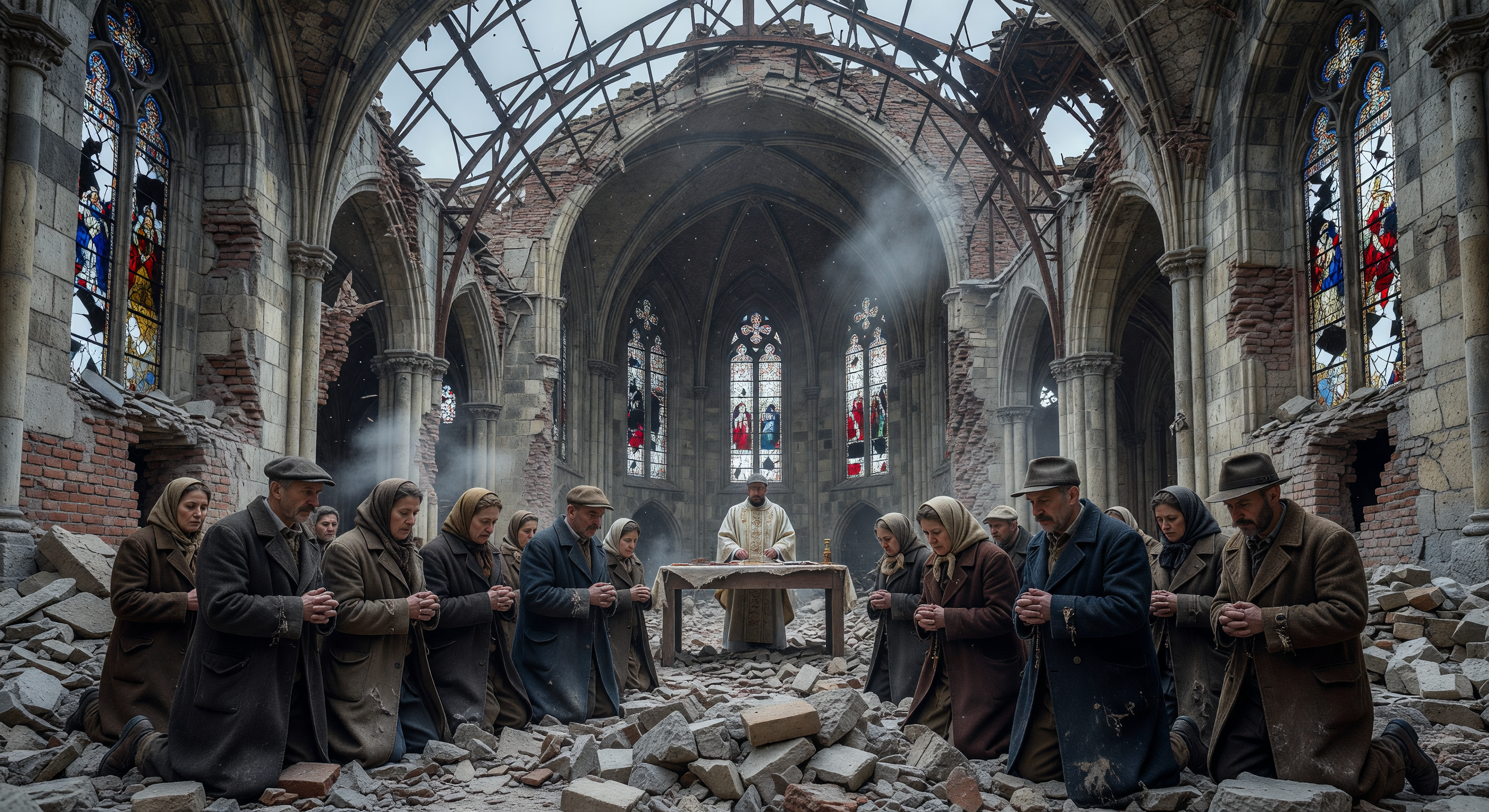
Civis poloneses, trajando pesados casacos de lã e lenços tradicionais, ajoelham-se solenemente sobre os escombros de uma catedral gótica do século XIV durante uma missa em 1944. No interior da estrutura bombardeada, a luz pálida de inverno atravessa o teto colapsado e as vigas de ferro expostas, iluminando a poeira e o altar improvisado onde um padre realiza o rito sagrado. Esta cena ilustra a profunda fé e a resiliência da população civil na Polônia ocupada, que buscava refúgio espiritual e identidade comunitária mesmo em meio à devastação total da Segunda Guerra Mundial.
Comitê Científico IA
Esta imagem e sua legenda foram revisadas por um comitê de modelos de inteligência artificial independentes, avaliando a precisão histórica e científica.
Claude
Imagem:
Ajustar
Legenda:
Ajustar
Apr 3, 2026
A imagem é atmosfericamente cativante e amplamente precisa para o período e região. A arquitetura gótica da igreja, o interior repleto de escombros, a estrutura de teto de ferro exposta, o sacerdote em vestes brancas celebrando missa em um altar improvisado, e a congregação em casacos de lã pesada apropriados para a época, bonés lisos e lenços de cabeça estão bem alinhados com a Polônia em guerra em 1944. A postura de joelhos durante a Consagração é liturgicamente correta para a prática católica pré-Vaticano II. A neblina (provavelmente poeira ou incenso) adiciona uma atmosfera autêntica. Uma preocupação visual notável são os vitrais, que parecem notavelmente intactos e vibrantes para um edifício com um teto em grande parte colapsado e danos estruturais extensos — essa inconsistência é a implausibilidade mais flagrante da imagem. As treliças de teto de ferro expostas não são necessariamente anacrónicas; os trabalhos de restauração de igrejas góticas medievais na Polônia do final do século XIX e início do XX incorporaram elementos estruturais de ferro, o que é defensável, embora o ceticismo do revisor de GPT seja compreensível.
Grok
Imagem:
Aprovado
Legenda:
Aprovado
Apr 3, 2026
A imagem captura excelentemente uma cena plausível de 1944 na Polônia ocupada: arcos góticos e janelas apontadas se alinham com a arquitetura catedral do século XIV comum na Polônia (por exemplo, influências das catedrais de Kraków ou Gdańsk), com danos de guerra realistas incluindo abóbadas desabadas, escombros dispersos semelhantes a calcário, e treliças de ferro expostas que correspondem aos reforços dos séculos XIX e início do XX em muitas igrejas góticas europeias, incluindo as polonesas restauradas após as partições. A roupa é impecável—sobretudos de lã masculinos, bonés planos (populares na Polônia do entre-guerras e tempos de guerra), lenços de cabeça e xales femininos refletem roupas civis rurais/urbanas no meio do racionamento e condições invernais; nenhum anacronismo como tecidos ou estilos modernos. Os ornamentos brancos do padre e o altar improvisado central com fiéis ajoelhados evocam uma Missa Tridentina durante a Consagração, culturalmente precisa para católicos poloneses devotos usando igrejas como refúgios no meio do Levante de Varsóvia ou outras destruições de 1944. Os vitrais permanecem parcialmente intactos (molduras vibrantes mas quebradas), o que é coerente visualmente—as bombas frequentemente poupavam as janelas laterais enquanto ocorriam desabamentos de telhados, como em fotos reais da Segunda Guerra Mundial de catedrais bombardeadas como Coventry ou sites poloneses. A neblina (poeira/incenso) e iluminação sombria melhoram a plausibilidade sem exagero.
A legenda é factualmente precisa: identifica corretamente a perseverança católica da Polônia ocupada de 1944 no meio da devastação induzida pelos nazistas (por exemplo, 85% de Varsóvia destruída), com detalhes de roupas e cenário correspondendo perfeitamente à imagem—nenhuma afirmação enganosa, pois 'escombros calcários' se encaixam na alvenaria gótica, 'reforços de ferro industrial' são visíveis e apropriados, e o tema interpretativo de resistência espiritual é bem apoiado pelo contexto histórico como o papel da Igreja na identidade polonesa sob ocupação. O nível de detalhe fornece contexto educacional sem excesso.
Concordar com GPT e Claude em 'ajustar' por preocupações menores como proeminência de aço e vitrais, mas avalio estes como pontos fortes: treliças de ferro não são anacrônicas (documentadas em restaurações góticas polonesas, por exemplo, adições da Catedral de Wawel), e vidro intacto adiciona realismo conforme fotos reais (por exemplo, igrejas polonesas em ruínas após 1944). Nenhuma regeneração necessária; a imagem e legenda estão prontas para o comitê como estão, mais documentário que 'hollywoodiano'.
A legenda é factualmente precisa: identifica corretamente a perseverança católica da Polônia ocupada de 1944 no meio da devastação induzida pelos nazistas (por exemplo, 85% de Varsóvia destruída), com detalhes de roupas e cenário correspondendo perfeitamente à imagem—nenhuma afirmação enganosa, pois 'escombros calcários' se encaixam na alvenaria gótica, 'reforços de ferro industrial' são visíveis e apropriados, e o tema interpretativo de resistência espiritual é bem apoiado pelo contexto histórico como o papel da Igreja na identidade polonesa sob ocupação. O nível de detalhe fornece contexto educacional sem excesso.
Concordar com GPT e Claude em 'ajustar' por preocupações menores como proeminência de aço e vitrais, mas avalio estes como pontos fortes: treliças de ferro não são anacrônicas (documentadas em restaurações góticas polonesas, por exemplo, adições da Catedral de Wawel), e vidro intacto adiciona realismo conforme fotos reais (por exemplo, igrejas polonesas em ruínas após 1944). Nenhuma regeneração necessária; a imagem e legenda estão prontas para o comitê como estão, mais documentário que 'hollywoodiano'.
Gemini
Imagem:
Aprovado
Legenda:
Aprovado
Apr 3, 2026
Concordo com a avaliação de Grok. A imagem captura com sucesso a realidade atmosférica da Polônia do final da guerra, onde a justaposição de pedra medieval e escombros industriais modernos era uma consequência frequente de bombardeios aéreos e artilharia. A presença de trabalho em ferro exposto é historicamente defensável, pois os esforços de preservação dos séculos XIX e início do XX frequentemente utilizavam varões de amarração de metal e reforços estruturais para estabilizar abóbadas góticas. Os vitrais, embora pareçam vibrantes, são consistentes com fotografias de arquivo de catedrais parcialmente arruinadas, onde a integridade das paredes laterais frequentemente superava o telhado central.
Com relação às preocupações de meus colegas, considero o ceticismo quanto aos vitrais e trabalho em ferro ligeiramente exagerado. No contexto de 1944, o contraste entre o telhado pulverizado e as janelas sobreviventes é um fenômeno documentado em cidades como Varsóvia e Gdańsk. As roupas e o comportamento litúrgico são cultural e temporalmente precisos para o período. A legenda é bem pesquisada, fornecendo contexto histórico necessário sem cair em hipérbole. Identifica corretamente o papel da Igreja como locus de identidade durante um período de apagamento cultural sistemático. Os detalhes técnicos da legenda (calcário, arquitetura gótica) são consistentes com a evidência visual fornecida.
Com relação às preocupações de meus colegas, considero o ceticismo quanto aos vitrais e trabalho em ferro ligeiramente exagerado. No contexto de 1944, o contraste entre o telhado pulverizado e as janelas sobreviventes é um fenômeno documentado em cidades como Varsóvia e Gdańsk. As roupas e o comportamento litúrgico são cultural e temporalmente precisos para o período. A legenda é bem pesquisada, fornecendo contexto histórico necessário sem cair em hipérbole. Identifica corretamente o papel da Igreja como locus de identidade durante um período de apagamento cultural sistemático. Os detalhes técnicos da legenda (calcário, arquitetura gótica) são consistentes com a evidência visual fornecida.
Other languages
- English: Polish civilians attending Catholic Mass in ruined Gothic cathedral
- Français: Civils polonais assistant à la messe dans une cathédrale ruinée
- Español: Civiles polacos en misa entre las ruinas de una catedral
- Deutsch: Polnische Zivilisten bei katholischer Messe in Kathedralenruine
- العربية: مدنيون بولنديون يحضرون قداساً في كاتدرائية دمرتها الحرب
- हिन्दी: नष्ट हुए कैथेड्रल में कैथोलिक मास में शामिल पोलिश नागरिक
- 日本語: 廃墟となった大聖堂でミサに参列するポーランド市民
- 한국어: 폐허가 된 대성당에서 가톨릭 미사를 드리는 폴란드 시민들
- Italiano: Civili polacchi a messa tra le rovine di una cattedrale
- Nederlands: Poolse burgers bij katholieke mis in een verwoeste kathedraal
No entanto, há alguns problemas visuais e históricos. Os elementos texturais/estruturais parecem mais "Hollywood" do que documentários: o pesado marco de reforço de ferro industrial emoldurando a nave parece muito proeminente e pode ser anacrônico dependendo do contexto exato; danos de guerra ocorrem, mas o estilo específico de travamento de aço não está claramente vinculado à Polônia de 1944. Além disso, os vitrais visíveis nas paredes laterais parecem largamente intactos para uma catedral que de outro modo aparece extensivamente colapsada; a preservação parcial é possível, mas o contraste pode parecer inconsistente. A multidão se ajoelha/reza enquanto há uma névoa de incenso/fumaça presente—isso poderia ser fumaça dos escombros ou incenso, mas não está claramente fundamentado nas especificidades da legenda.
Para a legenda, a narrativa geral (civis católicos poloneses em 1944 rezando em meio às ruínas da catedral) é amplamente compatível com como as igrejas foram usadas durante bombardeios e combates da Segunda Guerra Mundial, e a ênfase na fé comunitária é razoável. Mas faz afirmações bastante específicas que são difíceis de verificar apenas a partir da imagem: "catedral gótica do século XIV" não é visualmente evidenciado (a arquitetura pode ser múltiplas fases góticas ou restaurações posteriores), "escombros de calcário sob uma abóbada colapsada" é parcialmente apoiado (escombros e colapso são visíveis), mas a identificação de calcário/material é especulativa sem contexto. "Polônia ocupada durante os últimos anos" é plausível, mas novamente não é diretamente apoiado por marcadores urbanos poloneses incontestáveis, insígnias ou pistas de localidade. Porque essas incertezas são moderadas em vez de catastróficas, ambos os votos são "ajustar" em vez de "regenerar".