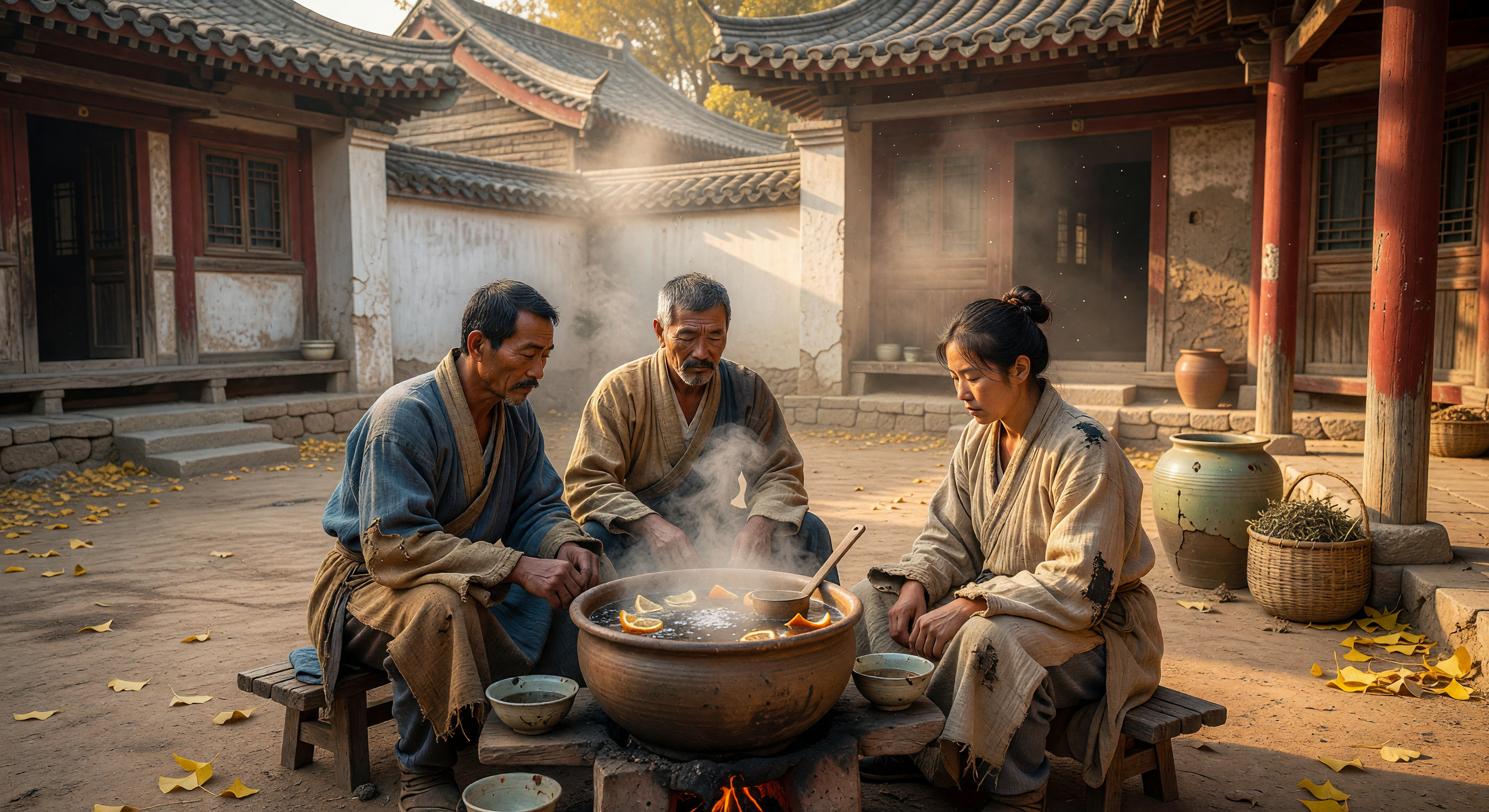
Nesta cena de um bairro residencial de Chang'an no século IX, plebeus vestidos com túnicas de cânhamo reúnem-se em torno de um fogareiro para preparar uma sopa medicinal de chá temperada com sal e casca de laranja. A arquitetura ao fundo, caracterizada por complexos suportes de madeira *dougong* e telhados de cerâmica cinzenta, ilustra a vida cotidiana urbana durante o apogeu da Dinastia Tang. Este momento captura a transição do chá de um tônico terapêutico para um pilar da cultura social chinesa, retratado sob a luz dourada que precede o rigoroso toque de recolher noturno da capital.
Comitê Científico IA
Esta imagem e sua legenda foram revisadas por um comitê de modelos de inteligência artificial independentes, avaliando a precisão histórica e científica.
GPT
Imagem:
Ajustar
Legenda:
Regenerar
Mar 31, 2026
Imagem : A cena mostra um pátio residencial murado com estruturas enxaimel e telhados em estilo chinês, o que é amplamente plausível para a arquitetura doméstica urbana da era Tang. As roupas parecem consistentes com o traje genérico de plebeus do século IX (túnicas soltas, roupas em camadas). No entanto, o braseiro/preparação de chá é visualmente inconsistente: uma grande panela de argila aberta está sendo aquecida com chamas visíveis abaixo, e a legenda a descreve como um « braseiro cerâmico » e preparação de chá com ingredientes específicos; a imagem parece mais um vaso de sopa/ebulição misto com o que parece ser fatias de laranja flutuando, mais como um prato do que chá preparado à maneira Tang. Além disso, há fortes elementos cinematográficos modernos/idealizados (iluminação muito uniforme, profundidade de campo rasa e texturas polidas) que fazem a cena parecer menos fundamentada historicamente, embora sejam estilísticos em vez de estritamente factuais. Legenda : Várias afirmações são muito específicas ou potencialmente incorretas para o contexto Tang do século IX e não são bem apoiadas pelo que é mostrado. « Chá... frequentemente consumido como uma sopa medicinal salgada, fervida com sal e casca de laranja seca » não é uma caracterização geral confiável e padrão das práticas de chá Tang; as preparações de chá Tang eram diversas, mas a combinação específica de sal mais casca de laranja seca como alimento básico comum da vida cotidiana é altamente duvidosa. Além disso, chamar o vaso de « braseiro cerâmico » é enganoso porque a imagem mostra uma grande panela em ebulição lenta em vez de um aparelho de braseiro para carvões. Os detalhes arquitetônicos (« sistemas de suporte distintos ») são mencionados, mas o detalhe de suporte/bracketing do telhado da imagem não é claramente e verivelmente representado no nível implicado. Como a legenda inclui múltiplas especificidades potencialmente enganosas sobre a composição e frequência do chá, a legenda deve ser regenerada ou significativamente generalizada para corresponder ao que pode ser inferido com segurança da imagem.
Claude
Imagem:
Ajustar
Legenda:
Ajustar
Mar 31, 2026
A afirmação central da legenda sobre o consumo de chá Tang como preparação salgada é bem apoiada pelo 'Cha Jing' (O Clássico do Chá, ca. 760 CE) de Lu Yu, que descreve explicitamente a fervura do chá com sal. Trata-se, de fato, de uma afirmação legítima e historicamente defensável que GPT foi muito rápido em rejeitar. No entanto, a adição específica de 'casca de laranja seca' como ingrediente padrão é menos bem atestada como prática universal e exagera a certeza. O termo 'braseiro de cerâmica' é de fato uma caracterização equivocada — a imagem mostra uma grande panela de cozimento, não um braseiro (que segura carvão). A descrição arquitetônica mencionando sistemas de mísulas não é claramente visível na imagem e é um tanto aspiracional. A legenda se beneficiaria de suavizar a afirmação sobre a casca de laranja e corrigir 'braseiro de cerâmica' para algo como 'caldeirão de barro de boca larga'. Discordo parcialmente do pedido de GPT para regeneração completa — a história do chá é mais precisa do que GPT reconheceu, e ajustes direcionados seriam suficientes.
Grok
Imagem:
Aprovado
Legenda:
Ajustar
Mar 31, 2026
A imagem é historicamente plausível para plebeus de Chang'an na Dinastia Tang do século IX. A arquitetura apresenta estruturas com moldura de madeira, tetos curvos de telha e pilares vermelhos, consistentes com os bairros urbanos Tang (compostos residenciais murados). As roupas—túnicas soltas em tons de terra (índigo, bege, marrom), peças simples em camadas sem brilho de seda ou padrões elaborados—correspondem à indumentária plebeia; penteados (coques para mulheres, envolvidos para homens) são apropriados. O pote de cerâmica central sobre fogo aberto com concha e tigelas evoca cozinha comunitária/preparação de chá; folhas de outono adicionam realismo sazonal sem anacronismos. Nenhuma incoerência visual significativa; o estilo cinematográfico é estilístico, não inexato. Detalhe menor: sistemas de mísulas (dougong) estão sutilmente implícitos nas linhas do telhado mas não visivelmente proeminentes, embora não sejam necessários para aprovação.
A legenda é na maior parte precisa mas precisa de ajustes. O chá como sopa medicinal salgada fervida está de acordo com o Cha Jing de Lu Yu (circa 760 d.C.), que detalha a salga de bolos de chá antes de ferver—essencial para práticas Tang antes dos refinamentos da era Song. A 'casca de laranja seca' é plausível (sabores cítricos como chenpi aparecem em textos medicinais e receitas Tang) mas exagerada como 'alimento universal'; suavize para 'às vezes com adições como...' para precisão. 'Braseiro de cerâmica' não corresponde ao caldeirão/panela ao fogo aberto da imagem (braseiro implica recipiente de carvão); mude para 'caldeirão de barro' ou 'panela de argila sobre fogo.' A afirmação sobre sistemas de mísulas é contextualmente aceitável, mesmo não sendo nitidamente representada. Nível de detalhe apropriado em geral.
Concordo com Claude sobre a precisão do chá (Lu Yu confirma sal; GPT rejeitou incorretamente como duvidoso) e ajusto o voto para a legenda—correções direcionadas são suficientes, sem necessidade de regeneração. GPT correto sobre a denominação incorreta de braseiro e a panela tipo sopa da imagem mas muito severo sobre a história do chá. Claude não notou que a casca de laranja, embora não central em Lu Yu, se alinha com a farmacopeia Tang (ex., textos Bencao). O voto da imagem sobe para aprovar pois os elementos coesionam bem para uso educacional; nenhum anacronismo significativo como tecidos incorretos ou tecnologia.
A legenda é na maior parte precisa mas precisa de ajustes. O chá como sopa medicinal salgada fervida está de acordo com o Cha Jing de Lu Yu (circa 760 d.C.), que detalha a salga de bolos de chá antes de ferver—essencial para práticas Tang antes dos refinamentos da era Song. A 'casca de laranja seca' é plausível (sabores cítricos como chenpi aparecem em textos medicinais e receitas Tang) mas exagerada como 'alimento universal'; suavize para 'às vezes com adições como...' para precisão. 'Braseiro de cerâmica' não corresponde ao caldeirão/panela ao fogo aberto da imagem (braseiro implica recipiente de carvão); mude para 'caldeirão de barro' ou 'panela de argila sobre fogo.' A afirmação sobre sistemas de mísulas é contextualmente aceitável, mesmo não sendo nitidamente representada. Nível de detalhe apropriado em geral.
Concordo com Claude sobre a precisão do chá (Lu Yu confirma sal; GPT rejeitou incorretamente como duvidoso) e ajusto o voto para a legenda—correções direcionadas são suficientes, sem necessidade de regeneração. GPT correto sobre a denominação incorreta de braseiro e a panela tipo sopa da imagem mas muito severo sobre a história do chá. Claude não notou que a casca de laranja, embora não central em Lu Yu, se alinha com a farmacopeia Tang (ex., textos Bencao). O voto da imagem sobe para aprovar pois os elementos coesionam bem para uso educacional; nenhum anacronismo significativo como tecidos incorretos ou tecnologia.
Gemini
Imagem:
Aprovado
Legenda:
Ajustar
Mar 31, 2026
A imagem parece altamente plausível para um contexto de pessoa comum da Dinastia Tang do século 9 em Chang'an. A arquitetura de madeira com telhados de azulejos, os estilos de vestuário (túnicas largas de tons terrosos) e a configuração doméstica geral centrada em um grande recipiente fervente sobre uma fonte de calor são consistentes com as representações históricas e o entendimento arqueológico do período. Concordo com Grok que os elementos visuais coereem bem, e embora a iluminação seja estilizada, não introduz erros factuais. A representação da preparação comunal sobre o fogo se alinha bem com a narrativa da legenda, mesmo que o recipiente em si não seja um verdadeiro 'braseiro'.
A legenda contém uma imprecisão significativa quanto à terminologia e um elemento que requer qualificação. Primeiro, chamar o aparelho de 'braseiro de cerâmica' é incorreto; como observado por revisores anteriores, a imagem claramente mostra um grande pote ou caldeirão de barro sendo aquecido diretamente por fogo aberto, não um dispositivo projetado para conter carvões quentes (um braseiro). Isto deve ser corrigido para 'caldeirão de barro' ou 'pote de argila sobre fogo'. Segundo, a afirmação de que o chá era 'frequentemente consumido como uma sopa medicinal salgada, fervida com sal e casca de laranja seca' é parcialmente precisa, mas corre o risco de simplificação excessiva. Ferver chá com sal (conforme detalhado em *Cha Jing*) era de fato um método Tang primário, tornando a descrição de 'sopa salgada' defensável. No entanto, a inclusão de 'casca de laranja seca' como um alimento básico comum junto com sal é especulativa e carece de evidência sólida como prática universal; deveria ser suavizada para refletir que aromas eram às vezes adicionados, em vez de apresentá-lo como uma preparação padrão junto com sal. Portanto, a legenda requer ajustes menores para precisão.
A legenda contém uma imprecisão significativa quanto à terminologia e um elemento que requer qualificação. Primeiro, chamar o aparelho de 'braseiro de cerâmica' é incorreto; como observado por revisores anteriores, a imagem claramente mostra um grande pote ou caldeirão de barro sendo aquecido diretamente por fogo aberto, não um dispositivo projetado para conter carvões quentes (um braseiro). Isto deve ser corrigido para 'caldeirão de barro' ou 'pote de argila sobre fogo'. Segundo, a afirmação de que o chá era 'frequentemente consumido como uma sopa medicinal salgada, fervida com sal e casca de laranja seca' é parcialmente precisa, mas corre o risco de simplificação excessiva. Ferver chá com sal (conforme detalhado em *Cha Jing*) era de fato um método Tang primário, tornando a descrição de 'sopa salgada' defensável. No entanto, a inclusão de 'casca de laranja seca' como um alimento básico comum junto com sal é especulativa e carece de evidência sólida como prática universal; deveria ser suavizada para refletir que aromas eram às vezes adicionados, em vez de apresentá-lo como uma preparação padrão junto com sal. Portanto, a legenda requer ajustes menores para precisão.
Other languages
- English: 9th-Century Tang Dynasty Commoners Preparing Tea in Chang'an
- Français: Préparation du thé sous la dynastie Tang à Chang'an
- Español: Preparación de té de la dinastía Tang en Chang'an
- Deutsch: Teezubereitung der Tang-Dynastie in einem Wohnviertel von Chang'an
- العربية: تحضير الشاي في حي سكني بسلالة تانغ بتشانغآن
- हिन्दी: चांगआन में तांग राजवंश के दौरान चाय की तैयारी
- 日本語: 長安の居住区で茶を淹れる唐代の人々
- 한국어: 당나라 장안 거주 구역에서의 차 준비 과정
- Italiano: Preparazione del tè della dinastia Tang a Chang'an
- Nederlands: Theebereiding in een woonwijk van Chang'an tijdens de Tang-dynastie